Author Archives: mikebriggs1910

Unknown's avatar

About mikebriggs1910

I'm not a Historian by profession - merely an (over) enthusiastic amateur. By day I'm a Professor of Genetics at Newcastle University with a translation research interest in rare bone diseases. At weekends I can be classified as a Yorkshire Cricket & Psychedelic Rock fan, but mostly I'm just on the Fells (or in the pub - when they were open!).

On V day 25th June 1916

June 25: Very heavy storm. Had to swim in communication trenches in places. Battn out working all night & wet through to top of the head. In this state we marched back to camp at ——–.

Found huts merely roofed with sacking and soaking through at 8 am. Billeted men in the village at 10am.

[Lieutenant Josiah Taylor]
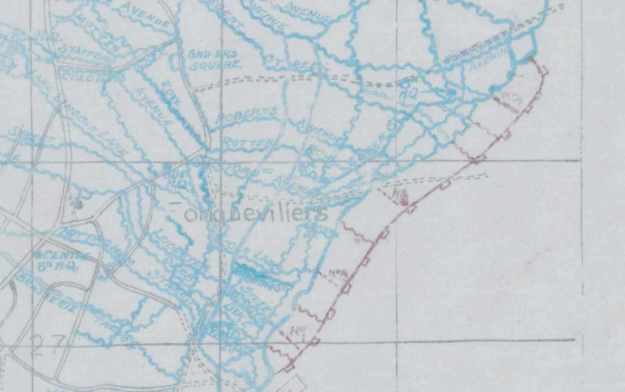

Trenches June 1916About the twenty seventh of June my Battalion was given the task of digging what was known as a Russian Sap, this was a narrow trench leading from our front line towards the German barbed wire, at the time we were not occupying the front line, but were quartered in a small village about three or four miles behind.

We paraded about nine p.m. in fighting order, all were issued with shovels, except every sixth man who was issued with a pick. We proceeded through the maze of rear trenches, and through our front line. The troops holding the line wished us luck as we filed past, and as quietly as possible we tried to make as little noise as we could, but it was difficult, what with our rifles, picks, shovels, tin cans, barbed wire and all the things that No-Mans Land could contain to cut out all noise.

On the way up the line to this operation we suffered a set-back in the way of a terrific thunder storm, with torrential rain. That rain seemed to flood the whole area, some were wading thigh deep, and in the deepest sections little men had great difficulty in keeping on their feet, in fact it was rumoured that some had drowned, whether this was correct or not I am not prepared to say. We swam, slithered and crept to our allotted task in NO-MANS LAND, and commenced to dig our secret trench towards the German wire, I think my position was about half way, we dug very carefully and very quietly in the squelching mud. We were saturated with a brown slime, when we had got down about two and a half feet, and the Germans had not discovered us, we considered we were making good time, and so we were.

To gain a complete picture of this operation the hazards must be taken into consideration, firstly the whole operation had to be finished, the trench covered in, and the excavated earth hidden in some way, and all the digging Battalion out of the area before the June dawn. The constant flare of verey lights, the probing machine gun and rifle fire, and every time a German flare sailed into the air everybody remained perfectly still, with our faces pressed closely to the ground. Of course the Germans were keyed up, they expected something to be going on, these last days of June, so they were taking no chances, and just before our Officers were prepared to consider our task well and truly carried out, someone must have made more noise than was good for the situation, up went the verey light, another, and another, we crouched silently in the water in the bottom of our freshly dug trench. The sides of the trench were crumbling with all the rain, but it was safer down in the water at the bottom than being up on the top to face what we thought would be coming our way if the suspicions of the Germans were roused any further. That was the case, they were not sure what was going on, their Officers must have decided to be on the safe side, and ordered withering machine gun and rifle fire. S.O.S. to their artillery for shrapnel, they swept the whole front for about half an hour, but fortunately for us they decided that whatever they had seen or heard had been dealt with and exterminated.

When all was quiet enough we dragged ourselves backwards from the operation into our own front line, and so back to our billets in the little village behind our front. We had sustained casualties but we considered we had got of lightly.

[2305 Pte Frank Longson]


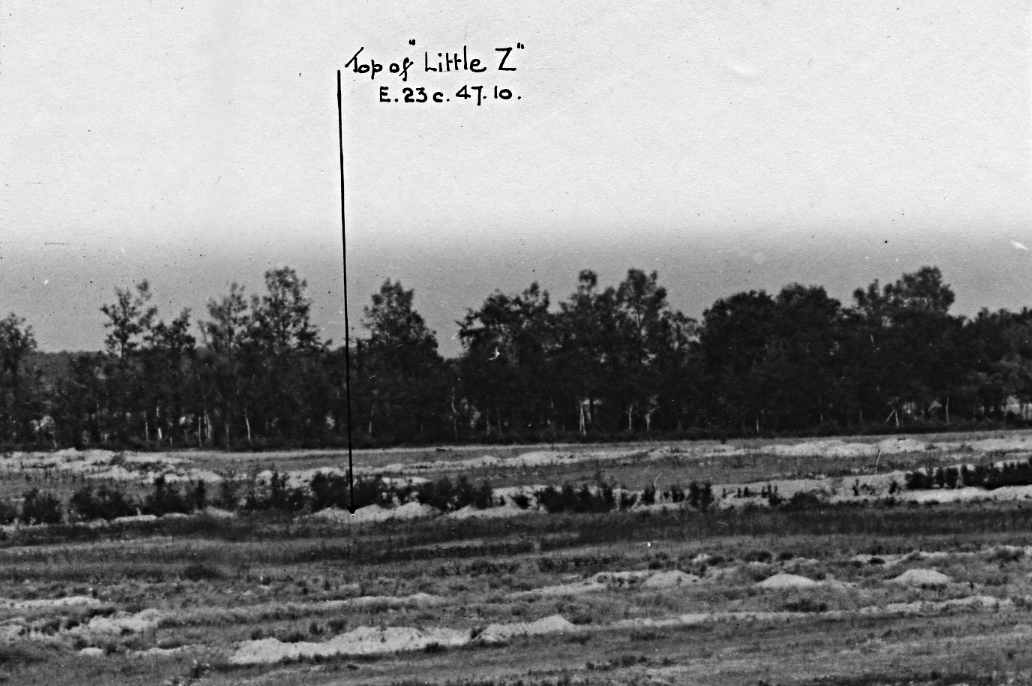
25: This is “V” day. Wire cutting continued by T Mortars & 18 Pdrs, unfortunately the 2″ trench mortar was knocked out. This mortar was cutting wire in the vicinity of LITTLE Z. Progress in wire cutting is being made on the right front, but on the left front it is not satisfactory. The weather has broken down again & the trenches are becoming worse.Little z 1916

139 Infantry Brigade: Headquarters War Diary [WO95/2692]
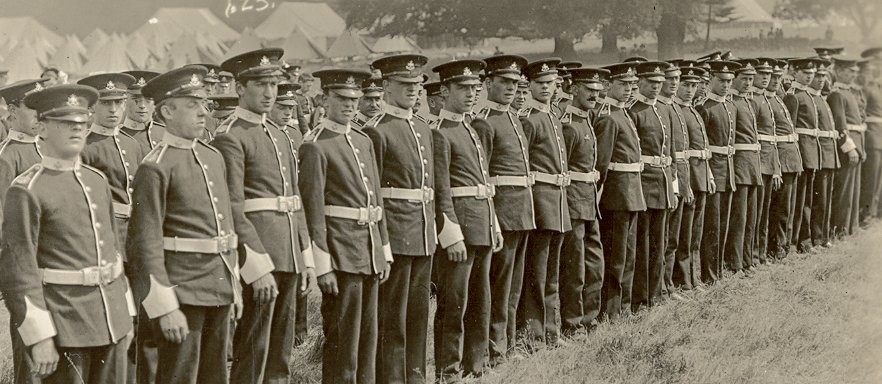
On U day 23rd – 24th June 1916

23/24.6.1916 TRENCHES: Battn continued digging advanced trench with 7th Battn finding covering party & reserve diggers. Rather heavy MG fire and shelling. Owing to the heavy rain the trench although linked up was not finished in depth.

24.6.1916: Battn marched into billets on the GAUDIEMPRE-PAS ROAD. Every man wet through & covered with mud from digging.

23.6.1916 GAUDIEMPRE: Capt CJ Wheatcroft rejoined from Base.

24.6.1916 GAUDIEMPRE: Lt TL Darbyshire rejoined from England.

War Diary [WO/95/2694]


23: A very heavy thunder storm this afternoon, which completely filled all the trenches with water – just like winter again. Pumps going hard to get the water out. Work on the new forward trench was continued this evening. Owing to the state of the ground work was very much hampered.

The enemy shelled a good deal too, but we were fortunate and only sustained a few casualties viz 1 killed & 12 wounded. The trench by the morning still required a good deal of work to complete it.

24: This is “U” day. Wire cutting by our artillery commenced today in accordance with pre arranged programme (see copy of Brigade Instruction & Operations Order No 63 attached). The enemy replied with crimps on our front line trench at various places knocking in the end of ROBERTS AVENUE to some extent. Work in the trenches had to be concentrated on pumping out the trenches which are in an awful state of water & mud.

139 Infantry Brigade: Headquarters War Diary [WO95/2692]


On these days 22nd – 23rd June 1916

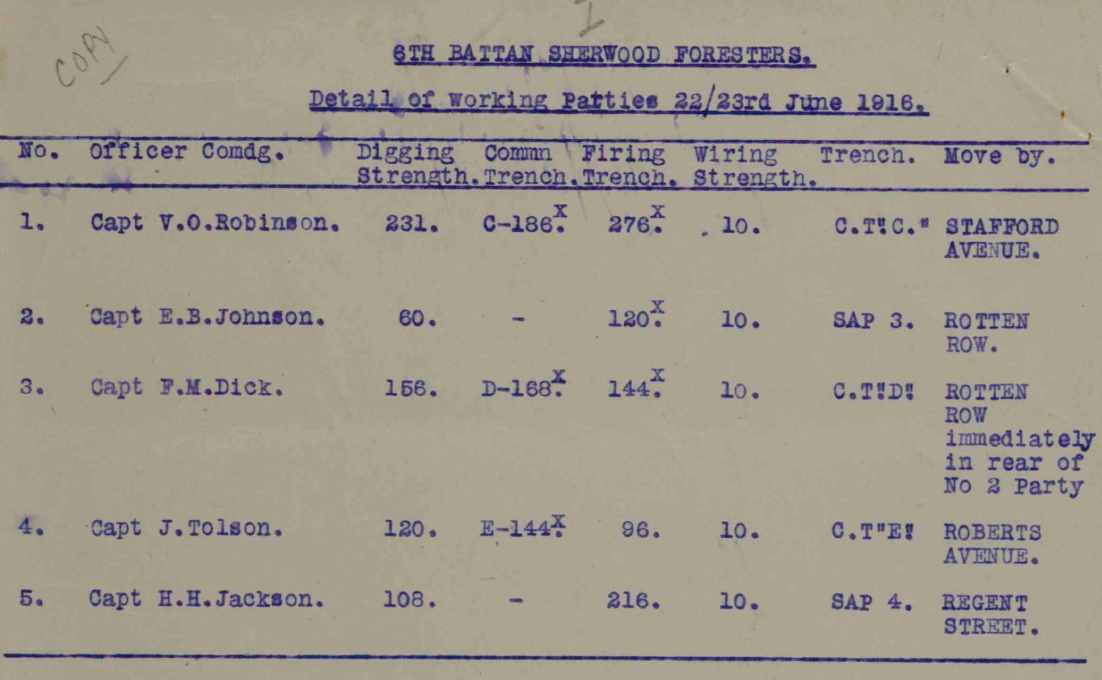
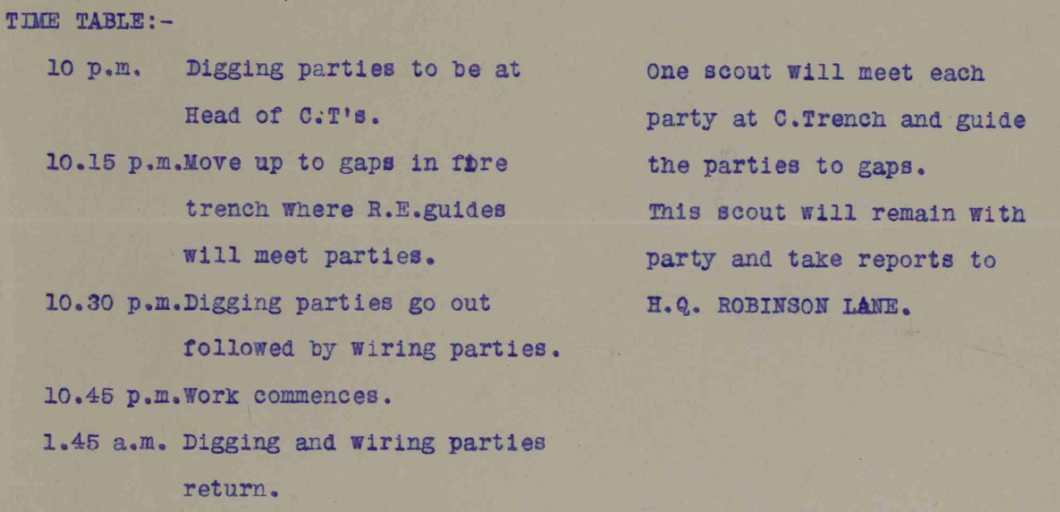
22/23.6.1916 TRENCHES: Bn began to dig advanced trench in Brigade front (total length with all CTs about 1300 yards). 7th Battn furnished covering party reserve diggers. Bn wired head of saps & CTs.trench digging 22 June 191622 June 1916 trench digging timesWar Diary [WO/95/2694]


June 20-24: Very busy men employed laying cable all day & digging trenches for them at night. Battn also busy digging trenches.

[Lieutenant Josiah Taylor]


22nd: Battns still working at above work. The front line was advanced tonight (see copy Operations Order 62 attached) about 150 yards. This work was undertaken by the 6th Battn SF. A covering party of 5 Offciers & 132 other ranks under Lt Colonel Goodman CMG Cmdg 6th Battn SF.

The orders were carried out very well. There was a little confusion on the right flank owing to a good deal of Machine Gun fire, in consequence the work on the night was not so far forward when the order to withdraw was given, as on the left.

By that time a trench varying from 5′ to 2 1/2′ had been dug on a frontage of 700 yards with 3 CTs averaging 140 yards each.

We had only one killed & 4 wounded out of some 800 men. engaged on the work – the work is to be completed tonight.

139 Infantry Brigade: Headquarters War Diary [WO95/2692]


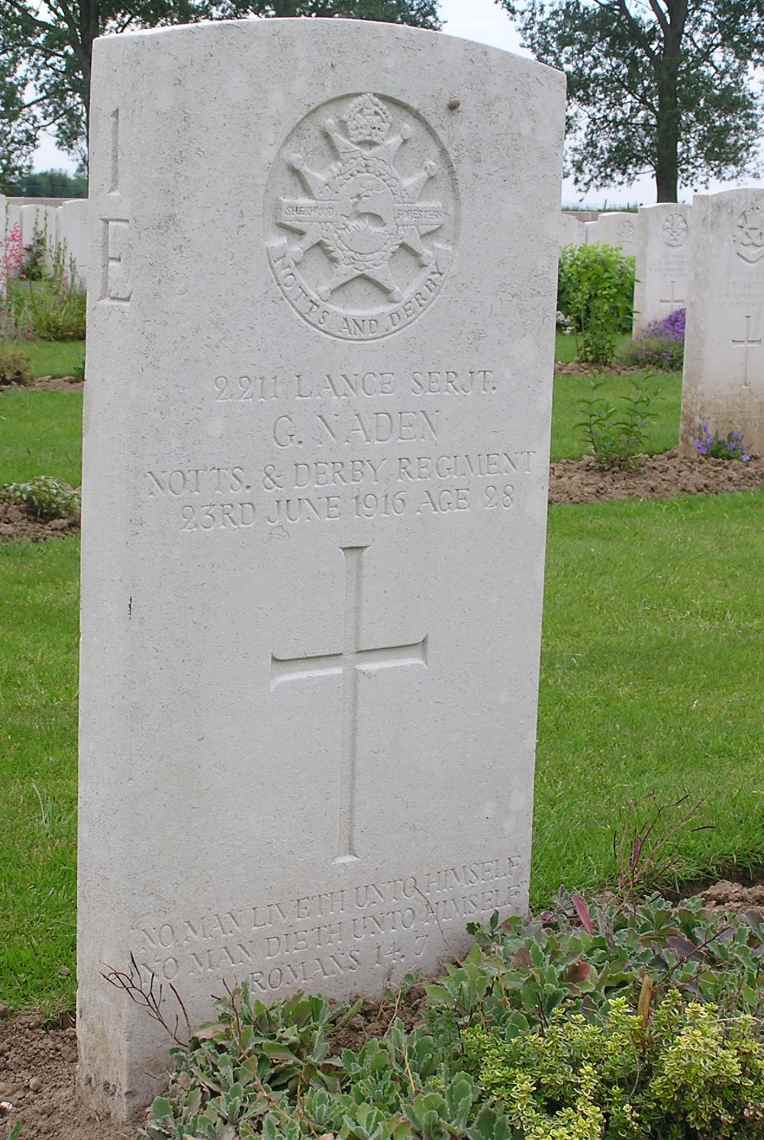
The man killed was 2211 Lance Sergeant George Naden from Dove Holes
2211 Naden

On these days 19th – 21st June 1916

No record in the War Diary [WO/95/2694]


19th: Battalions working on the trenches and at various works required by the Division.

20th: Battns still engaged in working on Trenches and preparing them for the coming operation.

21st: This work chiefly consists in improving CTs & making extra accommodation for storing ammunition & RE material.

139 Infantry Brigade: Headquarters War Diary [WO95/2692]
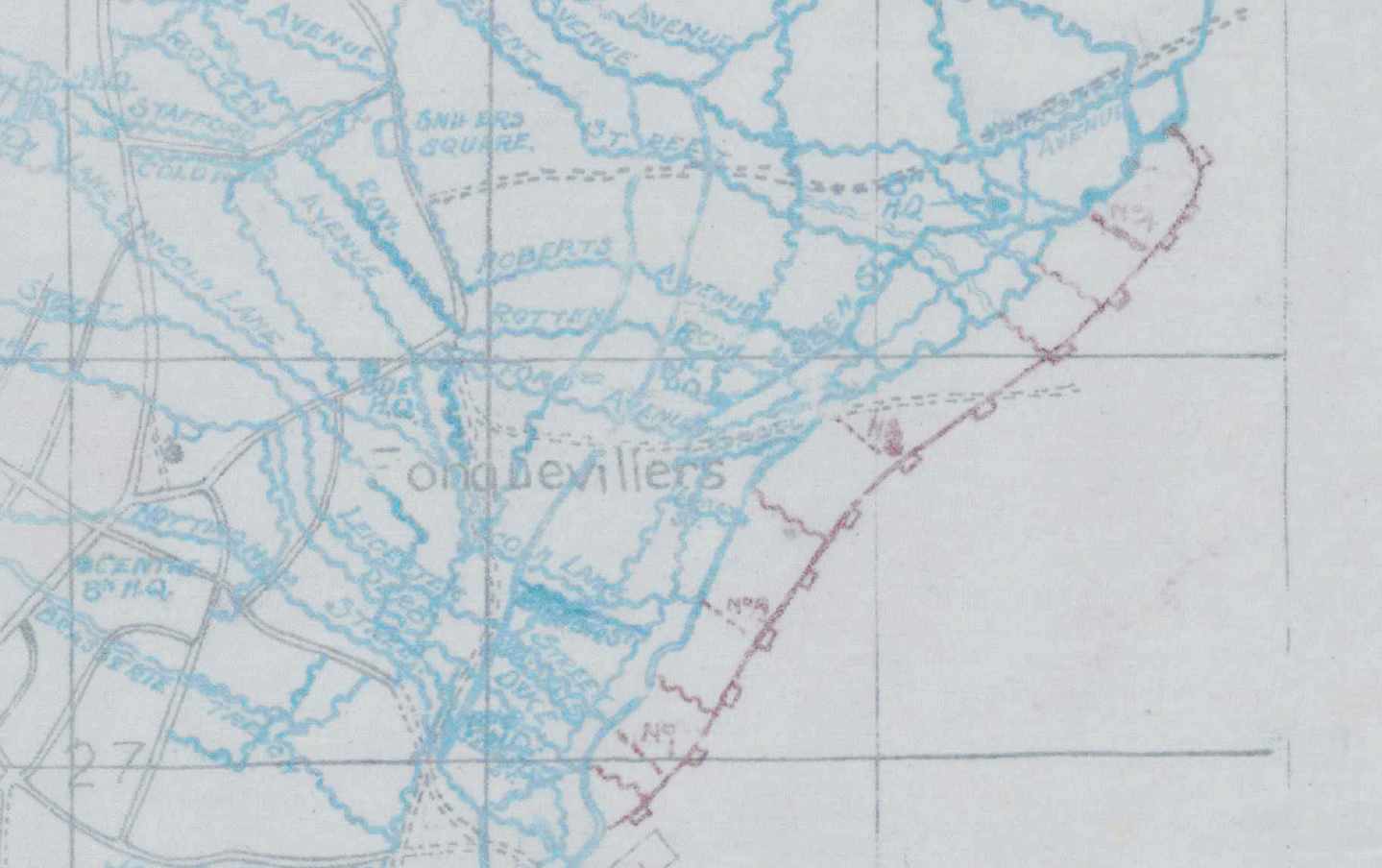
26th Trench Duty 18th – 24th June 1916

18/19.6.1916 SUS ST LEGER: Marched to FONQUEVILLERS & relieved 4th LINCS in SUPPORT. QM Stores & Transport lines to LA BAZIQUE FARM.

War Diary [WO/95/2694]


June 17: After the usual sort of so called rest (about 10-12 hours work a day) I took signals down to trenches. Slept on hammock in rec. Parcel from home.

June 18: Very heavy day laying new armoured cable. So heavy that it takes 6 men to carry a 1/4 mile cable. Battn arrived at night. CO & Adjt mentioned in dispatches. Lived in my old dugout. Much for a blanket very cold.

[Lieutenant Josiah Taylor]


18th: Brigade moved in accordance with copy of Operations Order 61 attached. The 8th Battalion SF going into the line & the 6th Battn SF into SUPPORT in FONQUEVILLERS. Everything went off all right & the relief was completed by 12-5 AM 19th.

Units are now stationed as under:-

  • Brigade HQrs at HUMBERCAMPS
  • 5th Battn at POMMIER
  • 6th Battn at FONQUEVILLERS
  • 7th Battn at BIENVILLERS
  • 8th Battn in trenches
  • Bde MG Coy & ™ Battery at POMMIER

139 Infantry Brigade: Headquarters War Diary [WO95/2692]
On this day 17th June 1916

17.6.1916 SUS ST LEGER: 139th Bde practiced attack near LUCHEUX FOREST in presence of Corps Commander & GOC Division. 6th Battn in support.

War Diary [WO/95/2694]


17th: The 5th, 6th & 7th Battns Sherwood Foresters practiced the attack today before the Commanders of 46th DIvision & VIIth Corps. Smoke was used in small quantities. Both Commanders expressed themselves pleased with what they saw. Both Officers addressed the Regimental Officers & Platoon Commanders after the Operation.

139 Infantry Brigade: Headquarters War Diary [WO95/2692]

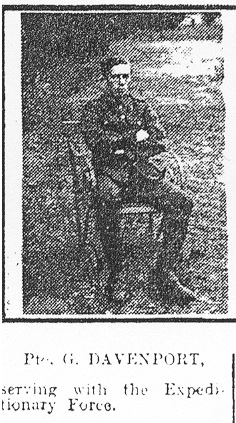
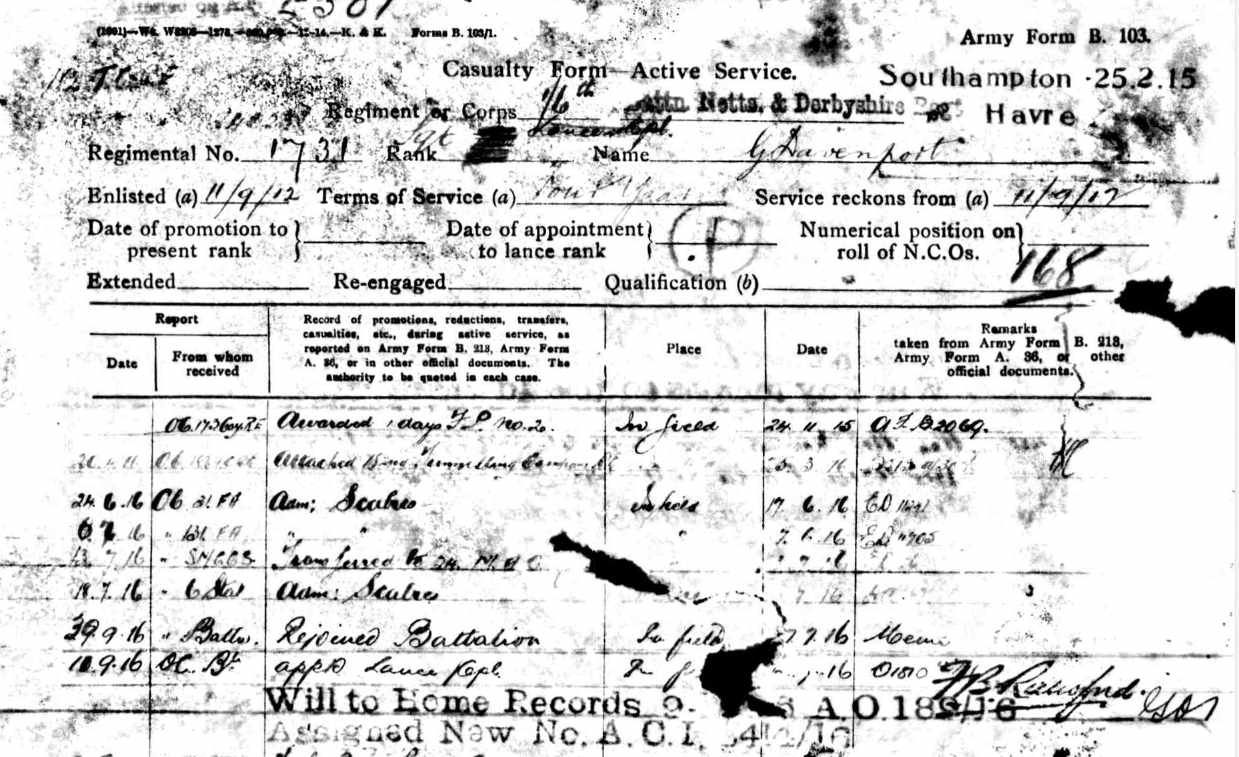
1731 Pte George Davenport, a horse driver from Peak Forest and a Pre-War Territorial serving in “B” Company was admitted to Hospital with scabies. He rejoined the Battalion on the 7th July.1731 Davenport 2 1731 Davenport

On this day 15th June 1916

15.6.1916 LONDON GAZETTE: Mentioned in dispatches by C-in-C for Gallantry & Distinguished Conduct in the field:-

  • Lt Col. Godfrey Davenport Goodman
  • Capt Cyril Benton JohnsonJohnson CD MID
  • 158 C.S.M William Goddard and later to win the Military Medal on 19th February  1917 (posthumously).158 Goodard MIC
  • 456 C.S.M Henry Holland and later to win the Distinguished Conduct Medal in July 1917.456 Holland MIC
  • 2388 Segt Thomas Hunter and later to win the Military Medal on 11th November 1916.2388 Hunter MM 1916 2
  • 1464 Sergt Wilfred Bernard Longson and later to win the Military Medal on 11th November 1916.Longson Military Medal 1916
  • 1644 Drummer James Chatterton and later to win the Military Medal on 11th November 1916.

But why were these Officers and Men “Mentioned in Dispatches”?

LG 15 June 1916Haig 30 June 1916names June 1916

The London Gazette from 15th June 1916 records the individuals Mentioned in Dispatches by General Haig on the 30th April 1916 and lists men from all four Territorial Battalions


Here is the evidence:-

  • The service records for Cyril Johnson, Henry Holland, William Goddard and James Chatterton all record that the men were Mentioned in Dispatches on the 30th April 1916, which is consistent with the London Gazette.
  • James Chatterton was wounded on the 12th March 1916 and was transferred to Hospital in England on the 17th March 1916. He did not return to France until the 16th July with the 15th Reinforcement.
  • James Chatterton, Wilfrid Longson and Thomas Hunter had their Military Medal announced in the London Gazette on 11th November 1916.London Gazette November 1916
  • William Goddard had his Military Medal announced in the in the London Gazette on 19th February 1917 because it was awarded posthumously.MM Postumosly 1917

Despite the fact that “British Gallantry Awards: The Sherwood Foresters” records that these NCOs and men received their awards for gallantry during the attack at Gommecourt on the 1st July 1916, this seems unlikely when all the evidence is reviewed, in particular the service records of 1644 Drummer James Chatterton who was not even present on that day.

It would therefore seem likely these individual acts of gallantry and distinguished conduct occurred whilst the 1/6th Battalion were holding the front line trenches in front of Vimy Ridge.

Chatterton’s wounding suggest that his act of gallantry occurred between 10th and 12th March 1916 during the first trench duty and specifically when the Germans exploded a mine under the French trenches on the right of the 139th Brigade.

On this day 13th June 1916

13.6.1916 SUS ST. LEGER: Lt H.W. HIGHAM for C.T. School ROUEN for duty.

War Diary [WO/95/2694]


13th to 16th: Battns still employed training for the attack on GOMMECOURT. The weather has been vile and has hampered the training very much. We have had rain every day.

500 men are also employed wood cutting in the LUCHEUX Forest.

In addition to training for the attack Battalions are employed at bayonet fighting & physical training, musketry & rapid wiring. On the 15th instant the 8th Battn proceeded to HUMBERCAMP by route march.

139 Infantry Brigade: Headquarters War Diary [WO95/2692]


On this day 11th June 1916

11.6.1916 SUS ST. LEGER: 2/Lts W.G. WOOD, W.T. STEPHENS and A.E. SYLVESTER joined from England.

Lt C.A. BROWN and C.S.M. SLATER to 3rd Army School of Instruction.

War Diary [WO/95/2694]