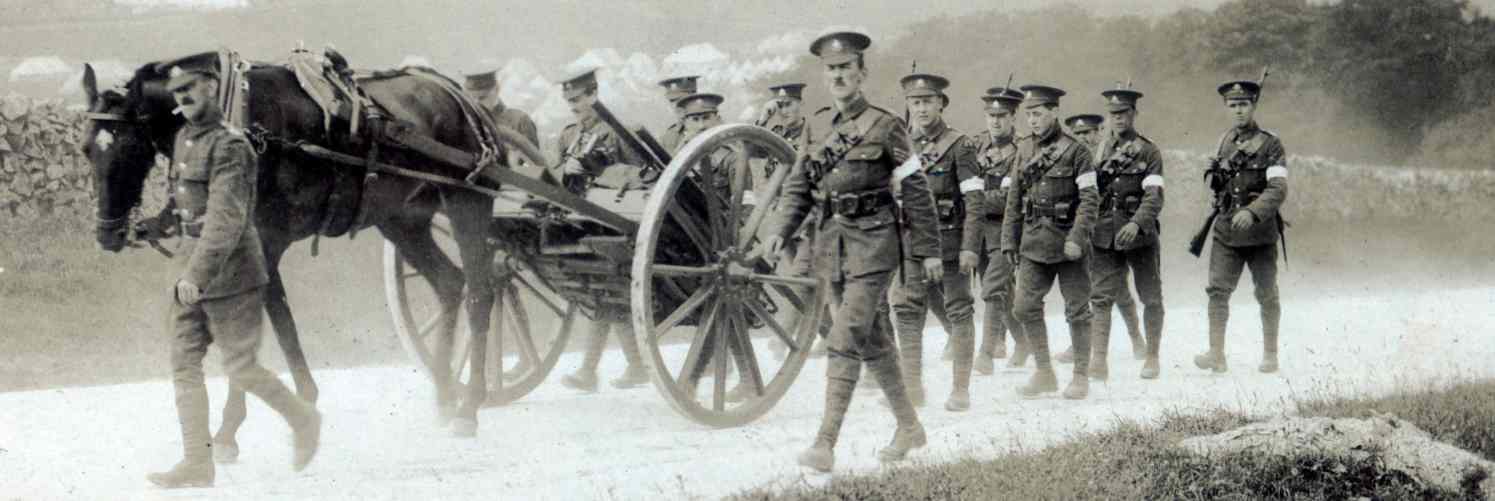
Commissioned into the 2/6th Battalion and was captured on the 21st March 1918 during the first day of the ‘Kaiserschlacht’ – the German Spring Offensive – and he provides one of the best personal accounts of the ‘last stand’ of the 2/6th Battalion
Many thanks to Conrad’s Grandson Jonathan for sending the transcript of his diary and the photographs
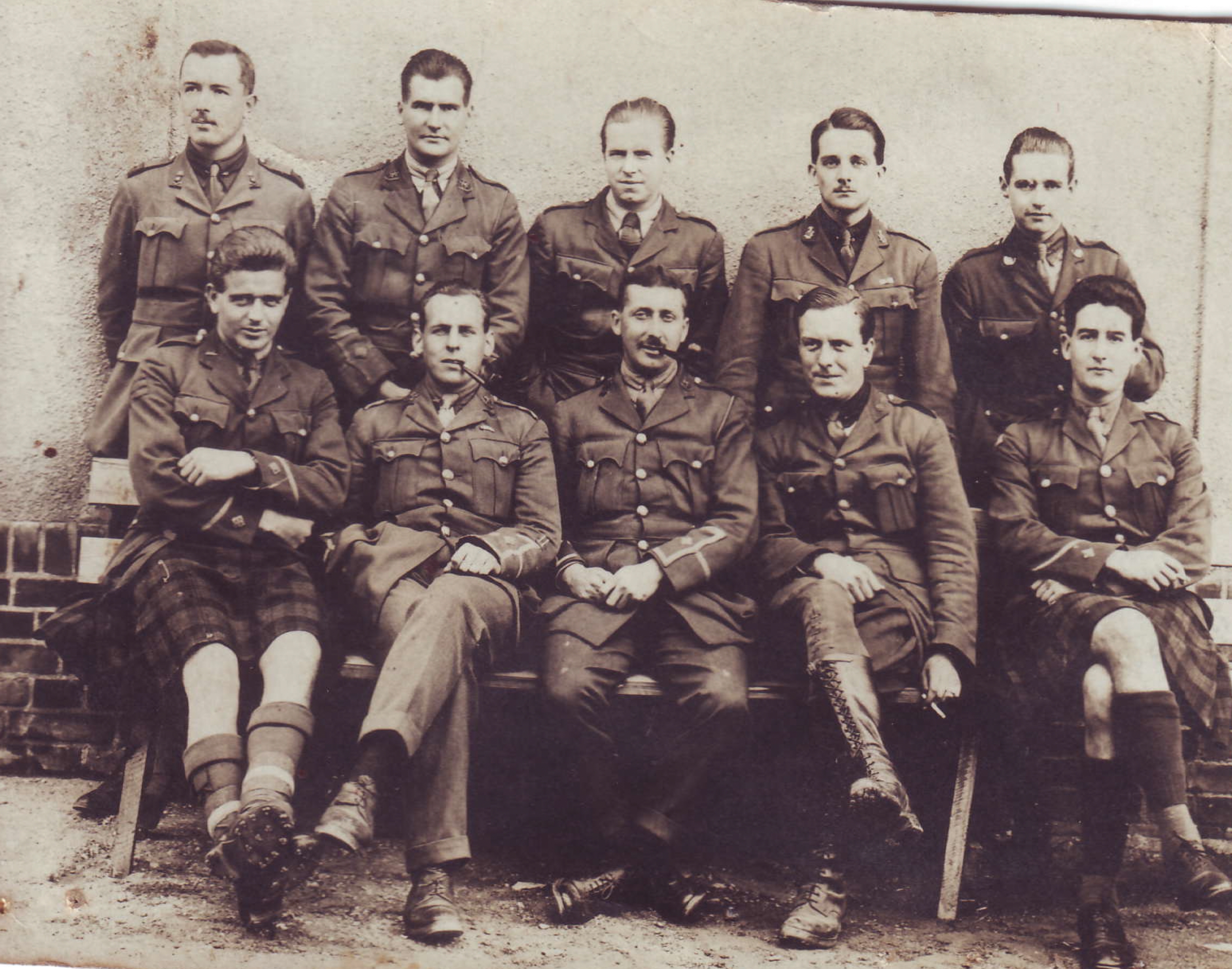
Conrad (centre front row) with fellow Officers in Graudenz Officers POW Camp 1918
Conrad was born in October 1886 in Wellington, Somerset. By 1911 he was living in Kensington and was a Clerk for the Excel Company Ltd, which at that time was a textile wholesaler.
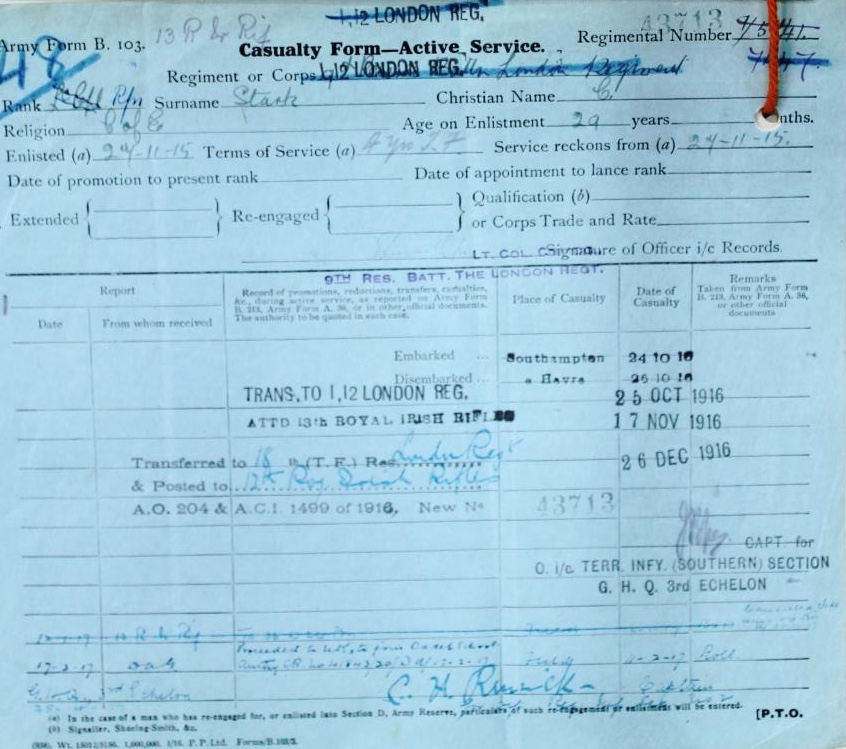
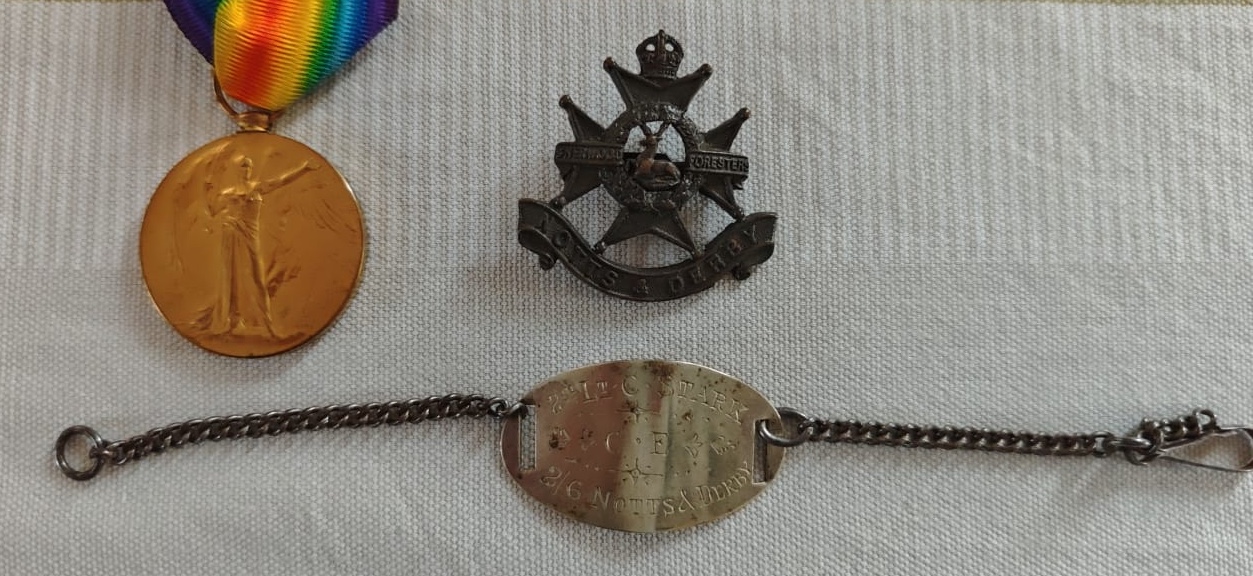
Conrad enlisted into the London Regiment in November 1915 and arrived in France in October 1916 and was posted to the 1/12th (County of London) Battalion (The Rangers). He was later transferred to the 13th Royal Irish Rifles in December 1916. Conrad was subsequently granted a Commission in August 1917 and was attached to the 2/6th Battalion Sherwood Foresters.
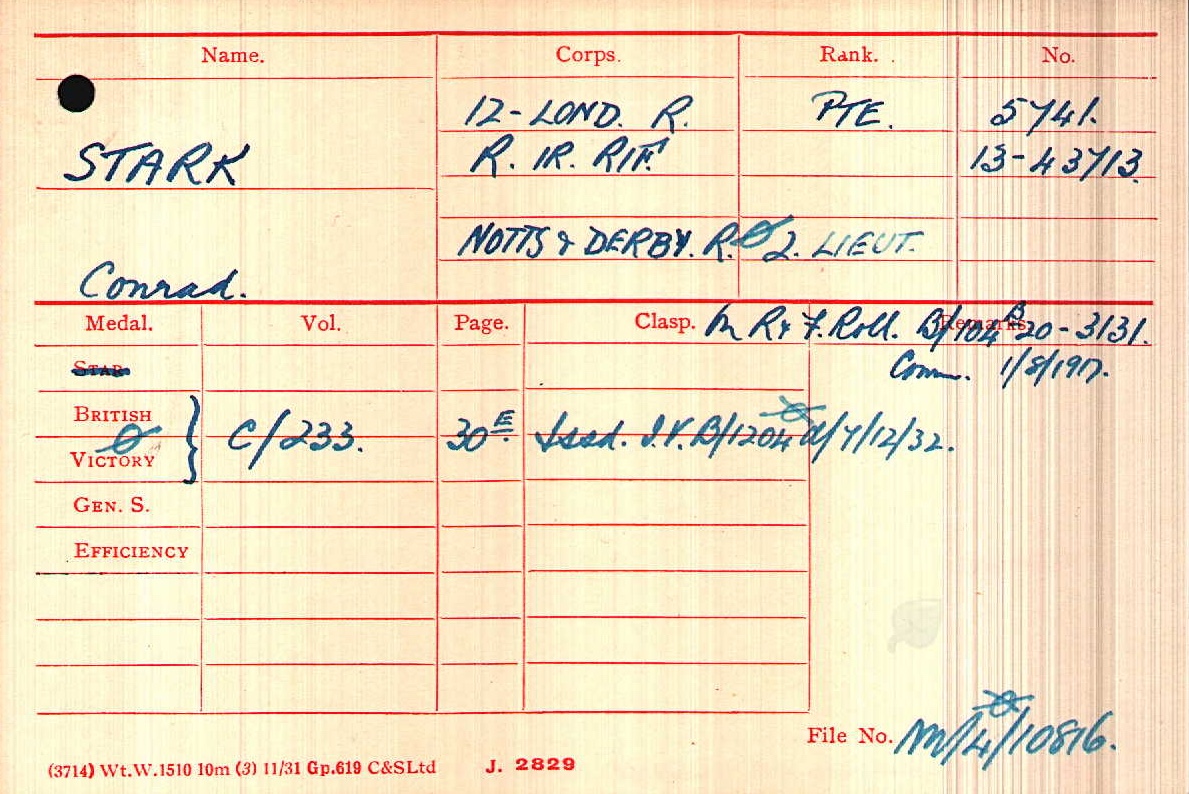

Medal Index Card and Medal Role showing Conrad’s entitlement to the British War and Victory Medals; interestingly his service with the 2/6th Battalion is not recored on the medal roll.
The Kaiserschlacht – March 1918
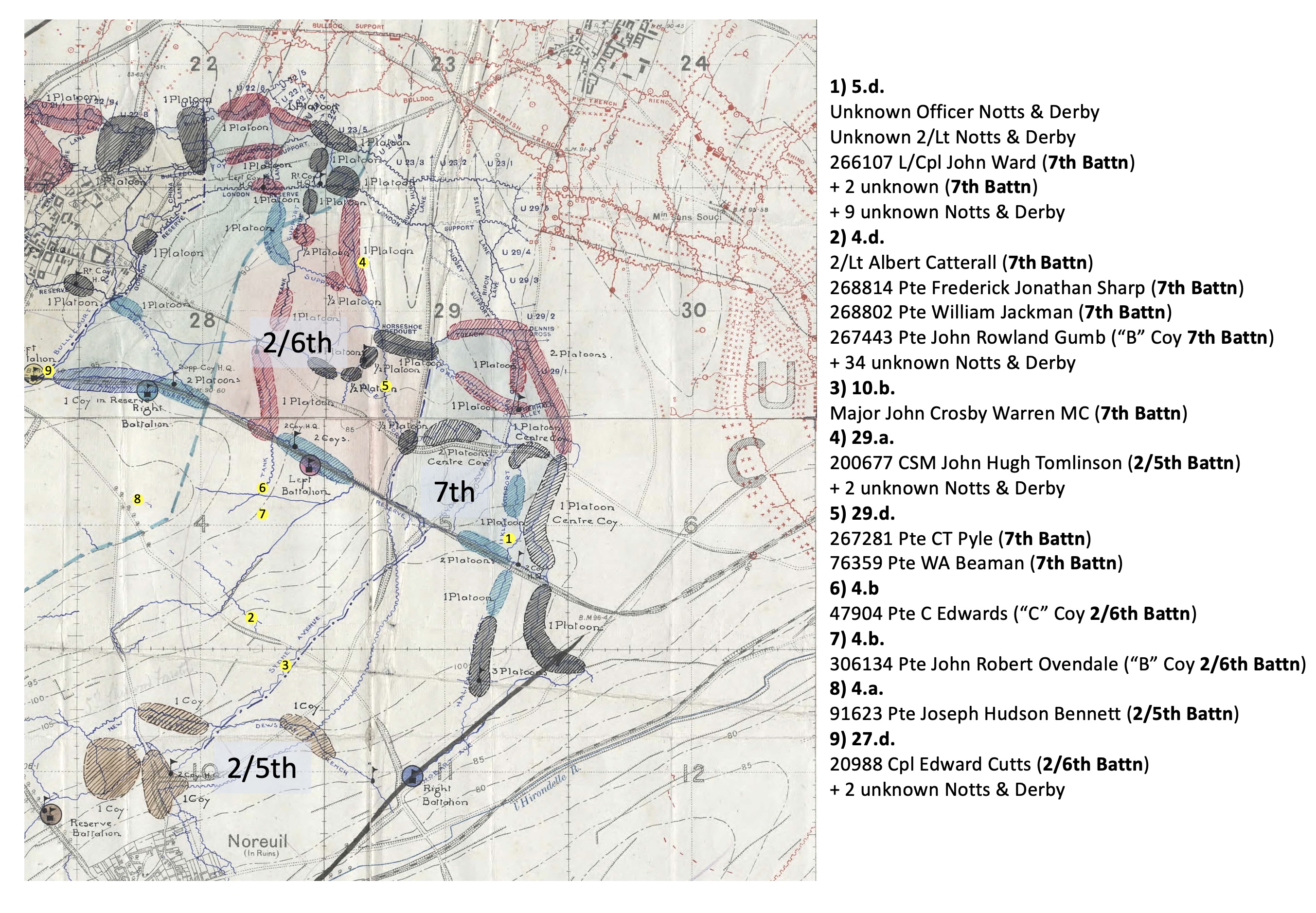
Deployment of the 178th Brigade and locations of the only men whose bodies were recovered after the War
March 19th 1918
“Returned from leave and after walking most of the day eventually reached our transport lines, since leaving same two weeks before, they had moved, hence my trouble in finding same. Had some tea and about five set off for the line, our battalion at the time holding the front line. Had a very stiff job to find same refusing a guide. Walked through several piles of mud & it was raining all the time.”
“Arrived at CHQ [Letter C Company] about 9:30 pm wet hungry and tired, was lucky enough to find Peter (our cook) in good form and soon had a nice meal in front of me, was given no duty that night so managed a decent night’s sleep. Stood to at 0500 & later took a tour of the line, can truthfully say that never had I been in such an impossible or dangerous piece of line to have to hold, the map was useless and we seemed to have posts covering each other.”
“Anyhow as we hoped to be relieved on the Friday I minded very little, still got a pretty good idea of the line during Wednesday March 20th and did two spells of duty, my late one luckily being from 9 p.m. to 11 p.m; during that time heard some weird noises in the enemy’s line, whilst posting a listening post in “No Man’s Land”, reported same to my O.C. on returning; we thought possibly owing to the amount of rain the enemy was repairing his trenches, (next day we knew different). Was informed by O.C. that they had seen movement in enemy lines, also our planes reported guns in the open, still was not much impressed by that as the general impression seemed that they were dummies to draw our fire. Was relieved at 11p.m. and after a cup of coffee turned in; was awakened at 5.10 a.m. to hear the sound of guns going. “Stood to” and soon realised the enemy was shelling our back area very heavily. About 0550 we smelt gas and had orders to give the warning to the men, by this time the shells began to fall occasionally near our own line. It is a beastly feeling being shelled with a gas helmet on.”
“At 06:30 our line was being heavily shelled especially with trench mortars; could stand my gas helmet on no longer. Could not somehow or other get the impression that the enemy was likely to come over. Breakfast was by this time nearly ready but felt precious little need for same.”
“Received orders about 7:30 a.m. to visit Mr. Nuttall’s post [2/Lt Harry Nuttall from Walsall; repatriated in November 1918]. The trench was much knocked about; in places nearly level. Found no men on duty (4 buried) and the entrance to the dugout almost closed, managed to call through to Nuttall and found him alright. Ordered him to post another sentry although I could see the folly of same. Was buried twice on my return journey to CHQ and began to feel a trifle windy; later was ordered to visit the post again; found the sentry again missing, spoke to Nuttall and agreed on the silliness of posting another man; told my O.C. so on returning. It was now nearly 8:30 a.m. and all the time the enemy’s barrage was terrific and “No Man’s Land” was covered with smoke. Could not see 60 yards in front of you. Our trenches by now were quite leveled and the artillery fire was still as intense as ever. At 9.05 a.m. reported the enemy coming over on the 2/5 front [positioned to the rear of the 2/6th Battalion and in reserve near Noreuil]. They were on our right; sent up the SOS signal and knew our own time was coming. About five minutes passed then the enemy advanced on our front.”
“Response to our signals was not great except machine gun fire which was pretty heavy.”
“Collected my platoon and put up as good a show as possible, the mist and dust making accurate shooting impossible. We were very quickly surrounded and our lines became too hot to hold from crossfire. Retired to our support line; shall never know how I reached same untouched, was walking through our own and the enemy’s barrage. Had a great number of casualties whilst crossing. On reaching support managed to put up a show there but was surrounded about 9:40 a.m. and taken prisoner about 45 minutes after the enemy left his front line.”
“Precious little notice was taken of me as I crossed our old line and thence into his lines. The sights on the way were very trying. Casualties were very heavy with the enemy advancing and our troops going back as prisoners. I walked to Cagnicourt and reached the first cage there about 15:30. Had previously spent over 2 hours in a German dug out and was given two cigarettes and some black bread I was quite unable to touch (nearly lost my trench coat here). God spare me such sights again.”
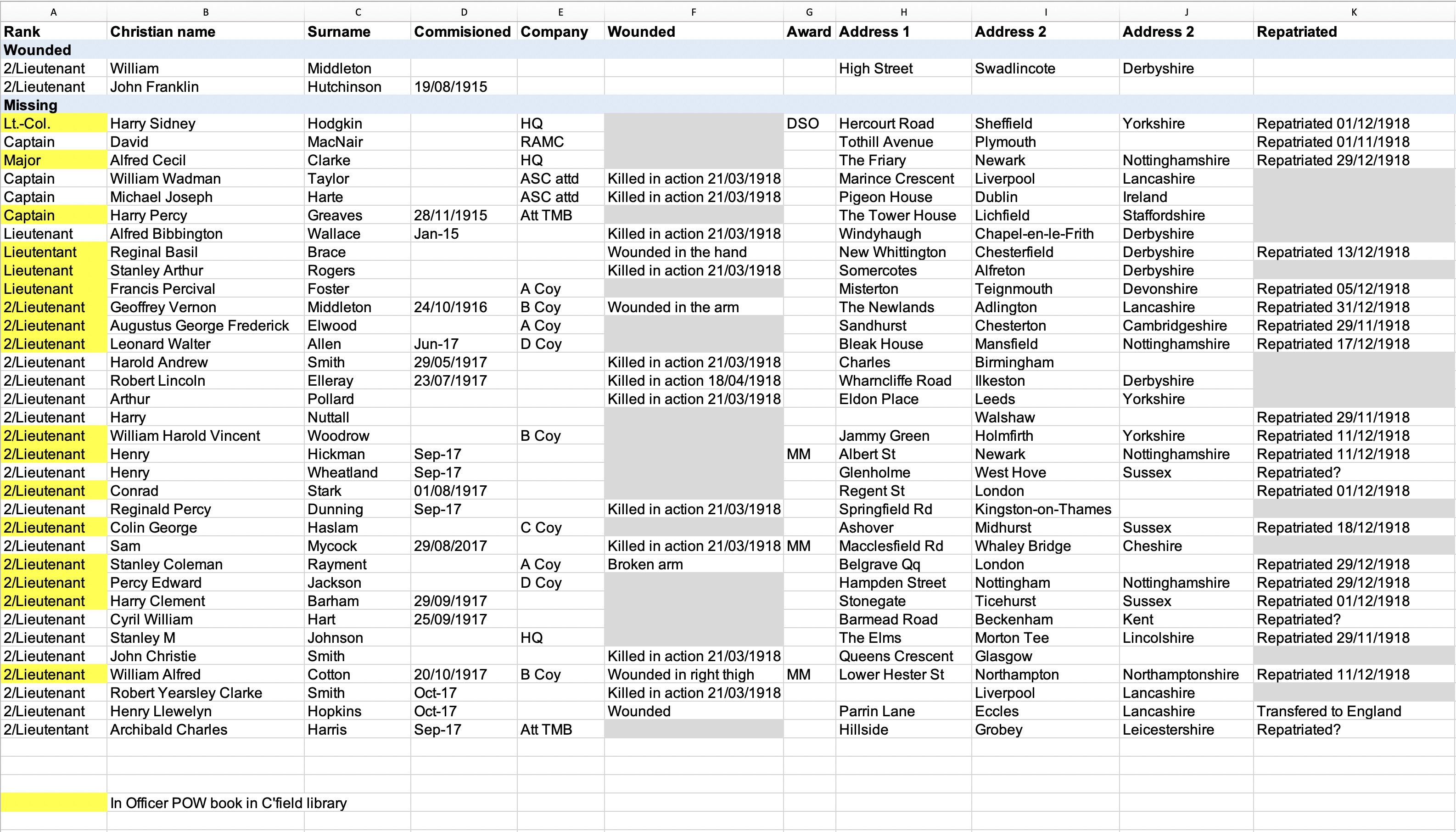
Conrad’s fellow Officers of the 2/6th Battalion that were killed in action, wounded or made prisoners of war
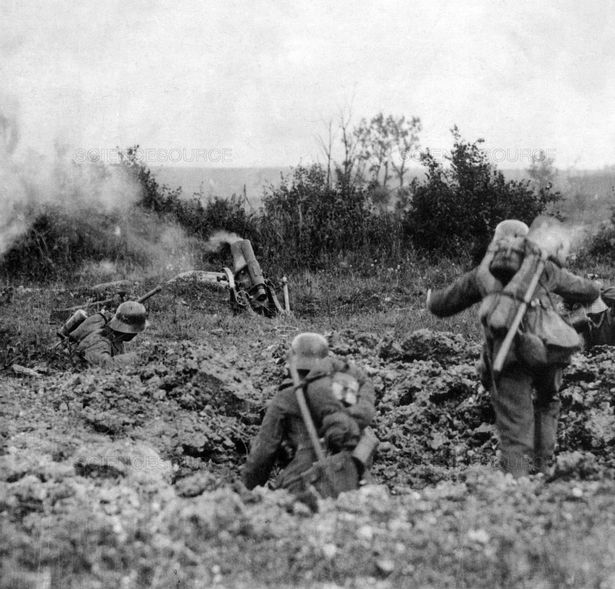
Staged photograph of the German assault
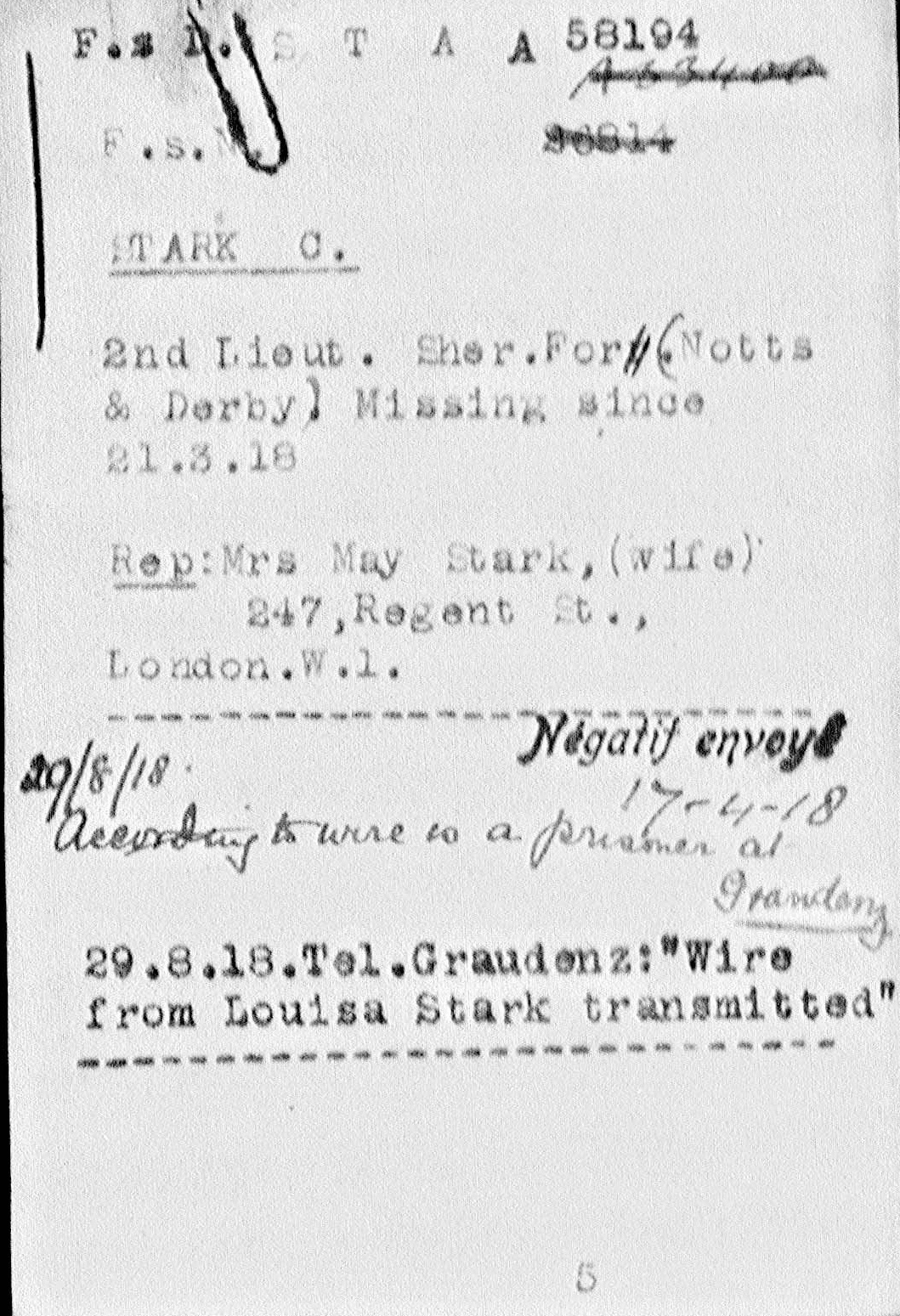
Red Cross enquiry by Conrad’s wife May (who he married in August 1917) with a reference to Conrad’s mother Louisa and a telegraph confirming Conrad’s internment in Graudenz POW camp
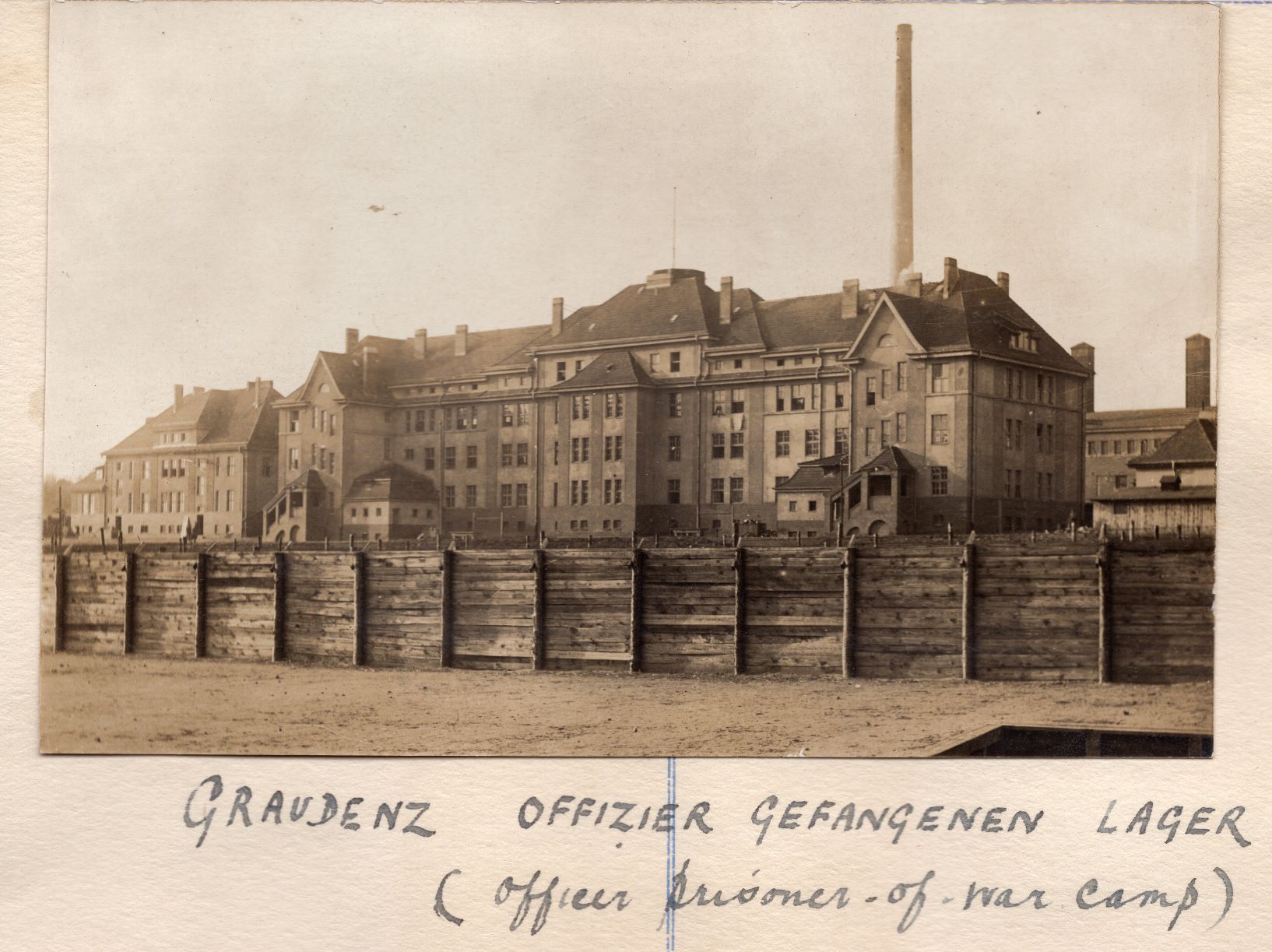
Internment in Graudenz Officers POW Camp 1918
Conrad was interned in Graudenz POW Camp for Officers – see here for more pictures.
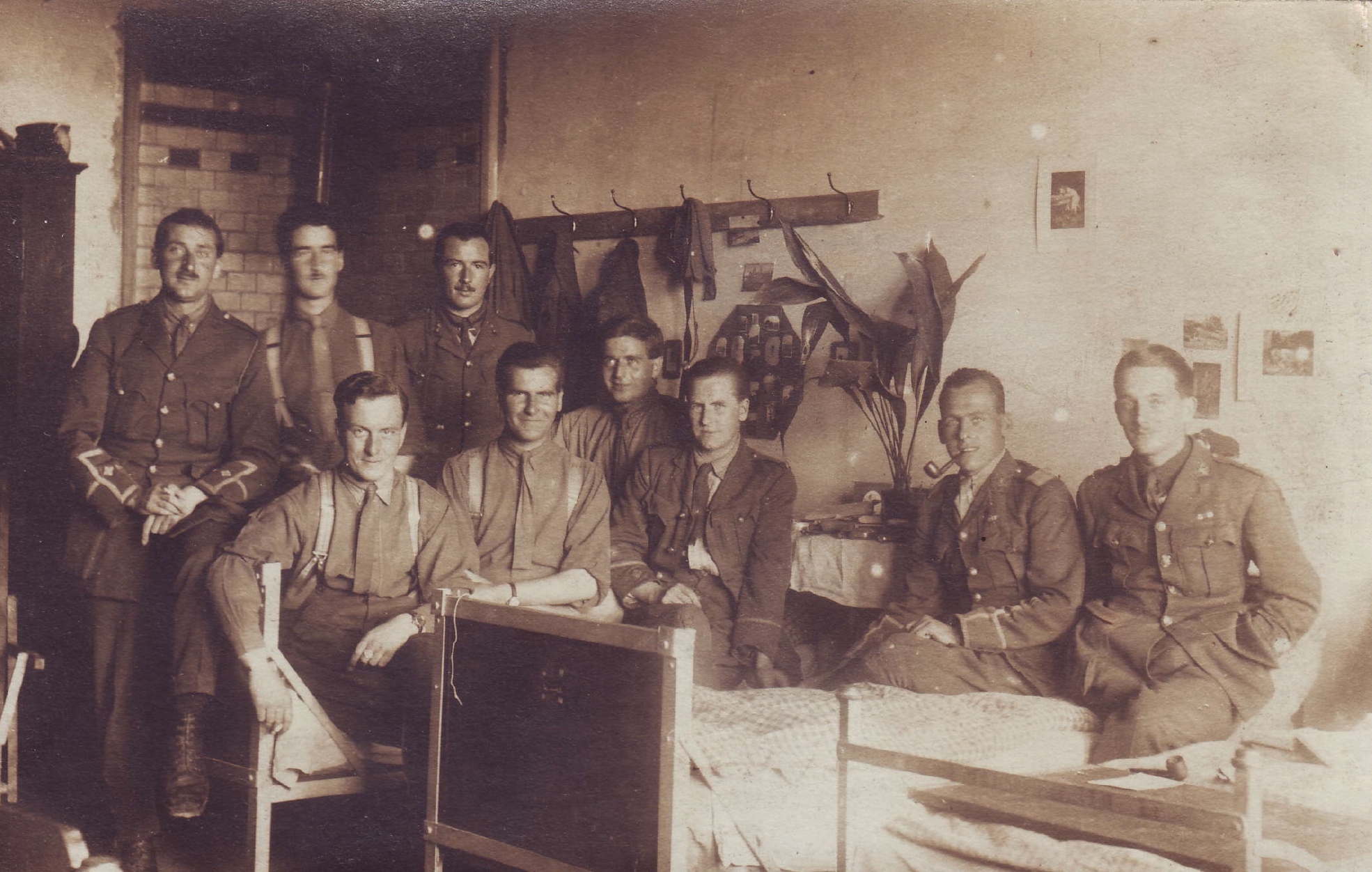
Conrad with a group of fellow Officers in Graudenz POW Camp
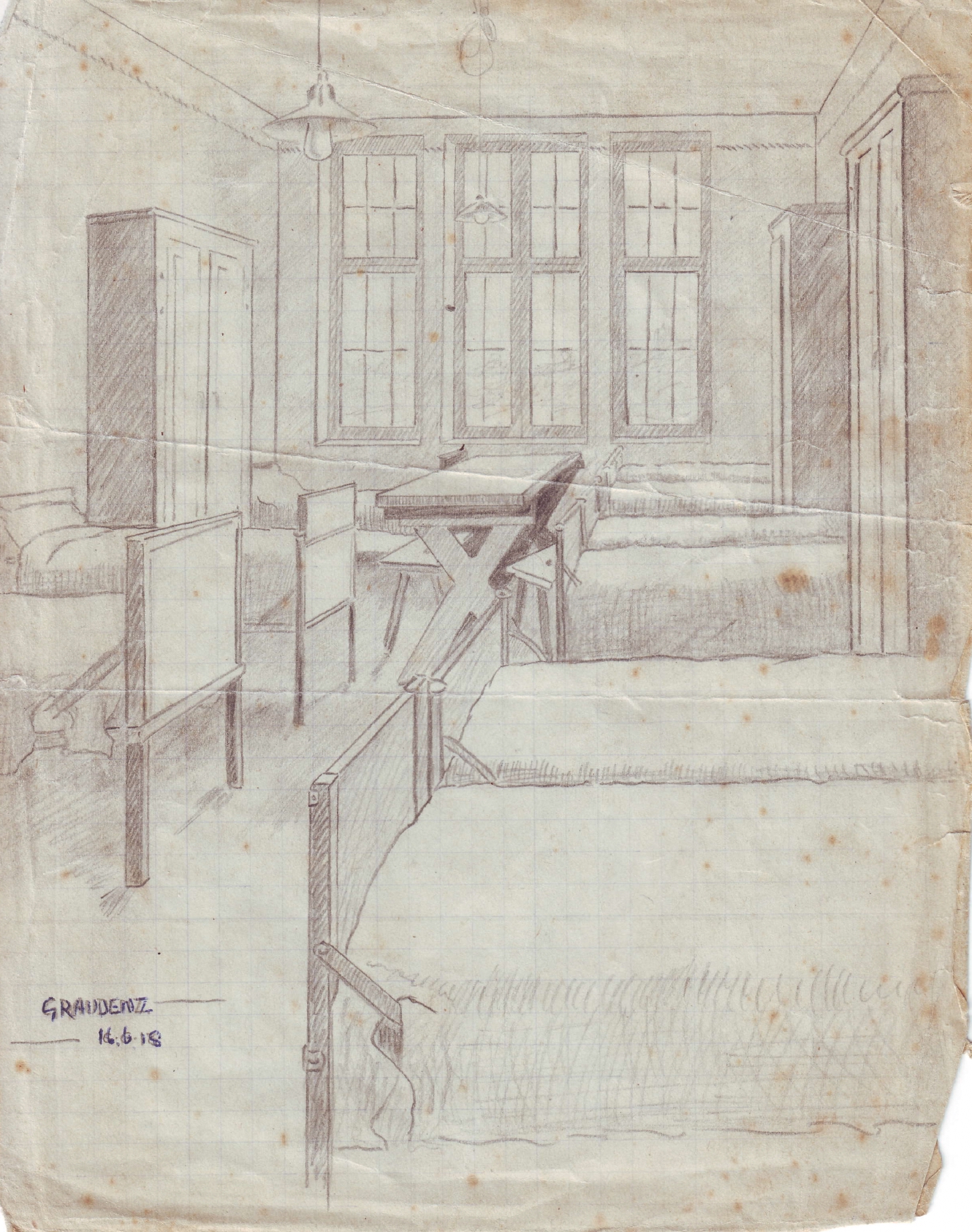
A drawing by Conrad in June 1918 showing the barracks that he was housed in – note the similarity of the beds with the previous photograph
Repatriation in December 1918
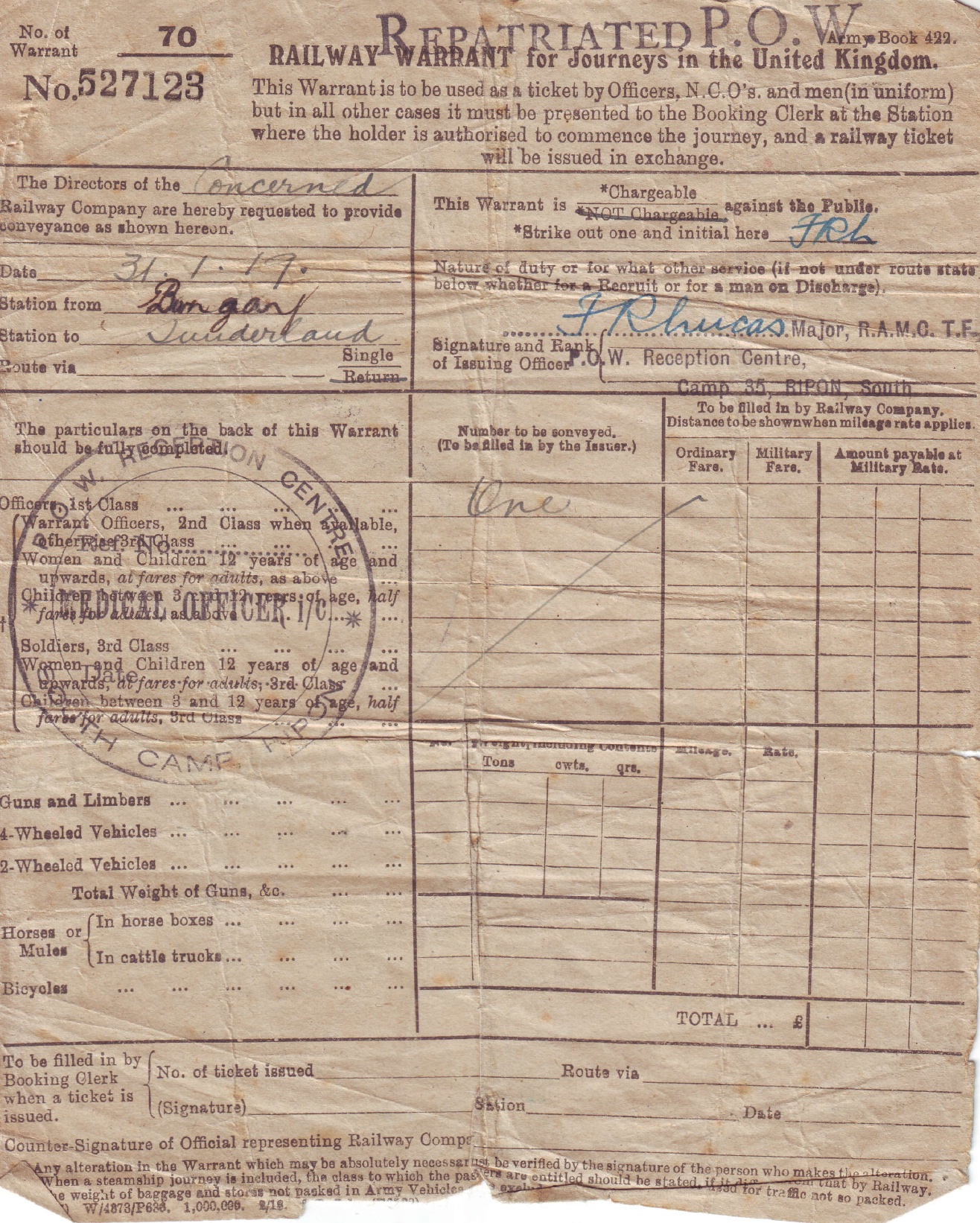
Railway Warrant for Conrad’s journey to Sunderland authorised by the Officer I/c of the POW Reception Centre in Ripon
Following his repatriation from imprisonment and a Court of Enquiry, Conrad wrote the following for a War Ministry Confidential report of 1/9/1919
2nd Lieutenant Conrad Stark C Company 2/6 Sherwood Foresters, 178 Brigade, 59th Division.
Captured at Riencourt, near Bullecourt.
I joined the above unit at place mentioned on returning from leave, 20th March 1918. My company was holding front line position. The enemy attacked on the morning of 21st March 2018 after heavily bombarding our line. My orders were to hold on to same, which I did with my platoon, until enemy entered our trench and took prisoners, myself and what few men remained alive. No other officers were actually taken with me but several arrived at our first stopping place later in the day.
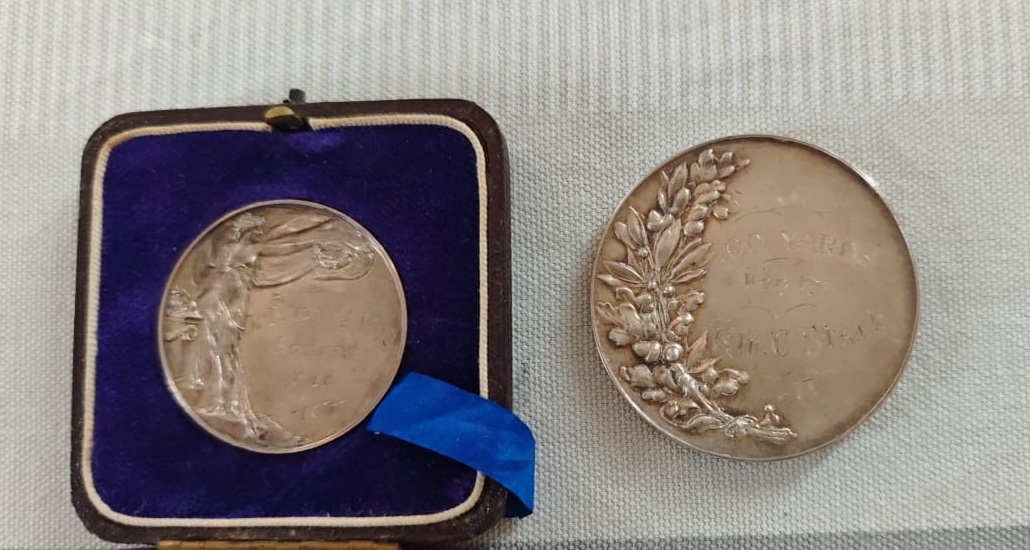
Conrad’s two running medals from Regimental Sports held in 1916 (LRB vs QVR) when he was a Rifleman and before Officer selection in 1917. Before the war he was a well known athlete in London and regularly competed at Crystal Palace


Dear Mike, what a splendid piece of work you have done. You have my eternal gratitude for bringing this to a broader audience and for the additional research and information you have undertaken and recorded. Please feel free to utilize the balance of Conrad’s diary in any future articles.
With my warmest regards,
Jonathan.
Thanks Jonathan – really glad you like it. I will definitely make use of the rest of the Diary. It’s my intention when I retire (in 3 odd years) to write the History of the 2/6th Battalion because it doesn’t really exist – well there was 50 odd copies made – I’m lucky to have one – and it stops after the Easter Rising. cheers Michael
Dear Mike,Many thanks for sharing this. Really interesting account. You might recall I’m writing a history of 59th (2nd North Midland) Divisi
Hello Nigel. I have the full transcript of my grandfather Conrad’s diary, which mainly chronicles his time in Graudenz as a POW after 21st March, if it would be of interest to you.
Hello Nigel – oh yes I remember now. Im hoping that when I retire in 3-odd years that I’ll start on a history of the 2/6th….perhaps
best wishes
Mike
Hi Mike,You definitely should. For me reading, archive work and writing is one of the most enjoyab
that is the most wonderful, interesting and poignant report. He seems to cover the entire war in a brief format. Conrad was clearly an exceptional man.
I’m pleased he survived the war.