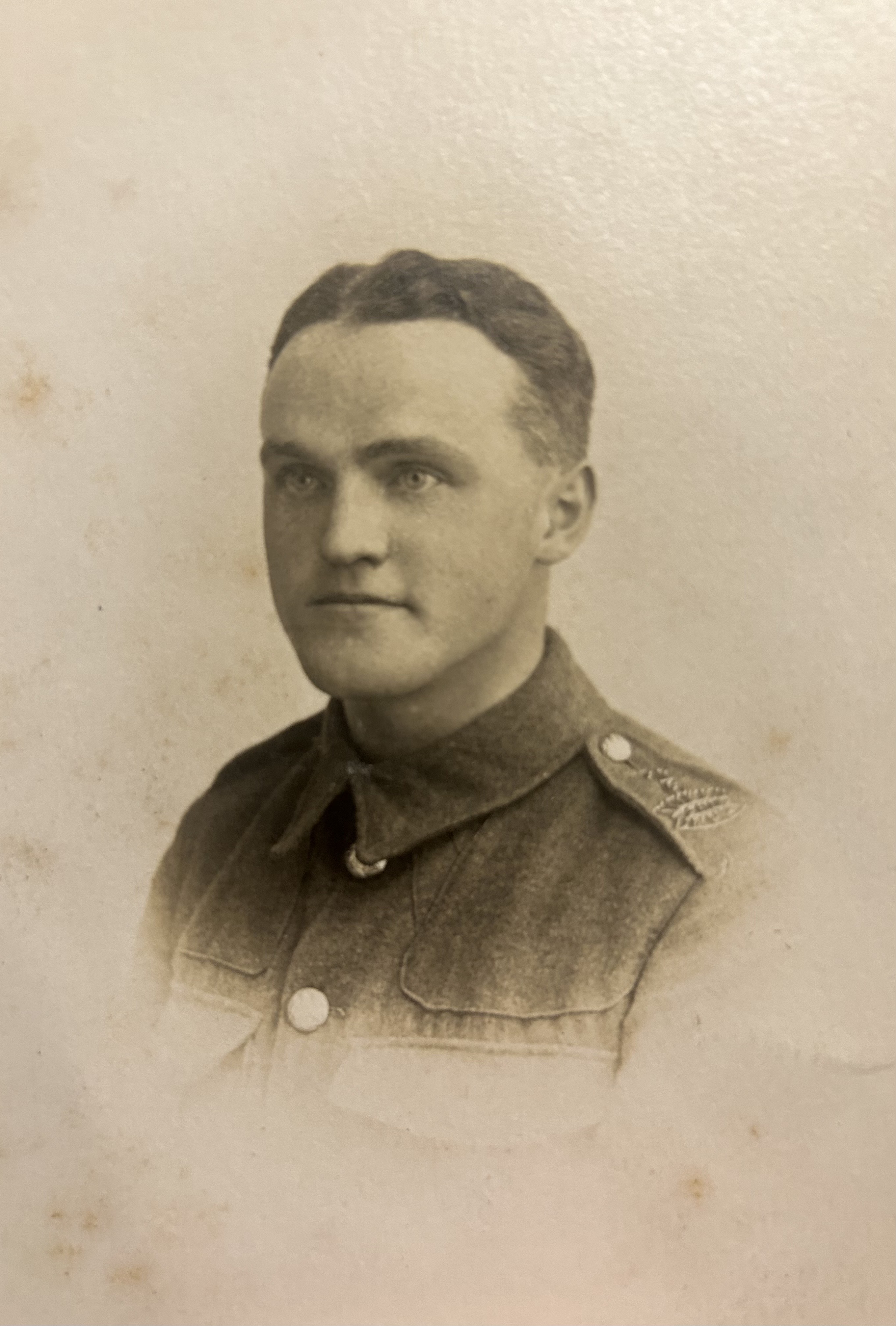
Enlisted in October 1914 and arrived in France with the 11th Reinforcement in June 1916. Served with A Company and was wounded and captured during a trench raid on the Talus in July 1916.
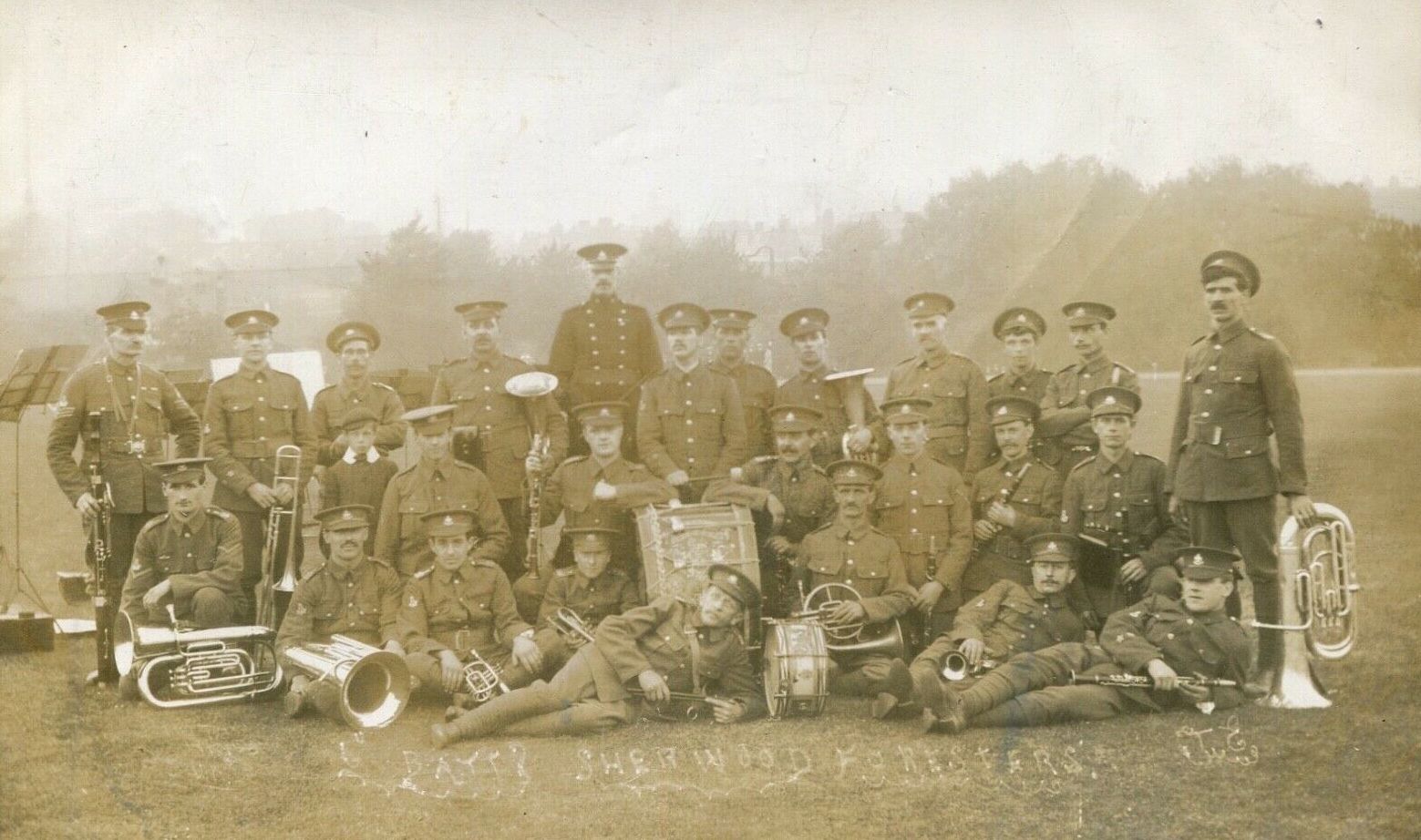
Many thanks to Ken Holmes for sending this picture
It is unclear whether Franks was killed on the raid or died as a POW; however, it would appear from the “Nachlassliste’ that he was killed during the raid and his body was not recovered and buried.
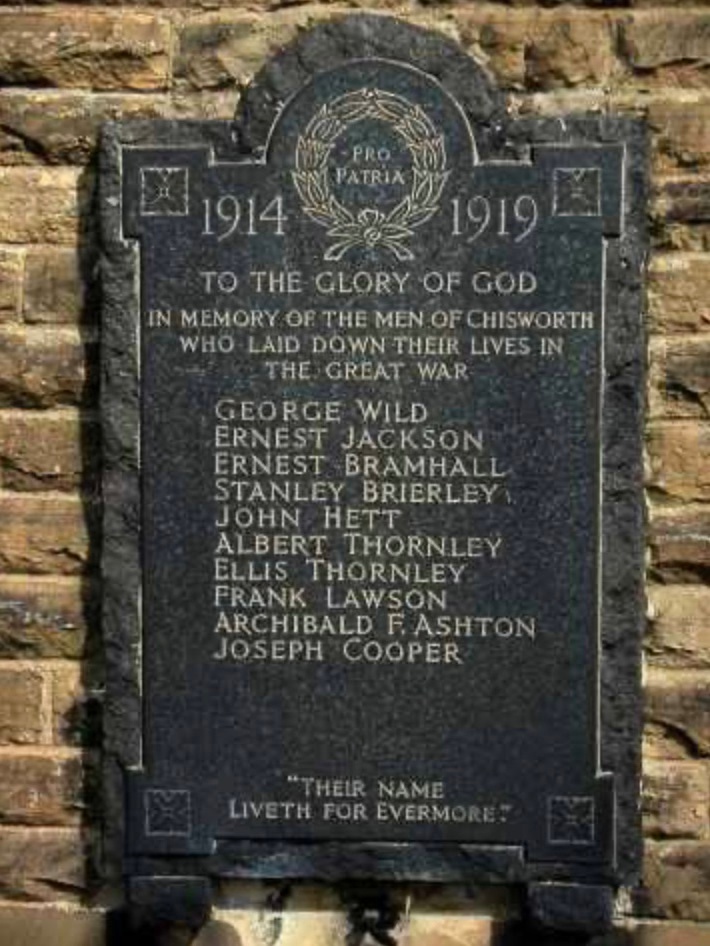
241743 L/Cpl Archibald Frank Ashton with a gun shot wound in the thumb. Entrained at Grevillers from a casualty clearing station and detrained at Etaples. Born in 1896 and was an insurance clerk from Chisworth in Derbyshire. He enlisted in Manchester in December 1915. Served with C Company and later died as a prisoner of war at Meschede POW camp on 21st June 1918 aged 23. He is buried in Niederzwehren Cemetery, Stadtkreis Kassel, Hessen, Germany and was the son of John Albert and Lavinia Ann Ashton of 65 Fatting Hay in Chisworth.
LEAD Technologies Inc. V1.01
70788 Pte John Robert Lister. An early member of the 1/8th Battn (3994) and arrived in France on 27th October 1915. He was later transferred to the 1st (70788), 2/6th and 15th Battns. Disembodied 7th April 1919. He was gassed on the 3rd December 1917 and entrained from Achiet-le-Grand (45th and 49th Casualty Clearing Stations). Later served with the 1/5th Battalion.
12901 Pte Anthony Fallowfield suffered a shrapnel wound to his neck, neck and knee. Entrained from Achiet-le-Grand on the 4th December. Original enlisted into the 9th Battalion and arrived in the Balkans on 1st July 1915. Later served with the Northumberland Fusiliers, Machine Gun Corps and Royal Engineers.
240770 Pte Ernest Longden suffered a shrapnel wound to the wrist and entrained from Achiet-le-Grand on the 4th December. Enlisted in October 1914 and later served with the 8th Battalion.
22630 Pte John Bland from Pleasley and suffered a shrapnel wound to the head and was entrained from Achiet-le-Grand on the 4th December. Enlisted in January 1915 aged 34 he was transferred to the 2/6th Battalion in August 1917. Later served with the Labour Corps.
240972 Pte John George Southam from Wirtksworth and enlisted in October 19145. Suffered gun shot wound in the shoulder. Entrained Achiet-le-Grand on 3rd December 1917 and detrained at Etaples. Later served with the 8th Battalion.
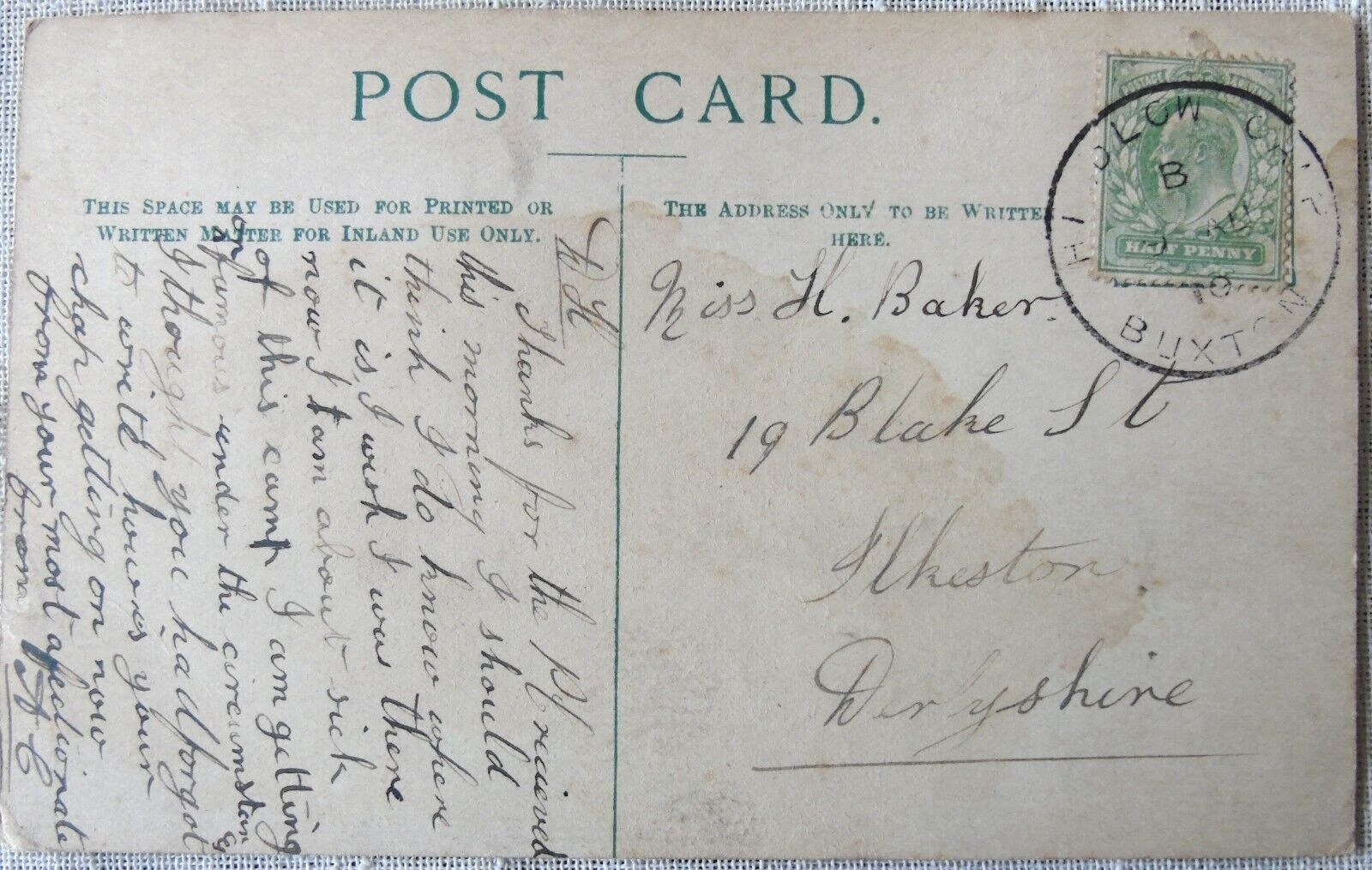
A post card written and sent from the 1910 Camp at Hindlow (near Buxton)
“Dear H
Thanks for the PC received this morning. I should think I do know where it is, I wish I was there now I am about sick of this camp. I am getting on famous under the circumstances. I thought you had forgot to write however your chap getting on now. From your most affectionate.
From AC”
We will never know the identity of ‘AC’. Hatty was born in September 1890 and married Charle Wheatley in April 1911 and their daughter Mariam (1911-1985) was born in August 1911. Hatty died in August 1979.
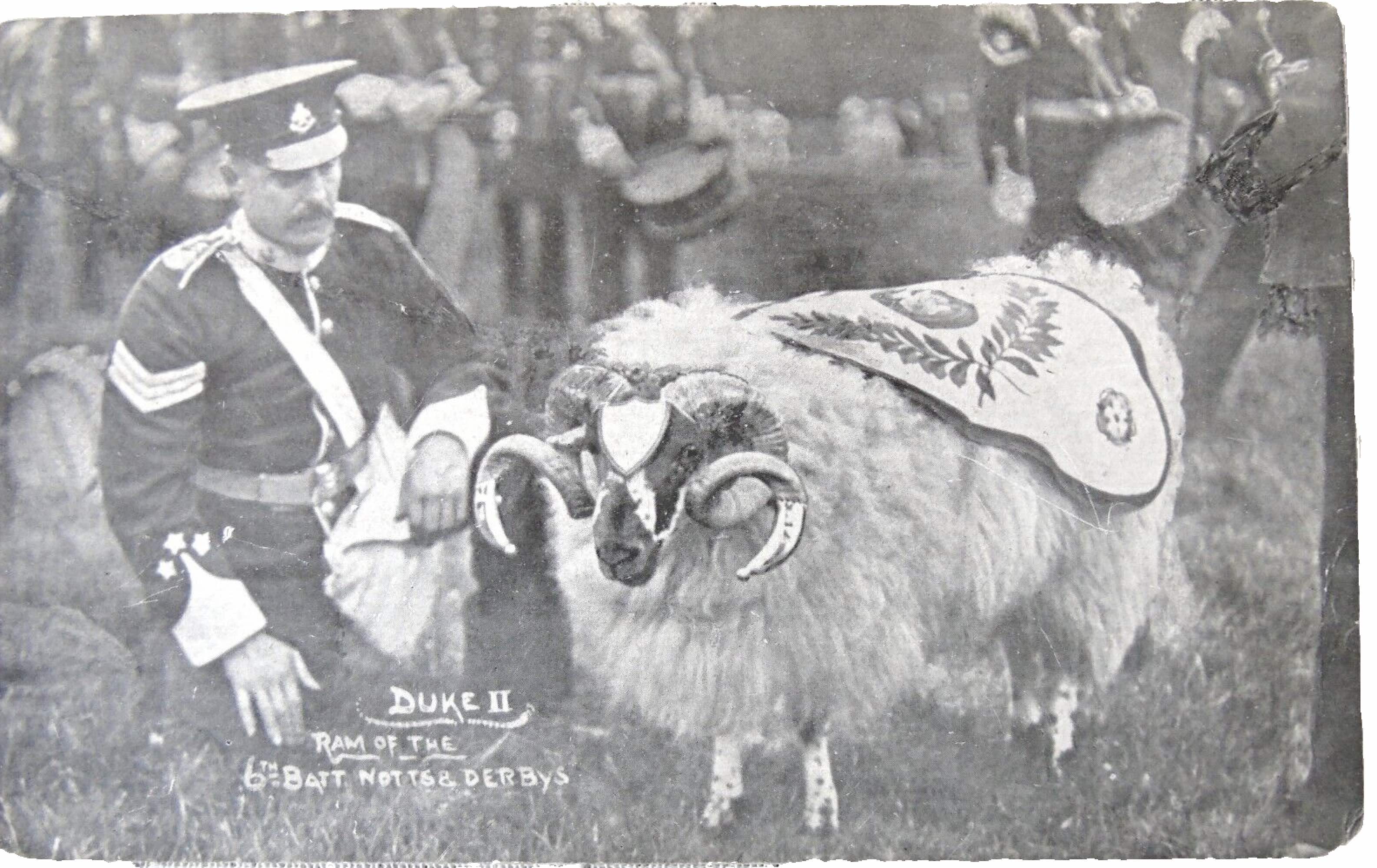
Interestingly, the Ilkeston address would suggest that ‘AC’ served in the 5th Battalion, but the card is of the 6th Battalion…..we’ll never know…….
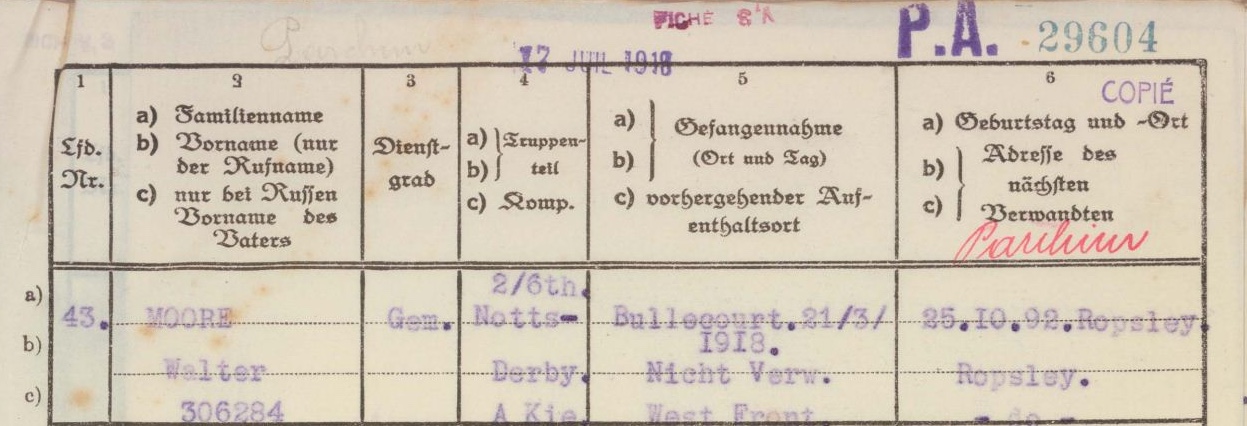
Enlisted in June 1915 and served with the 2/8th and 2/6th Battalions. Made a POW on the 21st March 1918.
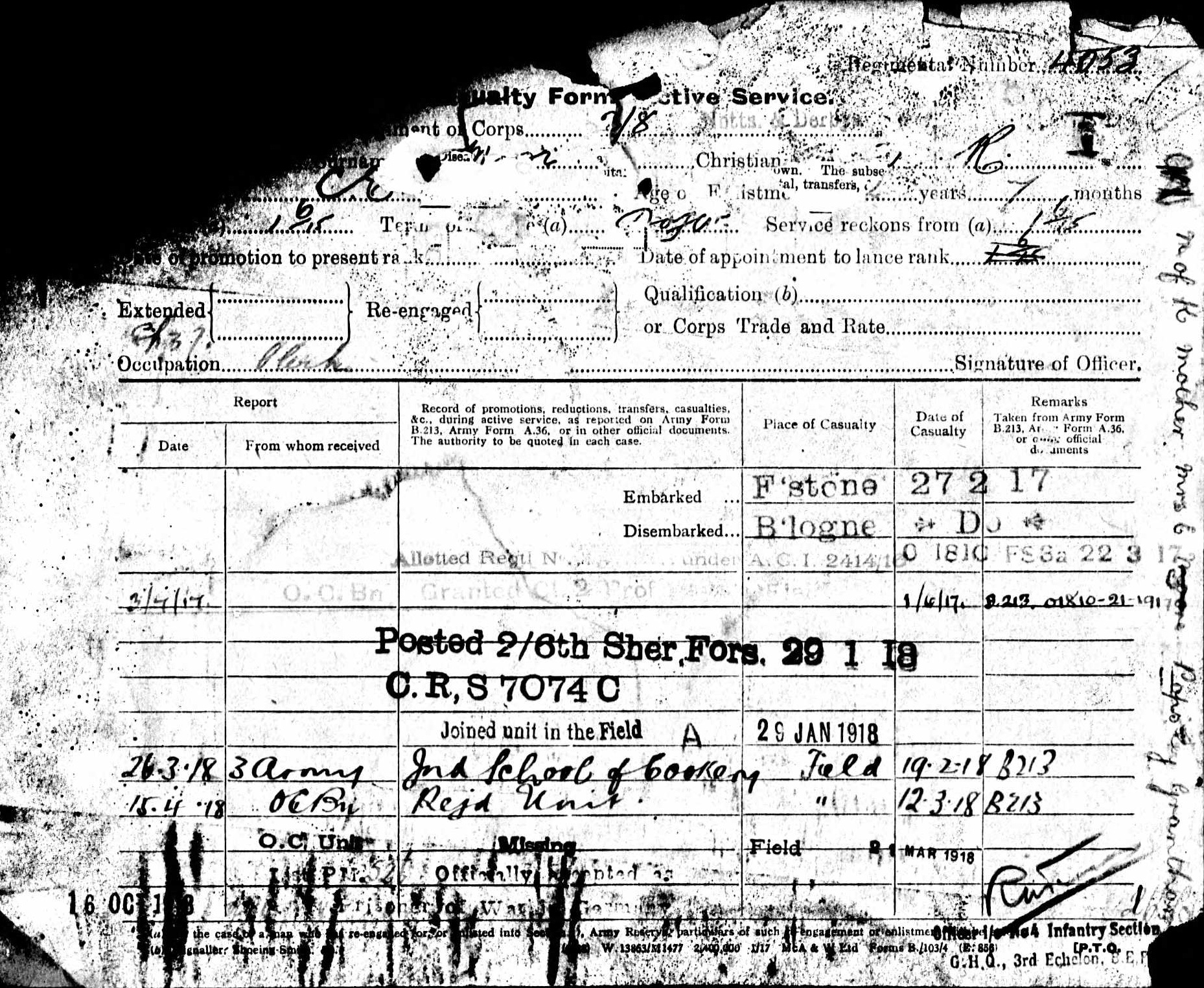
Walter enlisted in Newark into the 8th Battalion on the 1st June 1915 and was issued the service number 4053. It would appear that he was posted to the 2/8th Battalion because he received dental treatment at Watford in November 1915.
Walter would have served in the Easter Rising in April 1916, before embarking to France with the 59th Division on 27th February 1917. He received his 6-digit number (306284) in March 1917.
On the 29th January 1918, Walter with 5 Officers and 142 Other Ranks were transferred to the 2/6th Battalion – see here. In February 1918 Walter attended a school of cooking before returning in March, just several days before the start of the ‘Kaiserschlacht’ – the German Spring Offensive on 21st March 1918.
Walter was serving with “A Company” when was he captured and was interned in Parchim POW camp. He was finally disembodied in March 1919.
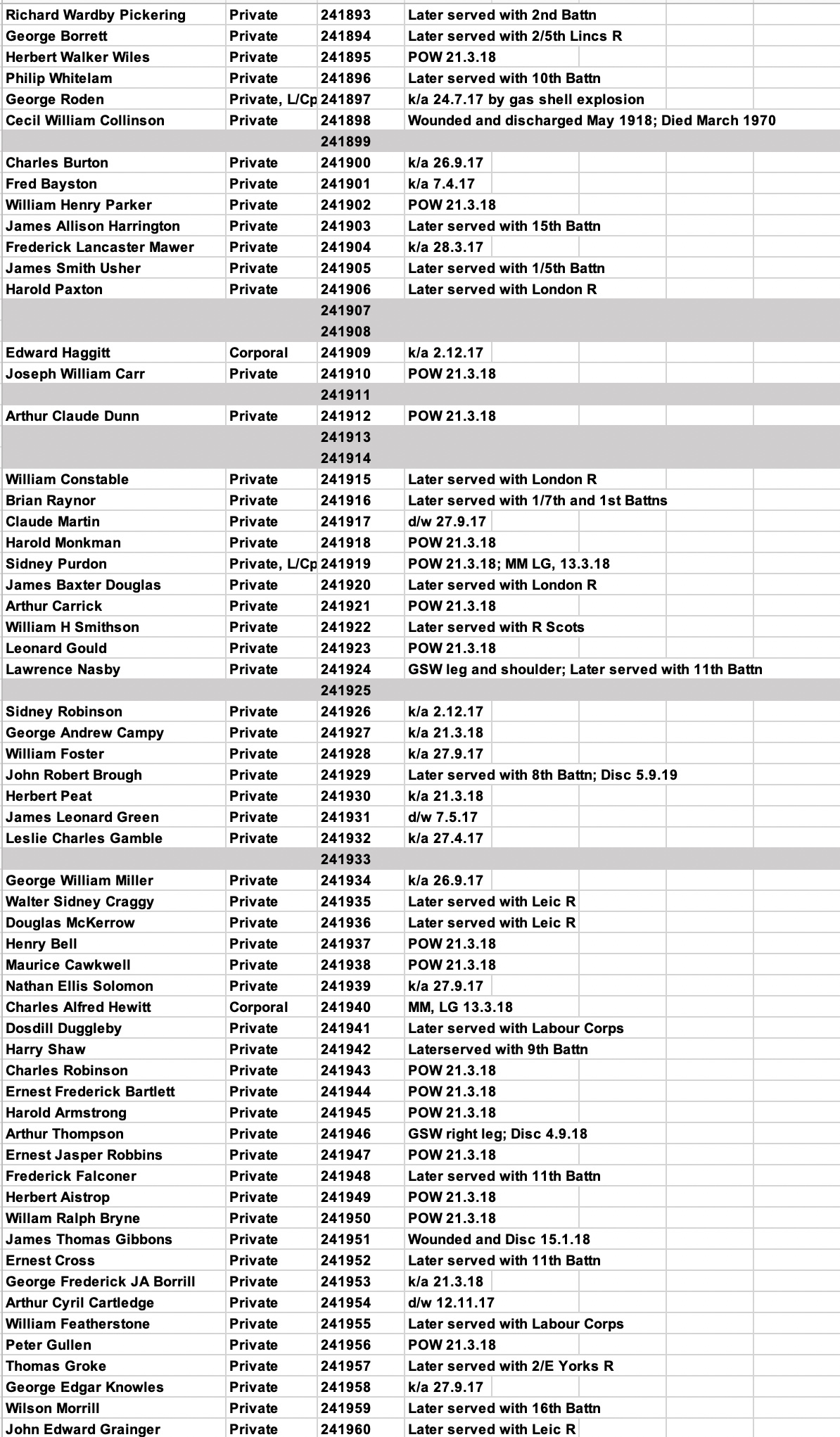
On the 10th May 1916 approximately 68 men from the Hull area (some who had previously served with the E Yorks R) were (directly?) transferred to the 2/6th Battalion Notts & Derby – I don’t think that they went via the 3/6th (based on records for 2/8th men at the same time).
They were numbered from 241893 to 241960.
I have been able to identify and trace the fate of 60 of these men.
23 men (38%) were transferred to other Battalions and/or Regiments.
13 men (22%) were killed in action or died of their wounds.
21 men (35%) were made prisoner of war on the 21st March 1918.
3 men (5%) were discharged due to wounds received.
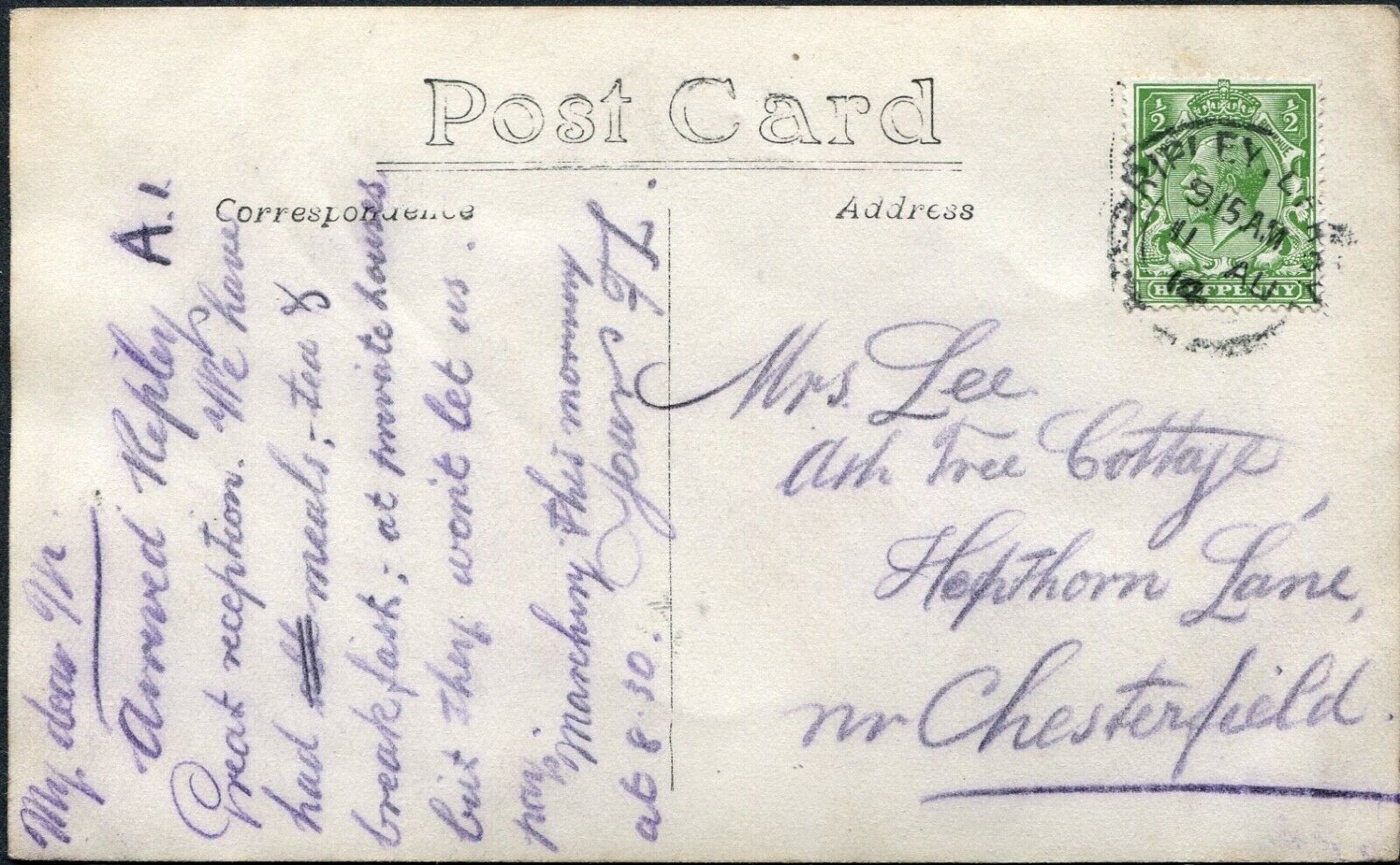
“My dear Ma. Arrived Ripley. Great reception. We have had meals, teas and breakfast at private houses, but they won’t let us pay. Marching this morning at 8.30. Yours FL”
I thought I’d share this little story with you, which I found in looking through the WW1 pension records – two sets that is!
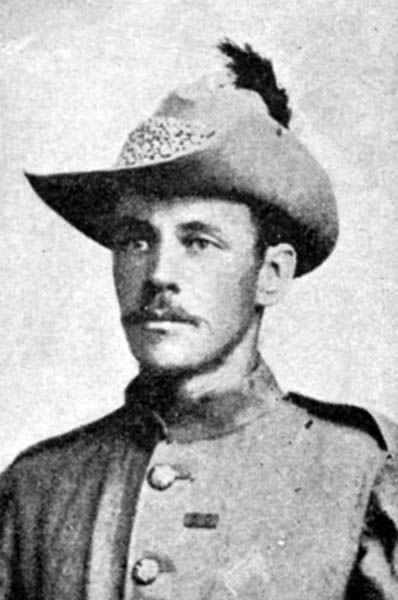
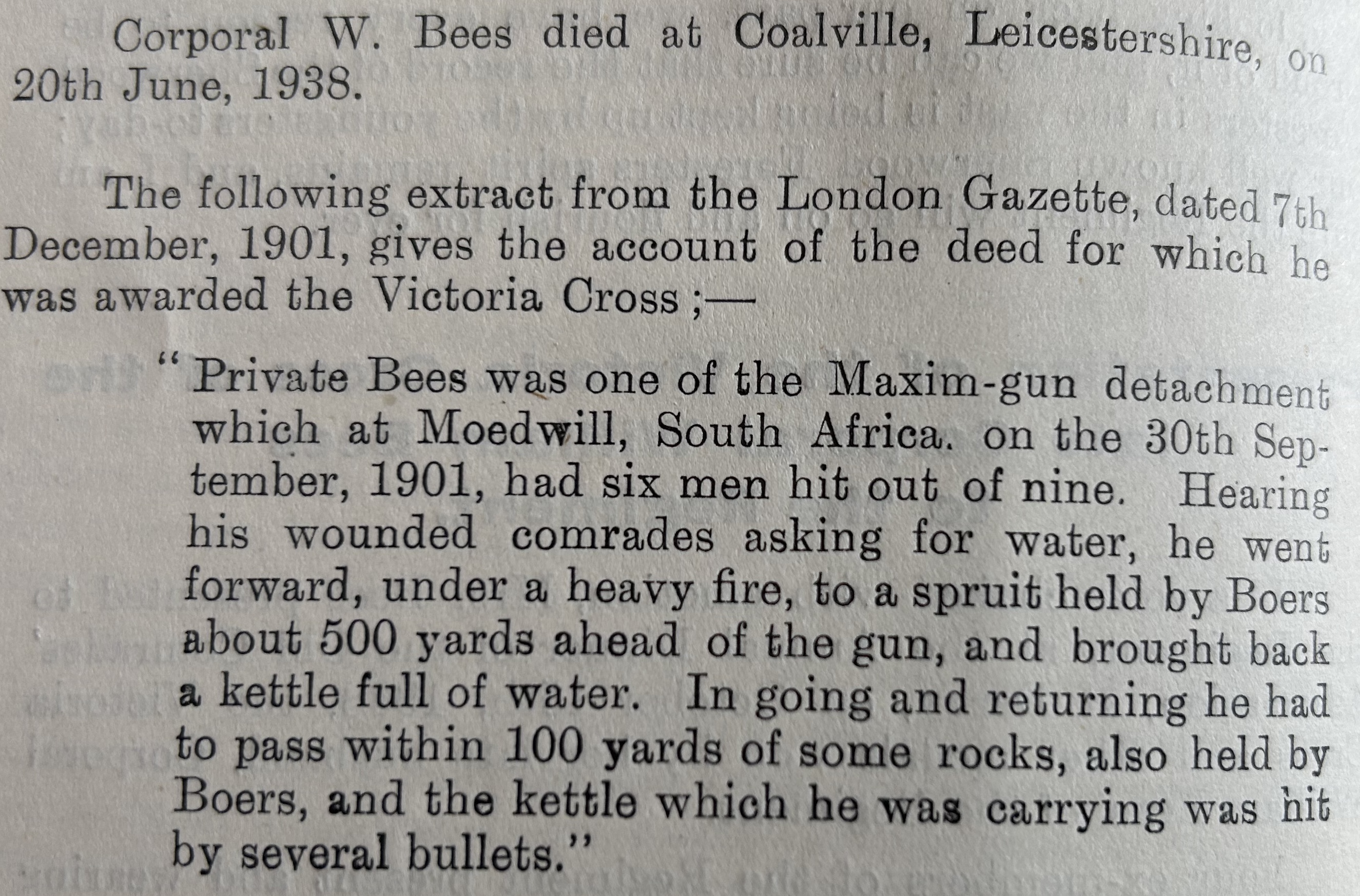
2753 Private William Bees was serving with the 1st Battalion Derbyshire Regiment (Sherwood Foresters) when he won the Victoria Cross in 1901.
The citation reads:-
“For most conspicuous bravery and devotion to duty. On 30th September 1901, at Moedwil, South Africa, Private Bees was one of the a Maxim-Gun detachment which suffered heavy casualties, six out of nine men being hit. Hearing his wounded comrades asking for water, Private Bees went forward under heavy fire to a spriot held by the Boars about 500 years ahead of the Gun, and brought back a kettle filled with water. In going and returning he had to pass within 100 yards of some rocks also held by the boars and the kettle he was carrying was hit by several bullets”
A truly brave man……..but what a rogue.
On 2nd October 1914 he enlisted in the Sherwood Foresters aged 42 years and was posted to the 12th Battalion. He was formerly discharged on 27th October as medically unfit.
On the 19th October 1914 (8 days before he was discharged) he enlisted in the Royal West Surry Regiment in London aged 31 years and was posted to the 7th Battalion. He was found to be “totally inefficient and unreliable” and on the 11th November he was issued a weeks leave to secure civil employment before discharge.
He remained absent and had left a false address with the battalion. Finally the police were able to trace him to Coalville and on 9th December the Leicestershire Constabulary paid him a visit. On being told he was going to be arrested he produced his discharge certificate from the 12th Sherwood Foresters and told the police he would be “found at this address if there were any orders for him”. They left.
And the Army did not know what to do with him………
On the 17th December the OC 7(S) Battn The Queens requested that Sergeant Bees should be discharged because “he is a very undesirable type”.
On the 21st December the OC 55th Division submitted the matter for the decision of the GOC 18th Division.
On the 19th January he was discharged under para 392 (XI) KR – For Misconduct.
And the best bit!
On his Attestation to the Royal Surrey Regiment, when it asks he has ever been rejected as unfit – he put YES, then crossed it out and put NO!
I had a little chuckle.
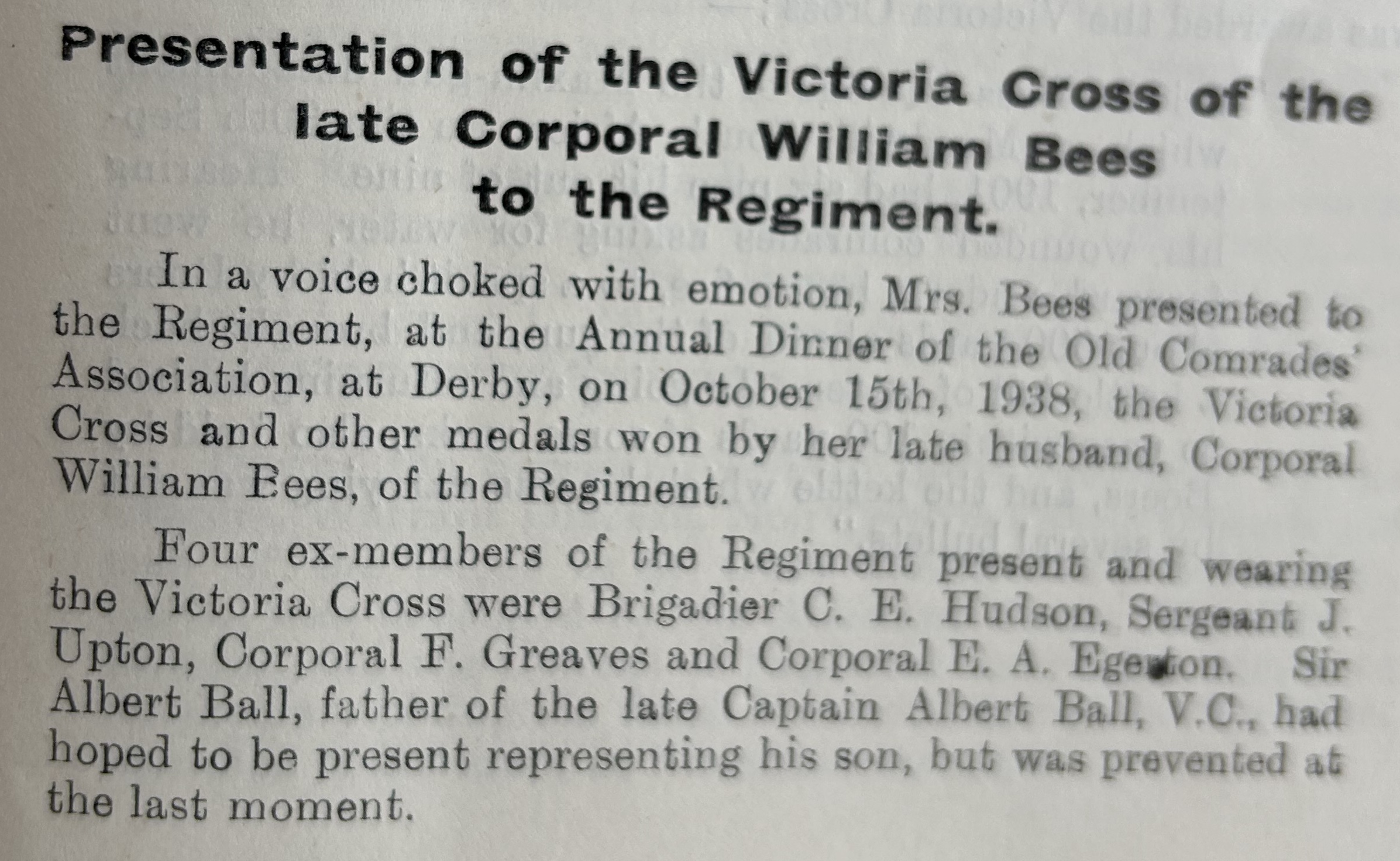
His Medals were later gifted to theRegiment at the Annual Dinner of the Old Comrades Association in October 1938.
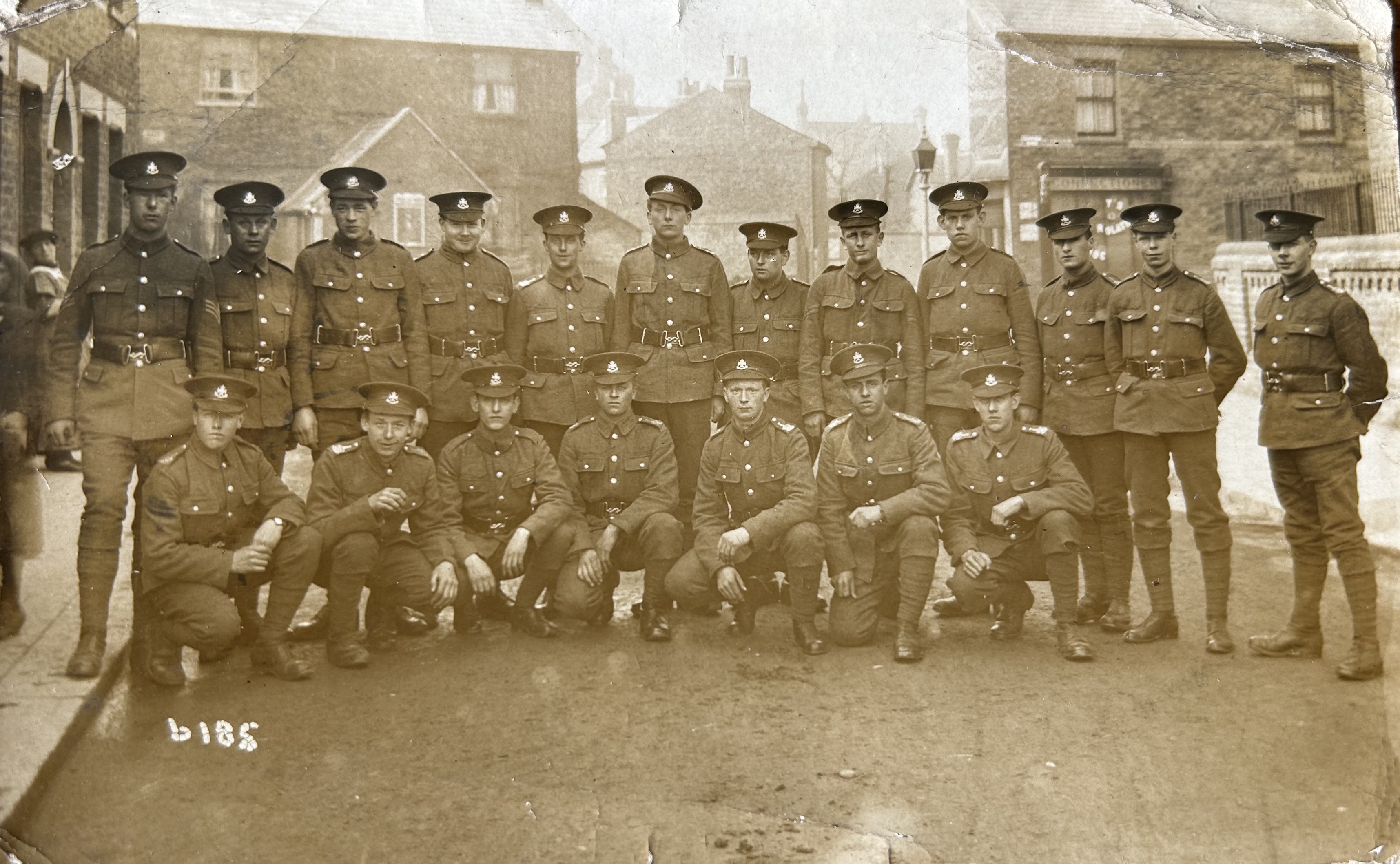
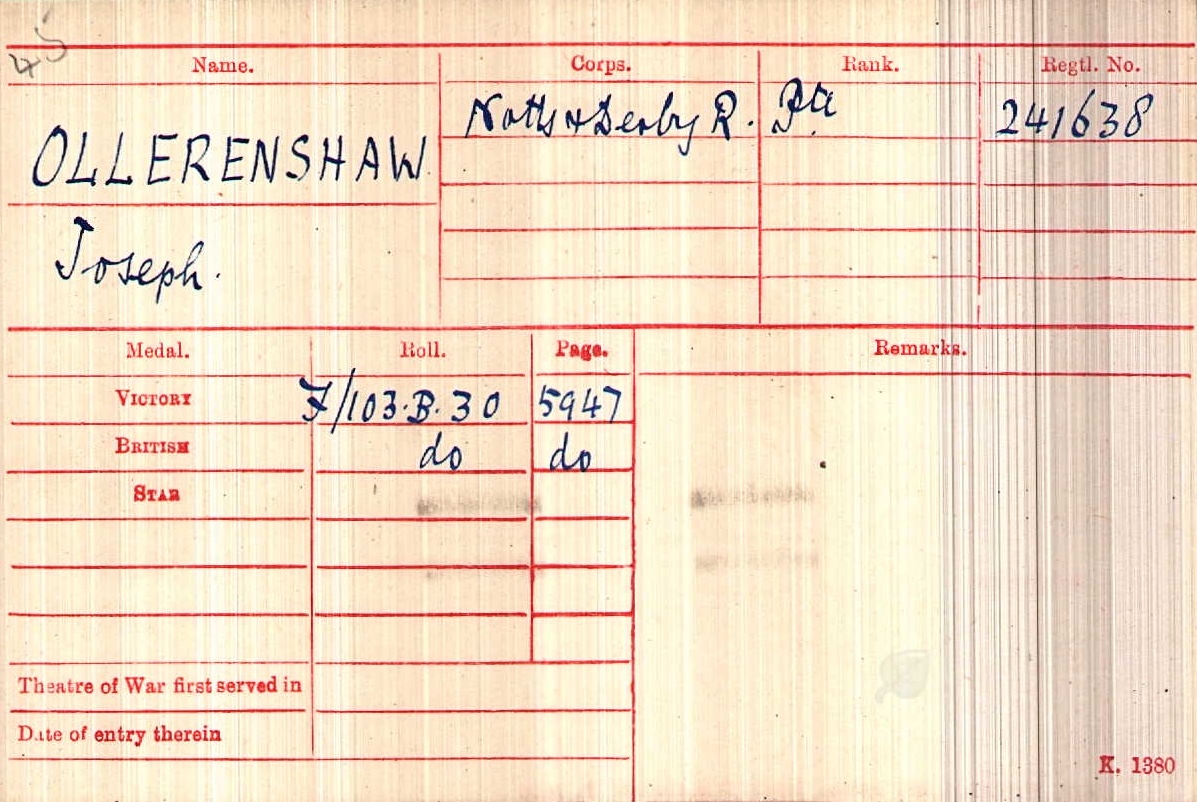
Joseph Ollerenshaw was born in 1895 in Bradwell in the High Peak. In the 1911 Census he is recored as living at Stumperlowe Grange Farm in Fulwood and was a farm worker.
Joseph enlisted into the 3/6th Battalion in December 1915 and was subsequently transferred to the 2/6th Battalion. His 4-digit Territorial number was 4685.
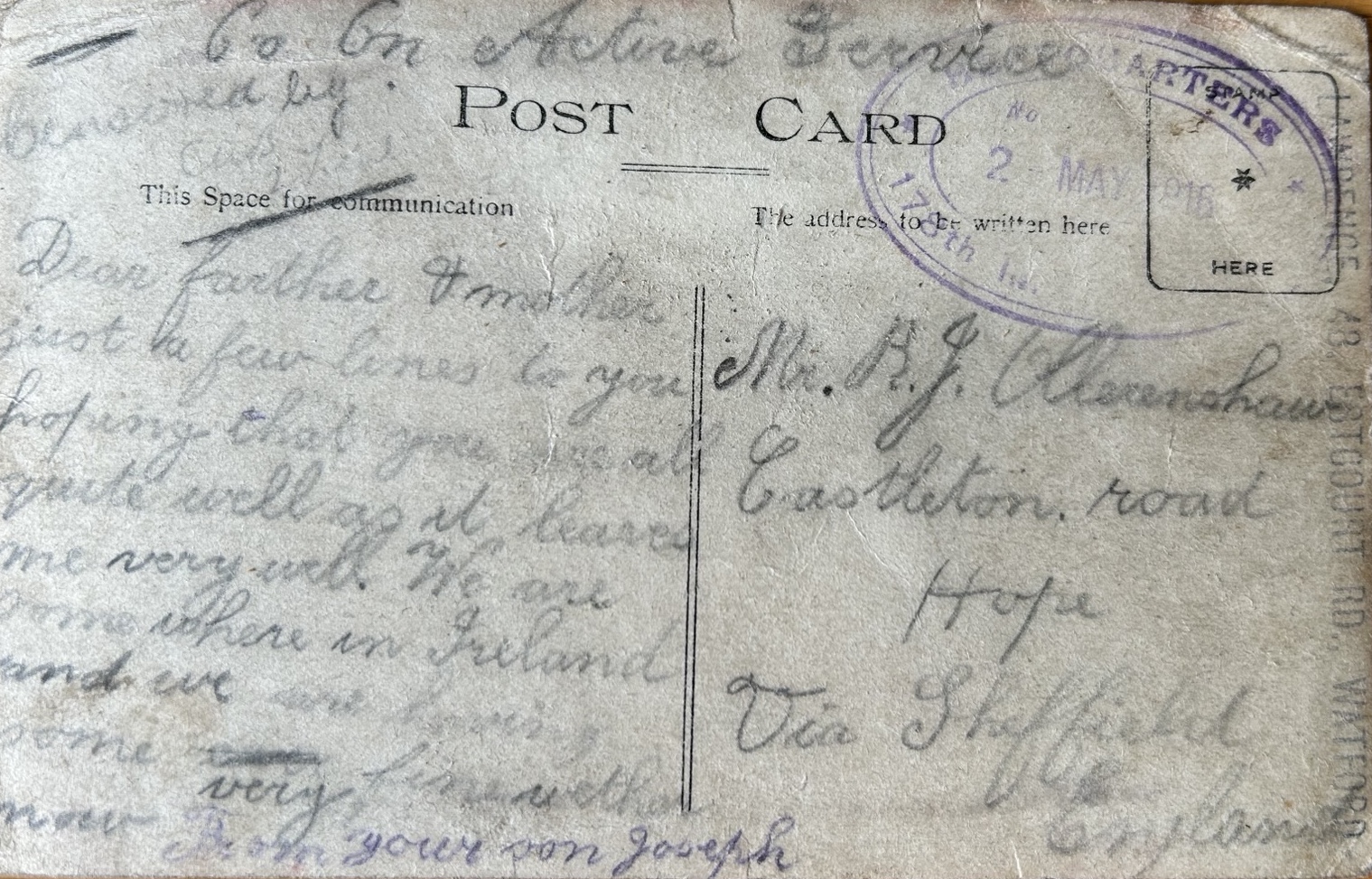
Joseph was serving with the 2/6th Battalion, 178th Brigade, 59th Division when it was sent to Ireland in response to the Easter Rising in 1916.
“Dear father & mother just a few lines to you hoping that you are all quite well as it leaves me very well. We are somewhere in Ireland and we are having some very fine weather now. From your son Joseph”
Joseph proceeded to France with 59th Division in early Spring 1917.
At some point Joseph transferred to the 10th Battalion, which could have been when the 2/6th Battalion was disbanded, in May 1918 or he may have been wounded and following recovery posted to the 10th Battalion ?
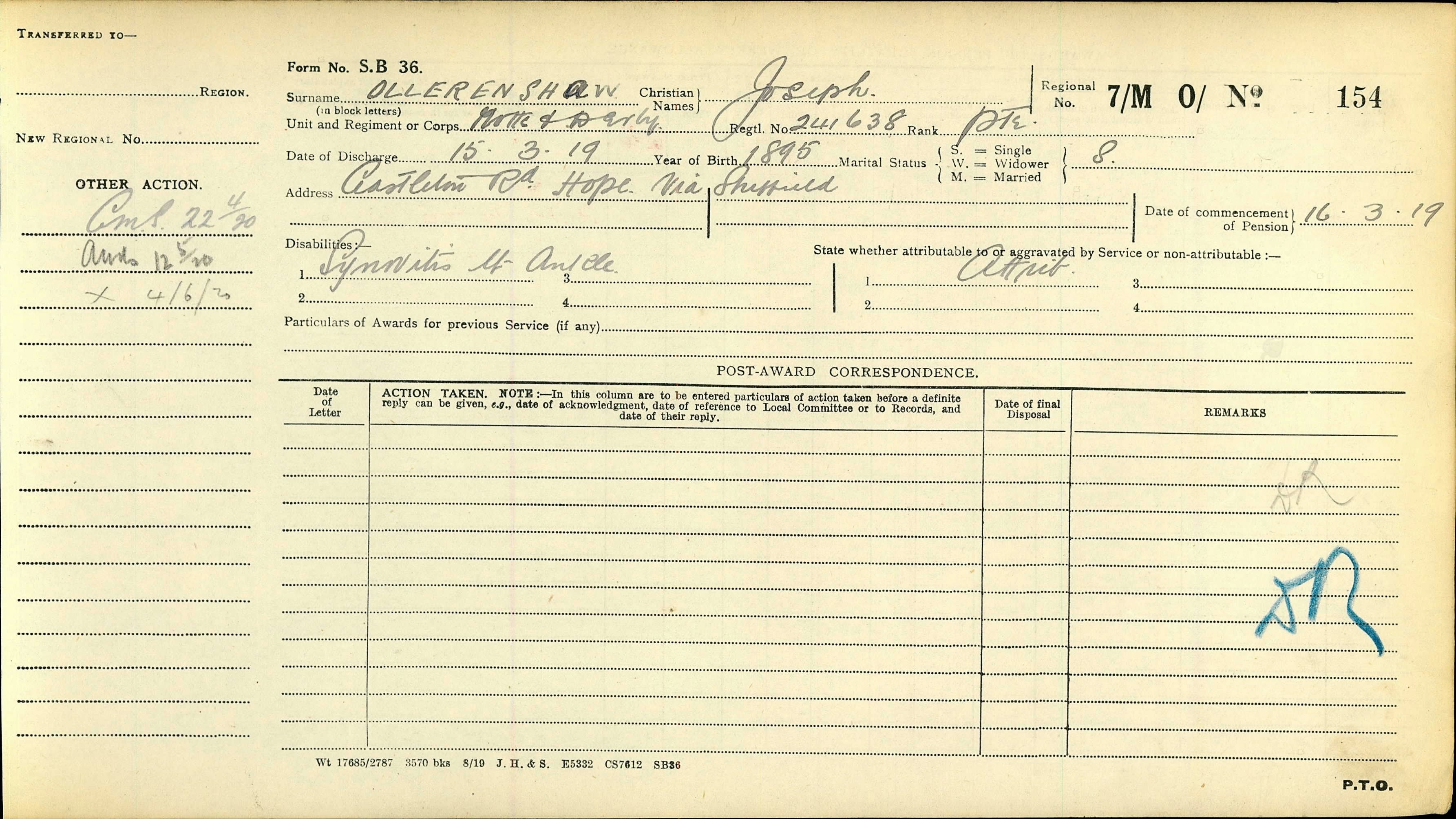
Joseph was discharged in March 1919 and received an Army pension due to ‘synovitis of the left angle’ that was attributed to active service.
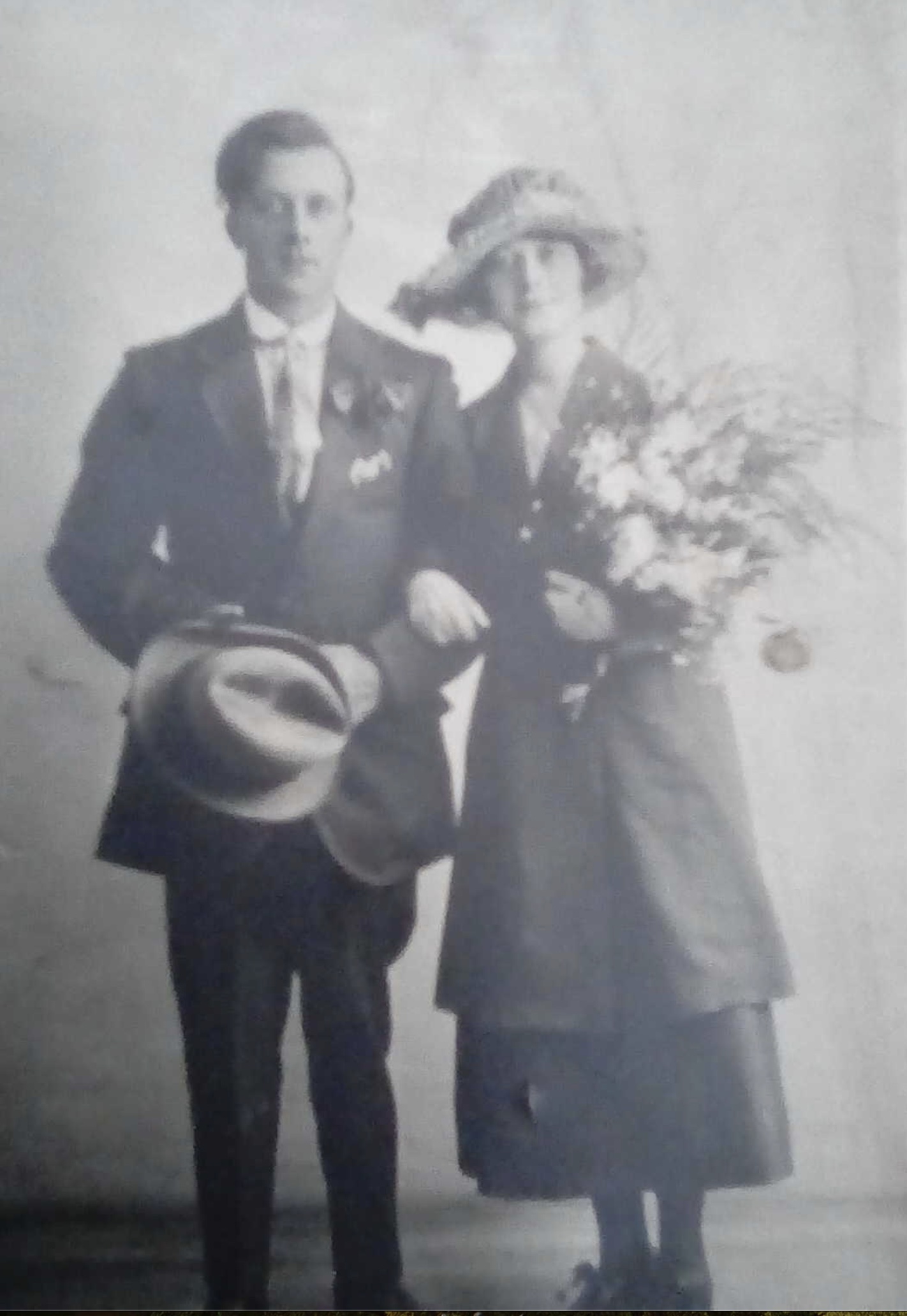
Joseph Ollerenshaw married Elsie Pye in Stockport, Cheshire in April 1922 when he was 26 years old – see here – they had one child during their marriage. He died in 1960 in Stockport, Cheshire at the age of 65.







 Derbyshire Territorials in the Great War


