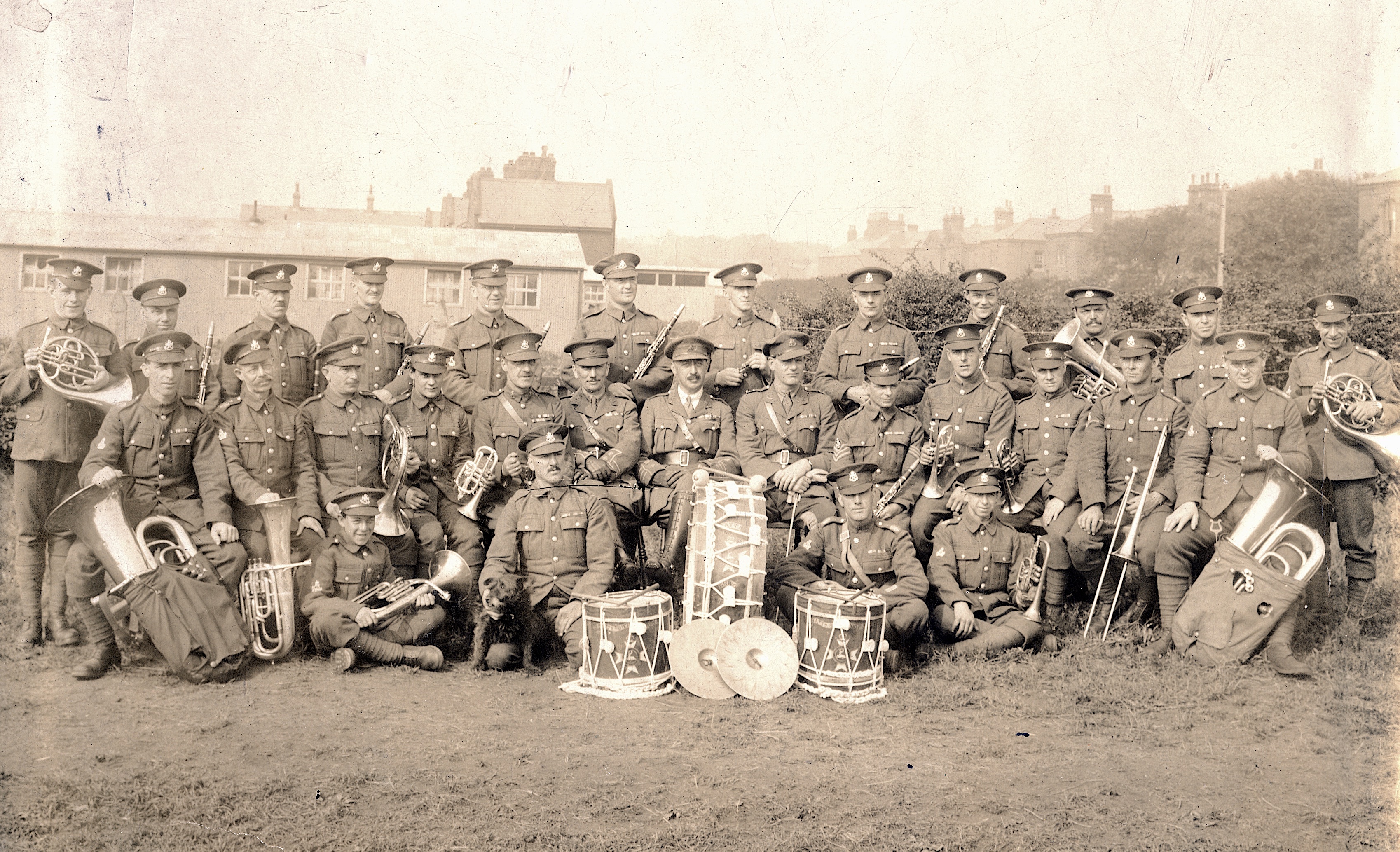
Several months ago I purchased a Carte Postale of the 1/6th Battalion Band – presumably in France. The 1/6th Battalion is confirmed by the presence in the picture of Bandmaster William Mcfarlane from Sheffield.
Band of the 1/6th Battalion1767/240255 a/CQMS William John Mcfarlane
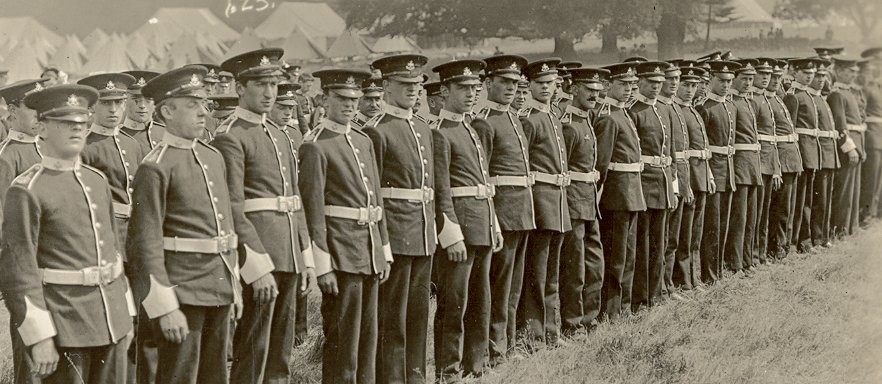
Earlier this week I was contacted by Chris Preston who also has a postcard of the ‘6th Sherwood Foresters in France’. He was kind enough to let me post it on this web site. As you will see below William Mcfarlane is again present, as are many of the bandsmen. Unfortunately the names of the other men are currently not known.
6th Sherwood Foresters in France
Although the photographs were taken at different locations at different time – I get the impression they were not too far apart……..
William survived the War and continued to be Bandmaster into the 1920s.
4669/241625 James Scott Datson was posted to the 3/6th Battn in January 1916 and transferred to the 2/6th Battn in time to serve in the Easter Rising in April 1916. He arrived in France in February 1917 and later served in the 1st Battn and was captured by the Germans on 25th March 1918.
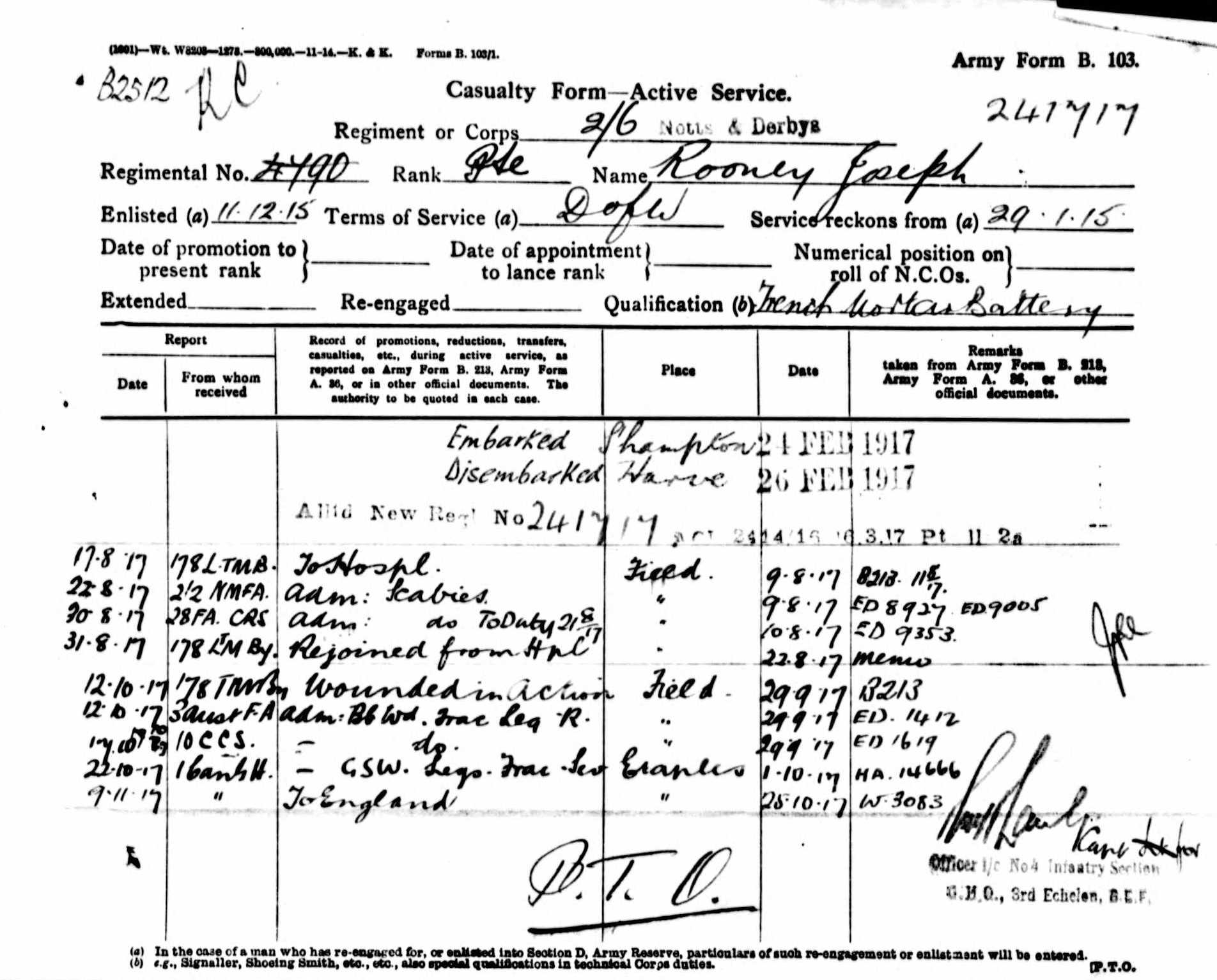
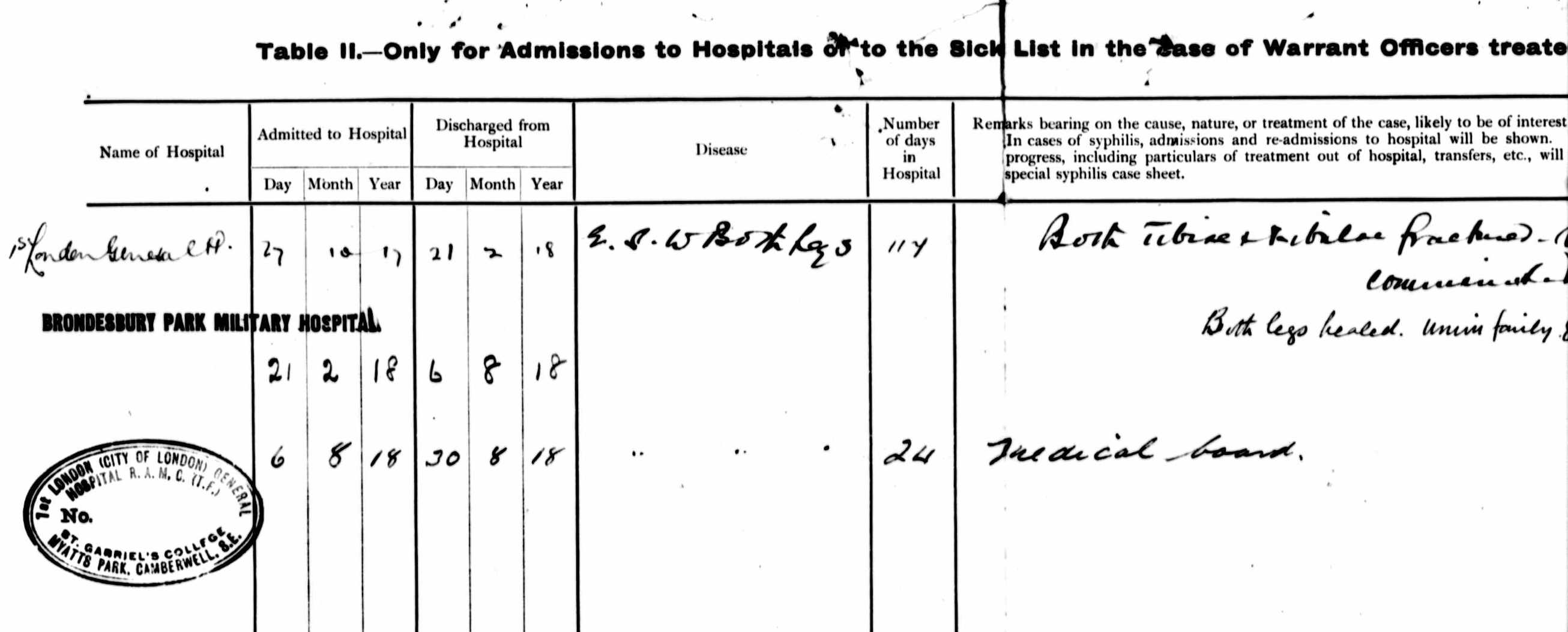
4790/241717 Joseph Michael Rooney was from Barrow Hill in Chesterfield. He attested on 11th December 1915 and was posted to the 3/6th Battn in February 1916. He later transferred to the 2/6th Battn and arrived in France on the 26th February 1917. Joseph was wounded in action at Ypres on the 29th September (GSW legs) and after treatment in the 1st Canadian General Hospital was transferred to England on the 27th October 1917.
Joseph suffered a fractured tibia and fibula and was discharged on the 17th September 1918. Unfortunately he died in November 1918. For more information of Joseph see here and here.
Joseph’s wounding therefore dates this casualty list to September/October 1917.
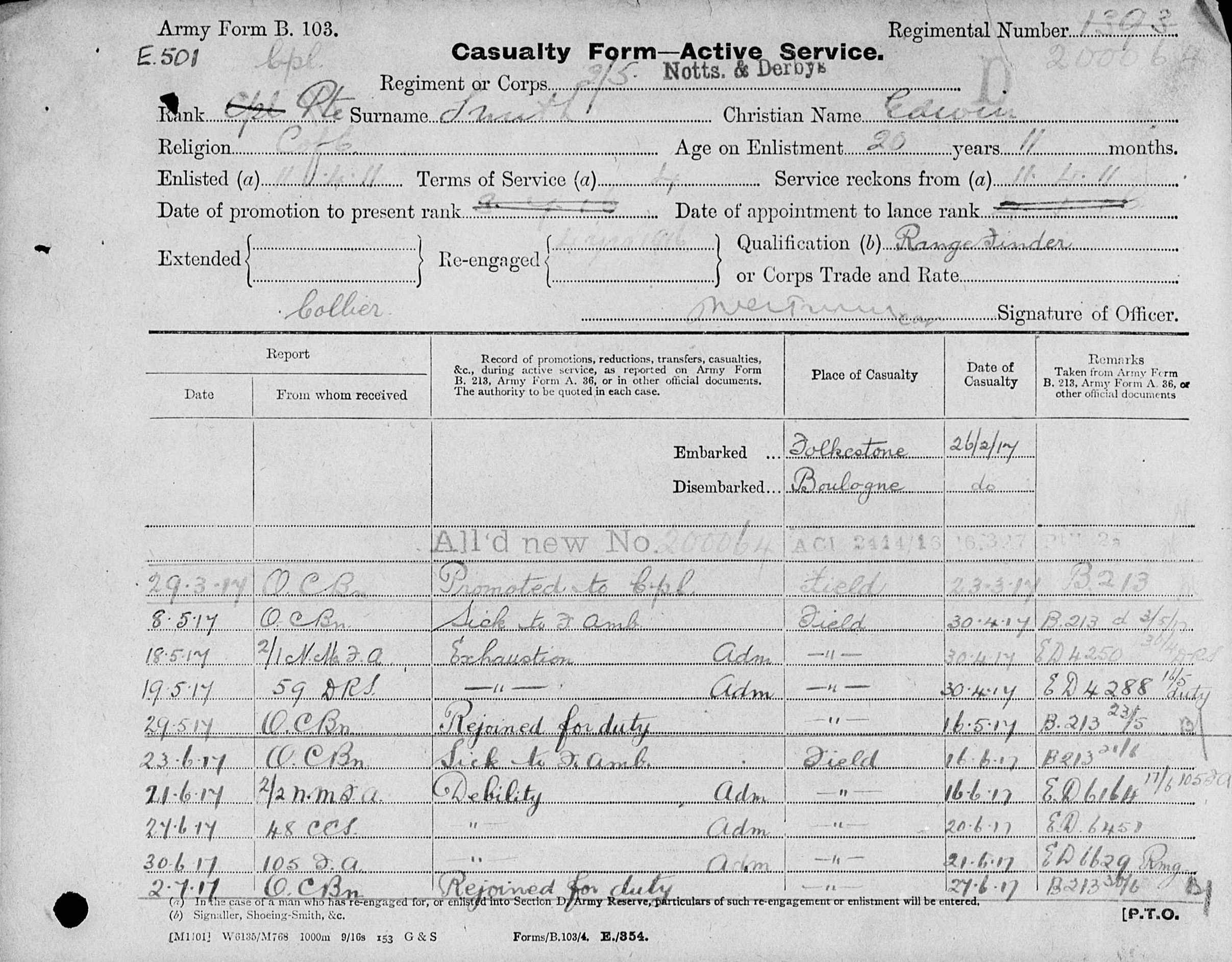
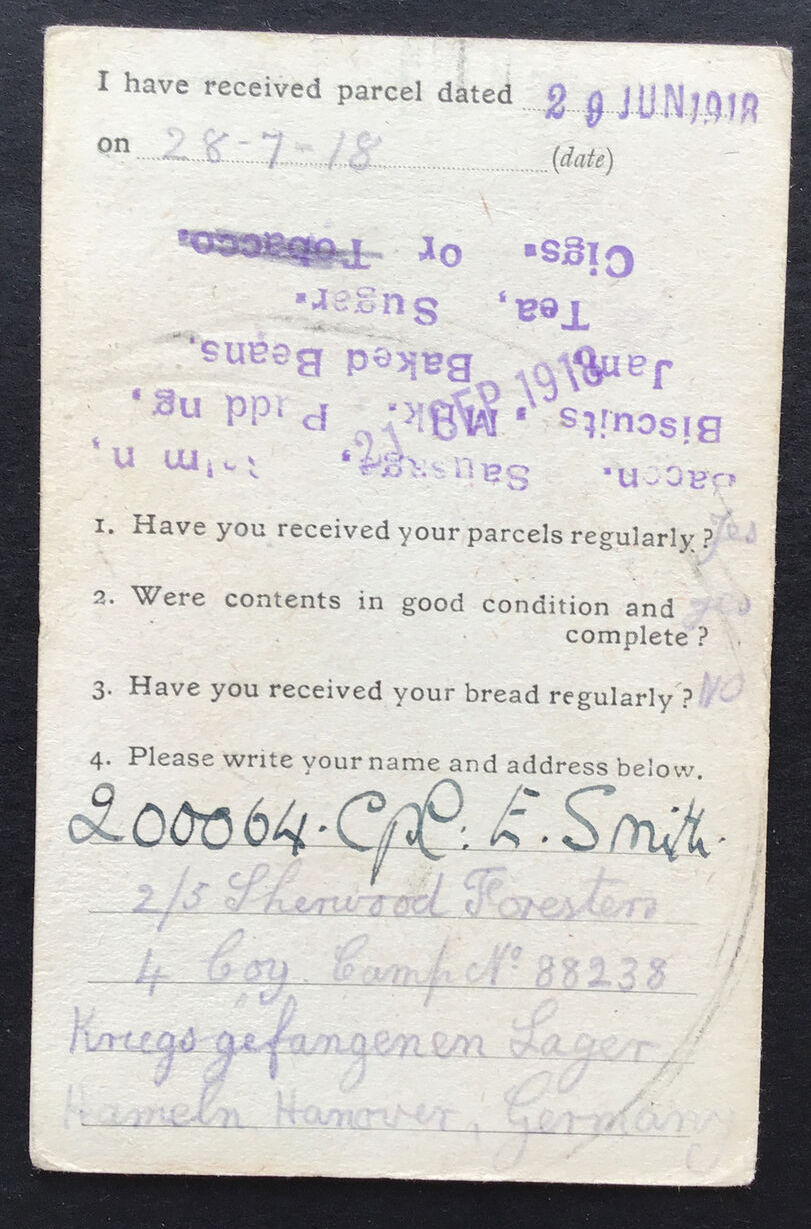
Edwin enlisted into the 5th Battalion on the 11th April 1911 and was allowed the Regimental number 1393. At the outbreak of War, or shortly after, he was transferred to the 2/5th Battn and was posted to France with the 178th Bde, 59th Division on the 26th February 1917 and re-allocated the number 200064.
Edwin was sick a few times during the spring and summer of 1917, requiring treatment and rest at various Field Ambulances (2/1 NMFA), Casualty Clearing Stations (48th) and the 59th Divisional Rest Station.
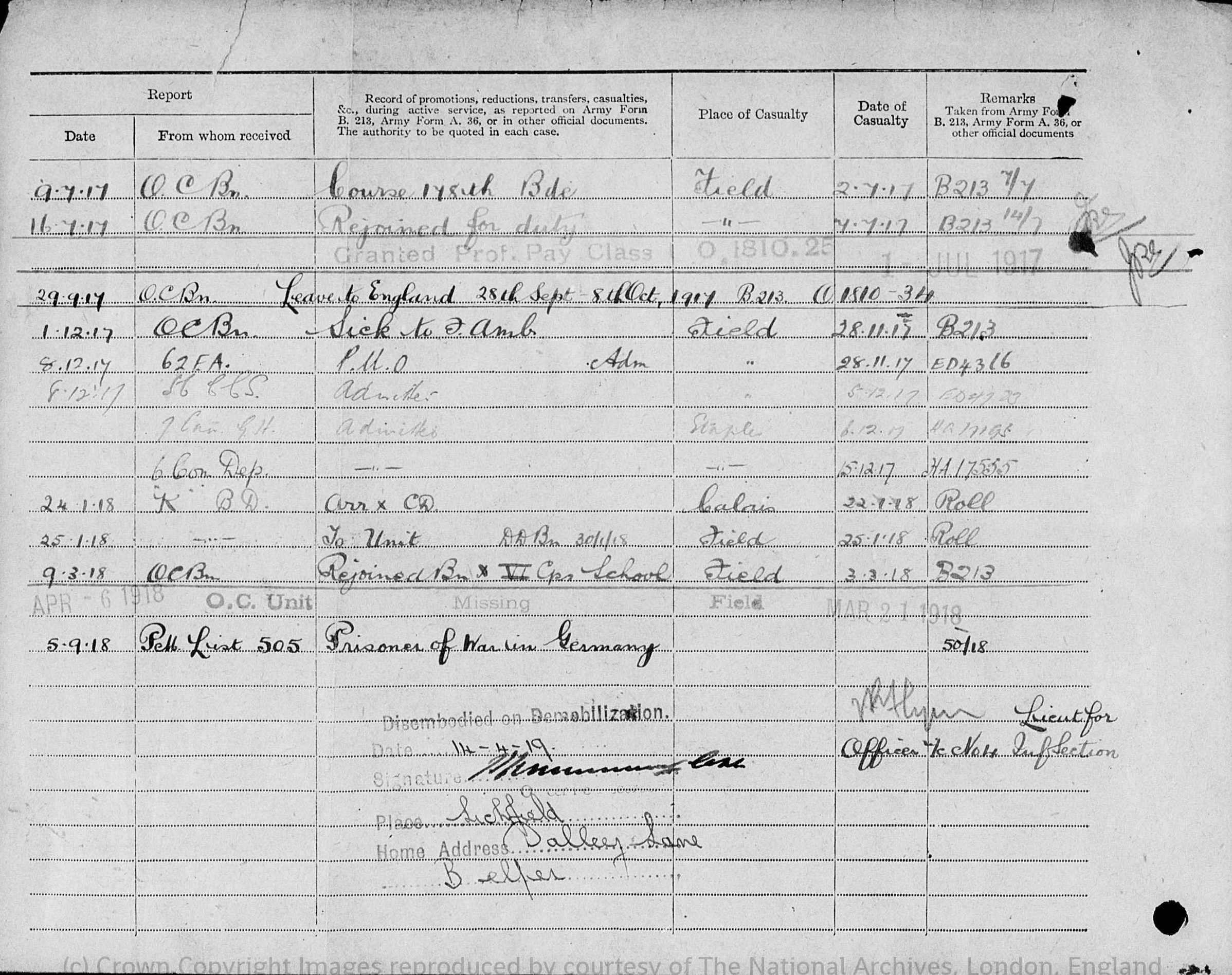
Edwin was granted leave to England in October 1917, returning to the 2/5th Battalion.
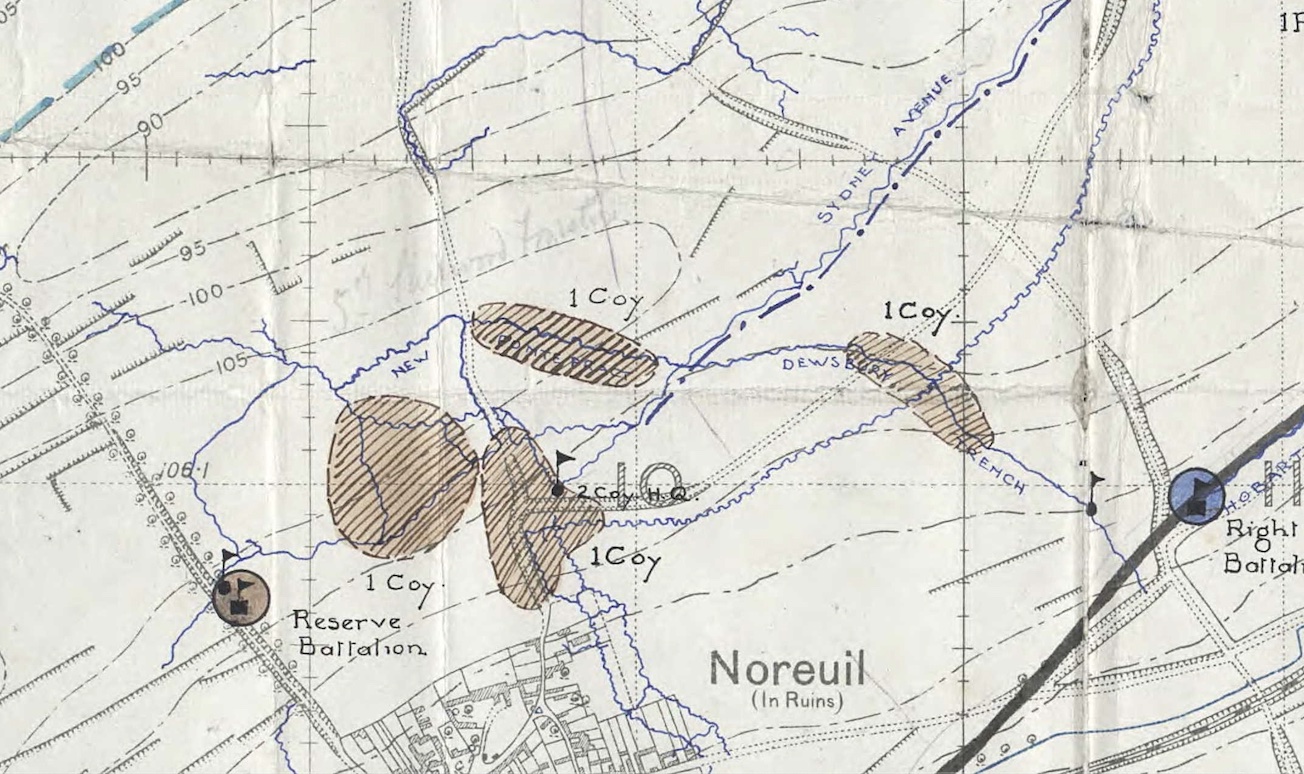
On the 21st March, Edwin with the rest of C Company of the 2/5th Battalion, were in Reserve at Noreuil on the extreme right of the 59th Division frontage. They were quickly over whelmed and outflanked by the German forces proceeding down the Noreuil Valley.
Edwin was severely wounded and spent 5 months in a German POW Camp Hospital at Hamelin.
During that time he received a parcel from the Sherwood Foresters Prisoners of War Regimental Care Committee, which provided him with a variety of items to make his life more comfortable as a POW.
Edwin was discharged on the 15th April 1919. He received a pension and was awarded a Silver War Badge in addition to the British War and Victory Medals.
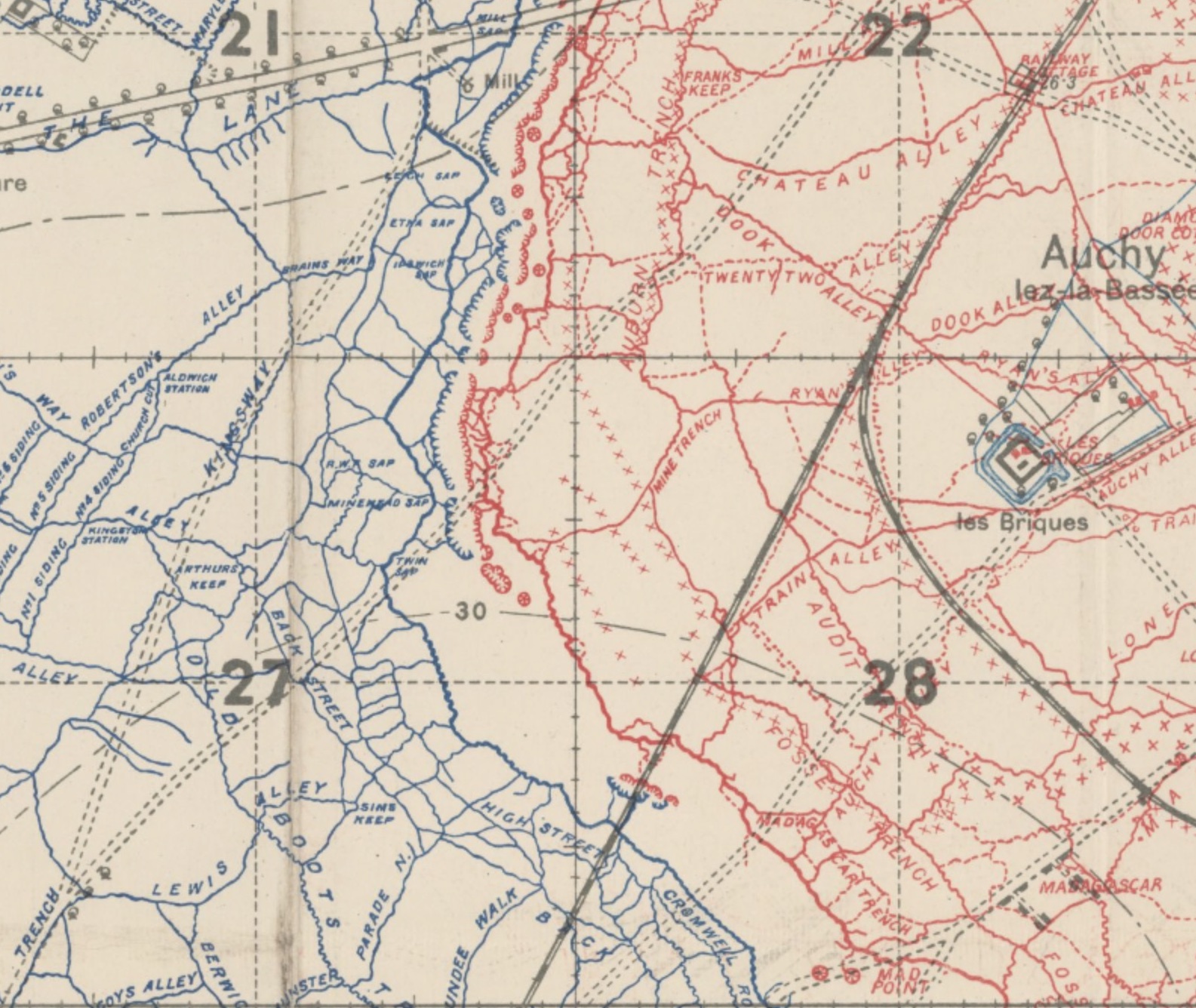
During the night of March 21/22nd, we did experience a real touch of the offensive in the shape of a big raid on the right Company, the most vulnerable portion of the line on the whole Brigade front. This front, which was held by A Company was of enormous length, extending from Railway Craters on the right to Munster Parade on the left, a distance of about 600 yards.
Three platoons (about 60 all told) held the outpost line in small posts of four or five men, each under a N.C.O., the fourth platoon being held in support as a counterattacking platoon in Old Boots Trench at the West end of Munster Tunnel. The latter was about 400 yards behind the outpost line, and was also occupied by the support Company, and contained the right Company Headquarters. The orders laid down were that in case of attack the platoon detailed for the task was to counter-attack either through the tunnel (quite impossible if the enemy obtained a footing in the trench at the tunnel mouth) or over the top.
Shortly after midnight, the enemy put down an intense barrage of trench mortars, wing bombs, and shells of all calibres, along the whole of the Brigade front and support lines, forward communication trenches, Battalion Headquarters, the Village Line, and extending even to roads, villages, and batteries far behind the line. Telephone wires were broken immediately, but the “S.O.S.” was sent by signal rocket and power buzzer, and our artillery and machine guns replied at once. There had been no preliminary bombardment or warning of any kind.
The enemy entered our trenches directly behind his barrage from the cover of the craters on the right, between our right post and the left Company of the 138th Brigade, who were on our right, also near Dundee Walk in the centre, and just North of Munster Tunnel on the left. Such wire as had been put up by the few men who were usually available was swept away by the hurricane bombardment, which prevented movement of any kind, either to or from the front or support lines.
Two runners were wounded whilst attempting to take messages between Company Headquarters and Munster Tunnel, a distance of 50 yards. The posts in the front line were unable, owing to their small numbers, to offer any prolonged resistance, or on account of the distance between them, to assist neighbouring posts.
The front line entrance to Munster Tunnel was held by us the whole time, and an attempt to blow it in, which was one of the main objects of the raid, was frustrated, 2nd Lieut. Hartle being wounded by a hand grenade. That the garrison of the outpost line withstood the onslaught to their utmost there is no doubt, and to this the pools of blood and reeking bayonets of some of the rifles found afterwards in the trench, bore convincing testimony.
After the enemy’s withdrawal, one unwounded and one seriously wounded German were left in our hands, the former having apparently become detached from his party, and being discovered later in front of our trench with a sheet of newspaper fluttering from his rifle.
The thoroughness with which the Boche trained for this raid was proved from the prisoners’ statements and documents, which afterwards came into our hands. For six weeks the raiding party, consisting of about 250 men, had been training over an exact replica of our trenches, constructed with the help of an aeroplane photograph. The training had also included the teaching of several words of English. The work of the raiders was extraordinary, and our own men in the front line testified to the remarkable dexterity with which they removed their casualties. This is the more wonderful inasmuch as they had to penetrate our barrages, in order to regain their trench, and there is no doubt that in doing so they lost heavily.
Our casualties amounted to three other ranks killed, including a very gallant N.C.O., Corpl. Tyne, 26 other ranks missing, and one Officer (Hartle), and ten other ranks wounded. We should like to pay tribute to the excellent work done by the Signallers, who as usual worked their hardest, to try and keep their lines in order, in spite of the heavy shelling. L.-Corpl. Parry’s efforts to repair the broken lines back from one of the front Companies, were especially praiseworthy.
The wounded Officer was Elias William Hartle from near Crich – see here
Elias William Hartle
The men killed were:-
307131 Pte Sidney Samuel Ives who lived at Walworth in Surrey and left Charlotte and a young son Sidney George who was born in 1916.
305752 Cpl Harold Tyne DCM was from Southwell and arrived in France in May 1915. See here.
305625 Pte John Thompson. Son of B. Thompson of Mansfield; husband of Rhoda Thompson of Heathfield, Cale Green, Stockport. John arrived in France in August 1915.
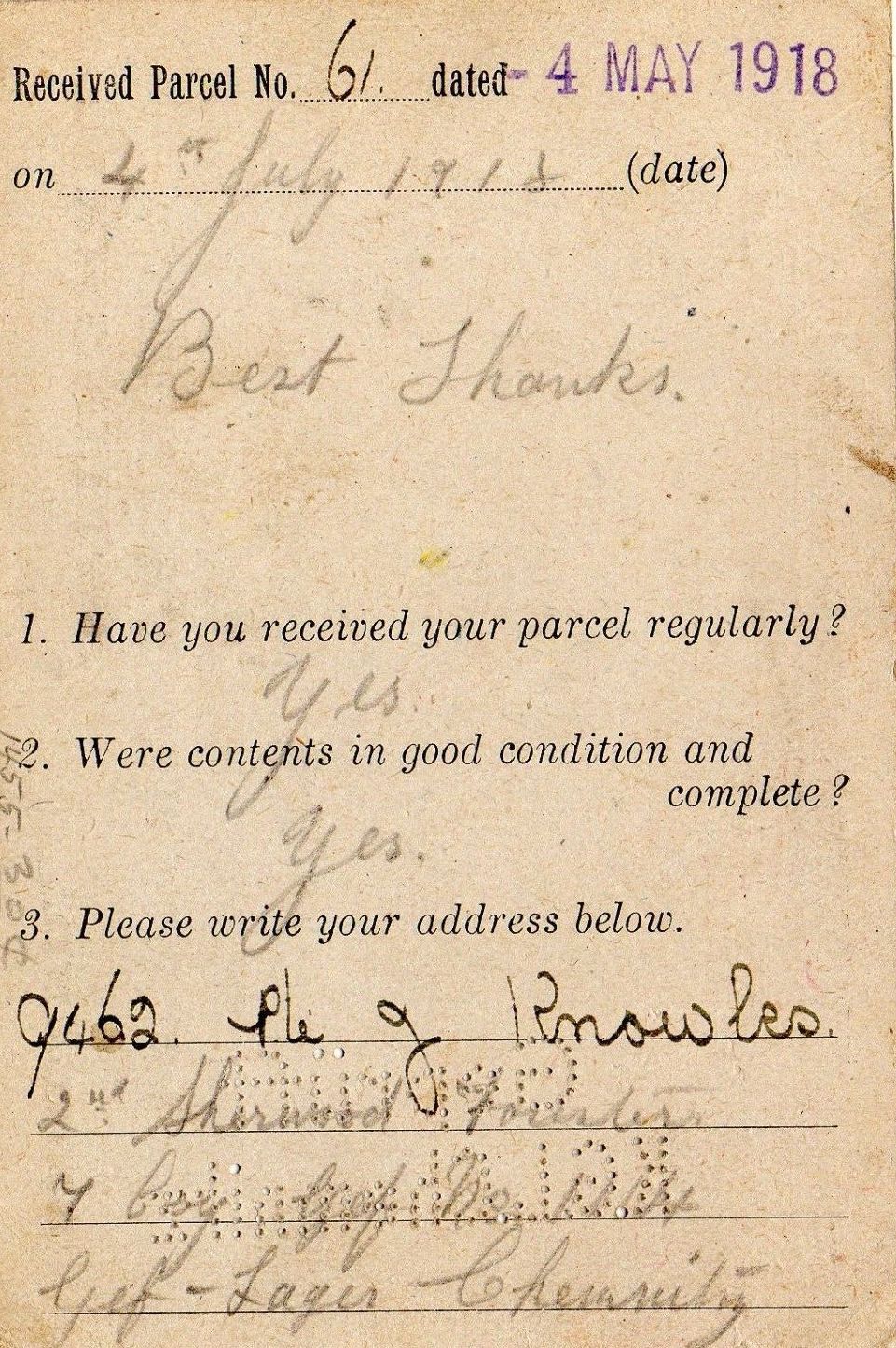
Sent by John Knowles in May 1918 from Chemitz POW CampSent by Edward Mathews to Miss Ord in March 1917 from Soltau POW Camp
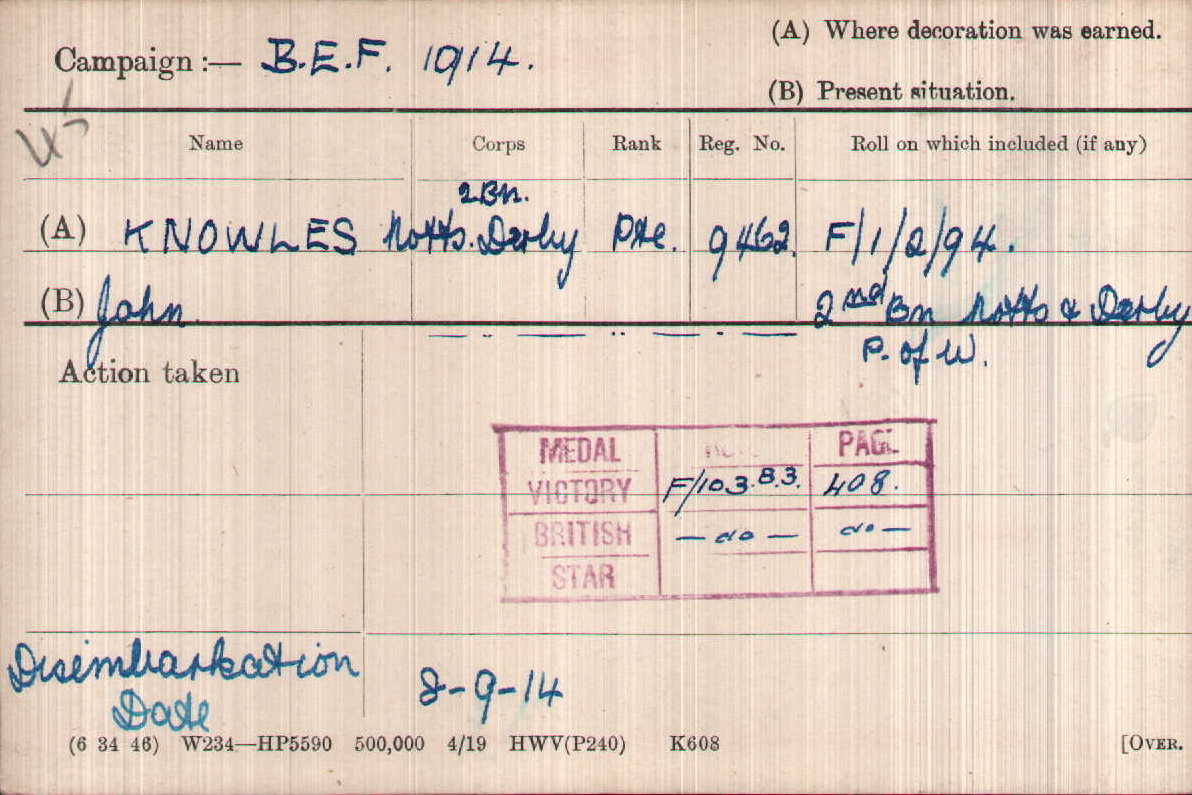
John Knowles was born in July 1886 and enlisted into the Sherwood Foresters in June 1904 aged 18.
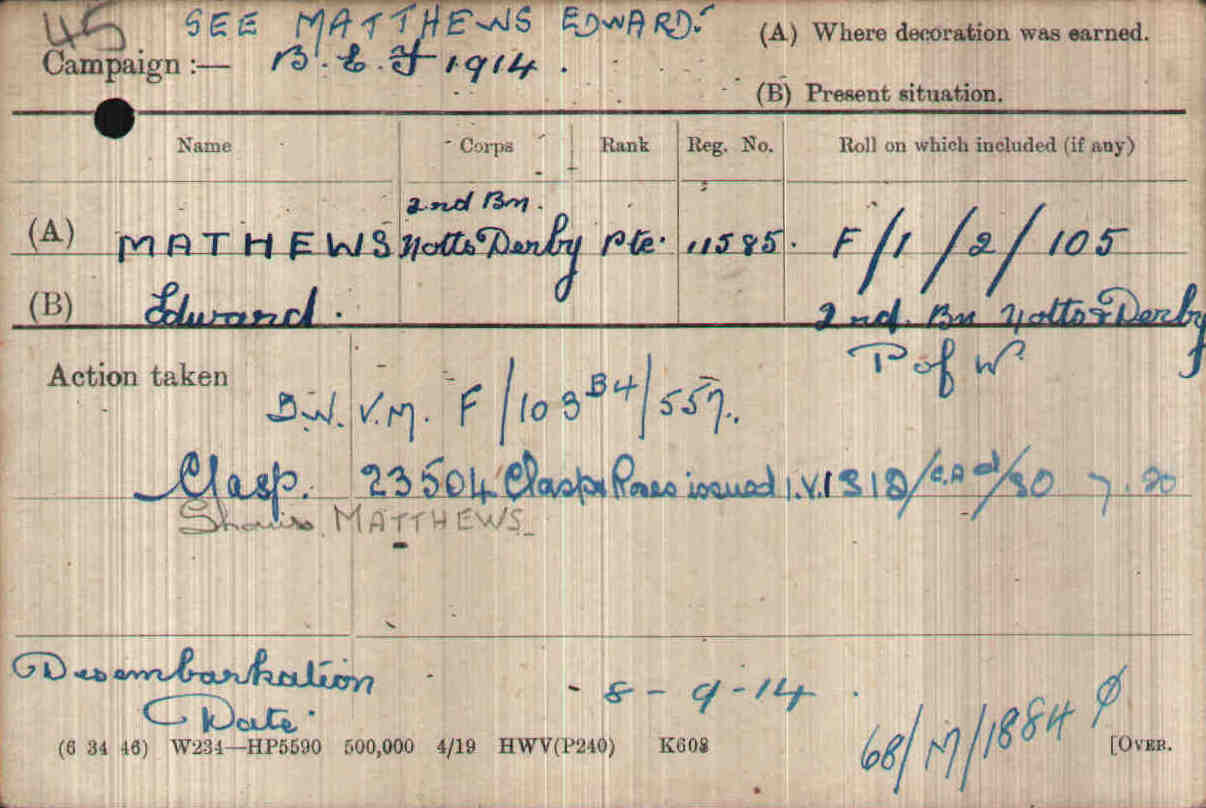
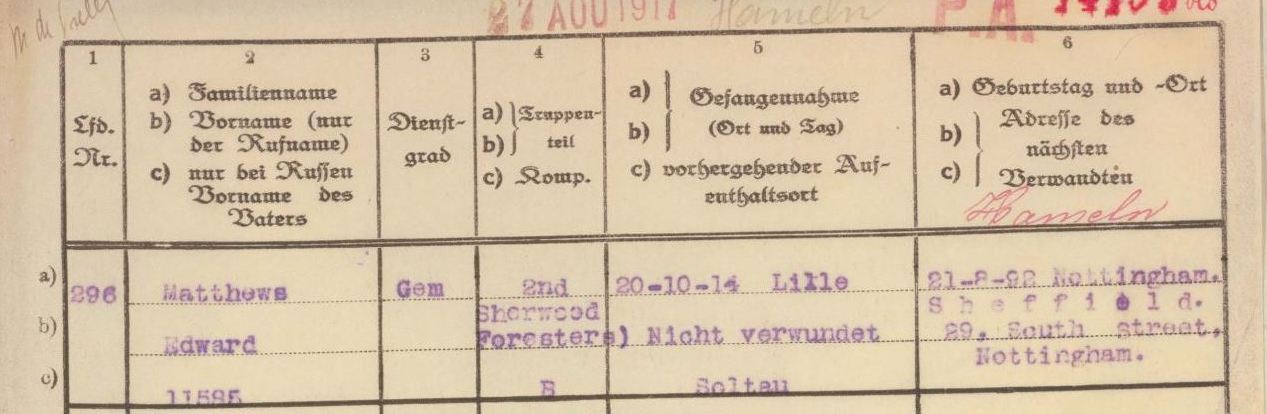
Edward Matthews was born in August 1892 and enlisted into into the Sherwood Foresters in March 1911 aged 19.
Medal Index Card for John KnowlesMedal Index Card for Edward MatthewsMen of the 2nd Battalion training in 1913
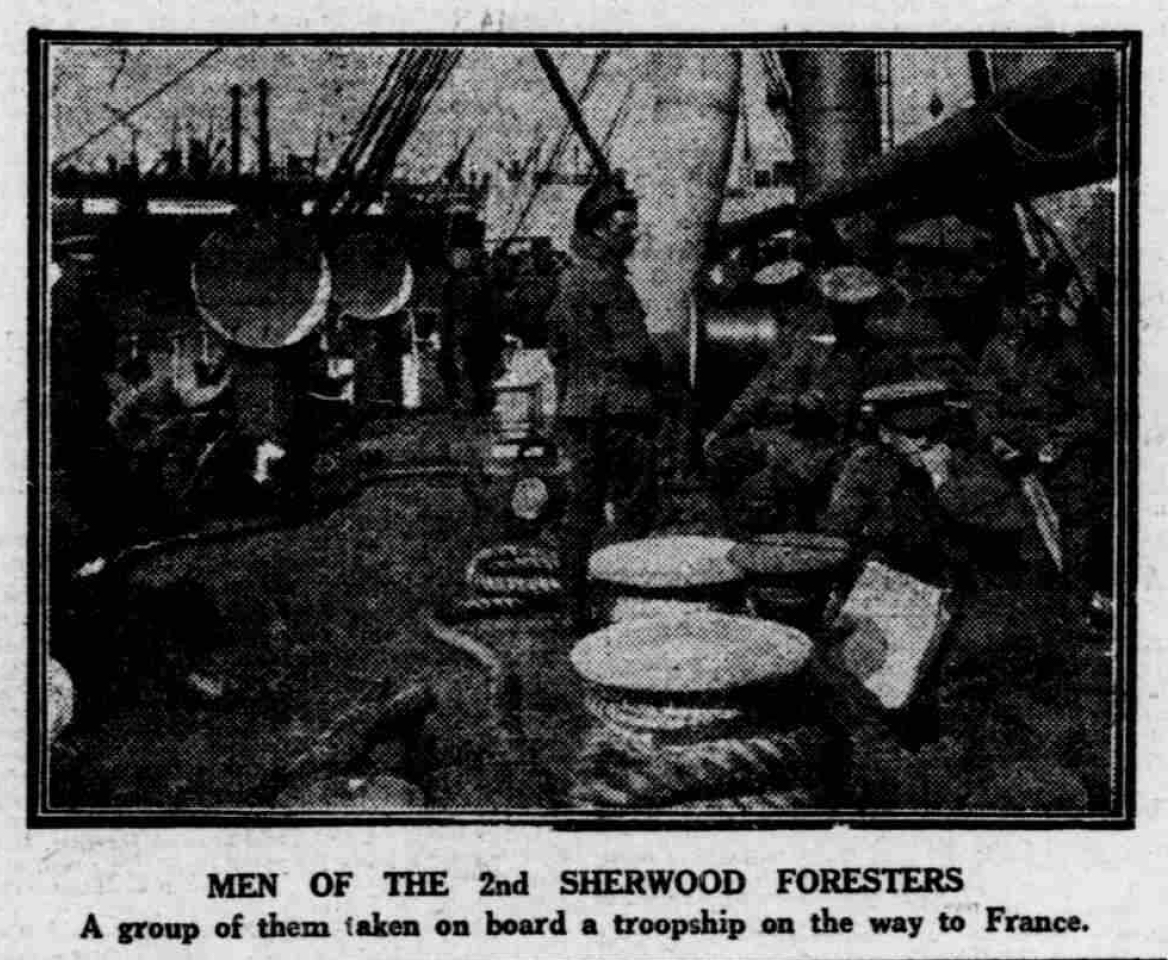
John Knowles and Edward Matthews arrived in France with the 2nd Battalion Sherwood Foresters (Notts & Derby) Regiment on the 8th September 1914. The 2/Sherwood Foresters were part of the 18th Brigade in the 6th Division.
Regimental History of the 1st and 2nd Battalions Sherwood Forester. Event of the 20th October 1914Map of engagement
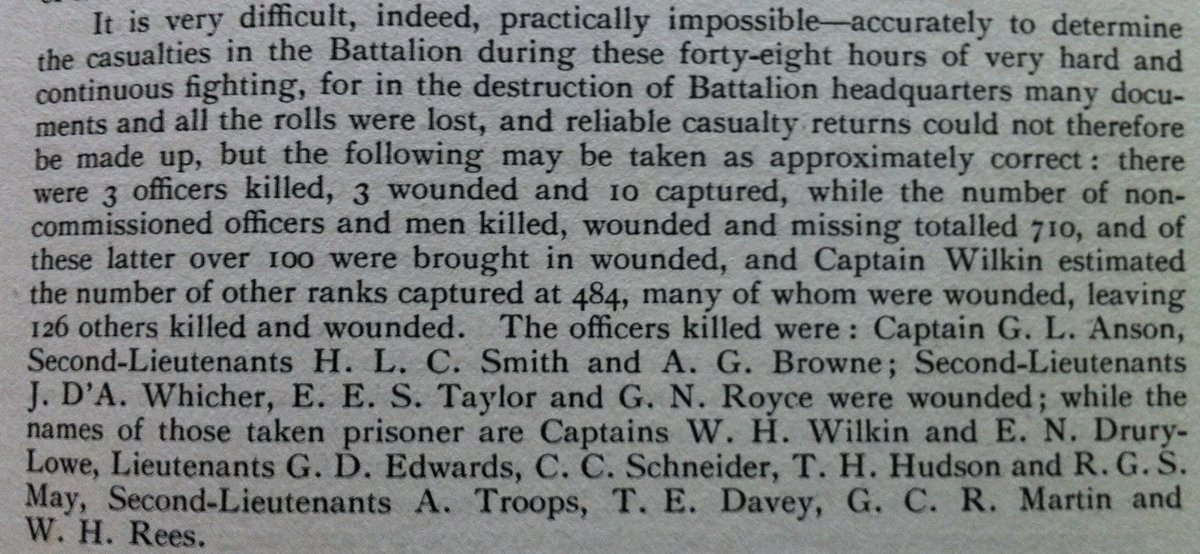
Edward Matthews was captured on the 20th October and John Knowles on the 28th October. In total over 480 men of the 2nd Battalion were captured.
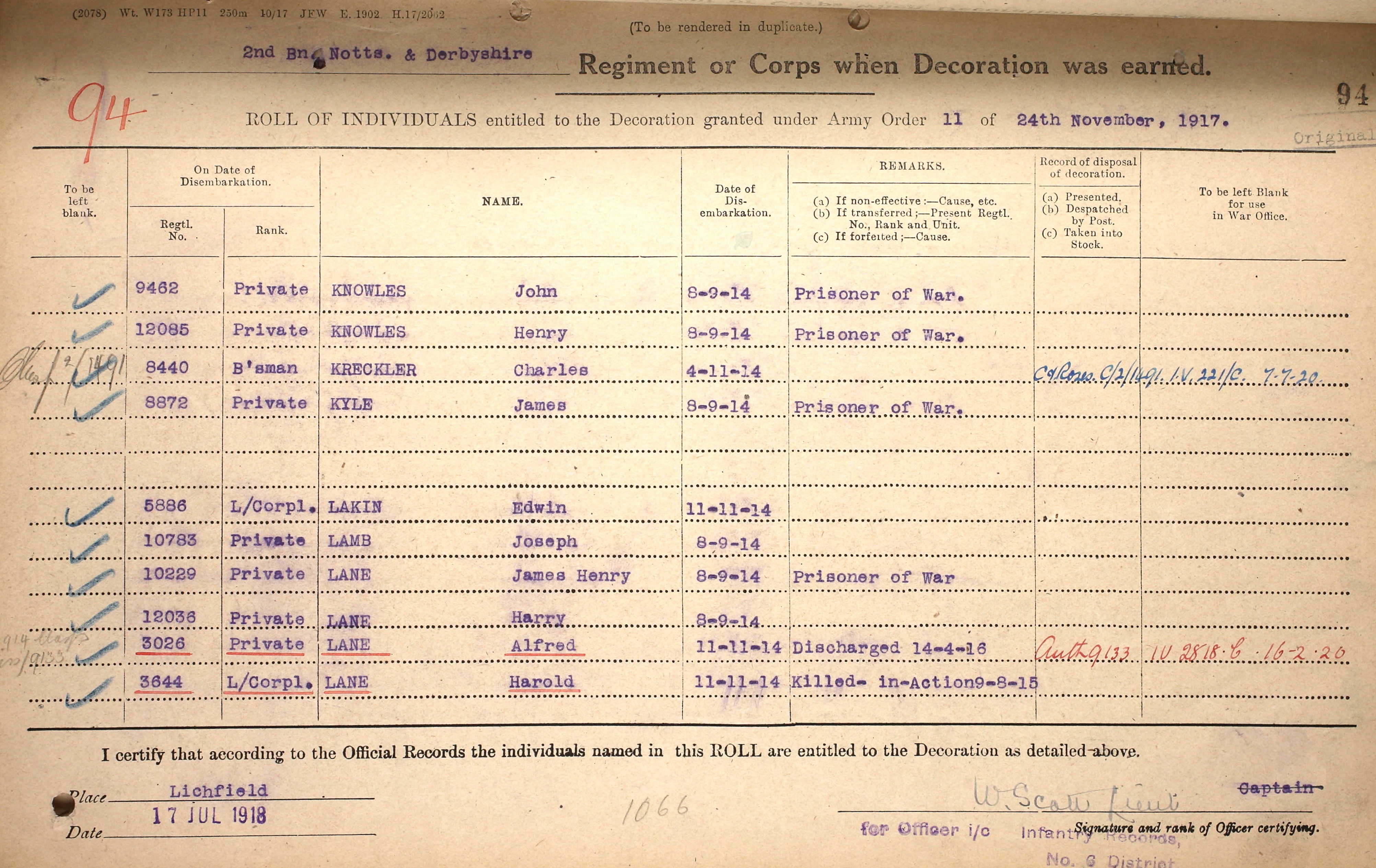
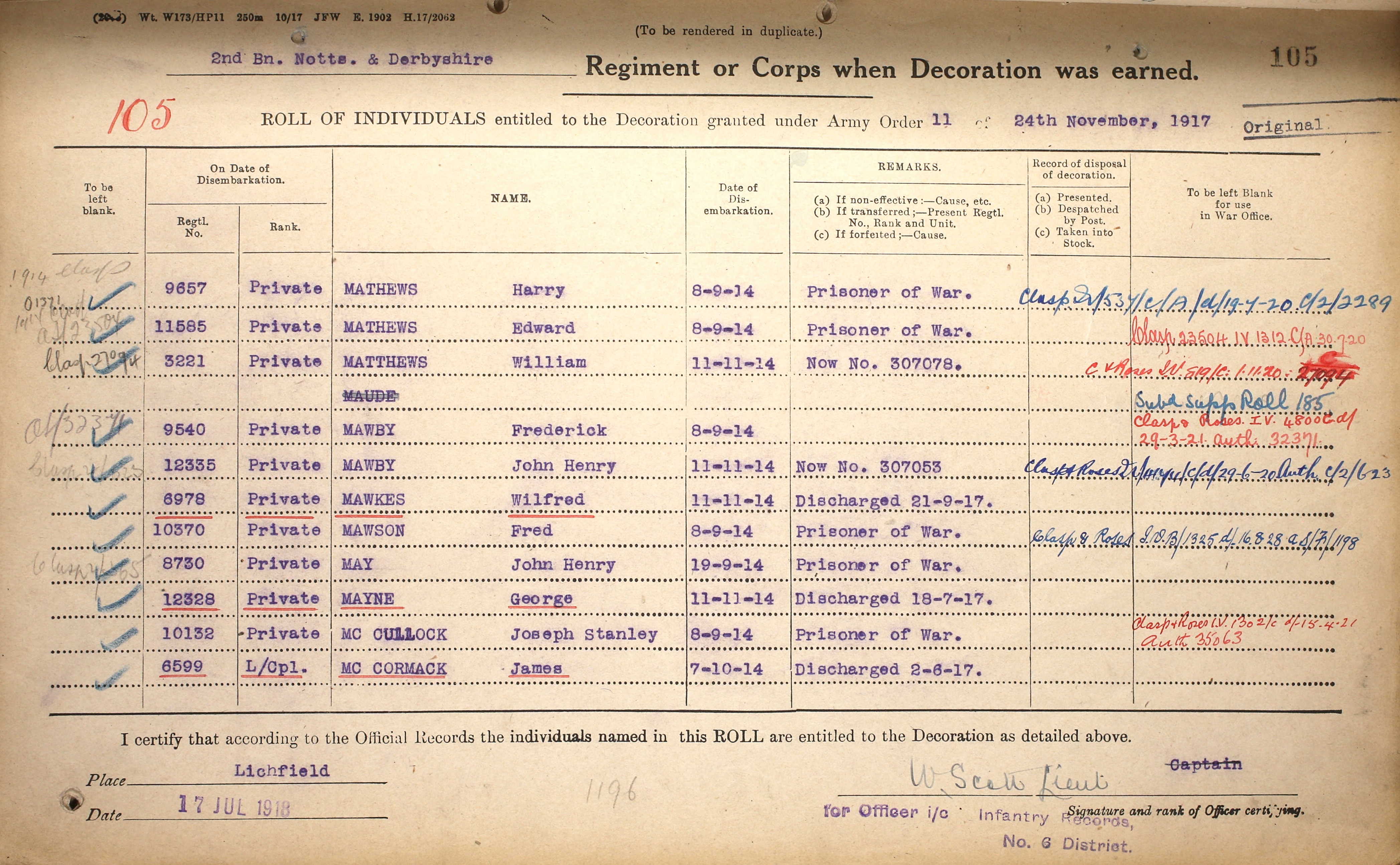
Record of Edward Matthews capture on the 20th October 1914Record of John Knowles capture on 28th October 19141914 Medal Roll for the 2nd Battalion showing the number of men made prisoners of War
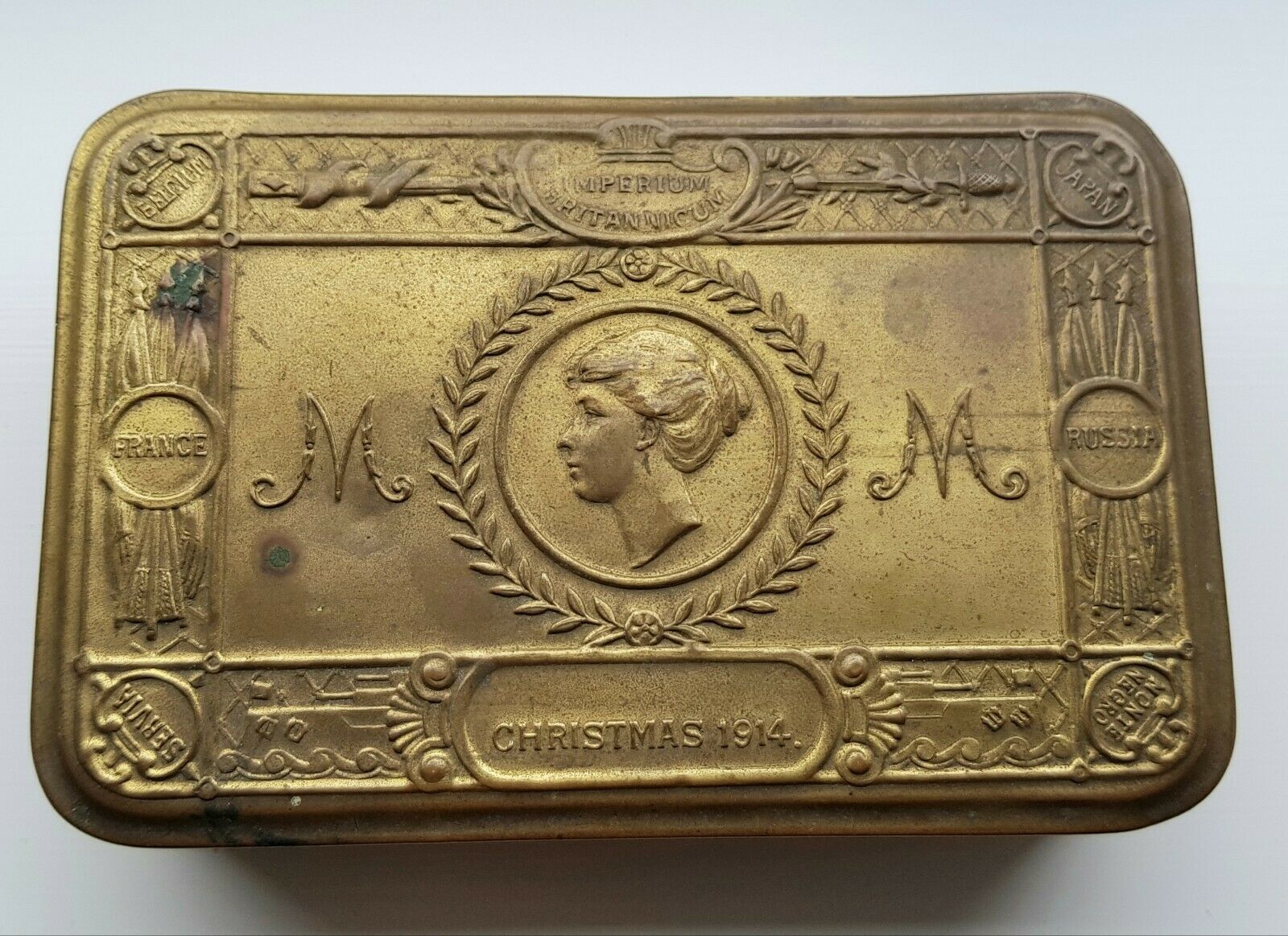
After returning to England both John and Edward received a Princess Marys Christmas Tin.
Record of John and Edward receiving the Christmas 1914 Tins
John married Florrie and they had three children. he is believed to have died in 1946. It is not know if Edward was married with a family, but he is believed to have died in 1965.
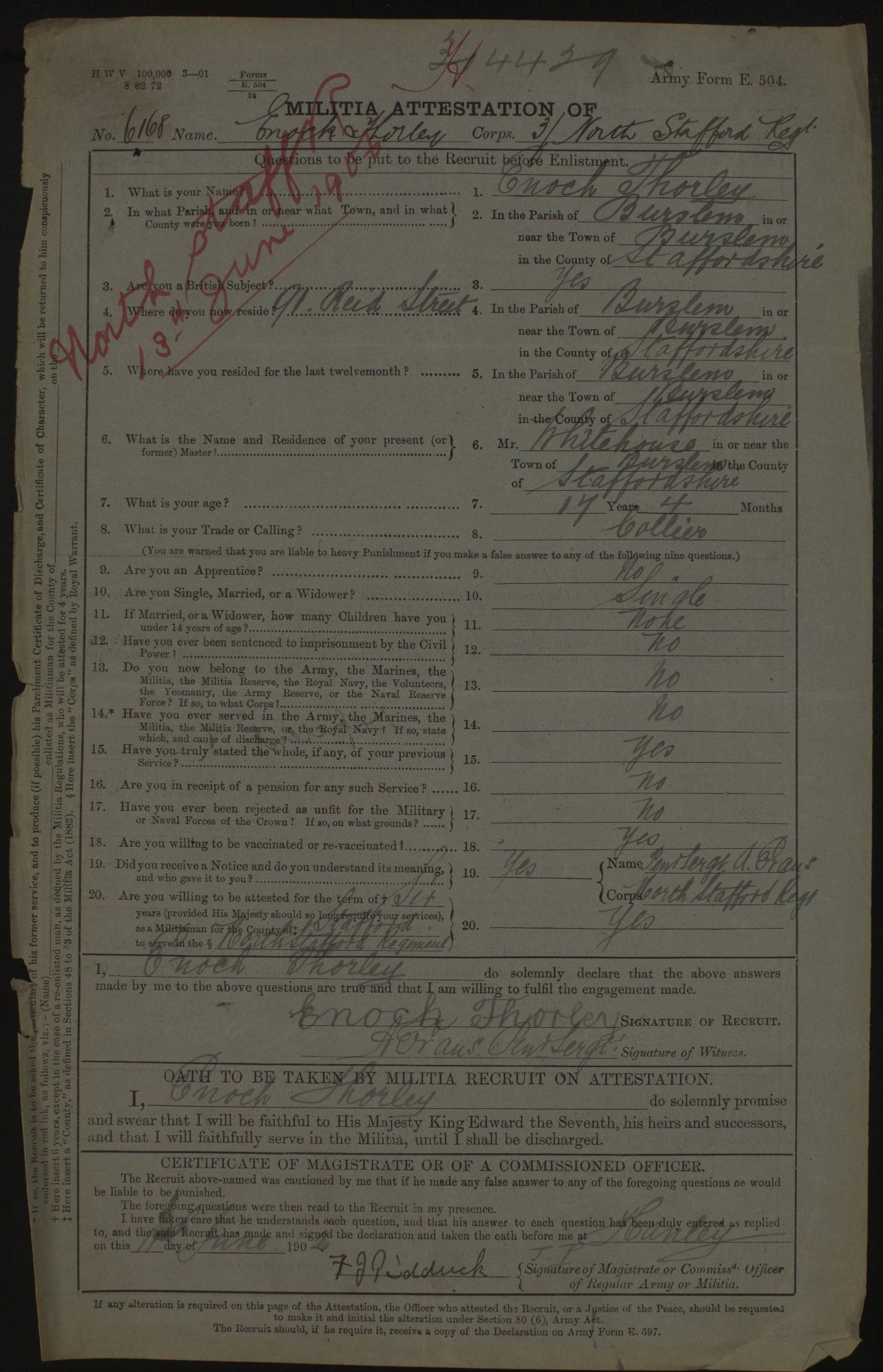
Enoch was born in The Town of Burslem in the County of Staffordshire in 1885 and was a collier by trade.
Attestation into the Militia
In June 1902 Enoch enlisted into the 3/North Stafford Regiment of Militia aged 17. His attestation form describes him as 5 ft 2 inches with brown hair and grey eyes.
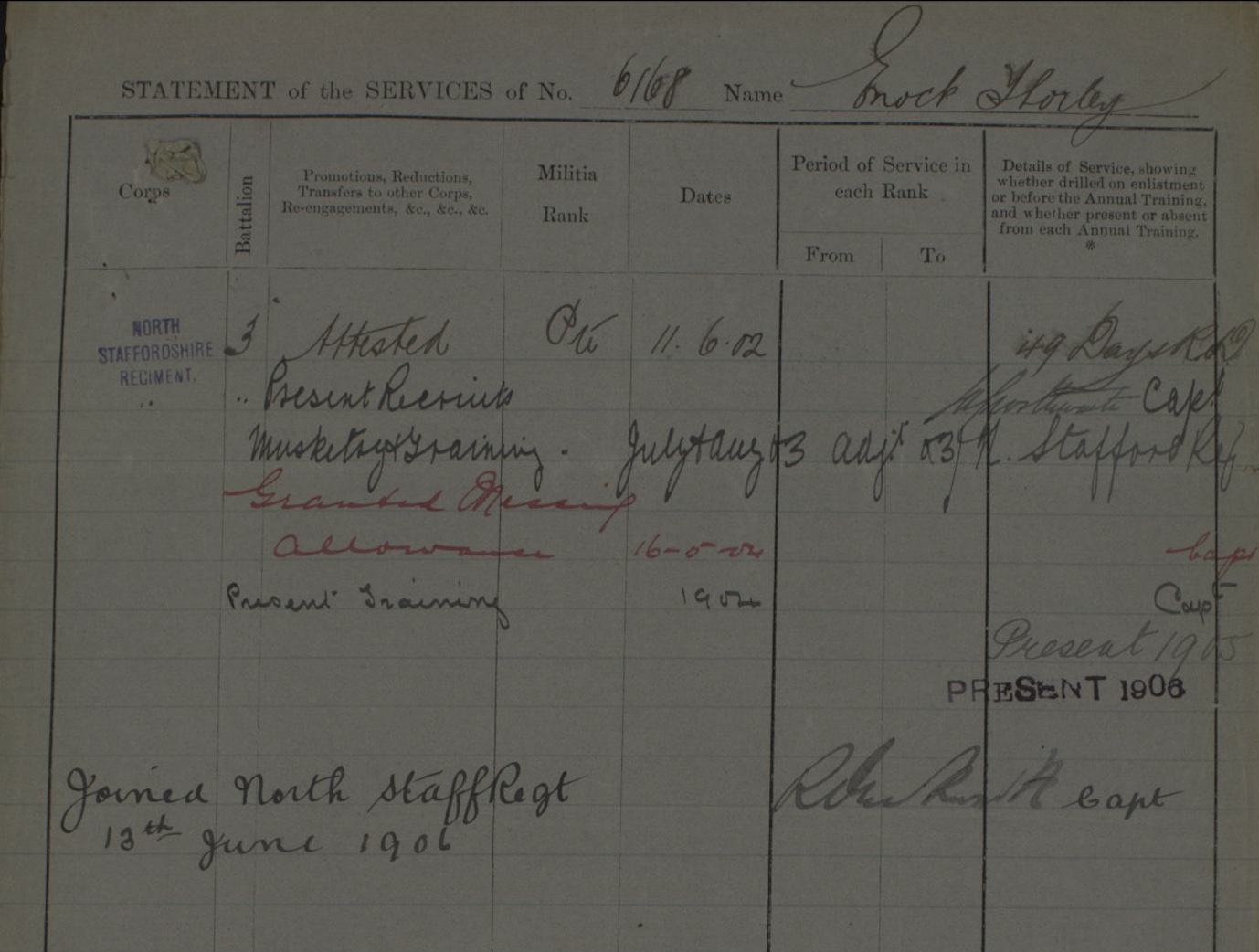
Statement of Service
After serving for 4 years in the Militia he joined the Regular Army.
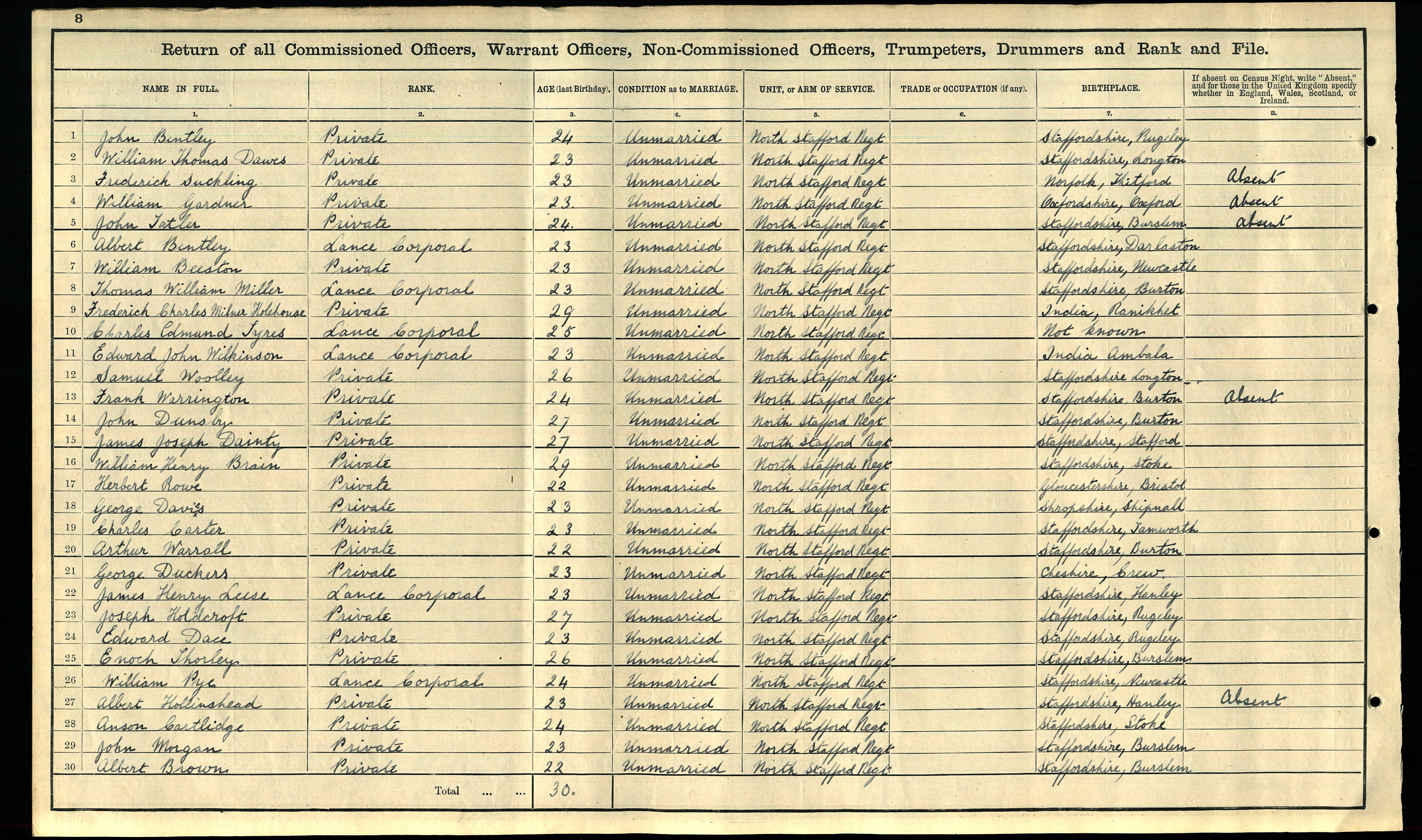
Enumeration Book for 1911 Census
It is not known how long Enoch stayed in the Army, but certainly by 1911 he is reordered as serving in Peshawar with 2nd Battalion the North Staffordshire Regiment.
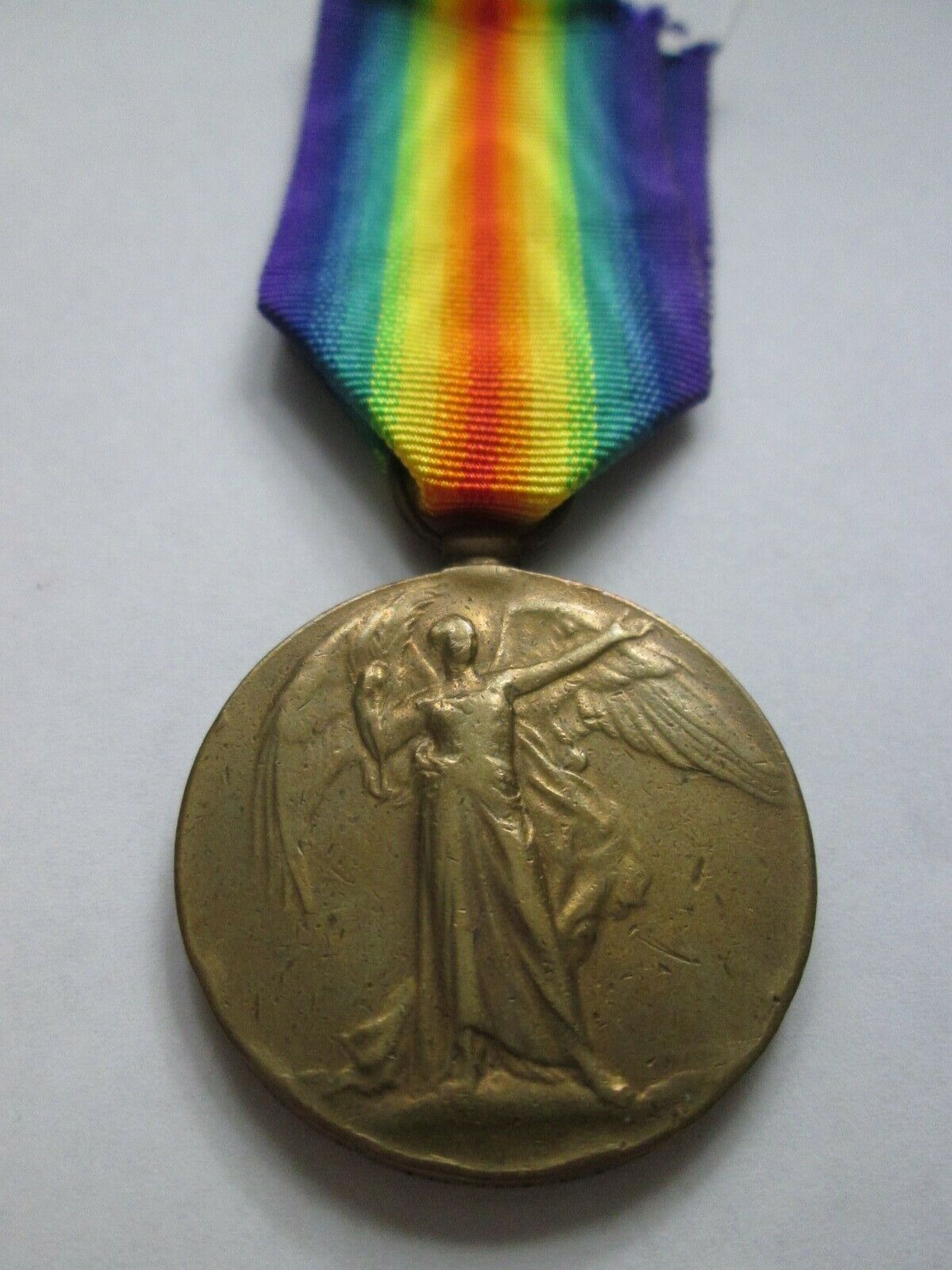
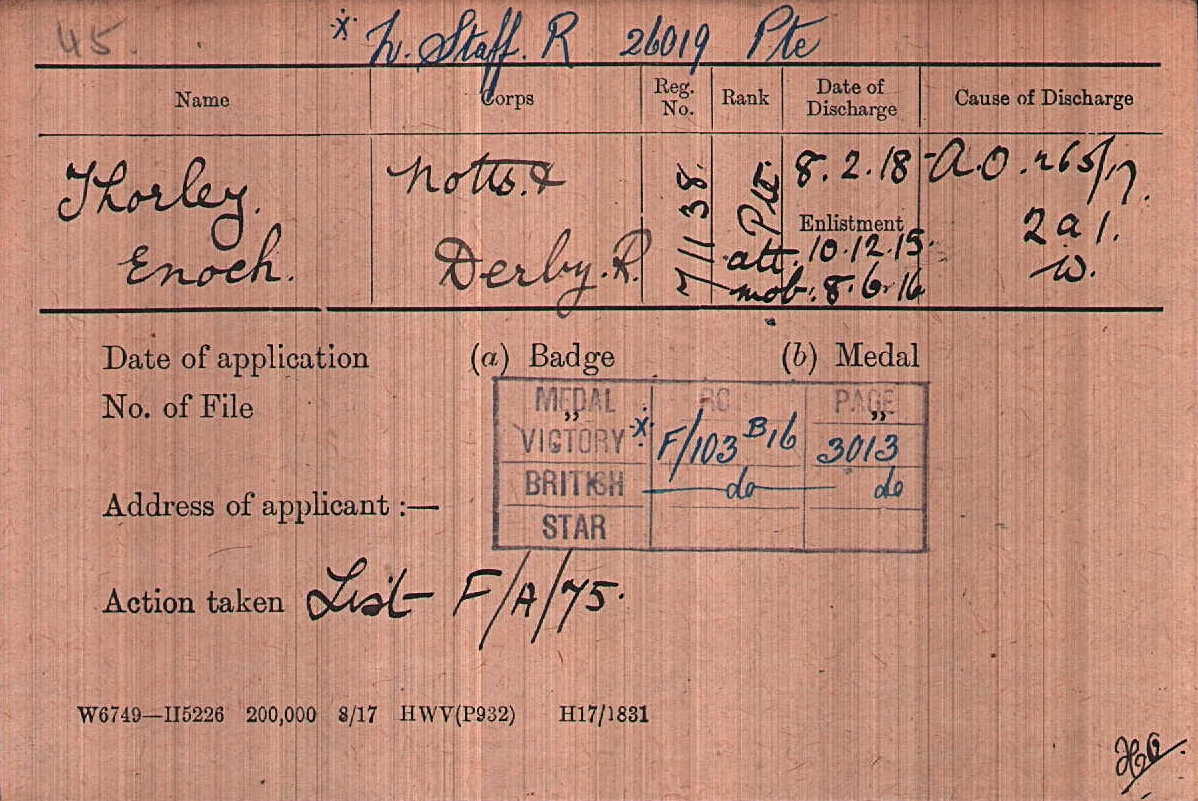
Medal Index Card
Enoch attested into the North Staffs Regiment in December 1915 as part of the ‘Derby Scheme’. He was mobilised in June 1916 and following training proceeded to Base Depot in France.
War Diary – Chatsworth Rifles – November 1916Service Record of 71108 Pte Arthur Chell
Enoch was part of a ‘Draft’ of 50 North Staffordshire men that were posted to the Chatsworth Rifles on the 11th November 1916 and given service numbers 71097 to 71146. The Service record of 71108 Pte Arthur Chell suggests that these men had initially been posted to the 3/8th Battalion North Staffs for training.
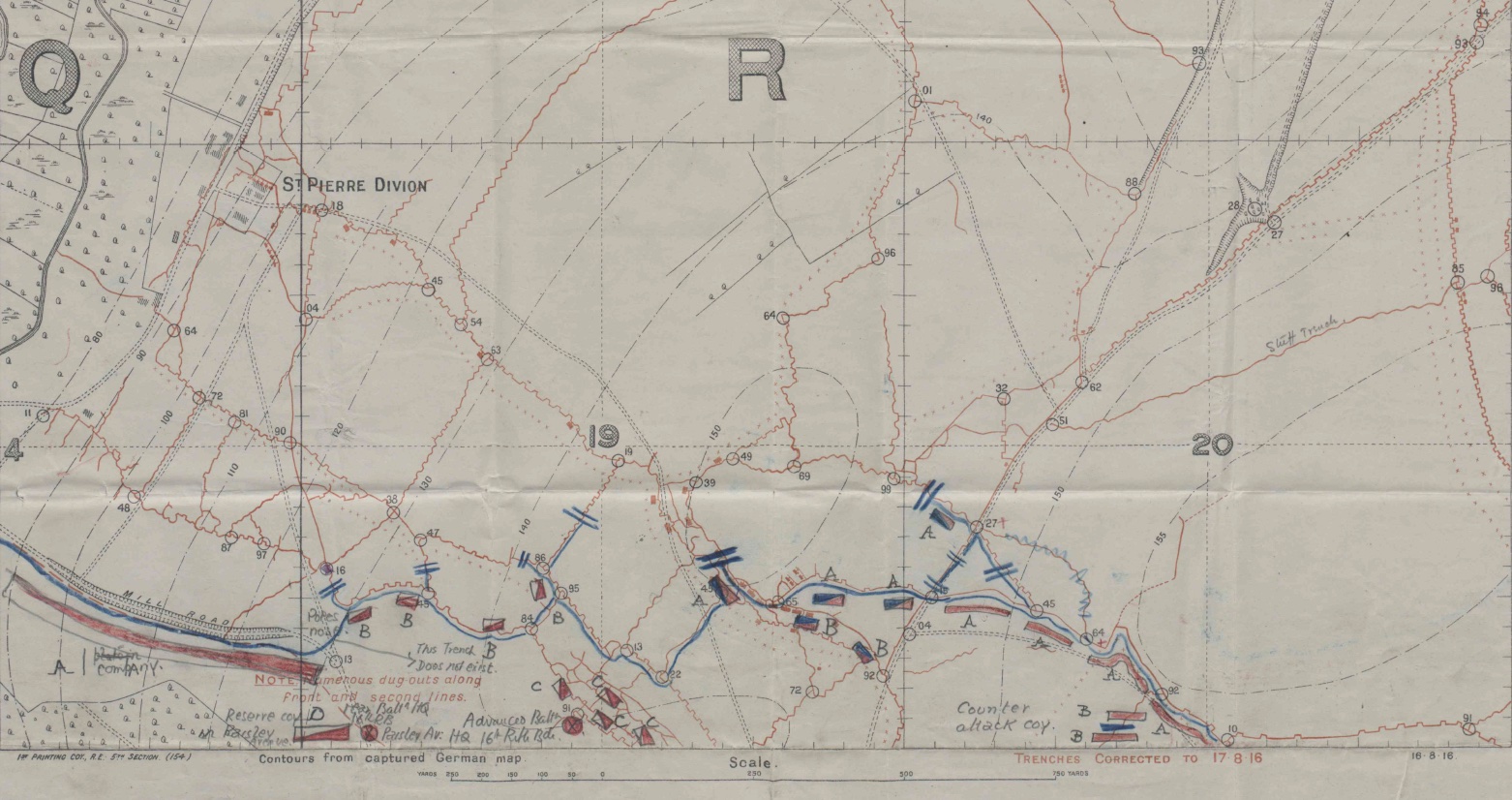
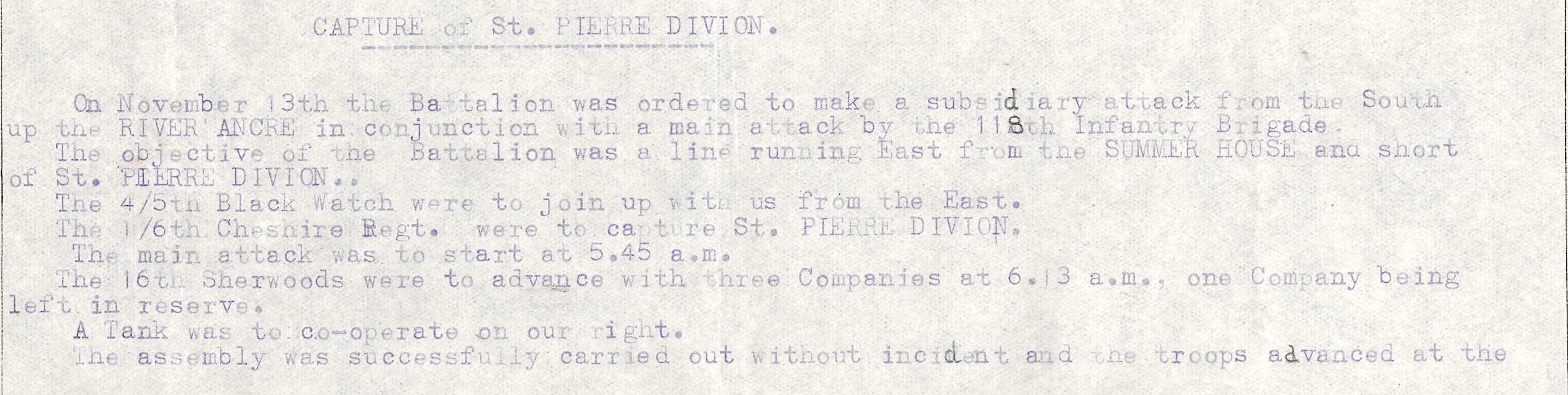
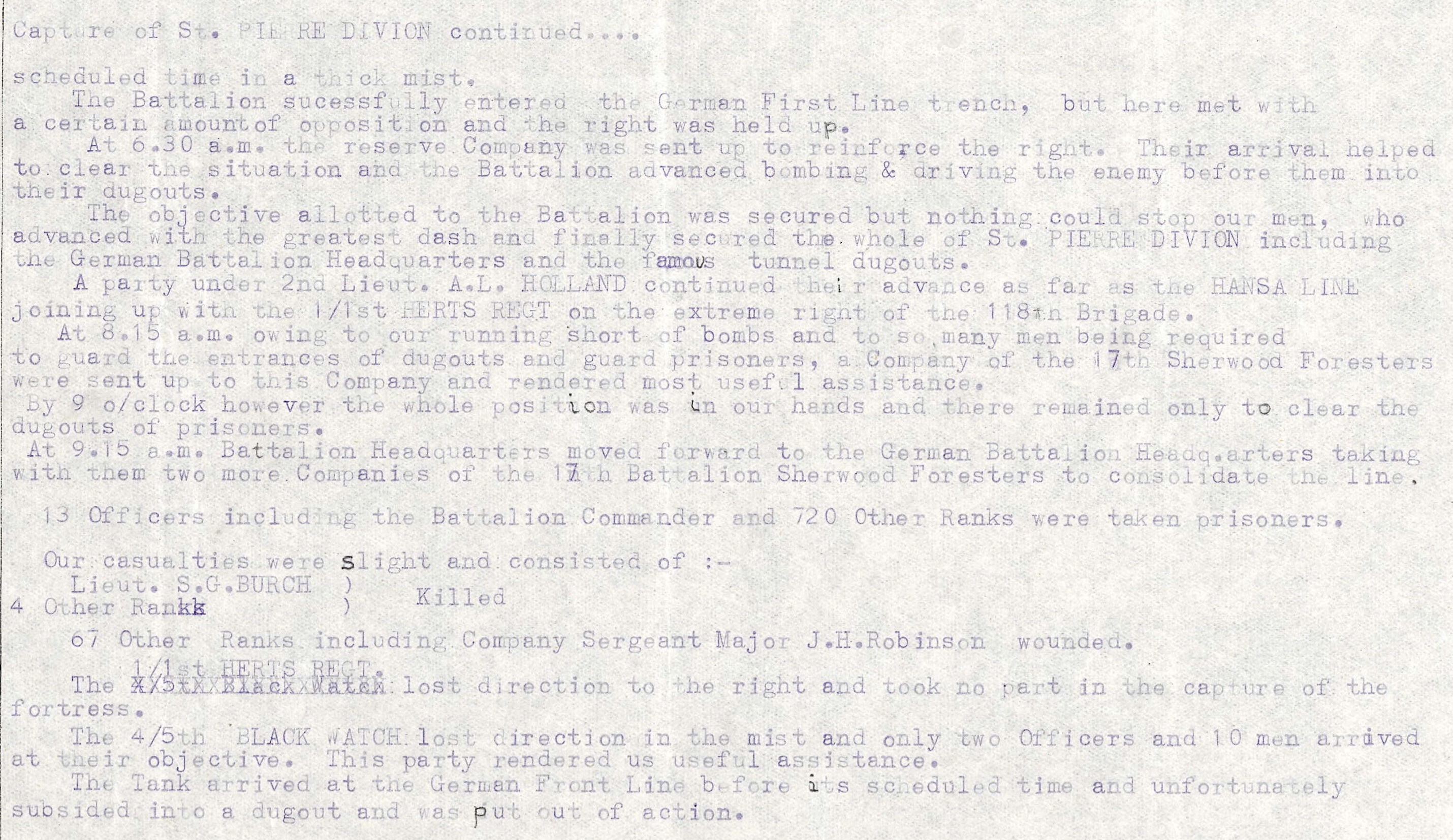
Trench Map of St Pierre Divion from WO95/2584/3War Diary entry for the attack on St Pierre Vivion WO95/2587/2
Almost immediately Enoch Thorley and the other men from the North Staffordshire Regiment were involved in the attack to capture St Pierre Divion. The Battalion successfully captured the German positions and in total captured 13 Officers and 720 Other Ranks. Casualties for the Chatsworth Rifles amounted to Lieut SG Burch and 4 Other Ranks killed; 67 Other Ranks wounded.
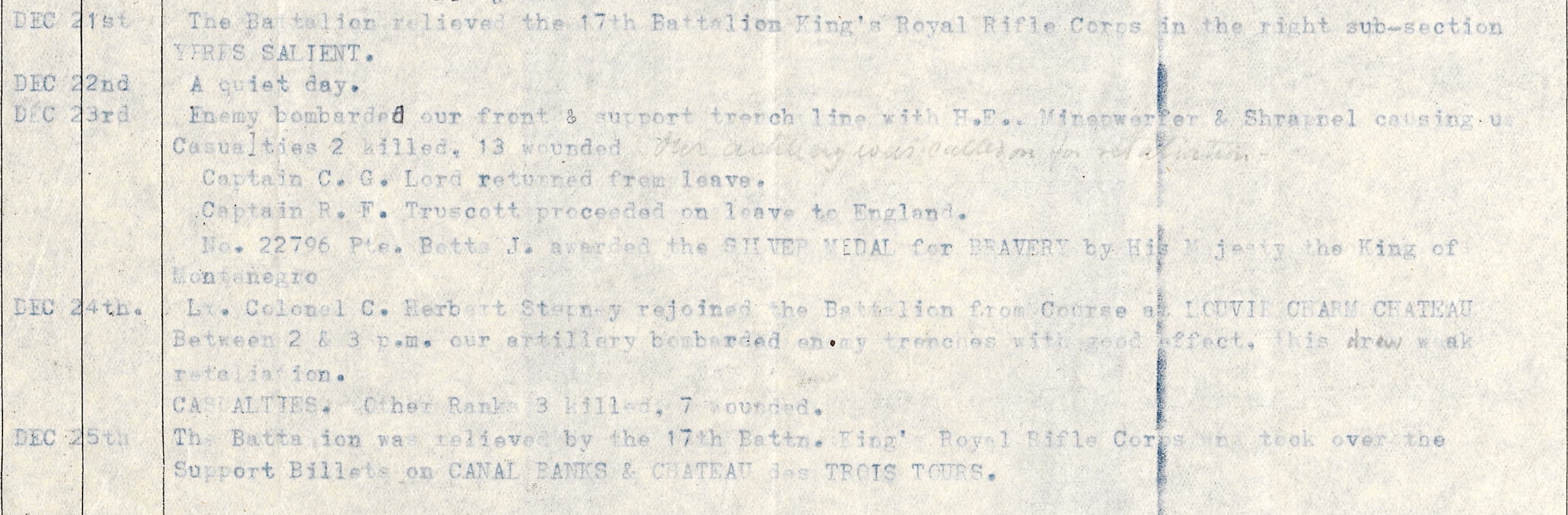
War Diary for 21st-25th December 1916 from WO95/2587/2
The Chatsworth Rifles were transferred to the Ypres Sector in November 1916 with the rest of the 39th Division. They relieved the 17th Battalion the King’s Royal Rifle Corps in the right sub-sector. These trenches were located on the Yser Canal just in front of Boesinghe.
Front line trenches
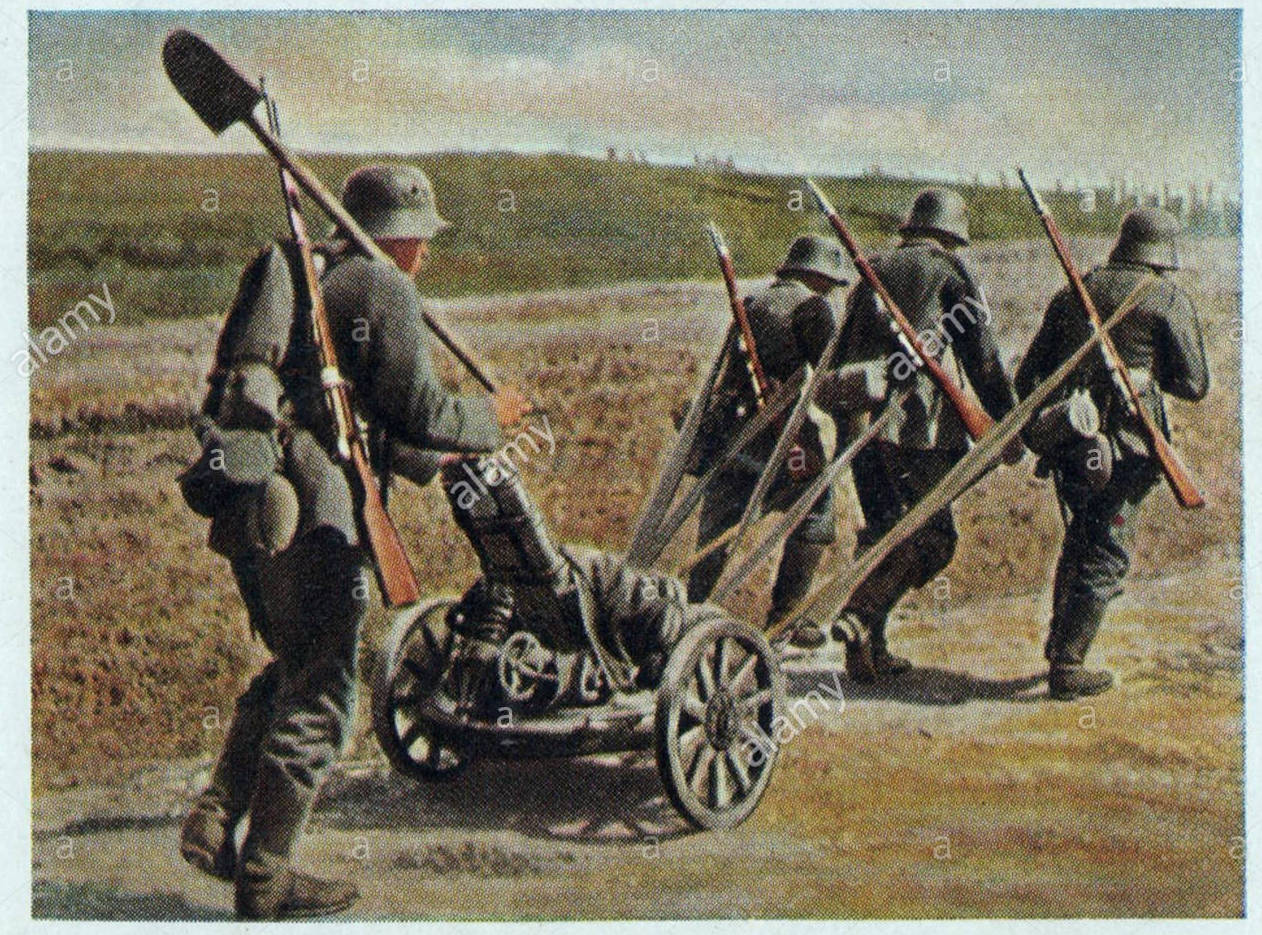
On the 23rd and 24th of December the Germans bombarded the front line trenches with Minenwerfer and shrapnel causing casualties. In total 5 men were killed and 20 wounded; amongst them was Enoch Thorley.
Enoch suffered a gunshot wound to the face, which was described as slight in the Admissions Book of the No 18 General Service Hospital based at Camiers. He had arrived by 18 Ambulance Train on the 26th December. This record also confirms that Enoch had only been in France for 2 months prior to his wounding. He was transferred to the 6 Canadian Hospital on the 10th January 1917.
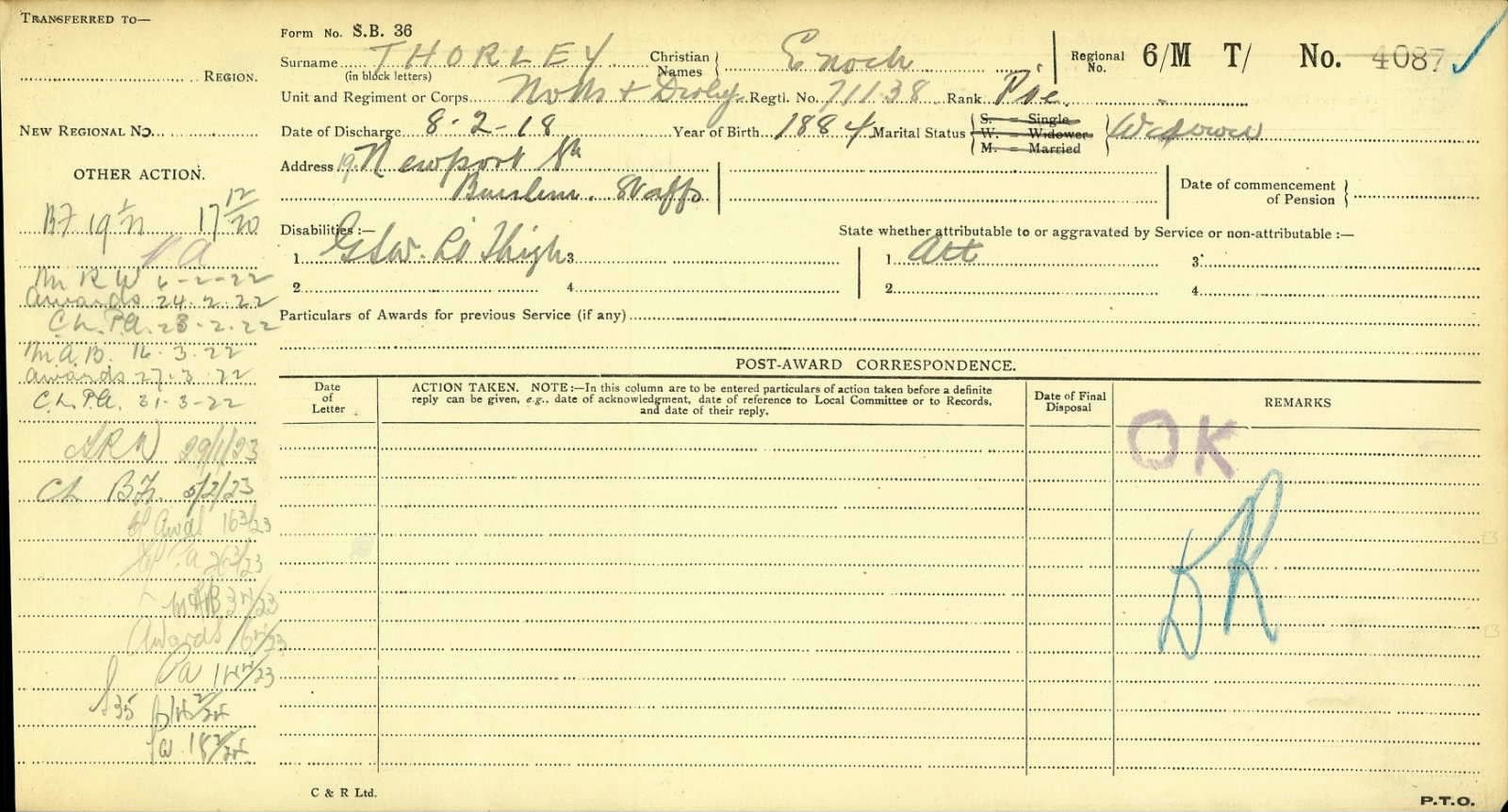
Enoch was discharged in February 1918 and received a pension. The Pension record describes his wound as GSW (gun shot wound) to the thighs; it is therefore possible that Enoch returned to the Chatsworth Rifles and was wounded a second time.
Enoch was awarded The Victory Medal, British War Medal and a Silver War Badge.
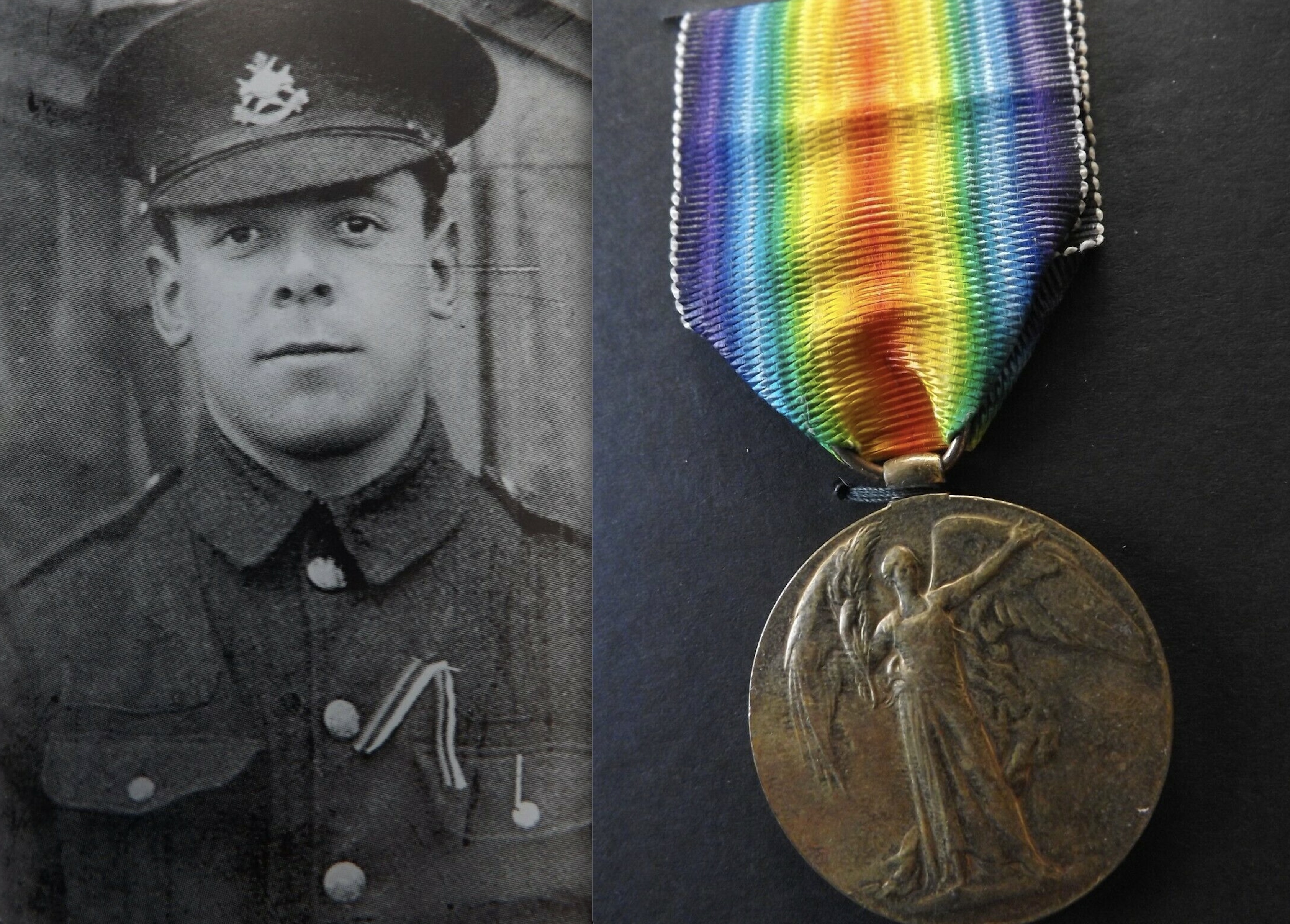
Walter was born in 1883 and was limestone quarryman. He enlisted into the Sherwood Foresters in December 1914 and was serving with the 3/6th Battalion in February 1916
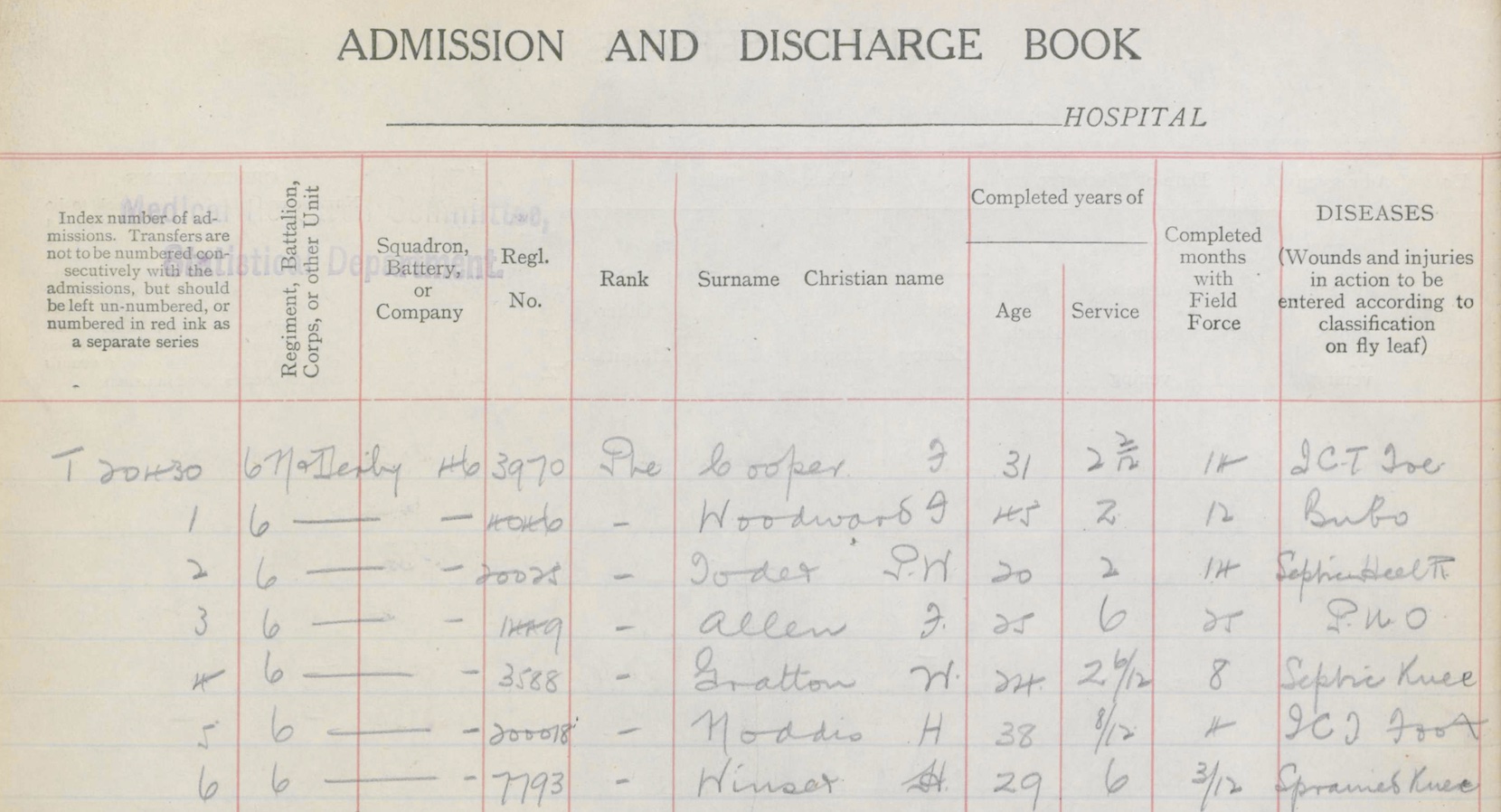
Around August 1916 Walter was posted to the 1/6th Battalion and sent to France (information taken from XI CCS Admission and Discharge book). In March 1917 he suffered from a septic knee and was sent to the XI Casualty Clearing Station in Varennes. Seven other men from the 1/6th Battalion were also sent by sick convoy to the XI CCS.
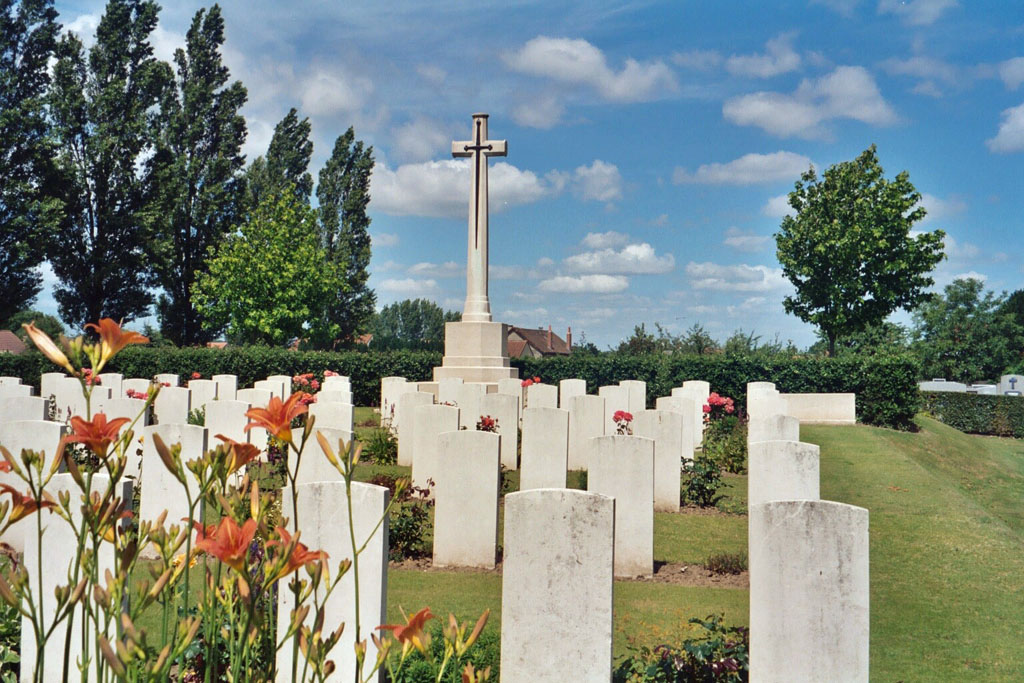
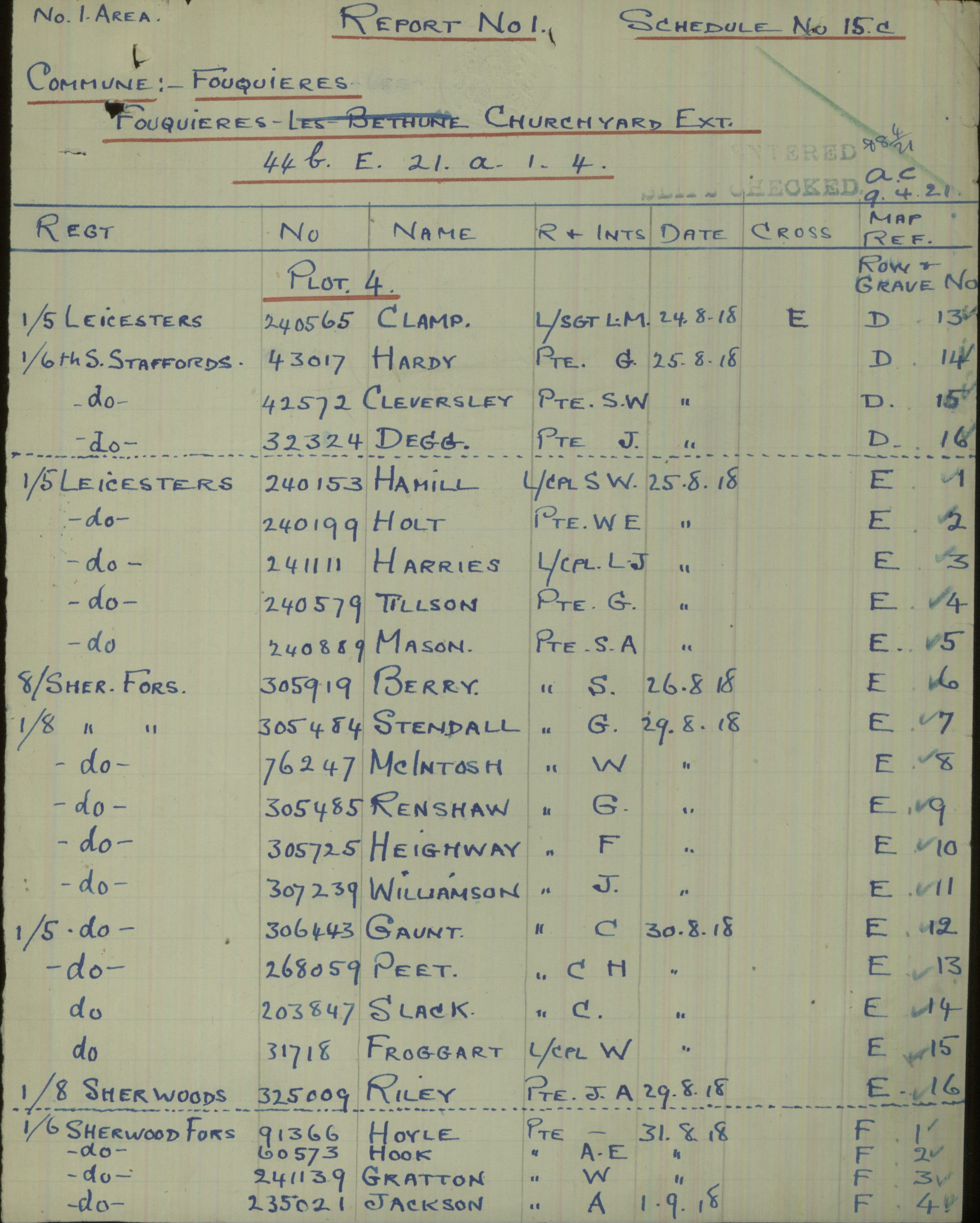
Walter was still serving with the 1/6th Battalion when they attacked Hunter and Scotts Post between 30th August and 3rd September – see here. Walter was one of four men killed that day and they are buried in FOUQUIERES CHURCHYARD EXTENSION, Plot IV, Graves F1-3 & 8.
Fouquieres Churchyard Extension, France
His parents (Benjamin and Mary) lived at 3 Rose Cottage, Upper Town in Bonsall, Derbyshire and after the War received a pension.



















 Derbyshire Territorials in the Great War