Category Archives: Casualties

Kaiserschlacht vignettes: Robert Alwyn Dane from Eyam

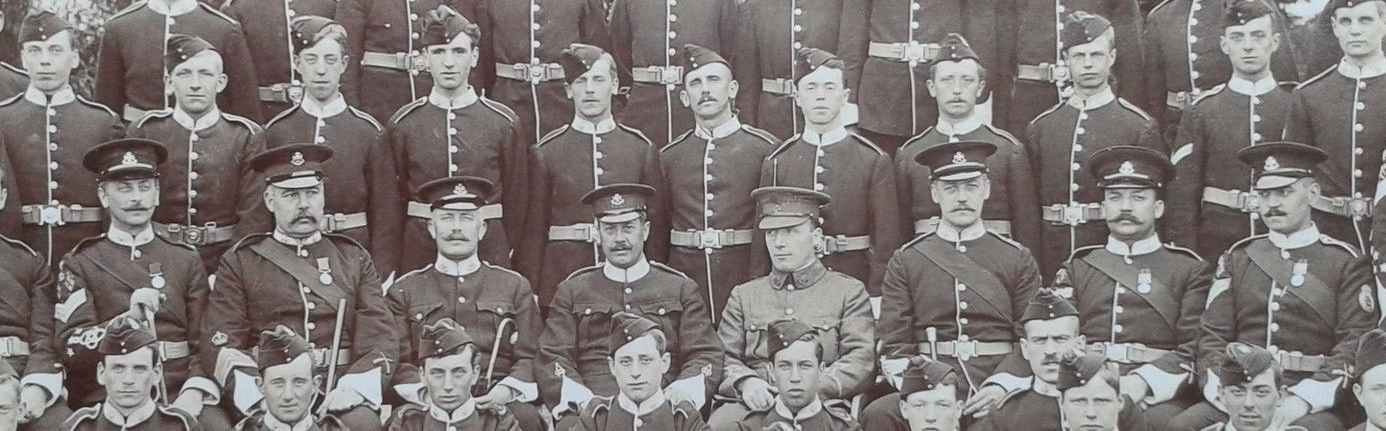
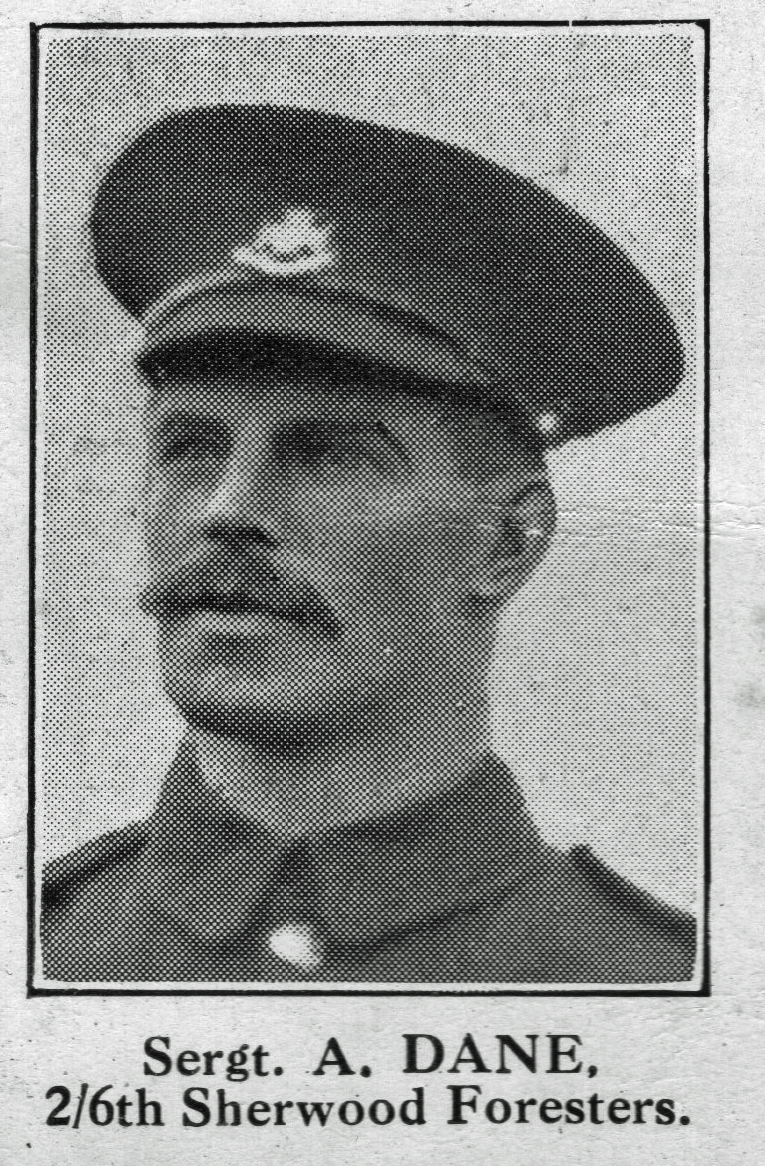
2843/240759 Sergeant Robert Alwyn Dane from Eyam

2843/240759 Sergeant Robert Alwyn Dane

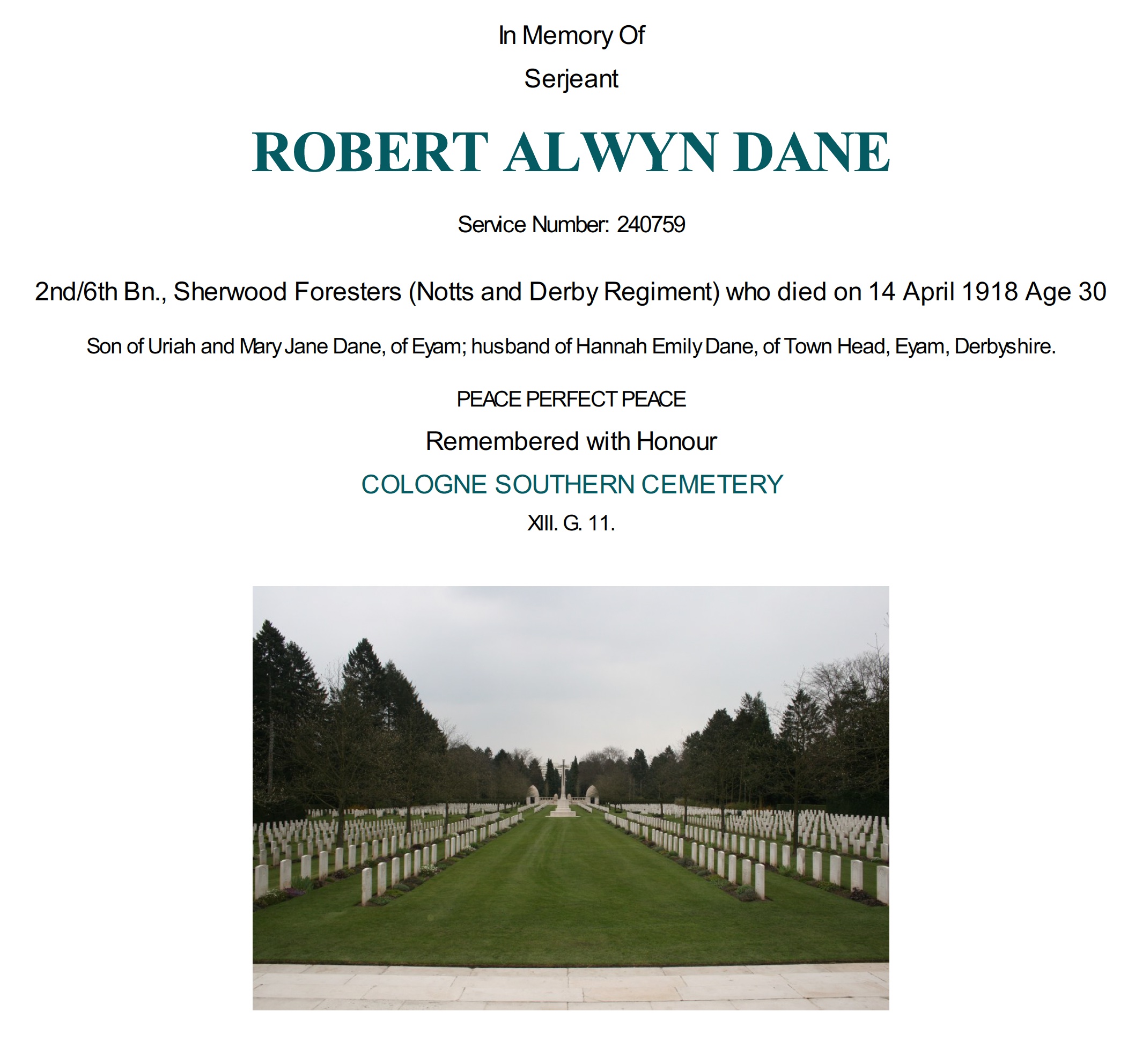
Robert enlisted in October 1914 into the 2/6th Battalion and arrived in France in February 1917. He was wounded in April 1917 and granted leave to the UK in September 1917. Robert was recorded as ‘missing in action’ on the 21st March 1918 and later died of his wounds on the 14th April.

Casualty Form – Active Service
Robert was wounded in the back
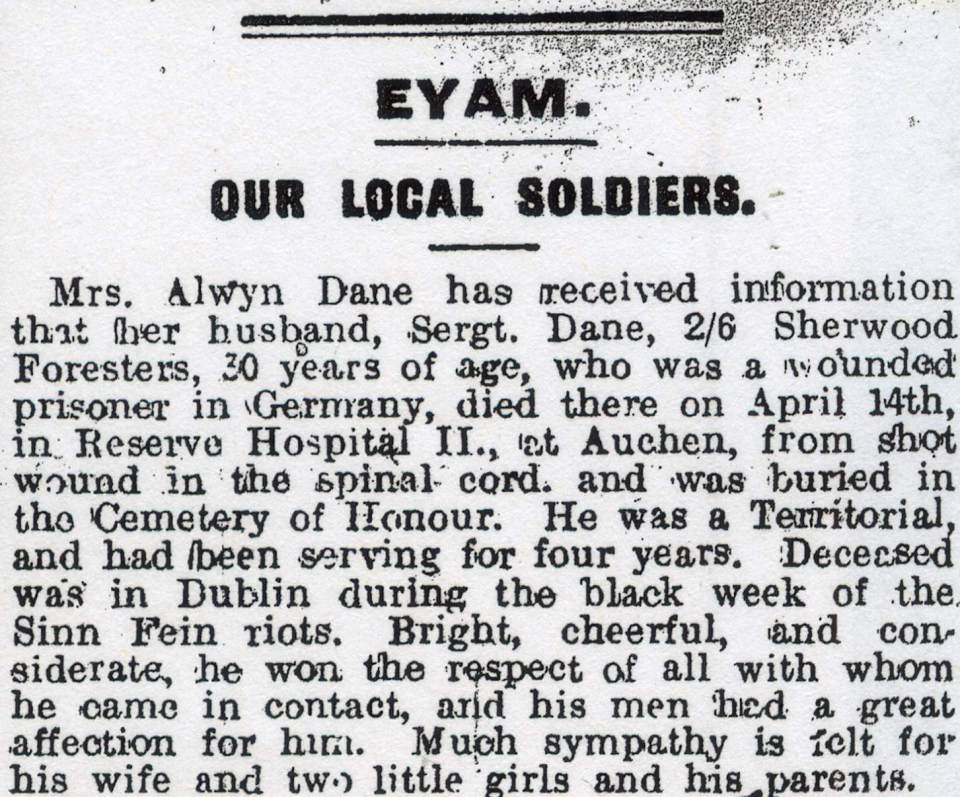
Derbyshire Time from 1918

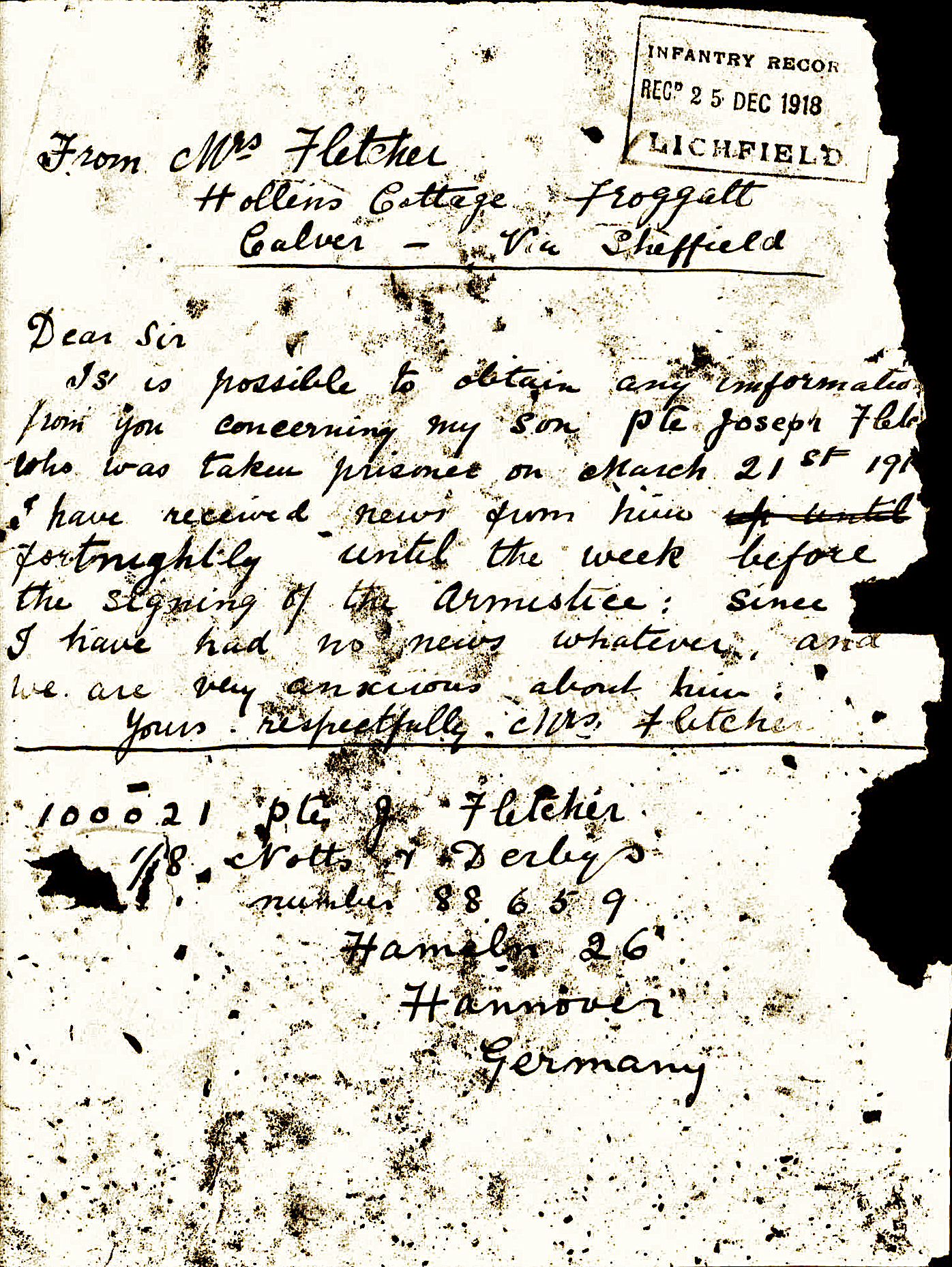
100021 Pte Joseph Fletcher from Froggatt: a mothers desperate letter……..

Dear Sir

Is it possible to obtain any information from you concerning my son Pte Joseph Fletcher who was taken prisoner on 21st March 1918. I have received news from him fortnightly until the week before the signing of the Armistice: since I have had no news whatever, and we are very anxious about him.

Yours respectively, Mrs Fletcher

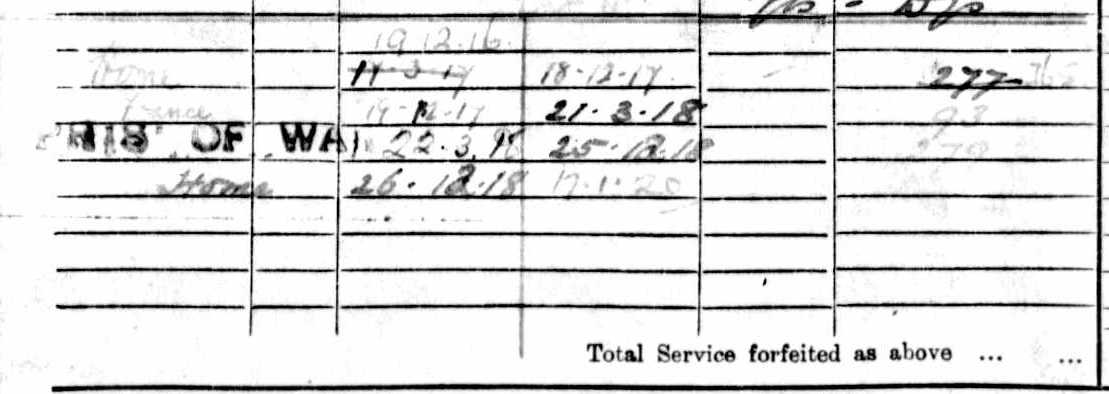
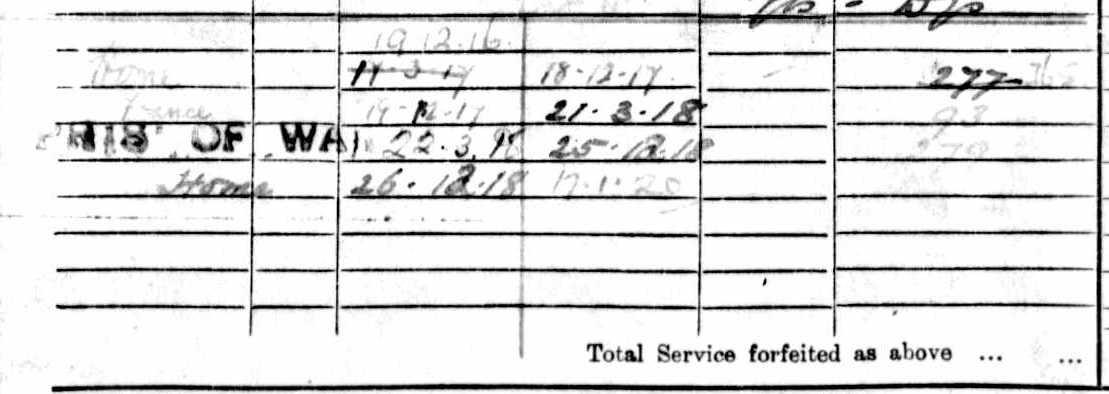
Joseph was repatriated on the 25th December 1918

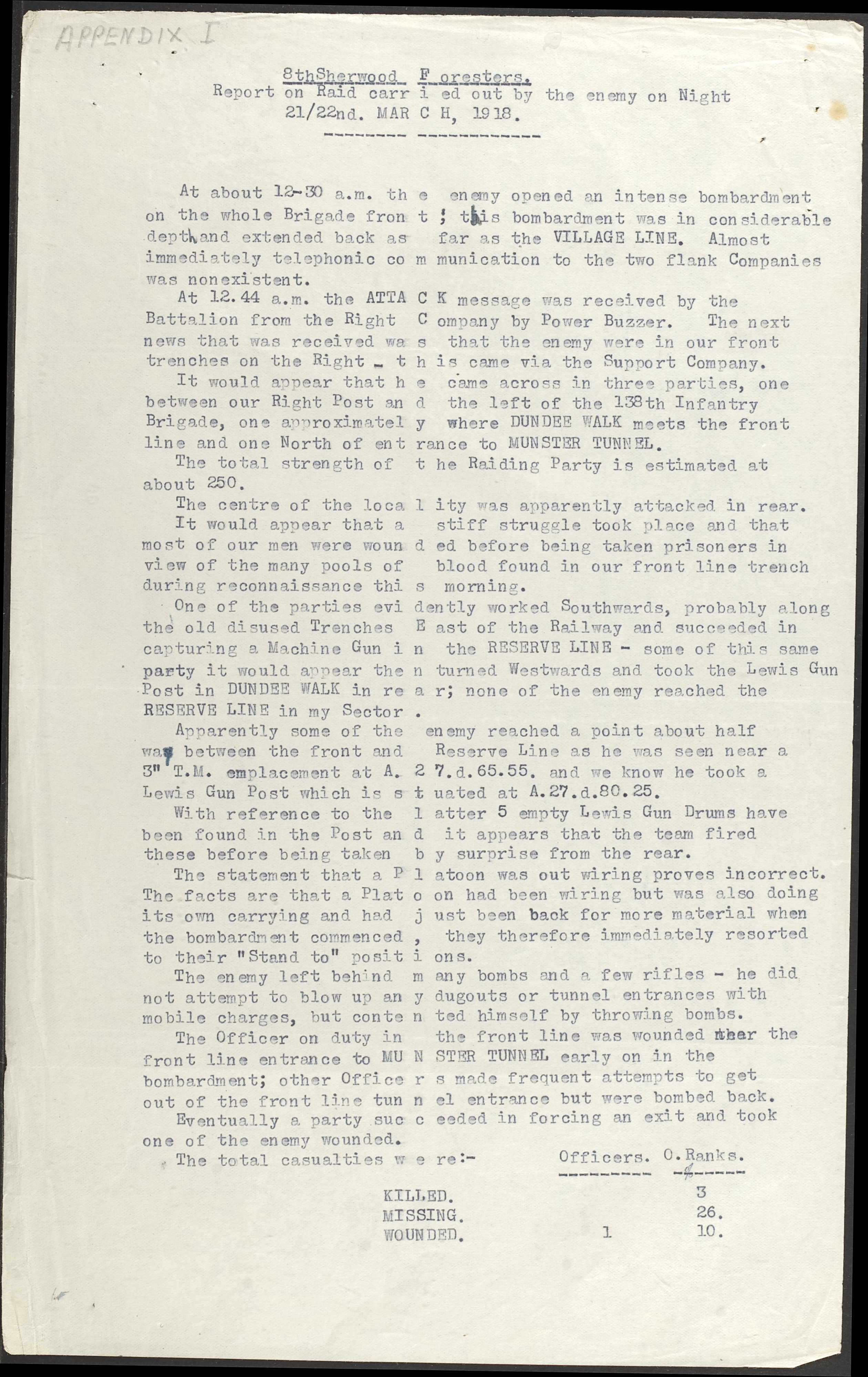
Service with the 1/8th Battalion

Joseph was posted to the 1/8th Battalion on the 29th January 1918, which was holding front line posts near Cambrai when the Germans raided causing several casualties.

Service Record
Record of capture
Joseph was interned in Dulmen POW Camp

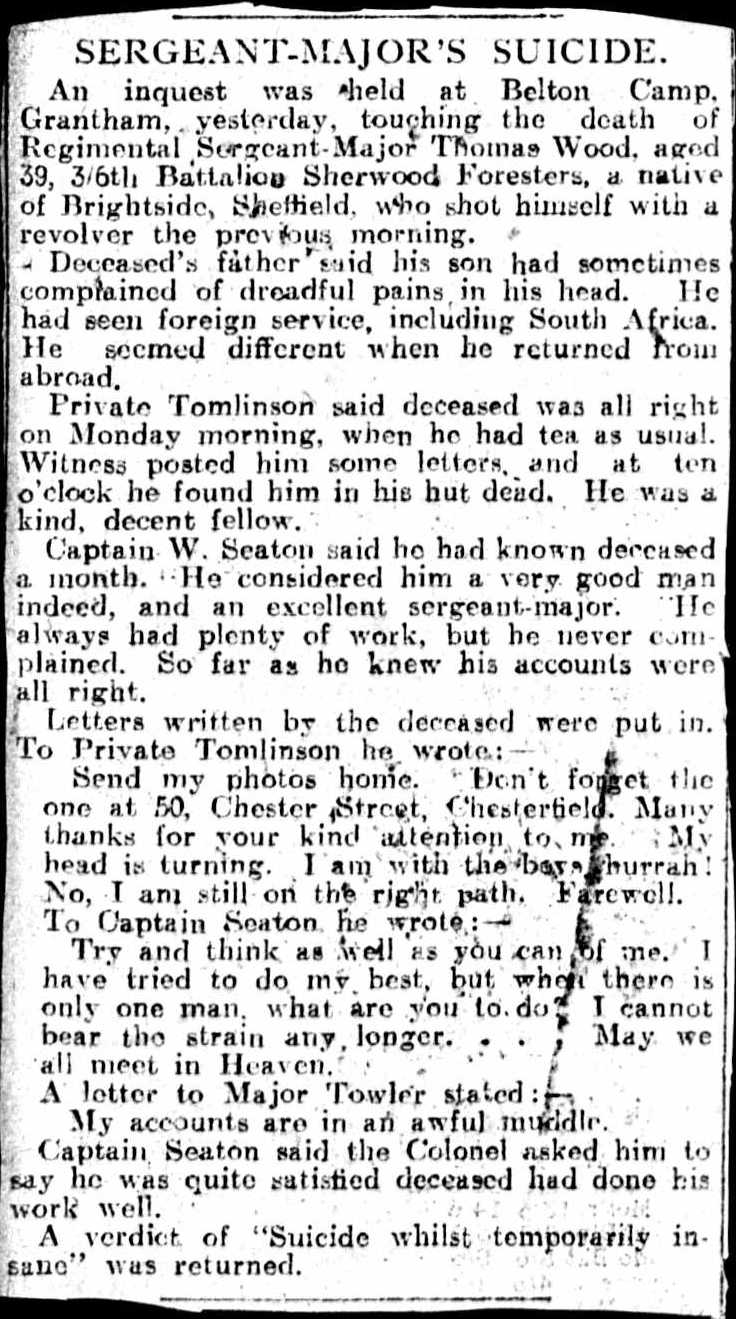
The tragic suicide of 3828 Company Sergeant Major Thomas Wood from Sheffield

On the 4th October 1915 at Belton Camp near to Grantham

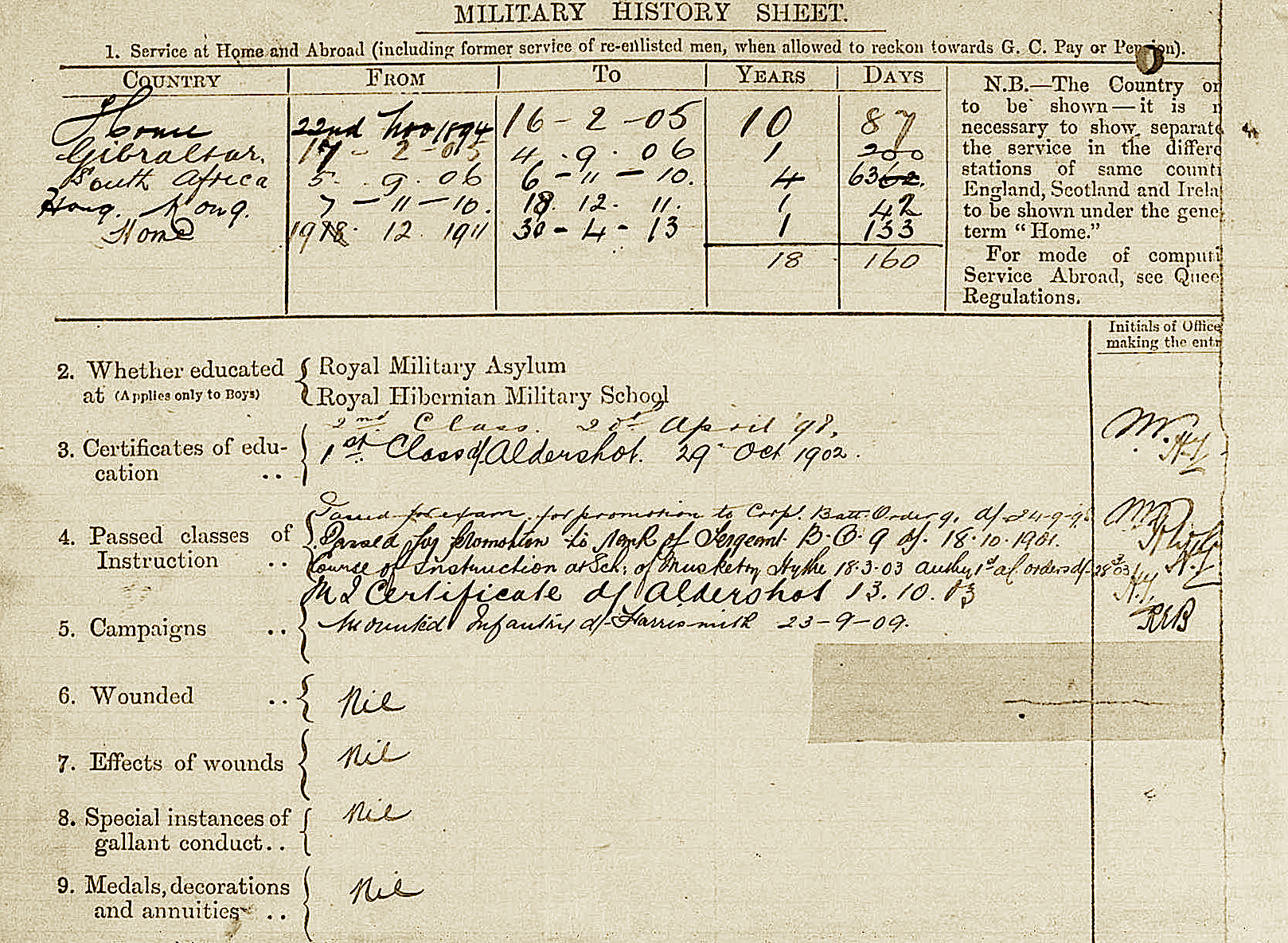
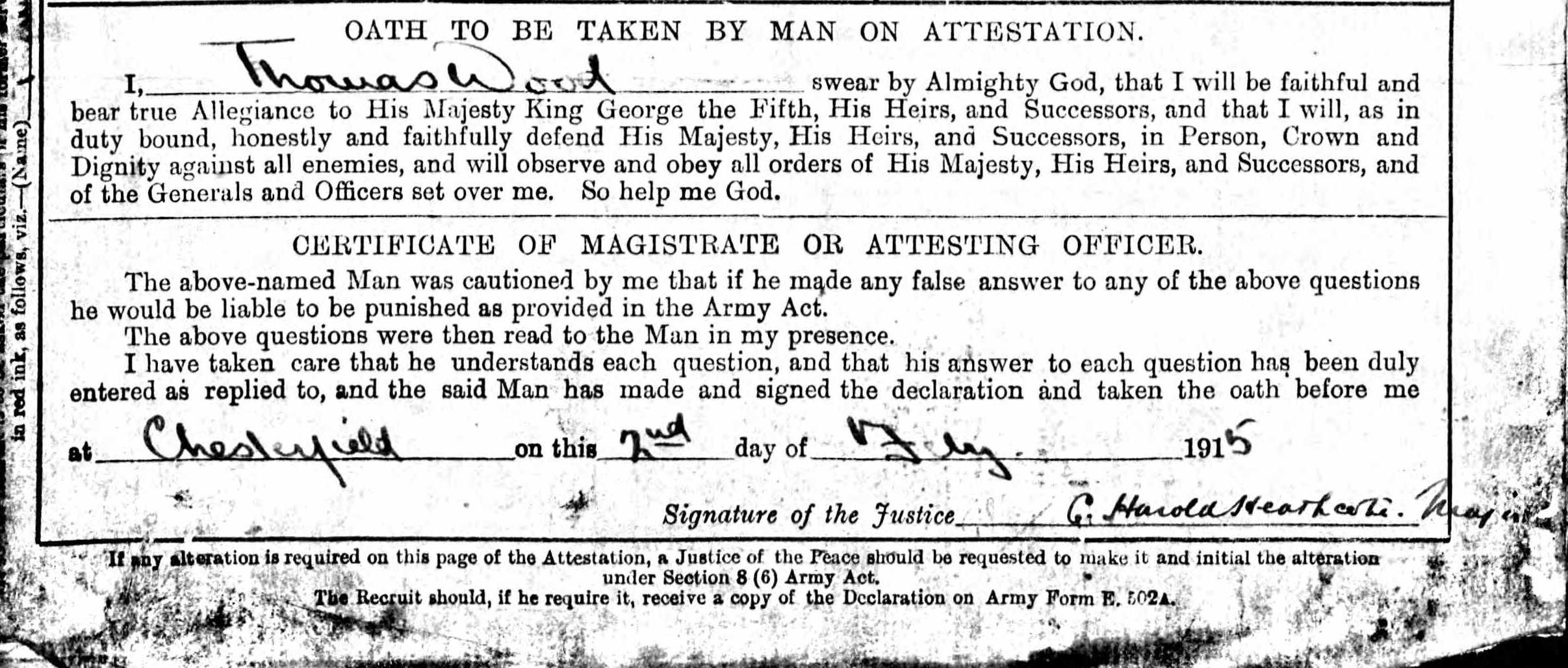
Thomas was a 38 year old clerk when he enlisted into the 6th Reserve Battalion, the Sherwood Foresters in Chesterfield on the 2nd May 1915. Thomas had previously served over 18 years with the 2nd Battalion Kings Own Yorkshire Light Infantry and rising to the rank of Colour Sergeant.

Service Record for Thomas Wood recording that he had served in South Africa and Hong Kong and has passed numerous courses of instruction.

Attestation of Thomas Wood witnessed by Major C Harold Heathcote
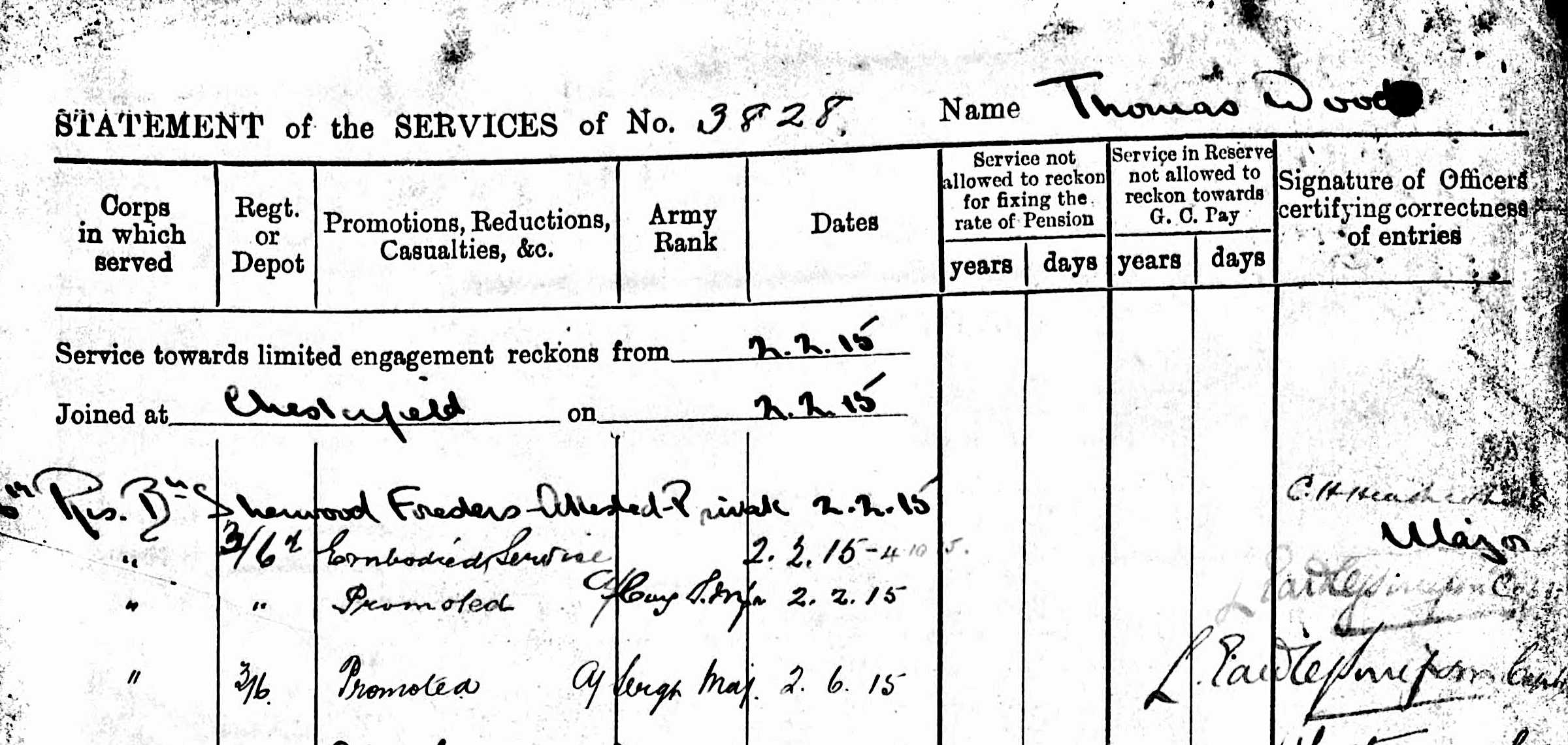
Thomas was immediately posted to the 3/6th Battalion and promoted to the rank of Acting Company Sergeant Major. He was subsequently promoted to Acting Sergeant Major in June 1915.
In October 1915 Thomas took his own life
Newspaper article

Captain William Seaton, who had known him for a month, described Thomas as a very good man indeed and an excellent sergeant-major. Thomas left a wife and four sons who received a pension.

It would appear from Captain Seaton’s testimony and Thomas’s final letter that he was under considerable pressure “Try and think as well as you can of me. I have tried to do my best, but when there is only man, what are you to do? I cannot bear the strain any longer”

Thomas wrote to Major Towler stringing that “my accounts are in an awful muddle”, but on examination “so far as he knew the accounts were alright”.

The History of the 3/7th Reserve (Robin Hood) Battalion Sherwood Foresters, written in 1921, records that there were a shortage of Officers and NCOs in these early days of the Reserve Battalions.


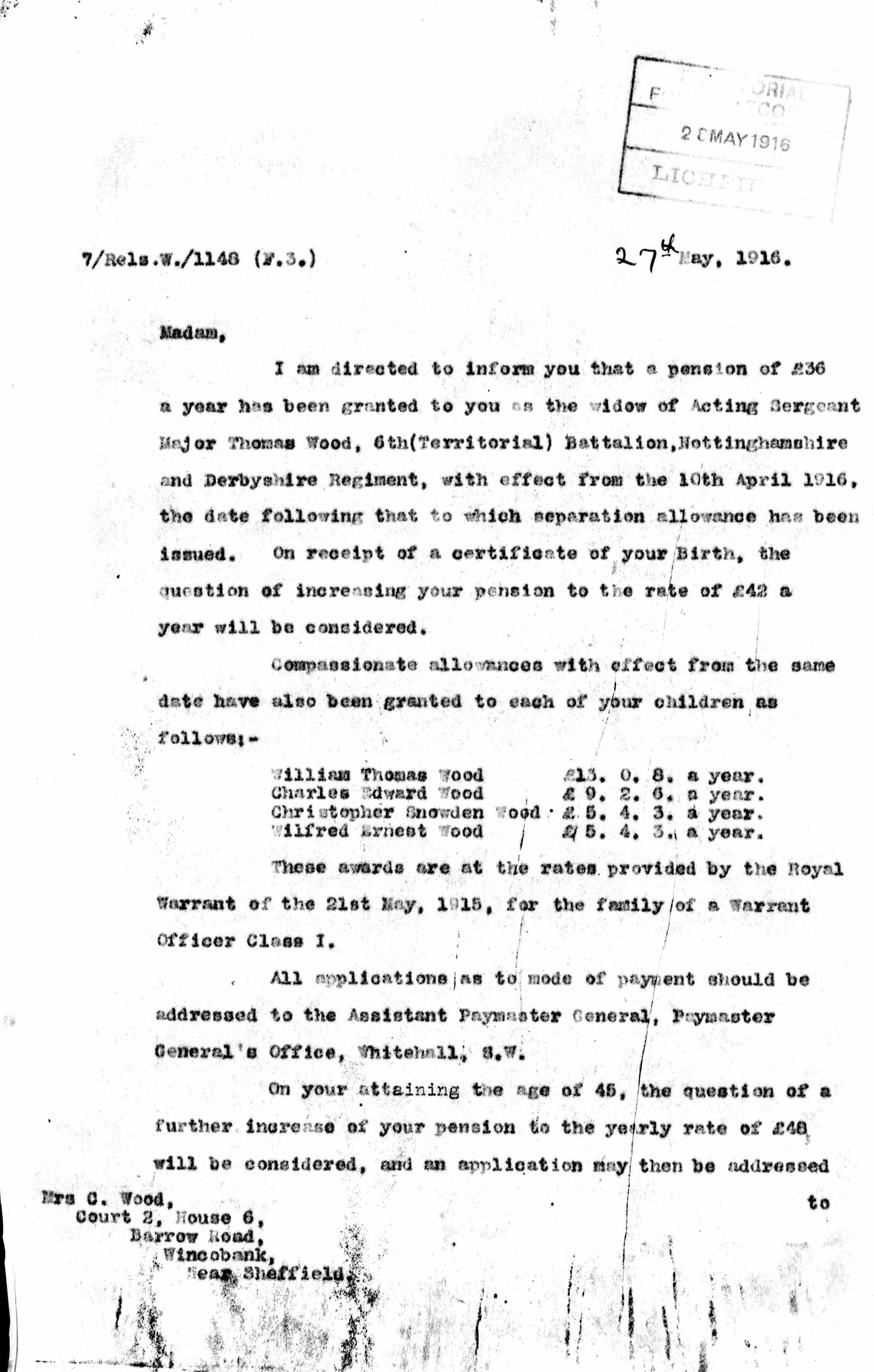
Thomas’s widow Catherine and their four young sons were awarded a pension.

Queant Road Cemetery: 2/5th Battalion men commemorated in August 1924

“To the memory of these 9 British Soldiers who were buried by the enemy in 1918 in NOREUIL GERMAN MIL. CEM., but whose graves are now lost”

Graves Registration report Form

2/5th Sherwood Foresters

202077 Pte Ernest Richard Potts was born in 1892 and was a boot repairer from Duffield who enlisted in November 1915. Only served overseas with the 2/5th Battalion and death was ‘presumed’ on 21st March 1918. He left his wife Mabel who received a pension.

Pension Card

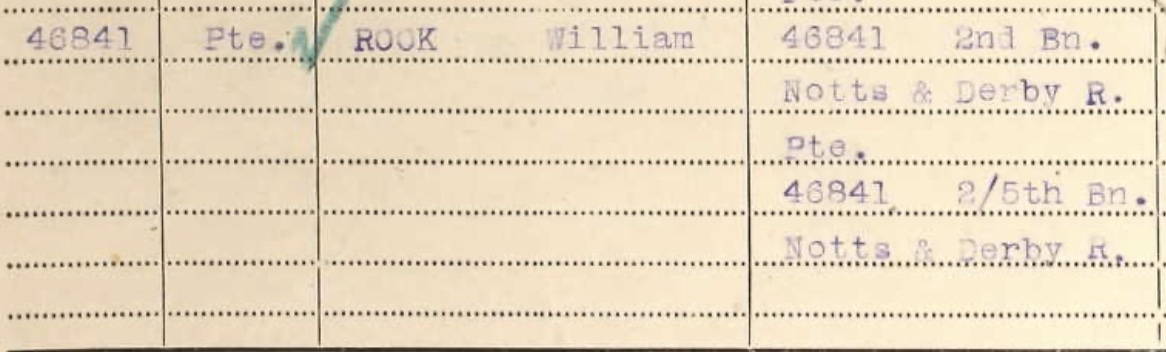
46841 Pte William Rook from Navenby in Lincolnshire. Enlisted in May 1916 and transferred from the 2nd Battalion. Death was ‘presumed’ on 21st March 1918 and his father received a pension.

Medal Roll

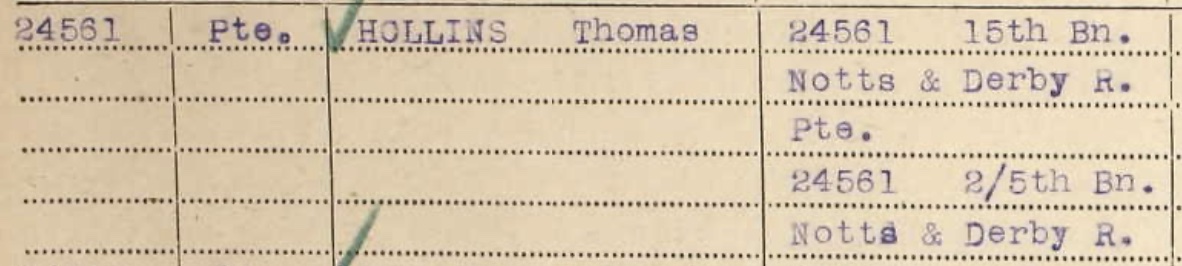
24561 Pte Thomas Hollins from Nottingham enlisted in March 1915 and had previously served with the 15th Battalion. He was killed in action on 21st March 1918 ‘or since’. His mother Jane was awarded a pension for life in November 1918.

Medal Roll

6970 Pte Edwin George Carter from Sneiton in Nottinghamshire aged 45. Previously saw service as a Sergeant in South Africa (1899-1902) with the 4th Battalion Derbyshire Regiment. Awarded Cape Colony and Orange Free State Clasps. Death was ‘presumed’ on 21st March 1918.

Medal Roll

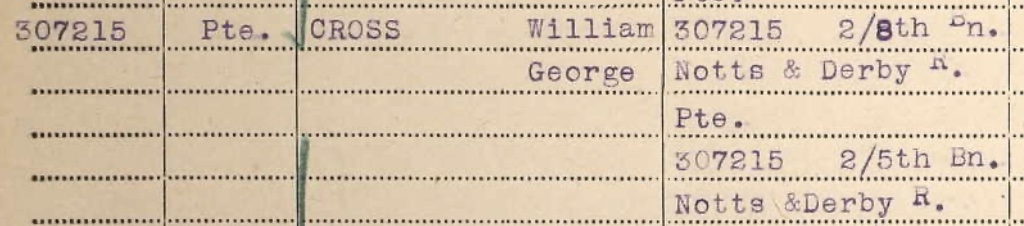
307215 Pte William George Cross from Camberwell. Also served with 2/8th Battalion. Death ‘officially accepted’ as 21st March 1918. Left his wife Birdie who received a pension.

Medal Roll

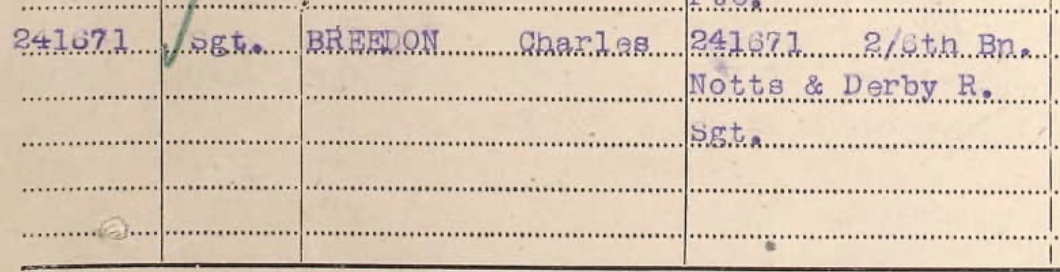
241671 Sergeant Charles Breedon from Clay Cross. Death ‘assumed’ on 21/3/18 and he was actually serving with 2/6th Battalion. His mother Elizabeth was awarded a pension for life in November 1918.

Medal Roll

Other Battalions

200463 Pte Frederick Ridgway from Mossley in Staffordshire aged 23. Served with 2/6th Battalion North Staffordshire (Prince of Wales’s) Regiment. Son of Harry and Lucy Ridgway of Henleaze Gardens, Westbury-on-Trym in Bristol. Born at Newcastle-under-Lyme.

27164 Pte Richard Martin from Heatly in Cheshire, 1st Bn Shropshire Light Infantry died of wounds on the 2nd April 1918. The adopted son of Mr. & Mrs. William Mantle of Sandy Lane, Lymm.

41415 Pte Henry John Moles from Hitchin in Hertfordshire aged 19. 2/5th Battalion Lincolnshire Regiment. http://www.hertsatwar.co.uk/biographies/569077/henry-john-moles.

Queant Road Cemetery

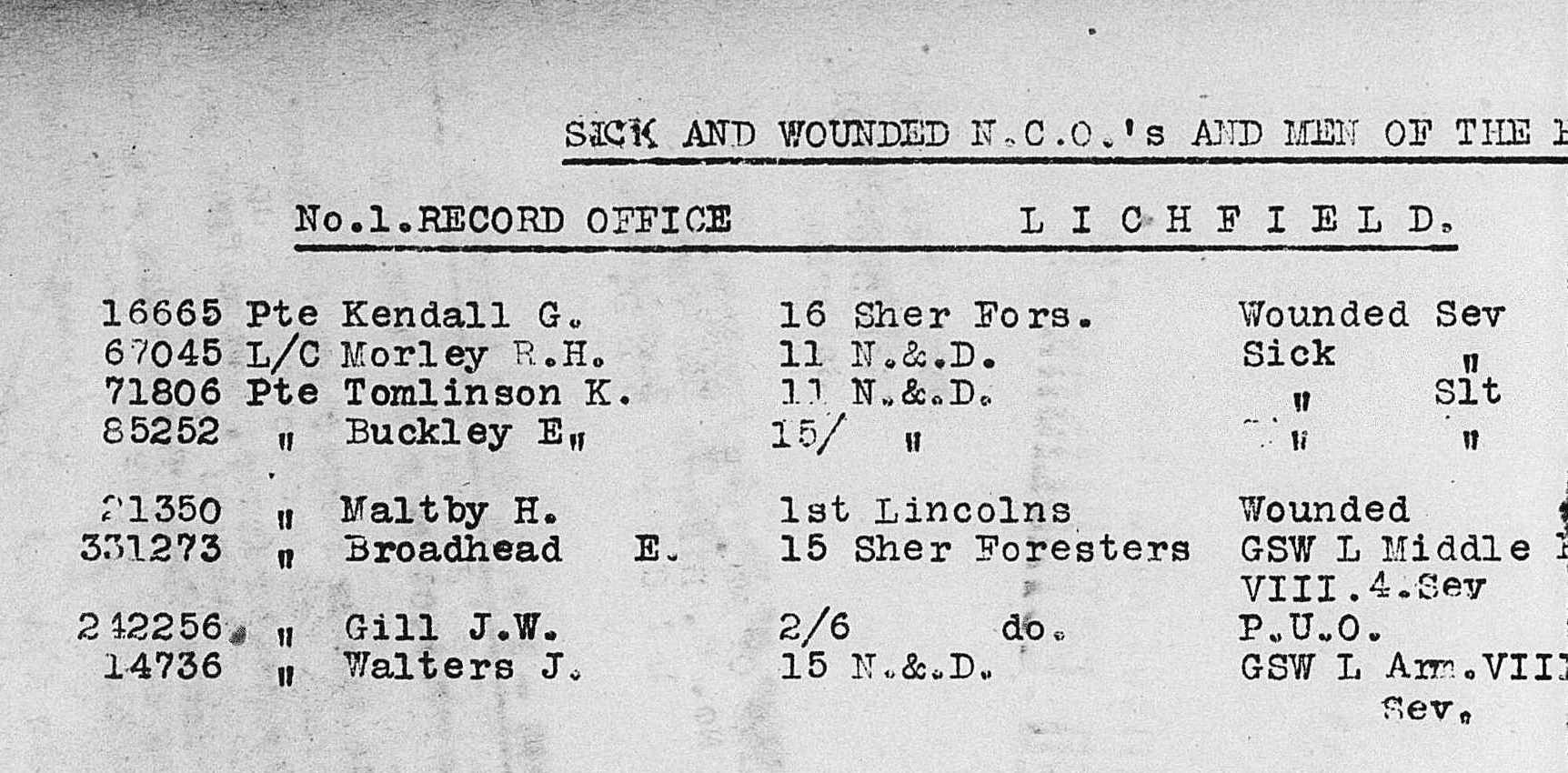
242256 Pte JW Gill on an undated casualty list from No. 1 Record Office in Lichfield……

‘Sick and wounded NCOs and Men of the…….’

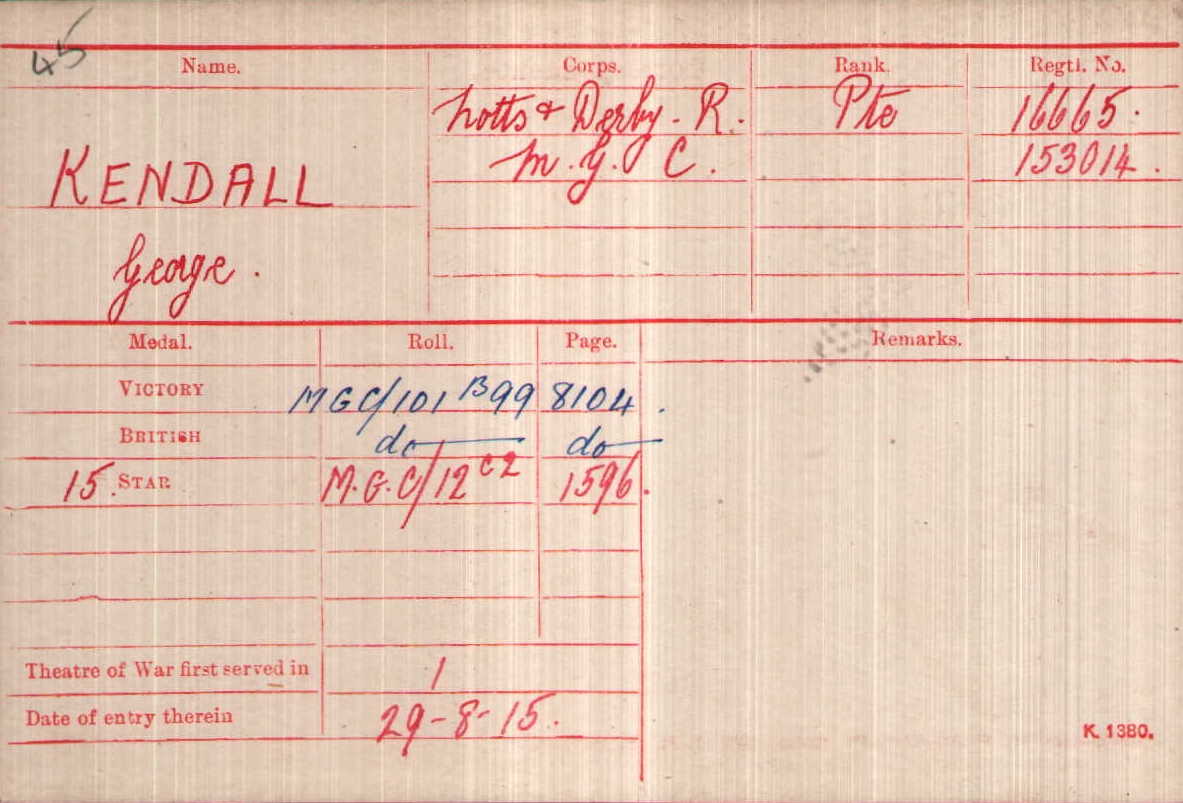
16665 Pte George Kendall from Mansfield

16665 Pte George Kendall from Mansfield enlisted in Sept 1914 and arrived in France with the 12th Battalion on the 28th August 1915. He later joined the MGC and was Class Z in January 1919.

MIC
George was later to receive a pension

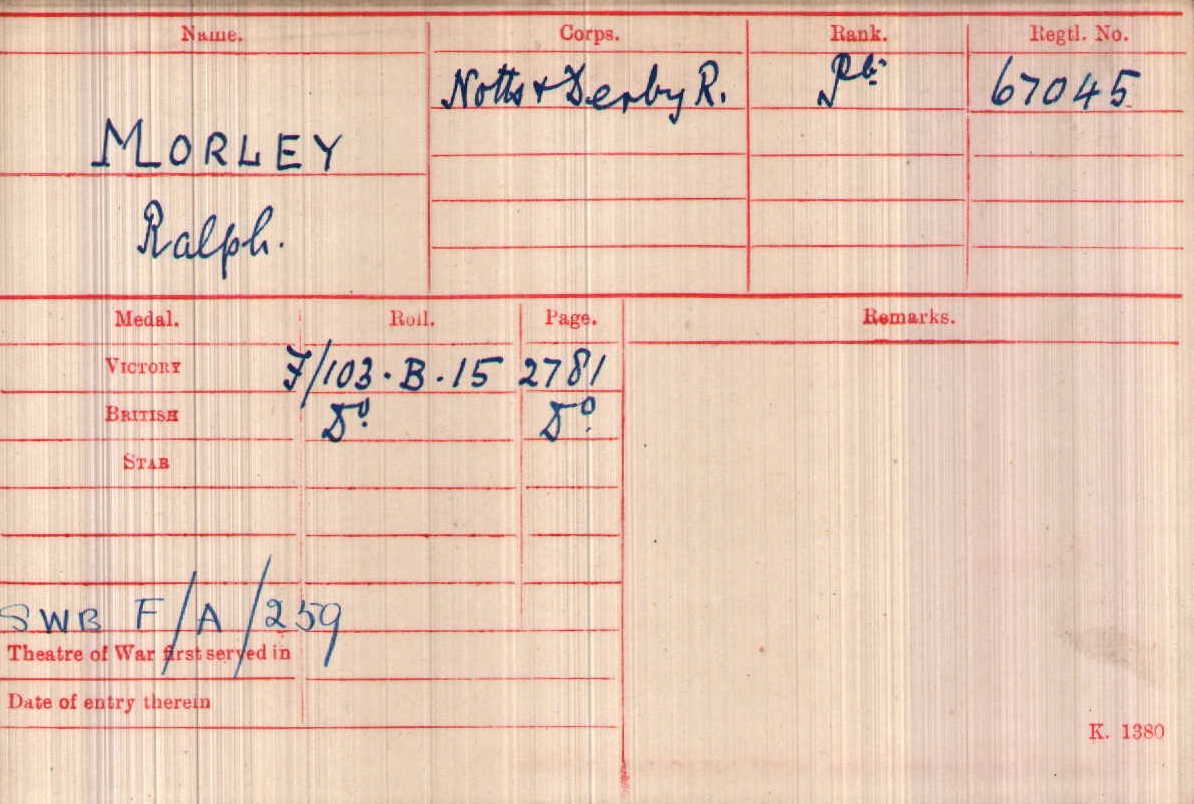
67045 Lance Corporal Ralph Morley

67045 L/C Ralph Morley enlisted on 10th Sept 1914 and only served overseas with the 11th Battn. He was discharged in April 1918 suffering from neurasthenia sickness; he would later receive a pension and a Silver War Badge.

MIC

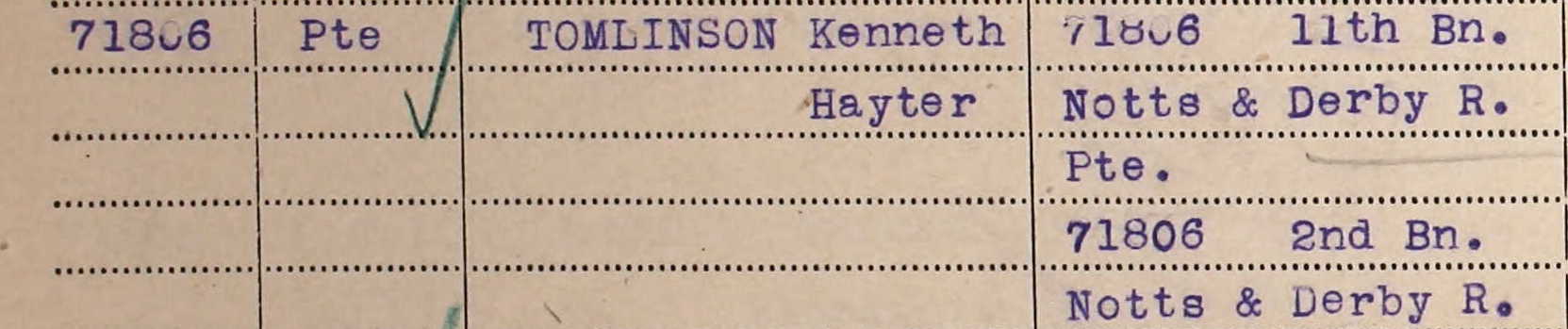
71806 Pte Kenneth Tomlinson from Sheffield

71806 Pte Kenneth Hayter Tomlinson from Sheffield served with ‘C’ Company 11th Battalion and suffered from eczema to the face and placed on the 31 Ambulance train from Remy to Boulogne on the 18th July 1917. He later served with the 1st Battalion.

Medal Role
31 Ambulance Train 18th July 1917

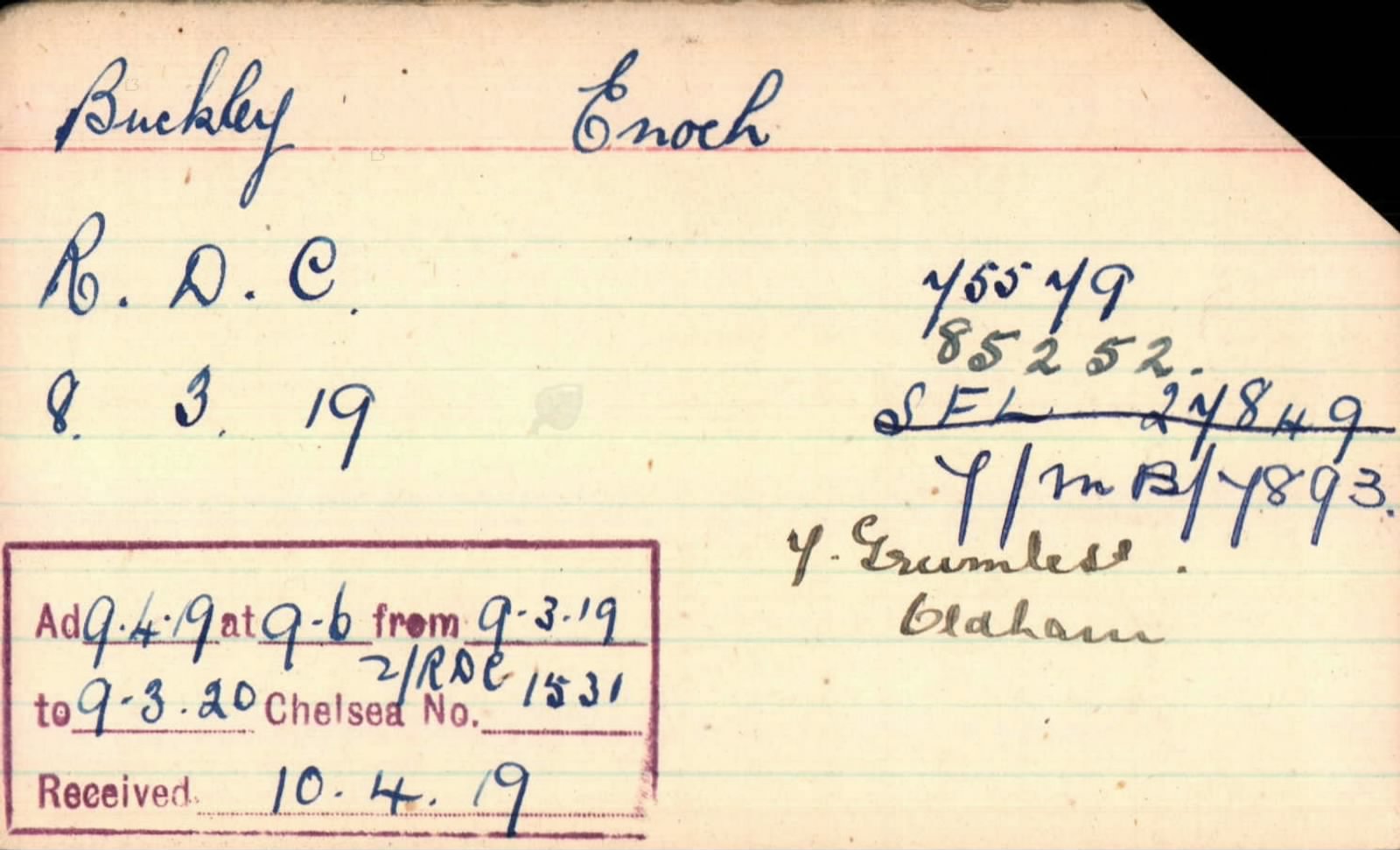
85252 Pte Enoch Buckley from Oldham

85252 Pte Enoch Buckley from Oldham served overseas with the 15th Battalion from 27th July 1917 to 28th October 1917. He later transferred to the Royal Defence Corps.

Medal Role
Enoch would later receive a pension

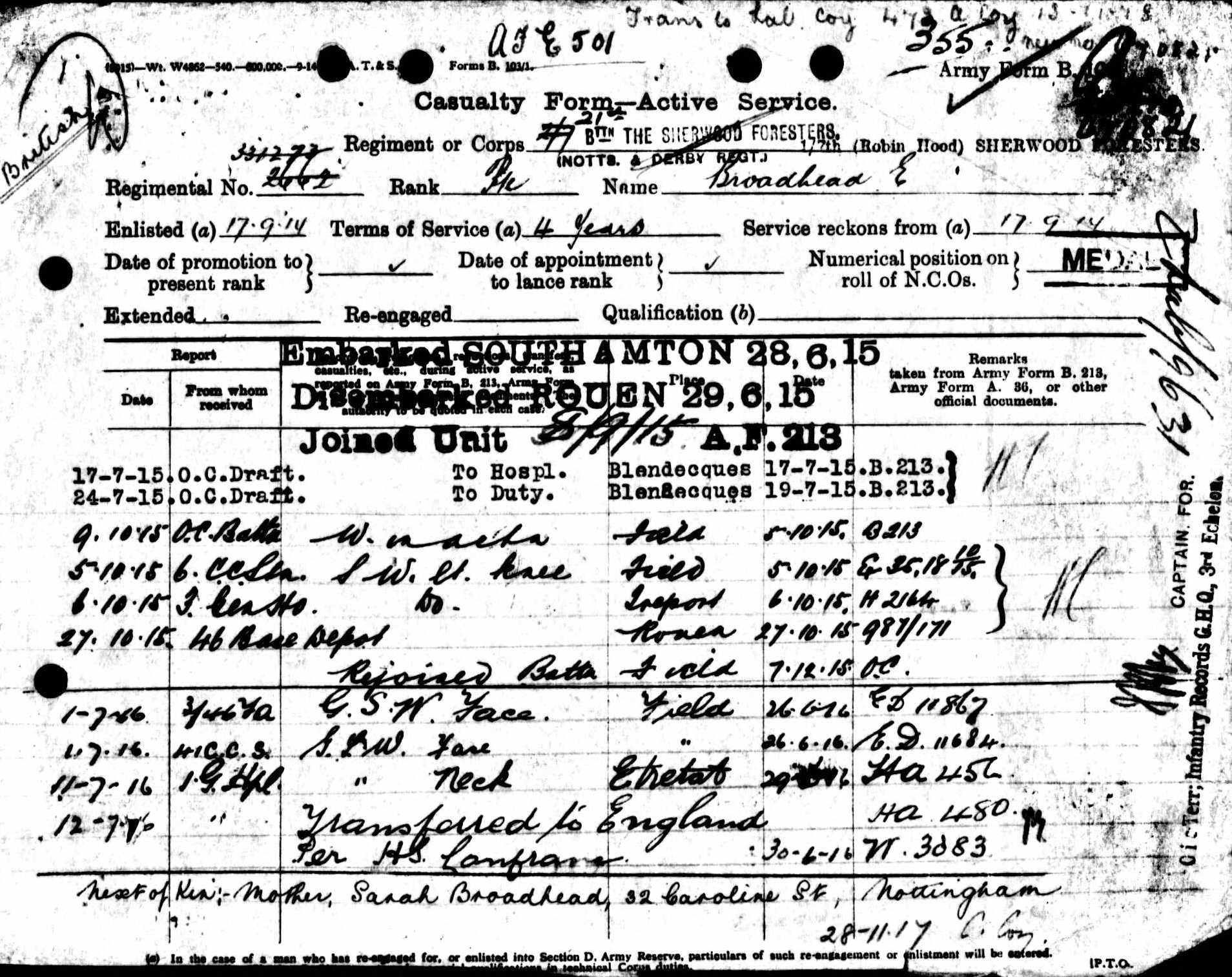
331273 Pte Ernest Broadhead from Nottingham

331273 Pte Ernest Broadhead served with a number of Battalions including the 2/7th, 1/7th, 21st & 15th, 2nd and 5th Res. Ernest originally attested into the Robin Hoods (2/7th Battalion) in September 1914.

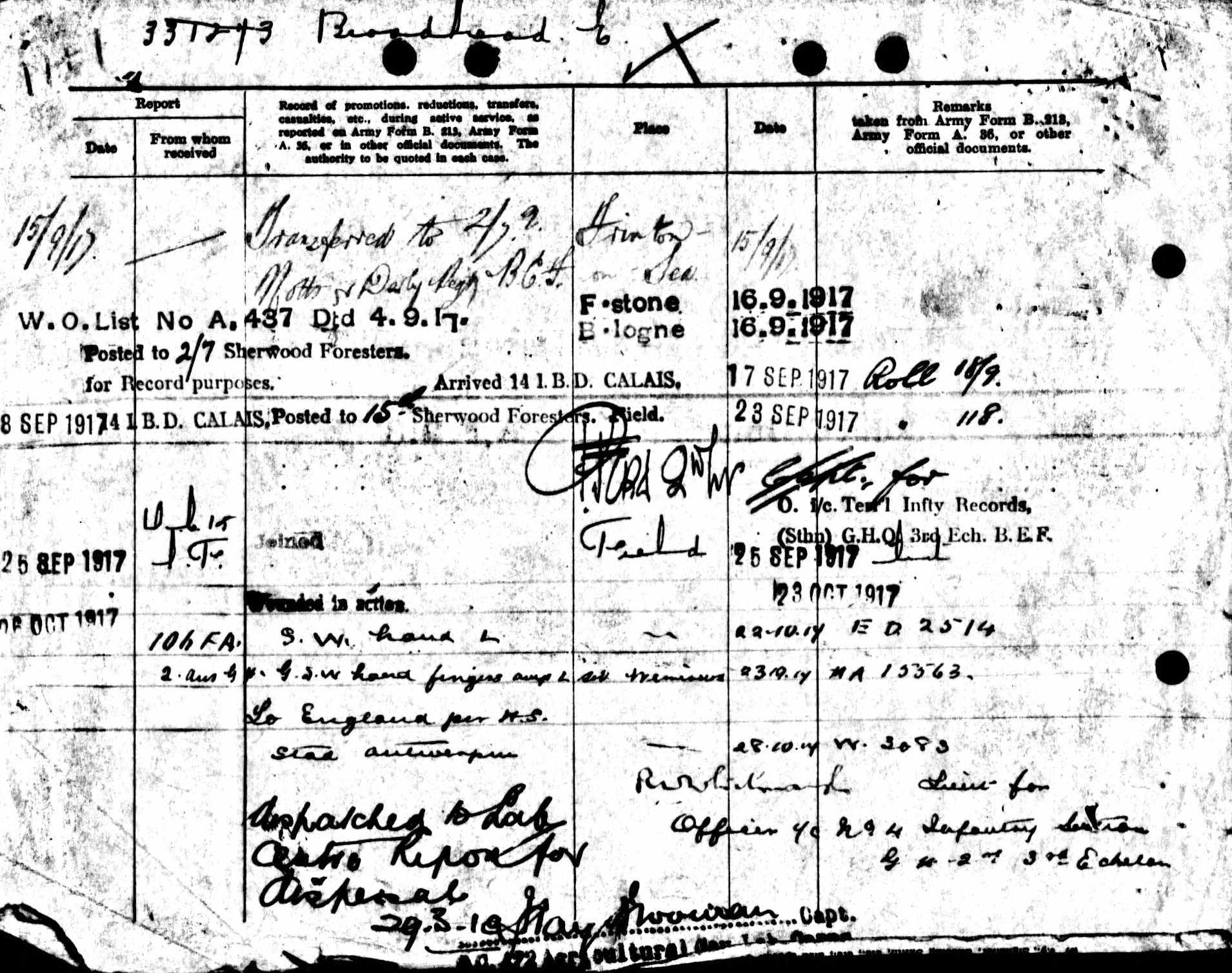
Casualty Form – Active Service

Ernest’s first regimental number was 2662 when he enlisted into the 2/7th Battalion. Ernest embarked from Southampton on the 28th June 1915 and disembarked the following day in Rouen. He was posted to the 1/7th Battalion on the 8th September 1916 and was wounded on the 5th October 1915.

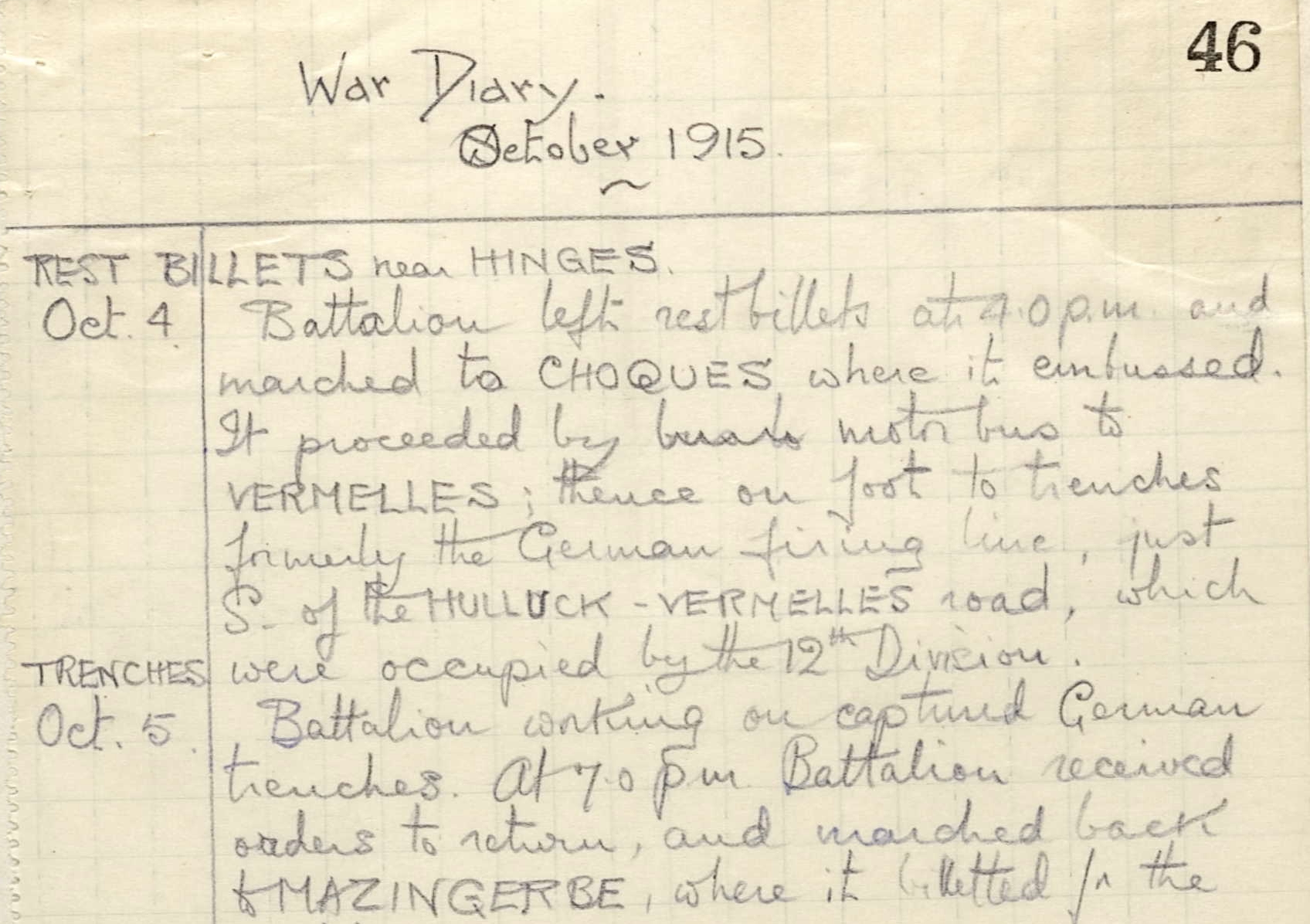
At the time of his wounding the Robin Hoods were working on captures German trenches

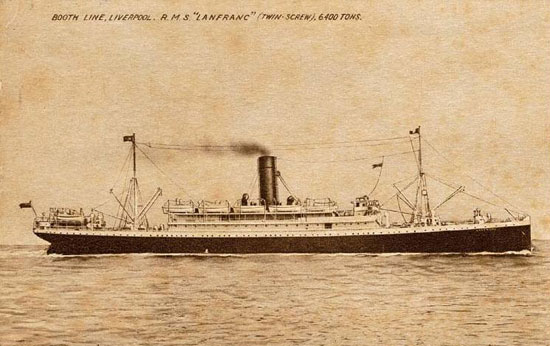
Ernest returned the Robin Hoods on the 7th December 1915 after recovering in Hospital and spending 6 weeks with the 46 NM Base Depot. Ernest was wounded a second time on the 26th June 1916 and transferred to England on the HS Lanfranc. On the 28th June he was posted to the Command Depot at Ballyvonare.

Robin Hood War Diary for 26th June 1916
Hospital Ship Lanfranc
Casualty Form – Active Service

After recovering from his wounds Ernest was posted to the 21st Battalion in January 1917 and the to the 2/7th Battalion in September 1917. He arrived back in France on the 19th September 1917 and was posted to the 14th Infantry Base Depot at Calais. He was transferred to the 15th Battalion and joined them ‘in the field’ on the 23rd September. Ernest was wounded in action for a third time on the 22nd October 1917, whilst the Battalion were attacking German positions near Houthulst Forest. He was transferred to hospital in England on the HS Stan Antwerpen.

15th Battalion War Diary for 22nd October 1917
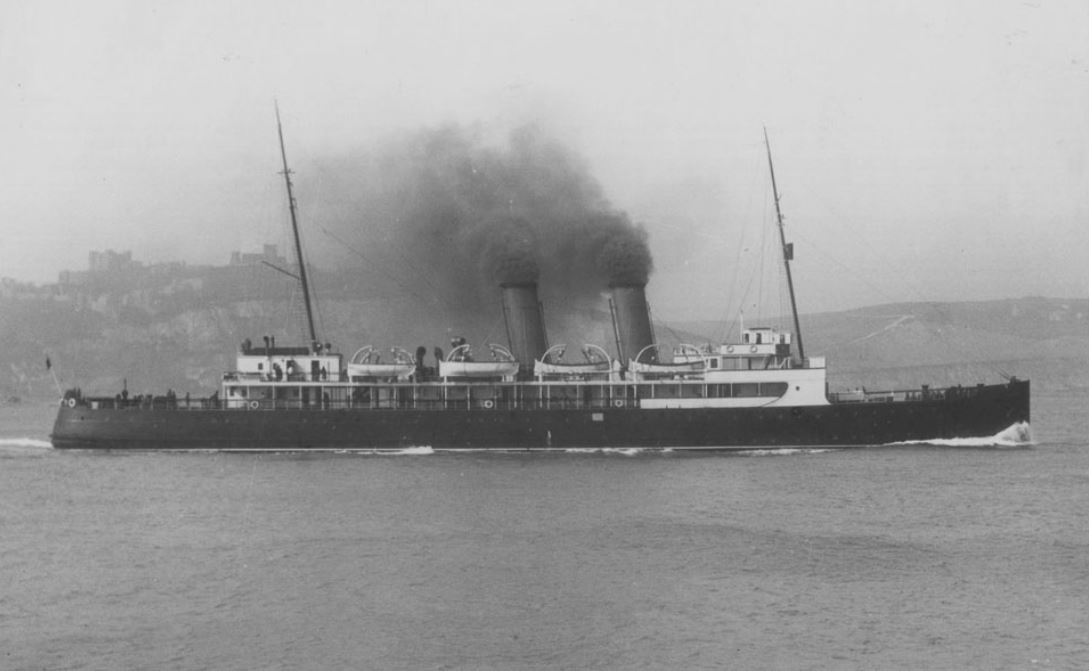
HS Stan Antwerpen

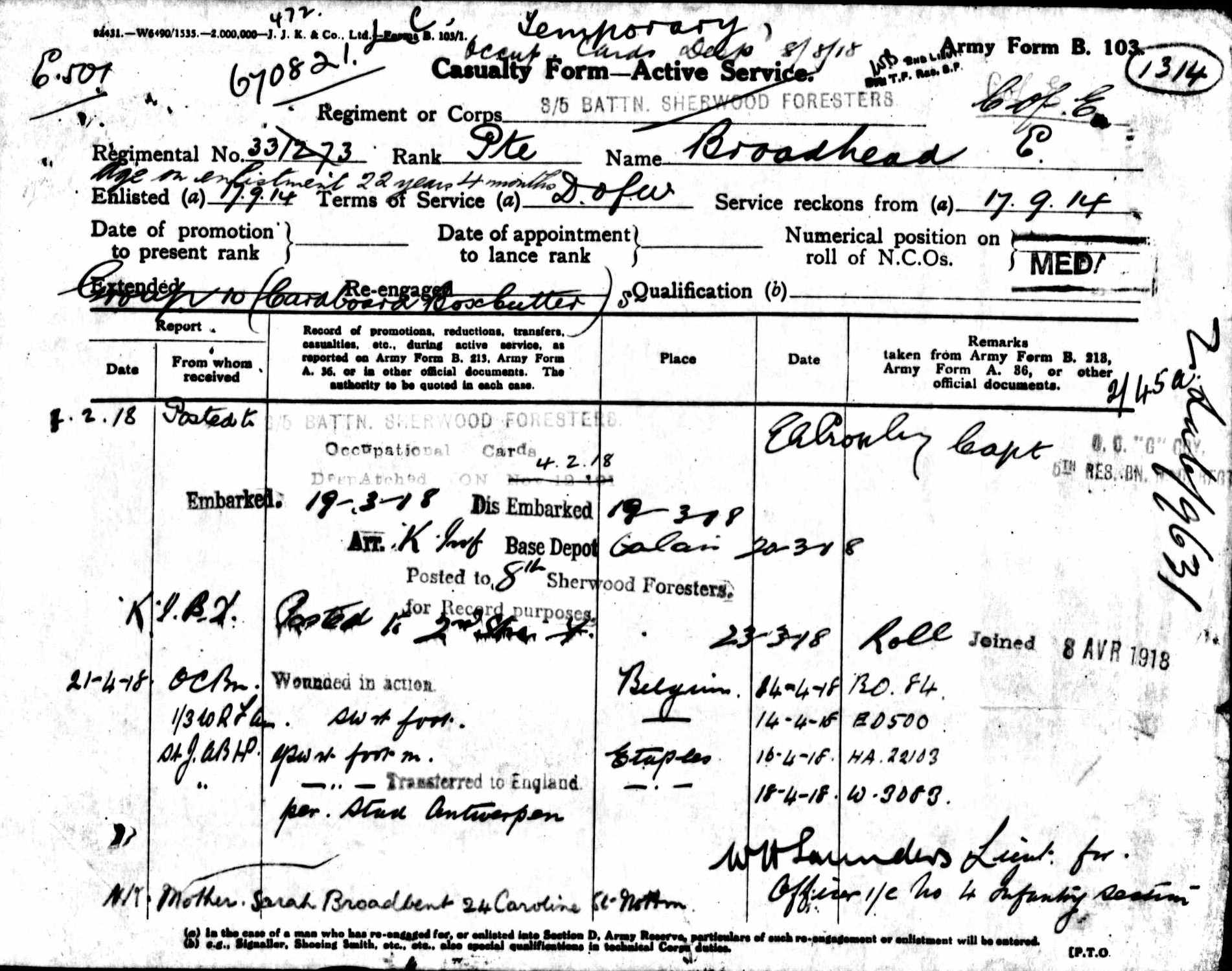
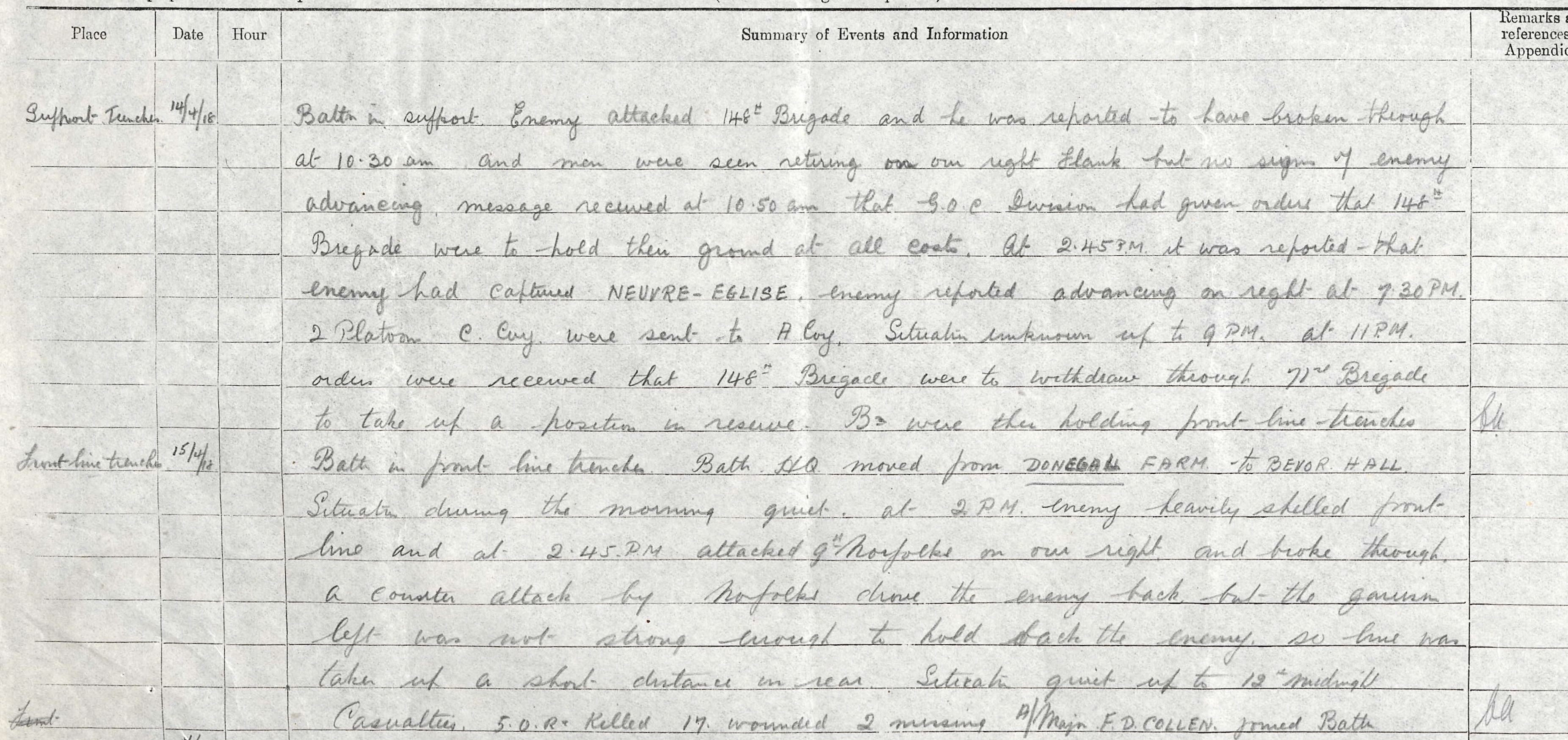
After recovering from his third wounding Ernest once again found himself going to France on the 19th March 1918. He was initially posted to the 8th Battalion at K Infantry Base Depot for record purposes, before being transferred to the 2nd Battalion on the 23rd March 1918. He was wounded in action for the fourth time on the 14th April 1918 and again returned to England on the HS Stan Antwerpen.

Casualty Form – Active Service
2nd Battalion War Diary 14th-15th April 1918
Ernest was eventually discharged in March 1919 and awarded a well deserved pension

242256 Private William Jack Gill

242256 Pte William Jack Gill arrived in France in Feb 1917 and served overseas with the 2/6th and 2nd Battns. Possibly enlisted in April 1916, but No other information is currently available.

Medal Roll

14736 Pte James Walters

14736 Pte James Walters arrived in France with the 10th Battalion on 14th July 1915 and later served with the 11th and 15th Battalions and the South Lancashire Regiment. He was discharged in January 1919.

Medal Roll

And the date……..

In summary Enoch Buckley and Ernest Broadhead’s service records would suggest that this casualty list was drawn up towards the end of October 1917.

Unfortunately, it’s not possible to determine any more provenance.

On this day 21st April 1917 two men were wounded and John Brown and Victor Bonsall were killed in action

Both John (242122) and Victor (242335) were original members of the 2/6th Battalion and are buried next to each other in Templeux-Le-Guerard British Cemetery.

John was the husband of Louisa Brown of 141 Fairfoot Rd., Bow in London. He was born in London.

Victor was the son of Richard and Louisa Bonsall of Monyash, Bakewell in Derbyshire.

Pension Record for Victor Bonsall
Pension Record for John Brown

103039 Pte Frederick Blaydon – one of the ‘Bedfordshire Lads’………

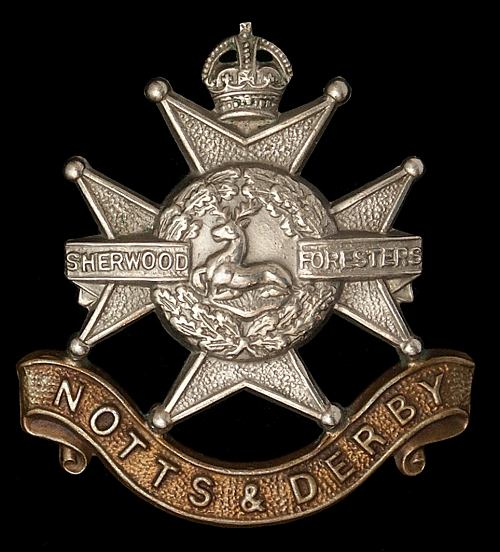
Sherwood Foresters Cap Badge

Unfortunately, I carelessly let this Medal Pair ‘get away from me’ on a well known internet auction site last night, but I thought that I would still try to piece together Frederick’s story.


Frederick was one of approximately 112 men who were transferred to the 2/6th Battalion, the Sherwood Foresters from the Bedfordshire Regiment and issued the new Regimental numbers running from 103024 (Herbert Meekins) to 103137 (George Webster). Many of these men had previously been numbered with a post-1917 6-digit Bedfordshire Territorial Force Regimental number (see below).

Section of the Sherwood Forester Medal Roll showing the transfer of Men from the Bedfordshire Regiment to the 2/6th Battalion.

But when and why did this transfer happen?

Fortunately the Service Records of at least two of this group of 112 men still exist:

103035 Pte John Male from Bath (see above).

103065 Pte Horace Crowle from Cornwall.

Casualty Form – Active service for 204038 Pte John Male
Casualty Form – Active Service for 103035 Pte John Male
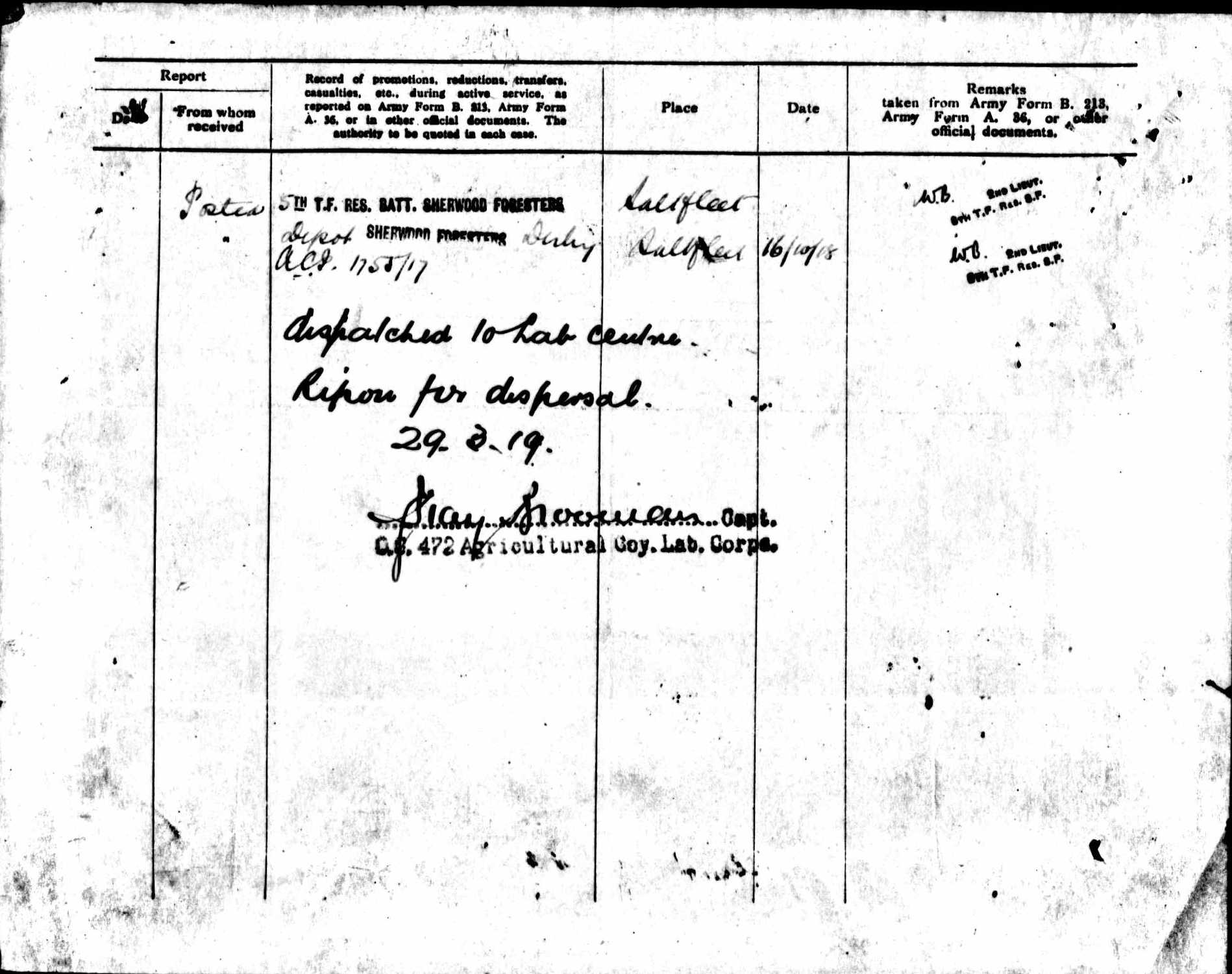
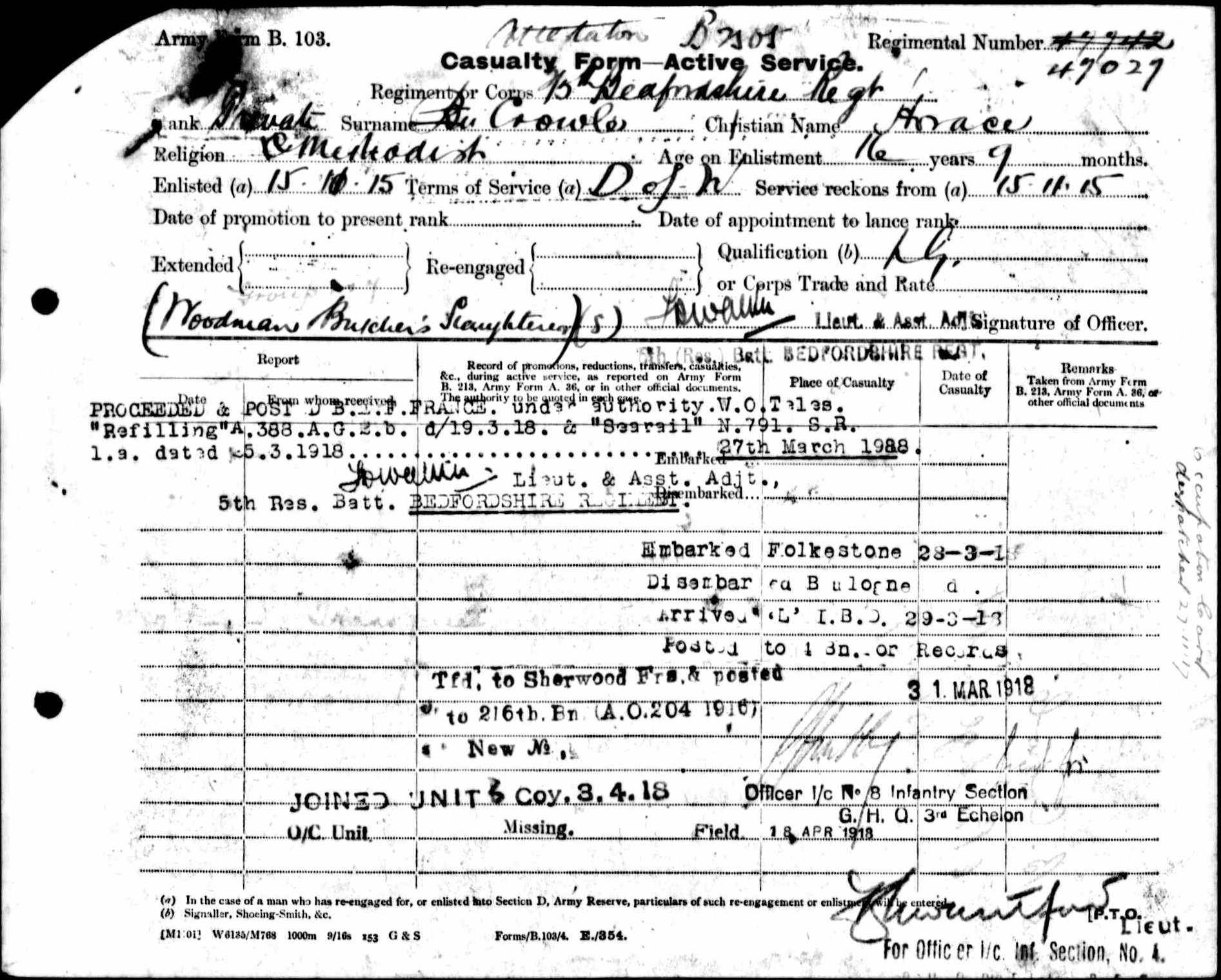
Casualty Form – Active Service for 103065 Pte Horace Crowie

These documents confirm that Pte John Male and Pte Horace Crowle – and by inference Pte Frederick Blaydon – were posted to the 5th Reserve Battalion of the Bedfordshire Regiment, before proceeding to France from Folkestone on the 28th March 1918.

They arrived at “L” Infantry Base Depot and were transferred to the 2/6th Battalion Sherwood Foresters on the 31st March 1918. This transfer was due to the losses suffered by the 2/6th Battalion (178th Bde, 59th Division) on the 21st March 1918 during the German Spring Offensive.


Neither John Male or Horace Cowle would survive the month

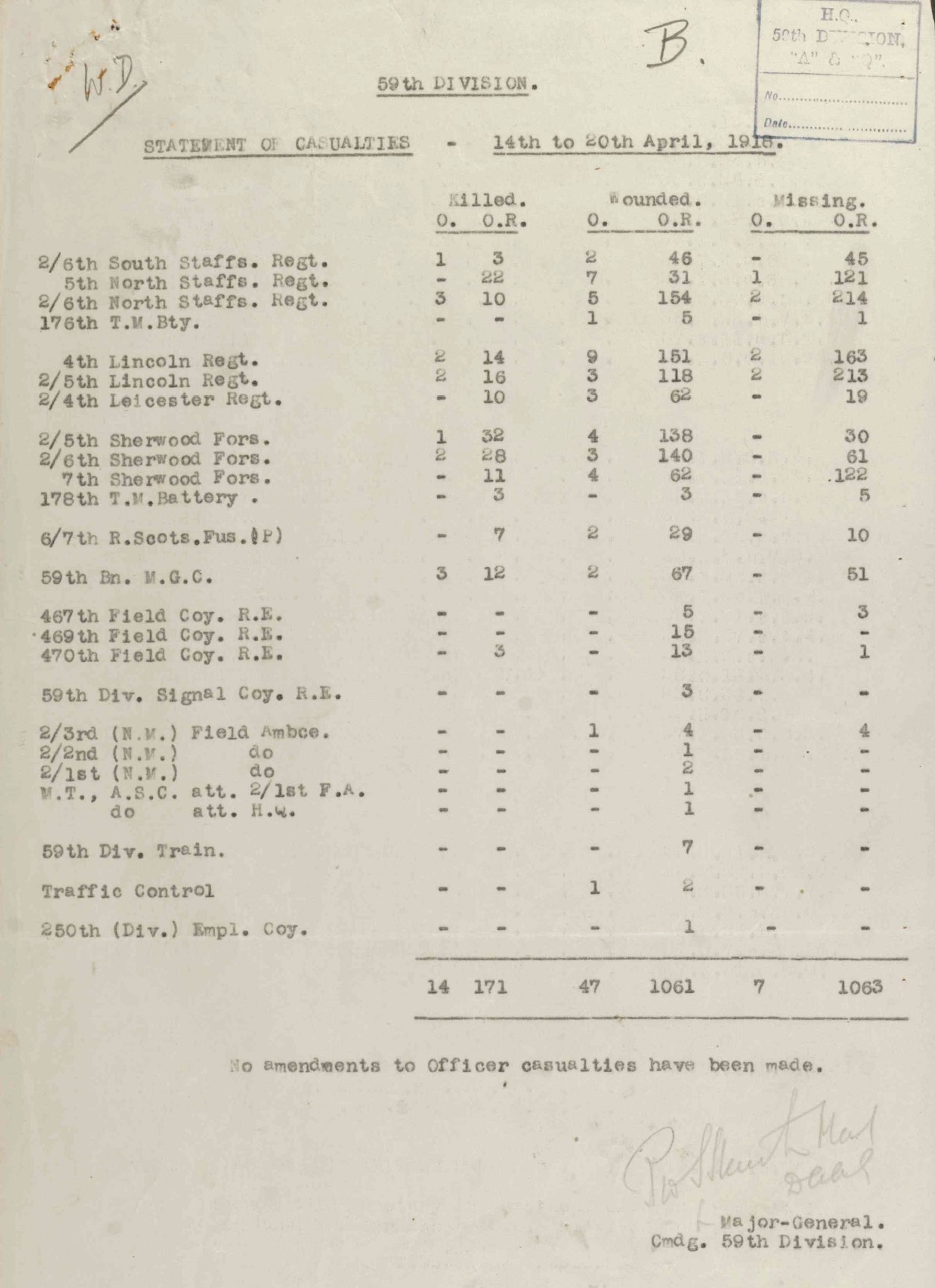
59th Division Casualties for April 1918

John Male was killed in action with B Company, 2/6th Battalion on the 16th April aged 48. He was the Son of Mr and Mrs Male of 13, Maytree Rd., Bitterne, Southampton. John’s body was exhumed near Kemmel Hall in July 1919 and he is now buried in La Clytte Military Cemetery.

Mount Kemmel – John’s body was found at 19 D, near to Kemmel Hall

Horace Cowle served with B Company and was listed as ‘missing in action’ during the defence of Kemmel on the 18th April 1918 aged 19. He was the son of Mr and Mrs Crowle of 1 Chapel Terrace, St. Blazey, Cornwall. Horace is commemorated on The Ploegsteert Memorial.

Horace had enlisted underage in November 1915. He arrived in France in December 1916 and was posted to the 1st Duke of Cornwall’s Light Infantry. However, in January 1917 he was returned to England.


Frederick Blaydon was later transferred to the 1/6th Battalion when the 2/6th was reduced to Cadre in May 1918 and survived the War.

Undated sick and wounded list with two original* members of the 6th Battalion……

*By ‘original’ I mean before Conscription started and they were issued with Territorial Force Regimental numbers

Undated sick and wounded list

240627 Sergeant Joseph Hughes

Joseph Hughes was a print works labourer from Birch Vale, near New Mills in Derbyshire. Joseph married Sarah and they had three girls; Dorothy (b 1907), Annie (b 1908) and Gertrude (b 1910). He enlisted in October 1914 and most likely arrived in France with the 2/6th Battalion in February 1917. He only served overseas with the 2/6th Battalion. According to the sick list (above) he suffered from slight myalgia (muscle aches and pains).

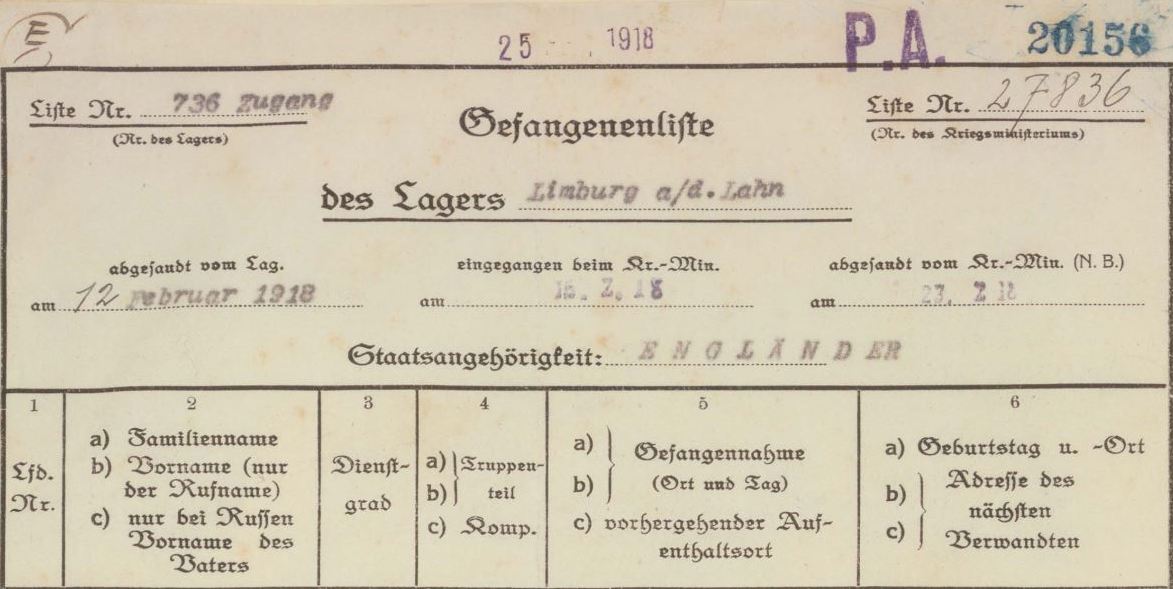
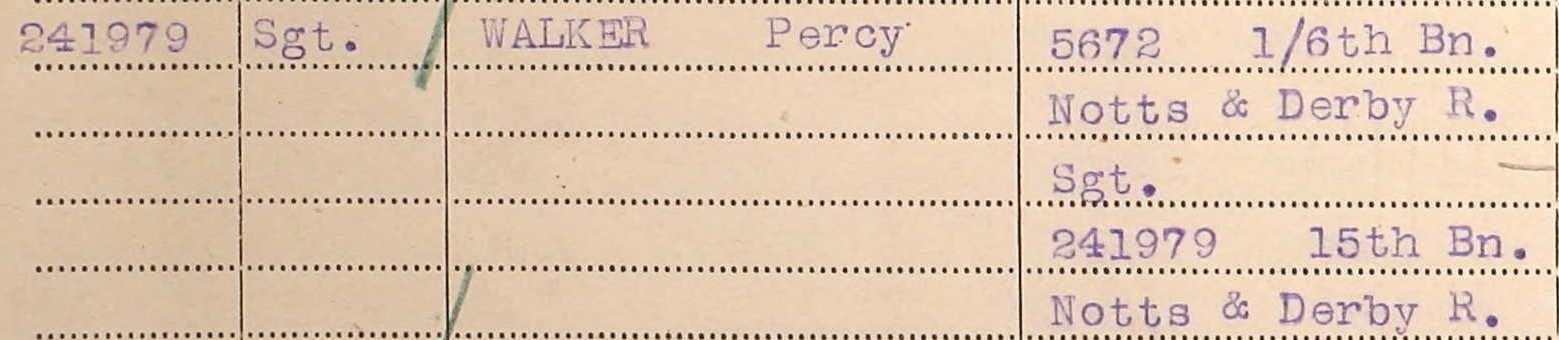
Limburg Camp Record
Joseph’s record recording his wounding

Joseph was later captured on the 4th December 1917 during the Battle of Cambrai and interned in Limburg POW Camp.

Silver War Badge Roll

Joseph was discharged in May 1915 aged 32 and received a pension.

2/6th Battalion Reunion held at Bakewell in 1935

It is possible that Joseph attended the reunions of the 2/6th Battalion held in Bakewell during the 1930s. Joseph died in July 1963.


241979 Sergeant Percy Walker

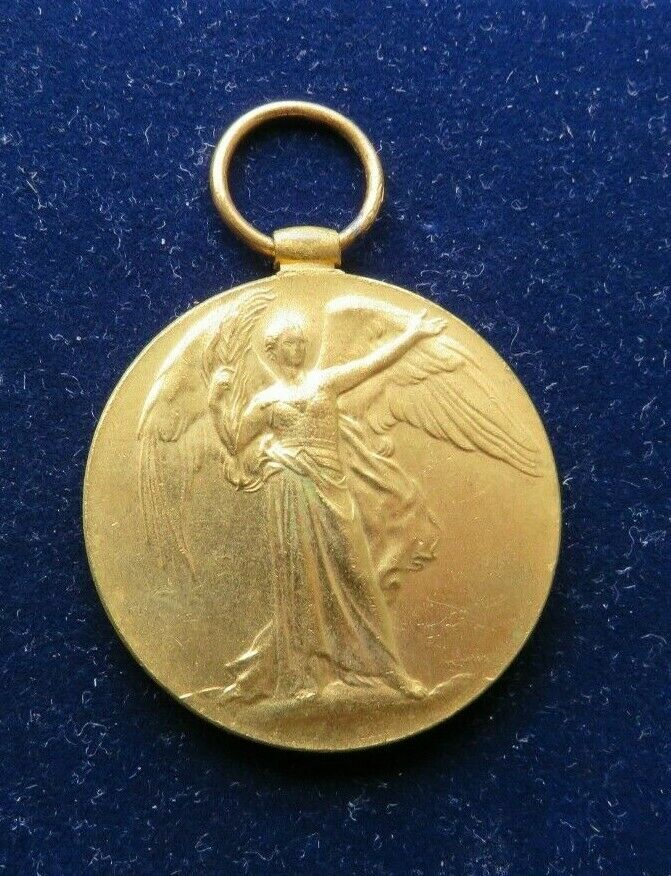
Medal Index Card
Medal Role

Percy Walker enlisted in July 1916 and was posted to the 1/6th Battalion in France in August 1916 according to his Medal Index Card. He would later serve with the 15th Battalion and was wounded (GW) with VI(I) [gunshot wound of back and spine (simple flesh contusions and wounds)] and IX(I) [gunshot wounds of lower extremities (simple flesh contusions and wounds)] – see ‘wounded and sick’ list above.

Record of the 31 Ambulance Train for May 1917

The undated ‘sick and wounded list’ ties in with the 7th-12th May 1917 record of the 31 Ambulance Train (above), which conveyed Percy Walker from Nesle to Rouen on the 12th-13th May 1917. Note: from April to June 1917 Nesle was the site of No. 21 Casualty Clearing Station.

15th Battalion War Diary – May 1917

At the time of his wounding the 15th Battalion were holding the front line and support trenches.

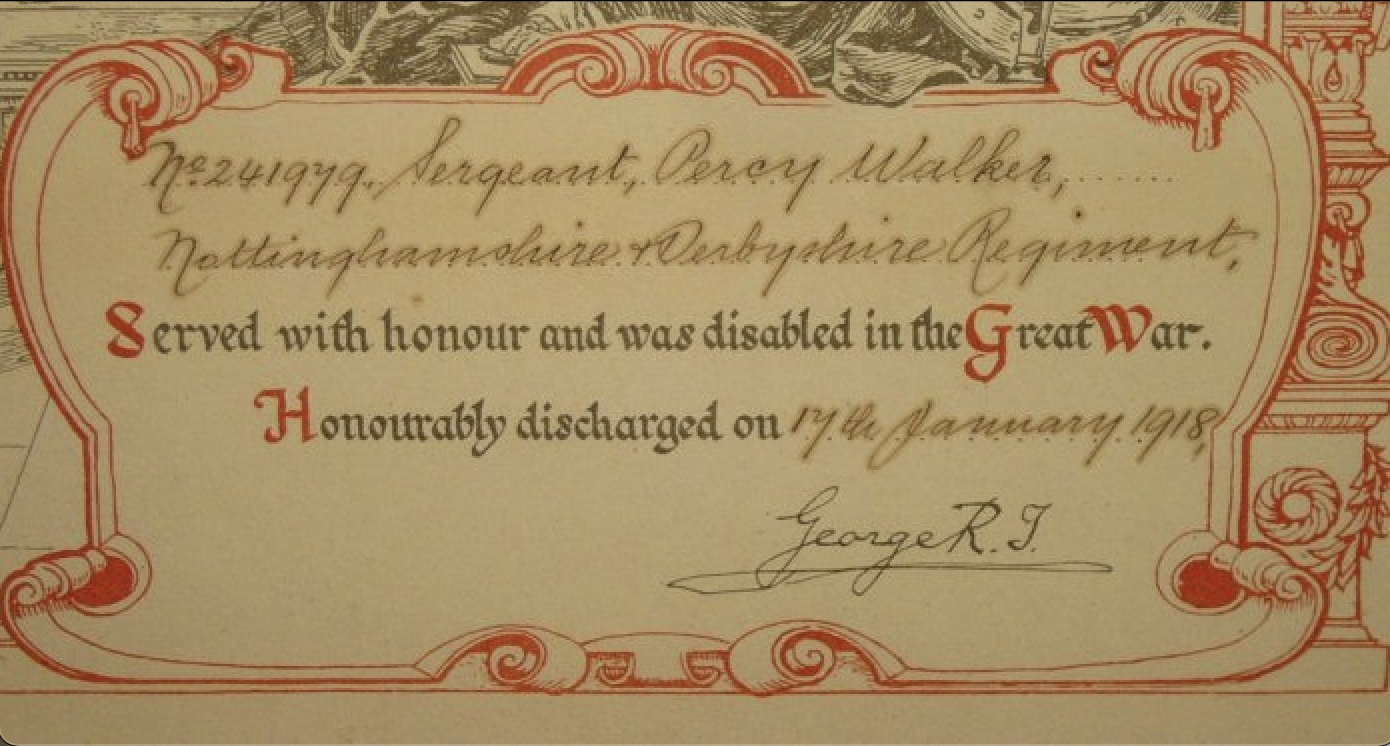
King’s Certificate of Discharge for Percy Walker (authors collection)

Percy was discharged in January 1918 aged 35 years and was awarded a Silver War Badge and a King’s Certificate of Discharge. He also received a pension.

100055 Pte Samuel Atkinson

100055 Pte Samuel Atkinson

Samuel was born in Essex in 1899 to Samuel Arthur and Annie Louisa in 1899 and was one of four siblings. In 1911 the family was living at 7 Nettleham Road in Lincoln.

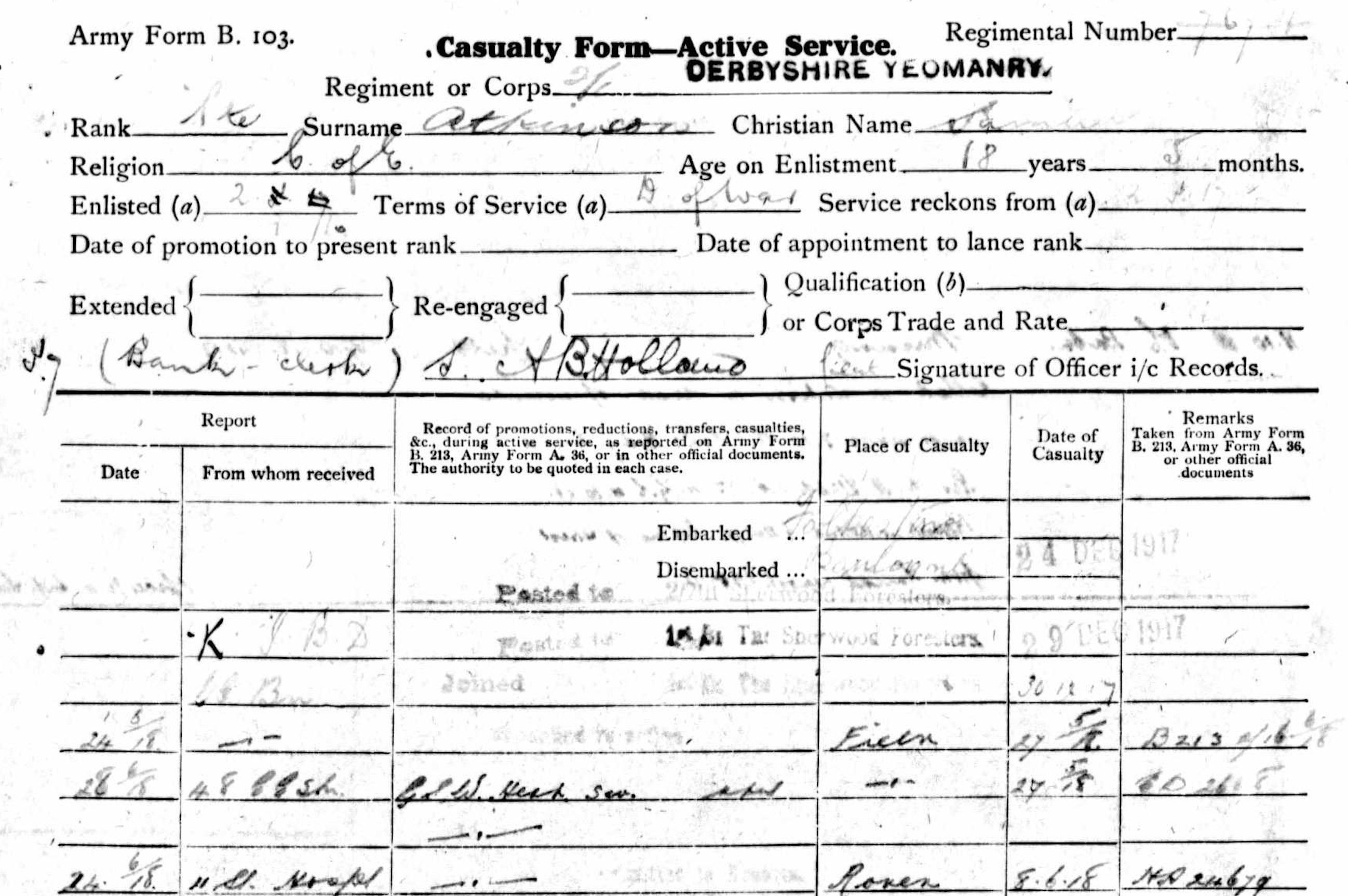
Samuel enlisted into the 2/1 Derbyshire Yeomanry in September 1916 aged 18 at which time he was a Bank Clerk. He was examined by the medical board on 15th February 1917 when he was passed fit for military service.

1st Battalion Sherwood Foresters

Service Record for 100055 Pte Samuel Atkinson

Following basic training Samuel embarked from Folkestone on Christmas Eve 1917 and going ‘K’ Infantry Base Depot, where he was transferred to the 2/7th Battalion Sherwood Foresters (for record purposes). Samuel was amongst a number of soldiers who at that time were transferred to the Sherwood Foresters from the Derbyshire Yeomanry and Nottinghamshire Yeomanry (Sherwood Rangers).

Samuel served was transferred the 1st Battalion on the 29th December and served with them until his wounding in May 1918.

On 27th May 1918 the 1st Battalion were engaged in the front line trenches:-

“1 a.m. Enemy barrage opened. VENTELAY neighbourhood + transport lines gassed. About 4.30 a.m. Battalion ordered forward to AISNE LINE……casualties heavy”

Samuel suffered a severe gun shot wound to the head and was admitted to the 11th Stationary Hospital in Rouen.

Service Record for 100055 Pte Samuel Atkinson

1/5th Battalion Sherwood Foresters

Following his recovery Samuel was sent to ‘D’ Infantry Base Depot and then posted to the 1/5th Battalion Sherwood Foresters on July 14th 1918.

1/5th Reinforcements – July 1918

Samuel was one of 130 men that were posted to the 1/5th Battalion in July 1915.

Service Record for 100055 Pte Samuel Atkinson

Samuel was wounded a second time on the 22nd July 1918 whilst the Battalion was holding front line trenches in the ESSARS Sector and were raided by the Germans.

1/5th Battalion casualties – July 1918

Samuel was on of 30 men of the 1/5th Battalion who were wounded in July 1918, he appears to have remained ‘at duty’.

Storming the Hindenburg Line

1/5th Battalion War Diary October 1915.

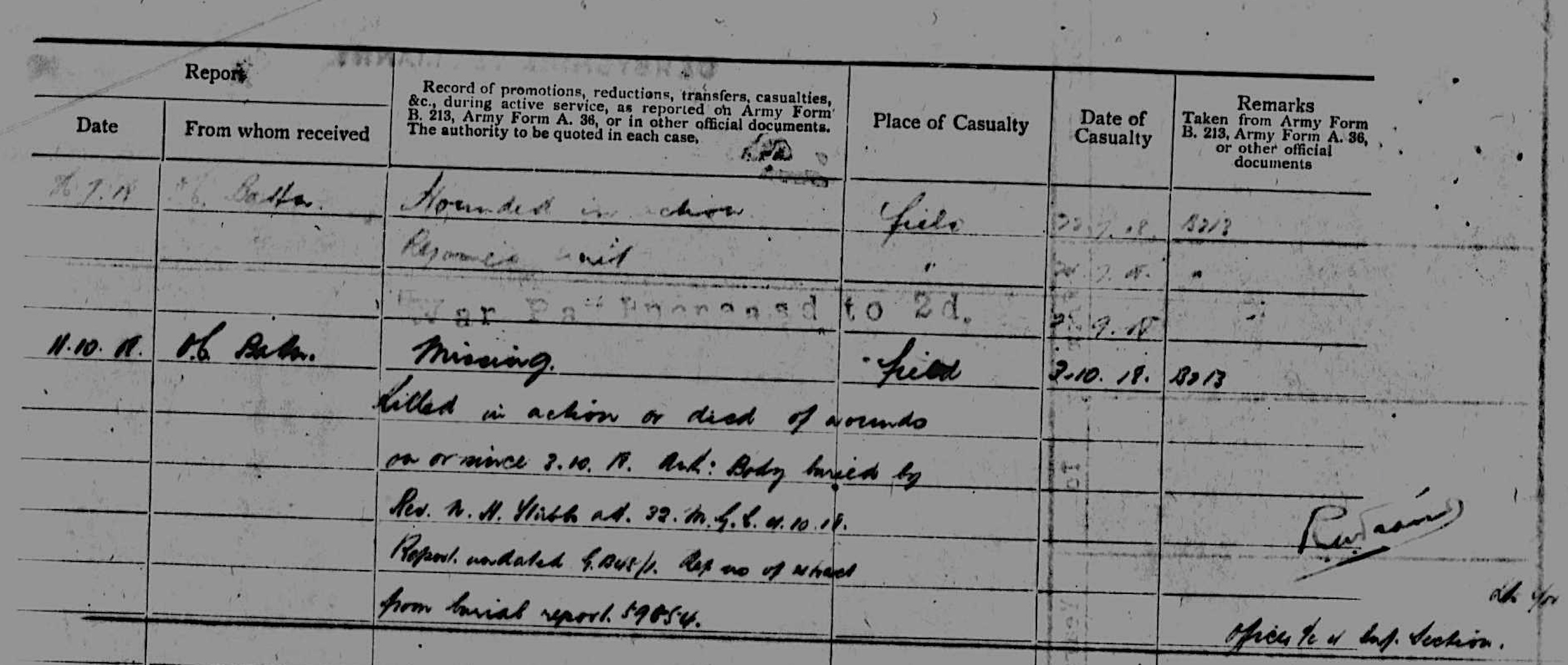
Samuel died of his wounds on the 3rd October 1918 as the 1/5th Battalion were attacking the villages of Ramicourt and Montbrehain.

“Killed in action or died of wounds on or since 3.10.18. Body buried by Rev M H ?? and 32 MGC 11.10.18”

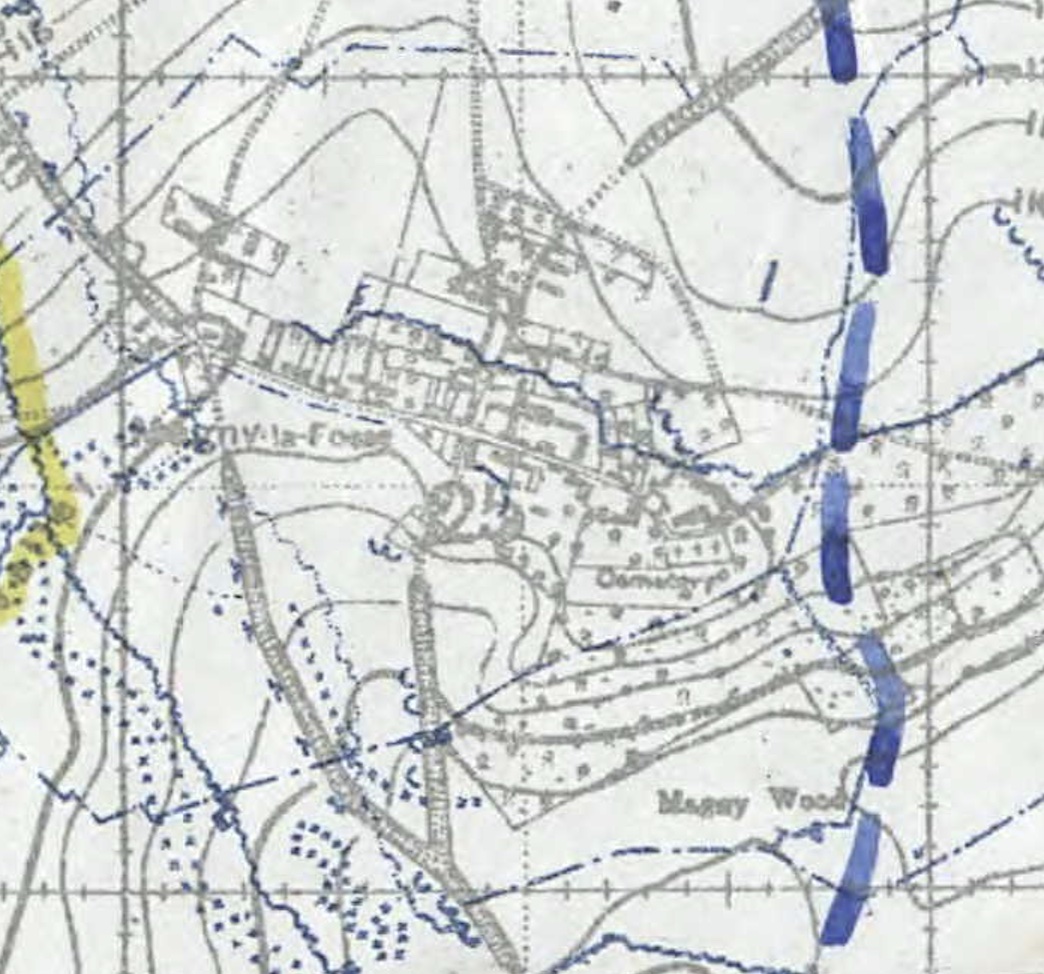
Magny La Fosse Map
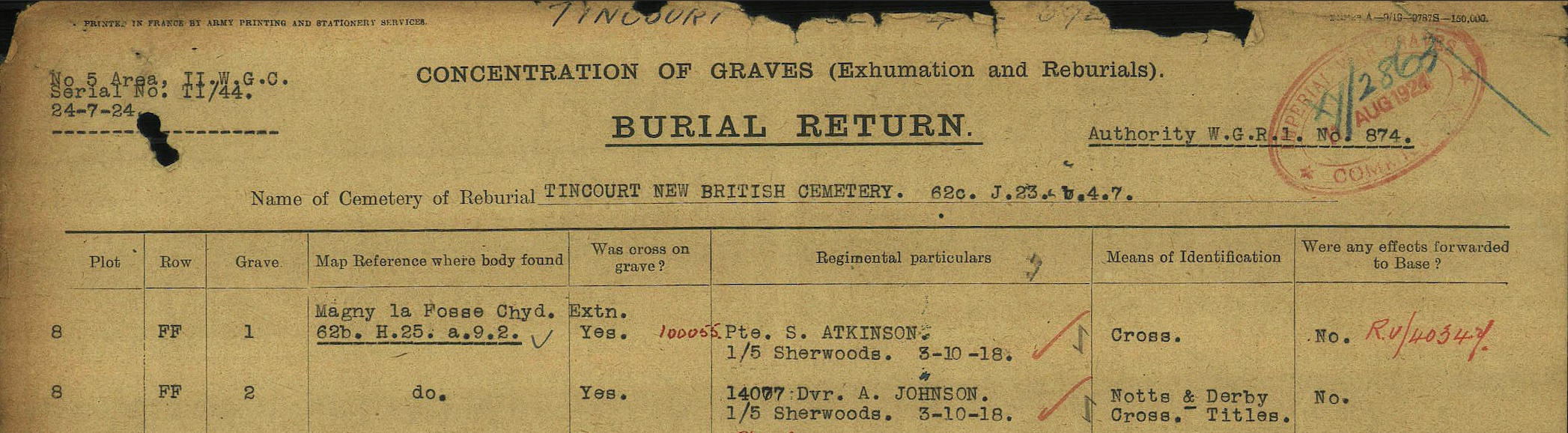
Magny La Fosse burial record

Samual was originally buried in Magny La Fosse Churchyard Extension [62b. H.25. a.9.2.] alongside 14077 Driver Arthur Johnson from Kiverton Park near Sheffield.

MAGNY-LA-FOSSE CHURCHYARD EXTENSION was made by an Advanced Dressing Station in October 1918, and contained the graves of seven soldiers from the United Kingdom and one from Australia and three men of the Chinese Labour Corps.

In 1924 Samual and Arthur’s bodies were exhumed and they were reburied in Tincourt Cemetery.

The last stand of the 178th (2/1st Nottinghamshire and Derbyshire) Brigade: 21st March 1918

[a short blog post]

“Very heavy enemy barrage on front line from 5.0am to 9.30am. Enemy attacked at 9.30am. Battn suffered very heavy casualties”

So wrote KJ Bunting, Captain and Adjutant  to the 2/6th Battalion; however, this short sentence belies the enormous casualties that the 2/6th Battalion, along with the 2/5th and 7th Battalions of the 178th Brigade, suffered during the first day of ‘Kaiserschlacht’; the German Spring offence of 1918.

Unlike the 2/5th and 7th Battalions, the War Diary of the 2/6th Battalion does not record the precise numbers of casualties suffered that day (i.e killed, wounded or missing).


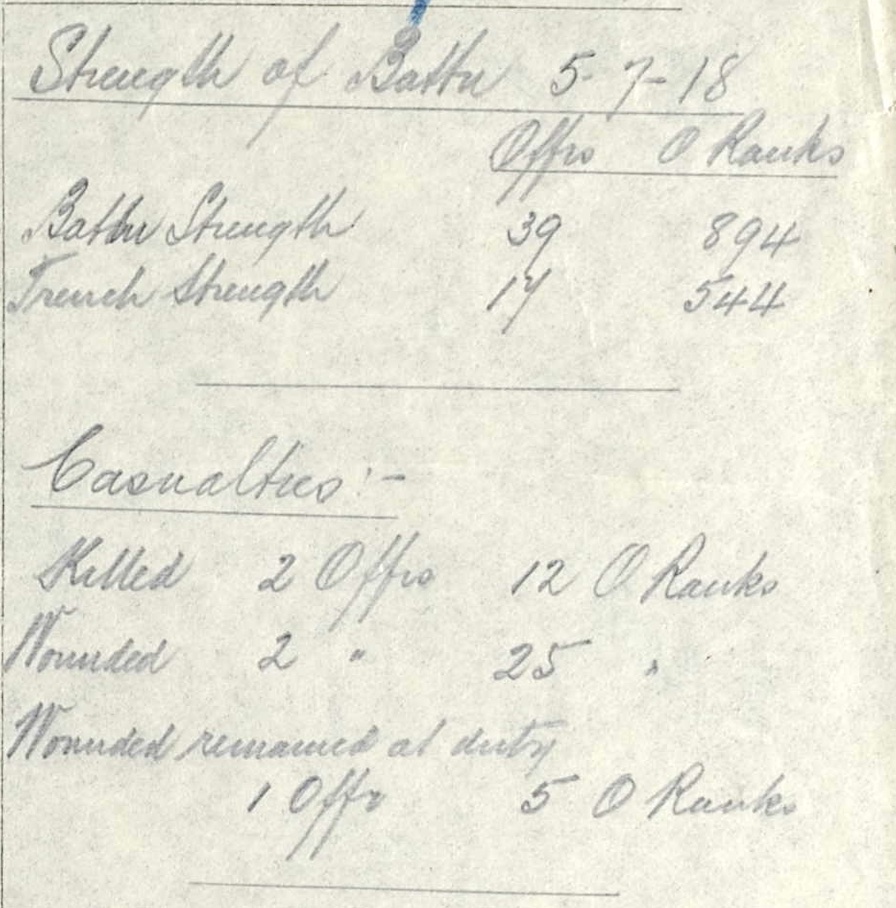
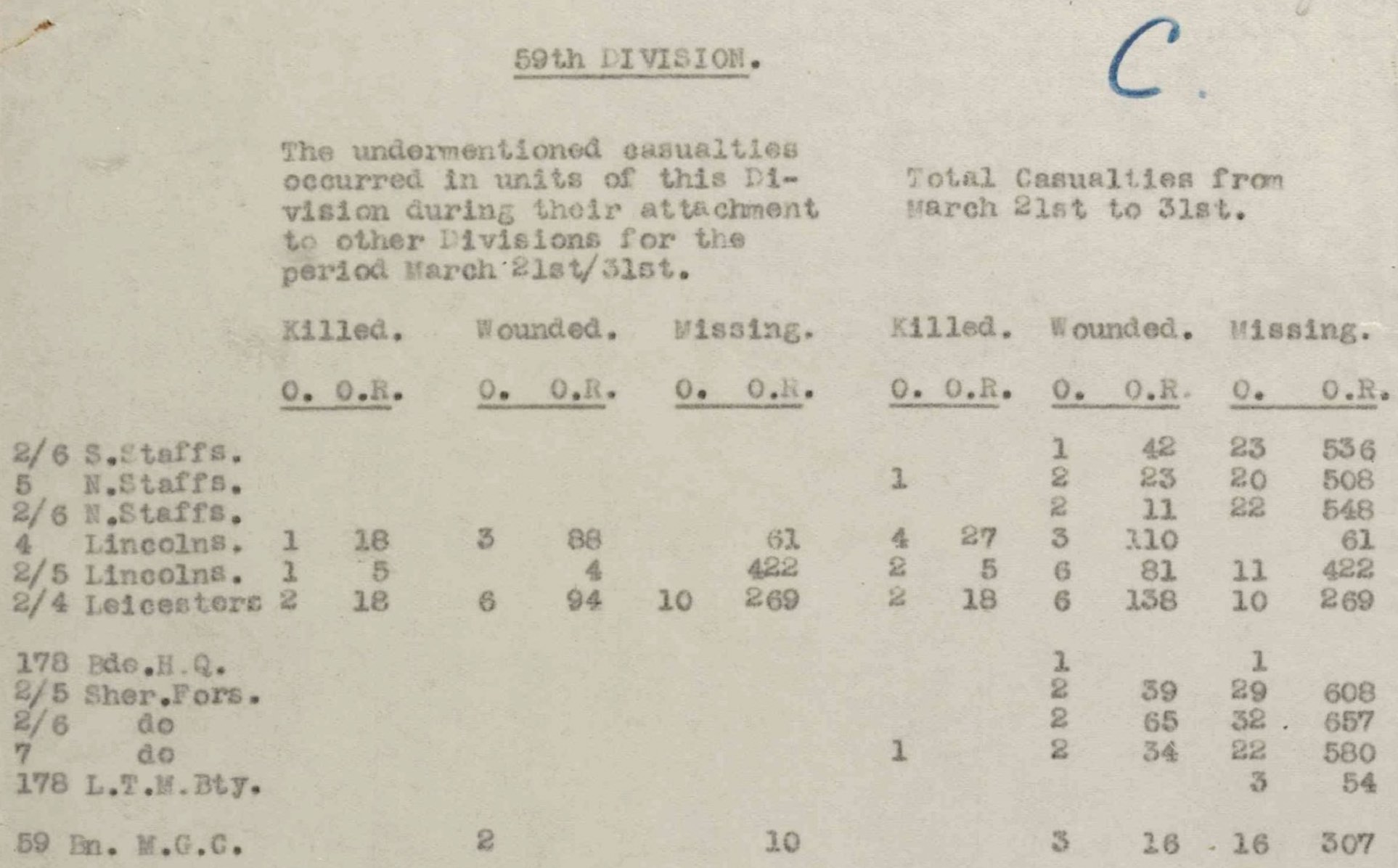
However, the 178th Brigade War diary does provide a total number of casualties for each Battalion. The strength of the 2/6th Battalion on 1st March 1918 was 53 Officers and 883 Other Ranks, thereby suggesting that approximately 20 Officers and 220 men were left in reserve and took no part in the fighting.
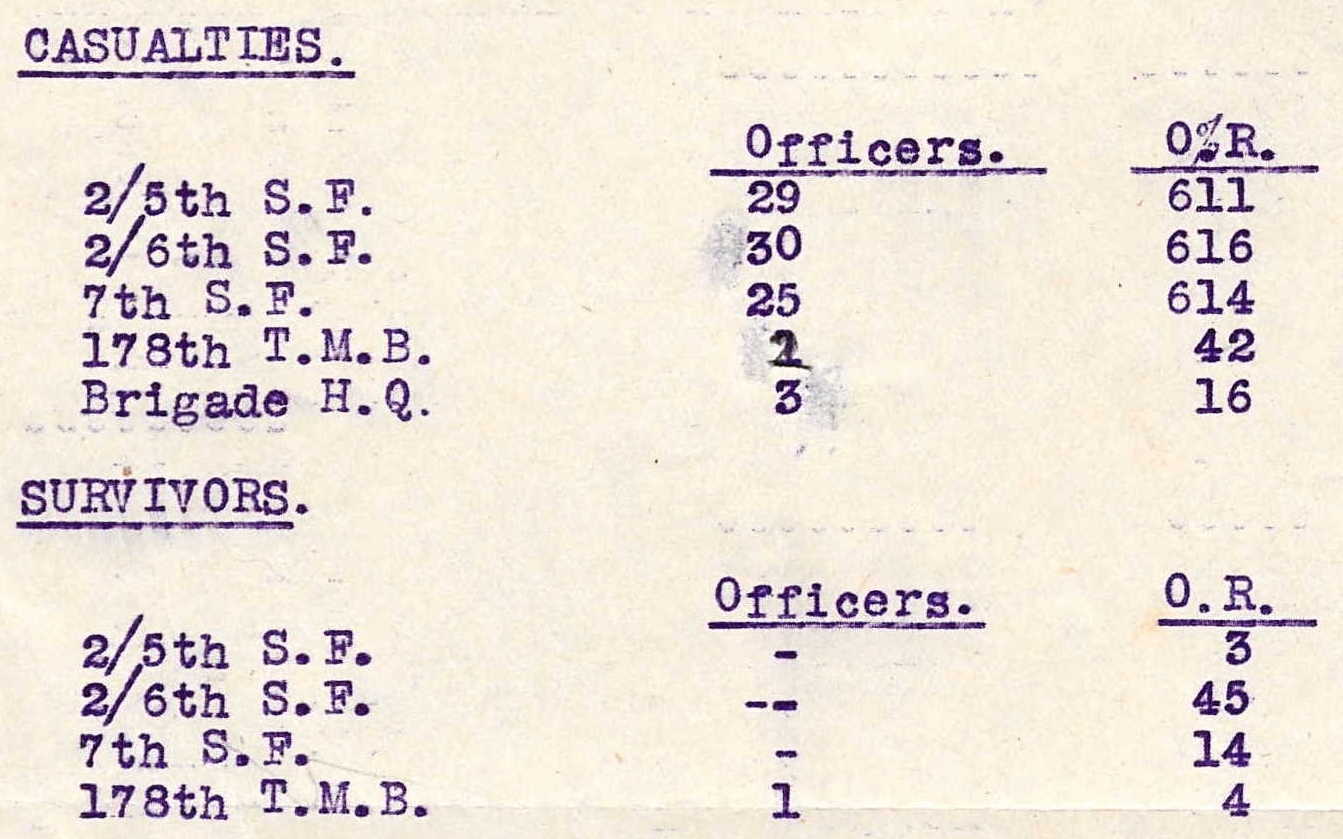

The 59th Division War Diary gives slightly higher casualty figures of 34 Officers and 722 men wounded or missing. In addition, they acknowledge that the numbers of wounded men were not reported by Medical Units, and therefore a proportion of other ranks listed a ‘missing’ may have in fact been wounded.

Personal Accounts

Very few personal accounts exist of those chaotic few hours, several Officers wrote of their experience after the War and a few stories appeared in local newspapers at the time.

Below are a few examples.


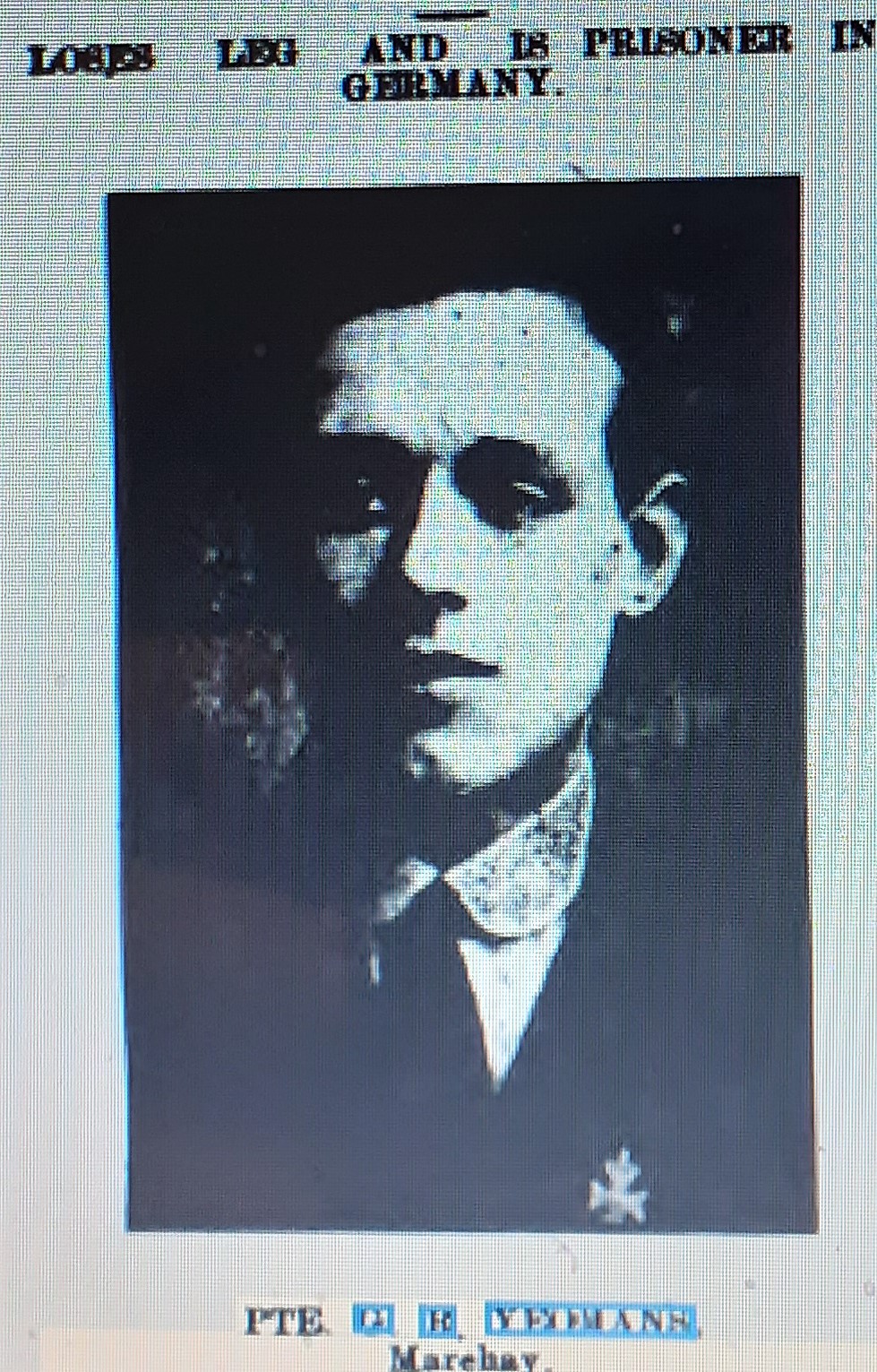
George Robert Yeomans

“We were holding the line on March 21st 1918. I was wounded in the left leg by a gun shot and taken prisoner a few hours afterwards. My leg was amputated April 8th 1918 at Cassel Germany”

George Robert Yeomans, Lewis Gunner, B Company, 2/6th Battn, aged 20 from Upper Marehay.


265746 Corporal Joseph Page

“Our Battalion was in the support trenches, having come out of the first line trenches two days earlier. We found the Germans putting down a barrage of gas shells. We stood to until eleven o’clock, by which time the trenches had been blown flat and many casualties sustained. A runner came up and said the Germans had broken through. I had to take that message to our Battalion headquarters, and after I had been there about 15 minutes I was surprised to see hundreds of Germans all round us.

            By this time part of the Battalion had already been taken prisoner, but the rest of us were told to get behind a sunken road and fight it out. There were machine guns at either end, and although we fired as hard as we could at the oncoming Germans they swarmed forward in mass formation, other parties coming down the communication trenches. We put up a hard fight until by one o’clock we had no ammunition left. Our last lot of bombs were useless, as somebody had left the detonators behind.

            After having done a lot of execution we retired from the sunken road into a trench, the end of which was blocked so that we could not get out. About twenty of us scrambled up, however, and made a rush under heavy machine gun fire to another trench on the right, fifty yards away. There we met some Lincolnshire reinforcements, with whom we put up a big bombing attack. Fritz bombed us back until our casualties became so heavy that we found it was hopeless to go on fighting, so one of the sergeant-majors ordered us to put our arms down and are hands up.”

[The Mansfield Reporter and Sutton Times, Friday, May 19, 1918]


Lt Conrad Stark, “C” Company, 2/6th Battalion

“We were very quickly surrounded and our lines became too hot to hold from crossfire. Retired to our support line; shall never know how I reached same untouched, was walking through our own and the enemy’s barrage. Had a great number of casualties whilst crossing. On reaching support managed to put up a show there but was surrounded about 9:40 a.m. and taken prisoner about 45 minutes after the enemy left his front line.”


The last stand of the 178th Brigade
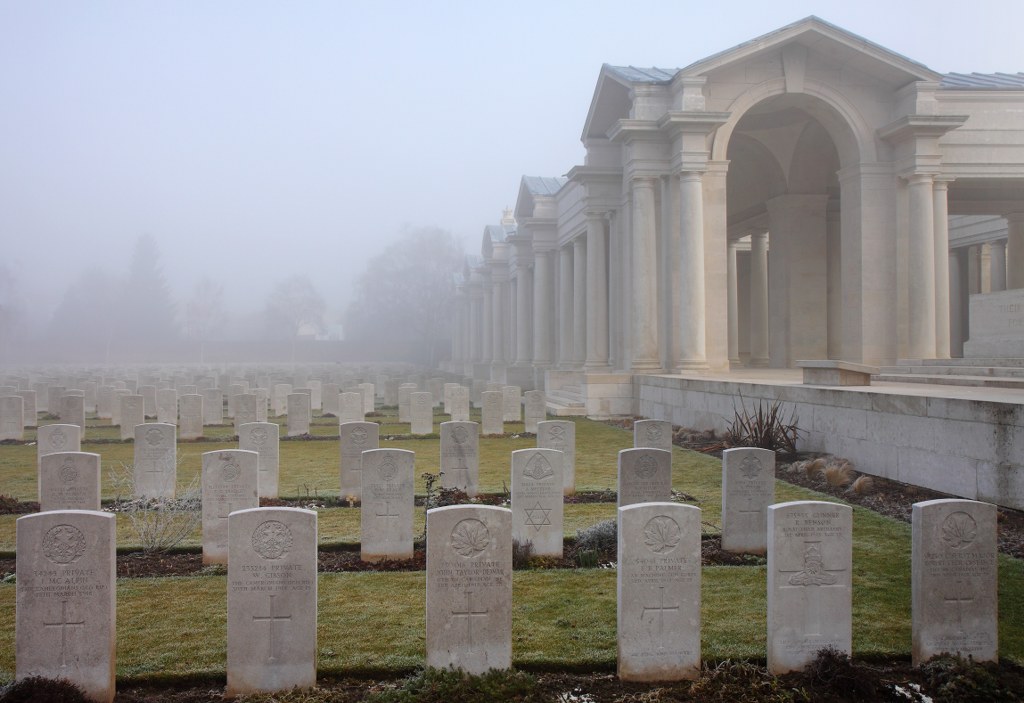
The vast majority of men that were killed that morning have no known grave and are Commemorated on the Arras Memorial to the Missing. 


However, by examining the exhumation and reburial records held by the CWGC it is possible to identify the locations of 65 Officers and men of the 178th Brigade whose bodies were recovered after the War. Assuming that they were buried close to where they died, either by the Germans or through shell fire, it is possible to trace the last actions of the 178th Brigade.
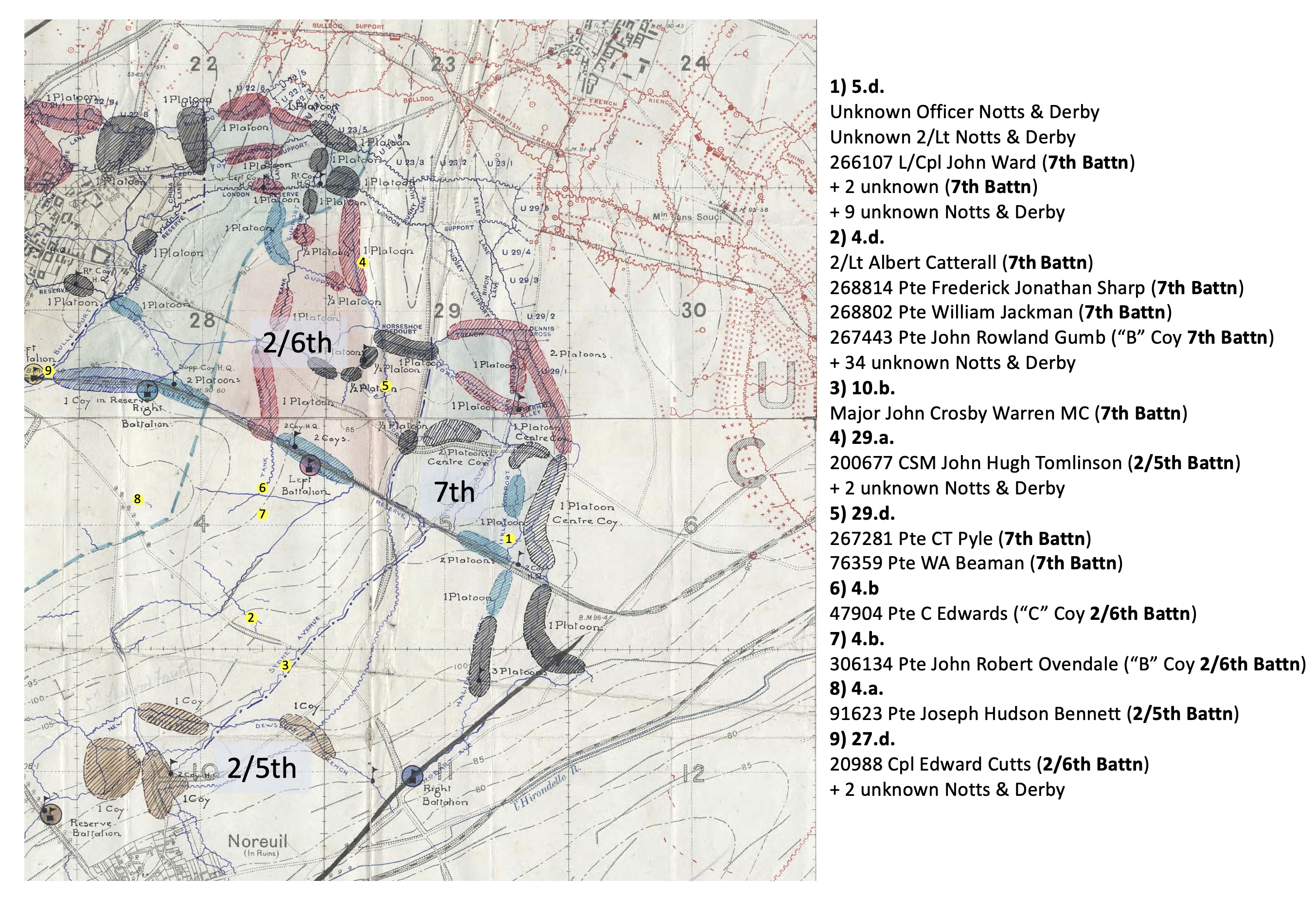
There are several important inferences that can be made:-

Major John Warren MC, 2/Lt Albert Catterall and a few men of the 7th Battalion were able to escape from the German’s surrounding their front line positions and make a ‘final ‘stand in sunken road in 4d – see 1), 2) and 3).
CSM John Tomlinson, although recored as serving with the 2/5th Battalion, had mostly likely been attached to the 2/6th Battalion when he was killed – see 4).

Several men from the 2/6th Battalion, most little from the HQ Company, were able to escape being surrounded in Railway Reserve – see 6), 7) and 9).

Very few of the 2/5th Battalion made made it away from Noreuil – see 8). In fact Joseph Hudson is the only man serving with the 2/5th Battalion who’s body was exhumed and identified after the War.