Tag Archives: Victor Owen Robinson

On this day 31st May 1917

31.5.1917 TRENCHES: Lieut JL PERCIVAL rejoined Battalion from 2nd Entrenching Battalion.

percival

John Lakeman Percival, MC

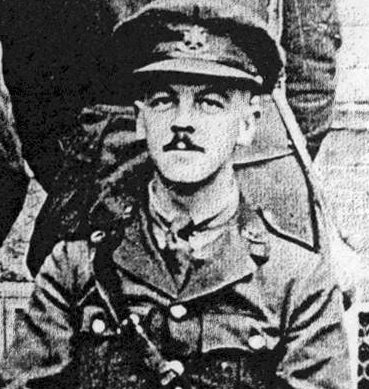
31.5.1917 TRENCHES: CAPT VO ROBINSON, MC proceeded on 1 months leave to England.

NIGHT 31st May/1st June Trenches: Relieved by 5th Sherwood Foresters and went into Brigade Reserve with HQ at RED MILL M.27.d.75.70. (LENS 36c SW1).

Red Mill May 1917

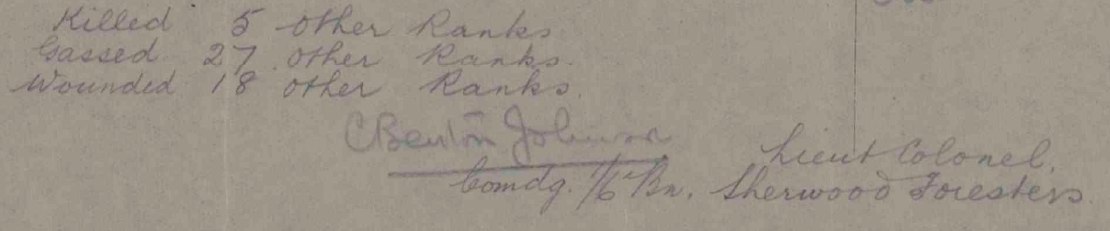
Casualties during tour:-

  • Killed 5 other ranks
  • Gassed 27 other ranks
  • Wounded 18 other ranks

Casualties May 1917

1/6th Battalion War Diary [WO/95/2694]


Poppy

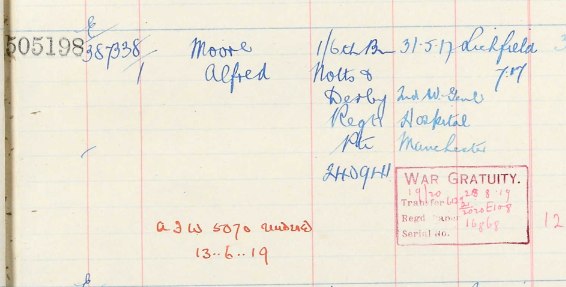
3194/240941 Alfred Morris Reginald Moore died on this day

Alfred enlisted in October 1914 and arrived in France in June 1915. He served with “B” Company and was wounded on the 25th May at Cite St Pierre.

3194 Moore 2

Alfred died of his wounds at the 2nd Western General Hospital in Manchester.

3194 Moore

He was born at Whaley Common and the son of Harry and Sabina Moore of Elmton Rd., Creswell. He is buried in Creswell (St. Mary Magdalene) Churchyard. See here for more details.

Alfred’s brother Joe Maxwell Moore was also killed in action with the 1/6th Battalion on the 3rd September 1918 during the attack on Hunter Post and Scott Post. See here.

On this day 30th May 1917

30.51917 Trenches: Draft of 24 other ranks arrived as reinforcements.

30.5.1917 Trenches: Lieut GKK MAUGHAN rejoined from short leave to England.

Gardyne Keith Kilgour Maughan

30.5.1917 MARQUEFFLES FARM: Divisional Commander presented medal ribbons to the following:-

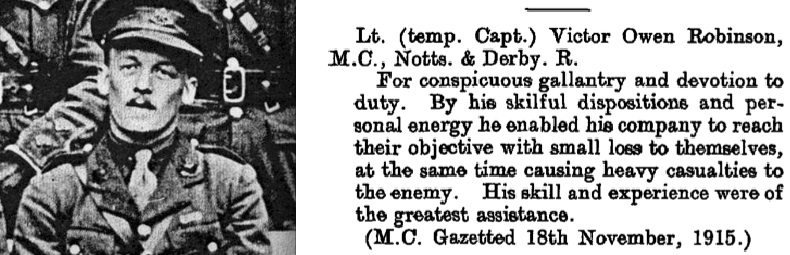
BAR to MILITARY CROSS CAPT VO ROBINSONRobinson 1917

DC MEDAL 240513 Sergeant F LONGSONLongson DCM June 1917

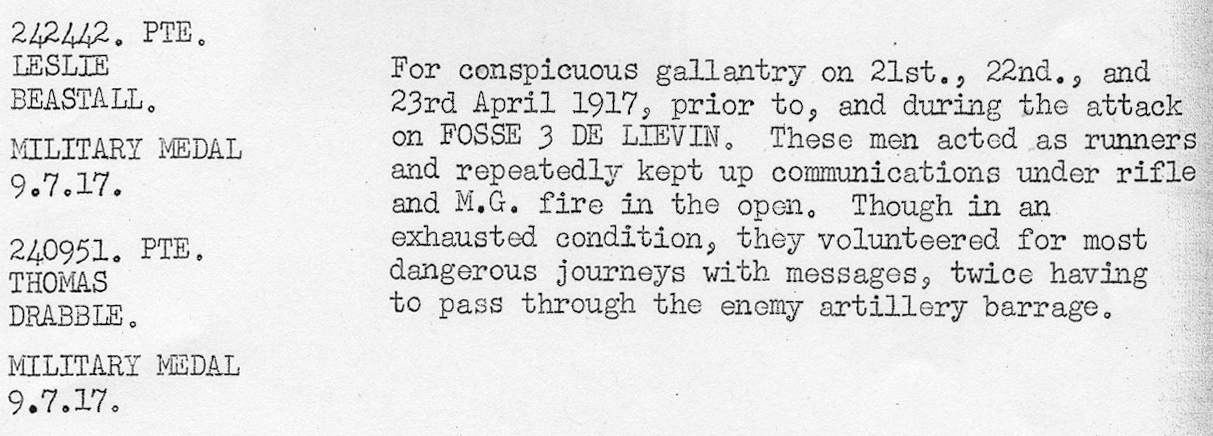
MILITARY MEDAL 240076 Sergeant JG RAVEY, 242442 Pte L BEASTALL, 241360 L/Cpl A EVANS240076 Ravey April 1917242442 Beastall April 1917241360 Evans April 1917

MARQUEFFLES FARM was next to MARQUEFFLES coal mine at the foot of the Northern slopes of the Lorette Ridge. The Companies were all billeted in the farm, and the Officers in tenet outside, while a home made marquee was used as a mess.

On this day 18th May 1917

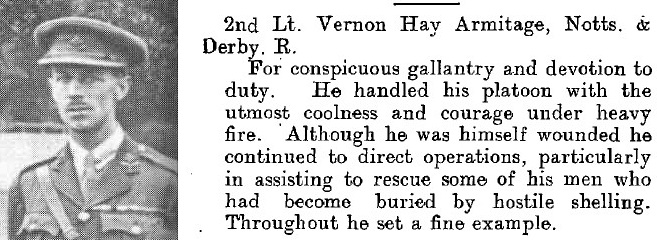
18.5.1917 Trenches: The following awards made to Officers and NCO for gallantry on 23rd April Fosse 3 De Lievin.

Military Cross 2/Lt Vernon Hay ArmitageArmitage MC

Bar to Military Cross Captain Victor Owen RobinsonRobinson 1917

DCM 240513 Sergeant Frank Longson

Longson DCM June 1917

1/6th Battalion War Diary [WO/95/2694]


Many awards were given to our Division for the brilliant work in the last big attack and for my part in the affair I was awarded the D.C.M. That in itself was great, but was more interesting when I was to leave the Battalion and proceed to England to an Officer Cadet Battalion. The last time I left the trenches was a very trying experience. I was sure the Germans were trying to prevent me getting out in one piece, perspiration rolled down by body and face, but I made it and with a sigh of relief I reached the rear area which was considered fairly safe from enemy shelling. A couple of week’s leave at home and then the usual week at the Officer Cadet Battalion. Soon after being commissioned I was posted to the Royal Flying Corps and was serving in that Corps when the Armistice was signed.

[2305 Pte Frank Longson]


To be completed

139 Infantry Brigade: Headquarters War Diary [WO95/2692]

On this day 31st December 1916

31.12.1916 TRENCHES: CAPT VO ROBINSON rejoined from duty at 14 Infantry Base Depot. 2/Lieut FWA STUBBS rejoined as reinforcement from England. 2/Lieut FW HIPKINS rejoined from Divisional School.STUBBS

Frederick William Arthur Stubbs

War Diary [WO/95/2694]


The last man wounded in 1916 was 4109/241358 Pte William J Stevenson of “A” Company who later served with the Labour Corps.


31st: Enemy field battery shelled Green Street in the afternoon. A fortnight of bad weather has caused most of the inverted trench in the sector to fall in and the Communication trenches in the left sub sector. Nottingham Street and Lincoln Lane and St Martins Lane in the right sub sector are almost impassible.

139 Infantry Brigade: Headquarters War Diary [WO95/2692]

On this day 20th July 1916

20.7.1916 BELLACOURT: Very heavy bombardment of trenches by enemy. “A” Company under Capt VO Robinson moved up to reinforce within 1 minute of receiving order from OC 5th Battn. Lt CEV CREE & 3 OR killed & 15 wounded.cree
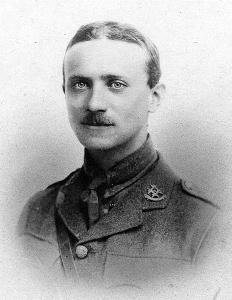
Lieutenant Charles Edward Victor Cree

July 20: Huns woke up & were unpleasant but not as bad as we were. Lieut Cree killed by a shell in the early morning. I lived in cellar for a long time with telephone down there. I attended funeral of Victor.

[Lieutenant Josiah Taylor]


“News has been received by his sisters, Mrs. McGough and Mrs. Lynch, Schofield’s Yard, New Square, Chesterfield, on the death in action of their brother, Pte. Edward Churchill, Sherwood Foresters.”

“He was killed almost instantly by a shell which burst and killed our officer and other two poor fellows. His comrades take it very hard as he was a good and brave soldier, who died doing his duty, and gave all for his King and Country.”

“Private Churchill was 24 years of age and worked at Grassmoor Colliery before the War. He leaves a widow and three children.”

[THE DERBYSHIRE TIMES, SATURDAY, AUGUST, 5th, 1916]


“Mrs French, 53, Wharf Lane, Stonegravels, Chesterfield. Has received information that two soldiers who were billeted with her, while stationed in the town have been wounded, while a chum of theirs was killed. Her Son-in-law writing from the Front says:

“Just a line to let you know that H Maycock has got wounded in the leg, and a bad wound too. We dropped in for it, not half. J. Crompton has been killed and Vero Wounded. When I saw The Derbyshire Times I could have cried to see my only pal’s photo in it. We have to smile to save us from crying. It would open people’ eyes when they saw The Times, but someone has to fight, the duty must be done.”

Pte. Tom Vero is also in the Sherwoods and lived with his brother, lately deceased, in Chatsworth Road. He is 19 years of age and worked at Grassmoor Colliery.”

[THE DERBYSHIRE TIMES, SATURDAY, JULY, 29th, 1916]


20: About 12-45 am the enemy started to bombard on our whole front, concentrating on trenches 146, 147 & 148. The bombardment on these trenches was particularly severe & on CHURCH & BELLACOURT STREETS. The latter was completely flattened out for over 100 yards between the Support & front lines.

About 2 am there was a lift & the enemy in two small parties raided SAPS 14 & 15. In the former (SAP 14) there was a dugout with the entrance blown in, in which there were 3 men imprisoned. There was a small hole through which the Germans threw a grenade, which only wounded one of the men.

In SAP 15 there was only one man left alive & he was buried up to the waist. He feigned being dead & the enemy cut off his shoulder strap & took his steel helmet & also his gas helmet. They did not proceed beyond this point. As the man had no shoulder badge no identifications were obtained.

From the Bombardment our casualties were:

  • 5th Sherwoods. Other Ranks 6 killed, 2 missing, 17 wounded.
  • 6th Sherwoods. 1 Officer Killed, 3 Other Ranks killed, 13 wounded, 1 Other Rank missing.

The enemy were very quit for the rest of the day.
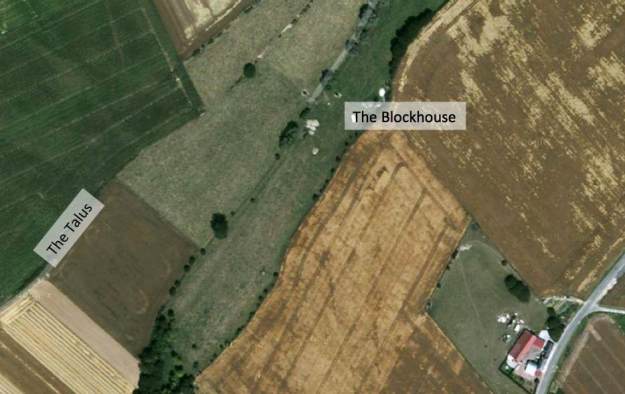
Talus Blockhouse 2015We carried out a small bombardment of the enemies trenches (especially the BLOCKHOUSE) at 6.30 pm & 9.30 pm.

139 Infantry Brigade: Headquarters War Diary [WO95/2692]


The men killed were or died of wounds were:-

1/5th Battalion:-

  • 4388 Pte James Carr
  • 4783 Pte Alfred Clarke
  • 4176 Pte Alfred Freeman
  • 2123 L/Cpl Edwin George Hemm
  • 2641 Pte Joseph Maiden
  • 1486 L/Cpl Walter Henry Phillips
  • 2704 Pte Ernest Pike

1/6th Battalion:-

  • Lieutenant  Charles Edward Victor Cree
  • 3768 Pte John Henry Crompton
  • 3399 Pte Francis Melbourne
  • 4519 Pte Edward Churchill
  • 4505 Pte James Carney
  • 4105 Pte Tom Vero
  • 3889 Pte William Poyser

Bellacourt cemetary

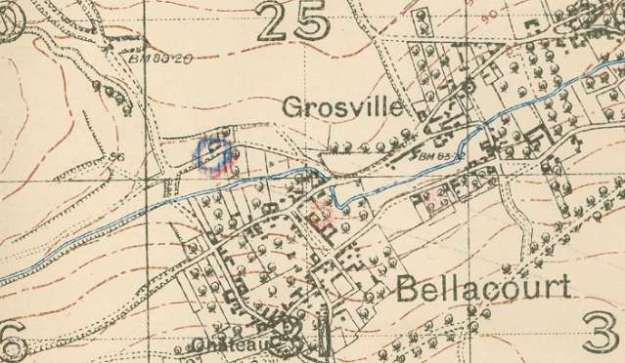
Location of these Trench Burials on a contemporary trench map dated 1916.
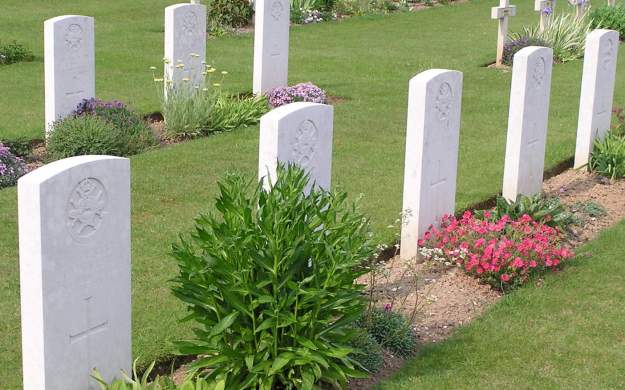
BellacourtEdward Victor Cree, Edward Churchill, John Crompton and Francis Melbourne are buried next to each other in Plot I, Row G, Graves 5-8.

Amongst the wounded men were:-

  • 2802 Pte. Wilfred Buxton a bricklayer from Ashbourne.
  • 3628 Pte. Samuel Charlesworth who returned to England and discharged.
  • 3782 Pte. Thomas Goodwin.
  • 3397 Pte. James Griffiths a colliery pony driver from Bolsover.
  • 4108 Pte. Henry Maycock, a labourer from Brampton who was severely wounded in the foot and transferred to England.
  • 1714 Pte. John McTigh from Chesterfield who was transferred to England and discharged.
  • 2309 Pte. Sam Nadin, a quarryman from Chapel-en-le-Frith, who suffered a GSW in left and right thigh and was transferred to England.
  • 4470 Pte. George Platts, a core maker from Newbold, who suffered a GSW in the left side and was transferred to England.
  • 2769 Pte. Albert Rivett a miner from Hasland.
  • 4460 Pte. Joseph Williamson, a miner from Whitehaven, who suffered multiple shell wounds and was transferred to England and discharged.
  • 1679 Pte Charles Smith, a coal miner from Chesterfield suffered a GSW in left leg and shoulder and returned to England and discharged.
  • 2185 Pte George Batterson, a coal miner from Tibshelf, suffered a GSW in the back and returned to England and discharged.


On these days 1st – 5th May 1916

2.5.1916 PENIN: Battn practised smoke attack with 139th Bde, (less 5th Battn) at TINQUES.

3.5.1916 PENIN: Capt V.O. Robinson to 3rd Army School of Instruction.

5.5.1916 PENIN: Lt E.M. JELLICOE & 2/Lt J.E. BARKER rejoined from 46th Divl School of Instruction.

War Diary [WO/95/2694]


May 1st: Units cleaning up and training.

May 2nd: Brigade practiced an attack under a smoke cloud near TINQUES – see Operations Order X.

May 3rd: Attack (as above) was postponed today (at last minute) until tomorrow at the same hour. The attack was again practised but owing to the wind having changed the attack today was made from West to East.

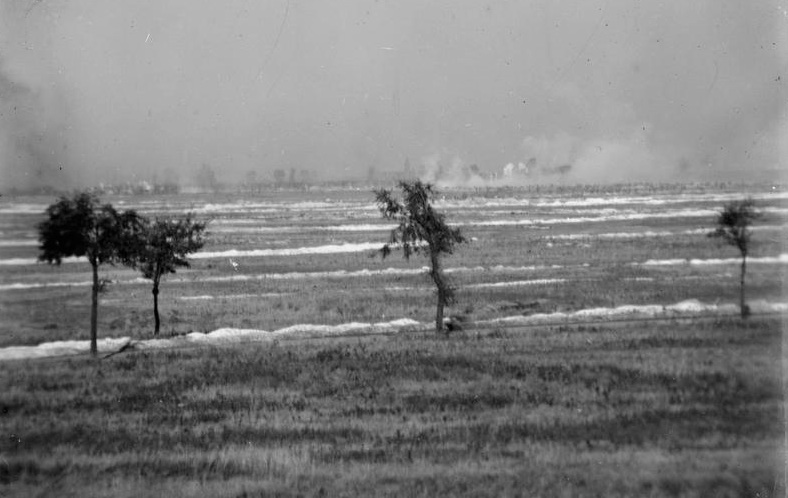
May 4th: The exhibition attack under a gas cloud was carried out today. It was most successful & instructive. The smoke bombs and smoke candles gave a very efficient smoke cloud behind which the attackers came on

Two aeroplanes and a kite balloon observed our movements from above.

May 5th: Brigade preparing for move tomorrow.

139 Infantry Brigade: Headquarters War Diary [WO95/2692]


On this day 2nd January 1916

2.1.1916 ISBERGUES: Notification received that Lt.-Col. G.D. Goodman, Capt V.O. Robinson, Regtl Sergt Maj. H.H. Jackman, Pte J Hamer had been mentioned in Sir John French’s Dispatches.

War Diary [WO/95/2694]


939 Hamer MID

On this day 5th November 1915

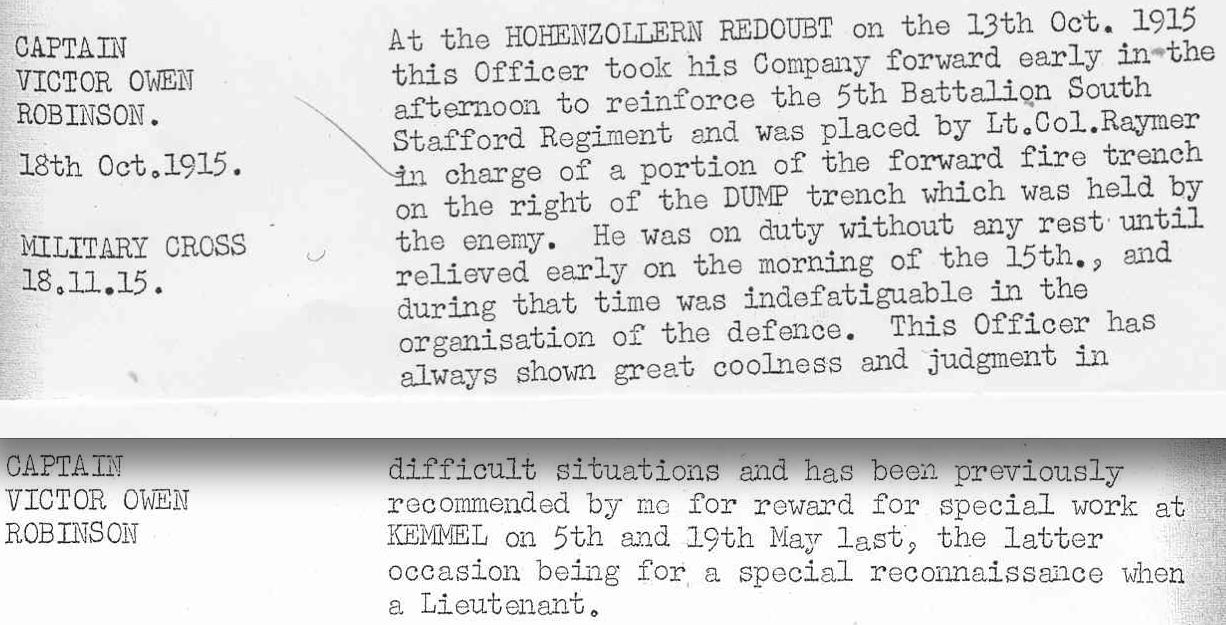
5.11.1915 PACAUT: Notification received that Capt V. O. Robinson had been awarded the MILITARY CROSS for Conspicuous gallantry at HOHENZOLLERN REDOUBT between the 13th & 15th October. The award is announced in the Supplement to the London Gazette dated 18.11.15.

War Diary [WO/95/2694]


Robinson VO

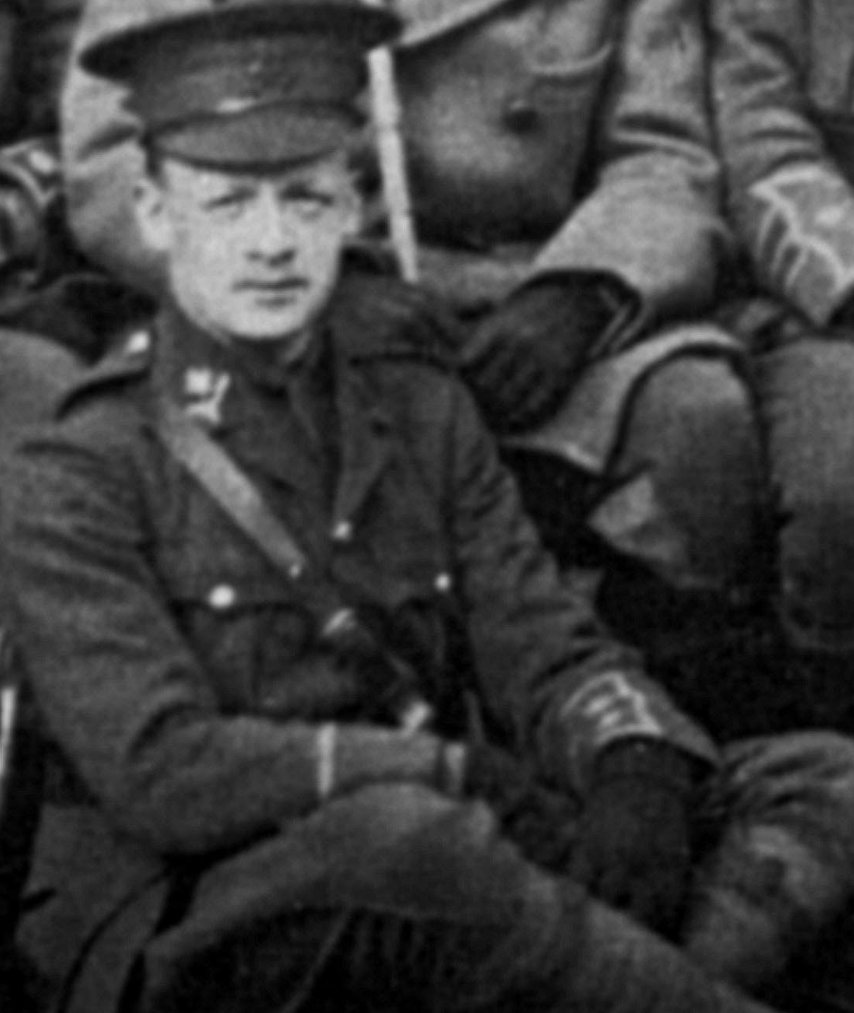
“Chesterfield hero: Captain Victor O. Robinson, aged 24 years, of the 1/6th Sherwood Foresters, who has been awarded the Military Cross. He is the youngest son of the late Mr William R. Robinson, twice Mayor of Chesterfield, and Mrs Robinson, of Field House, Chesterfield”

Robinson MC 1915


Nov 5th. Rose at 8 a.m. Signalling 10 till 12, others had bayonet fighting etc. Football in afternoon. Nice day but misty at first & cold at nights. Parcel from home again.

[3289 Pte George William Beardsley]

On this day 13th October 1915

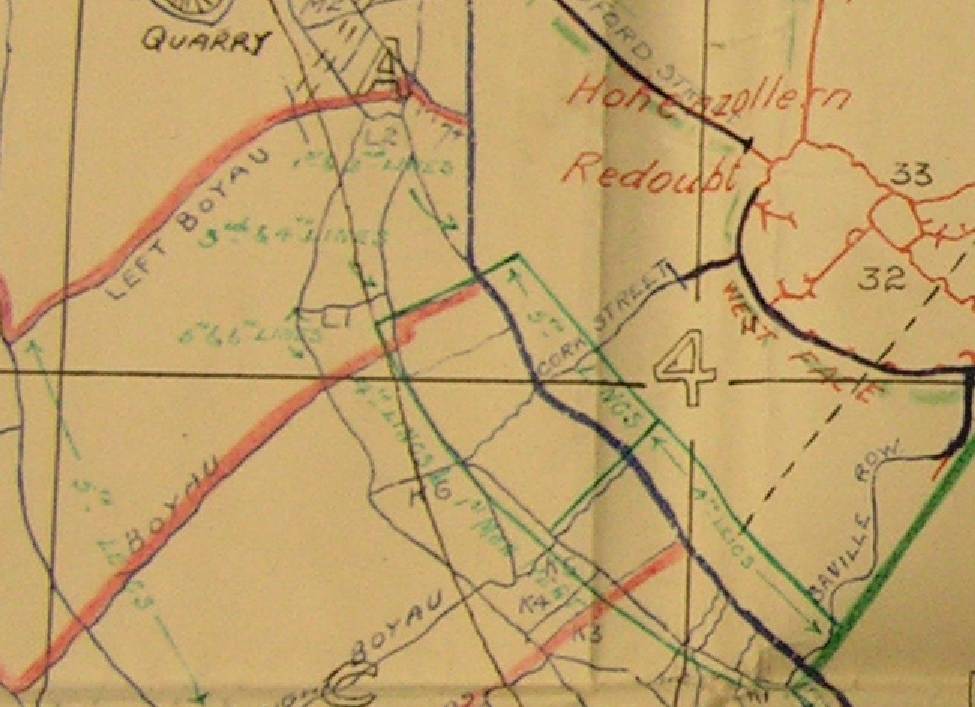
46th DIVISION attacked enemy trenches on a line from DUMP TRENCH to North of HOHENZOLLERN REDOUBT.

137th Brigade on Right, 138th Brigade on Left, 139th Bde in Reserve.138th Brigade

Attacking positions of the 138th Brigade (4th & 5th Lincolns; 4th & 5th Leicesters; 1st Monmouths)137th Brigade

Attacking positions of the 137th Brigade (4th & 5th North Staffs; 4th & 5th South Staffs)Gordon Alley

6th Battalion Sherwood Foresters (139th Brigade) in Reserve


At 12 noon Battalion came under orders of 137th Brigade to which it was in immediate support. Artillery opened at noon – gas attack at 1.0 pm. Infantry attacked at 2pm.

Hohenzollern 5


“A” Company (Capt VO Robinson) moved to front line trenches. “B” Company (Capt Dick) & “D” Company” (Capt CJ Wheatcroft) ordered to push on to DUMP supporting S. STAFFORDS but MAJOR BLACKWALL found attack unsuccessful & kept them in trenches. All Companies (less 3 platoons & M.G.) eventually in front line and immediate support trenches.Balckwell JE October 1915


“Great congestion in trenches owing to evacuation of wounded & carriage of S.A.A & bombs. Battn Bombardiers under 2/Lt LYTLE twice attacked BIG WILLIE but attack unsuccessful.”HohenzollernLytle WA October 1915


Oct 13th. Heavy bombardment of German trenches 12 till 2 p.m. Then Staffs, Lincs & Leicesters charged & took line. Gas many losses. About 4-30 p.m. we (Sherwoods) moved up into reserve trenches. Saw many wounded come down, some an awful mess. Nice day.


About four thirty on the morning of the thirteenth the artillery fire commenced, the whole area seemed to shake, of course the Germans joined in. This Redoubt to be attacked was about a hundred and fifty yards in front of our assembly trenches, and for about two hours was subjected to such a hail of shell fire that we were quite sure that no one could possibly remain alive to defend the position against our attack.

The first unit of our division at a prearranged time leapt from their trenches to the attack, and as soon as they left the protection of the deep front line all Hell broke loose. The enemy concentrated still further heavy artillery fire. This was to smash the next wave attempting to get out. In the awful stretch of ground the attacking first wave was met by such a withering scythe of machine gun fire that the Brigade lost fifty per cent of its strength in the first twenty five yards, the remainder somehow struggled on through that murderous hail, and only a very small part got a foot hold in the Redoubt.

It was now the turn of my Battalion to try and join them, but the fire was so great and effective that it was decided to wait a while to try as a sort of surprise. It will be appreciated that a frontal attack over the top was out of the question, as the artillery had not destroyed the German machine guns. In the meantime remnants of the attacking waves and some members of my Brigade had succeeded in worming their way along an old trench to join up with the lucky few in the Redoubt, they were established and consolidating the position, they mounted their machine guns and the artillery was asked to concentrate their fire on the German front line, to stop them gathering for a counter attack to regain the lost position.

About two thirty in the afternoon a message was received from the captured position that they badly needed bombs to repel the counter attack which surely would come at night fall. I was detailed to take a party of twelve men to carry bombs across this dreadful stretch of ground, with instructions that if we reached the captured position which was very doubtful to remain there and help in the defence.

Never shall I forget that dreadful journey, we started up by the disused trench, but it was so packed with dead and dying men also debris, that it was impossible to proceed, I therefore gave instructions to scramble out into No Mans Land, this I knew was very dangerous but could not be helped. We scrambled across guns, bodies, arms, legs and heads, the carnage had been complete. The first attacking wave had been completely wiped out, and any moment I expected the German fire to wipe us out. I imagined that every moment the trigger minded Germans would spot us and that would be the end, but somehow our little party struggled on. We were lucky in the extreme, either the Germans were resting, or they did not contemplate any attempt to cross that miserable stretch of ground in daylight. We made it in one piece.

Our crossing had been observed by the men in the Redoubt, in fact when we arrived along side them they told us that with every step of our journey they expected us all to be blown to smithereens, I shall always remember the words of one of the Officers who had observed our progress – “good show – here take a pull of this”, as he handed me his brandy flask, and although I was not a habitual drinker that brandy was very refreshing.

[2305 Pte. Frank Longson]