Tag Archives: Hohenzollern Redoubt

1365 Pte Benjamin James Savage

A mill hand from Cressbrook, who served with 5th Platoon “B” (Chapel & Whaley Bridge) Company and was killed during the attack on Hohenzollern Redoubt.

Many thanks to Marion Anderson for sending these pictures of her relative
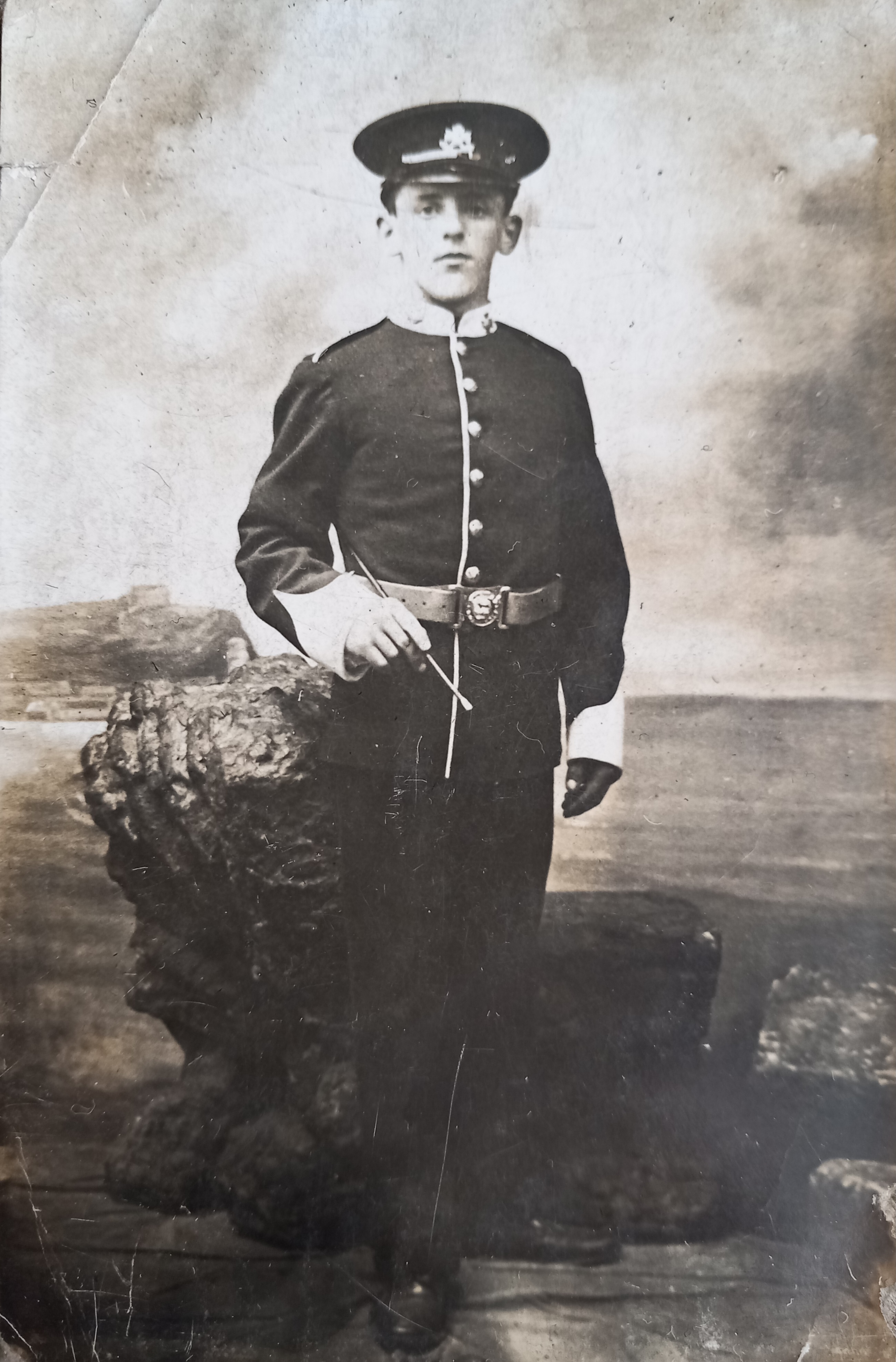
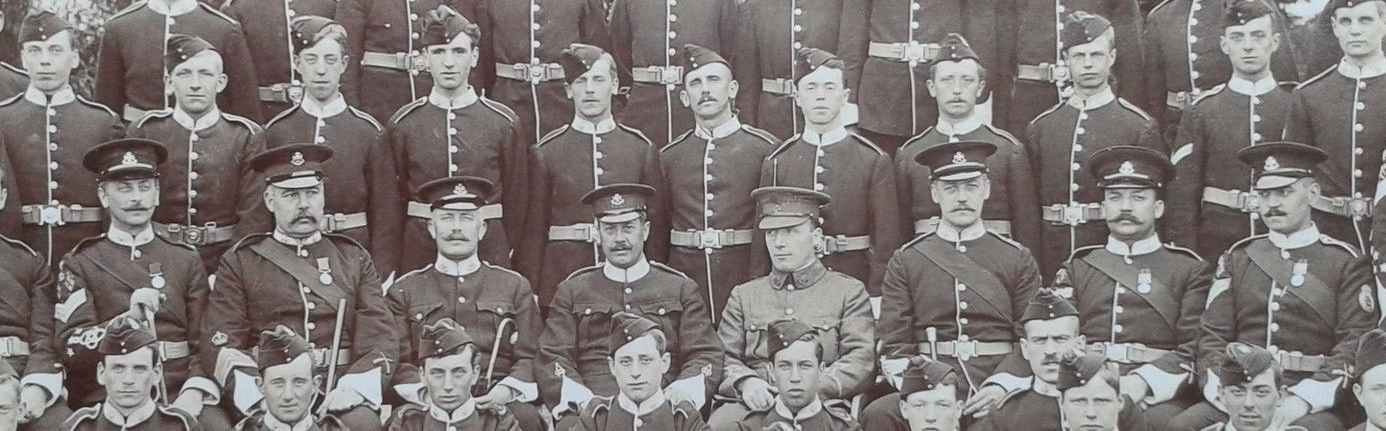
Benjamin in his dress uniform. The backdrop indicates that this was taken at the 1911 summer camp held at Scarborough where he signed the Imperial Service Agreement – see here for details of the camp.


Before the war – 1911-1914

Benjamin enlisted into the 6th (Derbyshire) Battalion, the Sherwood Foresters (Notts & Derby) Regiment on 18th March 1911 aged 18 years. In the 1911 Census he is recored as a mill hand at Cressbrook Mill.
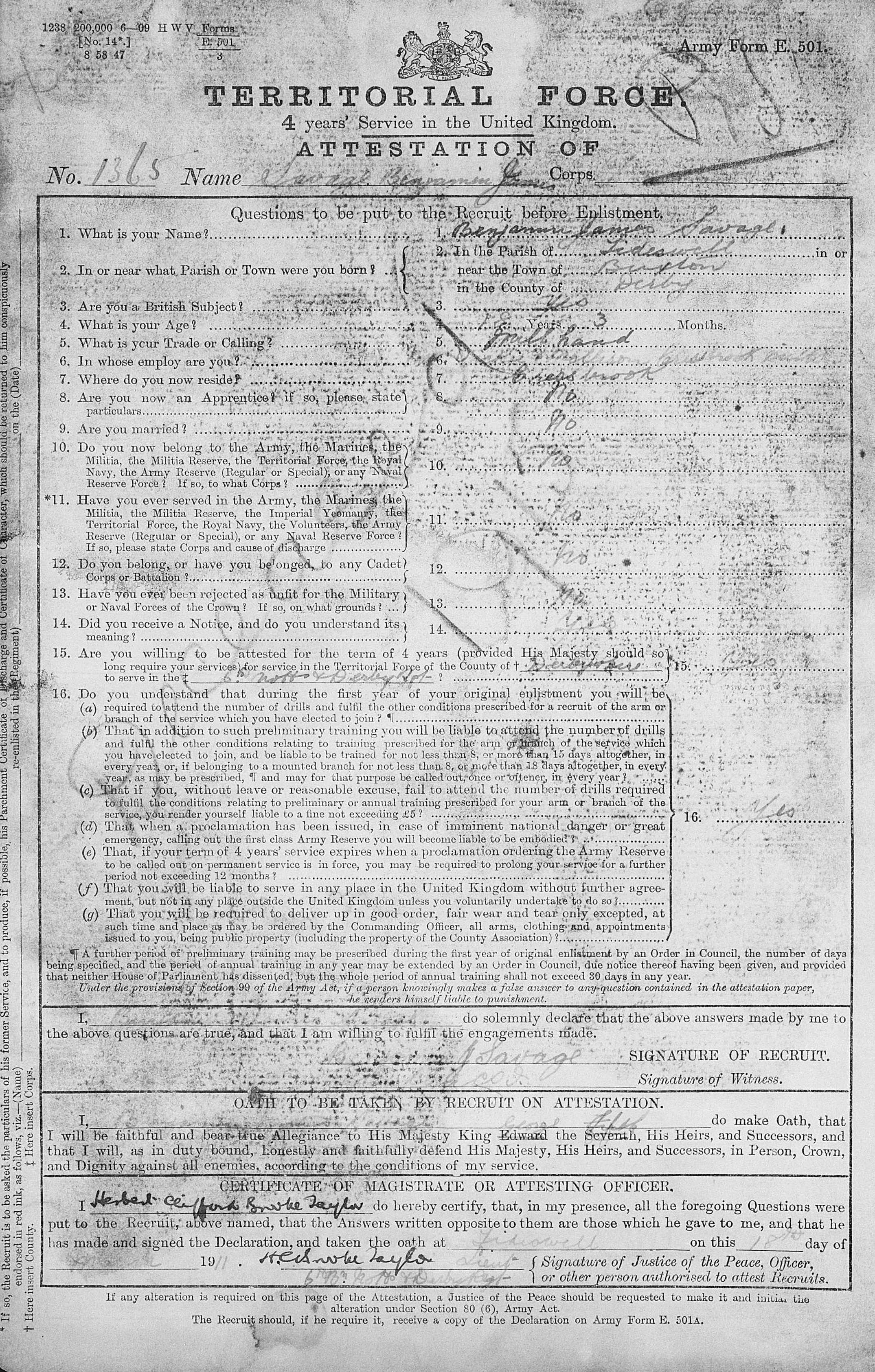
The first page of Benjamin’s army service record, which recorded him as just over 5′ 3″ tall and with good physical development. Benjamin attested and was medically examined at Tideswall, which suggests that he may have initially served with “D” Company that comprised men from Bakewell, Tideswall and Stoney Middleton.
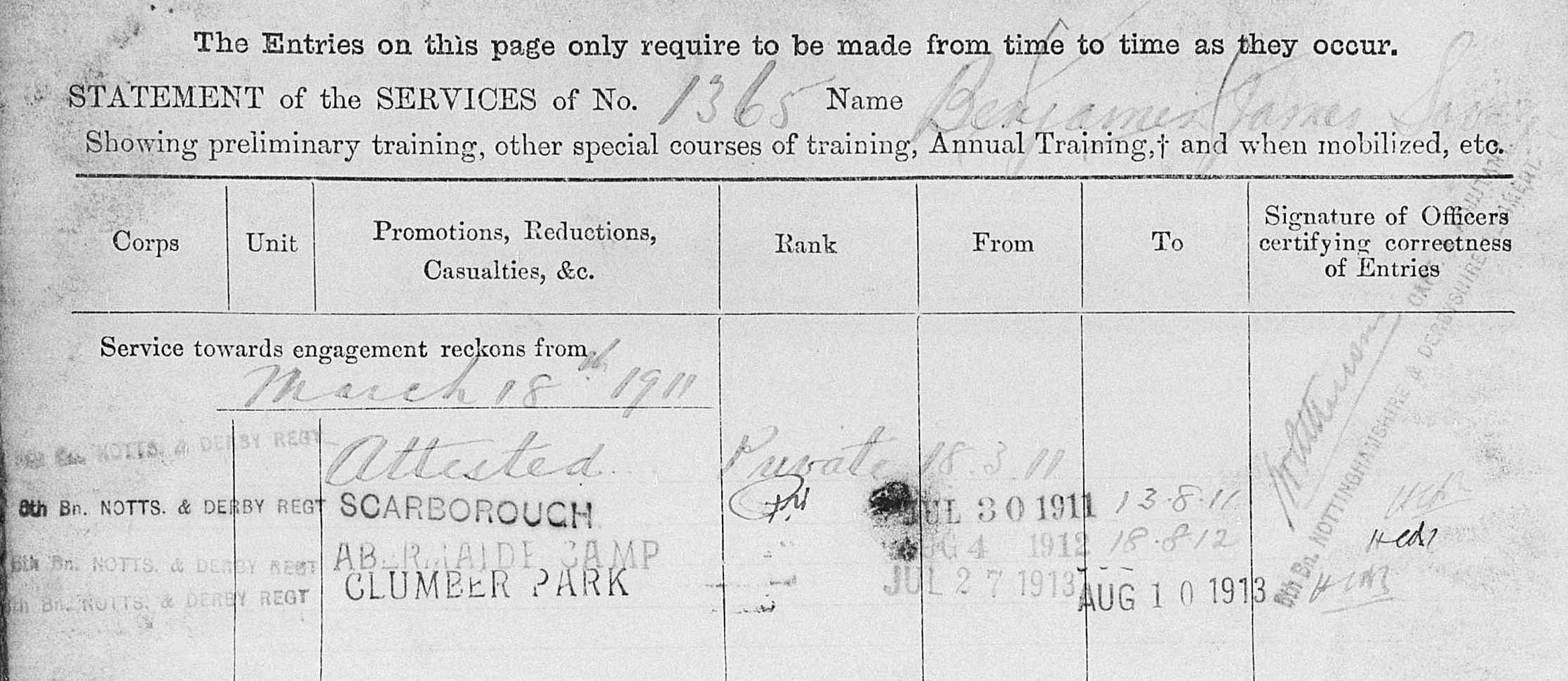
Benjamin attended the summer camps of 1911, 1912 and 1913; interestingly, there is no record of him being at the Hunmanby camp of 1914 when war was declared.


Mobilisation – August 1914

Benjamin was mobilised with the other men of the 6th Battalion on the 4th August 1914 and would have arrived in Chesterfield the following day. See here for details of the mobilisation.
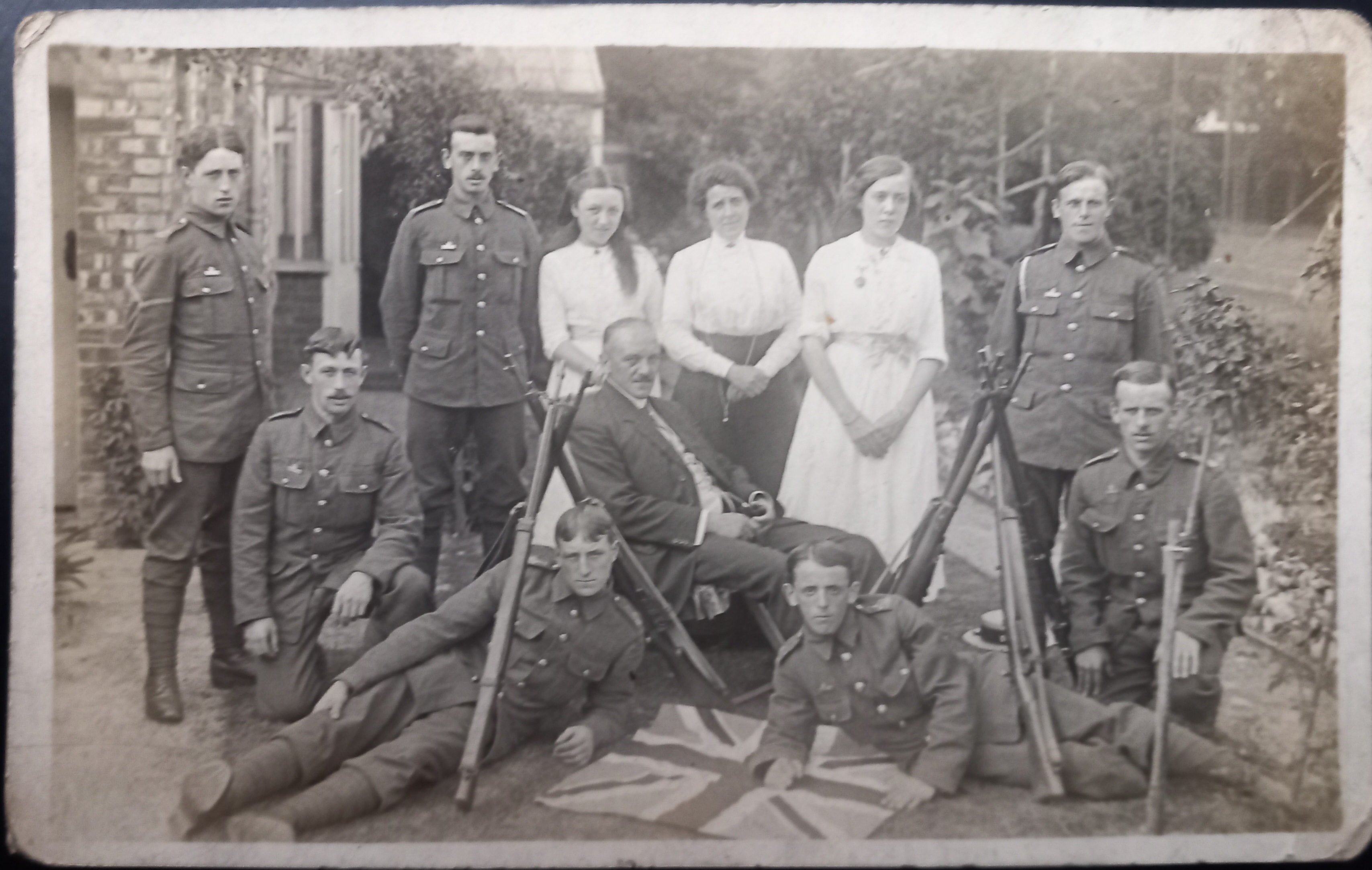
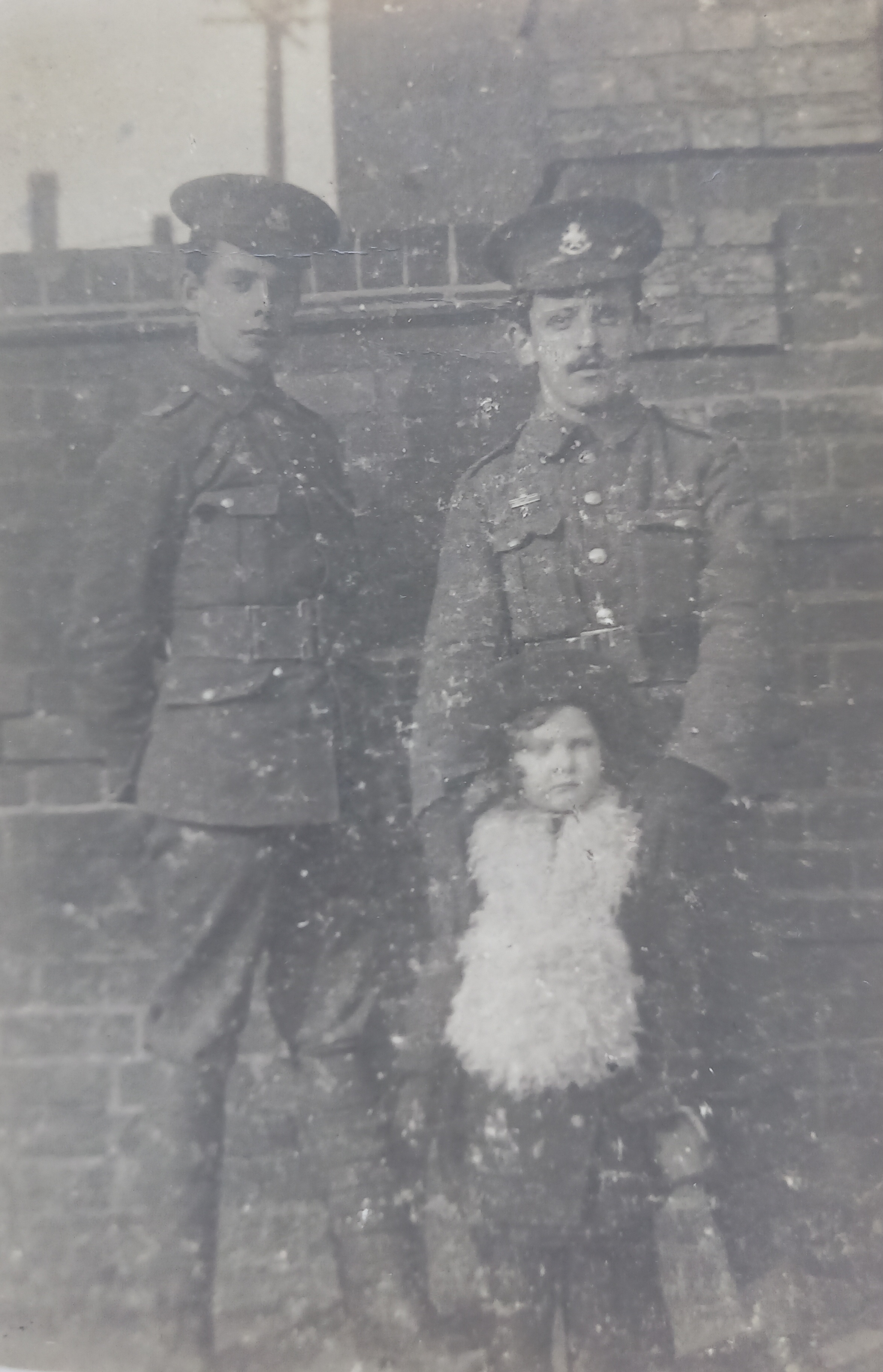
This picture possibly shows Benjamin’s section with the family that they billeted with in Harpenden. Benjamin is lying on the corner of the flag. Clearly visible are Imperial Service Badges above the men’s right tunic pocket. The men also have 5-tier Territorial shoulder badges and are equipped with ‘Long’ Lee Enfield rifles.


France – February 1915

The 46th North Midland Division arrived in France in February 1915 and soon found themselves in front line trenches. The North Midland Division had trench duties at Ploegsteert Wood (March), Neuf Berquin (March), Kemmel (April to June) and Ypres (June to September) before taking part in the Battle of Loos and the attack on Hohenzollern Redoubt.

During a period of rest at Ypres the Battalion were able to organise an inter Company cricket match between platoons of “B” Company and involving many local sportsman from the Chapel and Whaley Bridge areas. Of the 22 men who played in the cricket game on that warm July afternoon, ten were to lose their lives before the end of the War, three of these before the end of 1915; one of those would be Benjamin.


The attack on Hozenzollern Redoubt – 12th – 15th October

During the fighting for Hohenzollern Redoubt the 46th Division suffered 180 Officers and 3583 men killed, wounded or missing. The 1/6th Sherwood Foresters had 13 men killed, one man missing believed killed and 2/Lts Percival and Gardiner and 48 men wounded. The bodies of all of the men who were killed were not recovered or their graves identified after the War and they are commemorated on the Loos Memorial. The fact that so many bodies were not recovered is a testimony to the severity of the fighting and only Bernard White from Grassmoor, who died in a casualty clearing station in the Chateau at Vermelles, has a known grave.
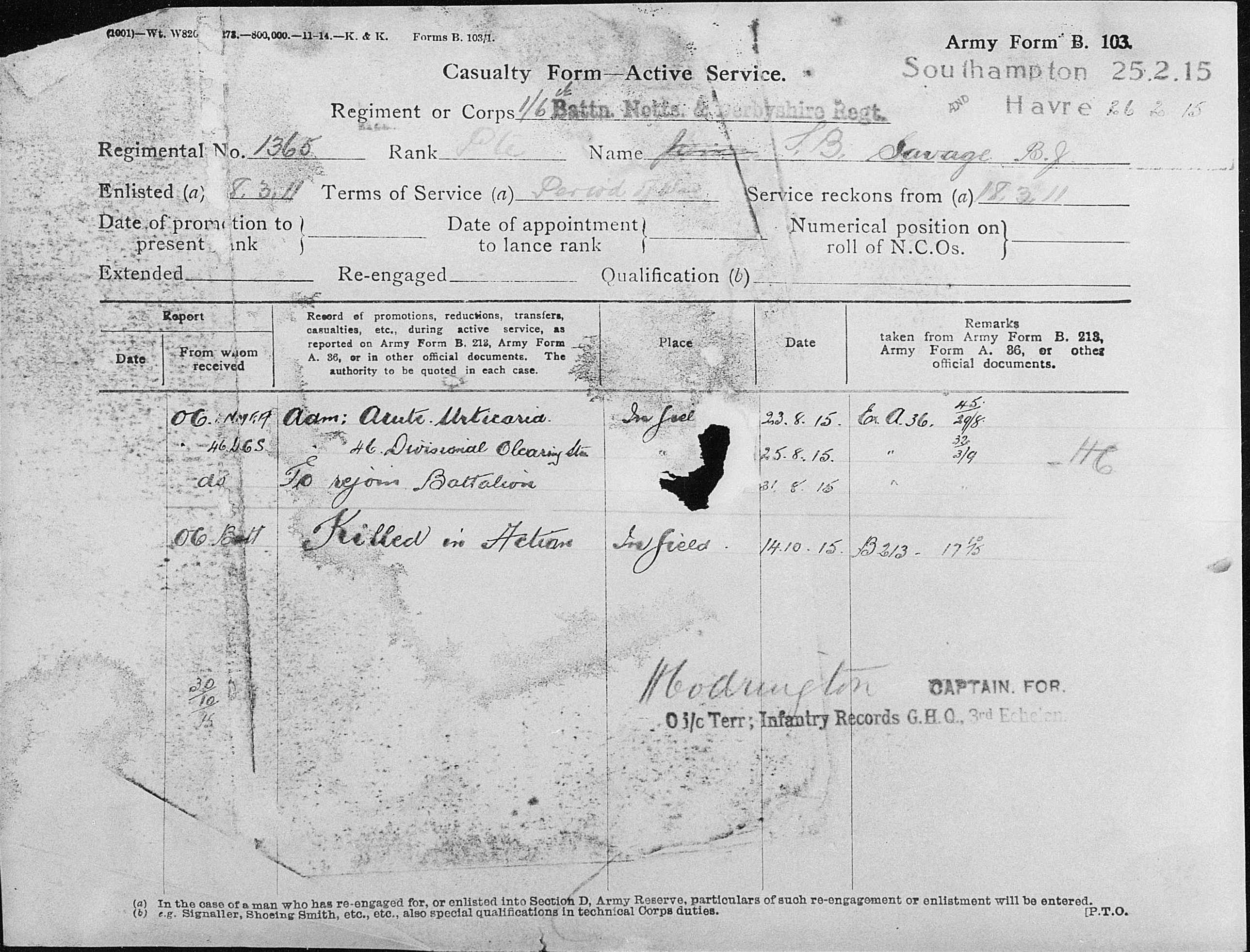
Casualty Form – Active Service’ recording that Benjamin had earlier suffered from acute urticaria (a chronic rash), most likely contracted from trench duty, and received treatment at the 1st North Midland Field Ambulance and then the 46th Divisional Clearing Station. The form also records Benjamin’s death ‘in the field’ on the 14th October 1915; he was only 22 years old.
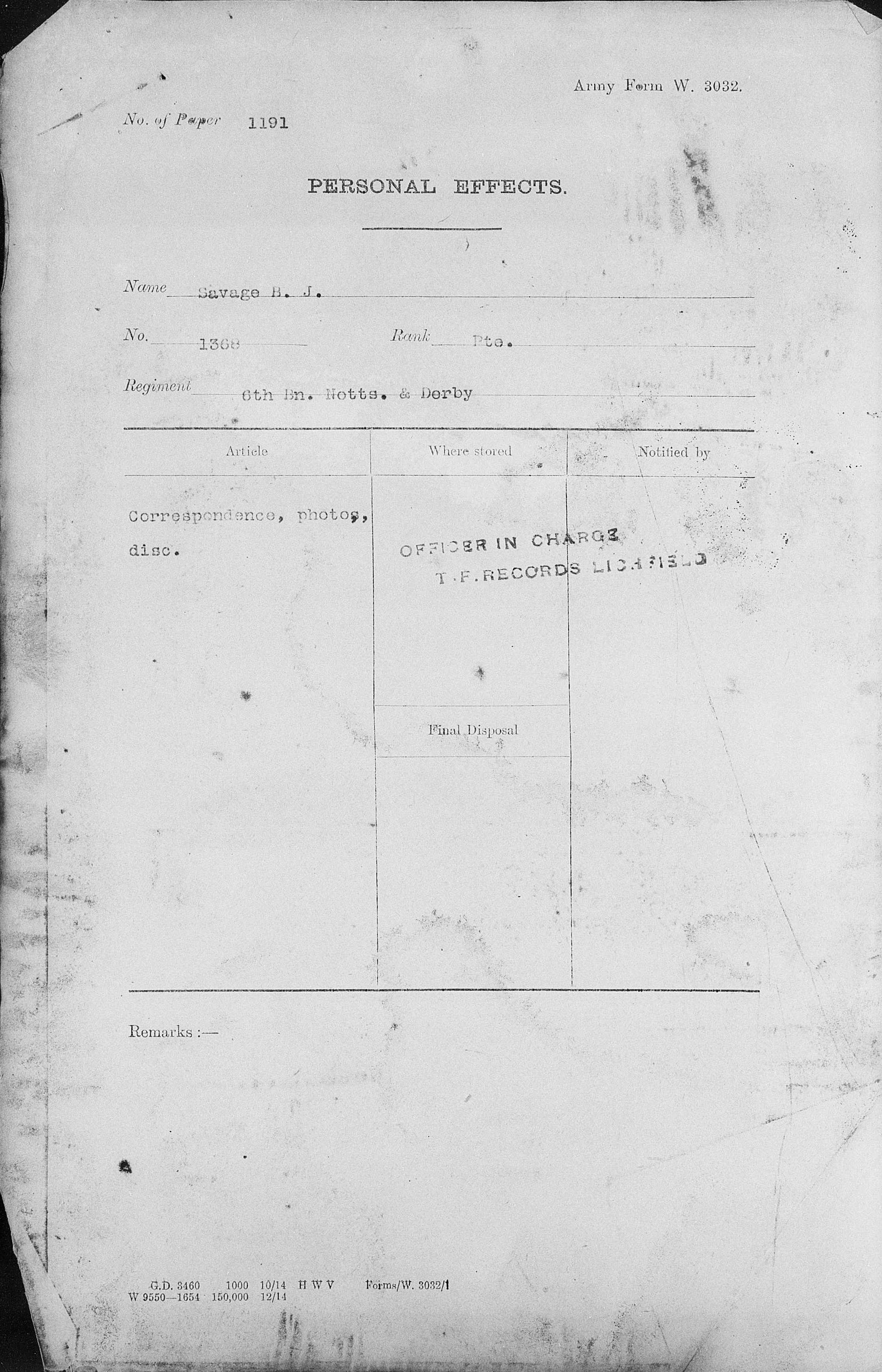
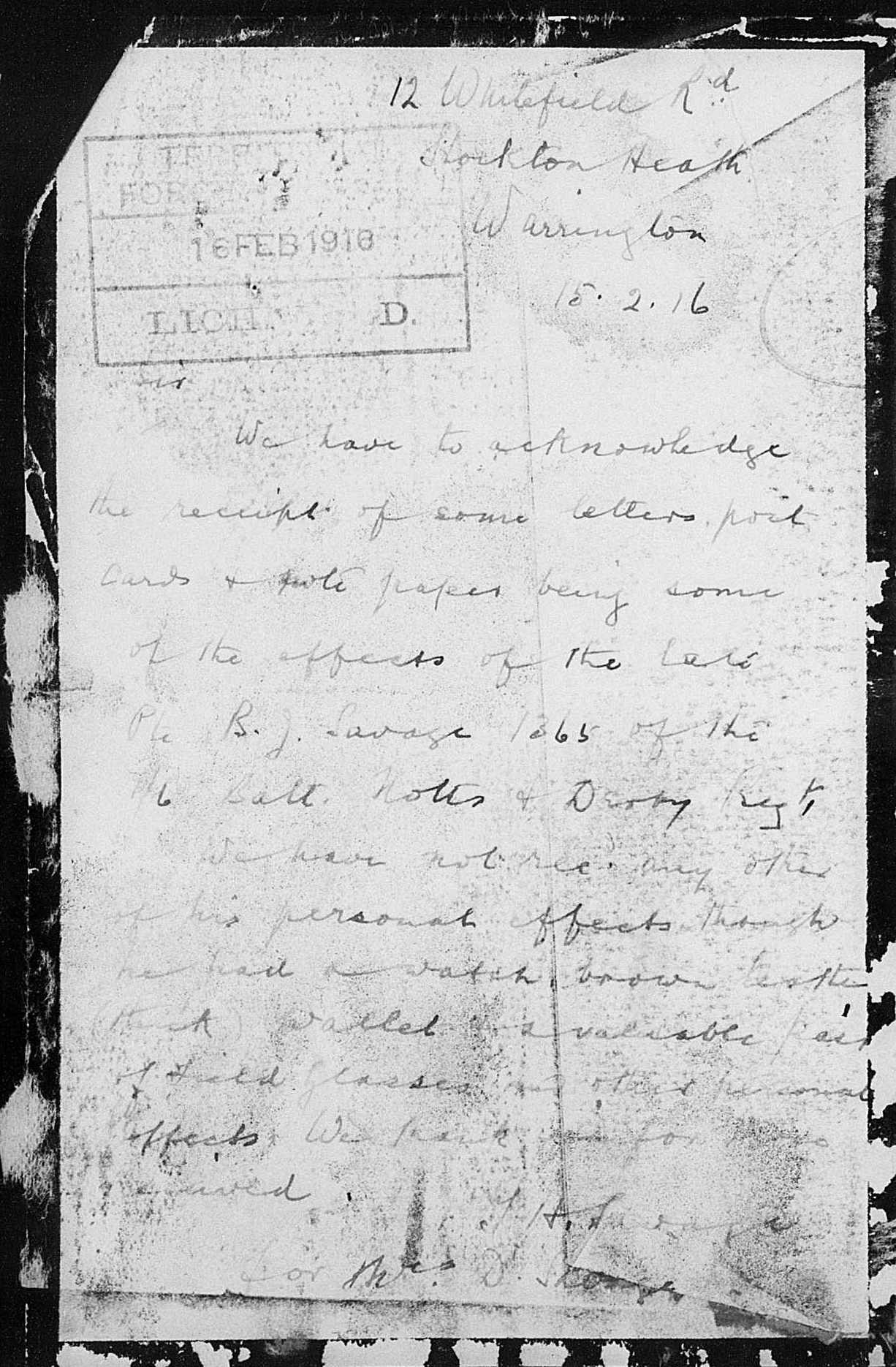
Personal effects sent to Benjamin’s parent and subsequent correspondence from them enquiring about some missing items including a watch and leather wallet. It was likely that he had those items on his person and they were not recovered along with his body.


After the War
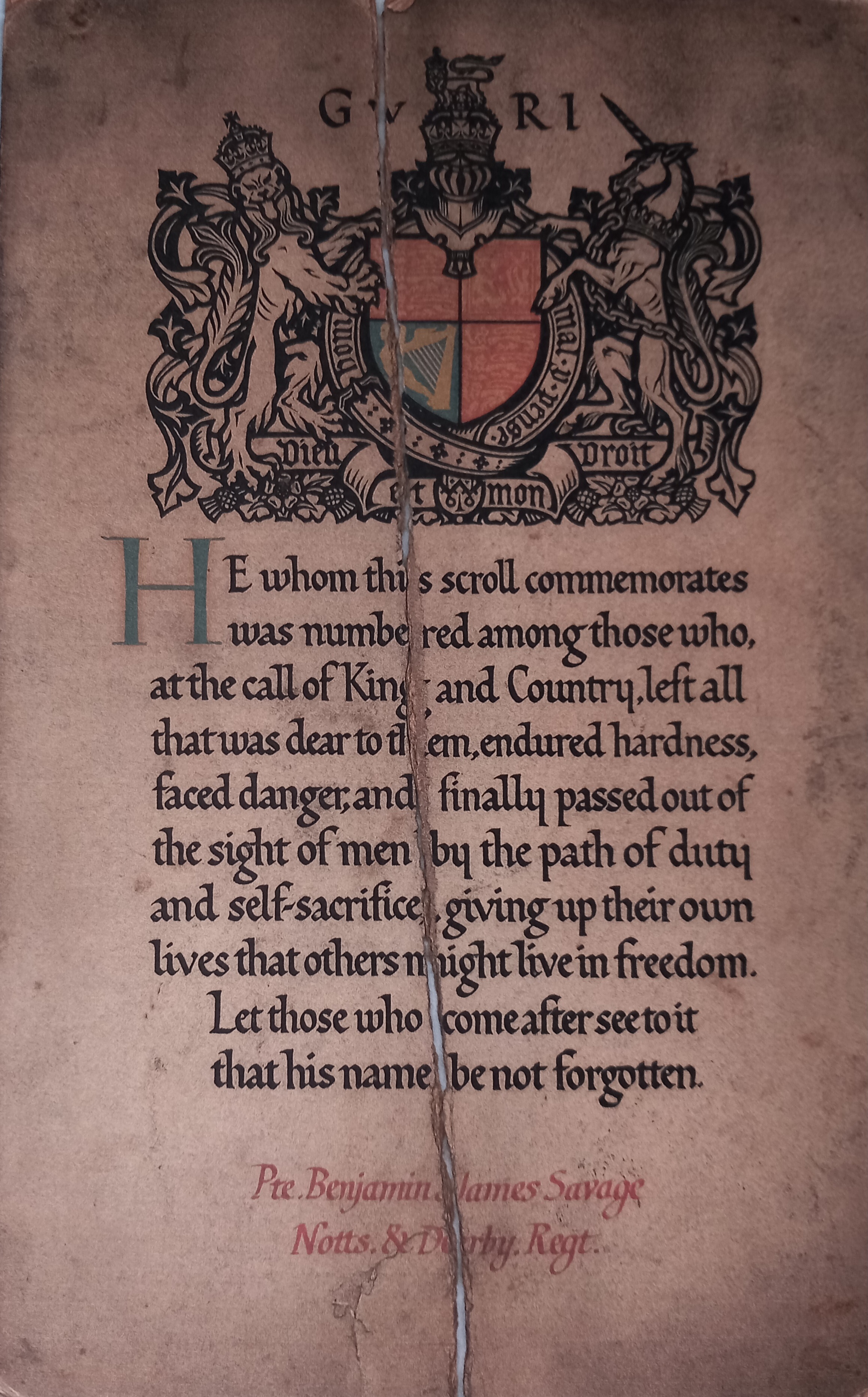
Benjamins’s family was presented with a ‘Next of Kin’ Memorial Scroll, Plaque and King’s Message. These were posted out separately, typically in 1919 and 1920, and a ‘King’s message’ was enclosed with both, containing a facsimile signature of the King.

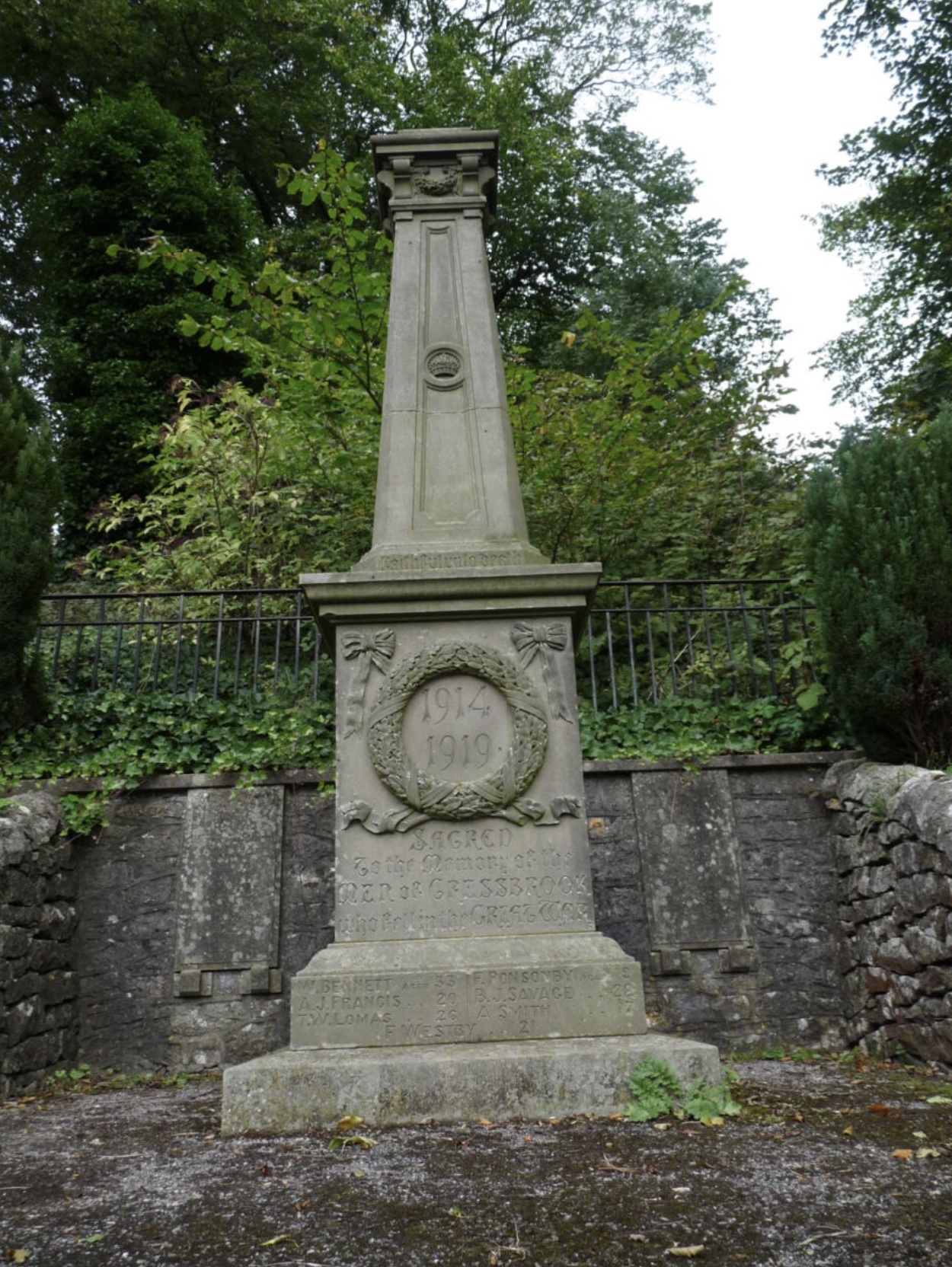
Benjamin’s name is recored on the Cressbrook Village Memorial. The image on the left is the original wood Cenotaph that was erected before the permanent stone memorial (right). Amongst the other men listed is 19-year old Fred Ponsonby, who also served with the 1/6th Battalion, and was shot by a sniper on the 21st May 1915.

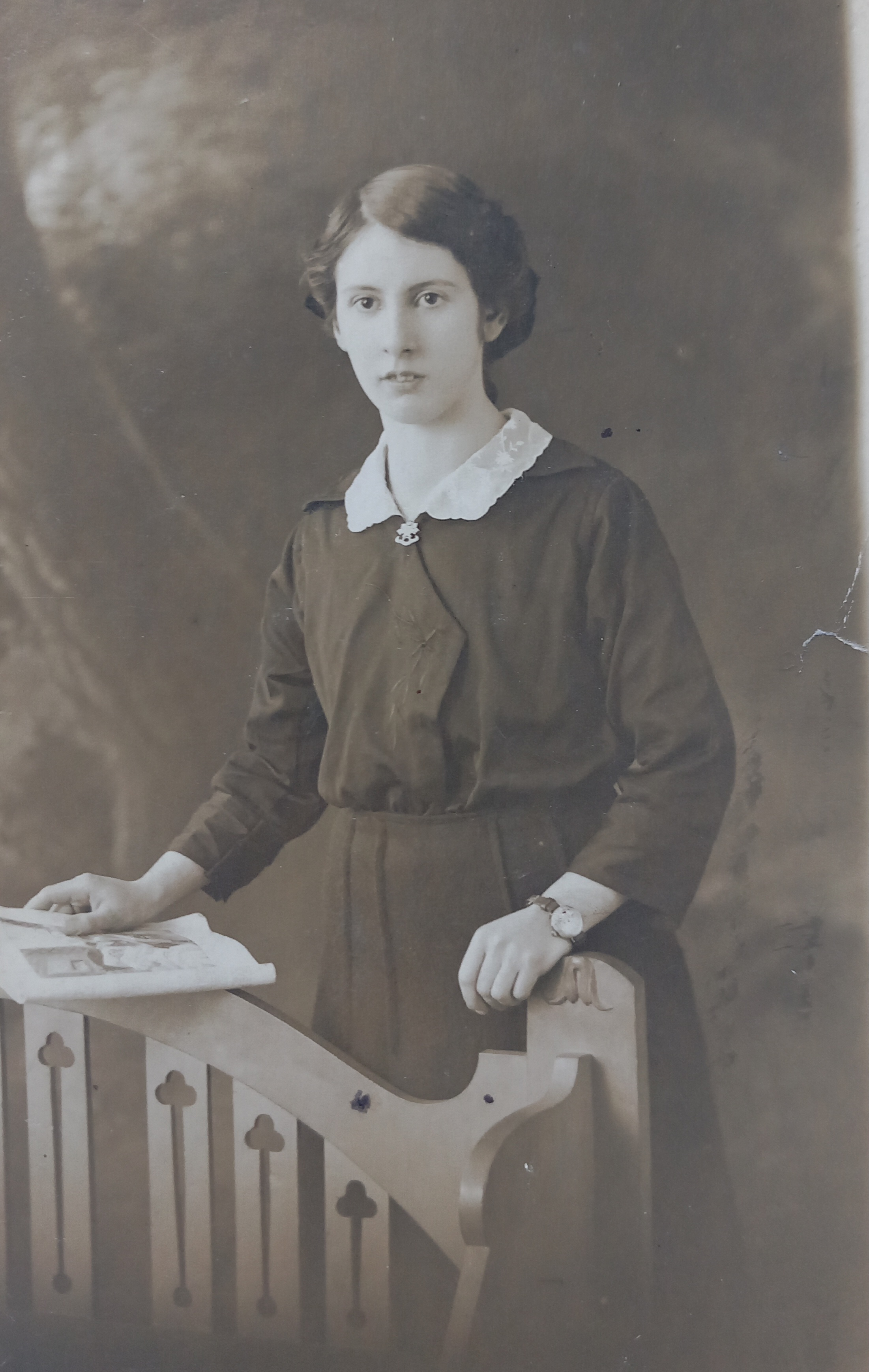
Benjamin’s father and mother, Thomas Hamilton Savage and Diana Richard-Savage who are standing on the doorstep of their home at Whitefield Road in Stockton Heath. Benjamin’s sister Isabel Savage-Charlesworth (right). Her husband Thomas was a Gunner in the Royal Field Artillery and died of his injuries exactly two years after Benjamin died, and just a few months after their son – Benjamin’s nephew (Marion’s grandfather) – was born.

1915 In Review

April to December 1915

  • The 6th Battalion left Southampton with the North Midland Division on the 25th February 1915.
  • The Battalion held the front line trenches 21 times between March and December 1915; including 1 major battle (the attack on Hohenzollern Redoubt).severne dickinson
  • Two Officer were killed during these 9 months; 2/Lt Henry Severne in May and 2/Lt Lewis Dickinson in September.
  • At least 10 Officers were also wounded during this time.
  • According to the War Diary 81 men were killed in the 9 months between March and December.
  • This does not include the 12 missing after the mine explosion on the 30th September; which was the biggest single loss of life to date.Redfern
  • The 1st man to be killed was 1470 Allen Redfern of Buxton who was shot by a sniper on the 10th March 1915 and is buried in Ploegsteert Wood Military Cemetery.Bombing
  • The last man to be killed was 3065 Joseph Brown, a miner from Grassmoor, who was last seen bombing in the German trench as the raiding party retired and was reported as missing on the 26th November. His body was never recovered or identified after the war and he is commemorated on the Loos Memorial.
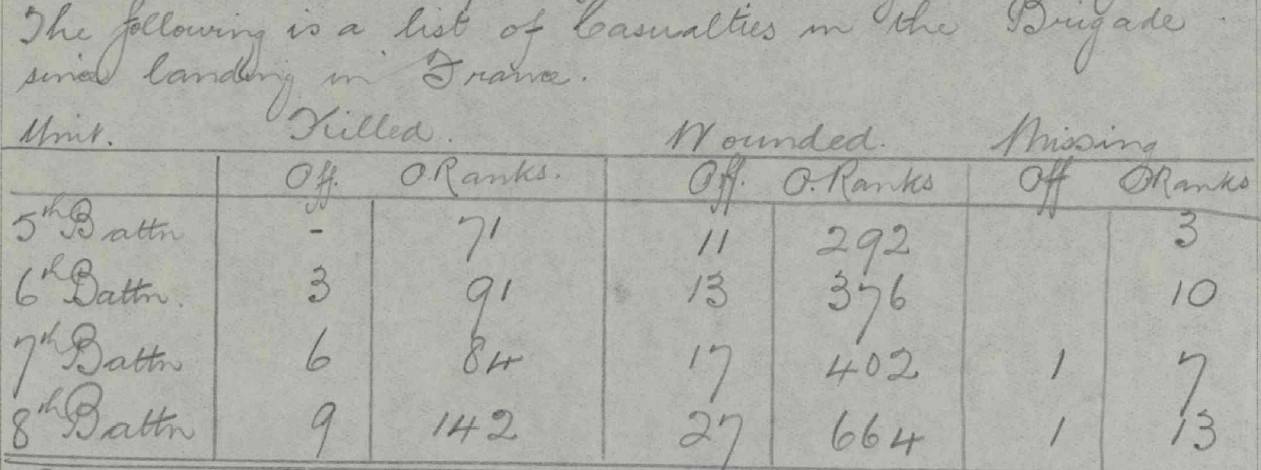
  • The War Diary records that 323 men were wounded during these 9 months; research suggests that this number is in fact much higher. Indeed the 139th Brigade War Diary records the following Casualties:-

1915 Casualties

On this day 5th November 1915

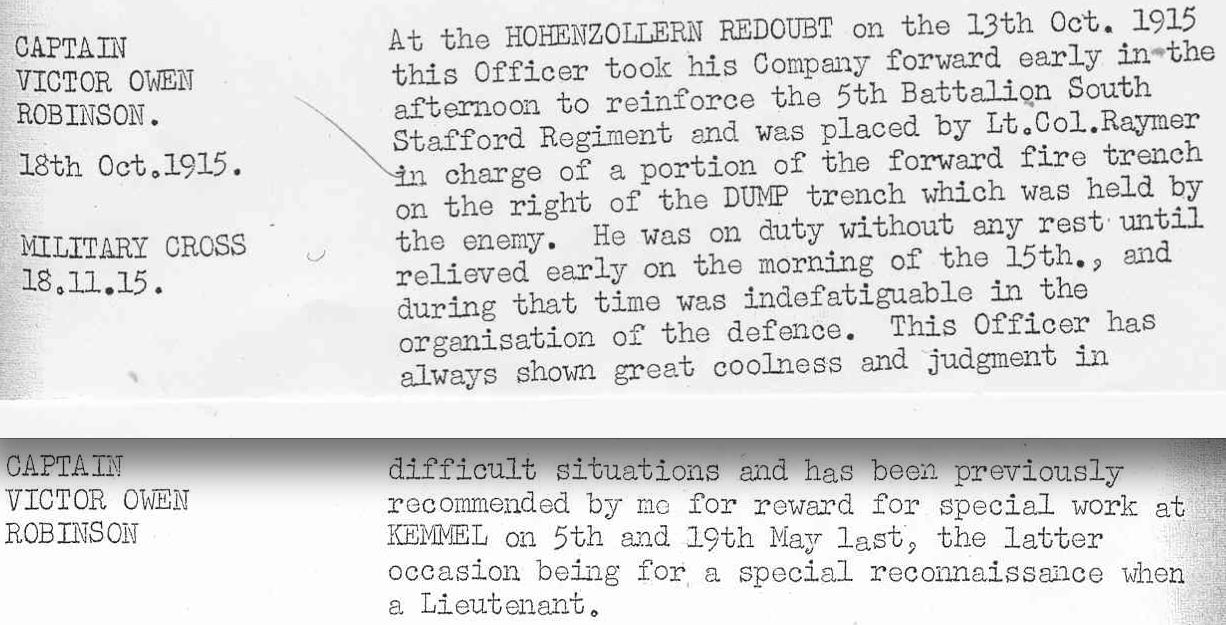
5.11.1915 PACAUT: Notification received that Capt V. O. Robinson had been awarded the MILITARY CROSS for Conspicuous gallantry at HOHENZOLLERN REDOUBT between the 13th & 15th October. The award is announced in the Supplement to the London Gazette dated 18.11.15.

War Diary [WO/95/2694]


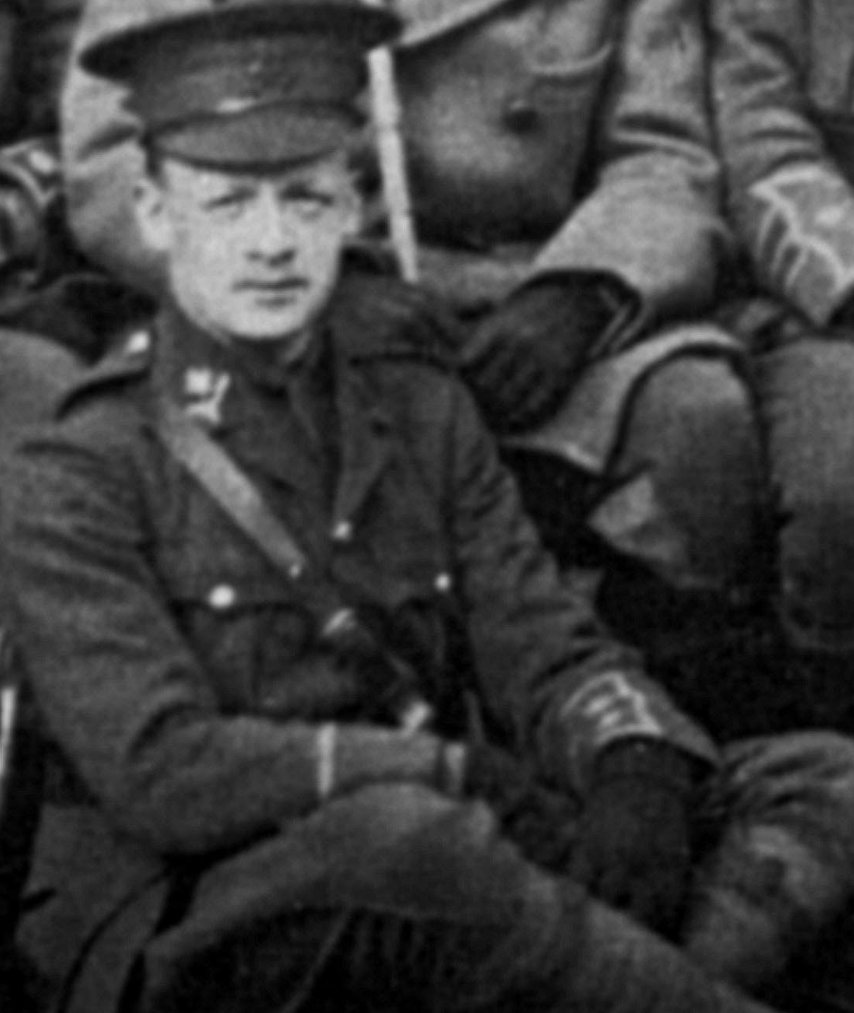
Robinson VO

“Chesterfield hero: Captain Victor O. Robinson, aged 24 years, of the 1/6th Sherwood Foresters, who has been awarded the Military Cross. He is the youngest son of the late Mr William R. Robinson, twice Mayor of Chesterfield, and Mrs Robinson, of Field House, Chesterfield”

Robinson MC 1915


Nov 5th. Rose at 8 a.m. Signalling 10 till 12, others had bayonet fighting etc. Football in afternoon. Nice day but misty at first & cold at nights. Parcel from home again.

[3289 Pte George William Beardsley]

On this day 13th October 1915

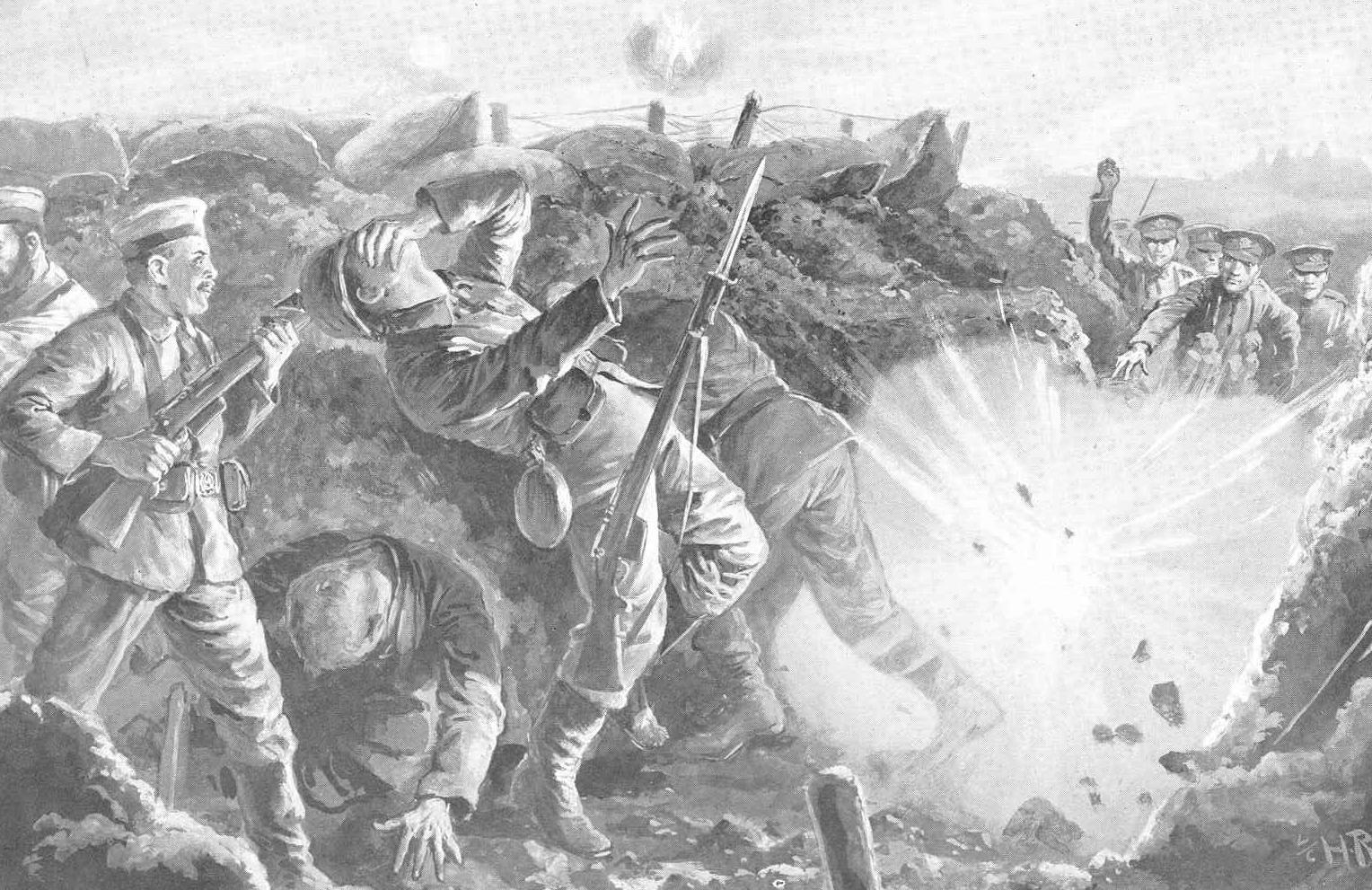
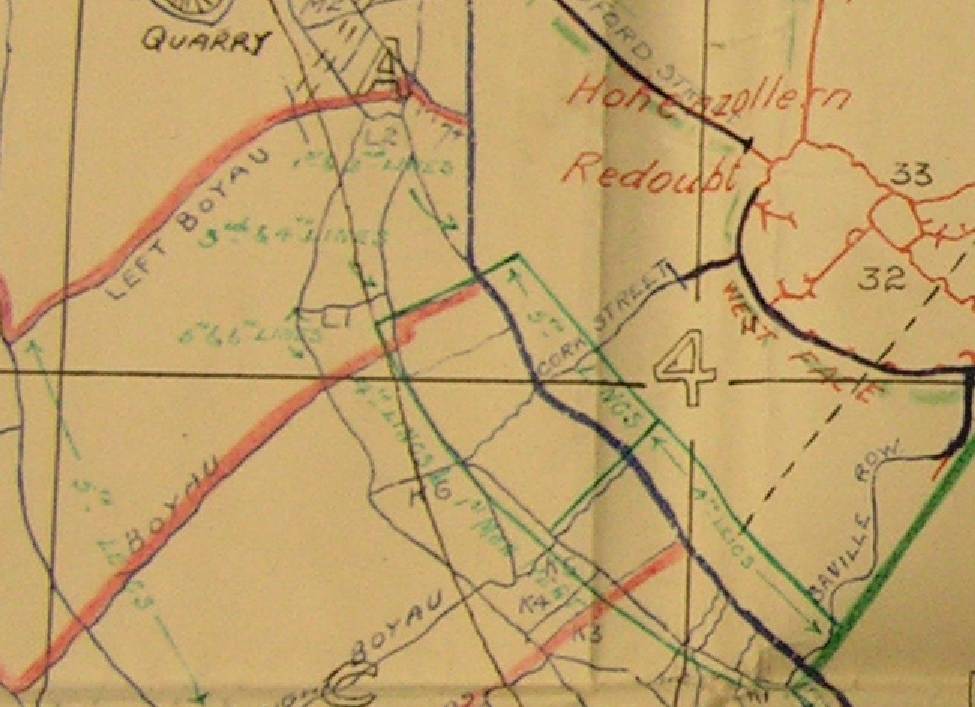
46th DIVISION attacked enemy trenches on a line from DUMP TRENCH to North of HOHENZOLLERN REDOUBT.

137th Brigade on Right, 138th Brigade on Left, 139th Bde in Reserve.138th Brigade

Attacking positions of the 138th Brigade (4th & 5th Lincolns; 4th & 5th Leicesters; 1st Monmouths)137th Brigade

Attacking positions of the 137th Brigade (4th & 5th North Staffs; 4th & 5th South Staffs)Gordon Alley

6th Battalion Sherwood Foresters (139th Brigade) in Reserve


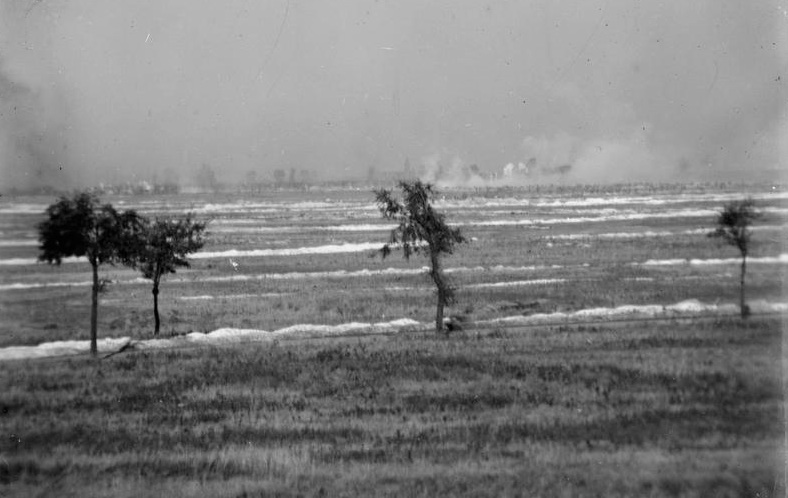
At 12 noon Battalion came under orders of 137th Brigade to which it was in immediate support. Artillery opened at noon – gas attack at 1.0 pm. Infantry attacked at 2pm.

Hohenzollern 5


“A” Company (Capt VO Robinson) moved to front line trenches. “B” Company (Capt Dick) & “D” Company” (Capt CJ Wheatcroft) ordered to push on to DUMP supporting S. STAFFORDS but MAJOR BLACKWALL found attack unsuccessful & kept them in trenches. All Companies (less 3 platoons & M.G.) eventually in front line and immediate support trenches.Balckwell JE October 1915


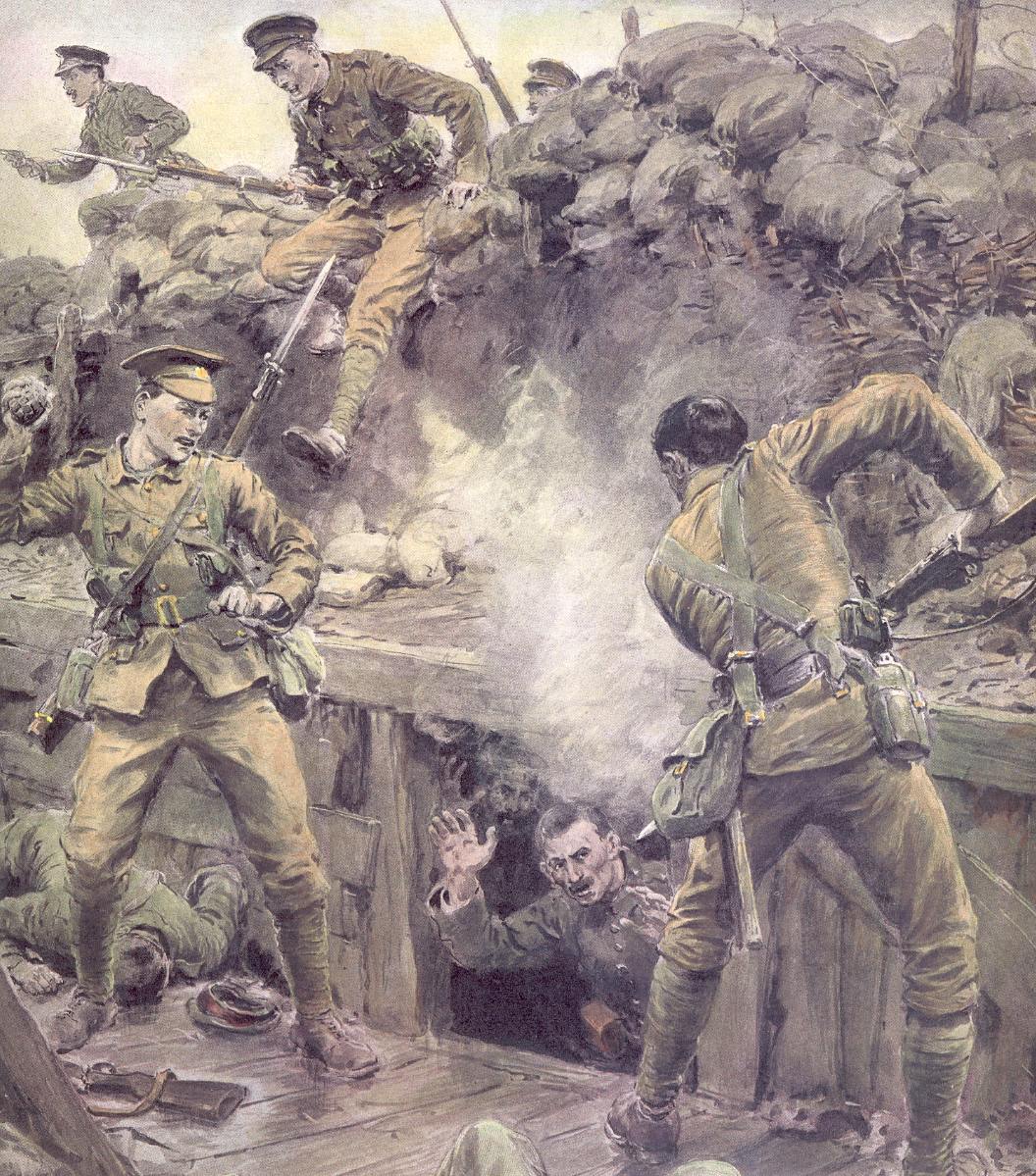
“Great congestion in trenches owing to evacuation of wounded & carriage of S.A.A & bombs. Battn Bombardiers under 2/Lt LYTLE twice attacked BIG WILLIE but attack unsuccessful.”HohenzollernLytle WA October 1915


Oct 13th. Heavy bombardment of German trenches 12 till 2 p.m. Then Staffs, Lincs & Leicesters charged & took line. Gas many losses. About 4-30 p.m. we (Sherwoods) moved up into reserve trenches. Saw many wounded come down, some an awful mess. Nice day.


About four thirty on the morning of the thirteenth the artillery fire commenced, the whole area seemed to shake, of course the Germans joined in. This Redoubt to be attacked was about a hundred and fifty yards in front of our assembly trenches, and for about two hours was subjected to such a hail of shell fire that we were quite sure that no one could possibly remain alive to defend the position against our attack.

The first unit of our division at a prearranged time leapt from their trenches to the attack, and as soon as they left the protection of the deep front line all Hell broke loose. The enemy concentrated still further heavy artillery fire. This was to smash the next wave attempting to get out. In the awful stretch of ground the attacking first wave was met by such a withering scythe of machine gun fire that the Brigade lost fifty per cent of its strength in the first twenty five yards, the remainder somehow struggled on through that murderous hail, and only a very small part got a foot hold in the Redoubt.

It was now the turn of my Battalion to try and join them, but the fire was so great and effective that it was decided to wait a while to try as a sort of surprise. It will be appreciated that a frontal attack over the top was out of the question, as the artillery had not destroyed the German machine guns. In the meantime remnants of the attacking waves and some members of my Brigade had succeeded in worming their way along an old trench to join up with the lucky few in the Redoubt, they were established and consolidating the position, they mounted their machine guns and the artillery was asked to concentrate their fire on the German front line, to stop them gathering for a counter attack to regain the lost position.

About two thirty in the afternoon a message was received from the captured position that they badly needed bombs to repel the counter attack which surely would come at night fall. I was detailed to take a party of twelve men to carry bombs across this dreadful stretch of ground, with instructions that if we reached the captured position which was very doubtful to remain there and help in the defence.

Never shall I forget that dreadful journey, we started up by the disused trench, but it was so packed with dead and dying men also debris, that it was impossible to proceed, I therefore gave instructions to scramble out into No Mans Land, this I knew was very dangerous but could not be helped. We scrambled across guns, bodies, arms, legs and heads, the carnage had been complete. The first attacking wave had been completely wiped out, and any moment I expected the German fire to wipe us out. I imagined that every moment the trigger minded Germans would spot us and that would be the end, but somehow our little party struggled on. We were lucky in the extreme, either the Germans were resting, or they did not contemplate any attempt to cross that miserable stretch of ground in daylight. We made it in one piece.

Our crossing had been observed by the men in the Redoubt, in fact when we arrived along side them they told us that with every step of our journey they expected us all to be blown to smithereens, I shall always remember the words of one of the Officers who had observed our progress – “good show – here take a pull of this”, as he handed me his brandy flask, and although I was not a habitual drinker that brandy was very refreshing.

[2305 Pte. Frank Longson]

On this day 15th October 1915

Orders were received on the night of the 14th-15th informing Colonel Goodman that he was to proceed with his Battalion and relieve the 8/Sherwood Foresters currently holding the Hohenzollern Redoubt. Their place in the British front line was be to be filled by Companies of the Guards Brigade, however this relief did not fully develop and it was shortly before dawn when three platoons of “C” Company under the command of Capt EH Heathcote arrived in the redoubt. At this time Colonel Fowler of the 8/Sherwood Foresters was killed and Colonel Goodman was ordered to return to the British Front line leaving Capt Heathcote in command of the Hohenzollern garrison. During the following night the relief was completed and the 6/Sherwood Foresters moved back Fouquereuil and thereafter to billets in Verquin.

During the fighting of the previous few days the 46th Division had suffered 180 Officers and 3583 men killed, wounded or missing. The 6/Sherwood Foresters had 13 men killed, one man missing believed killed and 2nd Lieutenants Percival and Gardiner and 48 men wounded.

The bodies of all of the men who were killed were not recovered or identified after the War and are commemorated on the Loos Memorial. The fact that so many bodies were not recovered is a testimony to the severity of the fighting and only Bernhard White from Grassmoor who died at a casualty clearing station in the Chateau at Vermelles has a known grave.

6

Amongst the men killed were Benjamin Savage from Tideswall who had played in the summer cricket match and 21 year old John Steggles (“C” Company) from Chesterfield who had a number of letters published in the Derbyshire Times over the previous six months.

9