
5.10.1915 HINGES: Details proceeded to MAZINGARBE and joined Bn who came out of trenches and billeted in MAZINGARBE.
[WO/95/2694]
Oct 5th. Rose at about 9 a.m. after a good night rest. Guarding blankets etc. in morning, & began packing up after dinner. Left Hinges at 4 p.m. & got to Sailly about 8 p.m. Stopped in an empty house for the night. Batt returned from trenches about midnight with many German souvenirs.
[3289 Pte George William Beardsley]
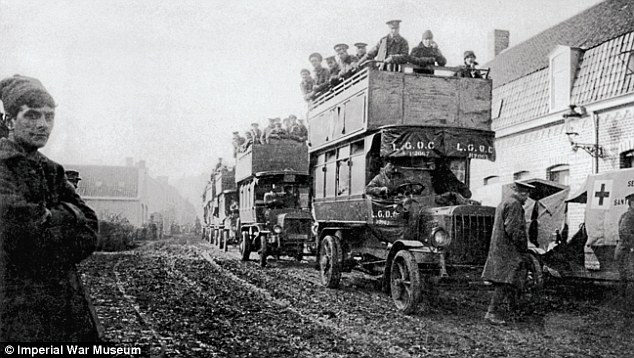
We de-bussed after about an hour proceeding through the approach trenches we reached the battle front, the noise, the carnage and the stench beggars description, we were in a part of the front that a kilted regiment had attacked, their casualties had been considerable, and their transport which had been formed up to follow them if the attack had been successful, but the attack had not been successful, and the whole convoy had been destroyed by the German artillery fire.
There were hundreds of dead and dying mules and horses, smashed wagons and stores of every description. The dead drivers were left there, but the wounded had been taken away. We were ordered to make some sort of order out of the chaos and to prepare to join in the attack, but the German artillery had decided to give us Hell and continued to pour a hail of heavy shell fire to smash our further attempt at renewed attack.
[2305 Pte. Frank Longson]
1961 L/Cpl John Marsland
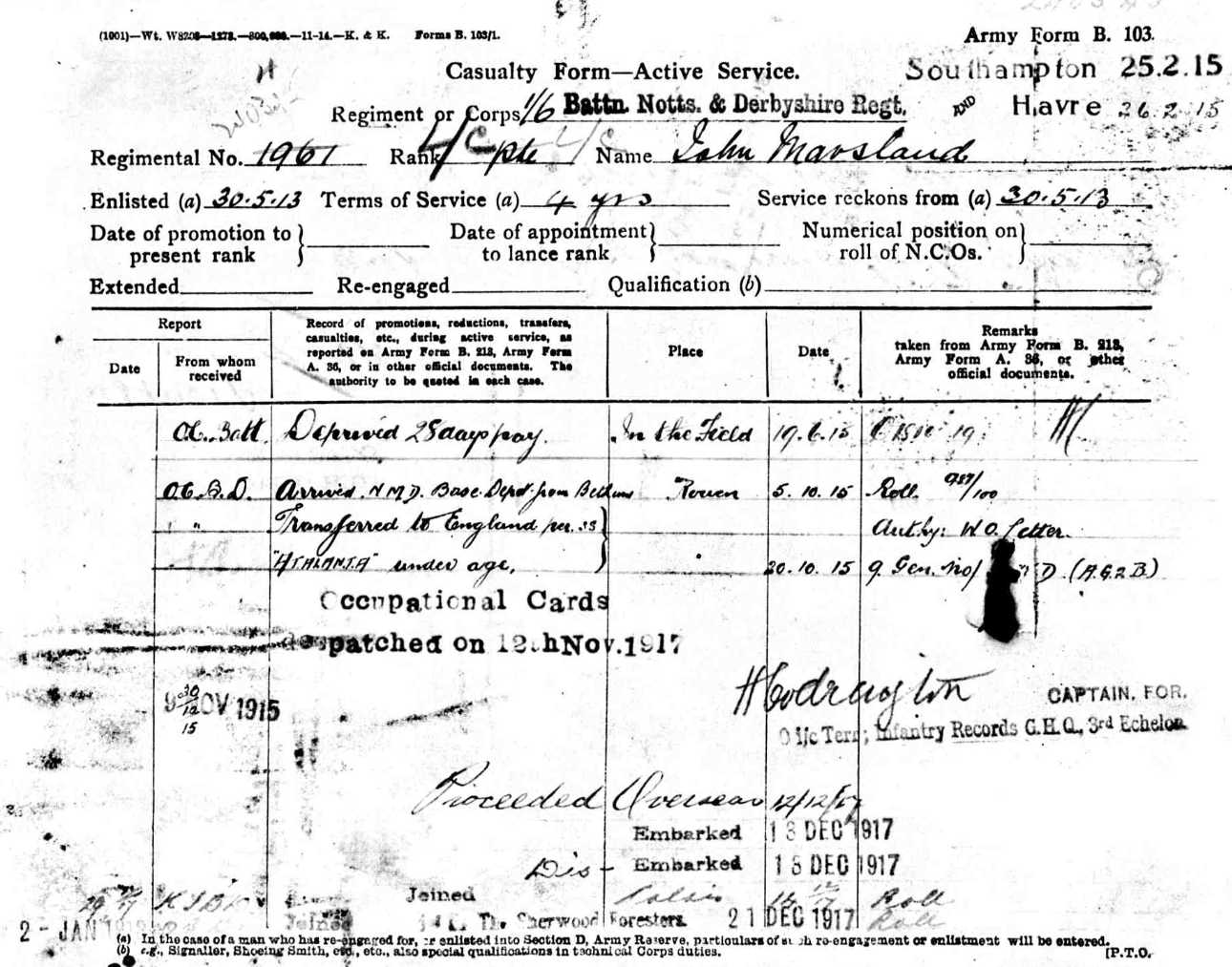 1961 L/Cpl John Marsland, a farm labourer from Kettleshulme, was transferred to England on the SS Atlanta due to being underage for overseas service.
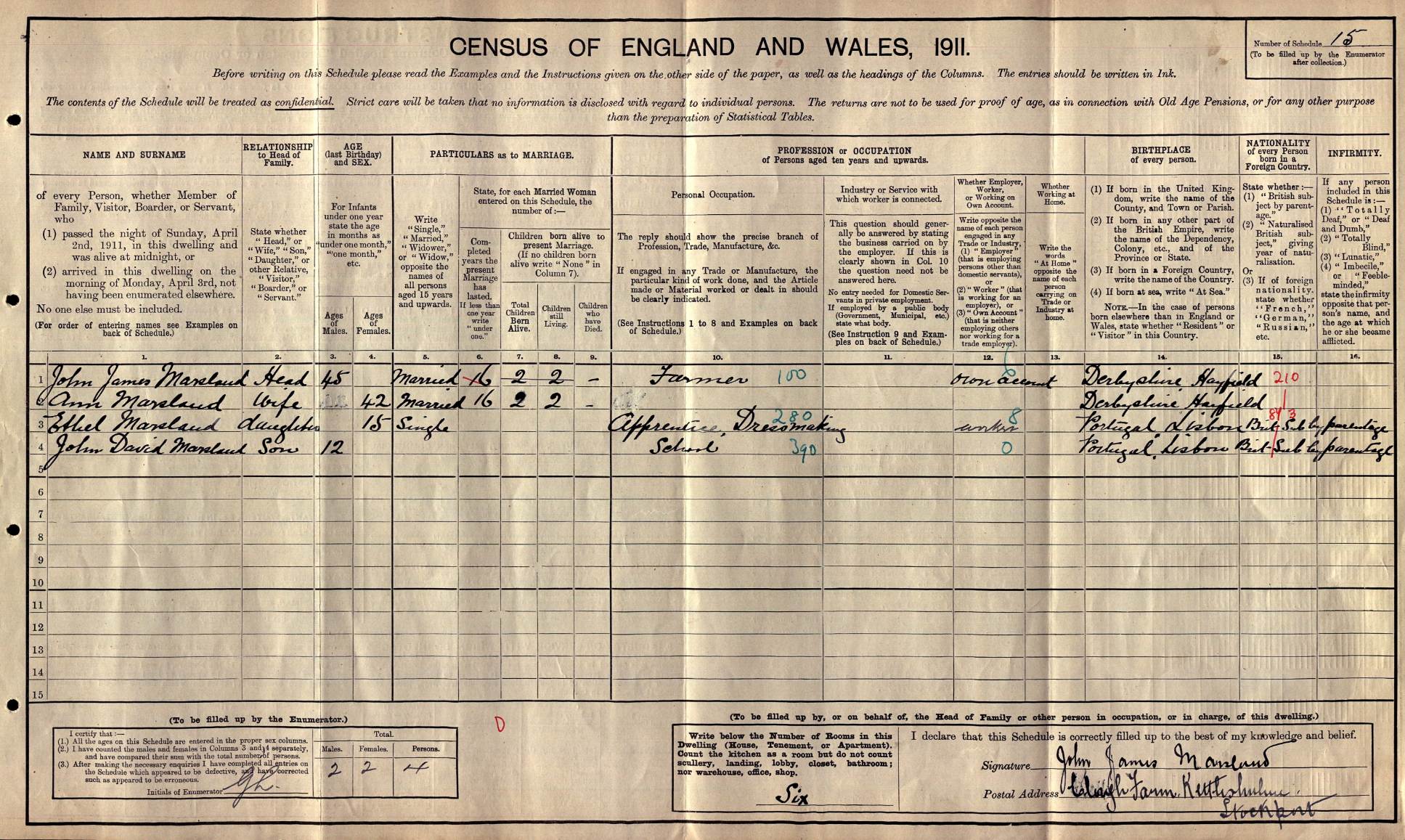
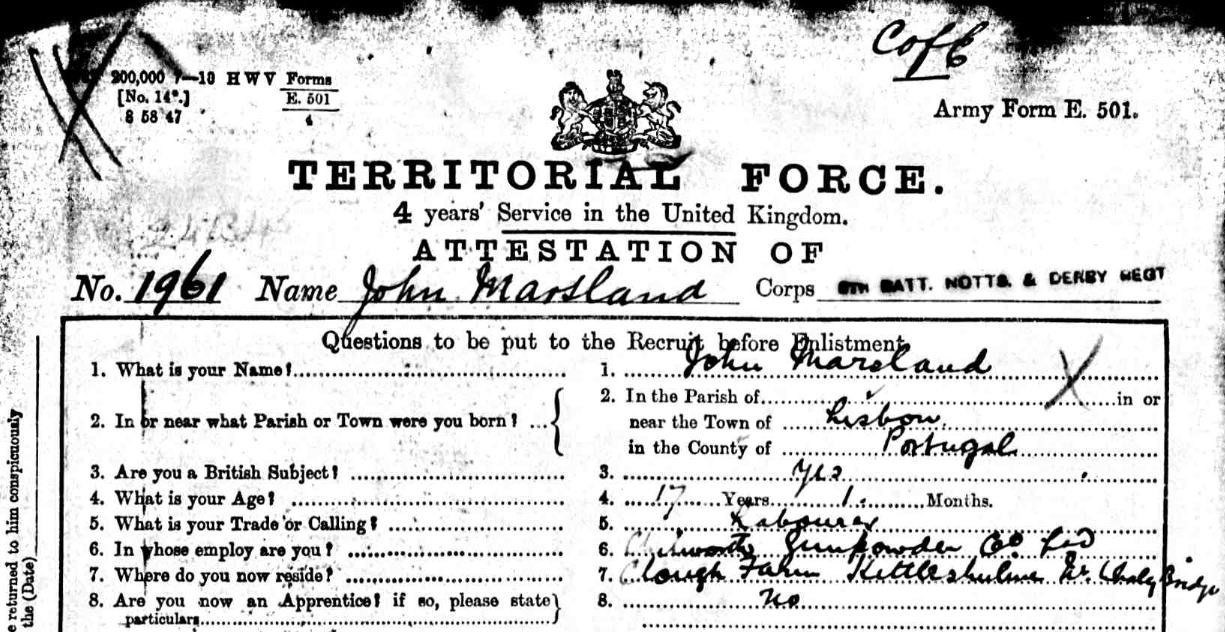 John has originally enlisted in May 1913 and gave his age as 17 years and 1 month; however, the 1911 Census records his birth in 1899 making him only about 14 years old.
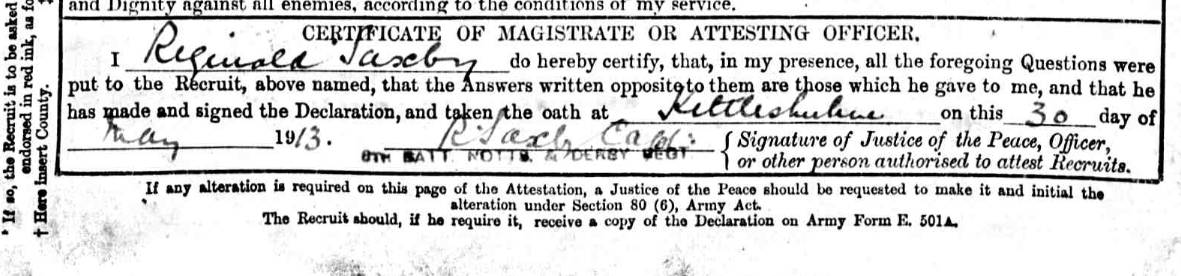
John was originally tested into “H” Company, which was under the command of Captain Reginald Saxby.
After returning to England John was attached to the 29th Provisional Battalion in January 1916. He was temporarily released for agricultural work on his father farm in July and August 1916 before joining the 6th Reserve Battalion on 11th August 1916.
 John returned to France in December 1917 and was posted to the 1st Battalion Sherwood Foresters and was reported missing on the 27th May 1918. He became a prisoner of war and was finally repatriated on the 2nd December 1918.


 Derbyshire Territorials in the Great War