Tag Archives: BLOCKHOUSE

36th Trench Duty 25th – 30th October 1916

25.10.1916 BELLACOURT: Lt Col. GD GOODMAN CMG returned from Divisional School. Relieved 5th BATTN in RIGHT SECTOR.

War Diary [WO/95/2694]


4am: Early in the morning we stopped the enemy working in front of Blaireville Wood by Lewis gun fire.

7.30am: 6th & 8th Battalions relieved the 5th & 7th in the front line. The 5th returning to BAILLEUVAL.

10.15pm: In order to cooperate in a raid carried out  by 137th Infantry Brigade on our right, a bombardment of the German BLOCKHOUSE was continued for 30 minutes. Our left group RA, one 2″ trench mortar & a stokes mortar, which was brought into action in the RAVINE cooperated. The enemy retaliated with several batteries of 77 & 4.2 howitzers & several trench mortars on both our sectors. Some damage being done to trenches.

139 Infantry Brigade: Headquarters War Diary [WO95/2692]

On this day 9th October 1916

Oct 9th 2am: Artillery programme continued.

Oct 9th 4am: C Coy 7th Battalion under Captain WF PLAYER attempt a raid on the enemy front line near the BLAMONT-BLAIREVILLE Road.Player
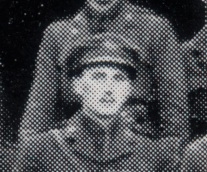
William Frederick Player from Staunton Grange in Nottingham was Gazetted to the 7th (Robin Hood) Battalion in October 1914 and arrived in France in 1915. In 1946 he became the High Sheriff of Nottinghamshire. The Family are famous for the Player brand of cigarettes made in Nottingham since 1820.

139 Infantry Brigade: Headquarters War Diary [WO95/2692]


Raid by “C” Company, the 1/7th Battalion Sherwood Foresters
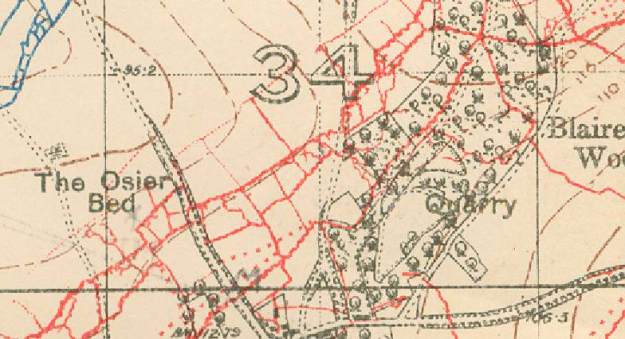
Raid R34C October 1916

I forward a report on the raid attempted by “C” Company, 7th Battalion Sherwood Foresters last night, against the German trenches across the SUNKEN ROAD in R.34.c.

WIRE CUTTING. Four 2″ Trench Mortars had been allocated to the cutting of wire in R.34.c. Two to the feint attack in R.34.b., and one to the reopening of an old gap also as a feint in R.3.b. Firing was carried out from 12 noon to 5pm on the 7th, but owing to the collapse of 4 positions only one gasp was cut – at Sap head North of the road.

Firing was continued with 5 Mortars on the 8th for a further period of 2 hours – at the end of which the gap at the sap head had been enlarged – the wire in front of the main objective was very badly knocked about, a gap of about 20 yards was cut in R.34.b, and a good gap was cut near ITALY SAP in X.3.b. 620 rounds had been used.

On the night 8th/9th – the party detailed to enlarge a gap in our wire near BLAMONT-BLAIREVILLE ROAD at 7.15 pm found 3 German grenades and 2 caps – belonging to an enemy patrol probably detailed to look out for our raiding party.

At 8pm our 18 pounders opened a short burst of fire on the gaps in the German wire and one minute later shouts were heard in the German trenches – red lights in pairs were sent up from X.3.b. and red and green lights from both sides of the SUNKEN Road.

At 8.10 pm their artillery opened a heavy fire from a battery of 4.2 and two batteries of 77mm, and from one or more heavy trench mortars on our front and support trenches from CAVENDISH SAP R.33.d. to our left. The 41st Infantry Brigade trenches were also heavily shelled – the enemy lifting from the front to the support and reserve lines. Heavy machine gun and rifle fire had also been opened particularly from trenches north of the road.

At 2.15 pm our wire patrol got within 40 yards of the Sap head north of the road and within 30 yards of the trenches south of the road and reported that they could see no gap at the latter point.

At 3.10 pm the same patrol endeavoured to take our 1 ammonal tube but owing to the rifle fire opened by the enemy and to a hostile patrol close to the objective the attempt was given up.

At 3.20 pm the raiding party left our trenches and had advanced beyond our wire twenty minutes later. (It was found that more time ought to have been allowed for passing through our wire).

At 3.58 when a single round was fired from our artillery the party were 60 yards from their objective.

At 4 am the covering fire commenced and by 4.2 the parties had practically reached the wire before the artillery lifted. They report that very few splinters from our shells were noticed.

At 4.1 pairs of red lights were sent up from several points in the enemy’s lines (these lights and green flares being sent up constantly for some 10 or 15 minutes), particularly from X.3.b. where an attack was evidently expected). The German batteries and medium trench mortars opened an erratic fire on our front and support trenches in R.33.b. and R.34.a. while they also commenced to shell their own front line South of the SUNKEN ROAD with 77mm and light trench mortars.

At 4.2 the party North of the Road entered the Sap Head without ugh difficulty but found the Sap half filled with wire and knife rests and were unable to proceed down it. South of the Road the party were unable to find a gap or to surmount the German wire. A the pound tube of ammonal exploded in the wire proved ineffective and the knife rests were found to be too firm to be removed by hand.

During this time the party was under constant rifle and machine gun fire from a gun in an emplacement probably near R.34.c.38.29 and from another on their right flank which was engaged by our Lewis Gun.

The enemy commenced to throw grenades from his Support line and from the flanks of the objective, and after bombing their front line our party was brought back at 4.14 am, via the OSIER BED to our front line.

The casualties consisted of one man killed (brought in), 3 wounded and 2 wounded at duty.

The artillery support proved to be extremely effective. The enemy’s trenches in X.3.b. and R.34.b. have been badly damaged and the gaps in the wire at these points drew a good deal of artillery and rifle fire away from the main objective.

53 rounds were fired during the night bombardment by the Medium Trench Mortars and 700 rounds by the 139th Stokes Battery, 25,500 rounds were fired by the 139th Machine Gun Company during the operation.139 Brigade major
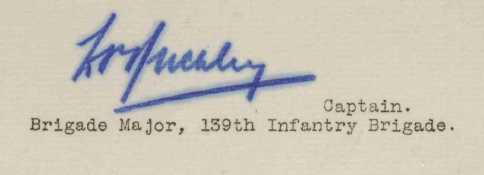
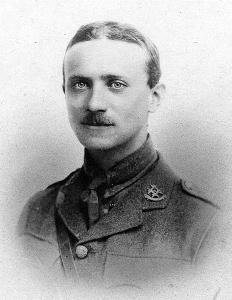
Captain William Percy Buckley, DSO, 1st Battalion, Duke of Cornwall’s Light Infantry


3394 Corporal Claude Wolley3394 Claude Wolley

London Gazette 9.12.1916: At Derby Sap on the morning of 9th October 1916, he was in charge of a Stokes Mortar and took part in a bombardment of the enemy’s lines during a raid. He kept his gun in action for half an hour whilst his position was subjected to a heavy bombardment by the enemy. During this time he showed exceptional coolness and courage and kept his team together by his excellent example. On 30th September 1916, at 10.30pm he also showed great coolness and devotion to duty when he took a Stokes Mortar into No Mans Land and bombarded the Blockhouse, though fired at continuously by an enemy machine gun.


1466 Corporal Arthur Ford1466 Ford

On this day 16th September 1916

16.9.1916 BAILLEUVAL: Draft of 22 other ranks arrived.

War Diary [WO/95/2694]


16th: The enemy were being quite all days – making no reply to our short bombardment of the BLOCKHOUSE at 4pm.

139 Infantry Brigade: Headquarters War Diary [WO95/2692]

32nd Trench Duty 9th – 15th September 1916

9.9.1916 TRENCHES: Battalion relieved 5th Battalion in RIGHT SECTOR. Capt EB JOHNSON rejoined from Hospital.

War Diary [WO/95/2694]


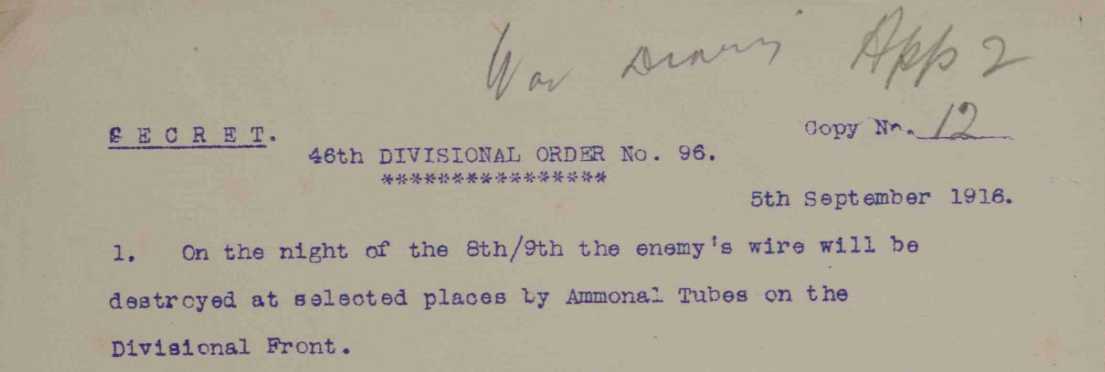
9th 2am: Patrols from 5th & 7th Battalions succeeded in damaging short lengths of the German wire by means of ammonal tubes. A further attempt was prevented by an enemy working party. In each case our parties returned without casualties & the enemy failed to retaliate.

11pm: The 6th Battalion relieved the 5th and the 8th relieved the 7th in the front line.

139 Infantry Brigade: Headquarters War Diary [WO95/2692]


The first use of ‘Ammonal Tubes’ by the 46th Division?

Ammonal tubes

The 1/5th (Derby) Battalion

Parties under Lieut SMALLEY and LIeut CLAYE attempted to cut gaps in Enemy wire at X.1.d.55.50. and X.2.b.61.51. with tubes of Ammonal each 24′ long and afterwards raid the enemy sap. Lieut SMALLEY’s party successfully exploded the tube but when attempting to get through the wire found that about 12 yards deep had not been cut and consequently no raid resulted. Lieut CLAYE’s party came up against a strong enemy working and covering party on front of the BLOCKHOUSE and could not approach their objective.

ClayeCharles Geoffrey Claye (1895-1918)

Smalley

Edward Arthur Victor Smalley (1885-)

1/5th Battalion War Diary WO/95/2695


The 1/7th (Nottingham) Battalion

Three enemy working parties were seen opposite left “C” Company Sector. Our heavy artillery [shelled] a strong post in a gabbled house just E of the east of the enemy’s 3rd line at the N end of BLAIRVILLE X.4.a.75.75. Two rifle grenades were fired by enemy on to the left Coy’s sector during the morning.

10.30pm: Eight spiral rockets were sent up from the enemy’s lines opposite right “A” Company sector. Each burst into 2 red stars. This was followed immediately by 6 heavy shells which burst on left “C” Company sector.

1am: 2/Lt NE WEBSTER MC with 2 sappers of the 2/1st RE Company 10 other ranks and 1 Lewis Gun left our own trenches from top of LA MOTTE 1 (R.33.d.51.81.). They took a tube containing ammonal & placed it under the enemy’s wire at (R.34.c.3.4.) just S of the SUNKEN ROAD [near the Ossier Bed]. This tube was fired by a fuse at 1.59am. It made a clean gap about 4 yards wide thro’ the wire.

2/Lt J KENT carried out a similar operation at R.34.b.42.50. opposite left “C” Company Sector. No action was taken by the enemy.

Both patrols returned safely to our trenches.

1/7th Battalion War Diary WO/95/2694


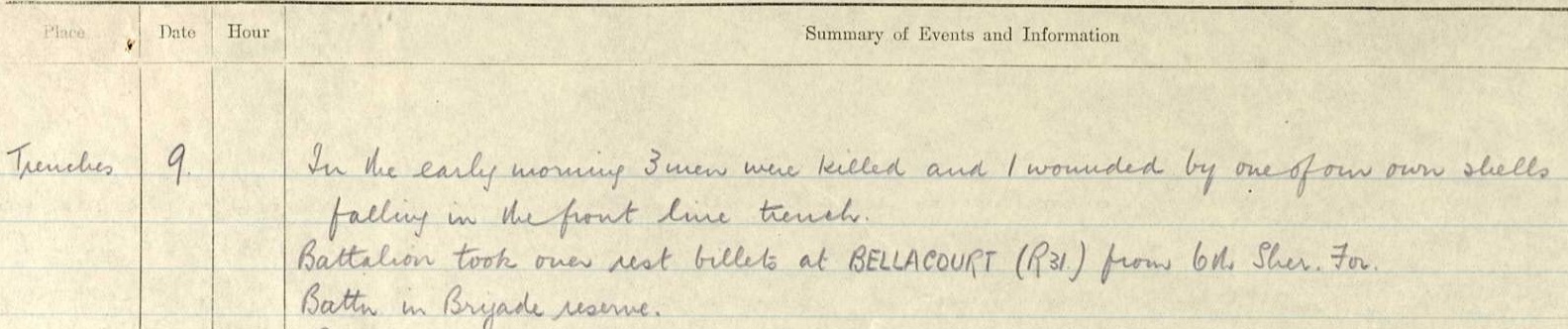
‘Friendly fire’ casualties in the Robin HoodsSept friendly fire

Three men of the Robin Hoods were killed by a British shell that fell short. They are buried next to each other in BELLACOURT MILITARY CEMETERY (Row G, graves 2-3).

  • 5309 Pte George Asher
  • 5910 Pte Robert Gray
  • 20538 Pte William White

Note:

20538 WHite5062/20538 Pte William White was a forestry worker from Baslow who was posted to the 3/6th Battalion in March 1916. He was transferred to the 1/6th Battalion on the 5th July and arrived in France (14 IBD at Calais)  with the 14th Reinforcement. He was posted to the 1/7th Sherwood Foresters on the 22nd July 1917 and renumbered using the 1916 5-digit numbering series – see here for more details.

On this day 24th August 1916

No record in the War Diary [WO/95/2694]


A raid by “B” Company, the 1/5th Sherwood Foresters

Official Operation Orders 77 Operations Orders 77 from WO-95-2692-6

24th 7am: A patrol of 5th Sherwood Foresters found that the wire in the bed of the river under the BLOCKHOUSE was intact.

Sandover Raid August 24th 1916Blockhouse raid August24th 7.30pm: “A” PARTY under Lieut SANDOVER left our front line near the top of WILLOWS and reached the enemys wire under the BLOCKHOUSE forty minutes later.

At 8.30pm Lieut SMALLEY with 8 men and a Lewis Gun “B” PARTY left our trenches and took up their position in the RAVINE in support of the first party.

Lieutenant SANDOVER hearing a party working to his right front endeavoured to find a gap in the German wire between the RAVINE and the BLOCKHOUSE. After passing through two rows of wire he and Sgt LOOMES were cutting through a third row when they were challenged by the enemy’s sentry 15 yards from them who threw four hand grenades. Finding it was impossible to surprise the enemy’s post Lieut. SANDOVER ordered his party to withdraw. In the meantime Rifle and Machine Gun fire had been opened from the German trench & Cpl JOHNSON was hit in the head. Lieutenant SANDERSON dragged the Corporal through the wire with the assistance of Pte MARRIOTT who had returned to help him & the whole party gained the cover of the river bed without further casualties.

Supporting fire was soon afterwards opened by our Artillery who carried out the remained of the programme very effectively. On the guns opening fire Stokes Mortars and Rifle Grenades were fired from CAVENDISH SAP into the German Saps & Trenches in X3b, the enemy replying with 20 HE shells on left sector.


The Officers leading this raid were:-

  • Alfred Eric Sandover
  • Edward Arthur Victor SmalleySmalley

Edward Arthur Victor Smalley (1885-)


The NCOs and Other Ranks mentioned in the War Diary were:-

  • 20636/203482 Sergeant Christoper Loomes a Pre-War Regular of the 2nd Battalion who was attached to the 1/5th Battalion on 6th July 1916.20636 Loomes
  • 3944 Corporal Robert William Edward Johnson who died of his wounds aged 19 and is buried in Bellacourt Military Cemetery. Robert was the son of Robert Eilliam and Harriett Johnson of 19 Nuttall St. in Alfreton, Derbyshire. He was a native of Huthwaite in Nottsinghamshire. He is Commemorated on the Huthwaite and Alfreton Memorials3944 Johnson
  • 2584 Pte Fred Marriott who won the Military Medal (London Gazette 11th November 1916). Fred enlisted into the 5th 2584 Marriott

139 Infantry Brigade: Headquarters War Diary [WO95/2692]

On this day 23rd August 1916

No record in the War Diary [WO/95/2694] 


23rd 2pm: A bombardment of the BLOCKHOUSE and trenches in the vicinity was carried out by VII Corps Heavy Battery, Divisional Battery and medium trench mortars. Considerable damage was down while the enemy’s reply was feeble.

139 Infantry Brigade: Headquarters War Diary [WO95/2692]

On this day 14th August 1916

No record in the War Diary [WO/95/2694]


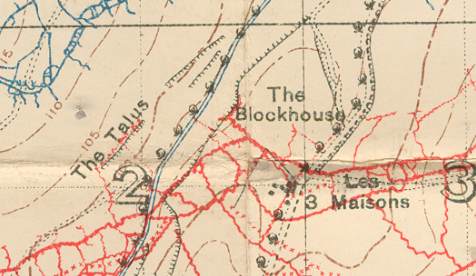
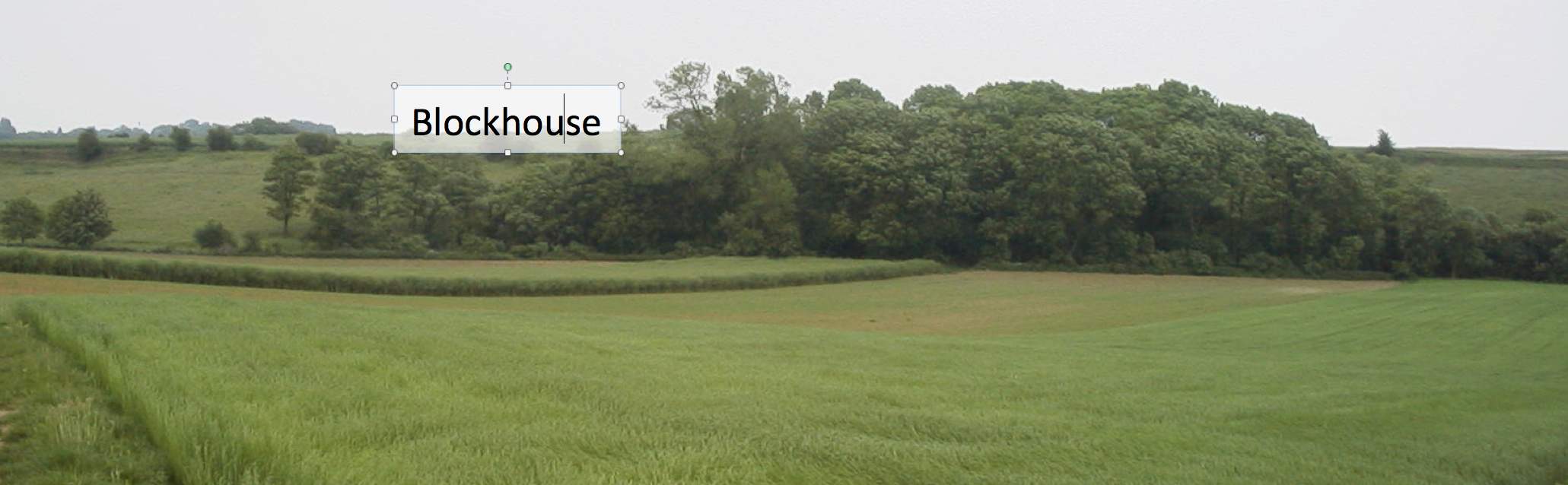
Blockhouse trench mapBlockhouse 2010Talus Blockhouse 201514th: A two hour bombardment of the BLOCKHOUSE and the trenches in the vicinity carried out by Divisional Artillery, one 9.4- & six 2-inch trench mortars. Considerable damage done to the enemy’s trenches and wire. Little hostile retaliation.

139 Infantry Brigade: Headquarters War Diary [WO95/2692]

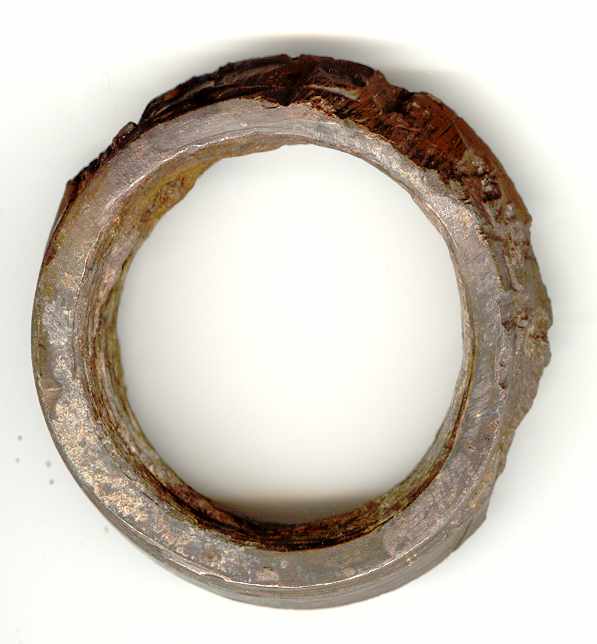
Fuse ring blockhouseFuse ring from a British 16-pounder shell recovered from the area of the BLOCKHOUSE in 2007

On this day 5th August 1916

No record in the War Diary [WO/95/2694]


4/5th: A party of 5 Germans attacked our front at the head of No 14 SAP (RIGHT SECTOR). A scuffle ensued during which the enemy dropped a revolver a cap of a bomb [sic], Fire was subsequently opened by one of our Lewis Guns & one of the enemy is believed to have been killed. No casualties were suffered by our part.

5th: A quite day.

10.45pm: Enemy fired about 50 4.2 at No 15 SAP (RIGHT SECTOR), our field batteries replying on the German “BLOCKHOUSE”.Blockhouse trench map

139 Infantry Brigade: Headquarters War Diary [WO95/2692]

On this day 20th July 1916

20.7.1916 BELLACOURT: Very heavy bombardment of trenches by enemy. “A” Company under Capt VO Robinson moved up to reinforce within 1 minute of receiving order from OC 5th Battn. Lt CEV CREE & 3 OR killed & 15 wounded.cree

Lieutenant Charles Edward Victor Cree

July 20: Huns woke up & were unpleasant but not as bad as we were. Lieut Cree killed by a shell in the early morning. I lived in cellar for a long time with telephone down there. I attended funeral of Victor.

[Lieutenant Josiah Taylor]


“News has been received by his sisters, Mrs. McGough and Mrs. Lynch, Schofield’s Yard, New Square, Chesterfield, on the death in action of their brother, Pte. Edward Churchill, Sherwood Foresters.”

“He was killed almost instantly by a shell which burst and killed our officer and other two poor fellows. His comrades take it very hard as he was a good and brave soldier, who died doing his duty, and gave all for his King and Country.”

“Private Churchill was 24 years of age and worked at Grassmoor Colliery before the War. He leaves a widow and three children.”

[THE DERBYSHIRE TIMES, SATURDAY, AUGUST, 5th, 1916]


“Mrs French, 53, Wharf Lane, Stonegravels, Chesterfield. Has received information that two soldiers who were billeted with her, while stationed in the town have been wounded, while a chum of theirs was killed. Her Son-in-law writing from the Front says:

“Just a line to let you know that H Maycock has got wounded in the leg, and a bad wound too. We dropped in for it, not half. J. Crompton has been killed and Vero Wounded. When I saw The Derbyshire Times I could have cried to see my only pal’s photo in it. We have to smile to save us from crying. It would open people’ eyes when they saw The Times, but someone has to fight, the duty must be done.”

Pte. Tom Vero is also in the Sherwoods and lived with his brother, lately deceased, in Chatsworth Road. He is 19 years of age and worked at Grassmoor Colliery.”

[THE DERBYSHIRE TIMES, SATURDAY, JULY, 29th, 1916]


20: About 12-45 am the enemy started to bombard on our whole front, concentrating on trenches 146, 147 & 148. The bombardment on these trenches was particularly severe & on CHURCH & BELLACOURT STREETS. The latter was completely flattened out for over 100 yards between the Support & front lines.

About 2 am there was a lift & the enemy in two small parties raided SAPS 14 & 15. In the former (SAP 14) there was a dugout with the entrance blown in, in which there were 3 men imprisoned. There was a small hole through which the Germans threw a grenade, which only wounded one of the men.

In SAP 15 there was only one man left alive & he was buried up to the waist. He feigned being dead & the enemy cut off his shoulder strap & took his steel helmet & also his gas helmet. They did not proceed beyond this point. As the man had no shoulder badge no identifications were obtained.

From the Bombardment our casualties were:

  • 5th Sherwoods. Other Ranks 6 killed, 2 missing, 17 wounded.
  • 6th Sherwoods. 1 Officer Killed, 3 Other Ranks killed, 13 wounded, 1 Other Rank missing.

The enemy were very quit for the rest of the day.

Talus Blockhouse 2015We carried out a small bombardment of the enemies trenches (especially the BLOCKHOUSE) at 6.30 pm & 9.30 pm.

139 Infantry Brigade: Headquarters War Diary [WO95/2692]


The men killed were or died of wounds were:-

1/5th Battalion:-

  • 4388 Pte James Carr
  • 4783 Pte Alfred Clarke
  • 4176 Pte Alfred Freeman
  • 2123 L/Cpl Edwin George Hemm
  • 2641 Pte Joseph Maiden
  • 1486 L/Cpl Walter Henry Phillips
  • 2704 Pte Ernest Pike

1/6th Battalion:-

  • Lieutenant  Charles Edward Victor Cree
  • 3768 Pte John Henry Crompton
  • 3399 Pte Francis Melbourne
  • 4519 Pte Edward Churchill
  • 4505 Pte James Carney
  • 4105 Pte Tom Vero
  • 3889 Pte William Poyser

Bellacourt cemetary

Location of these Trench Burials on a contemporary trench map dated 1916.

BellacourtEdward Victor Cree, Edward Churchill, John Crompton and Francis Melbourne are buried next to each other in Plot I, Row G, Graves 5-8.

Amongst the wounded men were:-

  • 2802 Pte. Wilfred Buxton a bricklayer from Ashbourne.
  • 3628 Pte. Samuel Charlesworth who returned to England and discharged.
  • 3782 Pte. Thomas Goodwin.
  • 3397 Pte. James Griffiths a colliery pony driver from Bolsover.
  • 4108 Pte. Henry Maycock, a labourer from Brampton who was severely wounded in the foot and transferred to England.
  • 1714 Pte. John McTigh from Chesterfield who was transferred to England and discharged.
  • 2309 Pte. Sam Nadin, a quarryman from Chapel-en-le-Frith, who suffered a GSW in left and right thigh and was transferred to England.
  • 4470 Pte. George Platts, a core maker from Newbold, who suffered a GSW in the left side and was transferred to England.
  • 2769 Pte. Albert Rivett a miner from Hasland.
  • 4460 Pte. Joseph Williamson, a miner from Whitehaven, who suffered multiple shell wounds and was transferred to England and discharged.
  • 1679 Pte Charles Smith, a coal miner from Chesterfield suffered a GSW in left leg and shoulder and returned to England and discharged.
  • 2185 Pte George Batterson, a coal miner from Tibshelf, suffered a GSW in the back and returned to England and discharged.