Although there is no ‘official’ record of this raid it is detailed in great detail in the Diary of 2305/240513 Sergeant Frank Longson entitled “AS WE SAW IT 1914-1918: This is a true record of an ordinary civilian turned Infantry Soldier”.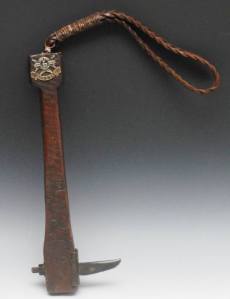
About 3p.m., Christmas Eve, the Commanding Officer sent for me and detailed me to take a patrol about 15 strong into No Man’s Land to patrol – to listen and traverse to examine our wire, and the German wire and to destroy any German patrol we might encounter who were doing the same from their front line.
Preparation for the raid
During the evening we prepared for the ordeal. Our pockets were emptied of pay-books, papers, letters and of everything that would give to the Germans (if we were captured) any information that would help them to ascertain the particulars of our regiment. We blackened our faces and the backs of our hands and armed to the teeth and fortified with corned-beef and hot cocoa and a rum ration we assembled in the front line ready to scramble over. We were a murderous looking crowd and as the troops occupying the front line wished us luck and the sentries warned which trench or post number we should be going out from and returning – this precaution was to safeguard our patrol from the fire of our own people and only in a very great emergency like an enemy attack was that arrangement to be broken.
Leaving the British trenches
One by one we scrambled over our parapet and through the pre-arranged gap in our wire, the going was unsteady and uneven and the noise, however careful, was terrific. There were scores of empty tins and derelict material lying about; scores of rats disturbed from this Christmas Eve feast in the empty wire.
We were through the wire and assembled on our side of No Man’s Land, this was a strange world. All seemed to be going well as we approached by a pre-arranged sunken road to the German wire, about half way across we adopted a crawling attitude, stopping at frequent intervals to listen.
On commencing to go forward again, after one of these halts, one of our members accidentally rolled over a tin. The noise under those circumstances sounded like the striking of a piece of corrugated iron, of course the German sentries heard something or thought they heard something. Up went the verey light and then another and then several. We pressed our black faces to the ground and remained rigid. Could they see us beneath the glare of the over head light? A few rifle shots passed over to our left, a burst of machine gun fire to our right which told us we had not been seen but they were suspicious. I instructed my little band to be extra careful from now on and proceeded to creep on.
Encountering the remains of the Staffordshire Lads from 1st July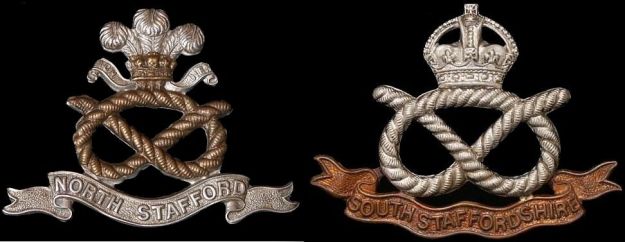
Before we reached the German barbed wire we realised that there was a number of unnatural mounds on the ground. We by-passed them by crawling round them but soon there were so many that we could not avoid them. The first one I crawled over I felt metal buttons and equipment and by the feel they were British. All my patrol were crawling over the same sort of mounds. The sensation was uncomfortable to say the least, who were these comrades of the British army? What regiment did they belong to? What homes in Britain mourned relatives missing in action? We got the answer to the first of these questions very soon for the Germans always on the alert decided to send up verey lights and looking at these poor pathetic mounds with the aid of verey lights we noticed that the sand bag material with which the British army covered its steel helmets bore the Staffordshire Knot. This was it then, these Staffordshire lads had been part of our Division that had gone into the attack on July 1st and had been stopped in their tracks by the German defences that had not been destroyed. These pathetic bundles then had lain in or on their resting places since the July battle. During the many months we had spent in action we had experienced many gruesome and terrible happenings but this incident remained in our thoughts for many a long day.
Nearing the German Wire
I led my Patrol nearer the German wire and when we had reached it and according to the instructions crept and crawled over to our right. This was a tricky business because at intervals the Germans had a habit of hanging bells on the wire so that if in the darkness you caught the wire hidden in the grass the trip wire would set the bell ringing and so warn the sentries that someone would be trying to get through the wire. A few of these wires were encountered but with care we avoided starting off the dreaded alarm. After about half an hour my patrol reached a point where the wire seemed to be very near the German trenches because with the aid of the verey lights we could see quite easily the built up front of the German front line. At this point I decided to carry out the listening part of the operation therefore with my patrol strung out on either side of me we listened for any sound that would tell us what the Germans were doing. Firstly the sound of a dog barking (both sides had plenty of dogs with them in the line) then a German voice urging the dog to bark and play, then a mouth- organ playing. We listened to the end of the tune, then the sound of shovels at work and many voices as the party strengthened their defences, and than a voice singing “Silent Night”. What strange circumstances this Christmas Eve to listen to the rendering of this beautiful Christmas Carol. Several voices joined the singer and then a whistle blew and the concert was over.
The return the the British Lines
We moved on to complete the examination of the wire then I decided that it was time to begin our journey back to our trenches. Carefully we backed our way from the German wire and eventually reached our own wire. We were a little out of bearing in finding the gap in our wire but after a time located it and my patrol passed through one by one. I came last and closed the gap behind me. The wire belt here was very wide so that there were several criss cross gaps to negotiate and to close and make secure. We were through, there remained one rather tricky operation before we reached the safety of our trenches and that was making safe contact with the sentry who in a way had been fore-warned of our expected return. Nevertheless the sentries would be suspicious and trigger happy. The patrol was now strung out at about three feet intervals and I was preparing to creep forward myself to contact the sentries when up shot 3 or 4 German verey lights. The lights sailed over “No Man’s Land”. We remained glued to the ground. It would be just too bad if with night glasses they spotted our rigid humps. The lights sailed over and went out and after a minute or two I decided to proceed slowly. I crept forward towards our sandbagged parapet and was not startled when a voice gave the familiar “Halt who goes there?” I quickly gave the password decided upon “ROBIN” and from the sentry “Pass Robin, all’s well”. Quickly the patrol crept forward and we scrambled over our parapet and dropped down into the trench.
Christmas Morning 1916
Our successful patrol was phoned to Headquarters and I was instructed to report to the Commanding Officer my version of the nights events. Afterwards I returned to our little dug-out and before getting down on the wire bed decided to unwrap one of my Christmas parcels to partake of the contents as a sort of Christmas Day breakfast. I finished the repast then secured the unused remainder in a sandbag and hung the bag to the ceiling, snuffed the candle and prepared for a nap. The candle out was the signal for the marauding rats to start the rampage. I caught the sound of movement in and around my sandbag. I switched on my flashlight and with the bean saw three or four large rats swinging and clutching to the bag. I took down the bag to examine the security of the contents and put my hand on a very large rat inside the bag. I shook out the contents and the rat scampered away and with that incident ended Christmas Eve and Christmas Morning 1916.



 Derbyshire Territorials in the Great War