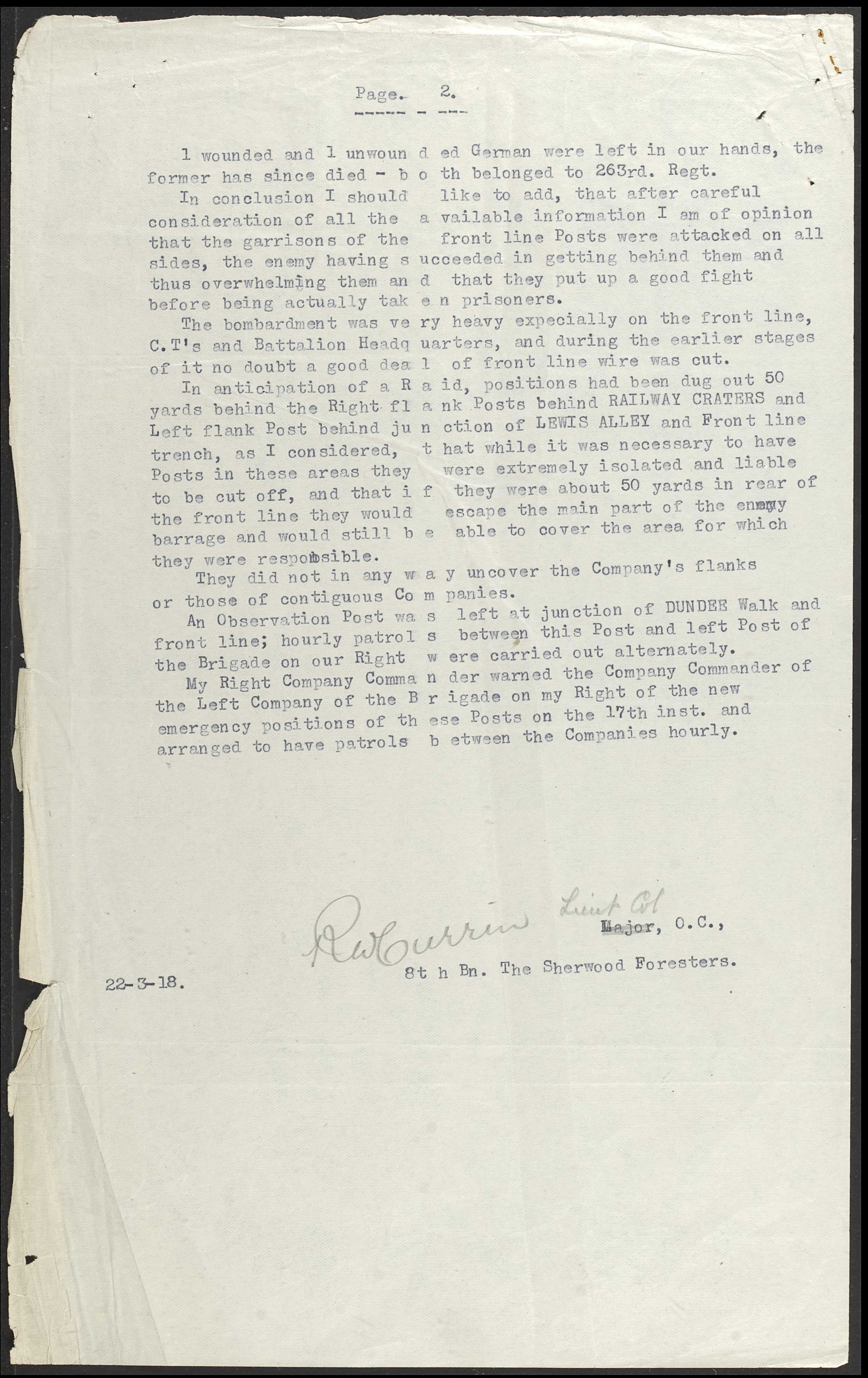
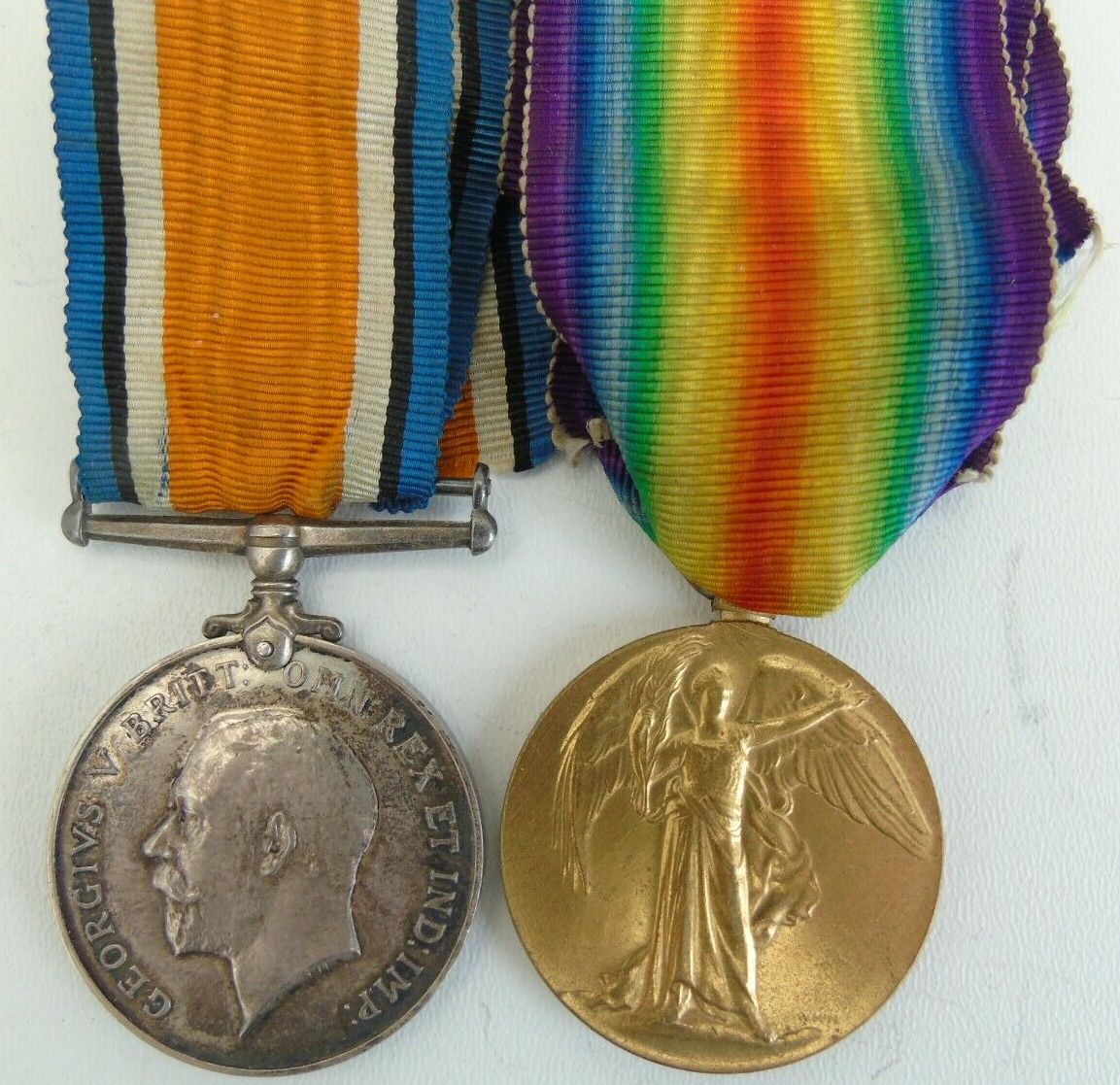
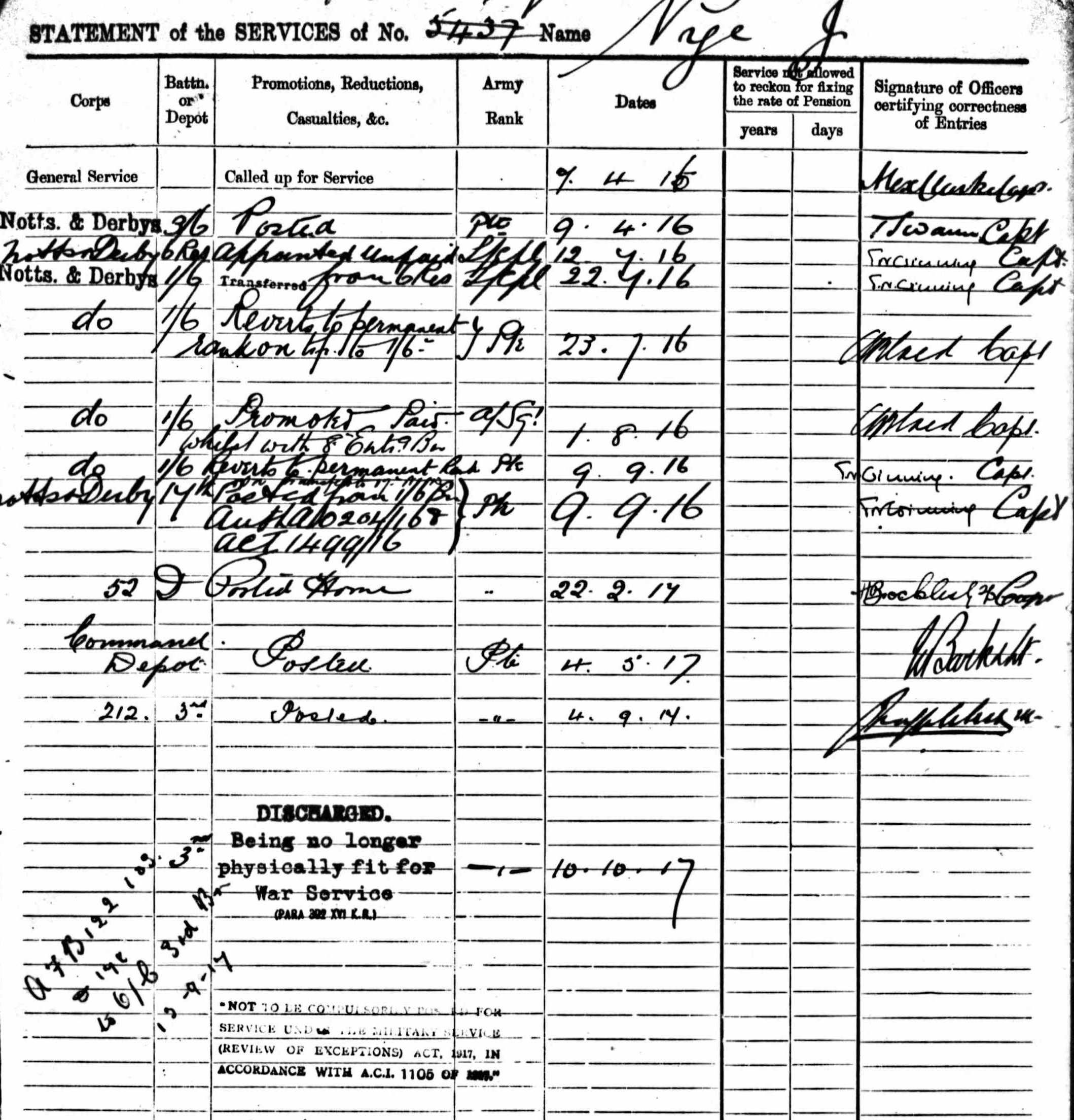
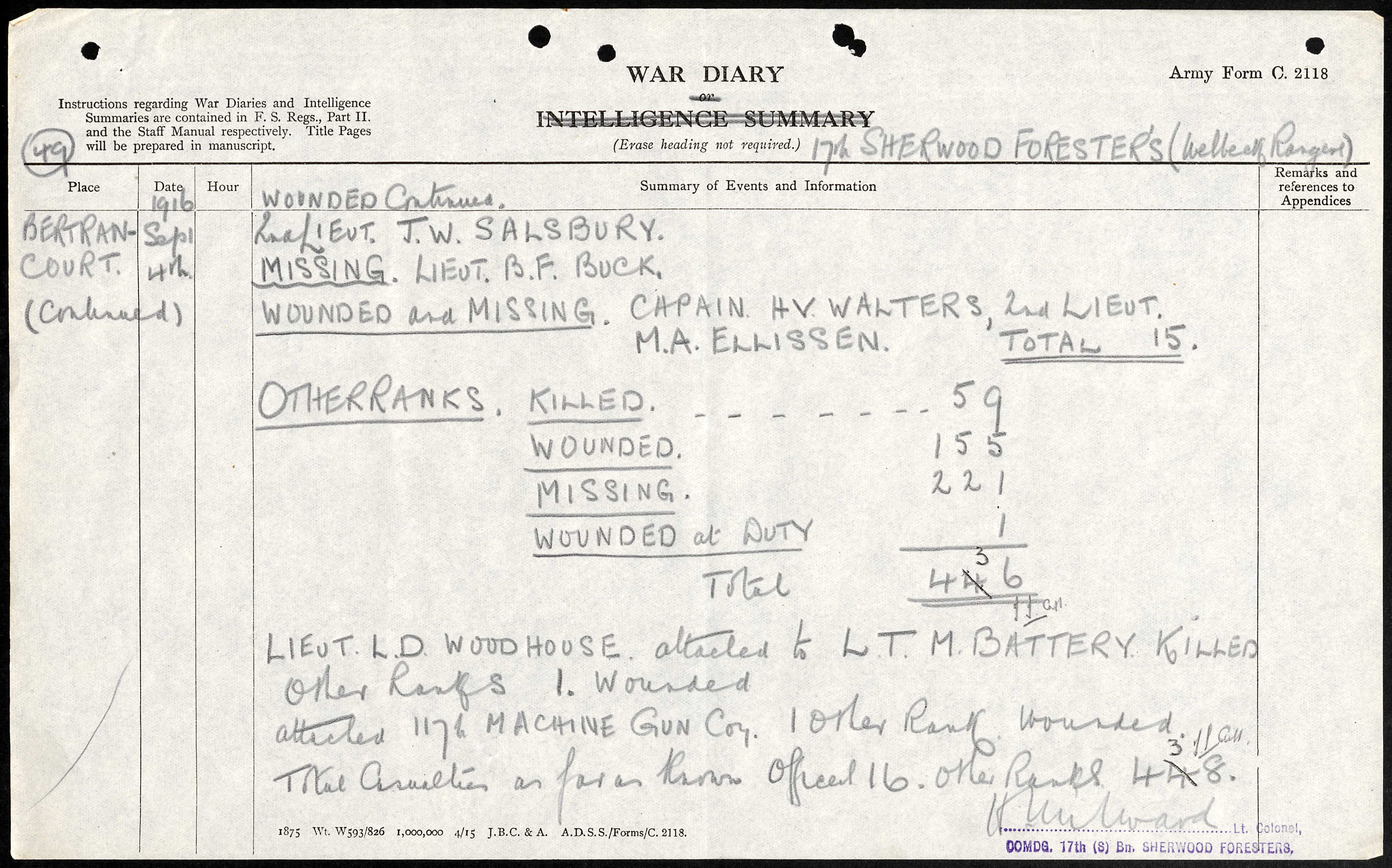
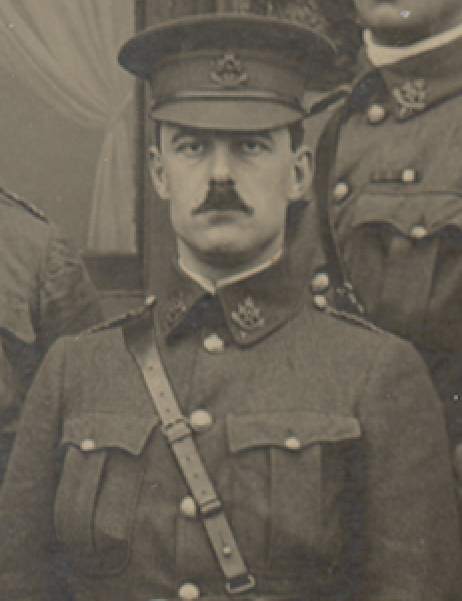
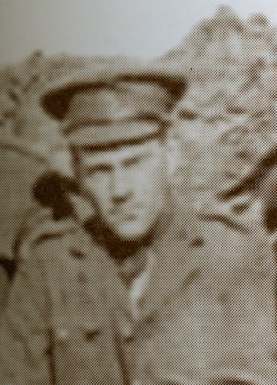
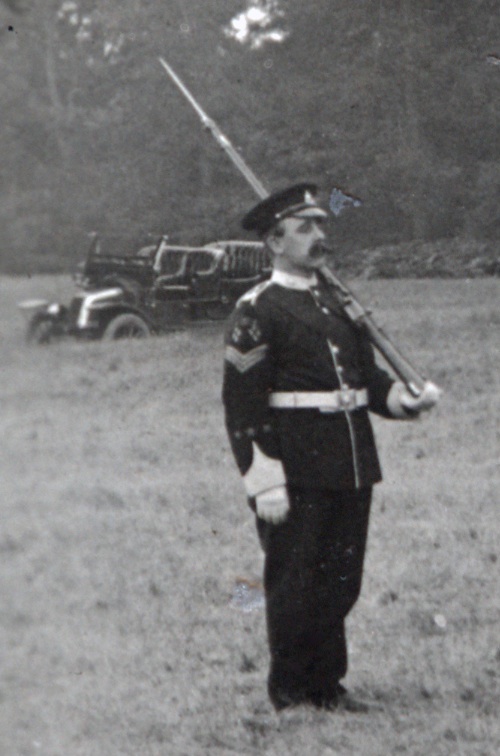
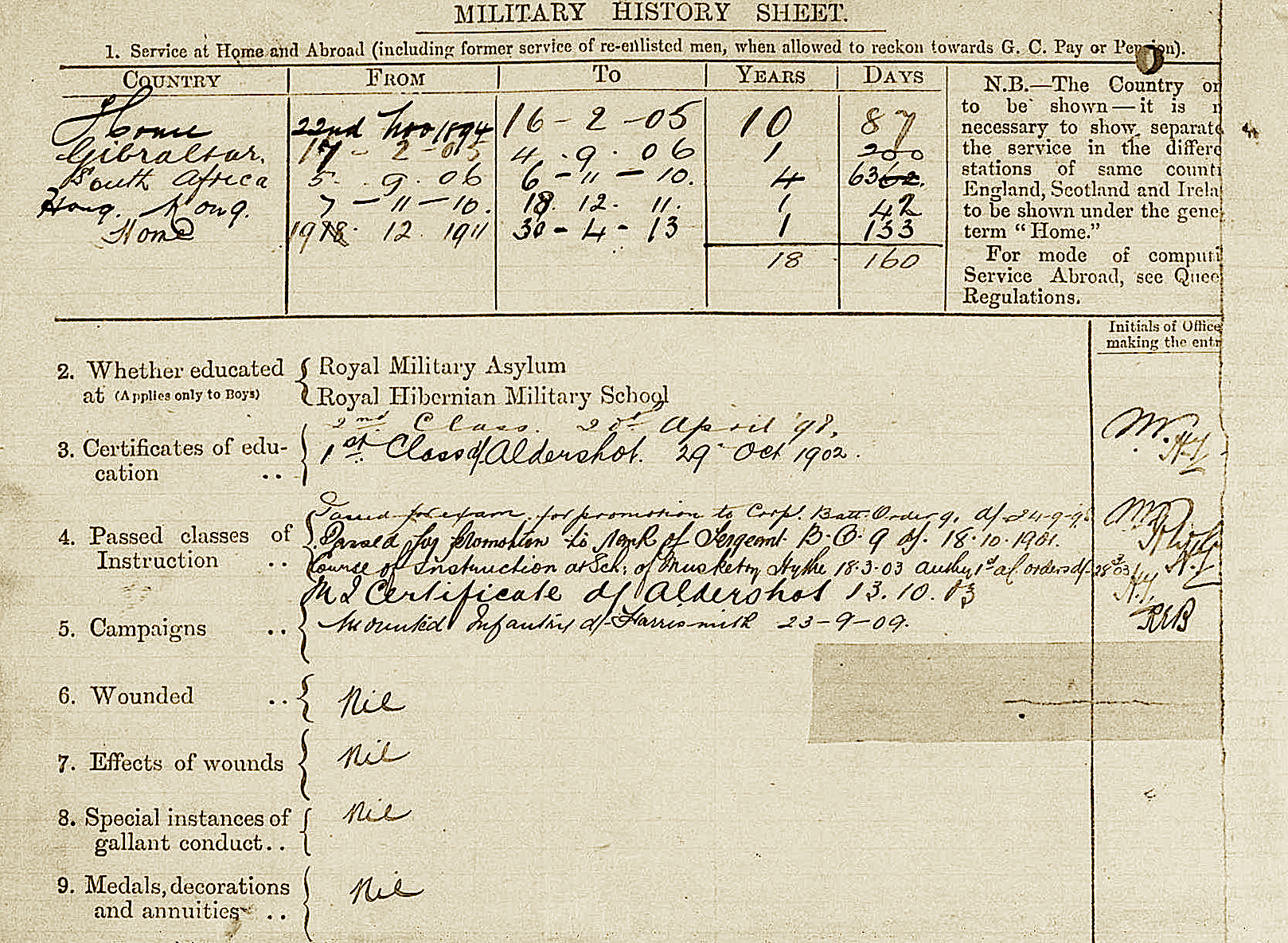
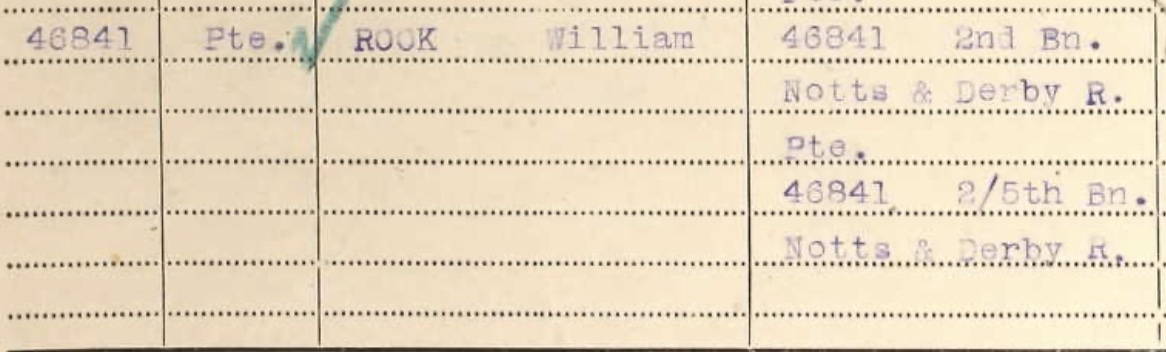
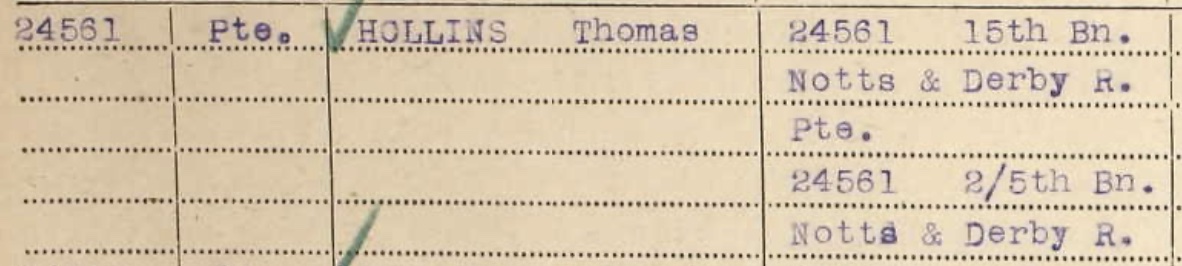
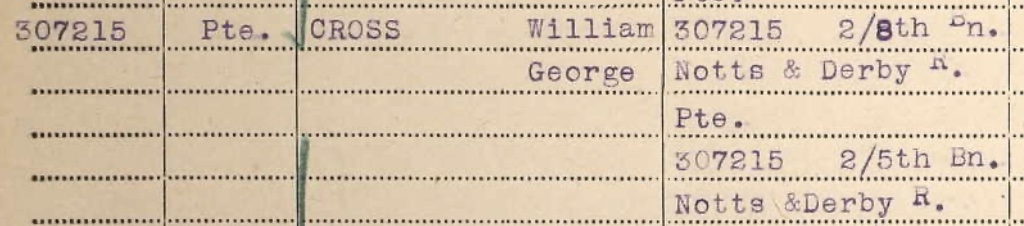
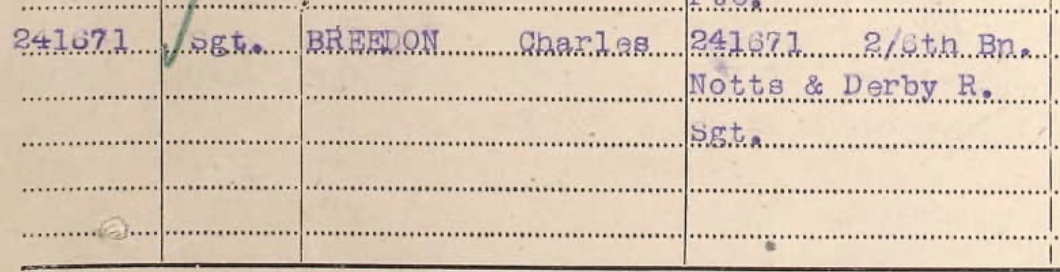
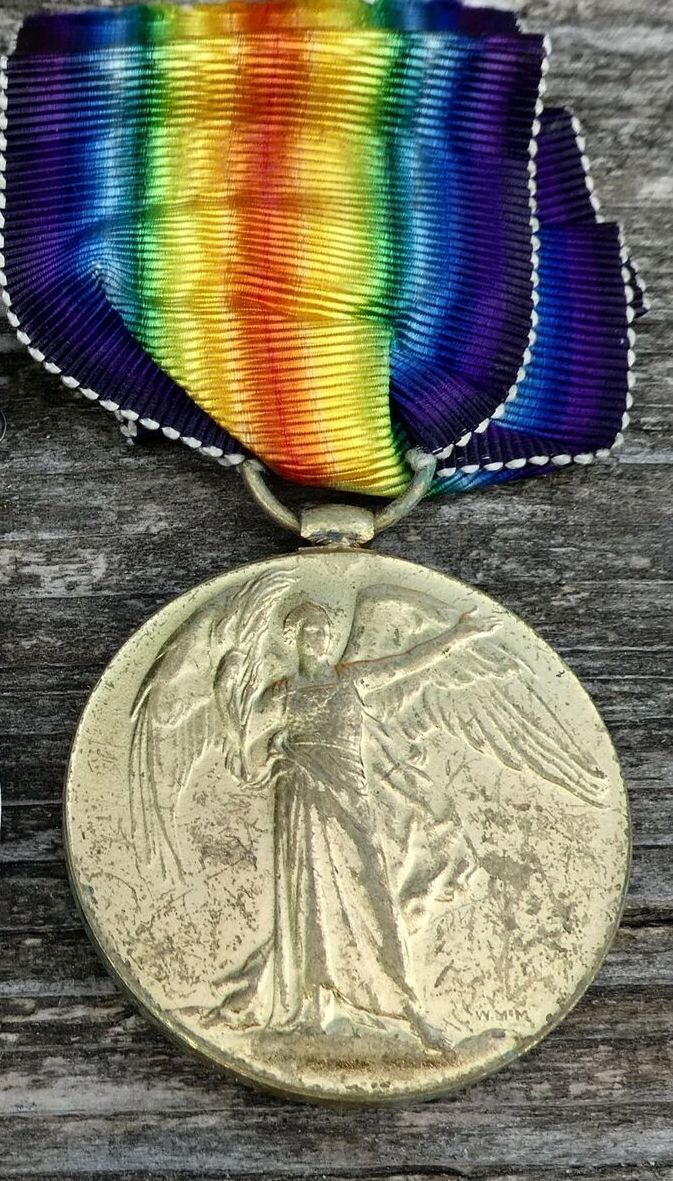
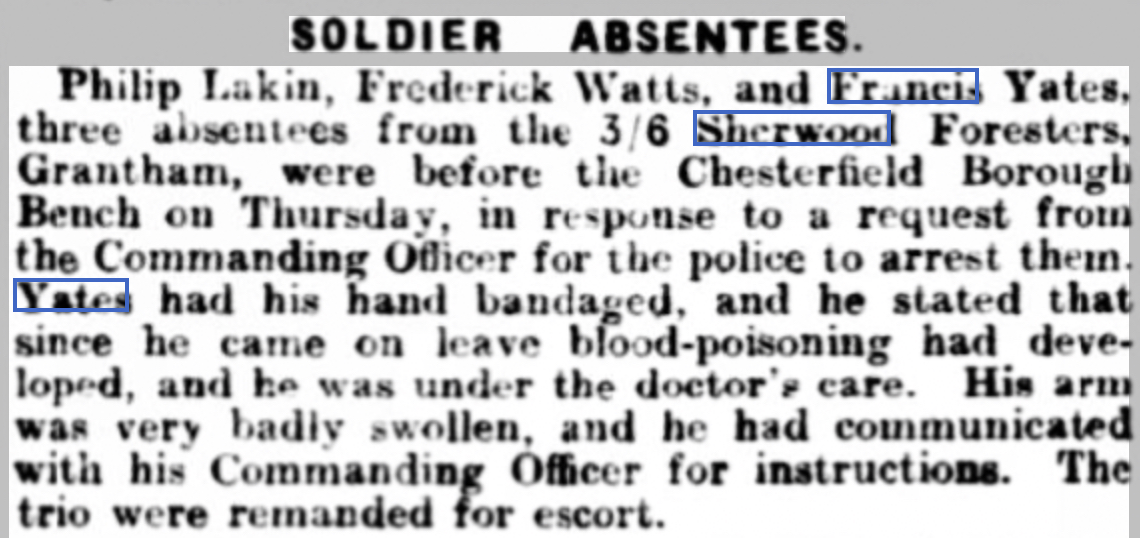
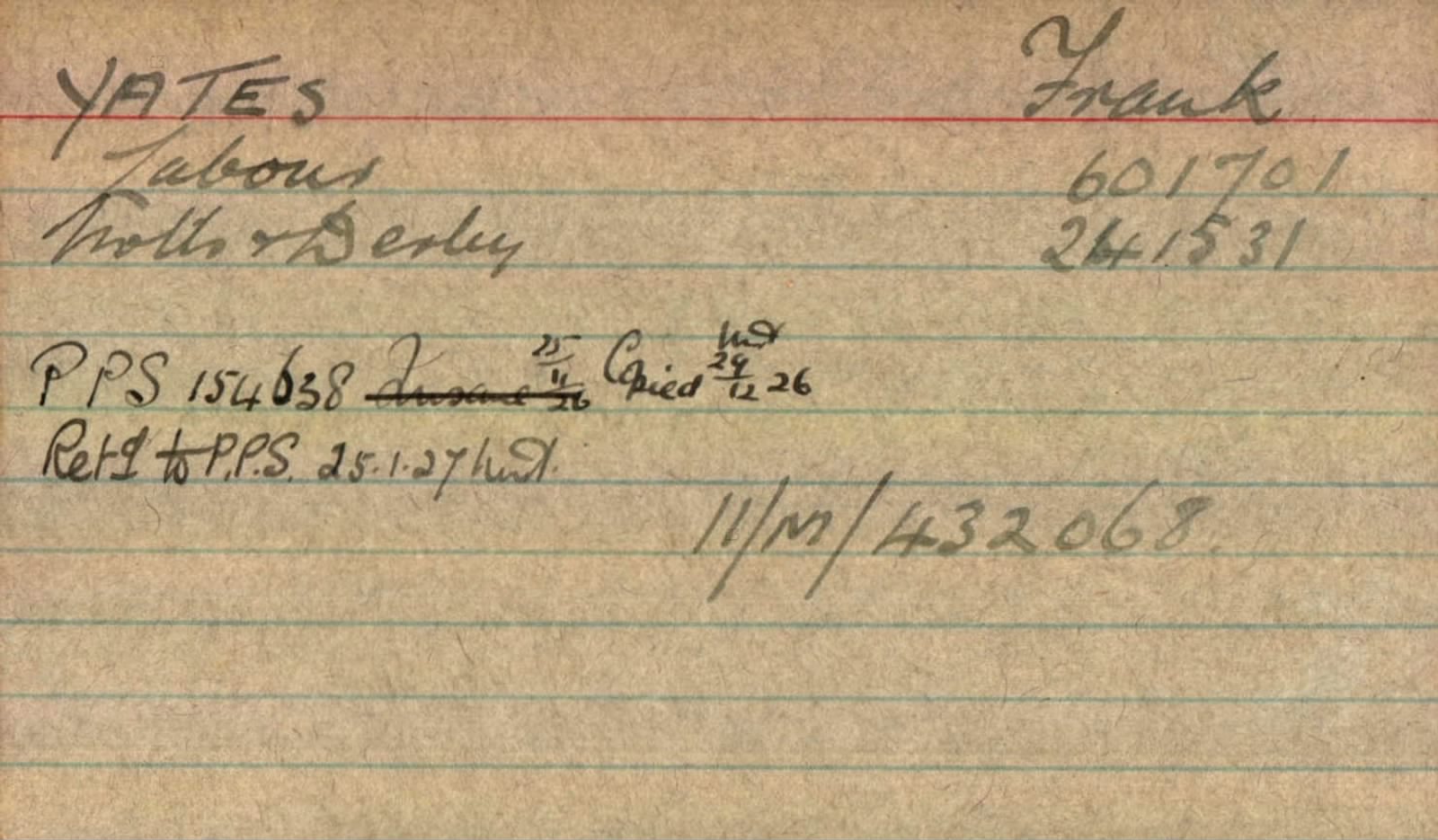
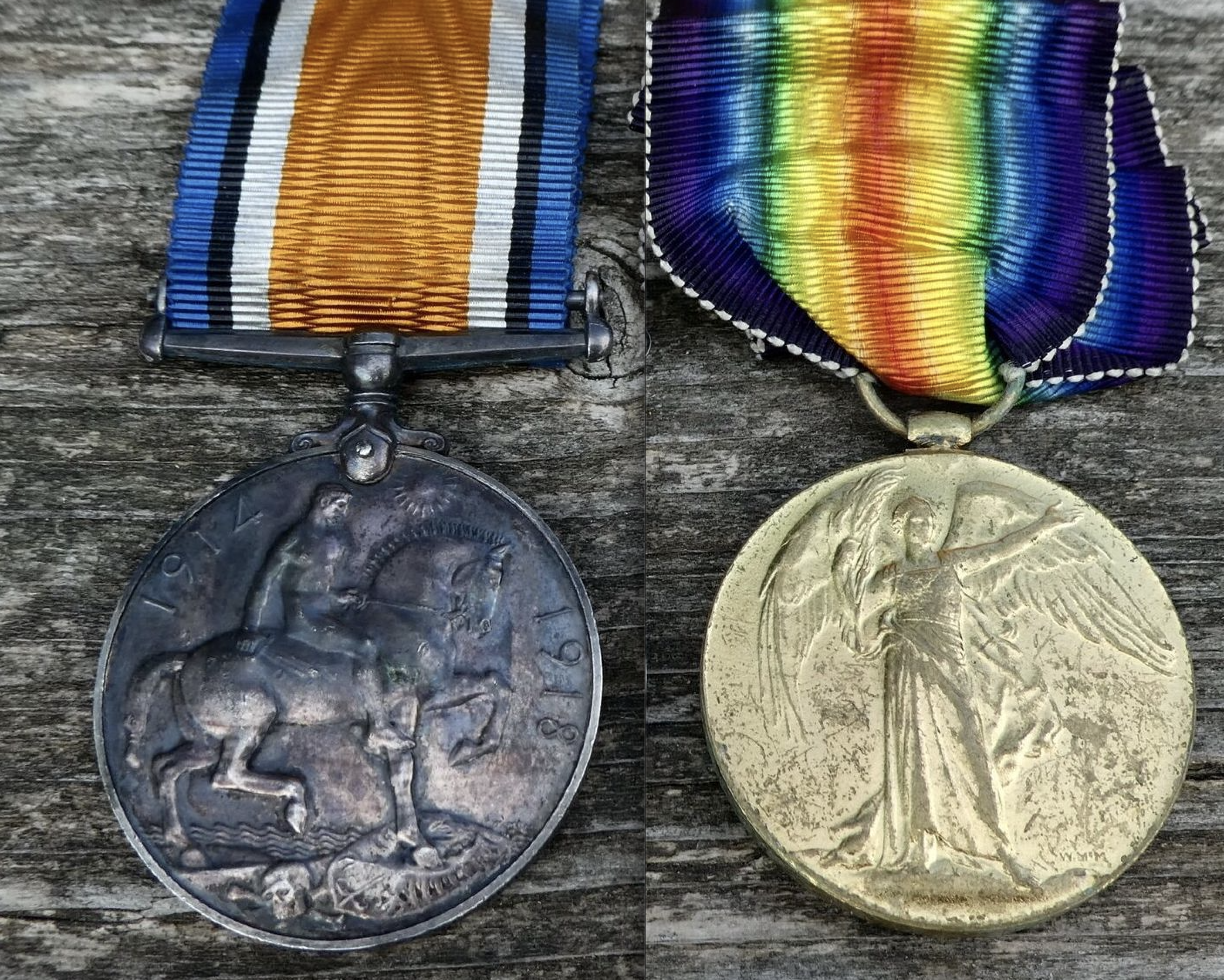
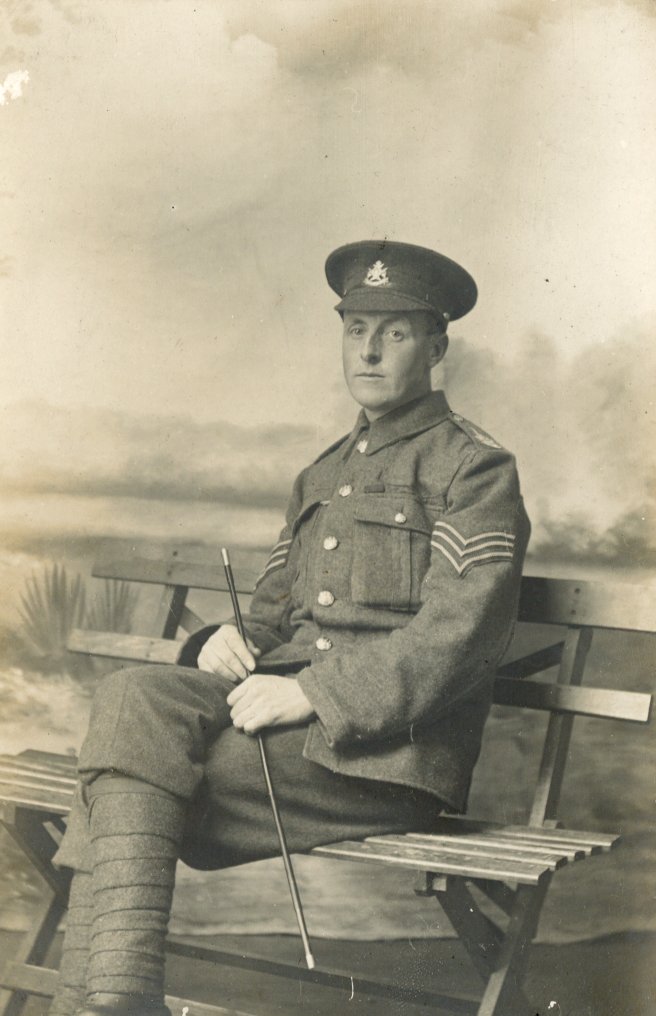
Another great purchase……..

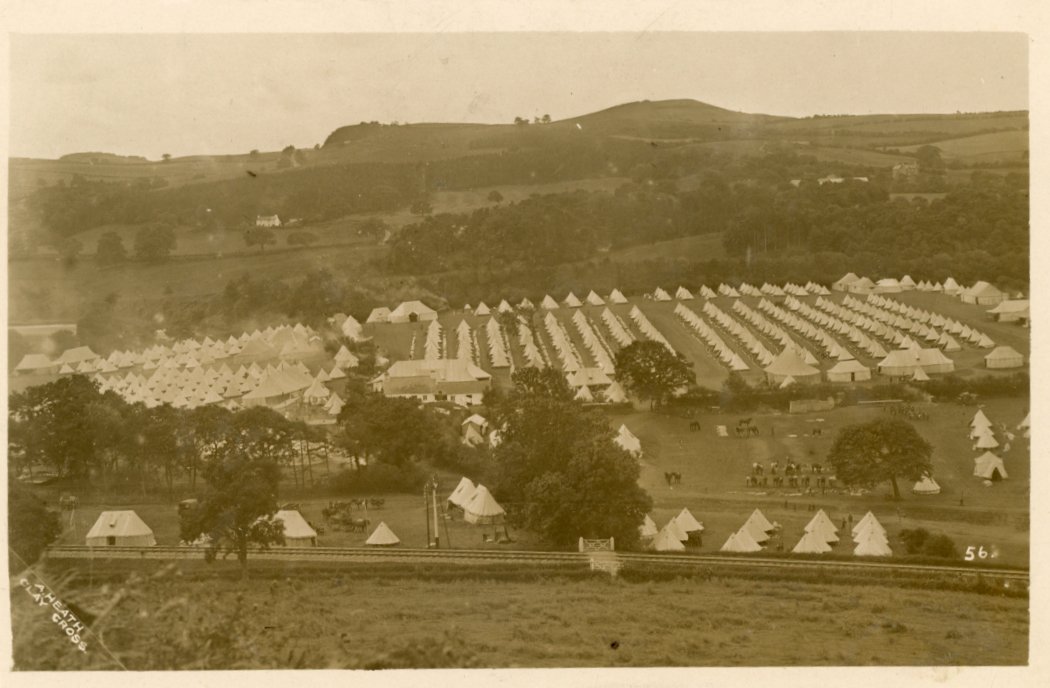
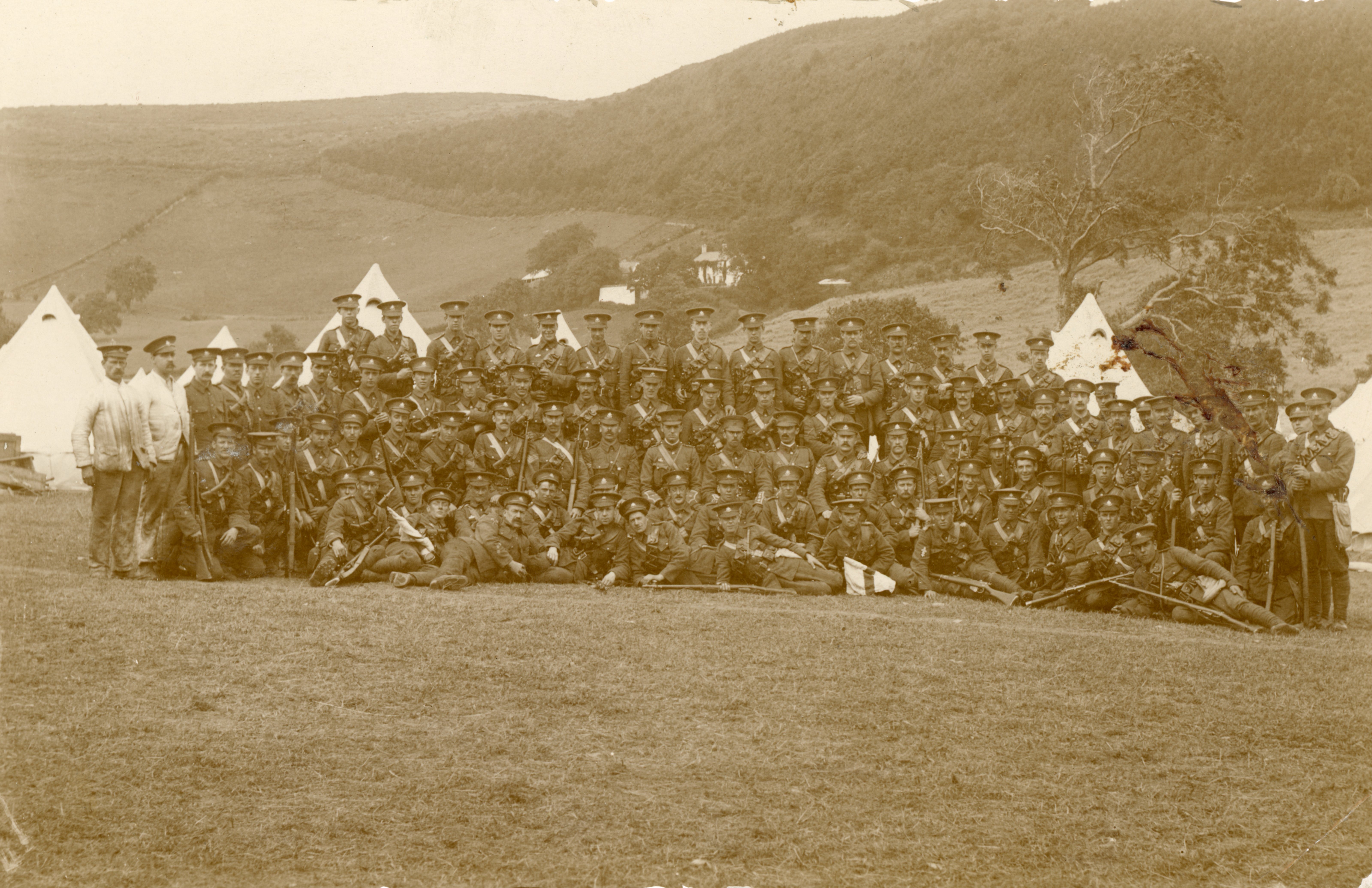
Hunmanby August 1914

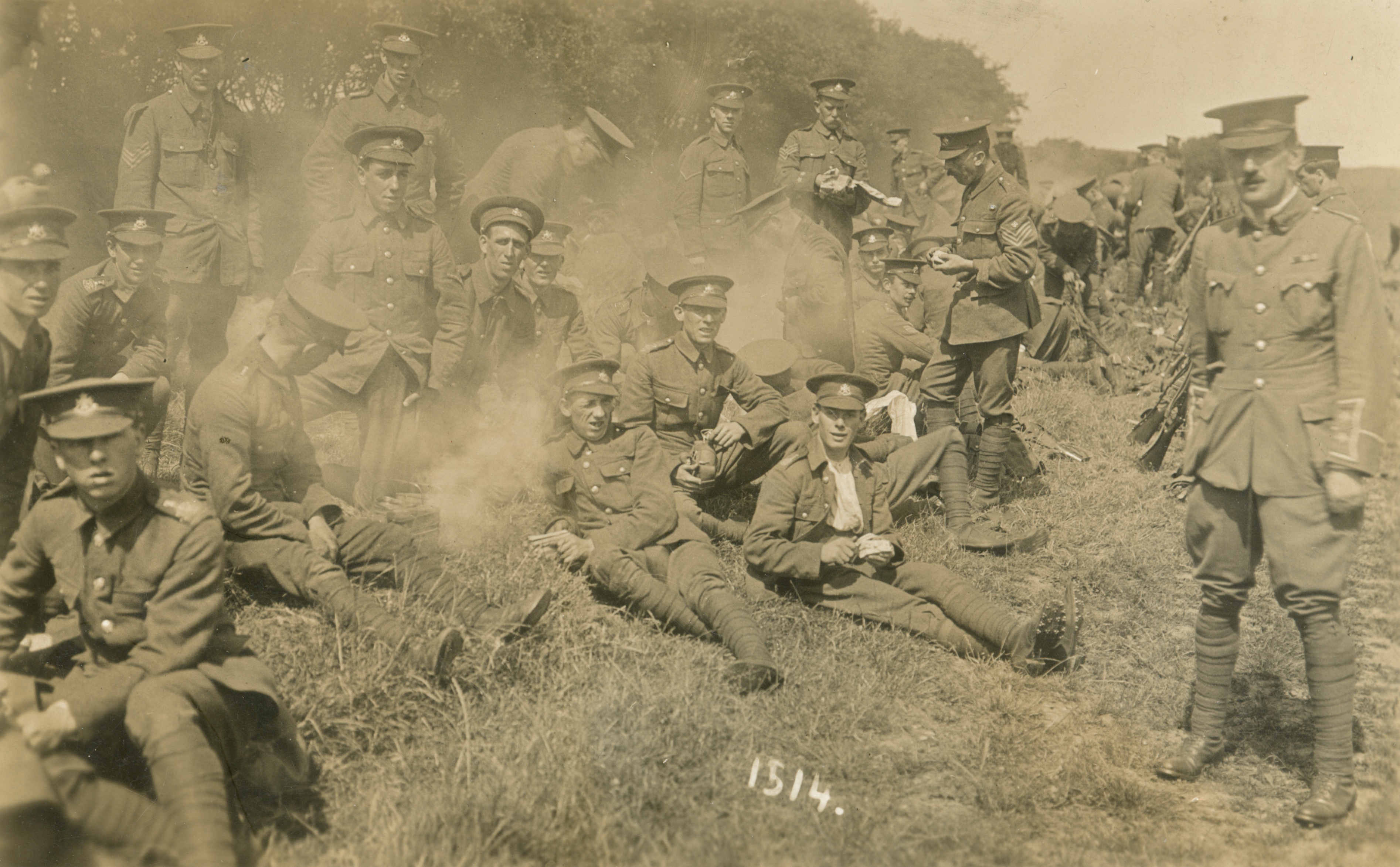
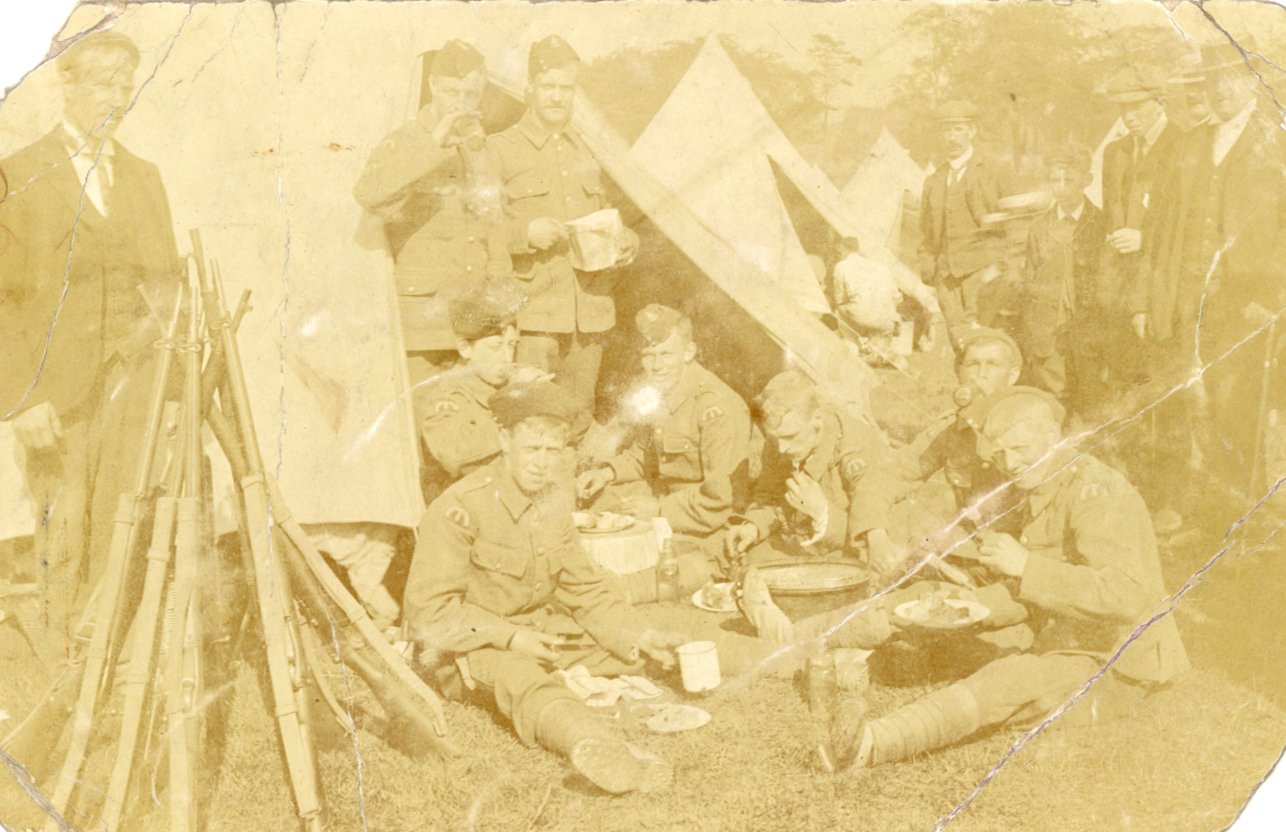
Pictures of the very short Summer Camp of 1914 in Hunmanby are hard to find and this is only my second……….

The reason being – War was declared and the men of the Sherwood Foresters quickly returned to their home station for mobilisation.

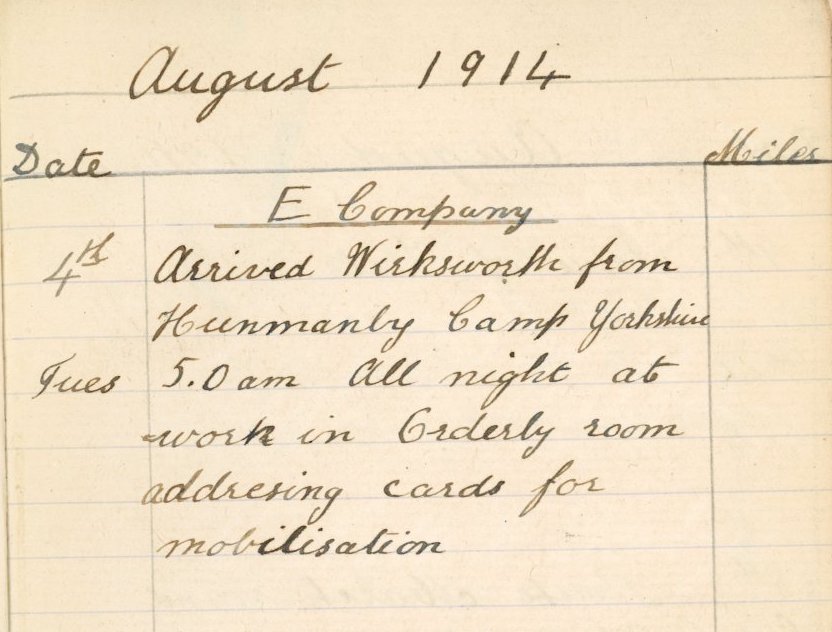
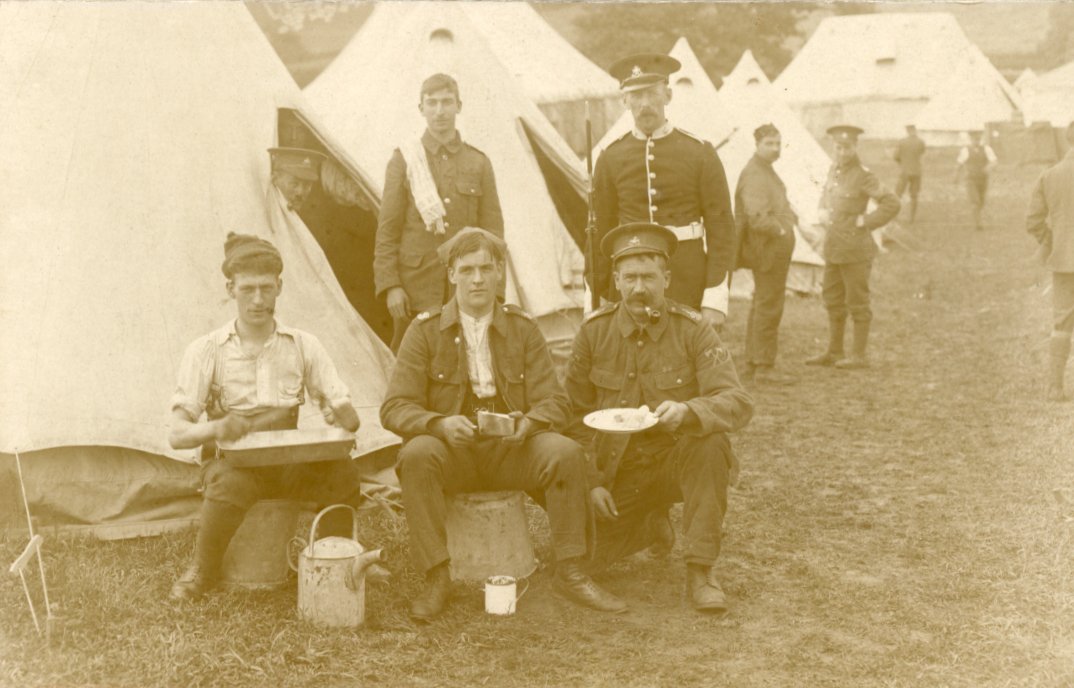
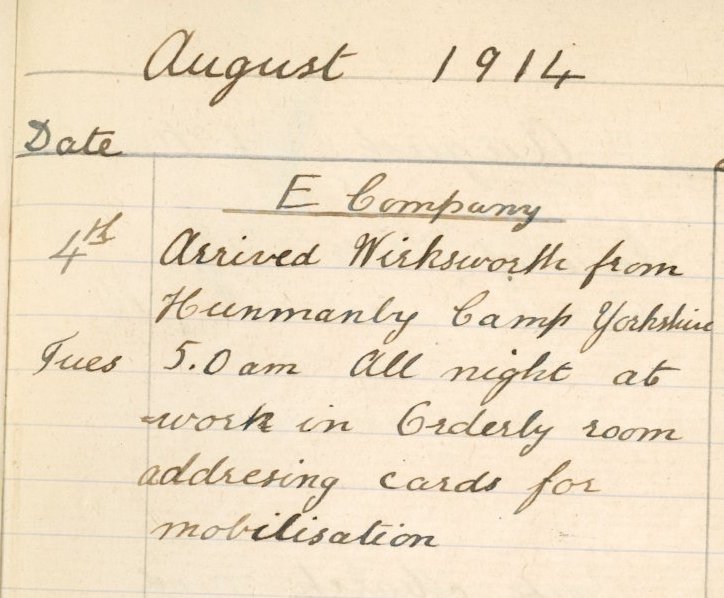
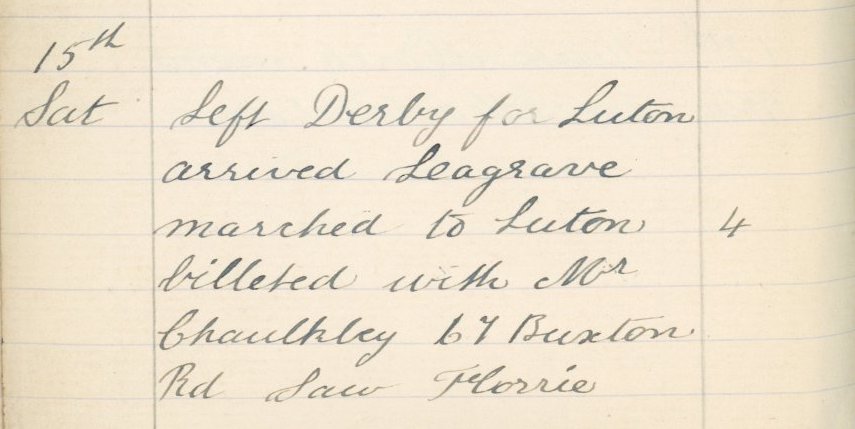
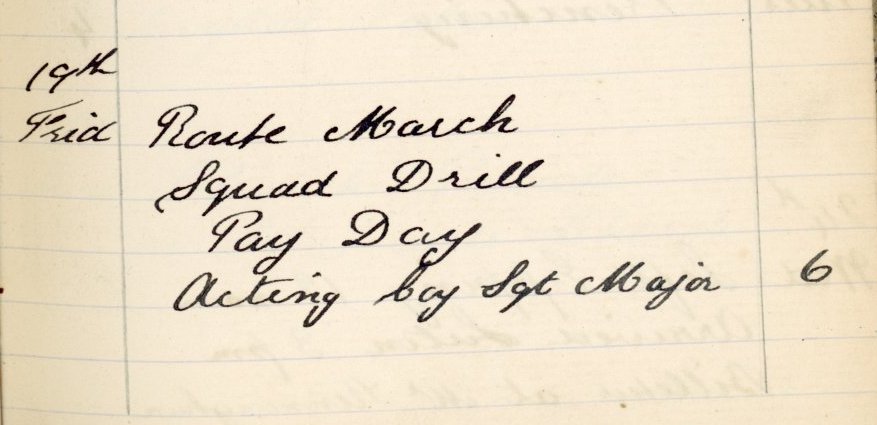
This is epitomised by the entry in Sergeant Percy Walker’s diary…


The picture shows men of the 5th or 6th Battalions cooking by the roadside…

Is this T5 or T6……
I’m calling this as T5
Great shot!

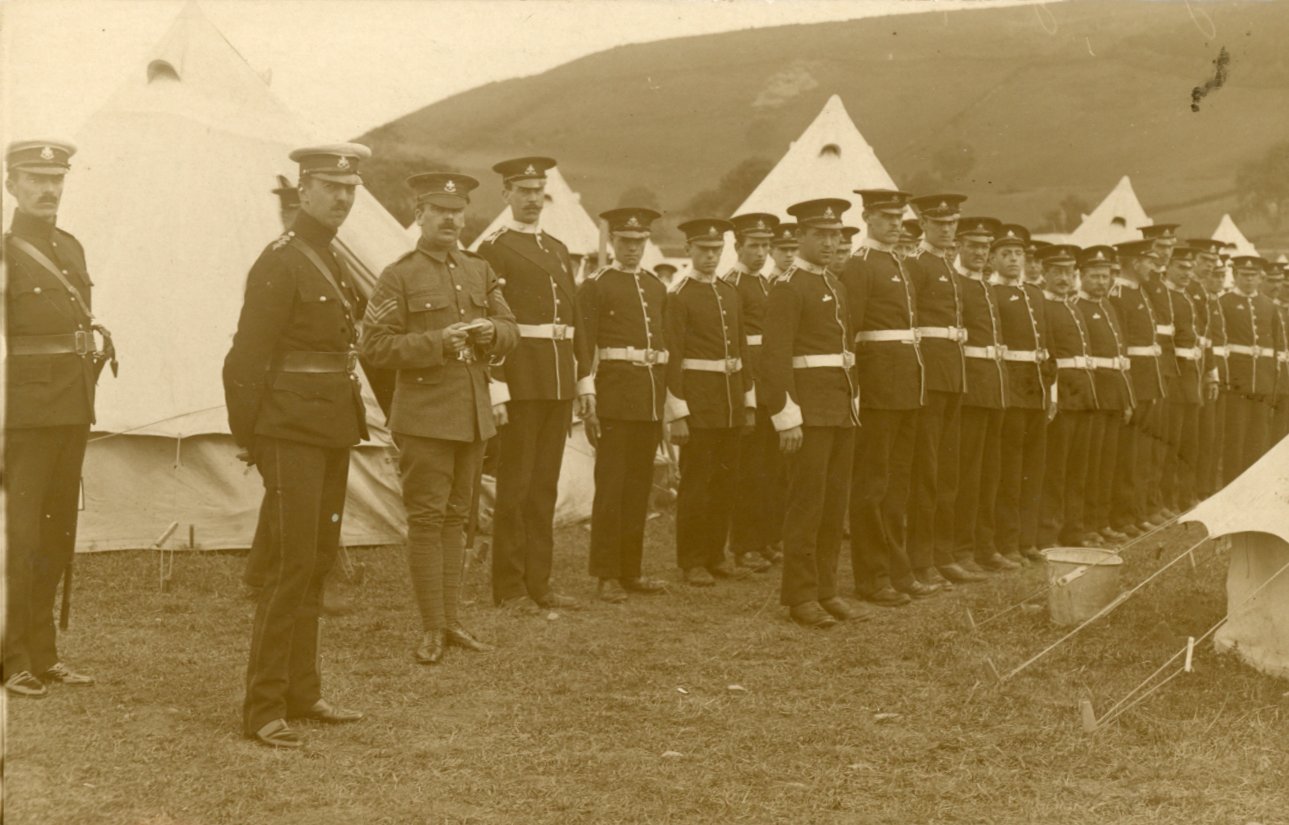
And just for comparison – here is the Robin Hood Rifles…..same photographer……just taken later

RHR at Hunmanby in August 1914

9/5673/241979 Percy Walker………an update

Many thanks to Pery’s great grandson son Granville, who has very kindly sent me copies of family photos and Percy’s diary, we can now fill in Percy’s service with the Sherwood Foresters.


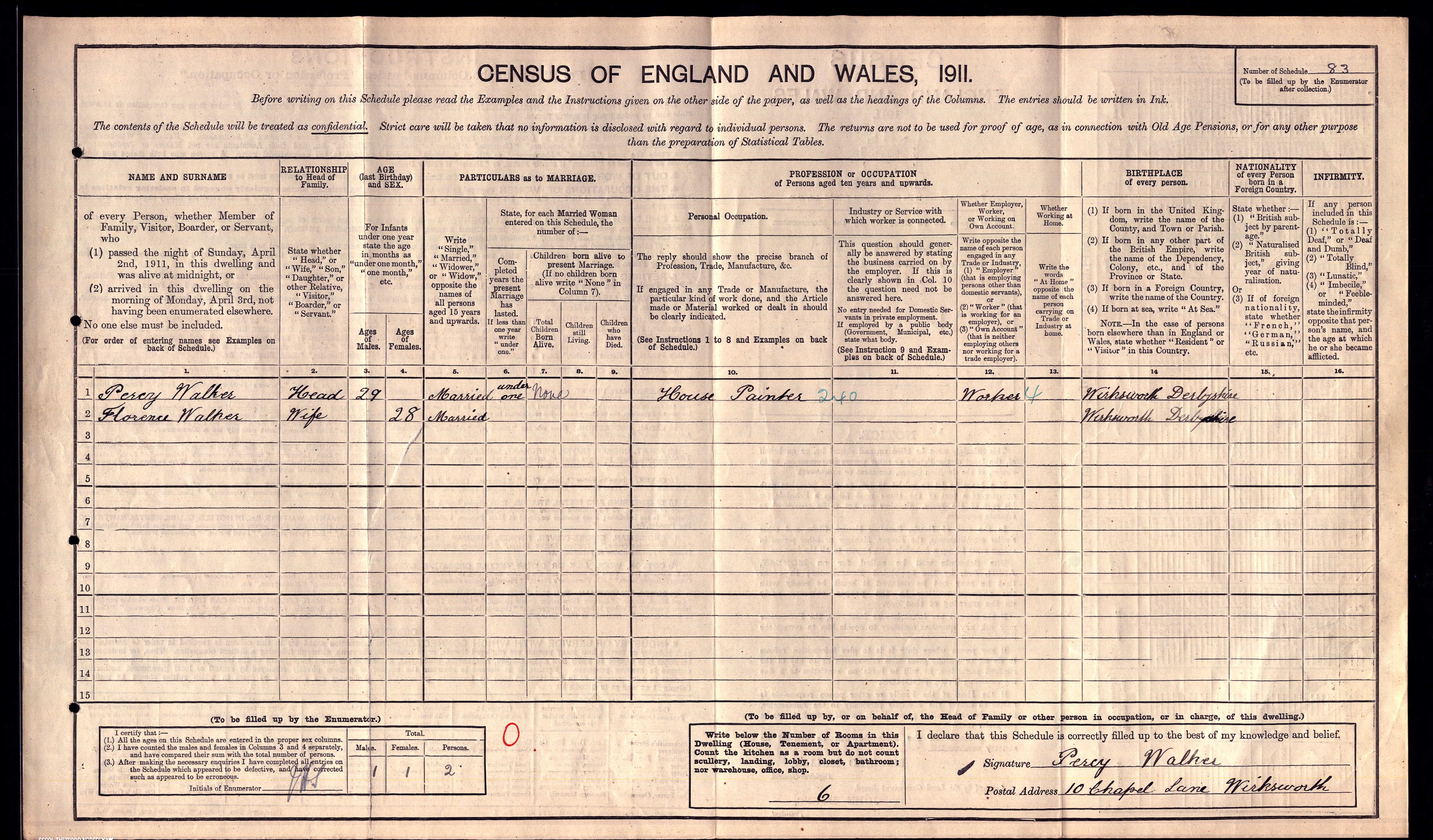
Born in 1882 in Wirksworth, Percy was a painter by trade, and by 1911 was living at 10 Chapel Lane with his new bride Florence.

1911 Census

Service with ‘E’ (Wirksworth) Company, the 2nd Volunteer Battalion of the Nottinghamshire & Derbyshire Regiment: 1902-1914

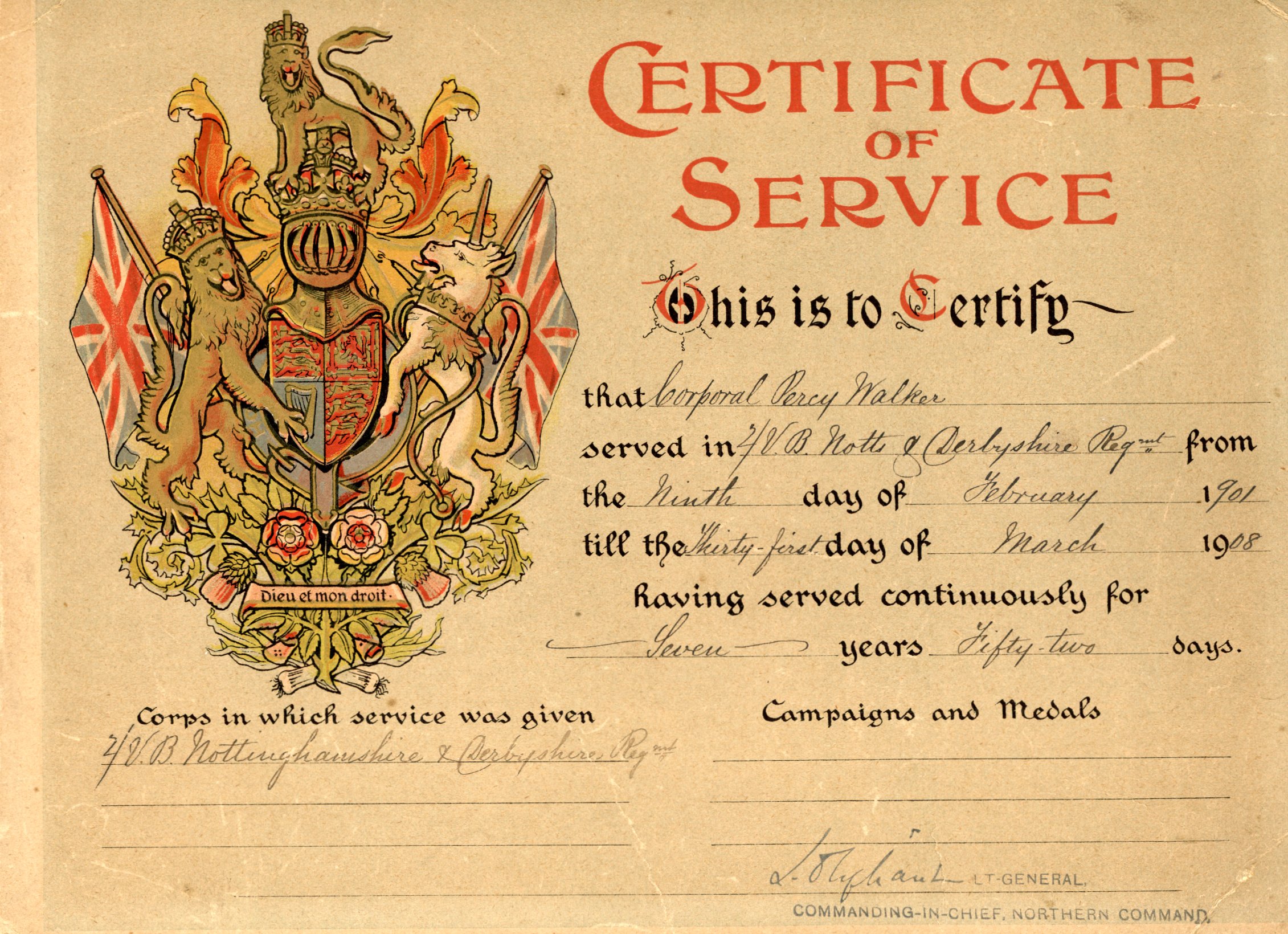
Percy enlisted into the 2VB on the 9th of February 1901 aged 19, and served with them until their disbandment on the 31st March 1908, during which time he rose to the rank of Corporal.

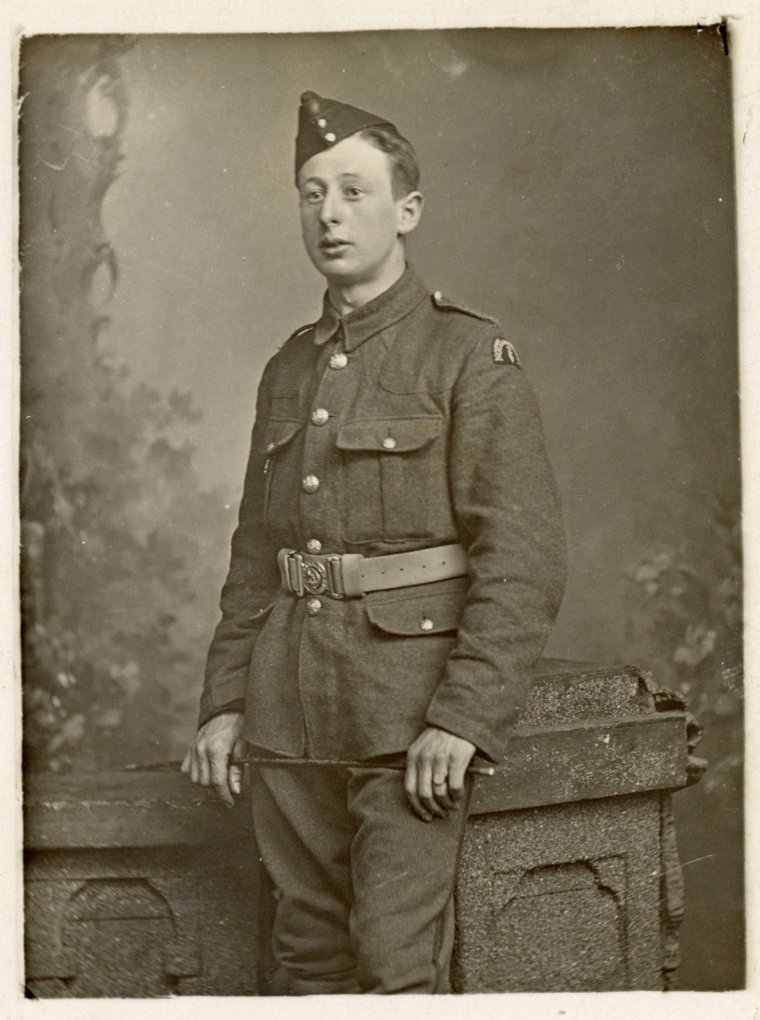
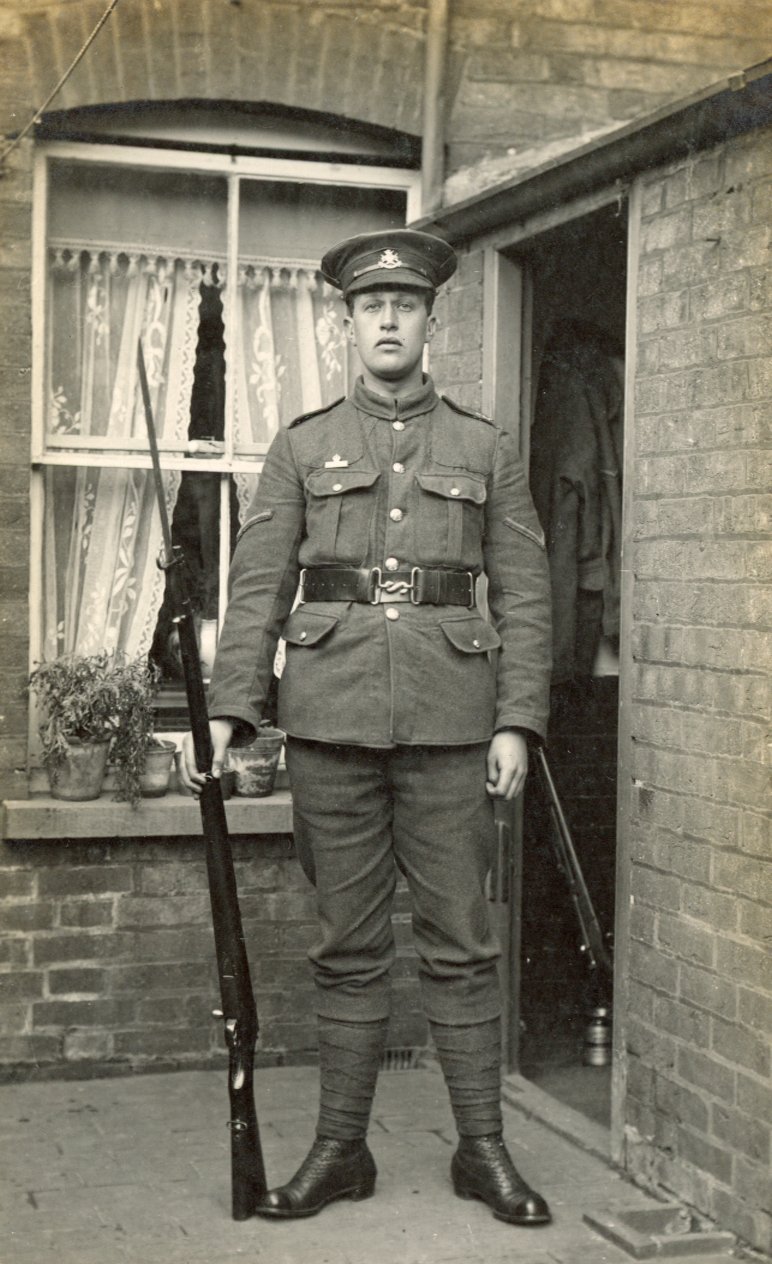
Private Percy Walker, most likely taken shortly after he had enlisted
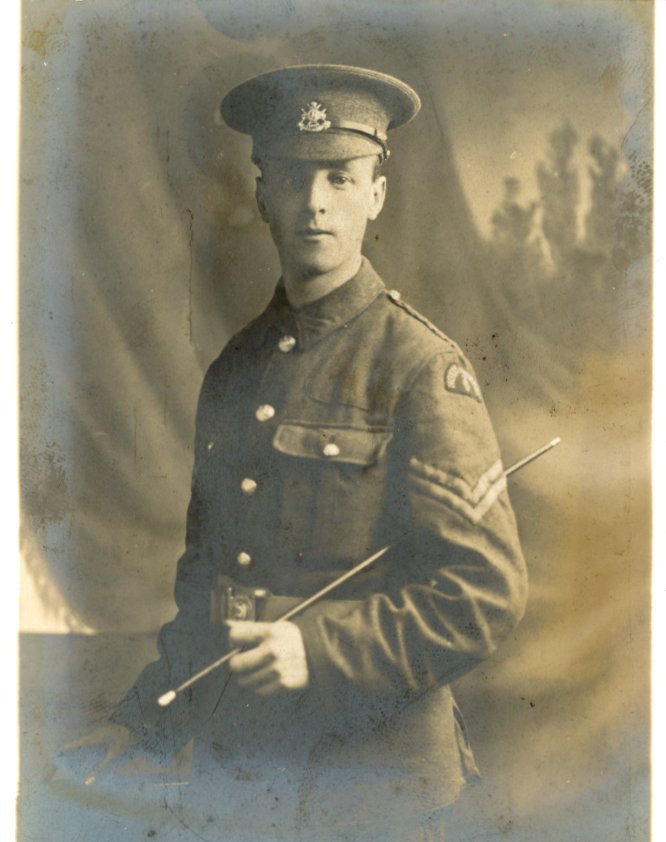
A newly promoted Corporal Percy Walker
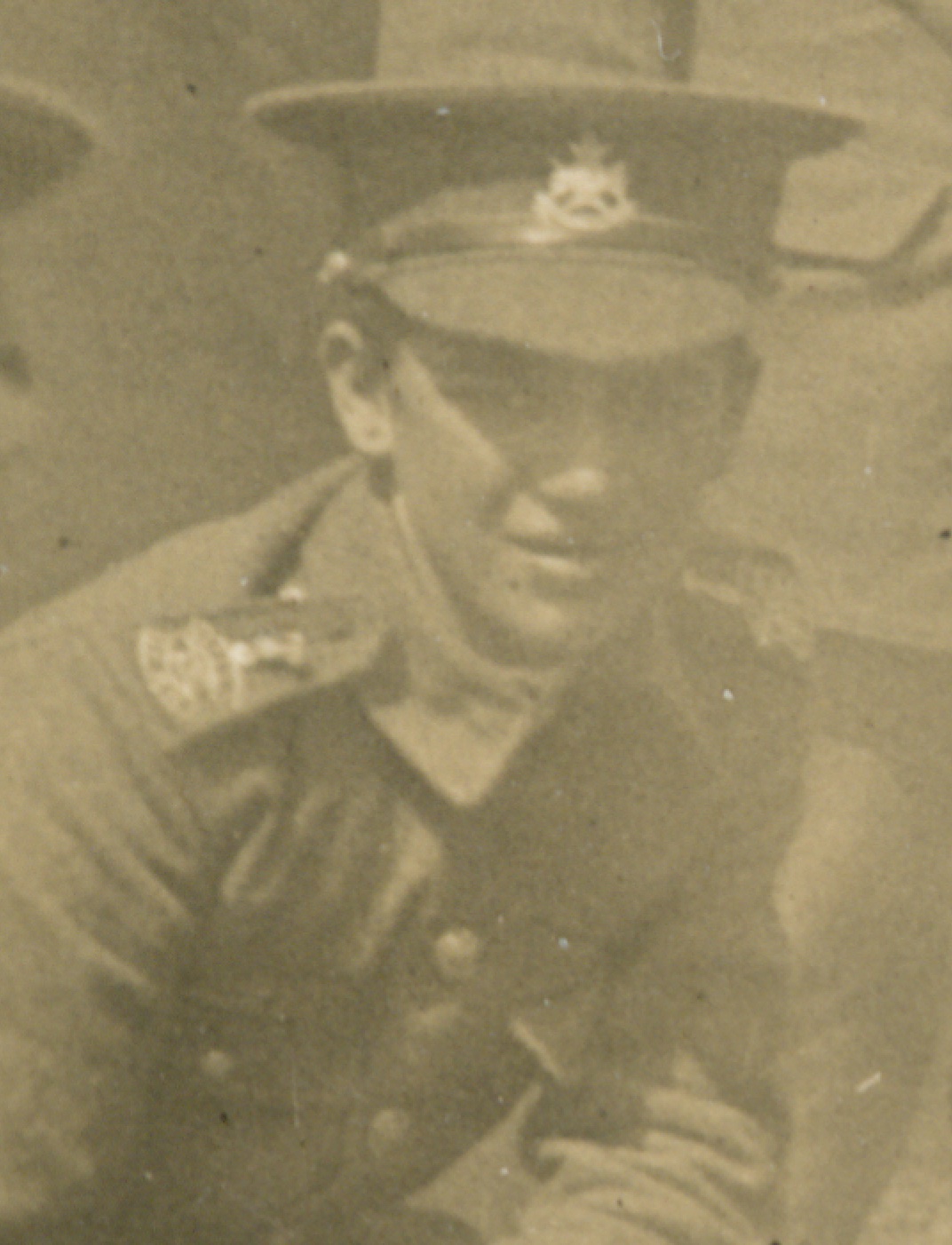
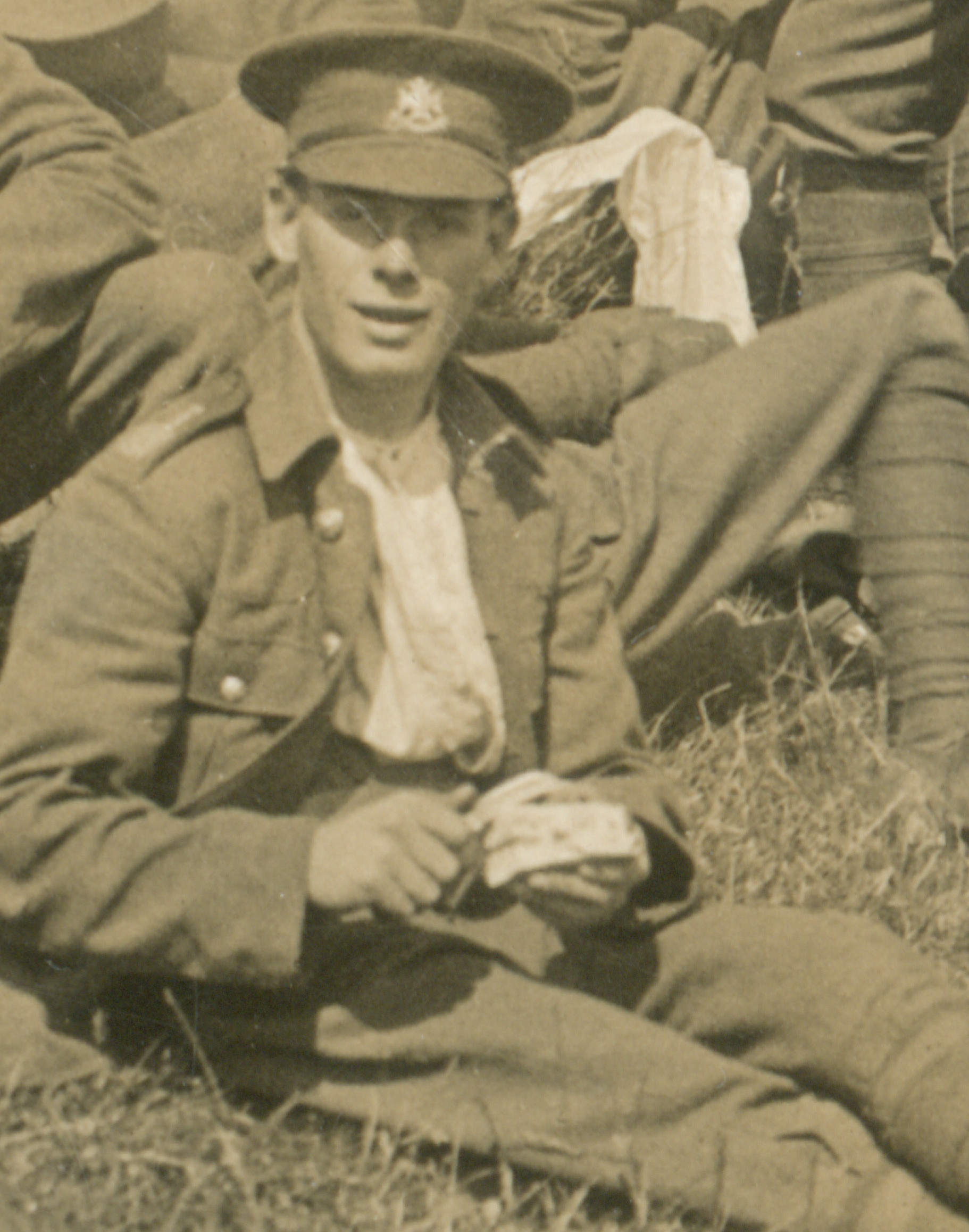
A group of men of the 2VB at a summer Camp. Percy is possibly the man sitting at the back drinking
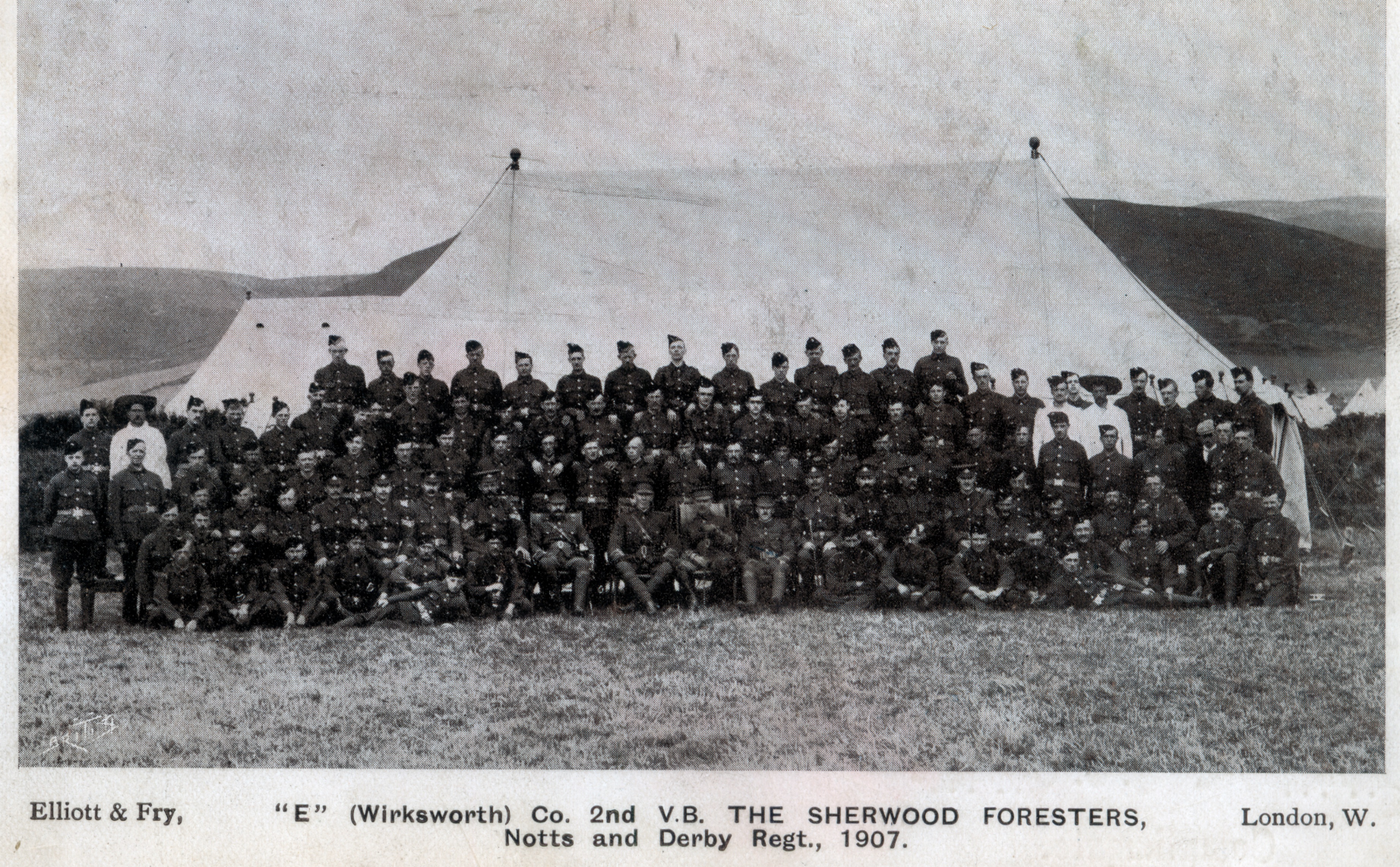
“E” (Wirksworth) Company taken at Towyn Camp 1907; authors collection
Percy’s record of service with the 2VB; in total 7 years and 52 days

Pre-War Service with ‘E’ (Wirksworth) Company, the 6th Battalion of the Nottinghamshire & Derbyshire Regiment: 1908-1914

Percy enlisted into the 6th Battalion on its formation on 1st April 1908 and was given the early regimental number of 9. He was assigned to No. 3 Section of the Left Half Company Commanded by 2/Lt Francis Edward Wintle. E Company was Commanded by Captain Joseph Albert Wheatcroft.

Nominal Role of Letter “E” Company circa 1908; authors own collection
Sergeants of Letter E Company; Percy is on the far right. This was taken at the summer camp of 1910, which was at Hindlow.
1910 Summer camp and a group of men from E Company; Percy is standing on the left. Note there are a number of senior NCOs standing at the back in ‘Tunic Order’
Percy also attended the 1912 summer camp at Abermaide in Wales
Letter E Company at Abermaide Camp; Percy is kneeling on the 2nd row, 7th from the left
An unknown group of men at the 1912 camp; note the pioneer kneeling on the right
On parade at Abermaide Camp.

War Service with ‘E’ (Wirksworth) Company, the 6th Battalion of the Nottinghamshire & Derbyshire Regiment: 1914

Some time prior to the outbreak of the Great War Percy had been promoted to Sergeant

On the outbreak of the War Percy started to keep a diary, which now throws light on those early days of the War and the training undertaken by the North Midland Division in the Harpenden and Luton areas.

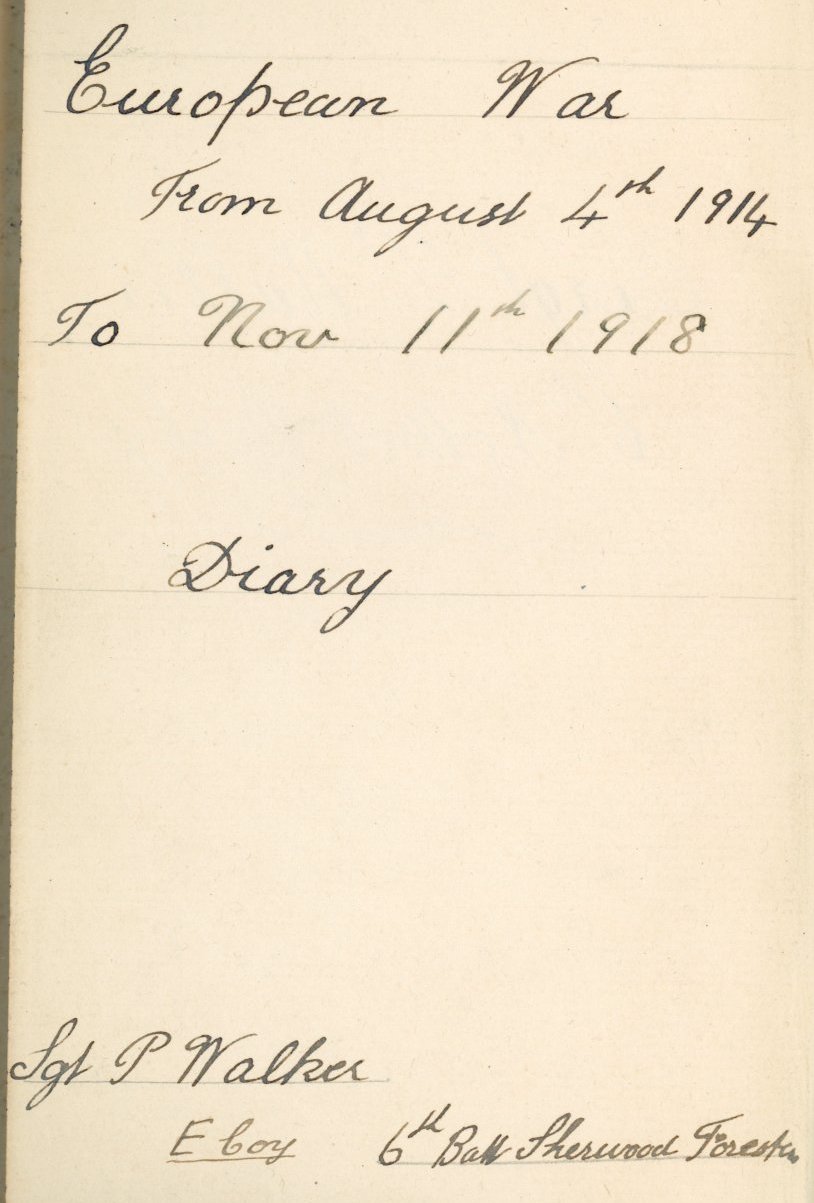
The cover page of Percy’s diary and it’s clear that ‘Nov 11th 1918’ was added at a later date.
Interestingly the first diary entry, dated Tuesday 4th August, details the short and ill-fated summer camp at Hunmanby.
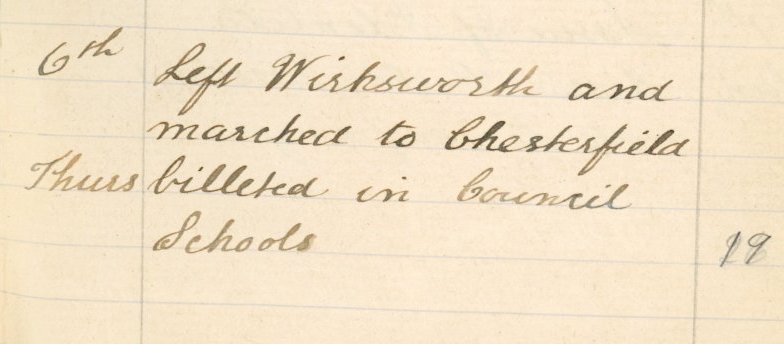
On the 6th August, just 2 days after the mobilisation of the British Army, men of Letter E Company marched the 19 miles to the Battalion Headquarters in Chesterfield
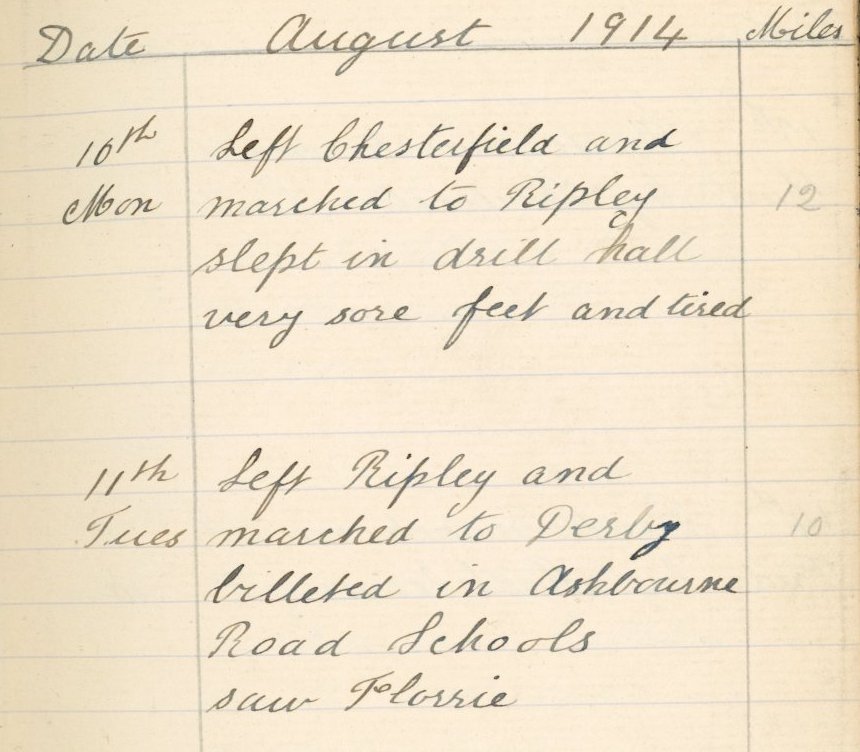
On the 10th August the ‘men of the high peak’ marched the 12 miles to Ripley and on the following day the 10 miles to Derby.
On the 15th August, 10 days ofter mobilisation, the 6th Battalion along with the Sherwood Foresters Brigade of the North Midland Division left Derby on their way to the Luton area.
The individual Battalions of the Sherwood Foresters Brigade mobilising in August 1914; authors own collection.

Percy’s diary records the training that they undertook, such as route marches, outpost work and Company/Battalion Drill. During this time Percy and the other men of the Division were billeted in private residences and the diary provides the names and addresses of these houses.

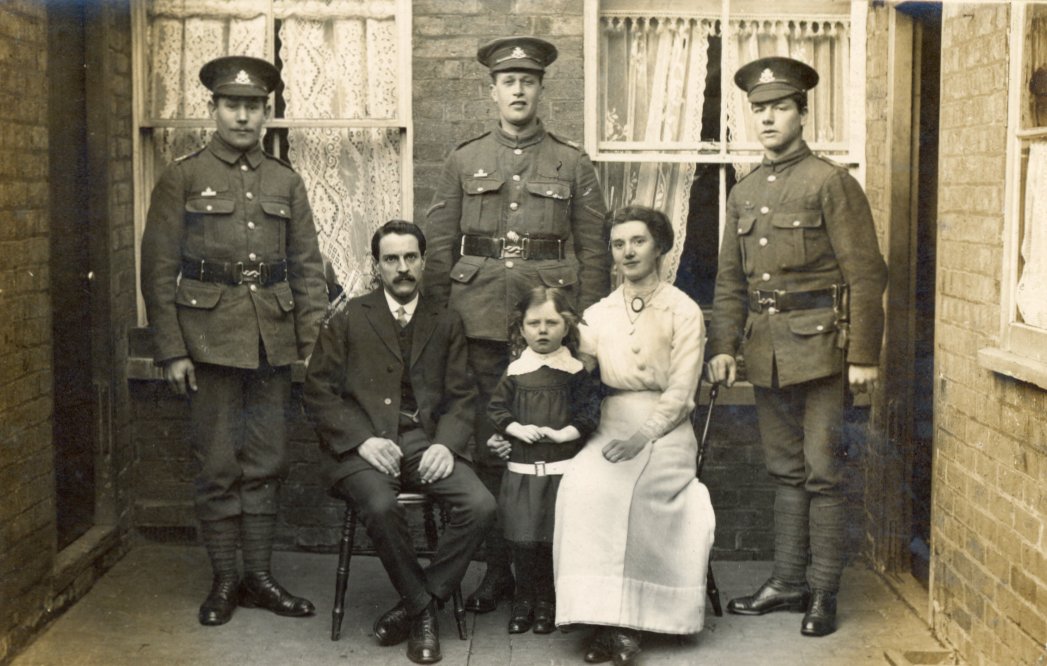
A group of E Company men billeted with a family in Harpenden; these are possibly plans of Percy
The same man seen in the photo above; note Imperial Service Badge
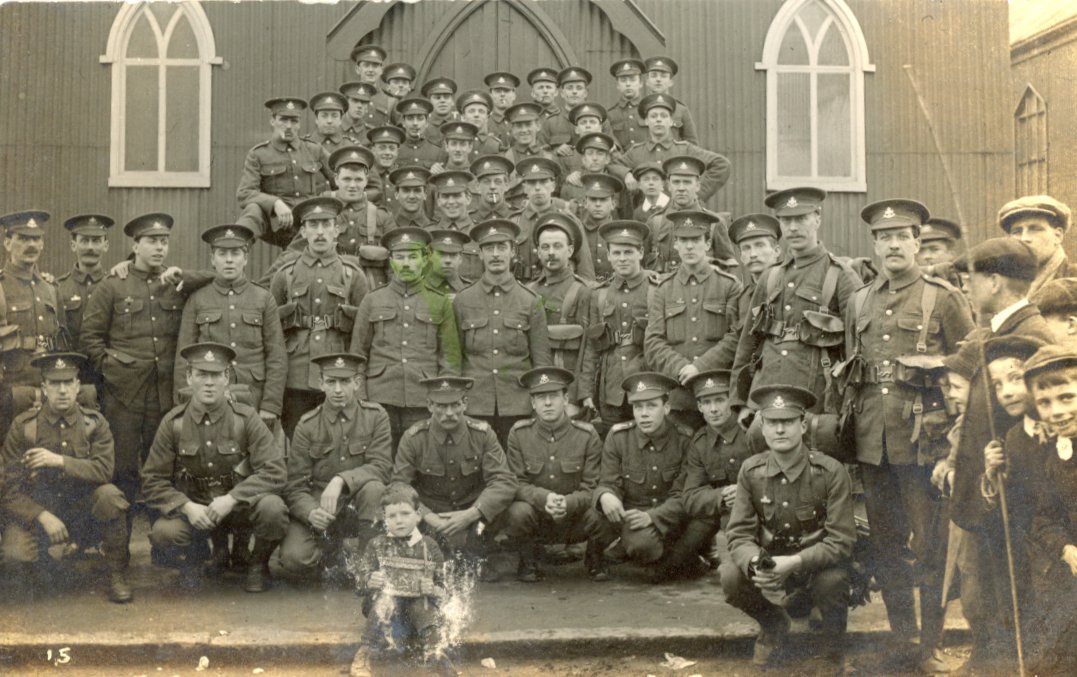
A group of 1/6th Battalion men; Percy is on the 2nd row

War Service with the 2/6th Battalion of the Nottinghamshire & Derbyshire Regiment: 1914-1916

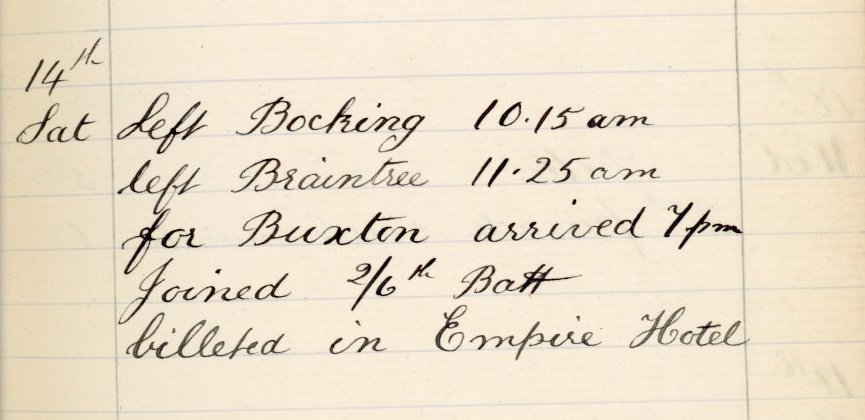
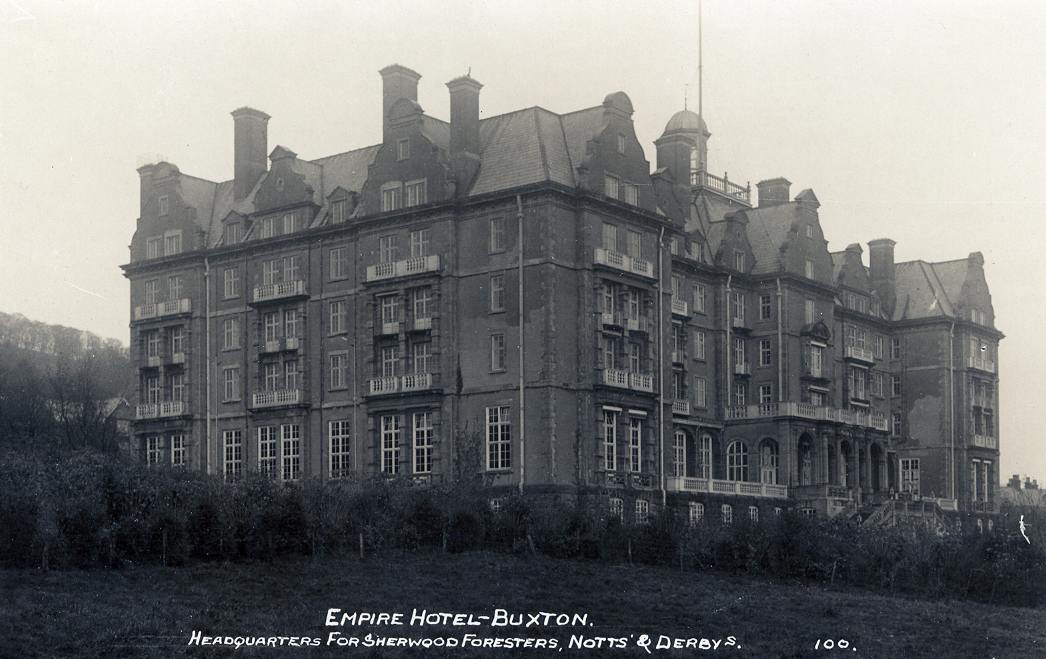
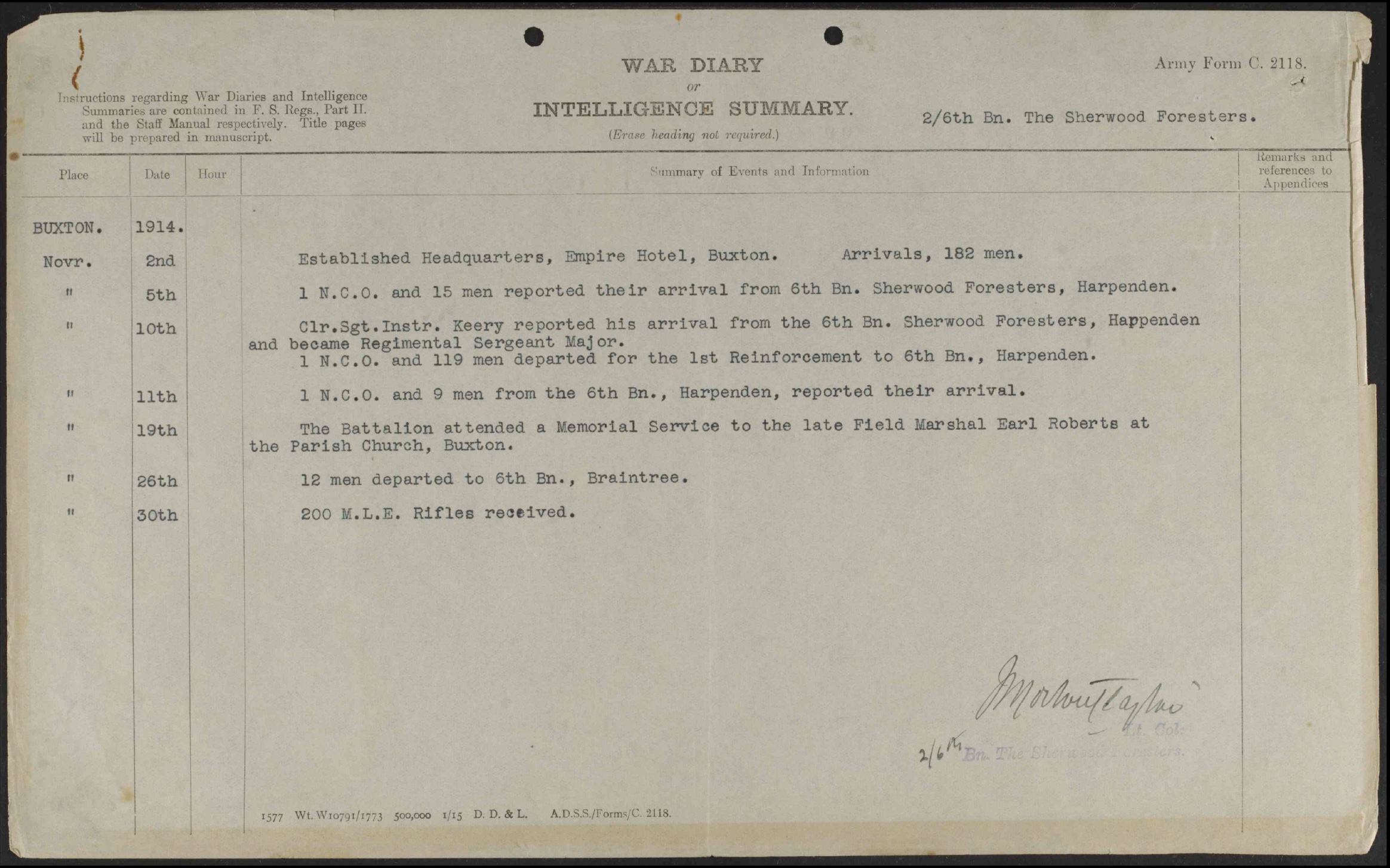
On the 14th November 1914 Percy was transferred to the newly formed 2/6th Battalion, which was Headquartered at Empire Hotel in Buxton and under the Command of Colonel Clayton
Empire Hotel in Buxton; authors own collection
War Diary of the 2/6th Battalion; authors own collection
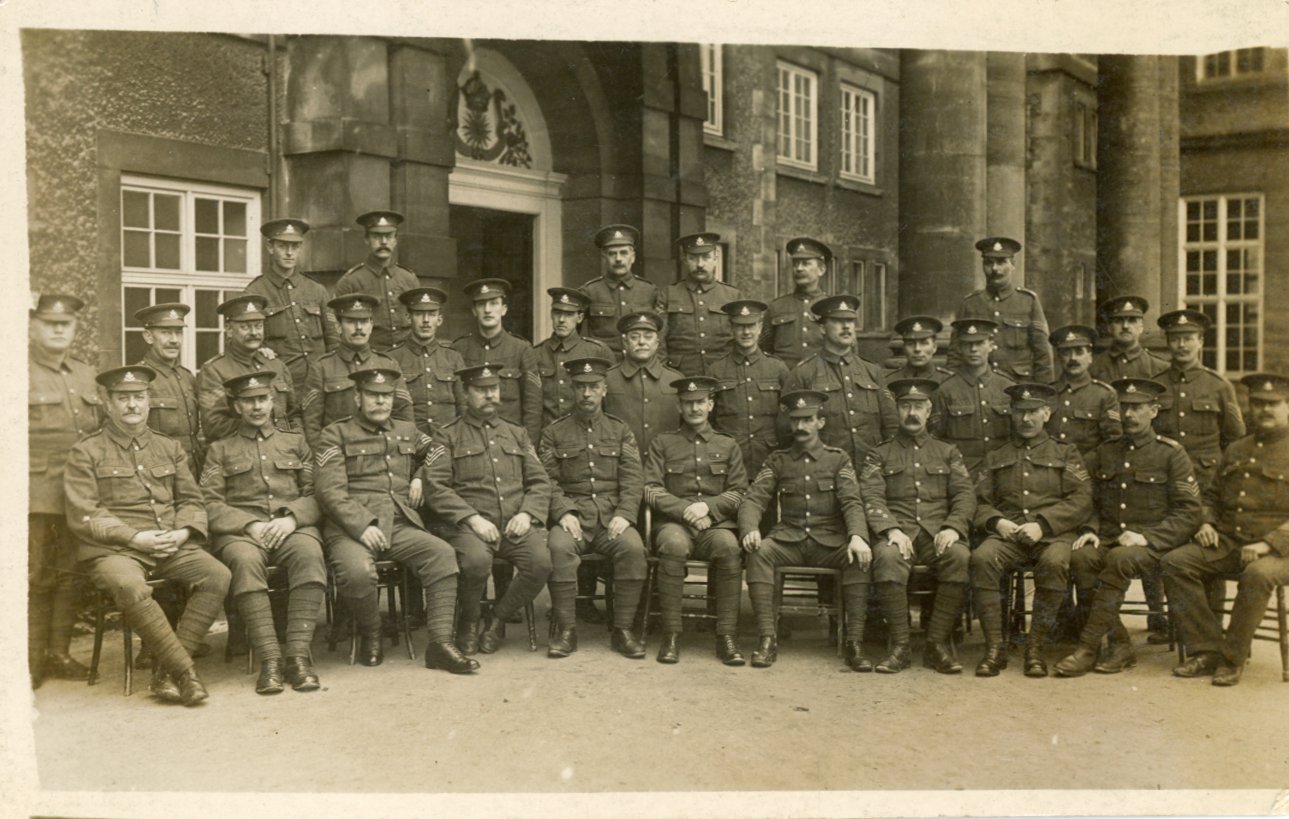
Senior NCO’s of the 2/6th Battalion at Buxton; Percy is on the far left of the rear row
Unknown Corporal on the steps outside the Empire Hotel
On the 3rd March the 2/6th Battalion moved to Luton and then Harpenden to take over the transport and billeting arrangements from the 1/6th Battalion, which were due to embark for France
On the 19th February Percy was made Acting Company Sergeant Major
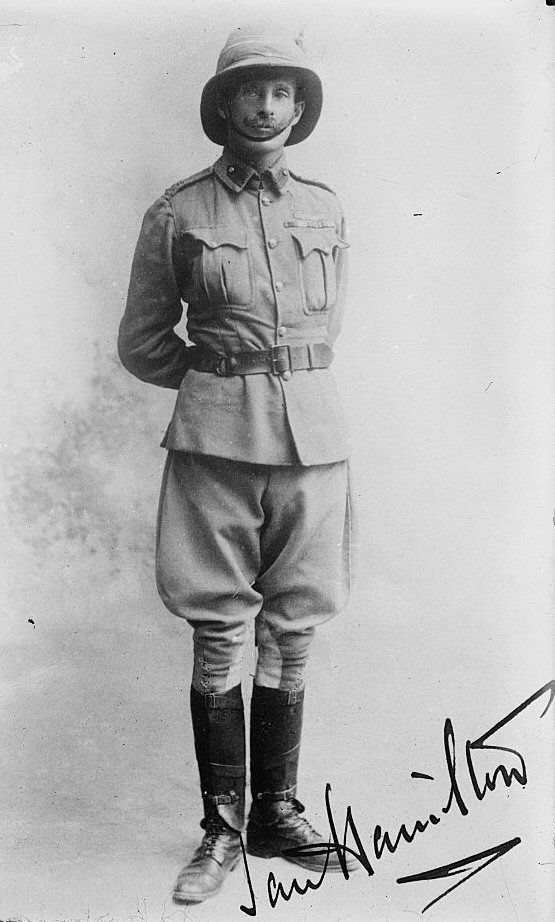
The 2nd North Midland Division was inspected by General Ian Hamilton
General Ian Hamilton would later lead the Dardanelles expedition

Overseas Service with the 1/6th Battalion of the Nottinghamshire & Derbyshire Regiment: 1916-17

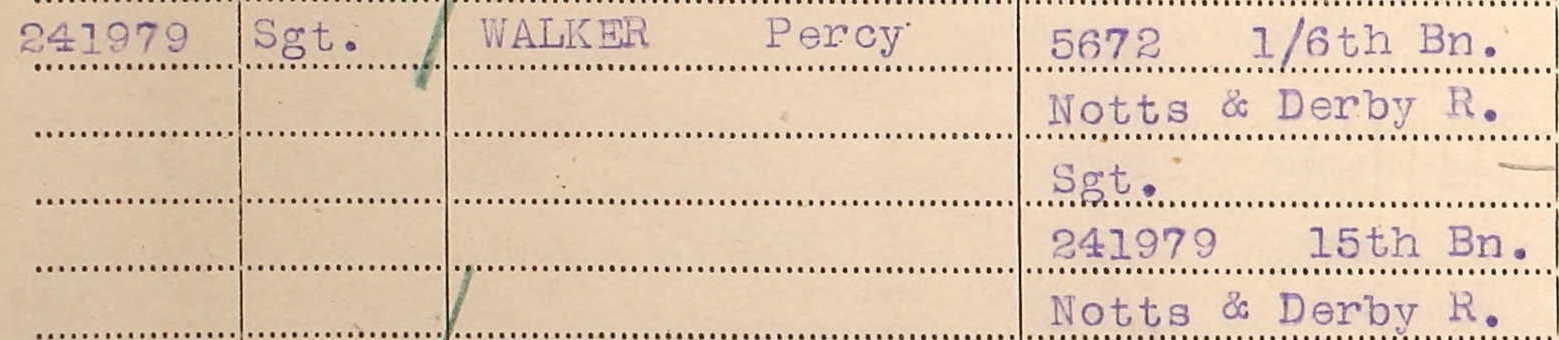
In April 1916 Percy would have served for 8 years in the Territorial Force, which meant that he was ‘time expired’. It appears from his Medal Index Card, Medal Roll and Silver War Badge Role that this was the case and he re-enlisted (or was conscripted) into the Sherwood Foresters and was posted to the 1/6th Battalion and given the new regimental number of 5672. He arrived in France on the 12th August 1916 and it appears that he was still with the 1/6th Battalion at time of the Territorial Force renumbering in spring of 1917 (new number of 241979).

At some point, and for some reason (possibly through wounding), Percy was transferred to the 15th Battalion.

Medal Index Card
Medal Roll showing that Percy served in France with the 1/6th and 15th Battalions

Overseas Service with the 15th Battalion of the Nottinghamshire & Derbyshire Regiment: 1917

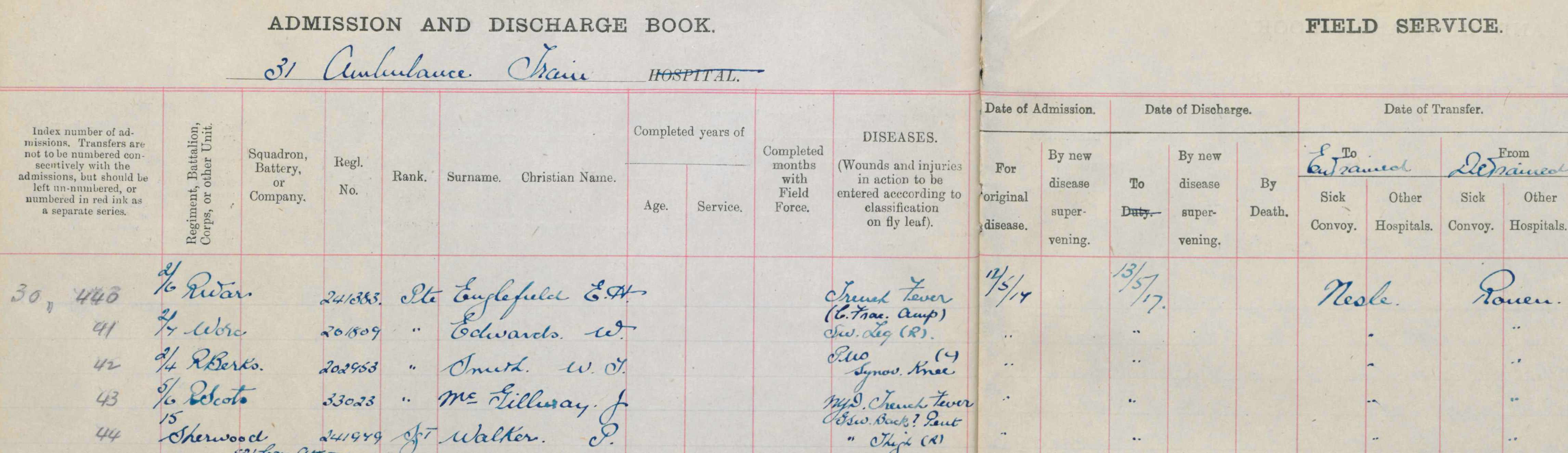
In May 1917 Percy was wounded (GW) with VI(I) [gunshot wound of back and spine (simple flesh contusions and wounds)] and IX(I) [gunshot wounds of lower extremities (simple flesh contusions and wounds)]. At the time of his wounding the 15th Battalion were holding the front line and support trenches.

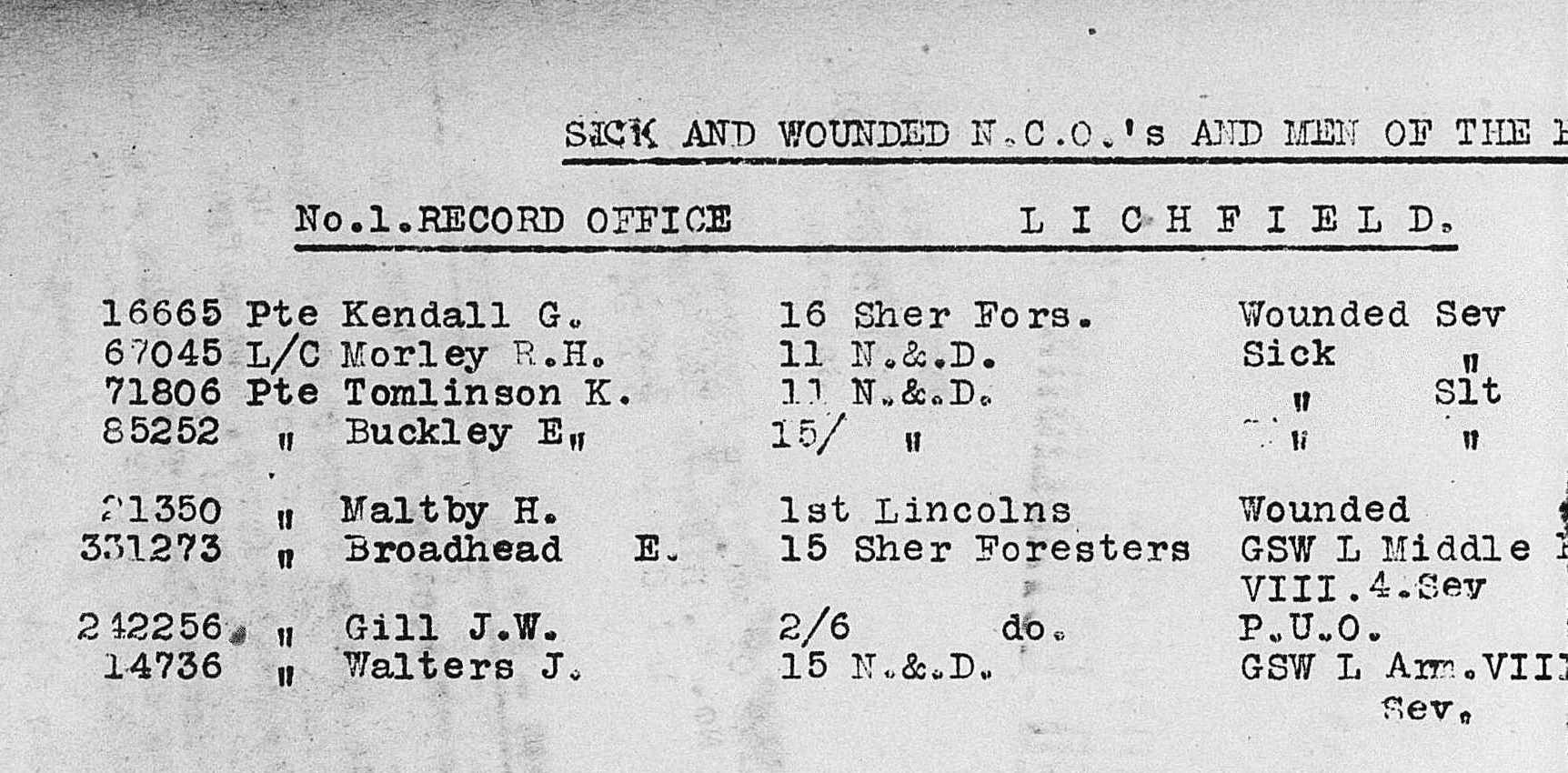
Undated sick and wounded list
Record of the 31 Ambulance Train for May 1917
15th Battalion War Diary for May 1917
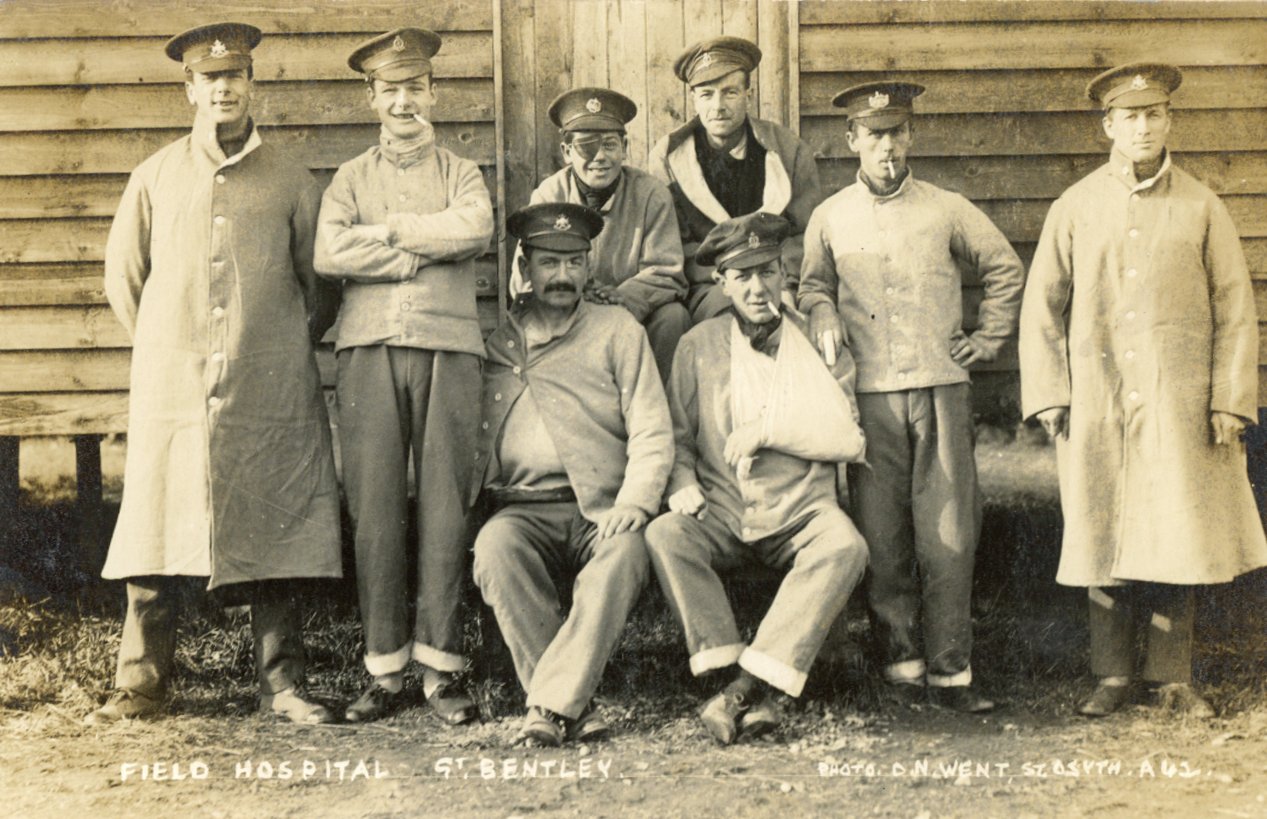
Wounded men at Great Bentley Council School Hospital; Percy is on the right
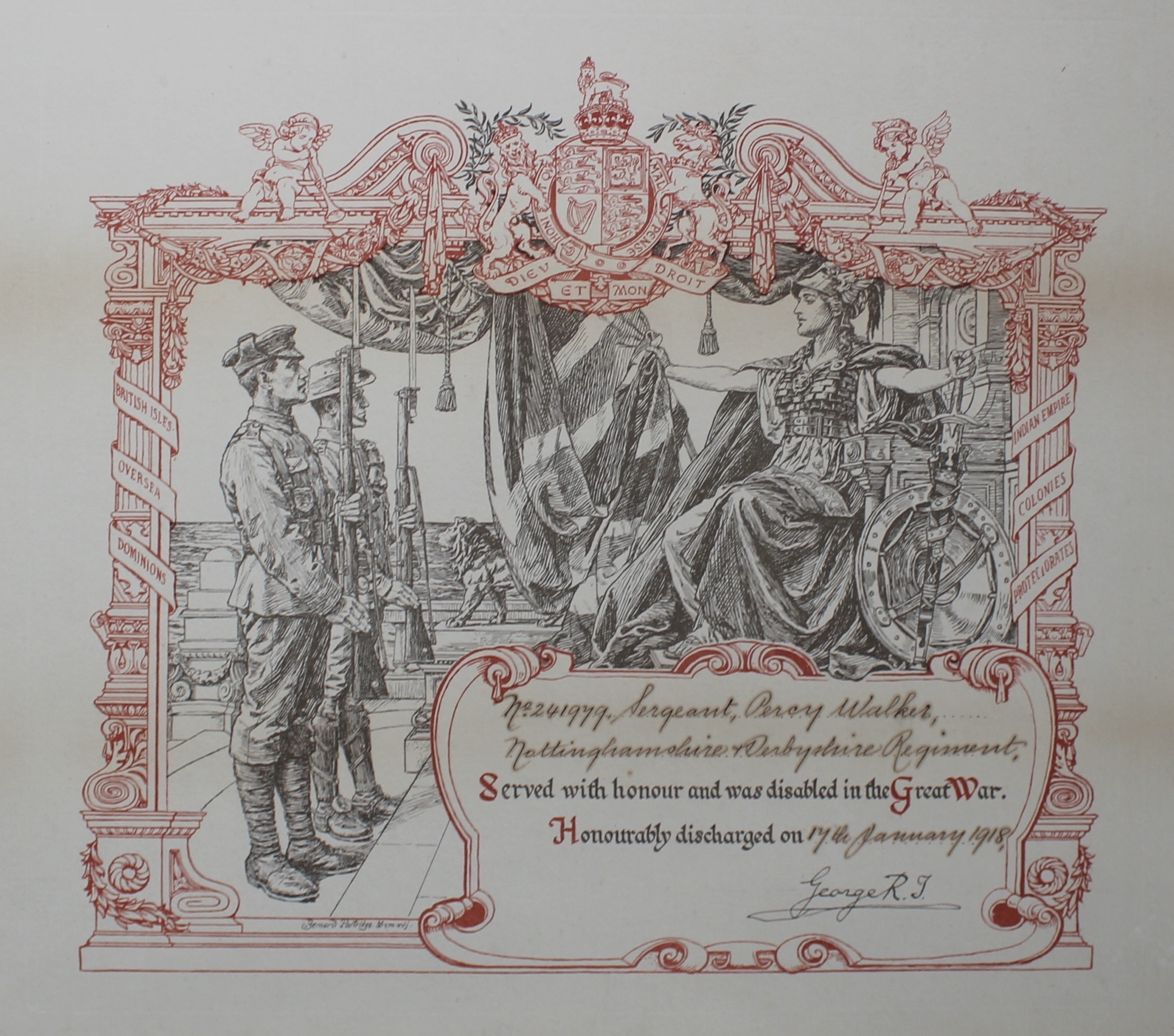
King’s Certificate of Discharge for Percy Walker; authors collection

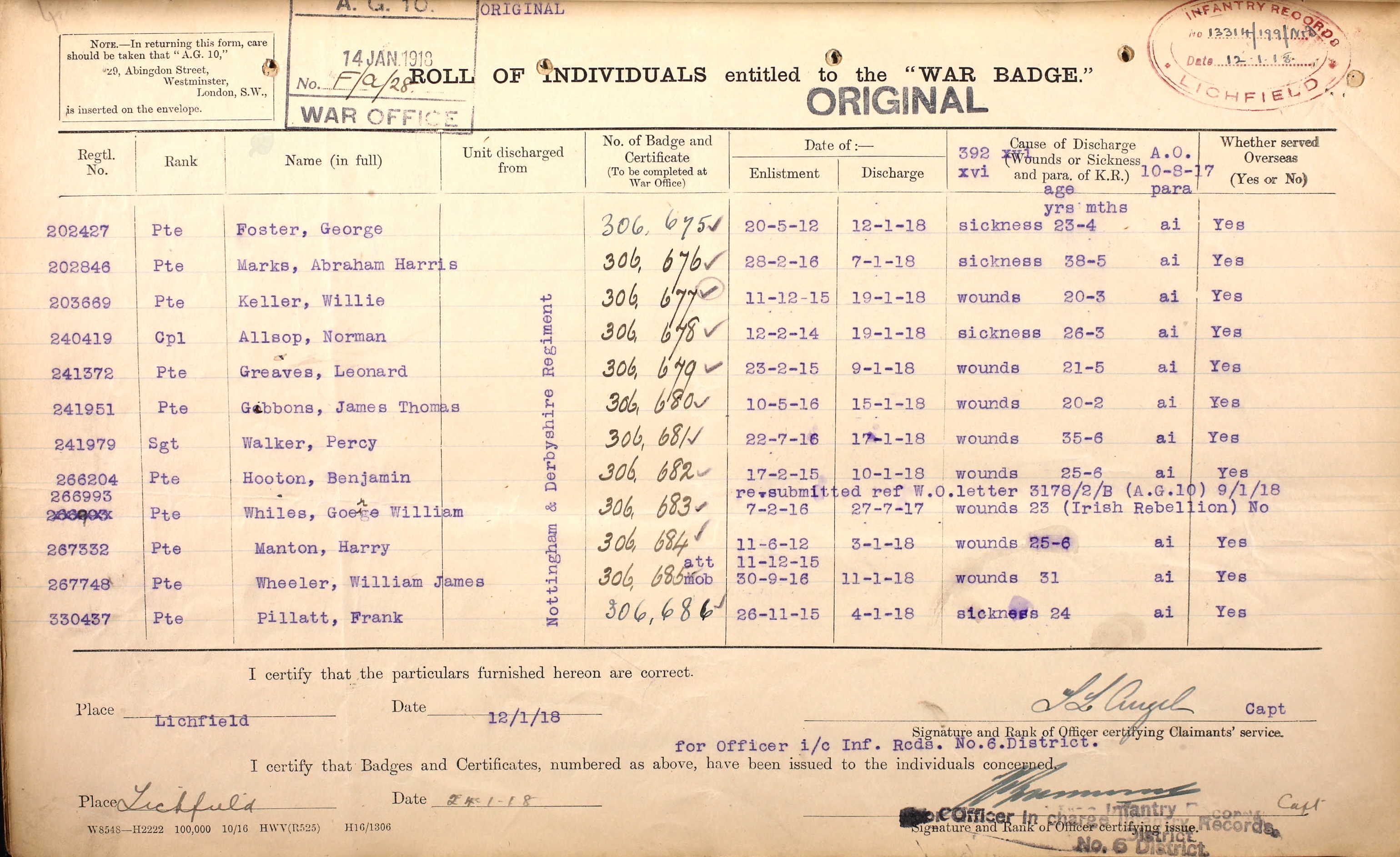
Percy was discharged in January 1918 aged 35 years and was awarded a Silver War Badge and a King’s Certificate of Discharge. He also received a pension.

Silver War Badge roll recording that Percy was discharged on the 17th January 1918 due to wounds
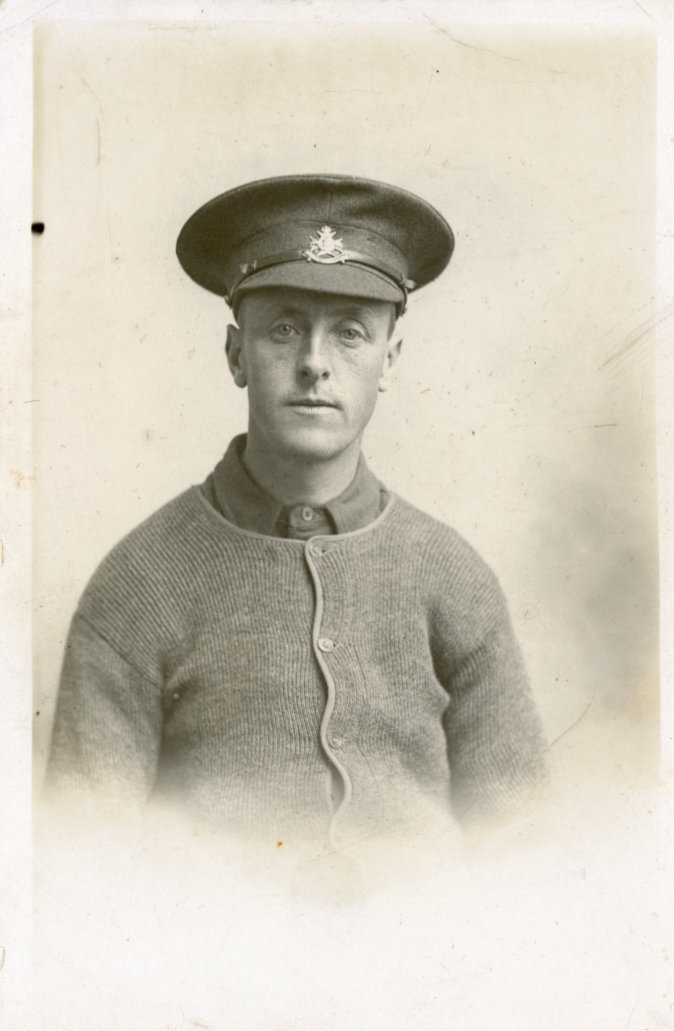
Percy
Embroidery done by Percy whilst in a convalescent home at Elland near to Halifax

On this day 21st April 1917 two men were wounded and John Brown and Victor Bonsall were killed in action

Both John (242122) and Victor (242335) were original members of the 2/6th Battalion and are buried next to each other in Templeux-Le-Guerard British Cemetery.

John was the husband of Louisa Brown of 141 Fairfoot Rd., Bow in London. He was born in London.

Victor was the son of Richard and Louisa Bonsall of Monyash, Bakewell in Derbyshire.
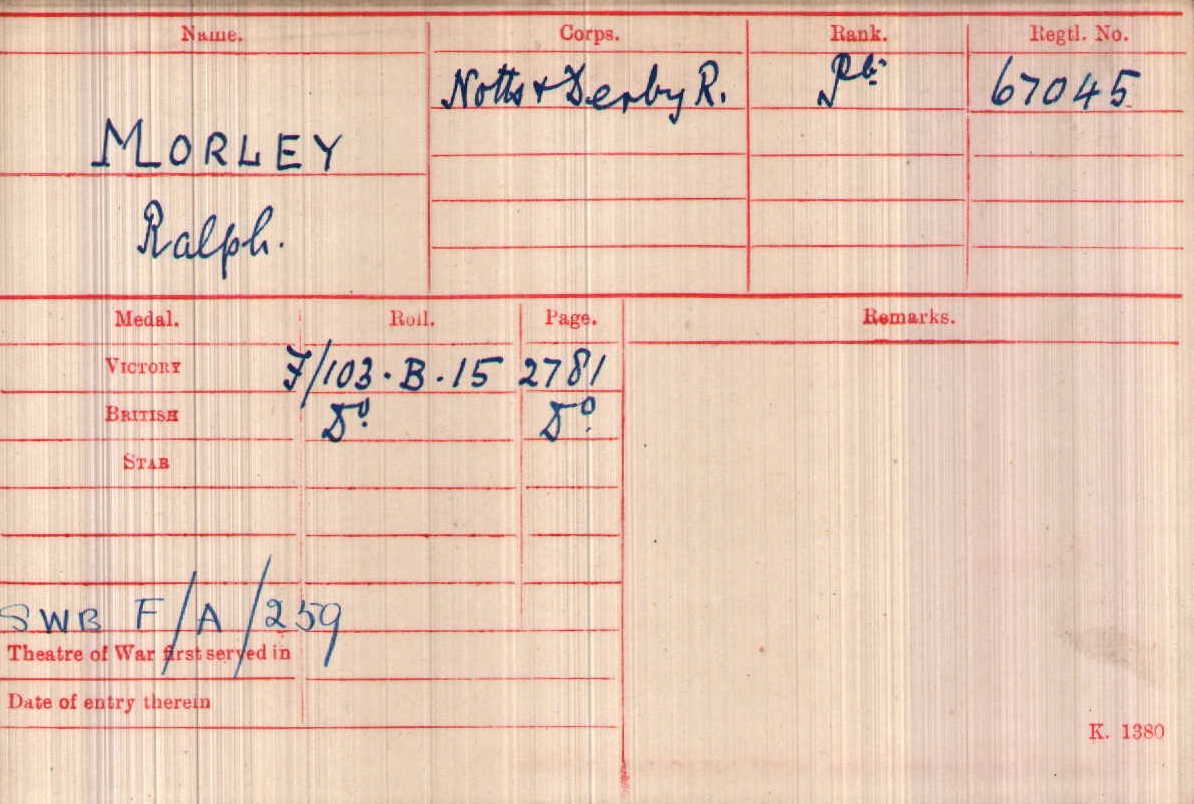
Pension Record for Victor Bonsall
Pension Record for John Brown

118815 Private Harry Watson and the 118*** series of Regimental numbers…….

A recent purchase that I am very happy with because I believe the recipient – 118815 Pte Harry Watson – has a special tale to tell in the story of the 1/6th Battalion, The Sherwood Foresters.


Harry was issued the Regimental Number of 118815, which were numbers issued to conscripted men posted to the 3rd/4th and 5th/7th (Reserve) Battalions for training in early summer 1918.


The 118*** Series of Regimental Numbers

From studying surviving service records we can draw some broad conclusions:-

Men numbered between 118044 (Pte William Walters) and 118239 (Pte Sidney Nunn) were posted to the 3rd or 4th Battalions between 25th and 29th May 1918. Following training these men arrived in France in Sept/Oct 1918.

Men numbered between 118272 (Pte Charles Leedel) and 118287 (Pte Street) were posted to the 5th Reserve Battalion at Saltfleet on the 28th and 29th May 1918. Following training these men arrived in France in Sept/Oct 1918.

Men numbered between 118431 (Pte Hartwell) and 118547 (Pte Walker) were posted to the 3rd Battalion at Sunderland between on the 12th and 13th June 1918. Following training these men arrived in France on 4th Oct 1918.

Men numbered between 118785 (Pte McLocklin) and 118889 (Pte Hand) were posted to the 5th and 7th Reserve Battalions at Saltfleet between 18th and 20th June 1918. Following training these men arrived in France in mid Oct 1918.


Medal Roll of 118815 Harry Watson

From his service number of 118215 we can surmise that Harry Watson was posted to either the 5th or 7th Reserve Battalions in mid June 1918 and was highly likely to have arrived in France and posted to the 1/6th Battalion in October 1918.

And why is that important?……..It would make Harry one of the last reinforcements to join the 1/6th Battalion, most likely to replace losses following the storming of the Hindenburg Line.
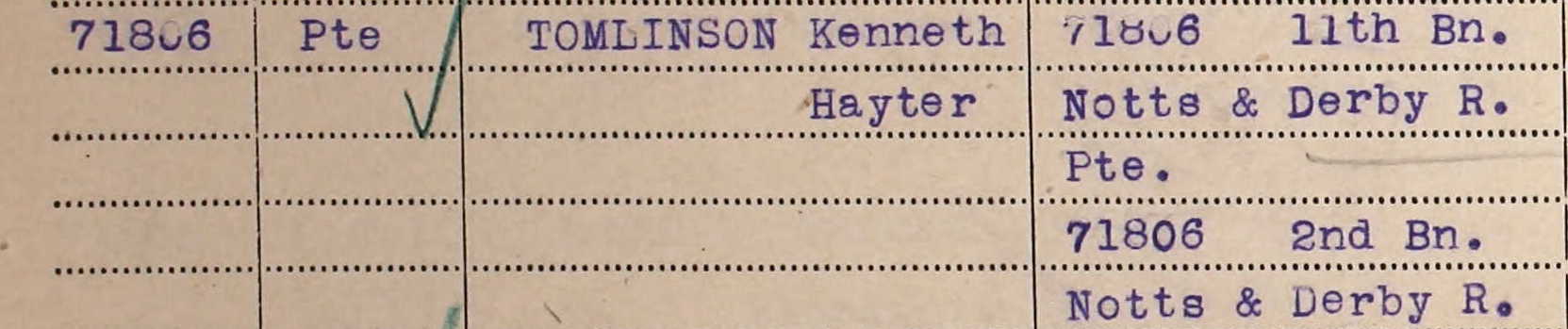
Note: On the medal roll there is no longer a distinction between the 1/6th and 2/6th Battalions, the latter of which had been finally disbanded on 31st July 1918.

103039 Pte Frederick Blaydon – one of the ‘Bedfordshire Lads’………

Sherwood Foresters Cap Badge

Unfortunately, I carelessly let this Medal Pair ‘get away from me’ on a well known internet auction site last night, but I thought that I would still try to piece together Frederick’s story.


Frederick was one of approximately 112 men who were transferred to the 2/6th Battalion, the Sherwood Foresters from the Bedfordshire Regiment and issued the new Regimental numbers running from 103024 (Herbert Meekins) to 103137 (George Webster). Many of these men had previously been numbered with a post-1917 6-digit Bedfordshire Territorial Force Regimental number (see below).

Section of the Sherwood Forester Medal Roll showing the transfer of Men from the Bedfordshire Regiment to the 2/6th Battalion.

But when and why did this transfer happen?

Fortunately the Service Records of at least two of this group of 112 men still exist:

103035 Pte John Male from Bath (see above).

103065 Pte Horace Crowle from Cornwall.

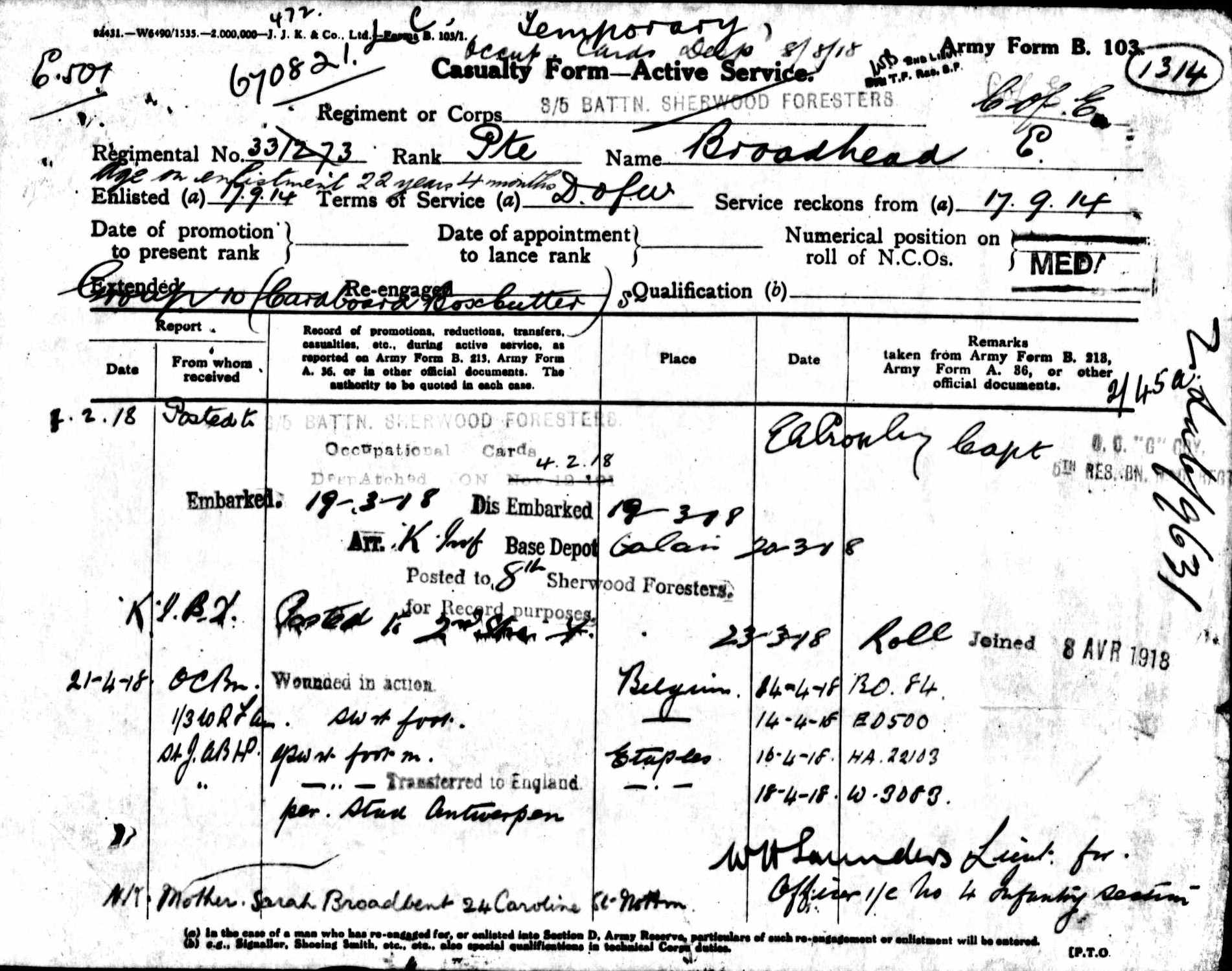
Casualty Form – Active service for 204038 Pte John Male
Casualty Form – Active Service for 103035 Pte John Male
Casualty Form – Active Service for 103065 Pte Horace Crowie

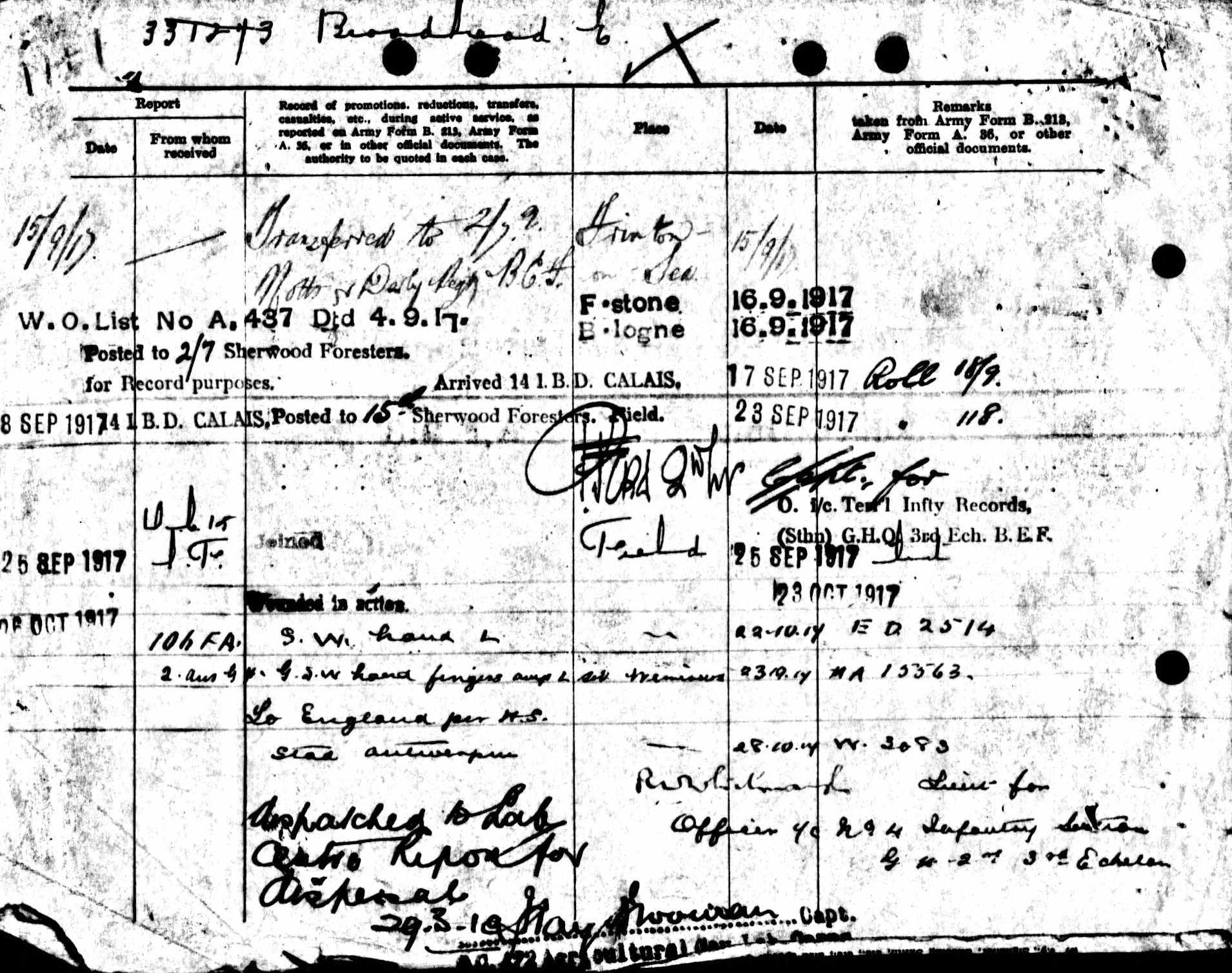
These documents confirm that Pte John Male and Pte Horace Crowle – and by inference Pte Frederick Blaydon – were posted to the 5th Reserve Battalion of the Bedfordshire Regiment, before proceeding to France from Folkestone on the 28th March 1918.

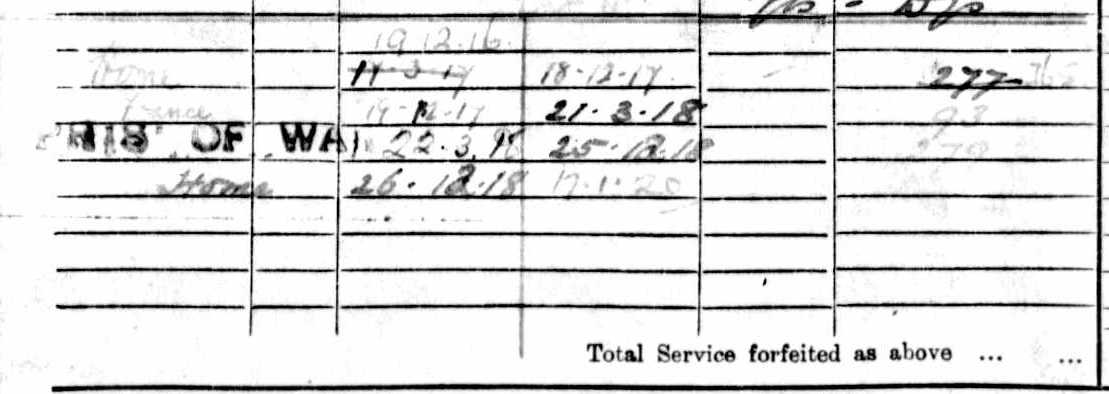
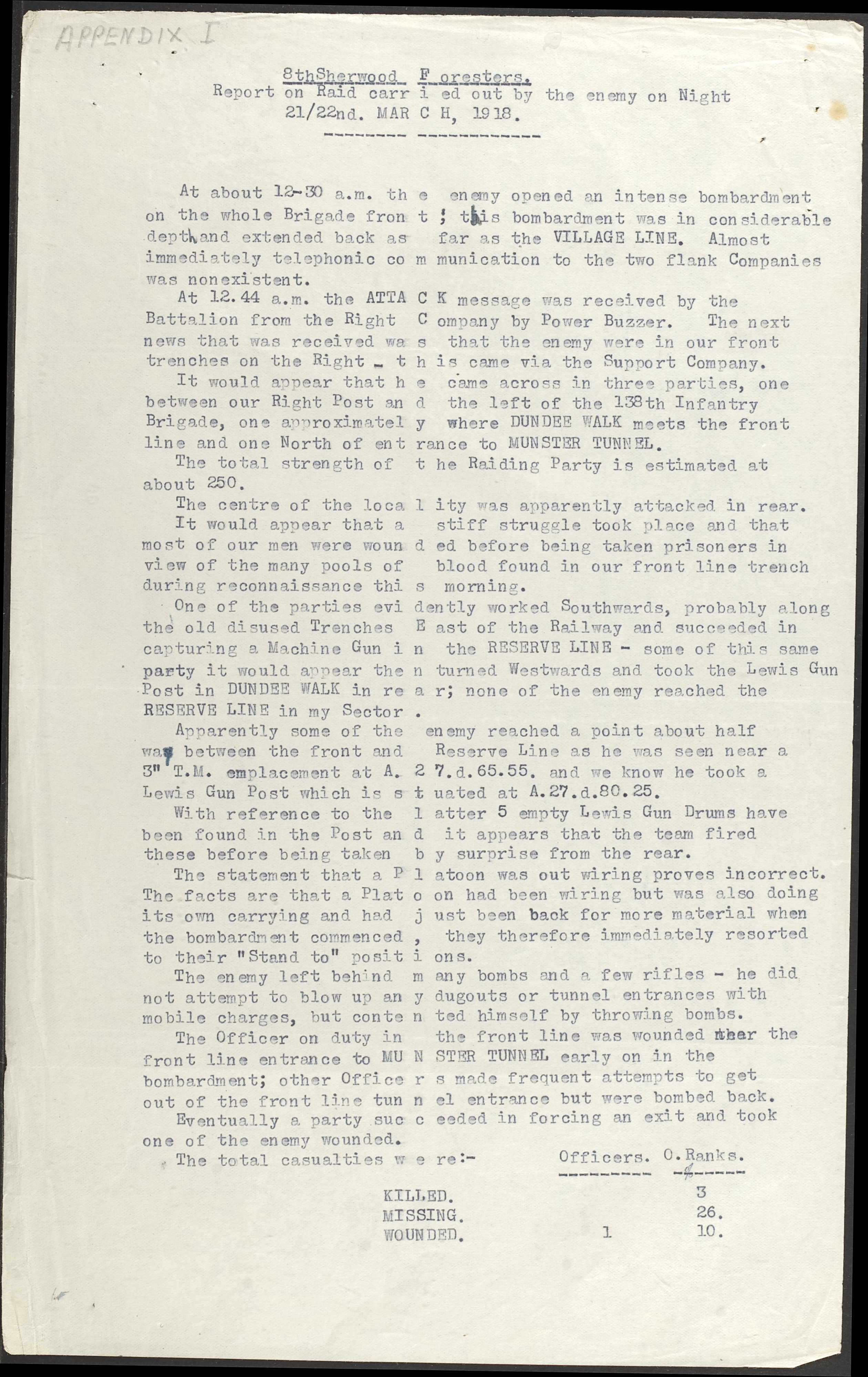
They arrived at “L” Infantry Base Depot and were transferred to the 2/6th Battalion Sherwood Foresters on the 31st March 1918. This transfer was due to the losses suffered by the 2/6th Battalion (178th Bde, 59th Division) on the 21st March 1918 during the German Spring Offensive.
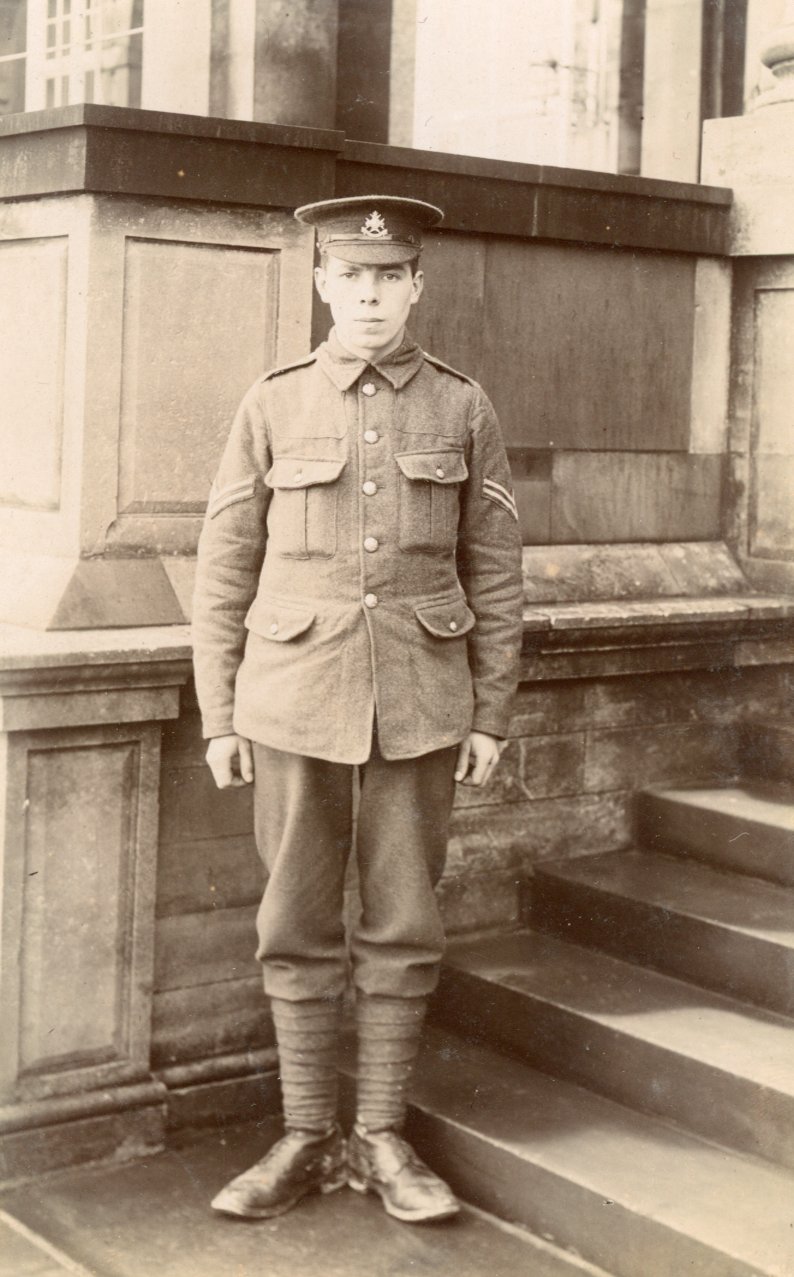

Neither John Male or Horace Cowle would survive the month

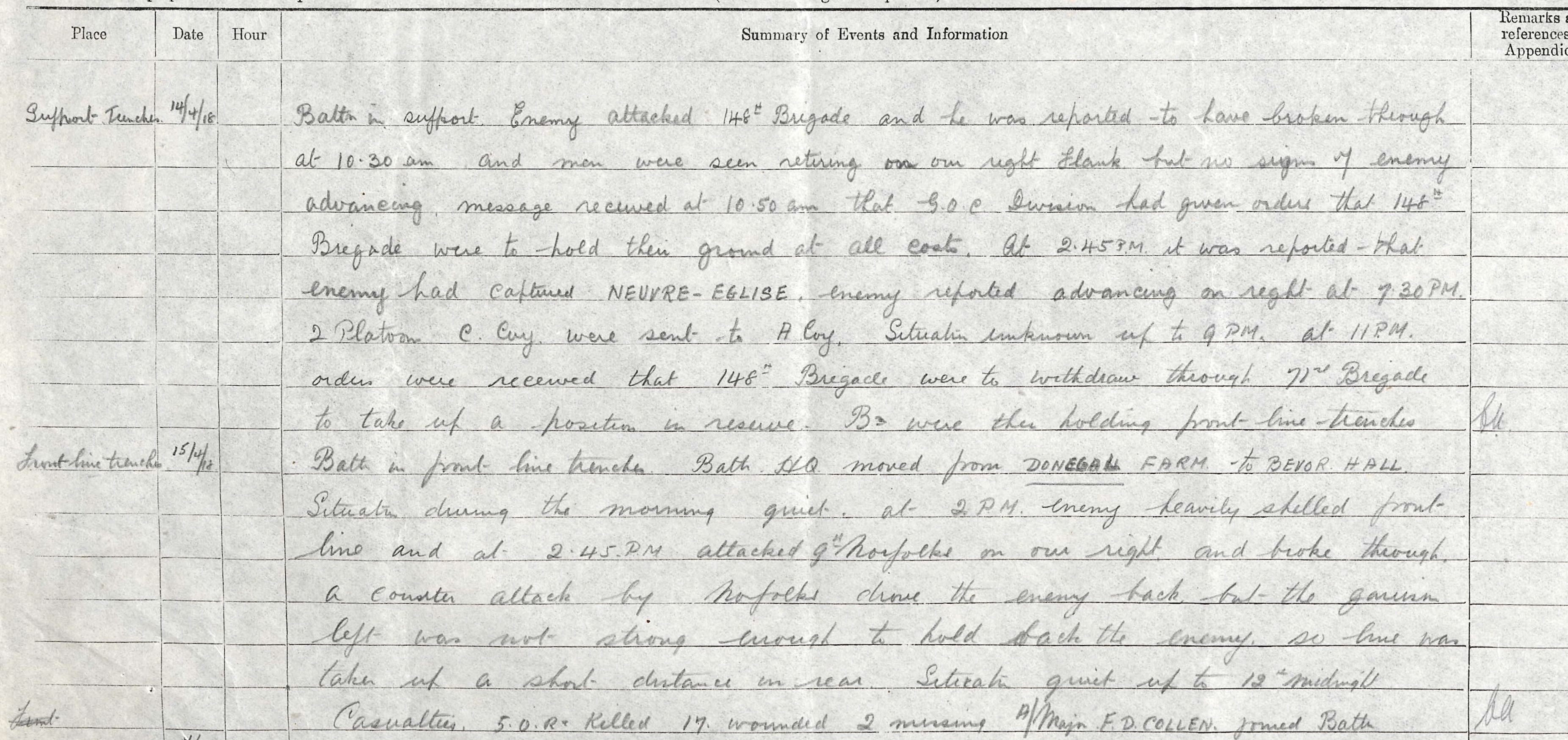
59th Division Casualties for April 1918

John Male was killed in action with B Company, 2/6th Battalion on the 16th April aged 48. He was the Son of Mr and Mrs Male of 13, Maytree Rd., Bitterne, Southampton. John’s body was exhumed near Kemmel Hall in July 1919 and he is now buried in La Clytte Military Cemetery.

Mount Kemmel – John’s body was found at 19 D, near to Kemmel Hall

Horace Cowle served with B Company and was listed as ‘missing in action’ during the defence of Kemmel on the 18th April 1918 aged 19. He was the son of Mr and Mrs Crowle of 1 Chapel Terrace, St. Blazey, Cornwall. Horace is commemorated on The Ploegsteert Memorial.

Horace had enlisted underage in November 1915. He arrived in France in December 1916 and was posted to the 1st Duke of Cornwall’s Light Infantry. However, in January 1917 he was returned to England.


Frederick Blaydon was later transferred to the 1/6th Battalion when the 2/6th was reduced to Cadre in May 1918 and survived the War.

Frances Hallowes Esq: 2nd Derby Militia (Chatsworth Rifles)

“CAVENDO TUTUS”: Safe through Caution

The 2nd Derby Militia were raised 12th January 1855 and designated the ‘Chatsworth Rifles’ on 22nd May 1855. They became the 3rd Battalion, the Derbyshire Regiment on 1st July 1881 finally amalgamating with 5th Battalion on 1st April 1891.

Writing slope box belonging to Francis Hallowes Esq
Francis Hallowes Esq: 2nd Derby Rifles

[The images of the writing slope box were kindly sent by Luke Kreciala]

Francis was born on the 28th April 1821 in Coed. He moved to Glapwell House near Chesterfield when his father inherited the estate. He was Commissioned into the 2nd Derby Militia as a Lieutenant on the 14th December 1863; promoted to Captain on the 14th December 1867 and retired in 1872. He died unmarried in December 1883 at the Hotel Valley in Anglesey.

Valley Hotel, Anglesey, North Wales. Date: circa 1910

Officers of the 1st and 2nd Debyshire Militia

Undated list of Officers of the 1st Derby and 2nd Derbyshire (Chatsworth Rifles). Note that Francis Hallowes is not listed, but his relative Thomas Richard Francis Brabazon Hallowes is (note misspelling of his surname). TRFBH Hallows was Commissioned into the 6th Dragoon Guards in 1873.

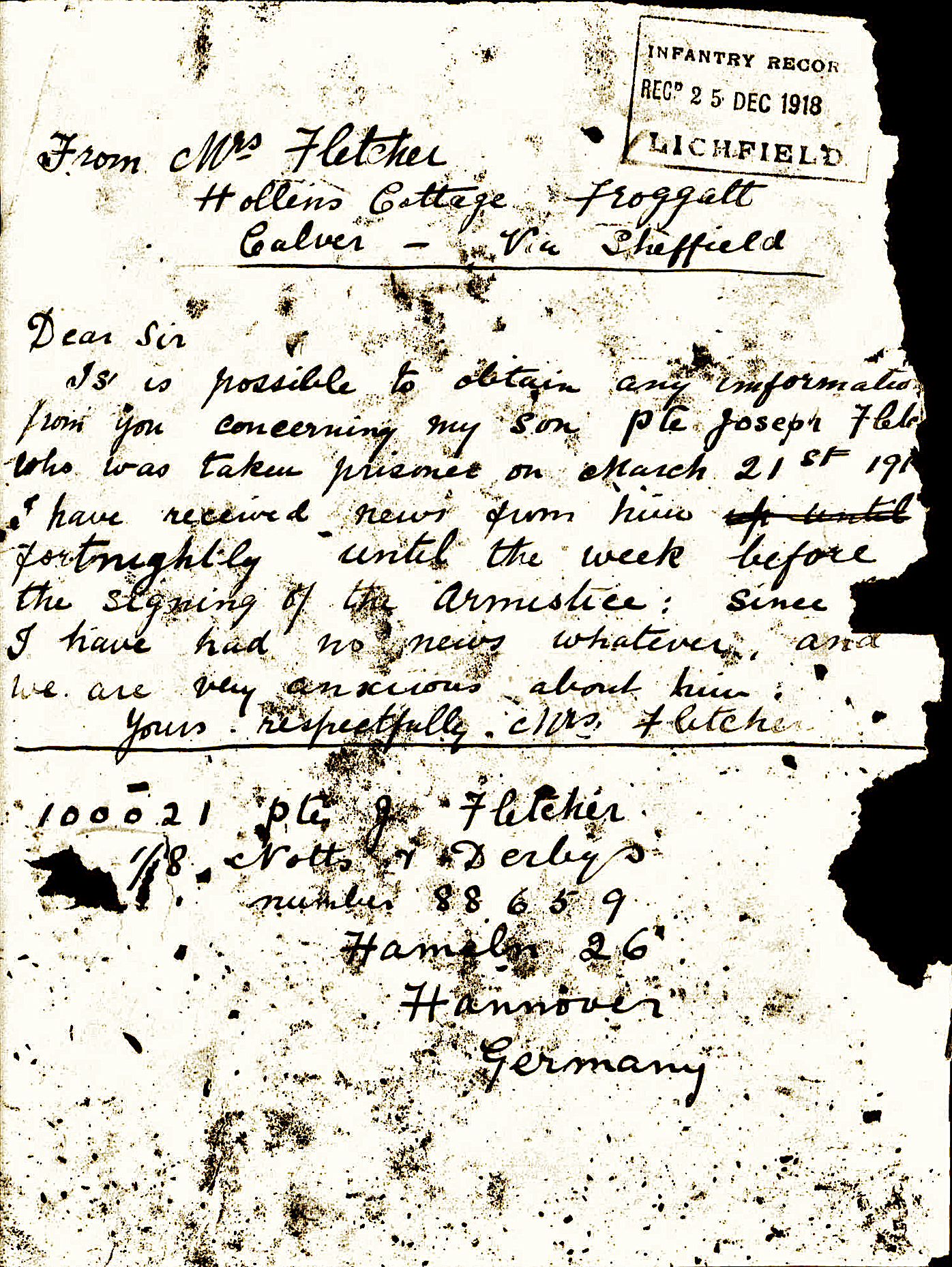
‘Kriegsgefangenen-Sendung’ from 70107 Pte George Wealthall of Nottingham

George was posted to the 16th Battalion, the Chatsworth Rifles with 125 other men in early Sept 1916. These men were issued with the Regimental numbers 70052 to 70177.

In 1916 this numbering system was used to transfer men from the Territorial Battalions of the Sherwood Foresters to the Regular and Service Battalions under Army Order 204/A.C.I. 1499.

George was captured at Thiepval on 9th October during the attack on the SCHWABEN REDOUBT.

War Diary of the Chatsworth Rifles
Trench Map showing Schwaben Redoubt
The Schwaben Redoubt (Art.IWM ART 3000) image: A view across to a redoubt, with shattered trees and wide craters pocking the chalky soil. Copyright: © IWM. Original Source: http://www.iwm.org.uk/collections/item/object/20829

George was interned in Giessen POW Camp when he sent this card.

118555 Pte Edmond Salmon

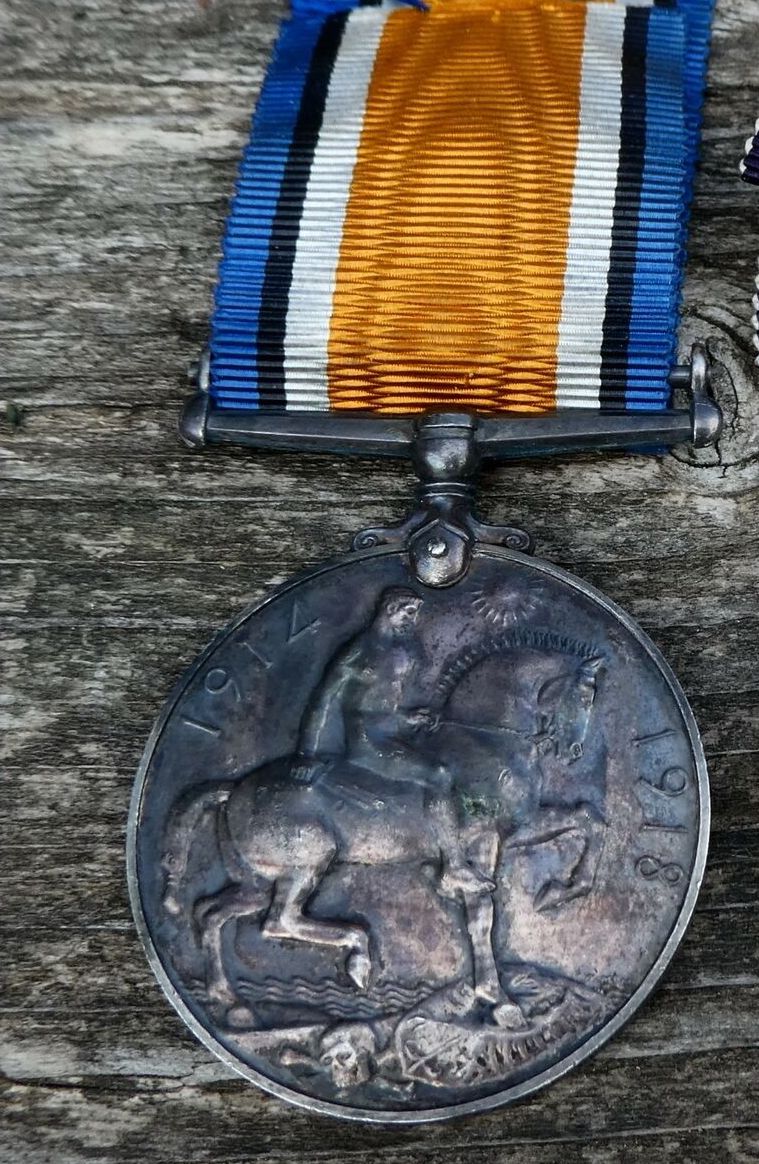
British War medal

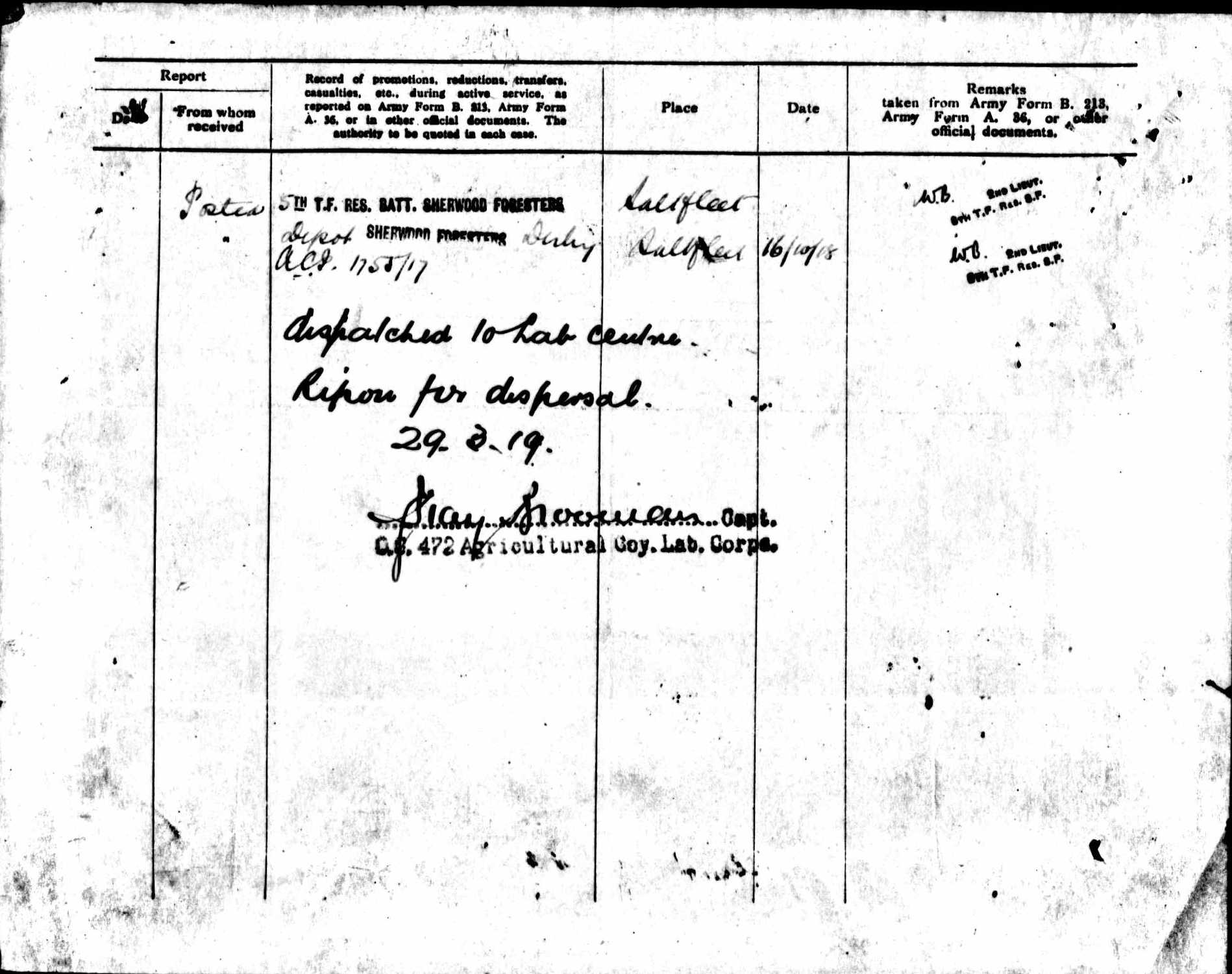
Edmond was part of a draft of at least 140 men that were mobilised and posted to the 3rd (Reserve) Battalion, the Sherwood Foresters between 12th-13th June 1918. The 3rd Battalion was was part of the Tyne Garrison based in Sunderland and was responsible for training new recruits, along with the 4th (Extra Reserve), 5th (Reserve) and 7th (Reserve) Battalions.

The men were issued regimental numbers between (at least) 118431 (Frank Hartwell from Hucknall) and 118571 (Walter Kirkham). The service records of at least six of these men still exist, and based on these records it is possible to piece together the movements of Edmond and his comrades.

Following training the men disembarked from Dover to the Base Depot in France on the 4th October 1918 and were initially posted to the 11th Battalion, Sherwood Foresters.

Army Service record for 118459 Pte Harry Hubbard, a boundary labourer from Sheepbridge in Chesterfield

However, before they could reach their unit they were transferred to the 1/6th (and 1/5th) Battalions, presumably to make up for losses during the storming of the Hindenburg Line between 29th September and 3rd October. This would be one of the last reinforcements that the 1/6th received – possible reinforcement number 57.

Over these next few days 105 years ago the 59th (2nd North Midland) Division start embark for France.

Invite to 178th Brigade Special Service held on 11th February 1917
The King inspects the 59th Division at Fovant on the 13th February 1917
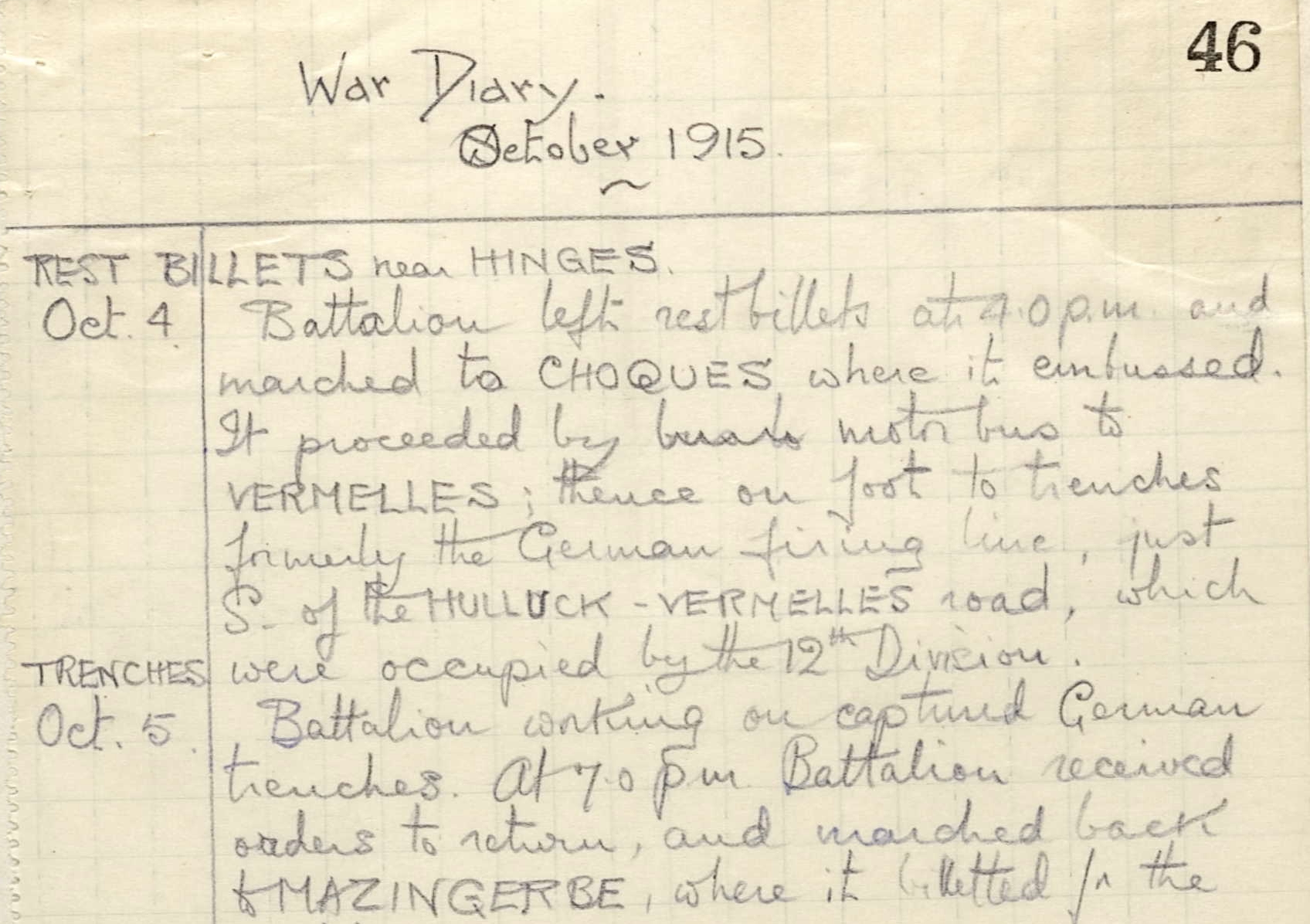
2/6th Battalion War Diary for February 1917

It took six days for the 59th Division to travel by train from their training areas in England to Southampton Docks. This mobilisation used 35 trains.

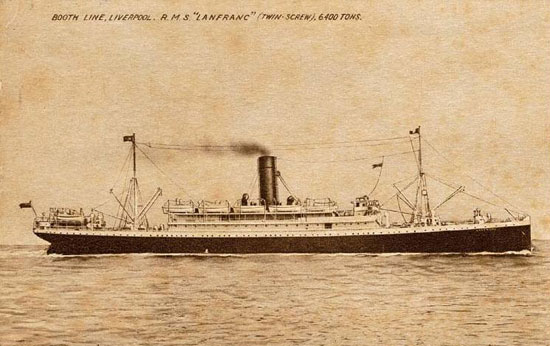
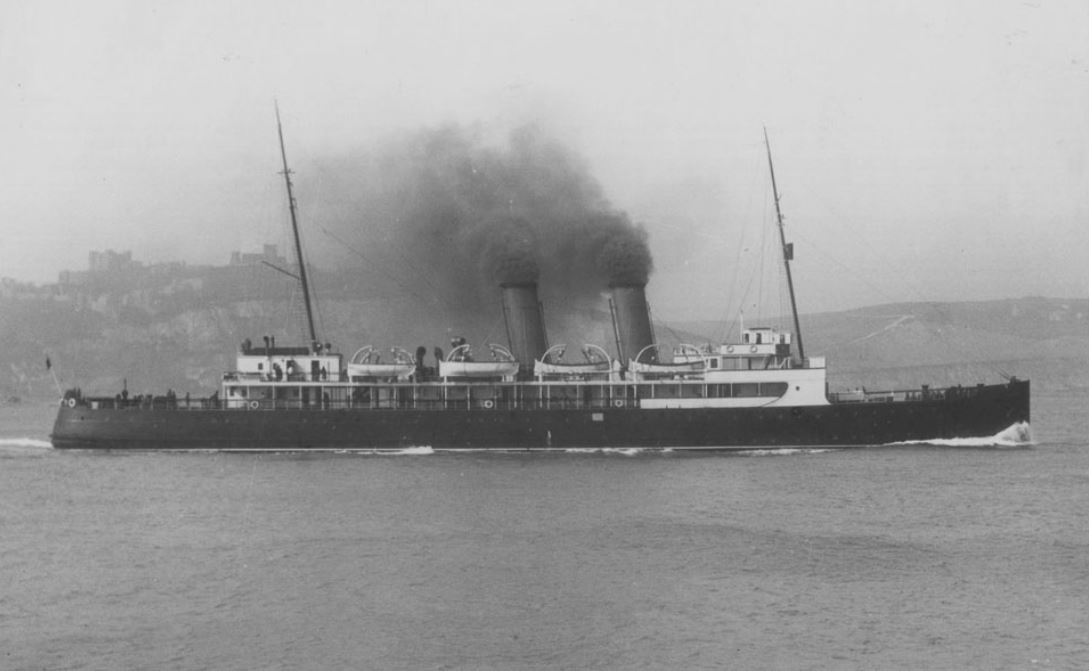
Ship timetable

It took over 6 days to move the Division from Southampton to Boulogne.