Category Archives: Trench Raid

On this day 19th May 1917

19.5.1917 TRENCHES: Battalion relieved by 1/5th North Staffordshire Regiment and moved back into Divisional Reserve billets at PETIT SAINS.

1/6th Battalion War Diary [WO/95/2694]


17/18 May: On the night of the 17/18th a raid was attempted by the 7th Sherwood Foresters.

19 May: This was repeated on the following night. For detailed report on both nights operations see App6. Pages from WO-95-2693-1

19 may raid

The 139 Bde was relieved in the line by the 137 Brigade.

139 Infantry Brigade: Headquarters War Diary [WO95/2692]

On these days 16th and 17th May 1917

No record in the 1/6th Battalion War Diary [WO/95/2694]


May 16: No change.

May 17: On the night of the 17th/18th a raid was attempted by the 7th Sherwood Foresters. Operational Order No 115.

139 Infantry Brigade: Headquarters War Diary [WO95/2692]

On this day 28th December 1916

28.12.1916 SOUASTRE: Capt CVHC BLACKWALL to 2nd in Command Divisional School. Lieut BE JOHNSON rejoined from leave.

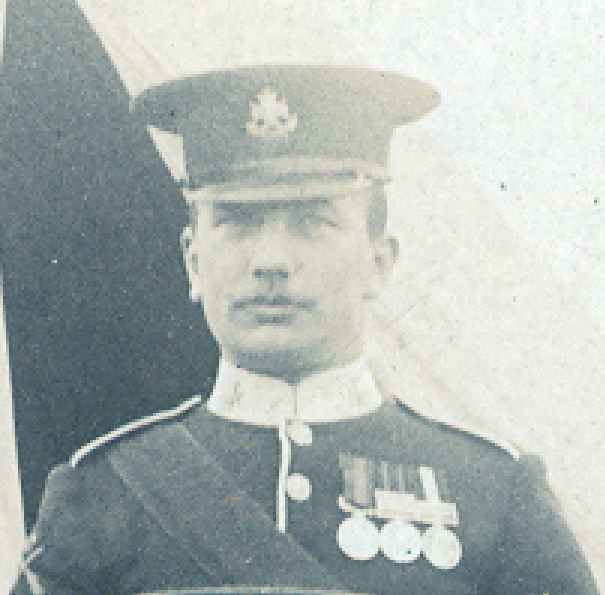
Blackwall CVHC

Charles Henry Cheetham Blackwall

War Diary [WO/95/2694]


German Raid

After an intense bombardment commencing 3 am the enemy attempted a raid in strength on our centre and left sectors. A few Germans entered our trenches in two places but were immediately ejected.

2/Lt J Barnes was seriously wounded by a bomb thrown by a German on our parapet whom he was firing at with his revolver, he died in the evening in the 1st North Midland Field Ambulance.

Our casualties were 2 killed, 4 wounded and 2 missing. Our trenches were badly damaged by the heavy bombardment.

1/7th Battalion War Diary [WO/95/2694]


28th 3am: Enemy artillery & trench mortars opened a very heavy bombardment of our line, particularly on the Communication Trenches & Support line on the left Sub-Sector. After about forty five minutes intense bombardment a party of the enemy estimated at 40 strong commenced to enter our trenches. between Leicester Lane & the Gommecourt Road.

Lincol LaneThey were apparently held of by the wire and retired on being fired on by Lewis Guns. One or more of the enemy entered entered our front line at the top of Lincoln Lane but were immediately driven out.

A patrol of 3 men also entered our left Companies trench but retired almost immediately.

The casualties were:-

  • 1 Officer & two other ranks killed (2/Lieutenant James Valetine Barnes, 5195 Pte Edward Leonard Ledger, 1549 Corporal Fred Smedley)
  • 4 other ranks wounded
  • 2 other ranks missing

139 Infantry Brigade: Headquarters War Diary [WO95/2692]

Christmas Eve Trench Raid by Sergeant Frank Longson’s Platoon

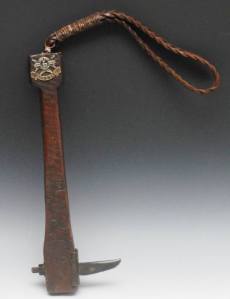
Although there is no ‘official’ record of this raid it is detailed in great detail in the Diary of 2305/240513 Sergeant Frank Longson entitled AS WE SAW IT 1914-1918: This is a true record of an ordinary civilian turned Infantry Soldier”.trench club


About 3p.m., Christmas Eve, the Commanding Officer sent for me and detailed me to take a patrol about 15 strong into No Man’s Land to patrol – to listen and traverse to examine our wire, and the German wire and to destroy any German patrol we might encounter who were doing the same from their front line.

Preparation for the raid

During the evening we prepared for the ordeal. Our pockets were emptied of pay-books, papers, letters and of everything that would give to the Germans (if we were captured) any information that would help them to ascertain the particulars of our regiment. We blackened our faces and the backs of our hands and armed to the teeth and fortified with corned-beef and hot cocoa and a rum ration we assembled in the front line ready to scramble over. We were a murderous looking crowd and as the troops occupying the front line wished us luck and the sentries warned which trench or post number we should be going out from and returning – this precaution was to safeguard our patrol from the fire of our own people and only in a very great emergency like an enemy attack was that arrangement to be broken.


Leaving the British trenches

One by one we scrambled over our parapet and through the pre-arranged gap in our wire, the going was unsteady and uneven and the noise, however careful, was terrific. There were scores of empty tins and derelict material lying about; scores of rats disturbed from this Christmas Eve feast in the empty wire.

We were through the wire and assembled on our side of No Man’s Land, this was a strange world. All seemed to be going well as we approached by a pre-arranged sunken road to the German wire, about half way across we adopted a crawling attitude, stopping at frequent intervals to listen.

On commencing to go forward again, after one of these halts, one of our members accidentally rolled over a tin. The noise under those circumstances sounded like the striking of a piece of corrugated iron, of course the German sentries heard something or thought they heard something. Up went the verey light and then another and then several. We pressed our black faces to the ground and remained rigid. Could they see us beneath the glare of the over head light? A few rifle shots passed over to our left, a burst of machine gun fire to our right which told us we had not been seen but they were suspicious. I instructed my little band to be extra careful from now on and proceeded to creep on.


Encountering the remains of the Staffordshire Lads from 1st JulyStaffords

Before we reached the German barbed wire we realised that there was a number of unnatural mounds on the ground. We by-passed them by crawling round them but soon there were so many that we could not avoid them. The first one I crawled over I felt metal buttons and equipment and by the feel they were British. All my patrol were crawling over the same sort of mounds. The sensation was uncomfortable to say the least, who were these comrades of the British army? What regiment did they belong to? What homes in Britain mourned relatives missing in action? We got the answer to the first of these questions very soon for the Germans always on the alert decided to send up verey lights and looking at these poor pathetic mounds with the aid of verey lights we noticed that the sand bag material with which the British army covered its steel helmets bore the Staffordshire Knot. This was it then, these Staffordshire lads had been part of our Division that had gone into the attack on July 1st and had been stopped in their tracks by the German defences that had not been destroyed. These pathetic bundles then had lain in or on their resting places since the July battle. During the many months we had spent in action we had experienced many gruesome and terrible happenings but this incident remained in our thoughts for many a long day.


Nearing the German Wire

I led my Patrol nearer the German wire and when we had reached it and according to the instructions crept and crawled over to our right. This was a tricky business because at intervals the Germans had a habit of hanging bells on the wire so that if in the darkness you caught the wire hidden in the grass the trip wire would set the bell ringing and so warn the sentries that someone would be trying to get through the wire. A few of these wires were encountered but with care we avoided starting off the dreaded alarm. After about half an hour my patrol reached a point where the wire seemed to be very near the German trenches because with the aid of the verey lights we could see quite easily the built up front of the German front line. At this point I decided to carry out the listening part of the operation therefore with my patrol strung out on either side of me we listened for any sound that would tell us what the Germans were doing. Firstly the sound of a dog barking (both sides had plenty of dogs with them in the line) then a German voice urging the dog to bark and play, then a mouth- organ playing. We listened to the end of the tune, then the sound of shovels at work and many voices as the party strengthened their defences, and than a voice singing “Silent Night”. What strange circumstances this Christmas Eve to listen to the rendering of this beautiful Christmas Carol. Several voices joined the singer and then a whistle blew and the concert was over.


The return the the British Lines

We moved on to complete the examination of the wire then I decided that it was time to begin our journey back to our trenches. Carefully we backed our way from the German wire and eventually reached our own wire. We were a little out of bearing in finding the gap in our wire but after a time located it and my patrol passed through one by one. I came last and closed the gap behind me. The wire belt here was very wide so that there were several criss cross gaps to negotiate and to close and make secure. We were through, there remained one rather tricky operation before we reached the safety of our trenches and that was making safe contact with the sentry who in a way had been fore-warned of our expected return. Nevertheless the sentries would be suspicious and trigger happy. The patrol was now strung out at about three feet intervals and I was preparing to creep forward myself to contact the sentries when up shot 3 or 4 German verey lights. The lights sailed over “No Man’s Land”. We remained glued to the ground. It would be just too bad if with night glasses they spotted our rigid humps. The lights sailed over and went out and after a minute or two I decided to proceed slowly. I crept forward towards our sandbagged parapet and was not startled when a voice gave the familiar “Halt who goes there?” I quickly gave the password decided upon “ROBIN” and from the sentry “Pass Robin, all’s well”. Quickly the patrol crept forward and we scrambled over our parapet and dropped down into the trench.


Christmas Morning 1916

Our successful patrol was phoned to Headquarters and I was instructed to report to the Commanding Officer my version of the nights events. Afterwards I returned to our little dug-out and before getting down on the wire bed decided to unwrap one of my Christmas parcels to partake of the contents as a sort of Christmas Day breakfast. I finished the repast then secured the unused remainder in a sandbag and hung the bag to the ceiling, snuffed the candle and prepared for a nap. The candle out was the signal for the marauding rats to start the rampage. I caught the sound of movement in and around my sandbag. I switched on my flashlight and with the bean saw three or four large rats swinging and clutching to the bag. I took down the bag to examine the security of the contents and put my hand on a very large rat inside the bag. I shook out the contents and the rat scampered away and with that incident ended Christmas Eve and Christmas Morning 1916.

On this day 19th December 1916

No record in the 1/6th Battalion War Diary [WO/95/2694]


In trenches – during enemy raid on trenches of our left Battalion (7th Sherwood Foresters) on 19th he heavily bombarded our Battalion front for about 2 hours commencing at 8.30 pm causing considerable damage to our trenches and inflicting 5 casualties

1/5th Battalion War Diary [WO/95/2694]

Amongst the casualties was 6018 Pte Harry Edge.6018 edge


No record

139 Infantry Brigade: Headquarters War Diary [WO95/2692]

On this day 9th October 1916

Oct 9th 2am: Artillery programme continued.

Oct 9th 4am: C Coy 7th Battalion under Captain WF PLAYER attempt a raid on the enemy front line near the BLAMONT-BLAIREVILLE Road.Player

William Frederick Player from Staunton Grange in Nottingham was Gazetted to the 7th (Robin Hood) Battalion in October 1914 and arrived in France in 1915. In 1946 he became the High Sheriff of Nottinghamshire. The Family are famous for the Player brand of cigarettes made in Nottingham since 1820.

139 Infantry Brigade: Headquarters War Diary [WO95/2692]


Raid by “C” Company, the 1/7th Battalion Sherwood Foresters

Raid R34C October 1916

I forward a report on the raid attempted by “C” Company, 7th Battalion Sherwood Foresters last night, against the German trenches across the SUNKEN ROAD in R.34.c.

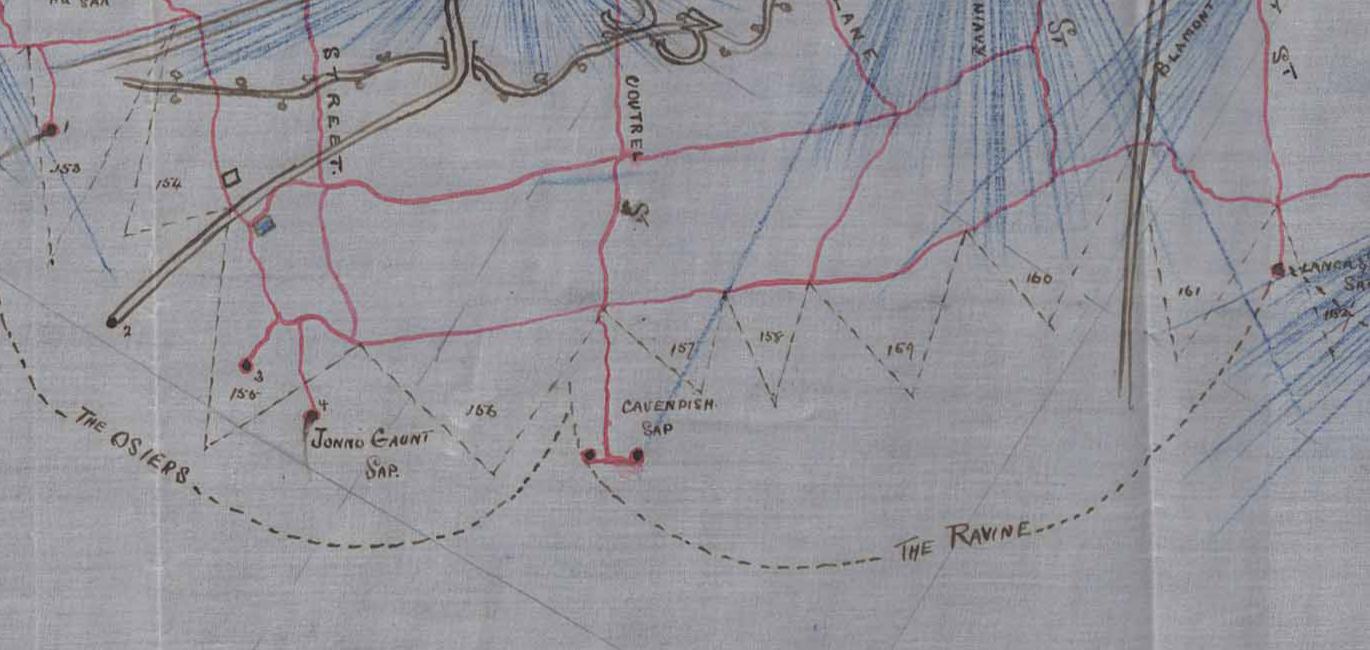
WIRE CUTTING. Four 2″ Trench Mortars had been allocated to the cutting of wire in R.34.c. Two to the feint attack in R.34.b., and one to the reopening of an old gap also as a feint in R.3.b. Firing was carried out from 12 noon to 5pm on the 7th, but owing to the collapse of 4 positions only one gasp was cut – at Sap head North of the road.

Firing was continued with 5 Mortars on the 8th for a further period of 2 hours – at the end of which the gap at the sap head had been enlarged – the wire in front of the main objective was very badly knocked about, a gap of about 20 yards was cut in R.34.b, and a good gap was cut near ITALY SAP in X.3.b. 620 rounds had been used.

On the night 8th/9th – the party detailed to enlarge a gap in our wire near BLAMONT-BLAIREVILLE ROAD at 7.15 pm found 3 German grenades and 2 caps – belonging to an enemy patrol probably detailed to look out for our raiding party.

At 8pm our 18 pounders opened a short burst of fire on the gaps in the German wire and one minute later shouts were heard in the German trenches – red lights in pairs were sent up from X.3.b. and red and green lights from both sides of the SUNKEN Road.

At 8.10 pm their artillery opened a heavy fire from a battery of 4.2 and two batteries of 77mm, and from one or more heavy trench mortars on our front and support trenches from CAVENDISH SAP R.33.d. to our left. The 41st Infantry Brigade trenches were also heavily shelled – the enemy lifting from the front to the support and reserve lines. Heavy machine gun and rifle fire had also been opened particularly from trenches north of the road.

At 2.15 pm our wire patrol got within 40 yards of the Sap head north of the road and within 30 yards of the trenches south of the road and reported that they could see no gap at the latter point.

At 3.10 pm the same patrol endeavoured to take our 1 ammonal tube but owing to the rifle fire opened by the enemy and to a hostile patrol close to the objective the attempt was given up.

At 3.20 pm the raiding party left our trenches and had advanced beyond our wire twenty minutes later. (It was found that more time ought to have been allowed for passing through our wire).

At 3.58 when a single round was fired from our artillery the party were 60 yards from their objective.

At 4 am the covering fire commenced and by 4.2 the parties had practically reached the wire before the artillery lifted. They report that very few splinters from our shells were noticed.

At 4.1 pairs of red lights were sent up from several points in the enemy’s lines (these lights and green flares being sent up constantly for some 10 or 15 minutes), particularly from X.3.b. where an attack was evidently expected). The German batteries and medium trench mortars opened an erratic fire on our front and support trenches in R.33.b. and R.34.a. while they also commenced to shell their own front line South of the SUNKEN ROAD with 77mm and light trench mortars.

At 4.2 the party North of the Road entered the Sap Head without ugh difficulty but found the Sap half filled with wire and knife rests and were unable to proceed down it. South of the Road the party were unable to find a gap or to surmount the German wire. A the pound tube of ammonal exploded in the wire proved ineffective and the knife rests were found to be too firm to be removed by hand.

During this time the party was under constant rifle and machine gun fire from a gun in an emplacement probably near R.34.c.38.29 and from another on their right flank which was engaged by our Lewis Gun.

The enemy commenced to throw grenades from his Support line and from the flanks of the objective, and after bombing their front line our party was brought back at 4.14 am, via the OSIER BED to our front line.

The casualties consisted of one man killed (brought in), 3 wounded and 2 wounded at duty.

The artillery support proved to be extremely effective. The enemy’s trenches in X.3.b. and R.34.b. have been badly damaged and the gaps in the wire at these points drew a good deal of artillery and rifle fire away from the main objective.

53 rounds were fired during the night bombardment by the Medium Trench Mortars and 700 rounds by the 139th Stokes Battery, 25,500 rounds were fired by the 139th Machine Gun Company during the operation.139 Brigade major

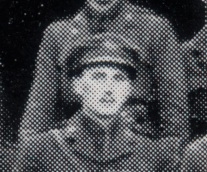
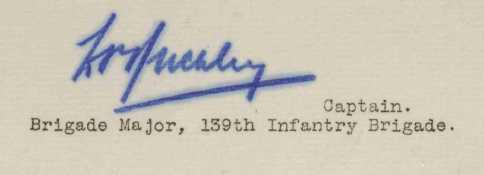
Captain William Percy Buckley, DSO, 1st Battalion, Duke of Cornwall’s Light Infantry


3394 Corporal Claude Wolley3394 Claude Wolley

London Gazette 9.12.1916: At Derby Sap on the morning of 9th October 1916, he was in charge of a Stokes Mortar and took part in a bombardment of the enemy’s lines during a raid. He kept his gun in action for half an hour whilst his position was subjected to a heavy bombardment by the enemy. During this time he showed exceptional coolness and courage and kept his team together by his excellent example. On 30th September 1916, at 10.30pm he also showed great coolness and devotion to duty when he took a Stokes Mortar into No Mans Land and bombarded the Blockhouse, though fired at continuously by an enemy machine gun.


1466 Corporal Arthur Ford1466 Ford

On this day 21st September 1916

No record in the War Diary [WO/95/2694]


21st: Operation carried out against the enemy trenches in X.3.b. by 8th Battalion
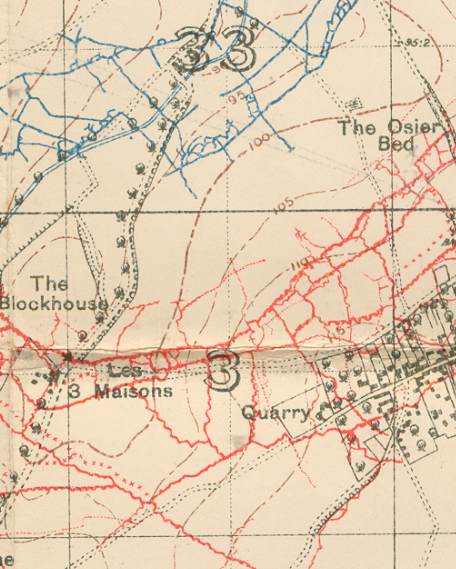
X3b 1916139 Infantry Brigade: Headquarters War Diary [WO95/2692]


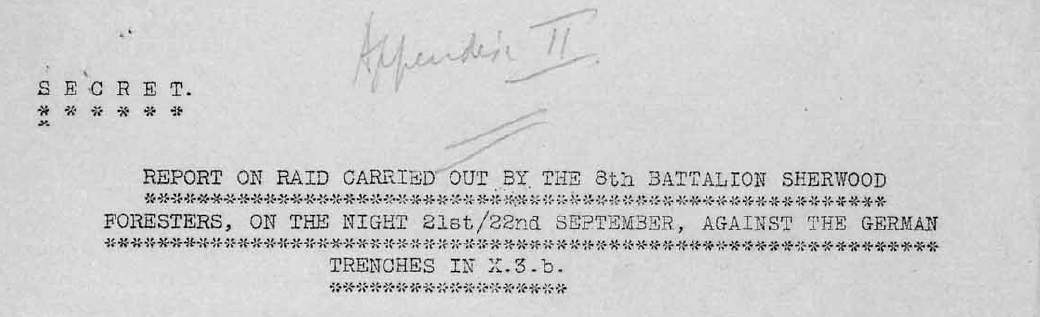
Raid carried out by the 1/8th BattalionRaid 21 September 1916
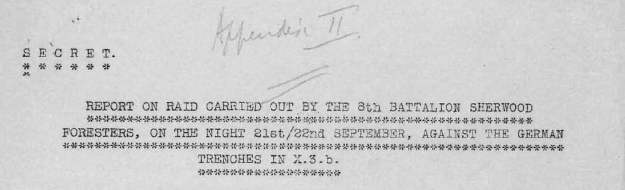
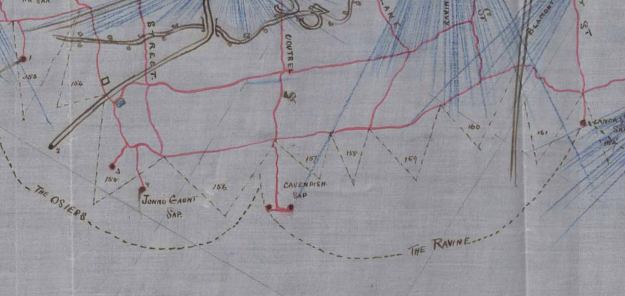
Cavendish sapWire cutting was done by 2″ trench mortars from 2pm to 6.30 pm. It could be seen that a gap had been made at the Sap head and considerable damage had been done to wire at junction of Sap and front line.

At 8pm the wire patrol went out from CAVENDISH SAP to investigate gaps in enemy’s wire and at 10 pm reported that gaps were good and that ammonal tubes were not required. Machine gun fire was turned on to gaps.

At 11.15pm the wire patrol laid tapes from gaps back to CAVENDISH SAP.

At 11.20 pm the parties began to move forward through CAVENDISH SAP and by 12 midnight were in position in groups at distances varying from 70 to 125 yards from CAVENDISH SAP, on the tapes leading to their entrances. with two machine guns and their covering parties on the flanks

By 12.15 pm parties were up to the enemy’s wire and when bombardment started it was found that parties were too near and they withdrew about twenty yards. One dud trench mortar came within ten yards of “A” Party. We had one casualty – shell splinter in right arm, probably from our own shells.

At 12.25 am warning to get ready was passed down.

At 12.27 am orders were passed down to move forward. The last shells &c fell into trench and at 12.28 am the whole raiding party went through gaps and were in the enemy’s trench almost immediately. Sap Party were held up for about two minutes by iron knife rests having been blown back into their gap.
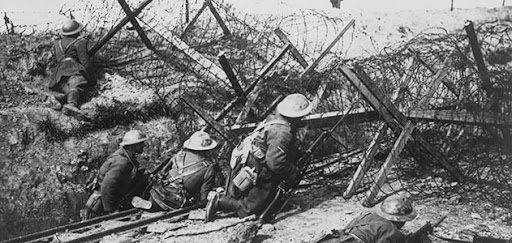
short barbed wire knife rests

A German who was in the trench was at once bayoneted. “B” Party went to the left and “C” Party to the right. “A” and “C” parties met in the Sap and it was found that “B” and “C” instead of entering front line had entered the Sap nears its junction with the front line.

"A" Party comprised 2/Lieut H De C Martell and 21 other ranks to deal with ITALY SAP.
"B" Party comprised 2/Lieut WP Duff and 20 other ranks to work left along front line, block CTs, bomb dugouts and obtain identification.
"C" Party comprised CSM G POWELL and 23 other ranks to work to right along front line with same object as "B" Party.

“A” Party investigated a dead end on the southern side of the Sap and found nothing. Then went right up to the top of the Sap nearest to our lines and the trench very much damaged. Portions of a man were also discovered. There was only one dug-out which was bombed and entered. Nothing was found and it was left in flames.

“B” Party soon came to the front line and a blocking post was established on the right of the junctions and bombers and bayonet men pushed along the front line bombing doug-out entrances.

By this time “C” Party went to front line and bombed dugouts. One was set on fire by a “P” grenade and even the woodwork in the trench began to burn, but was extinguished.
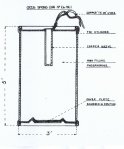
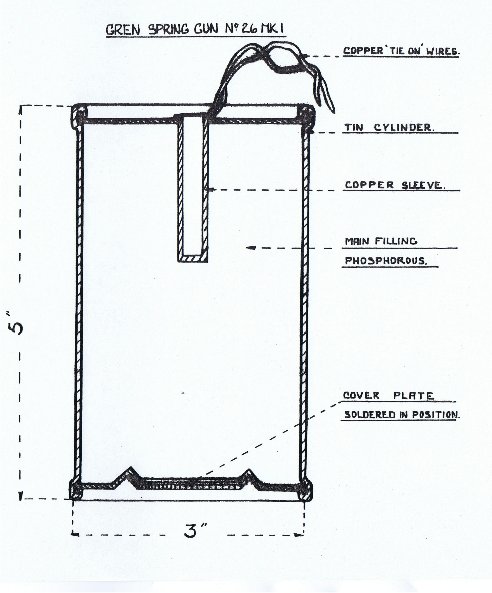
P Grenade"P" Grenade was also known as Cylindrical Type 'C' or Grenade, Spring Gun, No.26. A tinplate cylinder painted black with a red diamond on the lid. It had a copper cylinder soldered into the centre of the top plate which accepted a lighter set consisting of a a Brocks igniter, a 9 second fuze and a No 8 detonator. The filling was 1.046 lb, of red phosphorus. Courtesy of the GWF.

One dugout near near junction was blown up by the REs with an ammonal tube.

2 REs accompanied "C" Party with two short ammonal tubes fro blowing up dug-outs. 1 NCO and 4 men were held in readiness with two 24' ammonal tubes for completing gaps in wire if wire was not well out.

An enemy machine gun opened fire on us from Sap to right, but was at once engaged by the Lewis Gun on parapet and by the right flanking Brigade Machine Gun and silenced at once. It did not fire again.

I [Captain Bernard William Vann, MC] went along parapet with my runner and two buglers to help “B’ Party along their trench and a German bomb burst quite near, wounding my runner and a bugler. This appeared to come from CT about X.3.b.84.85 but the thrower was soon silenced. Bombing along parapet & trench we found another dug-out entrance and someone at once went down and called to the huns to come out. Two who came up with bayonets fixed were shot, one through the head and another through the thigh. This man was pulled out and four others, including a stretcher bearer came out with hands up. shouting ‘KAMERAD’, ‘KAMRAD’ and crying for mercy. They were very frightened. They were sent over the parapet under escort. Some showed fight in their own wire, but were speedily suppressed and brought across to our lines.

During the last ten minutes the Huns had surrounded the occupied portion of trench with red lights and their artillery had begun to shell both the front line and ITALY SAP, making it necessary to take all but 5 men out of ITALY SAP. One shell landed in their front line, beyond where we were. Two hit their parados, and two fell in the southern derelict arm of ITALY SAP.

At 12.49 am I ordered my bugler to sound recall. At this moment the rocket signals went up from Battalion Headquarters, and a bugle sounded the “Cook House Door” in our own trenches. The enemy had been firing from his support line and from the two saps near the BLAMONT-RANSART ROAD. Bullets also passed over very high from the N. side of the SUNKEN ROAD.

There was fairly strong rifle fire as we withdrew, and plenty of Very Lights. No one was hit. Tpaes were cut just outside enemy wire and were brought in. All men reported by 12.55 am. The enemy was shelling our front line, CTs and Supports fairly heavy, which gradually died down and ceased about 2.45 am.

Five Germans were killed by the raiding party apart from those in dug-outs which were bombed, and five prisoners taken (one wounded).

Our Casualties were very slight – eight men being wounded (only one seriously).


3513 Pte Arthur Stocks was killed later that morning. He was the son of james and Agnes Stocks, of Cinder Hill, Shireoaks, Worksop is buried in Bellacourt Military Cemetery.
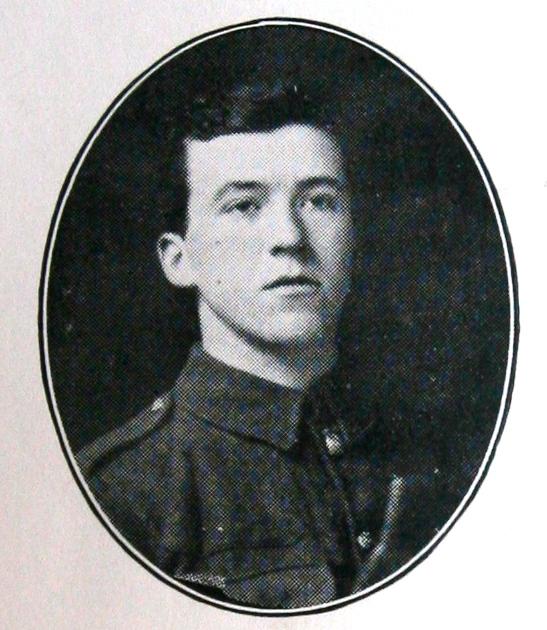
Stocks Arthur

“Dear Mr. and Mrs Stocks,-I very much regret having to write and give you bad news, but I feel sure you will be glad to have particulars from me. I am sorry to tell you that your son was killed by a machine gun bullet whilst “Standing to” this morning. He had just come off a patrol, and as it was just beginning to get light he had to “stand to” with the others of his team as usual. A machine gun, somewhere in the German lines, suddenly opened out, and a bullet hit your son in the forehead, killing him instantly. Your son was one of the best men on his team. I always found him a keen and reliable soldier. I just sent him on a Lewis Gun course, so that would be an additional help to me in the training of reserves, and he had already started this, with the results which were very pleasing to me. He will be very greatly missed by the others of his team, as he was always cheery and helped to tide them all over bad times. I went to his funeral this afternoon, and I understand the Wesleyan Chaplain who officiated is writing to you, giving all the particulars of where he is buried. Please accept my heart felt sorrow in your loss, and I shall miss him also, but I trust the blow will be softened by the knowledge that he did his duty,-Yours faithfully, C.G. Tomlinson, Sec.-Lieut”


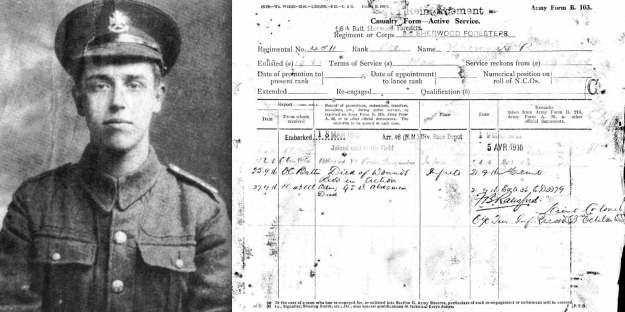
4511 Pte Robert Spencer4511 Spencer
On this day 19th September 1916

No record in the War Diary [WO/95/2694]


Septr 19: Lecture on moral by Major Fuller

[Lieutenant Josiah Taylor]


large minenwerfer19th: A dozen rounds fired by a heavy Minenwerfer into the right sector. Operation carried out by 5th & 7th Battalions. Both parties of the 5th Battalion cut the enemies wire successfully but were unable to get through the remaining strands. The 7th Battalion patrols bombed their objective – two men being wounded.

The 139 Trench Mortar Battery carried out their programme well.

139 Infantry Brigade: Headquarters War Diary [WO95/2692]


1/5th Battalion Raid

19 September 1916 raidParties under Lieut W DOUGLASS and 2/Lieut JC HUTCHINSON attempted to blow gaps in enemy’s wire at X.1.d.50.50. and X.2.c.15.60. with tubes of ammonal 24′ long and afterwards raid enemy saps at points X.1.d.54.52. and X.2.c.20.70.

Lieut W DOUGLAS’s party were unable to get through the wire after successfully exploding the tube.

2/Lieut JC HUTCHINSON’s party successfully exploded the tube but were unable to enter the enemy sap.

1/5th Battalion War Diary [WO/95/2695]


The 1/7th Battalion Raid

Three bombing parties (patrols) in charge of 2/Lts METCALFE, BARNES and WIGHTMAN went out with the object of bombing enemy saps to distract attention of the enemy from operations of the 5th Sherwood Foresters and 137th Brigade on our right. They successfully bombed the enemy saps & returned safely. Two of our men were slightly wounded.

1/7th Battalion War Diary [WO/95/2694] 

32nd Trench Duty 9th – 15th September 1916

9.9.1916 TRENCHES: Battalion relieved 5th Battalion in RIGHT SECTOR. Capt EB JOHNSON rejoined from Hospital.

War Diary [WO/95/2694]


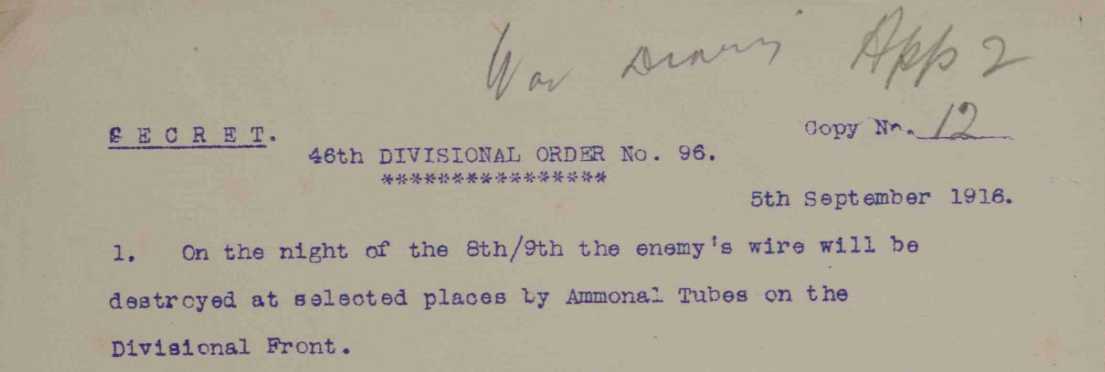
9th 2am: Patrols from 5th & 7th Battalions succeeded in damaging short lengths of the German wire by means of ammonal tubes. A further attempt was prevented by an enemy working party. In each case our parties returned without casualties & the enemy failed to retaliate.

11pm: The 6th Battalion relieved the 5th and the 8th relieved the 7th in the front line.

139 Infantry Brigade: Headquarters War Diary [WO95/2692]


The first use of ‘Ammonal Tubes’ by the 46th Division?

Ammonal tubes

The 1/5th (Derby) Battalion

Parties under Lieut SMALLEY and LIeut CLAYE attempted to cut gaps in Enemy wire at X.1.d.55.50. and X.2.b.61.51. with tubes of Ammonal each 24′ long and afterwards raid the enemy sap. Lieut SMALLEY’s party successfully exploded the tube but when attempting to get through the wire found that about 12 yards deep had not been cut and consequently no raid resulted. Lieut CLAYE’s party came up against a strong enemy working and covering party on front of the BLOCKHOUSE and could not approach their objective.

ClayeCharles Geoffrey Claye (1895-1918)

Smalley

Edward Arthur Victor Smalley (1885-)

1/5th Battalion War Diary WO/95/2695


The 1/7th (Nottingham) Battalion

Three enemy working parties were seen opposite left “C” Company Sector. Our heavy artillery [shelled] a strong post in a gabbled house just E of the east of the enemy’s 3rd line at the N end of BLAIRVILLE X.4.a.75.75. Two rifle grenades were fired by enemy on to the left Coy’s sector during the morning.

10.30pm: Eight spiral rockets were sent up from the enemy’s lines opposite right “A” Company sector. Each burst into 2 red stars. This was followed immediately by 6 heavy shells which burst on left “C” Company sector.

1am: 2/Lt NE WEBSTER MC with 2 sappers of the 2/1st RE Company 10 other ranks and 1 Lewis Gun left our own trenches from top of LA MOTTE 1 (R.33.d.51.81.). They took a tube containing ammonal & placed it under the enemy’s wire at (R.34.c.3.4.) just S of the SUNKEN ROAD [near the Ossier Bed]. This tube was fired by a fuse at 1.59am. It made a clean gap about 4 yards wide thro’ the wire.

2/Lt J KENT carried out a similar operation at R.34.b.42.50. opposite left “C” Company Sector. No action was taken by the enemy.

Both patrols returned safely to our trenches.

1/7th Battalion War Diary WO/95/2694


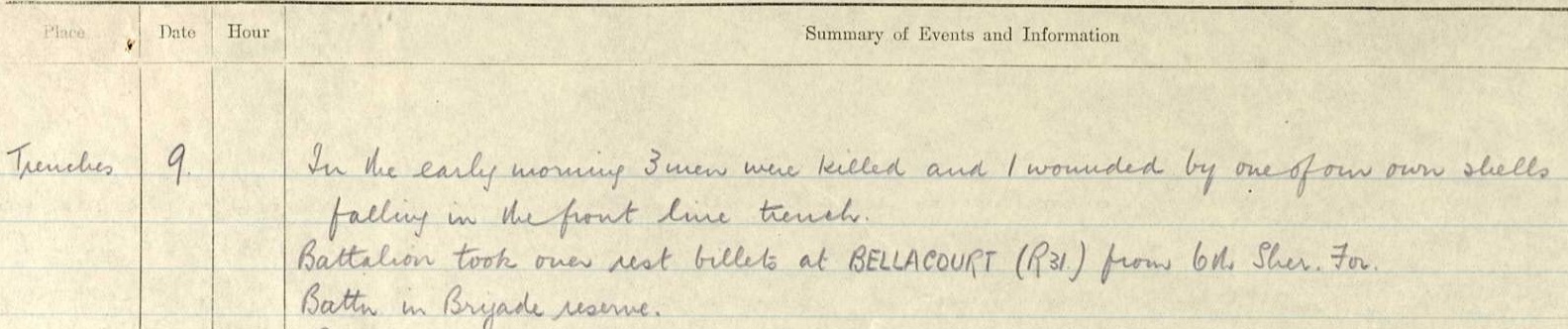
‘Friendly fire’ casualties in the Robin HoodsSept friendly fire

Three men of the Robin Hoods were killed by a British shell that fell short. They are buried next to each other in BELLACOURT MILITARY CEMETERY (Row G, graves 2-3).

  • 5309 Pte George Asher
  • 5910 Pte Robert Gray
  • 20538 Pte William White

Note:

20538 WHite5062/20538 Pte William White was a forestry worker from Baslow who was posted to the 3/6th Battalion in March 1916. He was transferred to the 1/6th Battalion on the 5th July and arrived in France (14 IBD at Calais)  with the 14th Reinforcement. He was posted to the 1/7th Sherwood Foresters on the 22nd July 1917 and renumbered using the 1916 5-digit numbering series – see here for more details.

On this day 31st August 1916

4440 Seaton31.8.1916 BELLACOURT: Capt W Seaton rejoined from 7th Battalion.

War Diary [WO/95/2694]


Talus Kershaw31st: Slightly more hostile sniping noticed. At midnight a party of 20 NCOs and men under 2/Lt EVANS of the 6th Battalion guided by the Battalion Scouts under 2/Lt Kershaw (above) attempted to raid the enemies listening post at the TALUS. After passing the first row of wire successfully the party were stopped by some new wire which was found to be too thick to cut by hand. The party was brought back without loss.

Official Report Talus 30 August 1916 from WO-95-2694-1_1_1-6th

139 Infantry Brigade: Headquarters War Diary [WO95/2692]