Category Archives: Soldiers

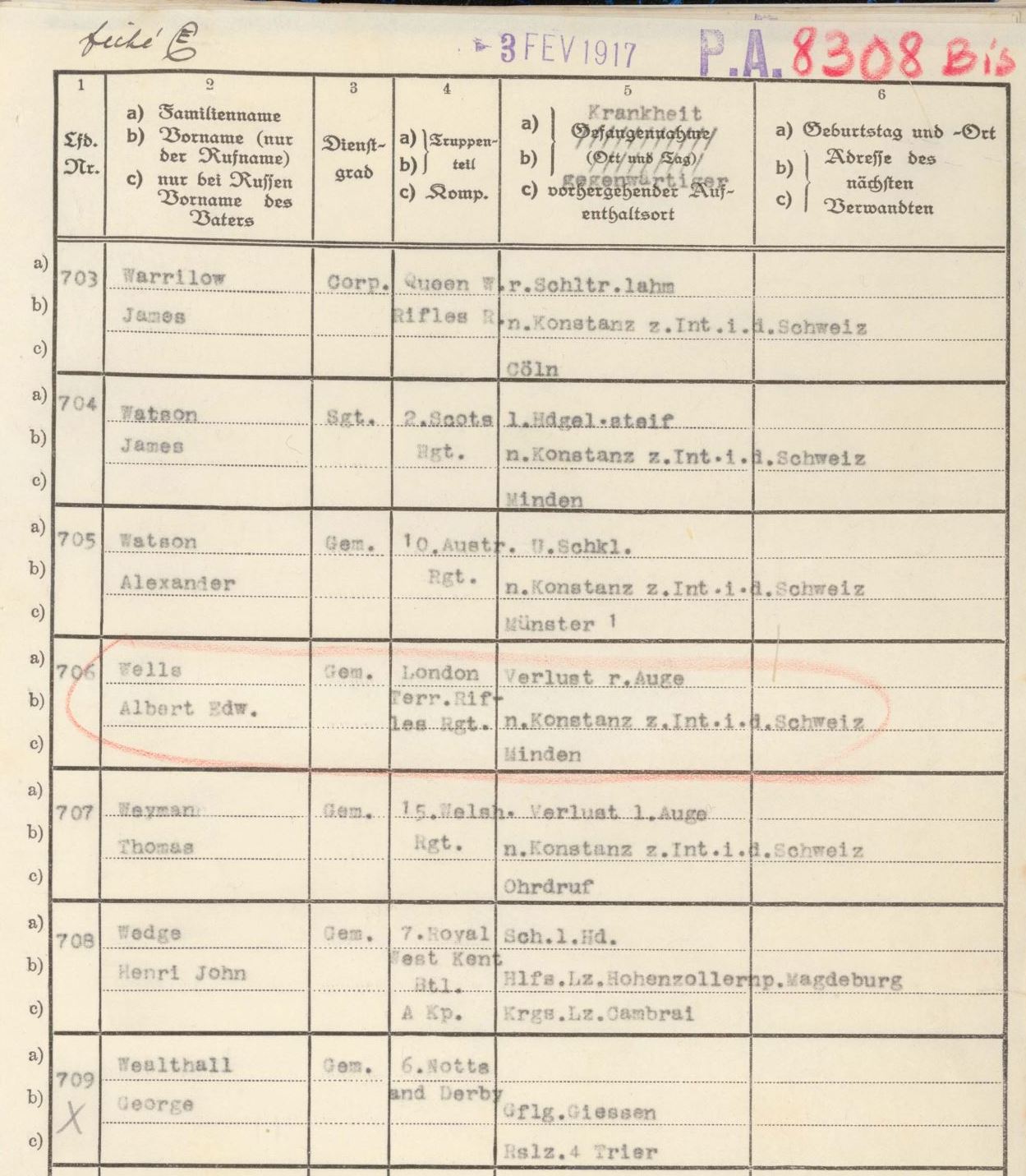
Undated sick and wounded list with two original* members of the 6th Battalion……

*By ‘original’ I mean before Conscription started and they were issued with Territorial Force Regimental numbers

Undated sick and wounded list

240627 Sergeant Joseph Hughes

Joseph Hughes was a print works labourer from Birch Vale, near New Mills in Derbyshire. Joseph married Sarah and they had three girls; Dorothy (b 1907), Annie (b 1908) and Gertrude (b 1910). He enlisted in October 1914 and most likely arrived in France with the 2/6th Battalion in February 1917. He only served overseas with the 2/6th Battalion. According to the sick list (above) he suffered from slight myalgia (muscle aches and pains).

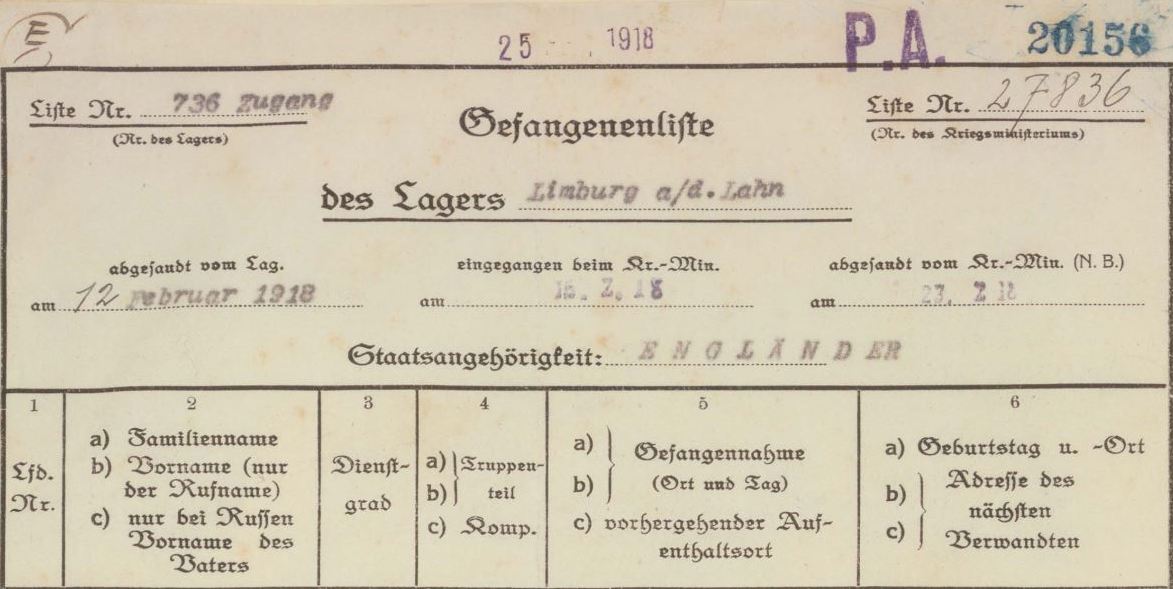
Limburg Camp Record
Joseph’s record recording his wounding

Joseph was later captured on the 4th December 1917 during the Battle of Cambrai and interned in Limburg POW Camp.

Silver War Badge Roll

Joseph was discharged in May 1915 aged 32 and received a pension.

2/6th Battalion Reunion held at Bakewell in 1935

It is possible that Joseph attended the reunions of the 2/6th Battalion held in Bakewell during the 1930s. Joseph died in July 1963.


241979 Sergeant Percy Walker

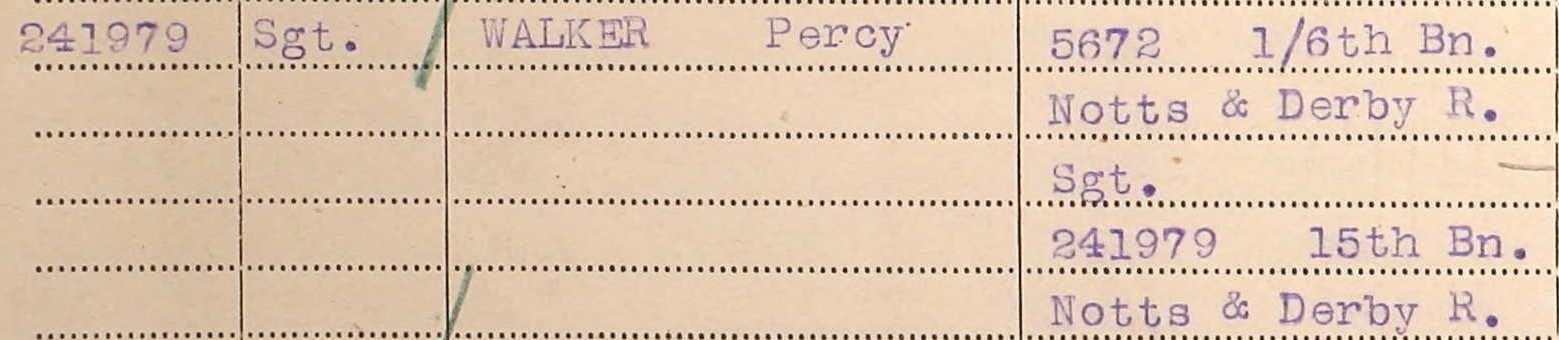
Medal Index Card
Medal Role

Percy Walker enlisted in July 1916 and was posted to the 1/6th Battalion in France in August 1916 according to his Medal Index Card. He would later serve with the 15th Battalion and was wounded (GW) with VI(I) [gunshot wound of back and spine (simple flesh contusions and wounds)] and IX(I) [gunshot wounds of lower extremities (simple flesh contusions and wounds)] – see ‘wounded and sick’ list above.

Record of the 31 Ambulance Train for May 1917

The undated ‘sick and wounded list’ ties in with the 7th-12th May 1917 record of the 31 Ambulance Train (above), which conveyed Percy Walker from Nesle to Rouen on the 12th-13th May 1917. Note: from April to June 1917 Nesle was the site of No. 21 Casualty Clearing Station.

15th Battalion War Diary – May 1917

At the time of his wounding the 15th Battalion were holding the front line and support trenches.

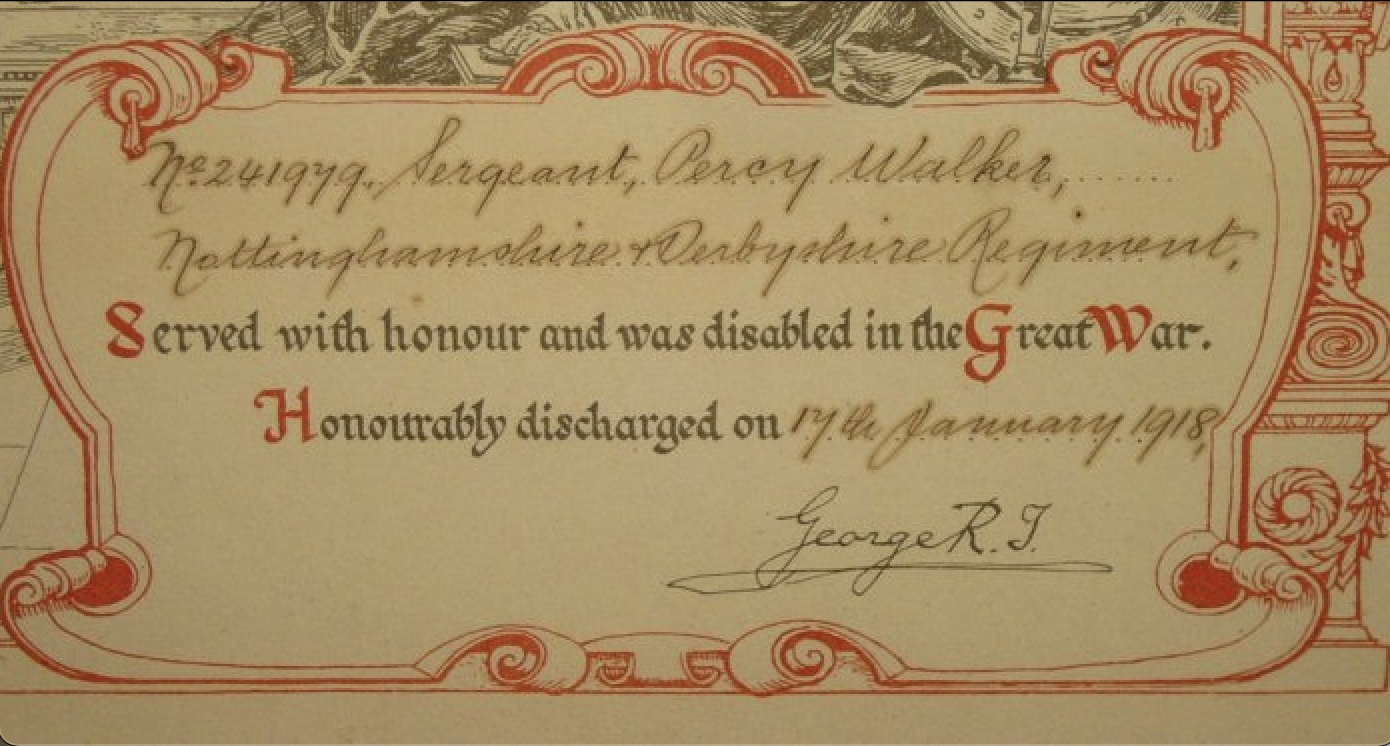
King’s Certificate of Discharge for Percy Walker (authors collection)

Percy was discharged in January 1918 aged 35 years and was awarded a Silver War Badge and a King’s Certificate of Discharge. He also received a pension.

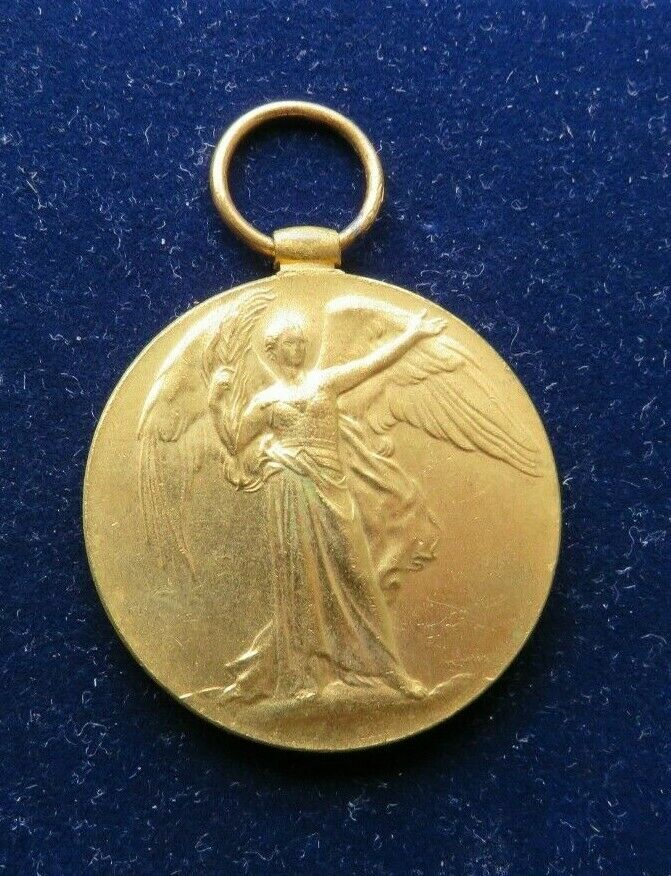
100055 Pte Samuel Atkinson

100055 Pte Samuel Atkinson

Samuel was born in Essex in 1899 to Samuel Arthur and Annie Louisa in 1899 and was one of four siblings. In 1911 the family was living at 7 Nettleham Road in Lincoln.

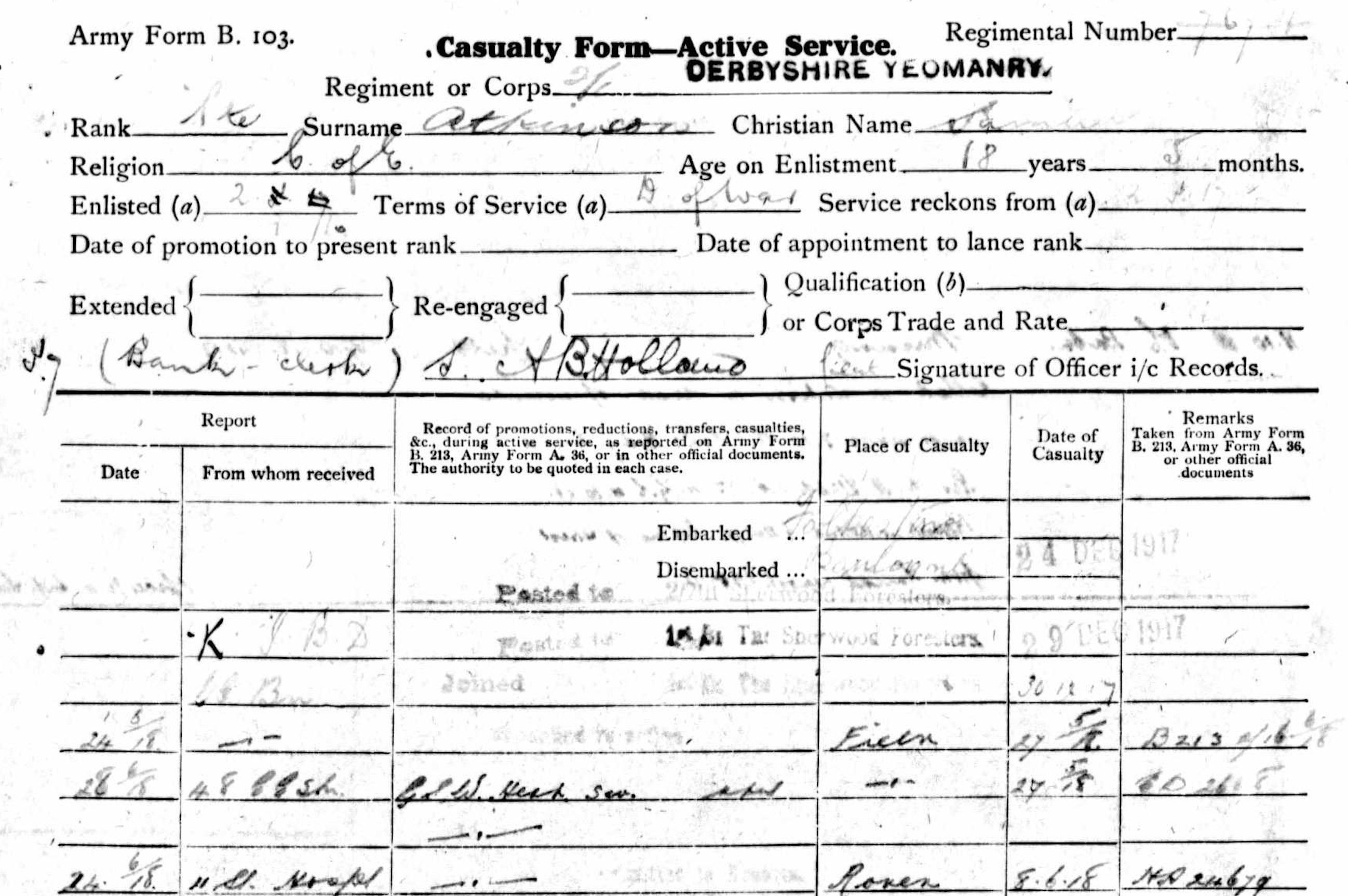
Samuel enlisted into the 2/1 Derbyshire Yeomanry in September 1916 aged 18 at which time he was a Bank Clerk. He was examined by the medical board on 15th February 1917 when he was passed fit for military service.

1st Battalion Sherwood Foresters

Service Record for 100055 Pte Samuel Atkinson

Following basic training Samuel embarked from Folkestone on Christmas Eve 1917 and going ‘K’ Infantry Base Depot, where he was transferred to the 2/7th Battalion Sherwood Foresters (for record purposes). Samuel was amongst a number of soldiers who at that time were transferred to the Sherwood Foresters from the Derbyshire Yeomanry and Nottinghamshire Yeomanry (Sherwood Rangers).

Samuel served was transferred the 1st Battalion on the 29th December and served with them until his wounding in May 1918.

On 27th May 1918 the 1st Battalion were engaged in the front line trenches:-

“1 a.m. Enemy barrage opened. VENTELAY neighbourhood + transport lines gassed. About 4.30 a.m. Battalion ordered forward to AISNE LINE……casualties heavy”

Samuel suffered a severe gun shot wound to the head and was admitted to the 11th Stationary Hospital in Rouen.

Service Record for 100055 Pte Samuel Atkinson

1/5th Battalion Sherwood Foresters

Following his recovery Samuel was sent to ‘D’ Infantry Base Depot and then posted to the 1/5th Battalion Sherwood Foresters on July 14th 1918.

1/5th Reinforcements – July 1918

Samuel was one of 130 men that were posted to the 1/5th Battalion in July 1915.

Service Record for 100055 Pte Samuel Atkinson

Samuel was wounded a second time on the 22nd July 1918 whilst the Battalion was holding front line trenches in the ESSARS Sector and were raided by the Germans.

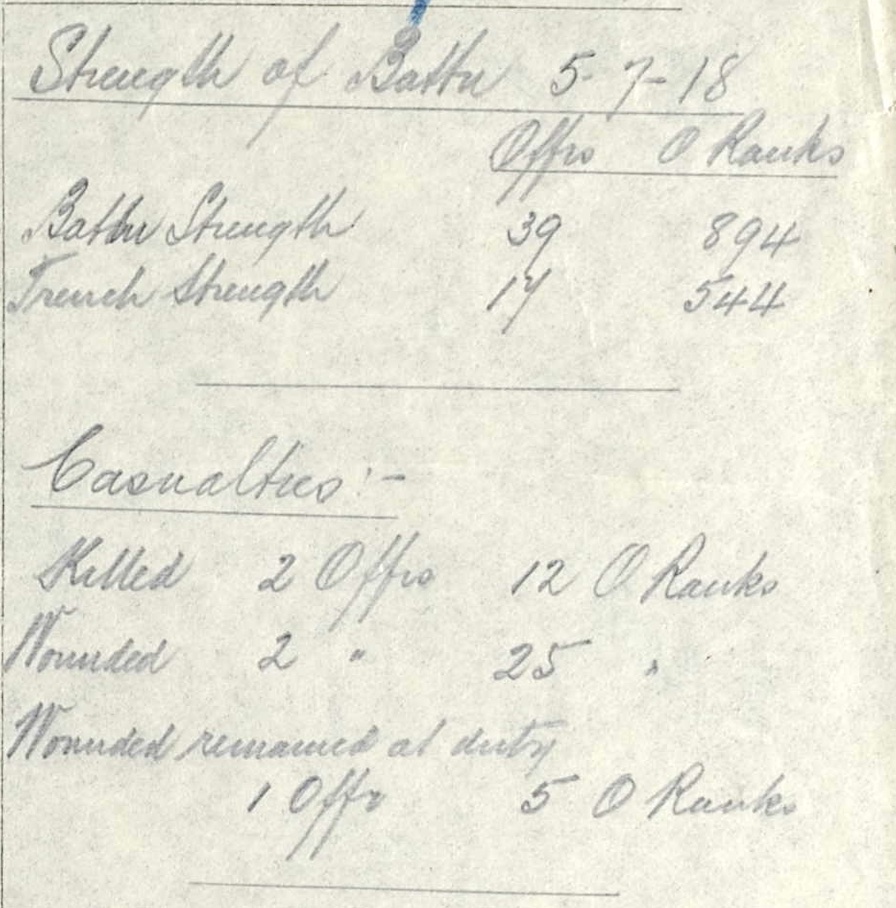
1/5th Battalion casualties – July 1918

Samuel was on of 30 men of the 1/5th Battalion who were wounded in July 1918, he appears to have remained ‘at duty’.

Storming the Hindenburg Line

1/5th Battalion War Diary October 1915.

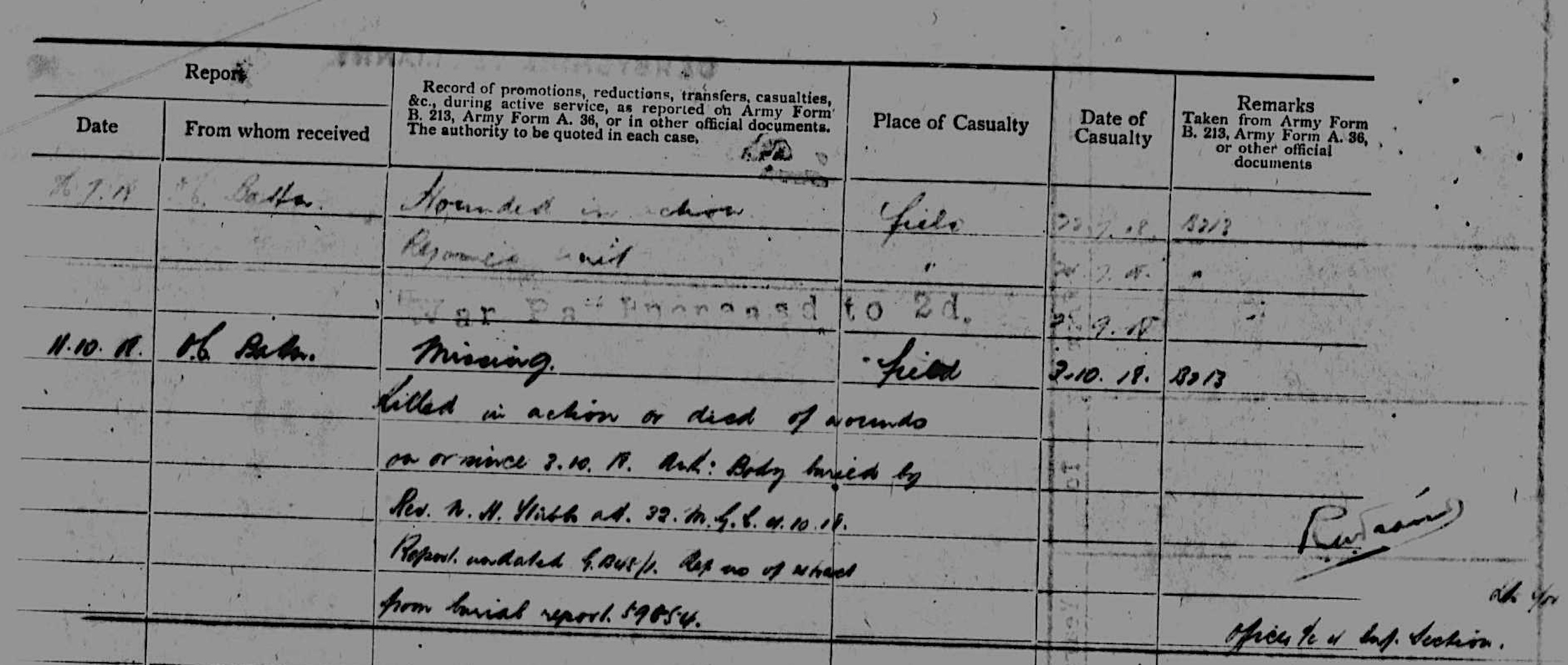
Samuel died of his wounds on the 3rd October 1918 as the 1/5th Battalion were attacking the villages of Ramicourt and Montbrehain.

“Killed in action or died of wounds on or since 3.10.18. Body buried by Rev M H ?? and 32 MGC 11.10.18”

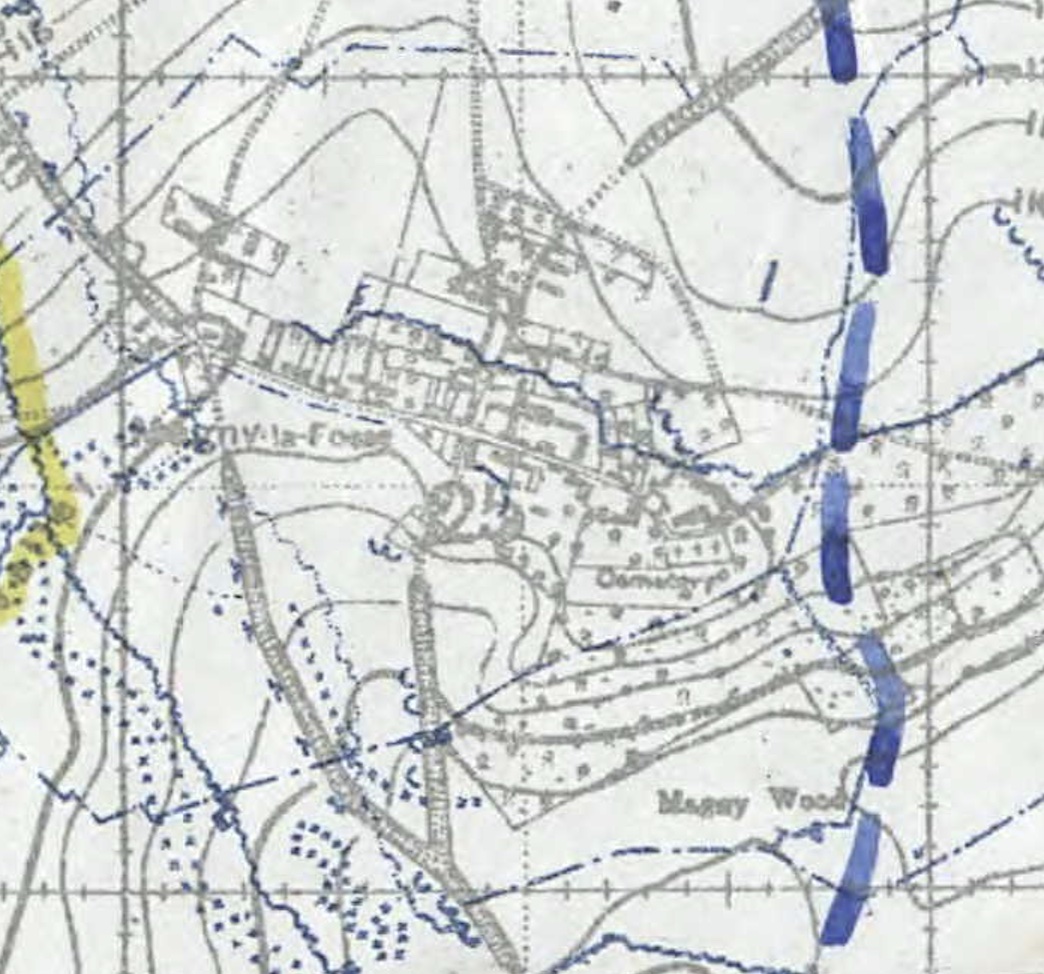
Magny La Fosse Map
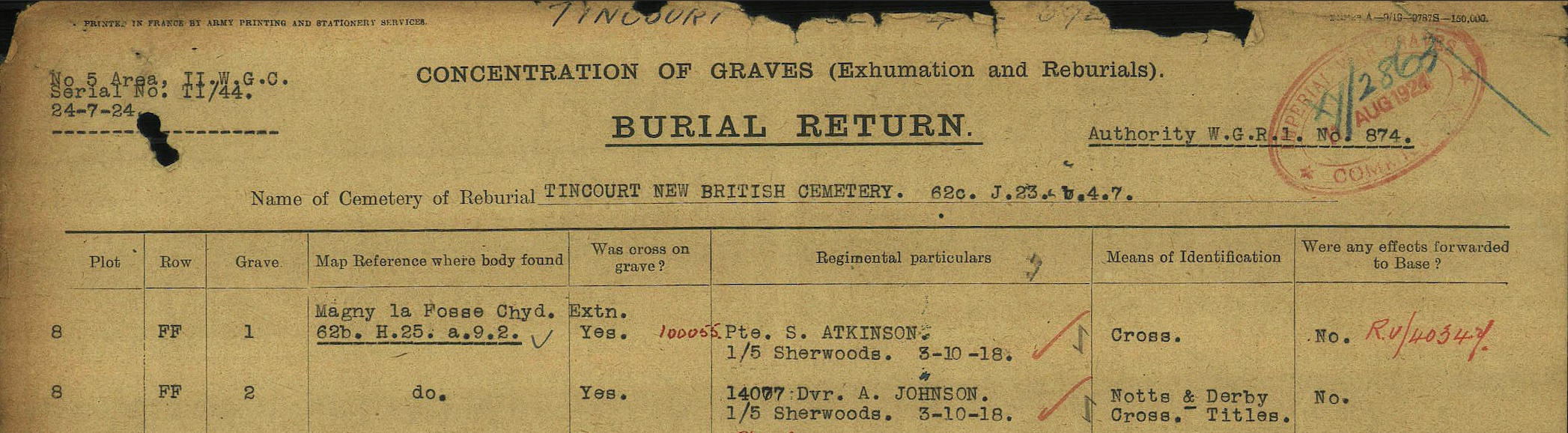
Magny La Fosse burial record

Samual was originally buried in Magny La Fosse Churchyard Extension [62b. H.25. a.9.2.] alongside 14077 Driver Arthur Johnson from Kiverton Park near Sheffield.

MAGNY-LA-FOSSE CHURCHYARD EXTENSION was made by an Advanced Dressing Station in October 1918, and contained the graves of seven soldiers from the United Kingdom and one from Australia and three men of the Chinese Labour Corps.

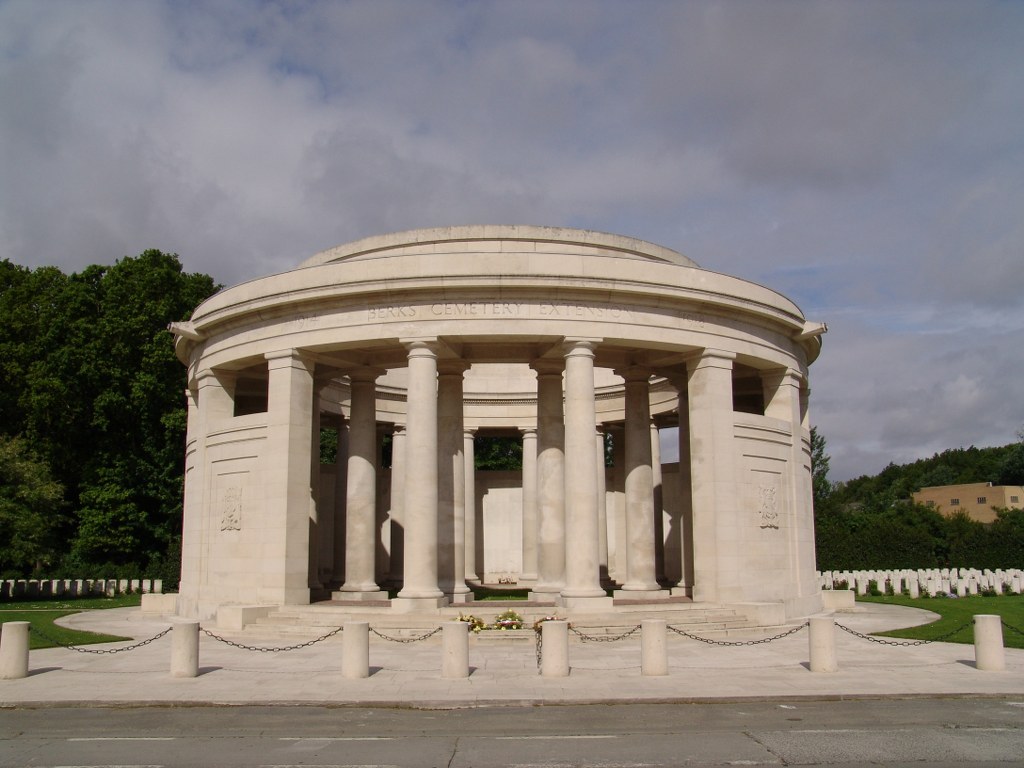
In 1924 Samual and Arthur’s bodies were exhumed and they were reburied in Tincourt Cemetery.

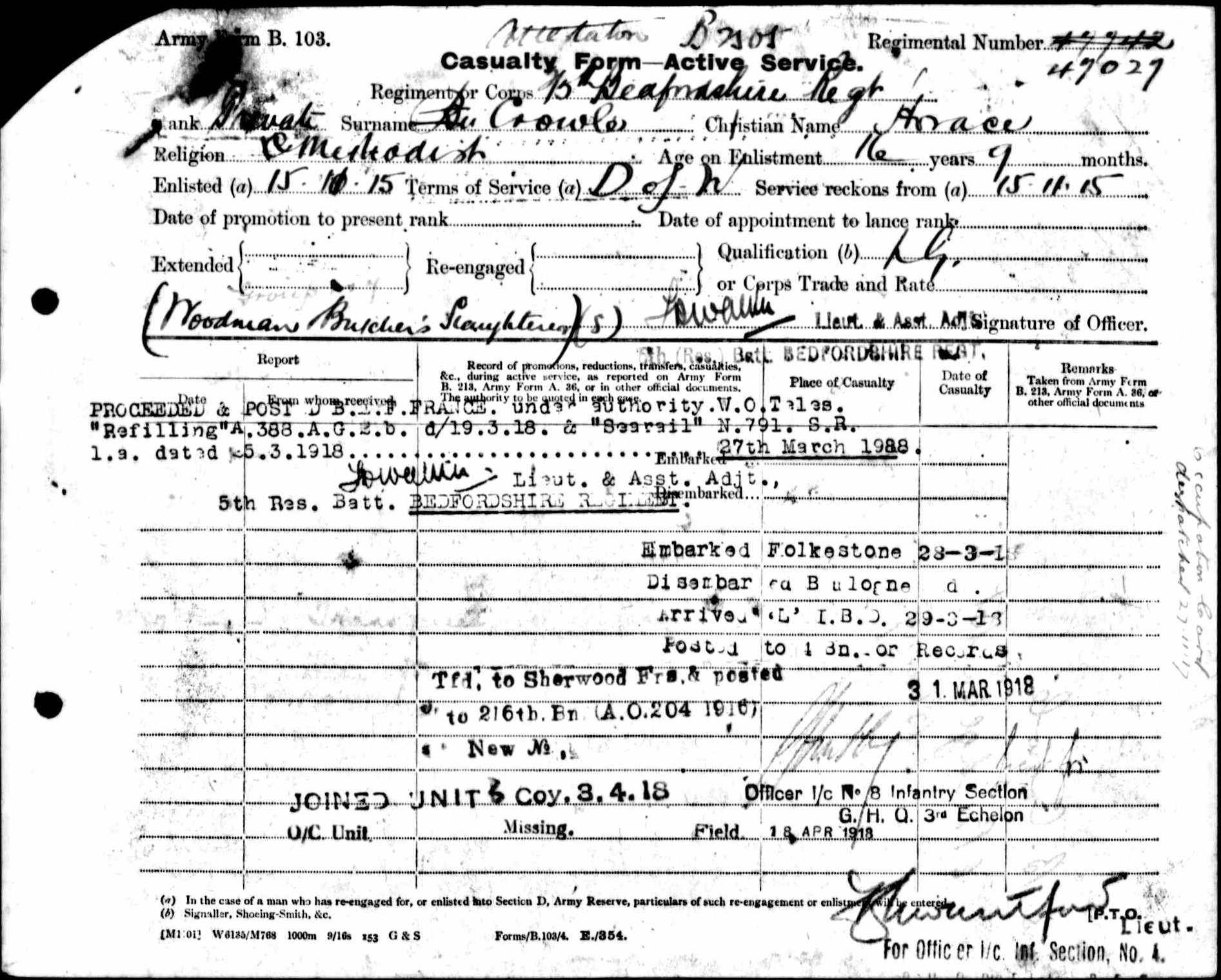
103122 Sydney Charles Noble

Sydney Charles Noble is typical of the men that were posted to the 2/6th Battalion after their decimation on the 21st March 1918.

Sydney was 28 and a resident of London. He was a newspaper printer at the ‘Times’.

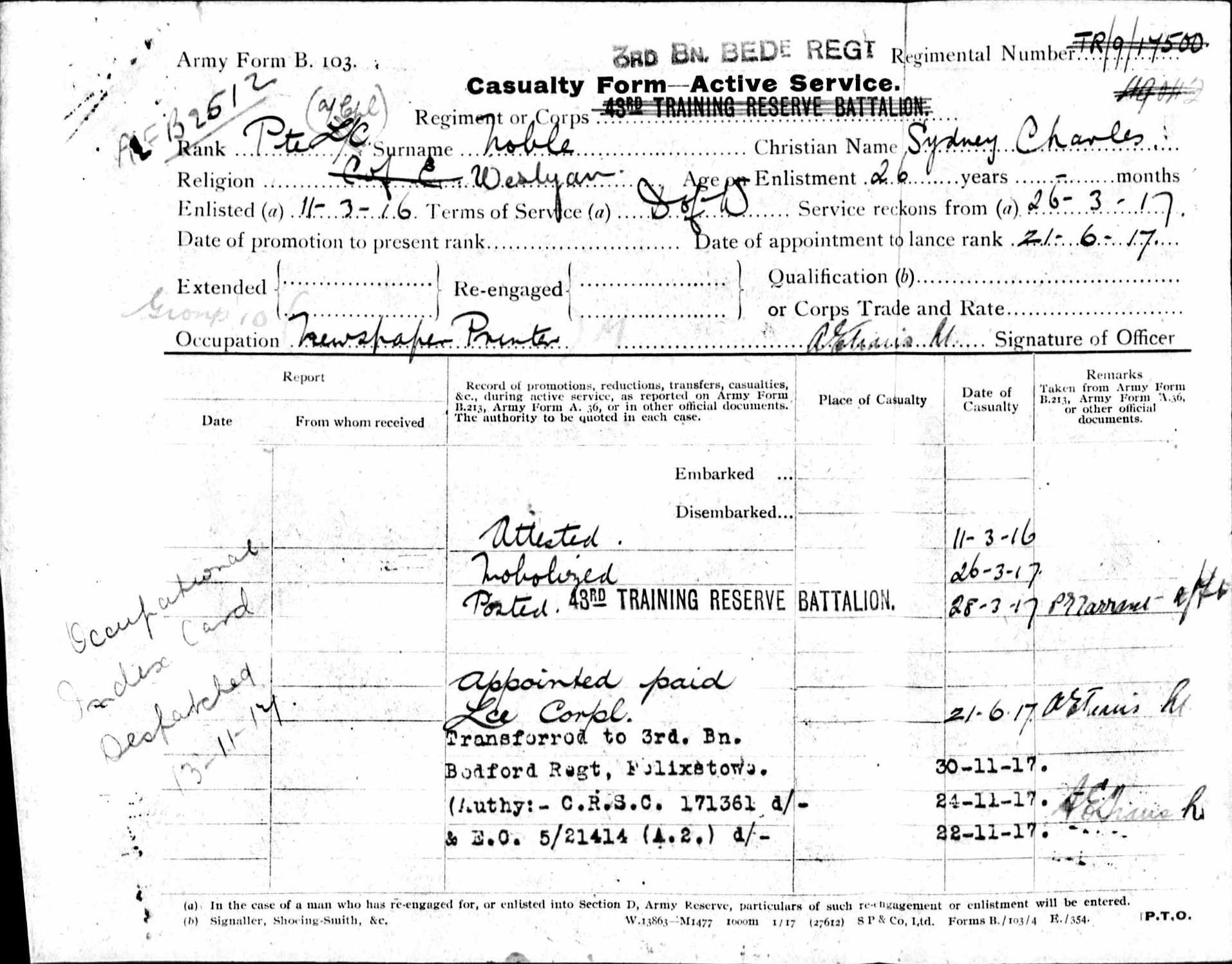
He attested in March 1916 and was mobilised the following year and posted to the 43rd Training Reserve Battalion.

After 8 months training he was transferred to the 3rd Battalion Bedford Regiment at Felixstowe in November 1917.

Sydney arrived in France in March 1918 and was posted to L Infantry Base Depot.

He was transferred to the 2/6th Battalion Sherwood Foresters on the 30th March 1918 and joined C Company ‘in the field’ on 3rd April 1918.

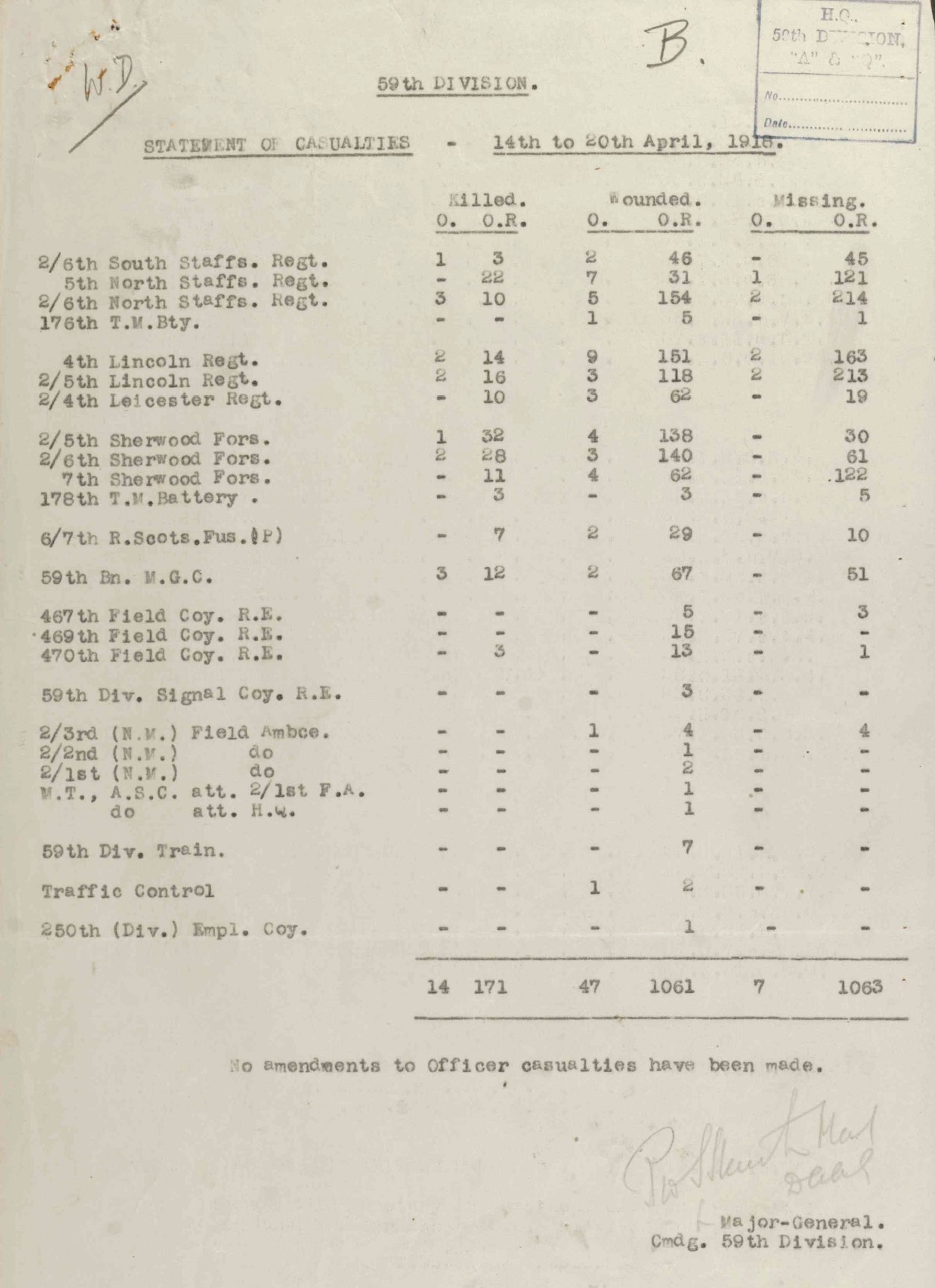
He fought with the 2/6th Battalion during the Battle for Kemmel Hill (14-20 April) were the re-formed 59thDivision suffered terrible casualties; 2363 Officers and men killed, wounded of missing.

Sidney was posted to K Infantry base on 7th May when the 2/6th Battalion was reduced to Cadre and transferred to the 16th Lancashire Fusiliers (2nd Salford Pals) on the 5th July along with 52 other men from the 2/6th.

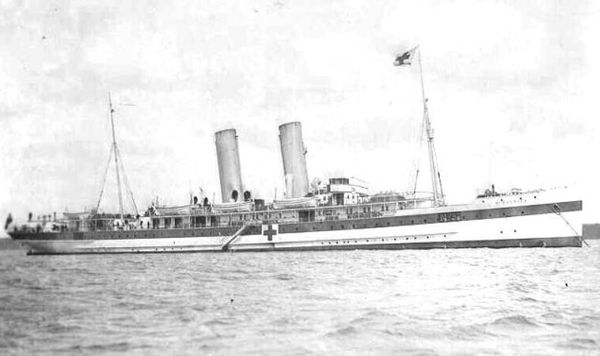
He was gassed on the 25th August 1918 and admitted to 9th General Hospital Rouen before being transferred to England on HMS St Patrick.

“Whilst this action coast the 16th Lancashire Fusiliers few casualties, two days later [25th August] the still inexperienced men were subjected to a devastatingly heavy mustard-gas shelling, which left 15 Officers and 429 men as casualties”

[Salford Pals by Michael Steadman]

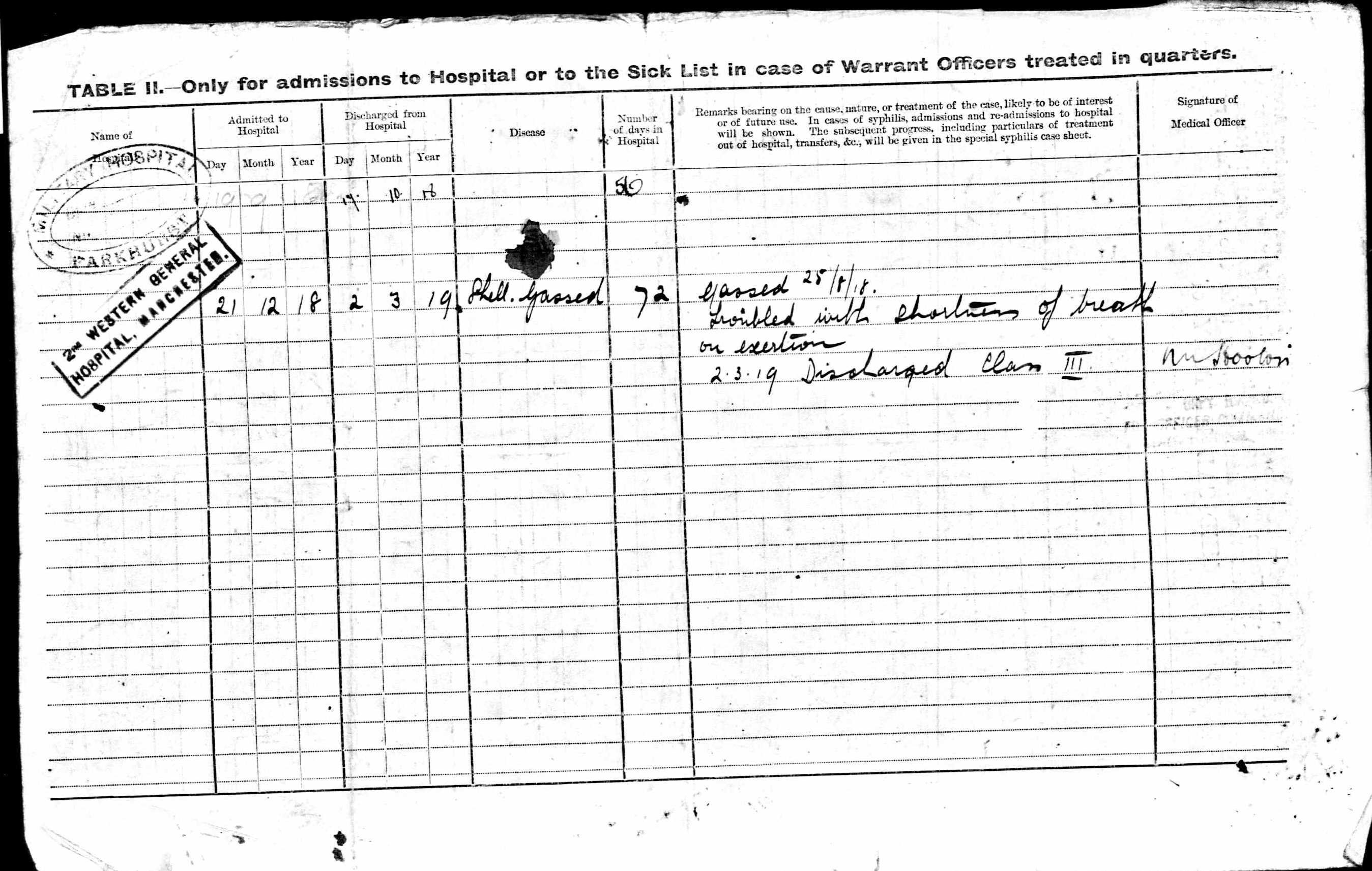
Sydney spent 56 days in the Military Hospital at Parkhust and 72 days in the 2nd Western General Hospital in Manchester.
He was finally discharged from Hospital in March 1918.

35748 Pte George Chambers Woolley, The Welbeck Rangers…….

Prior to Enlisting

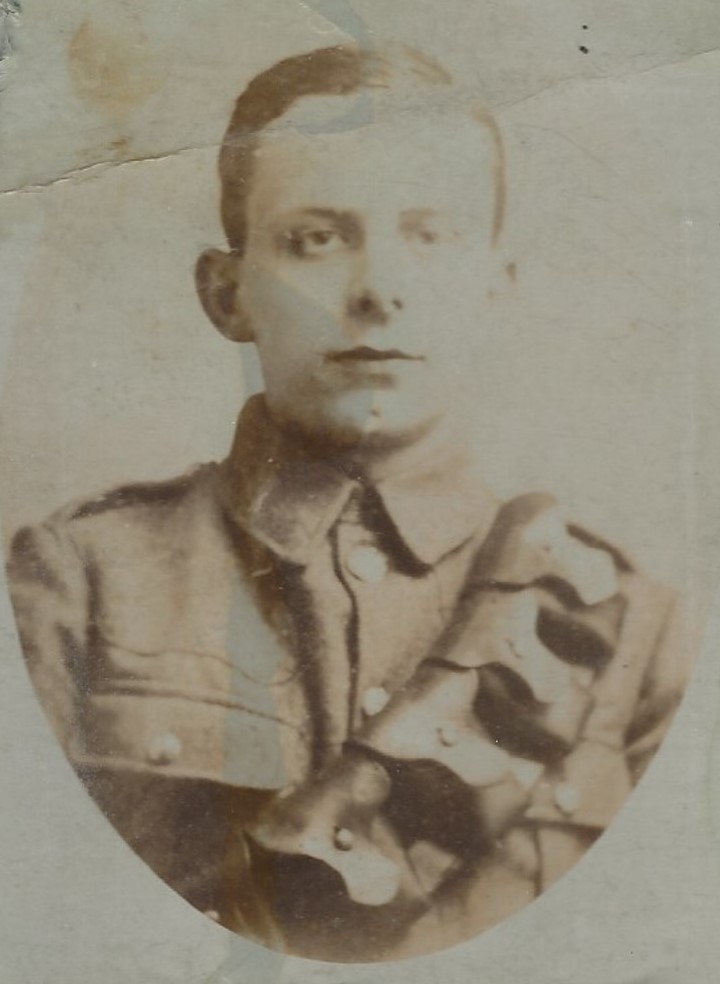
George was born in New Mills to ?? and Mary Chambers and was one of 8 surviving children. In the 1911 Census the Wolley family were living at Ollersett, New Mills in Derbyshire. At this time George was cloth packer in the local bleach works.

George Attested into the British Army in December 1915 – possibly under the Derby Scheme – and was mobilised into the 3rd Battalion Sherwood Foresters on the 5th June 1916.

George married Maria Roughly in Hayfield Parish Church in October 1916 and four months later their first daughter Matha was born. A son George was born on 30th December 1918.


Arrival in France and wounded at the Battle of Passchendale

Following basic training George arrived in France (Calais) on the 2nd July 1917 and was posted to the 17th Battalion Sherwood Foresters, the Wellbeck Rangers at the 14th Infantry Base Depot.

George was present with the Wellbeck Rangers when they took part in the 3rd Battle of Ypres and attacked Steenbeek near St Julian.

1.15am. Assembly of Battalion was complete and carried out without casualties.

3.50am. The advance commenced across “No Man’s Land”.

4.16 am. The Blue Line was reached without opposition. Slight casualties were incurred due to the protective barrage.

5.13 am. The advance on Black Line commenced. Slight opposition was met with by two enemy machine guns in the vicinity of Oblong Farm. These were at once engaged. The advance continued until held up by machine guns and snipers from Canoe Trench.

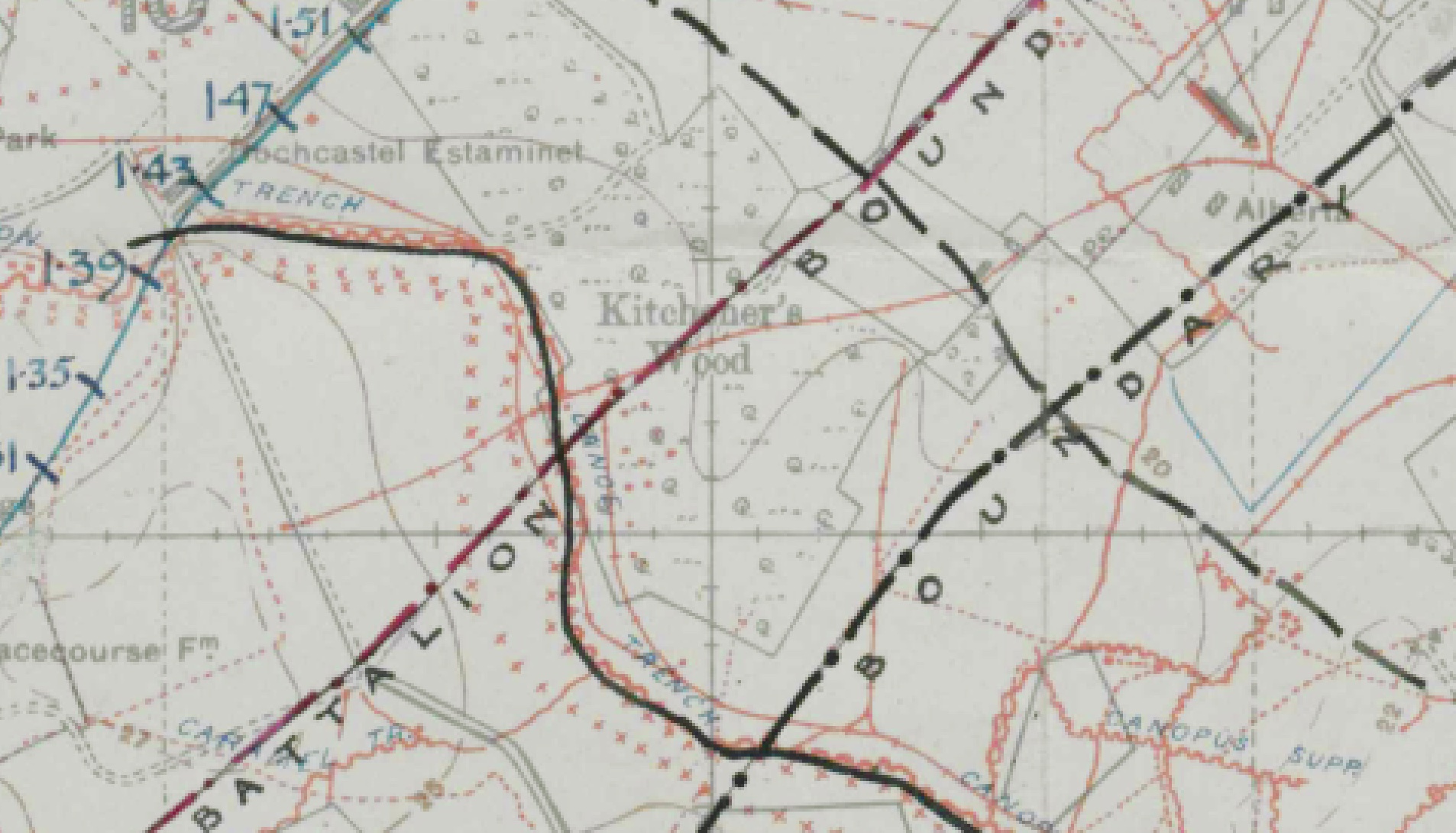
5.33am. Undercover of Lewis guns and barrage Canoe Trench was the captured. The advance was then continued by the second wave through Kitchener’s Wood to the dotted black line. On arrival on the eastern side of the Wood two enemy machine guns opened up on us from Alberta. These were engaged…….with the assistance of two tanks……and captured the farm.

6.50 am. The Dotted Green Line Companies and Hugel Hollow Platoon formed up behind protective barrage.

7.30 am. Advance behind protective barrage began. Very little resistance was met. Several prisoners taken from Hugel Hollow and concrete dug-outs to the North East of Alberta.

7.55 am. The Steenbeek was reached and advanced over and consolidation commenced on the Eastern side.

Total casualties were 331 Officers and men including George who was serving with “B” Company.


George was taken to the 134th Field Ambulance before being transferred to 2nd Australian General Hospital at Wimereux. He was returned to England on the 9th August 1917 and did not return to France.


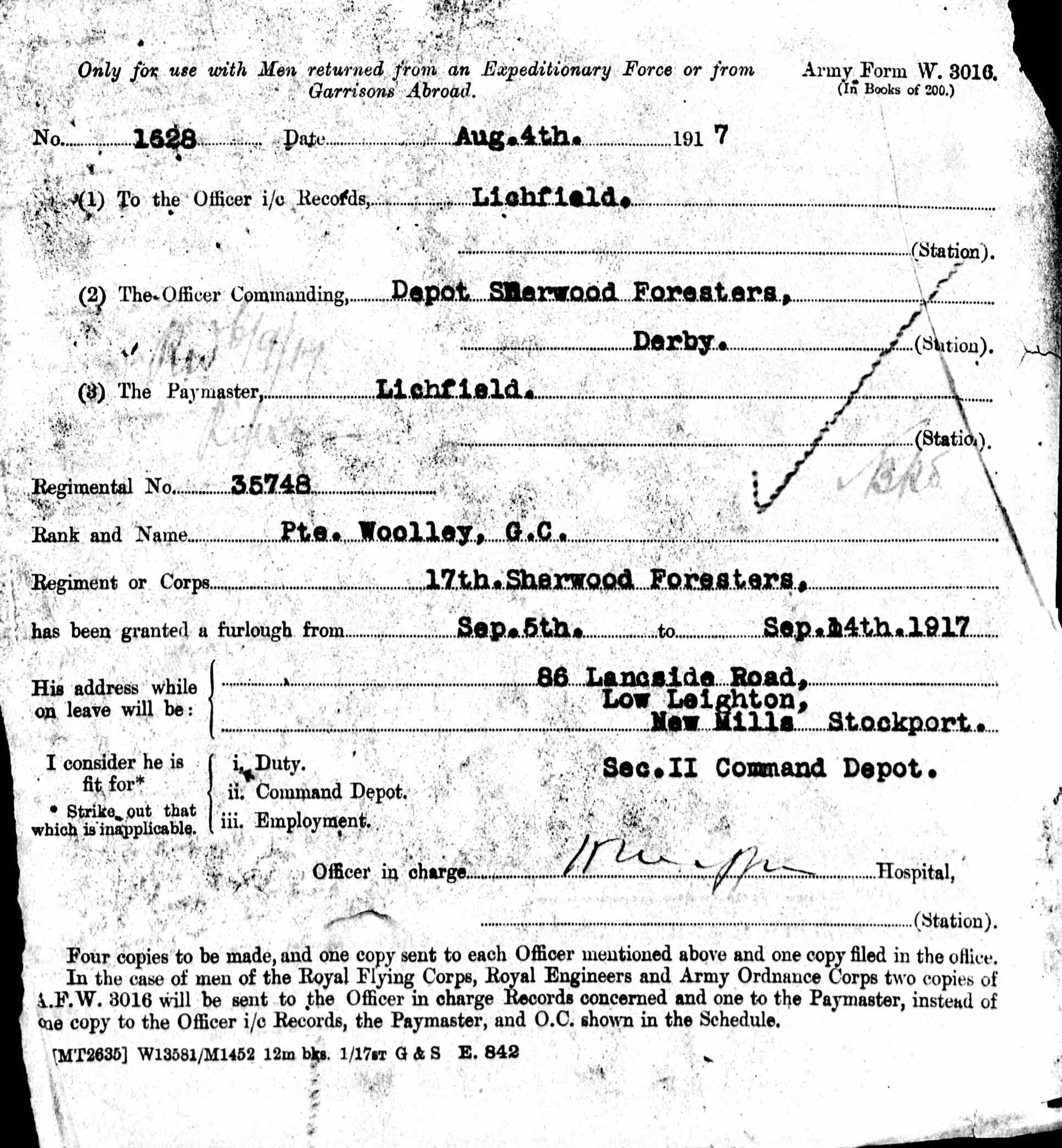
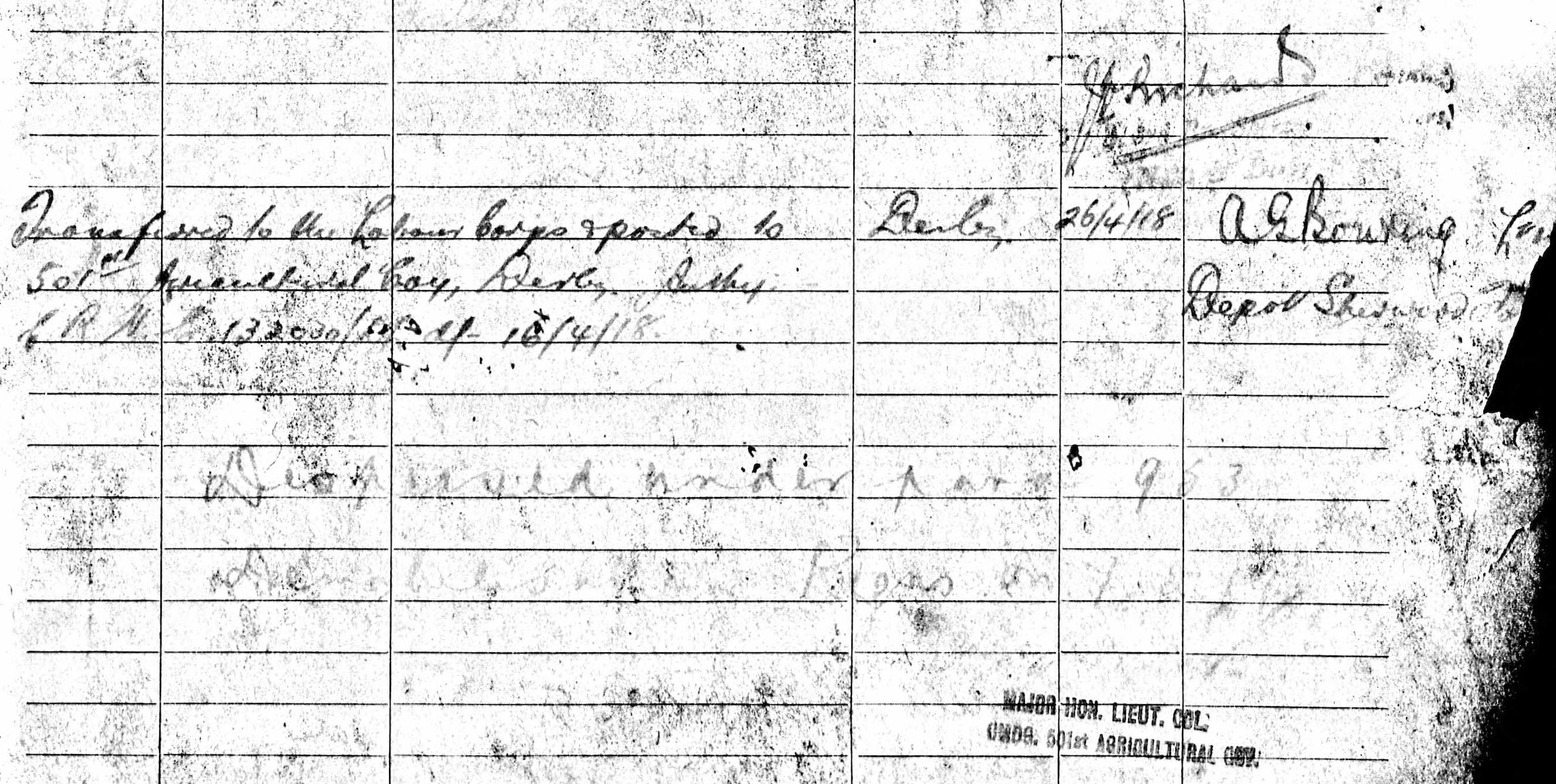
George was granted 9 days leave in mid-September 1917, before being transferred to the 501s5 Agricultural Company of the Labour Corps in April 1918 and was stationed at Derby with the Northern Command.

Charles Norman Commins from Lincoln

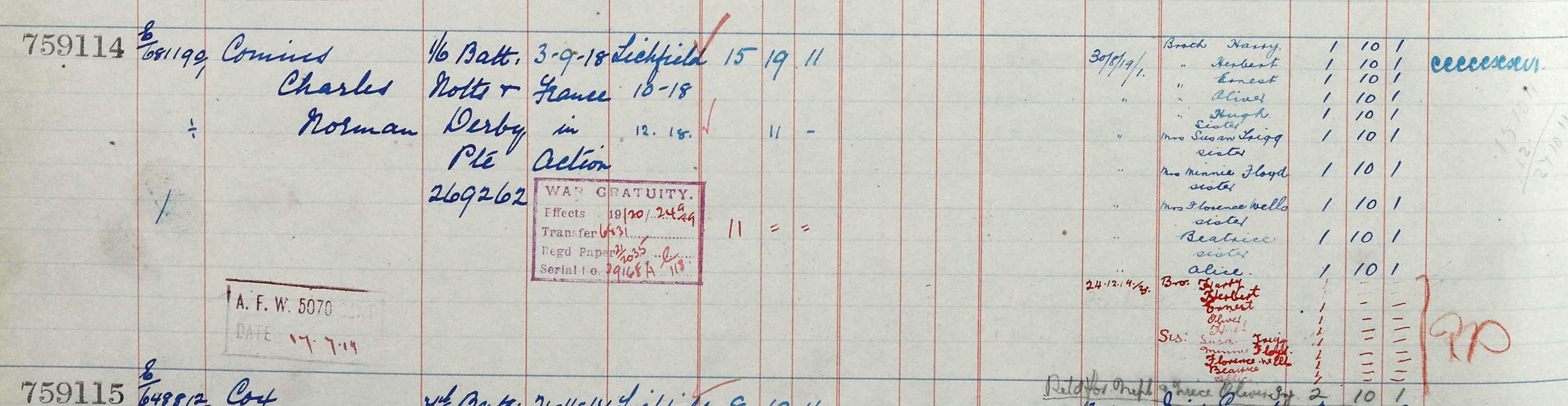
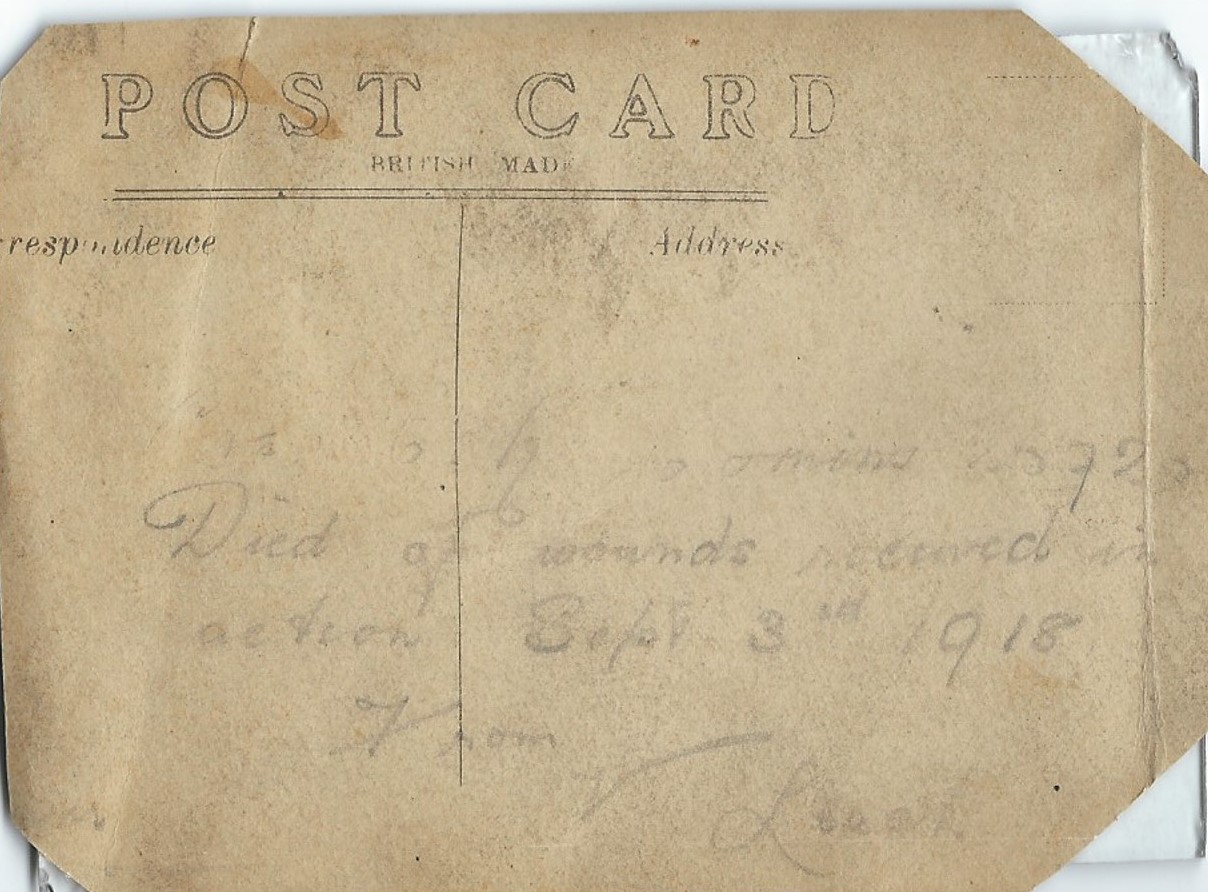
Charles was killed in action during a raid on Hunters Post in the last months of the Great War, and thanks to his great nephew Chris, we can now put a face to Charles and tell a little more about his short life and the sweetheart that he left at home.

Charles was born in Lincoln in July 1895 and in the 1911 Census was living with his family at 117 Winn Street. He was from a large family and an errand boy for a local doctor.


Service with the Sherwood Foresters

It’s not clear when Charles enlisted, and into which Regiment; interestingly, his two elder brothers both enlisted into the Lincolnshire Regiment and have very close regimental numbers.

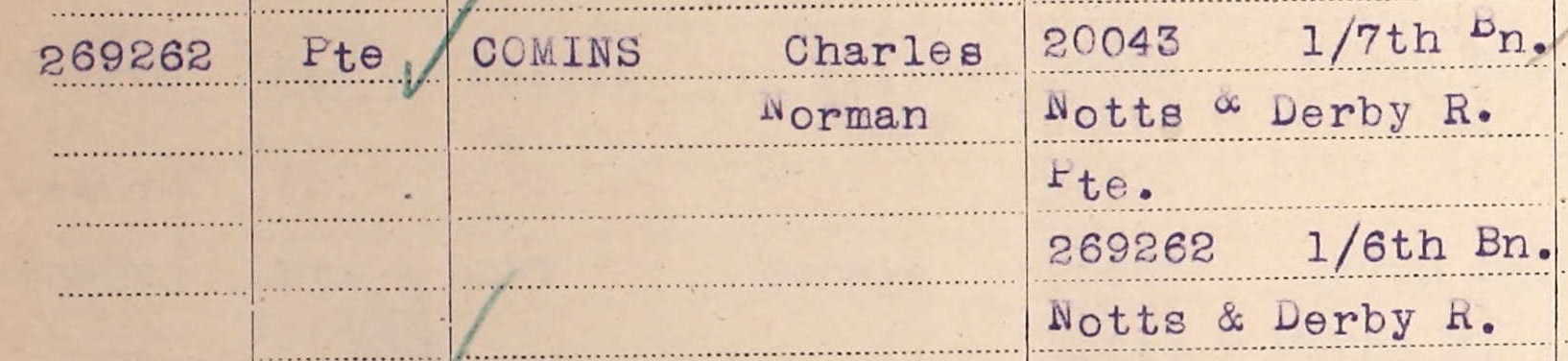
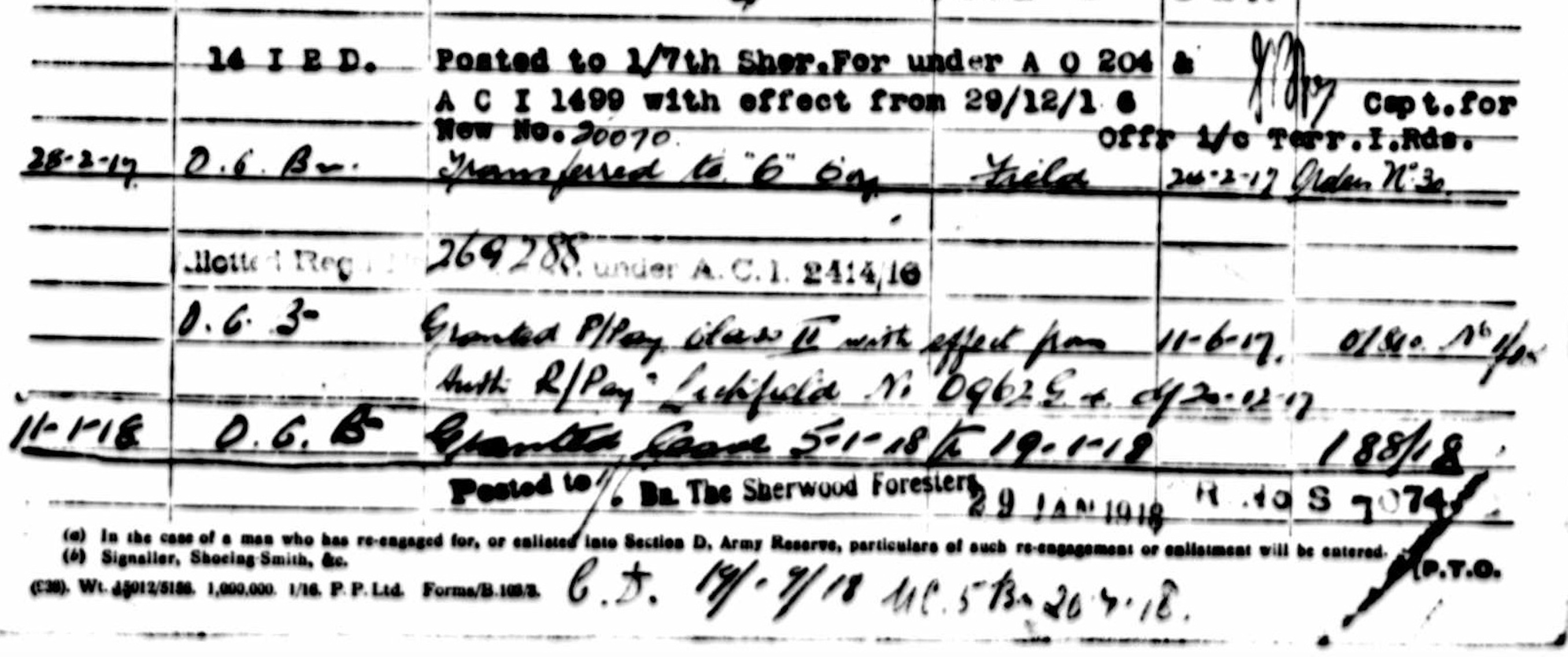
Charles was certainly with the 1/7th Battalion at the end of 1916 (December) when the Territorial Force Renumbering was being planned and the Territorial Battalions of the Sherwood Foresters used a five digit (2****) regimental numbering system to renumber men being moved between battalions or being posted from other Regiments at the 14th Infantry Base Depot . Charles duly received a 7th Battalion 6-digit number in March 1917 (269262).

Charles most likely served with the Robin Hoods from December 1916 until the Battalion was reduced to Cadre in late January 1918.

Note the Service Record of 20070/269288 Alfred Harold Gregory, who has similar Regimental Numbers to Charles, was used to infer his service.


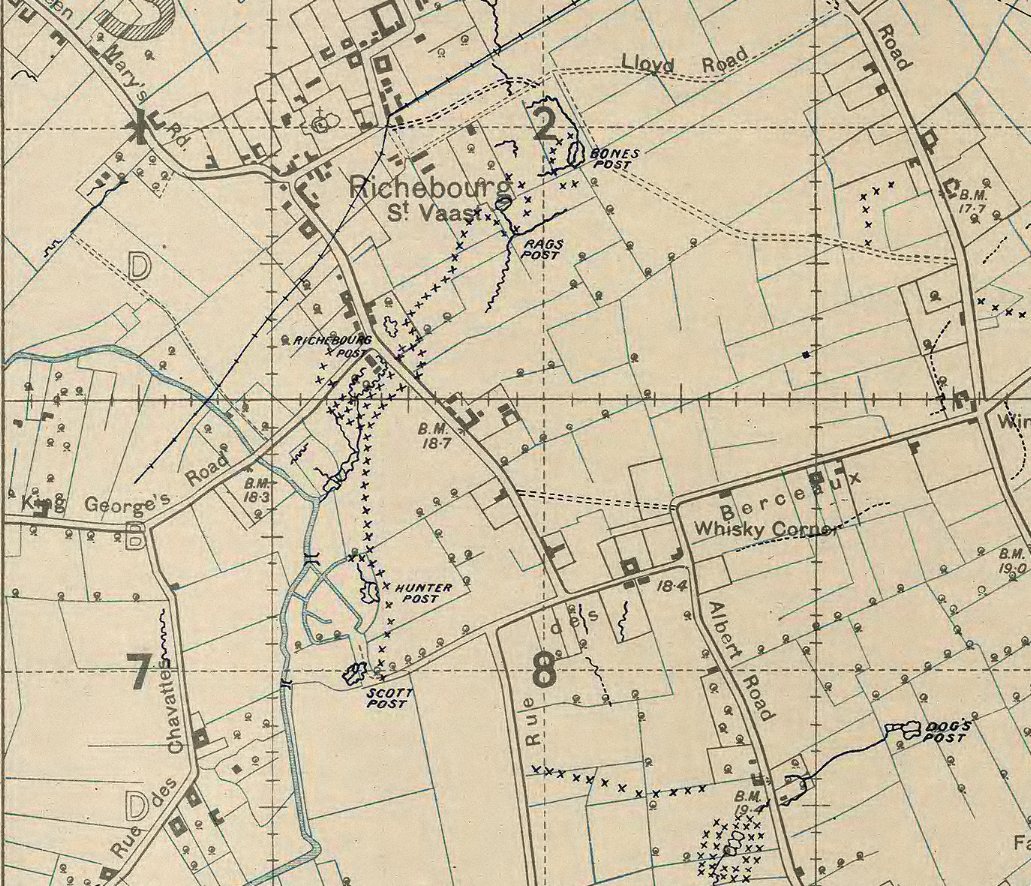
Attack on Hunter and Scott Post

During early September 1918 the 1/6th Battalion made several attacks on the German strong points known as Hunter and Scott Post – see here for details. It was during this attack that Charles was killed in action or mortally wounded.

Chris has told me that there is a family legend that Charles died carrying a wounded man back to his own trenches. That he was hit and fell and that the wounded man asked Charles whether he was OK, he said he was ok and could carry on. He picked the man up again but was hit a second time, this time he told wounded man he would have to make his own way back and died.


An obituary was posted in a local paper by his fiancée “Vera L” who must have also sent the post card to the family.

1199 Acting Sergeant John William Burton, Signal Section, 1/5th Battalion

Many thanks to Martha Gratton who very kindly sent me pictures of her Great Grandfather John William Burton.

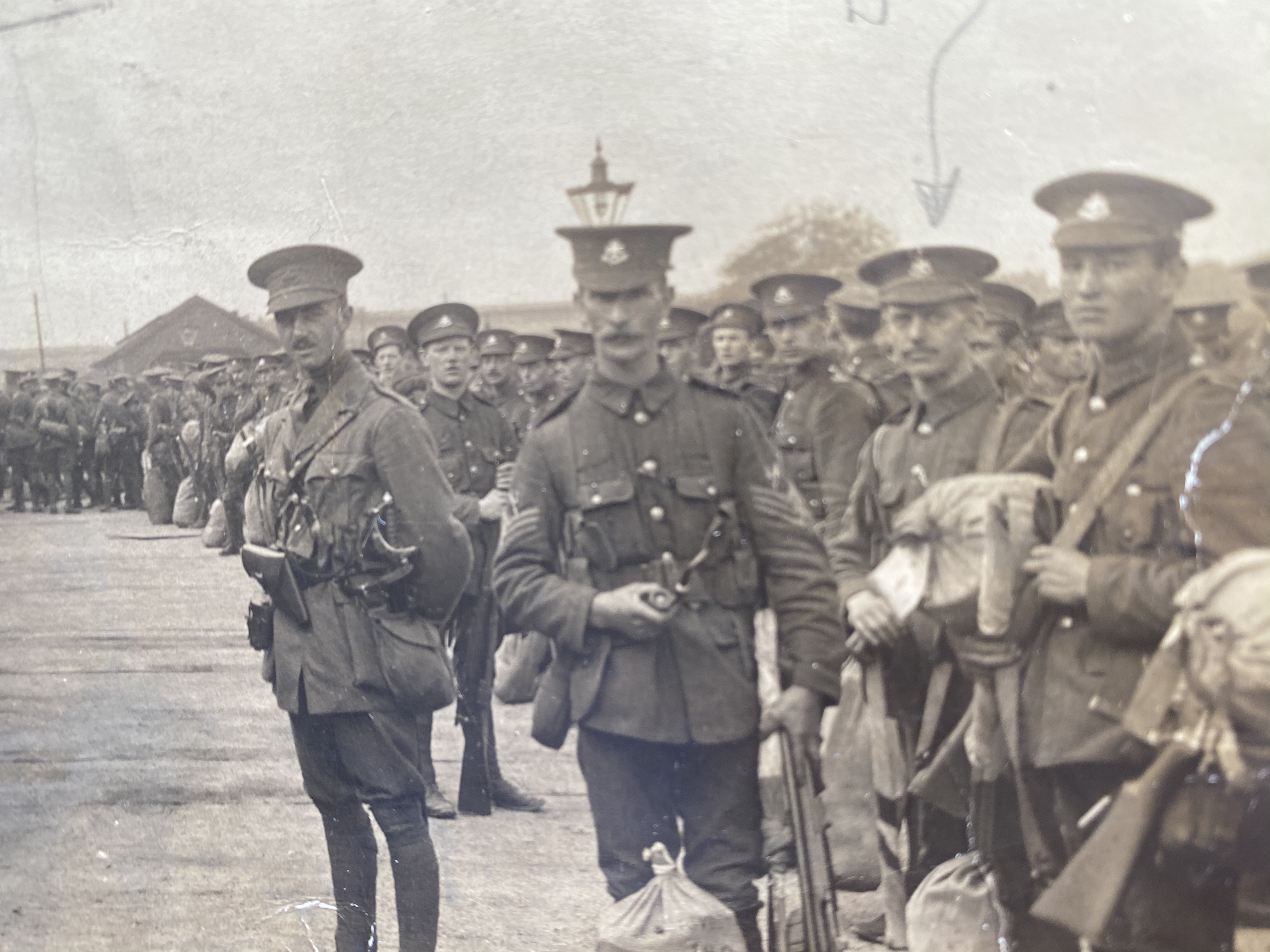
Men of the 1/5th Battalion entraining for Luton from Friar Gair Station in Derby on the 16th August 1914. The arrow indicates John Burton and on the back is written “Signallers 1/5th Sherwood Foresters”. Also identified on the back are Signalling Officer Captain Reginald J Case and Signalling Sergeant H Bonnell. 

To be continued………

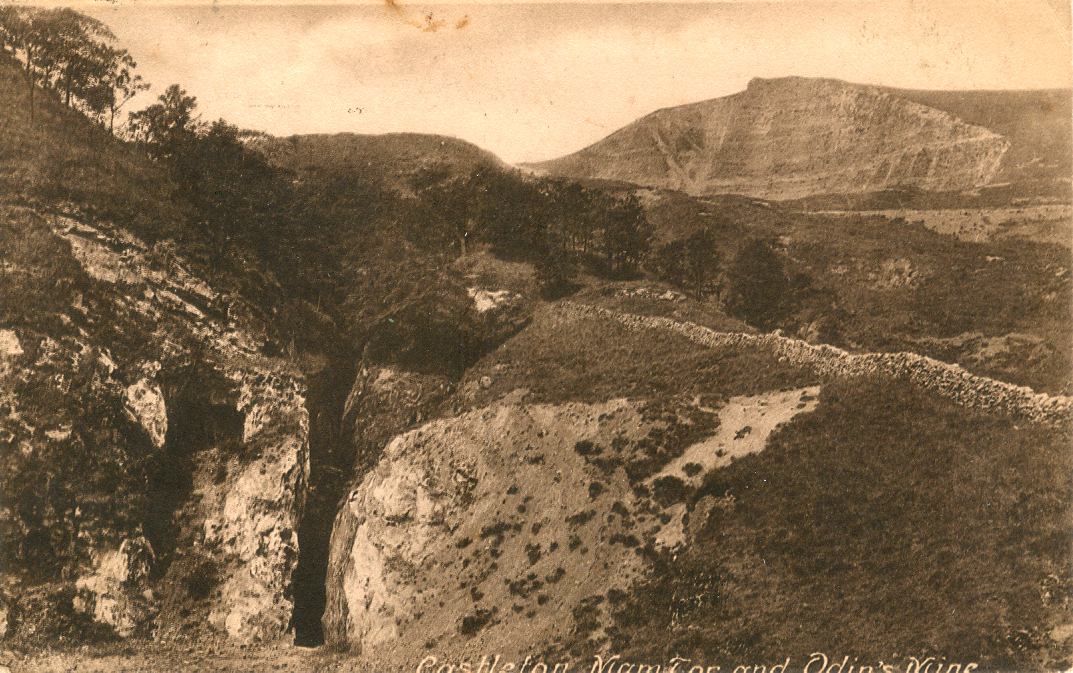
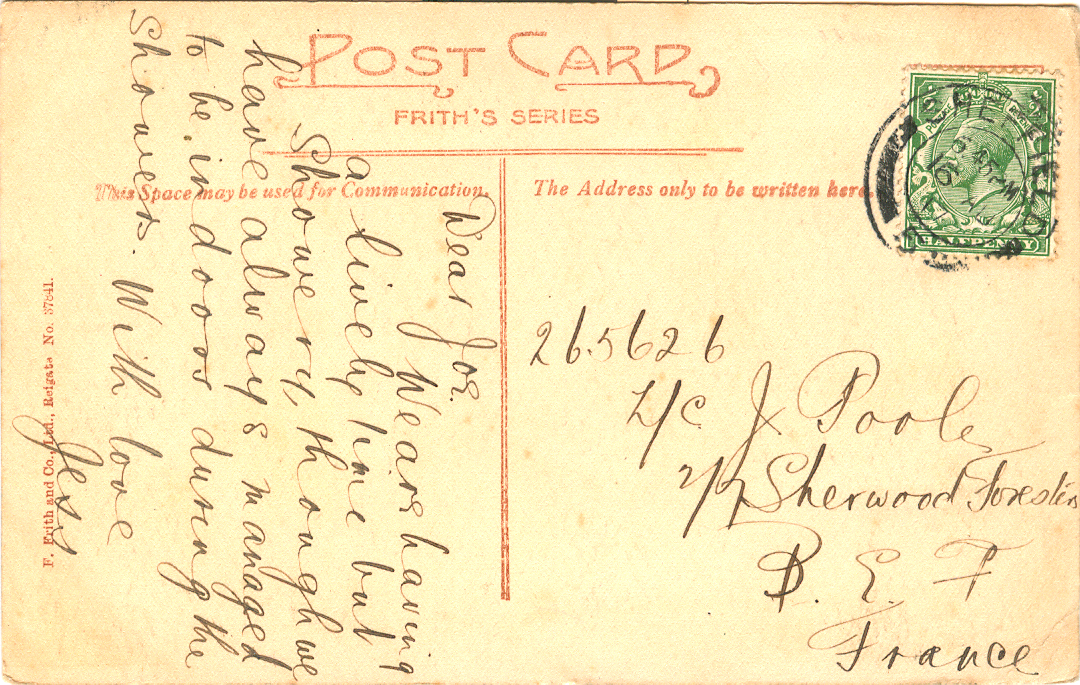
265626 L/Cpl Joseph Poole and his sister Jess

Dear Joe

Wears [sic] having a lively time but showery. though we had always managed to be in doors during the showers.

With Love

Jess

[Posted from Sheffield 16 Aug 1917]


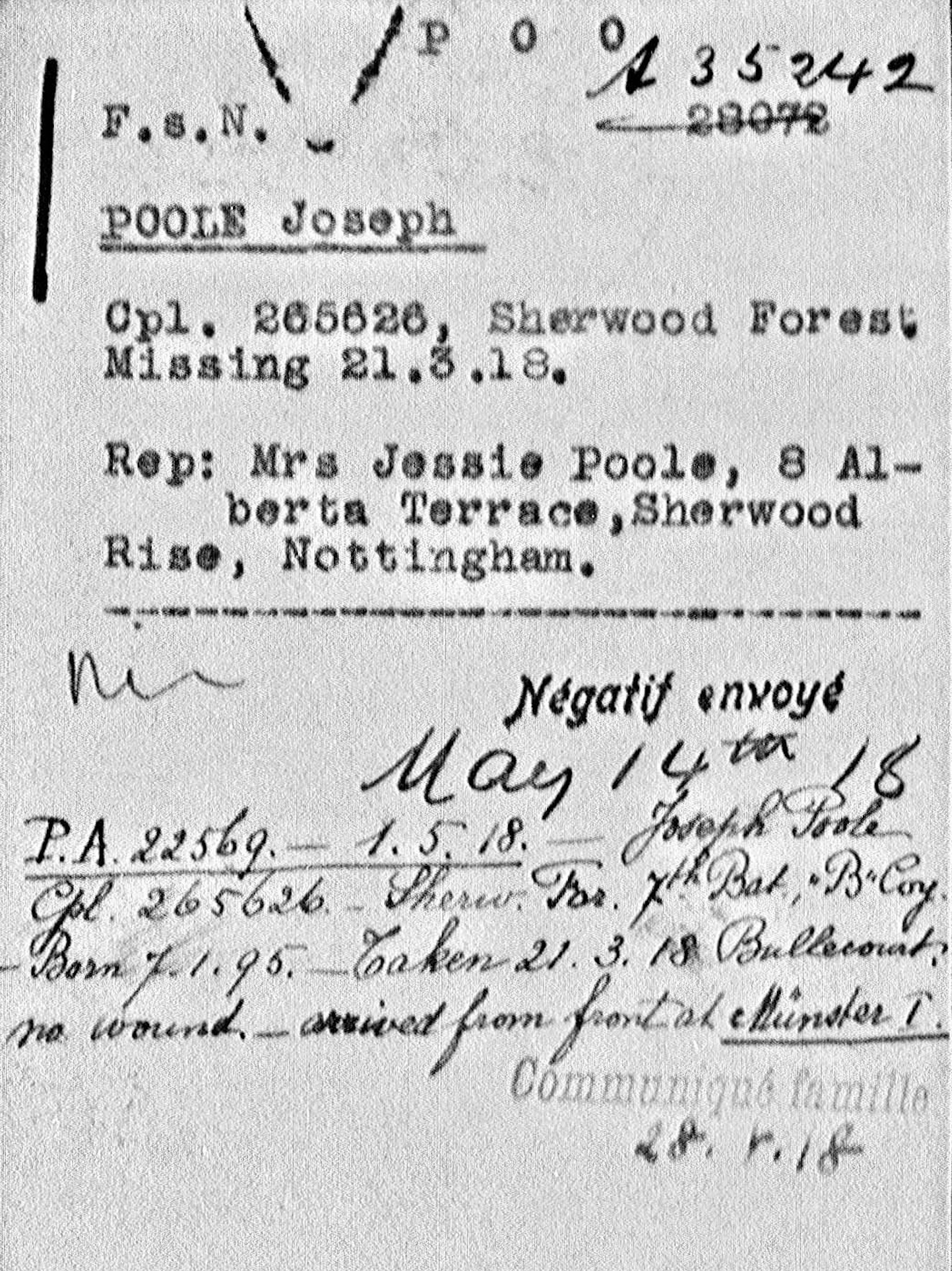
265626 Pte Joseph Cole served with “B” Company the 2/7th Battalion Sherwood Foresters during WW1and was in the front line trenches on 21st March 1918 at the start of the German Spring Offensive.


Like many of the men of the 178th Brigade George was reported as missing.

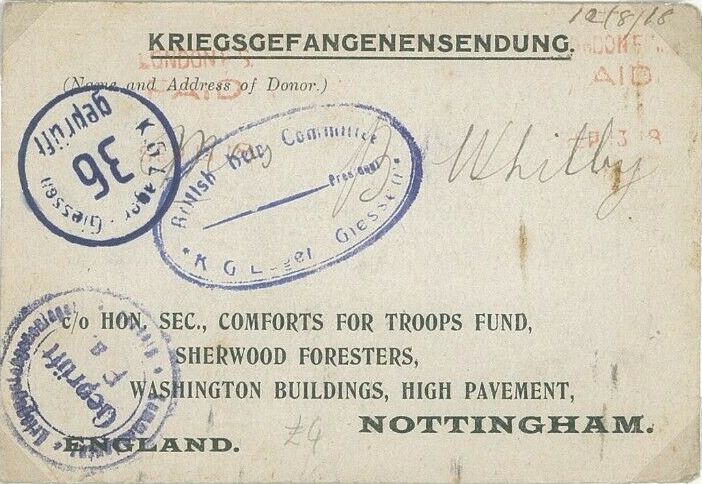
Joseph was made a Prisoner of War and would be later repatriated.

A Thankful Village’s lost son

Hunstanworth is a very small village just over the border in County Durham and nestled on the fells of the North Pennines. It’s one of just fifty-four ‘Thankful Villages’ and the only one in Durham.

See the BBC online article and also Tom Morgan’s excellent site.

The names of the Hunstanworth men that served in WW1 are recorded as:-

  • Michael Jamieson
  • Makepeace Jamieson,
  • Joshua Jamieson
  • William Jamieson
  • Arthur John Taylor

However, research by myself has identified at least two other men from the Village that served in WW1 and returned home.


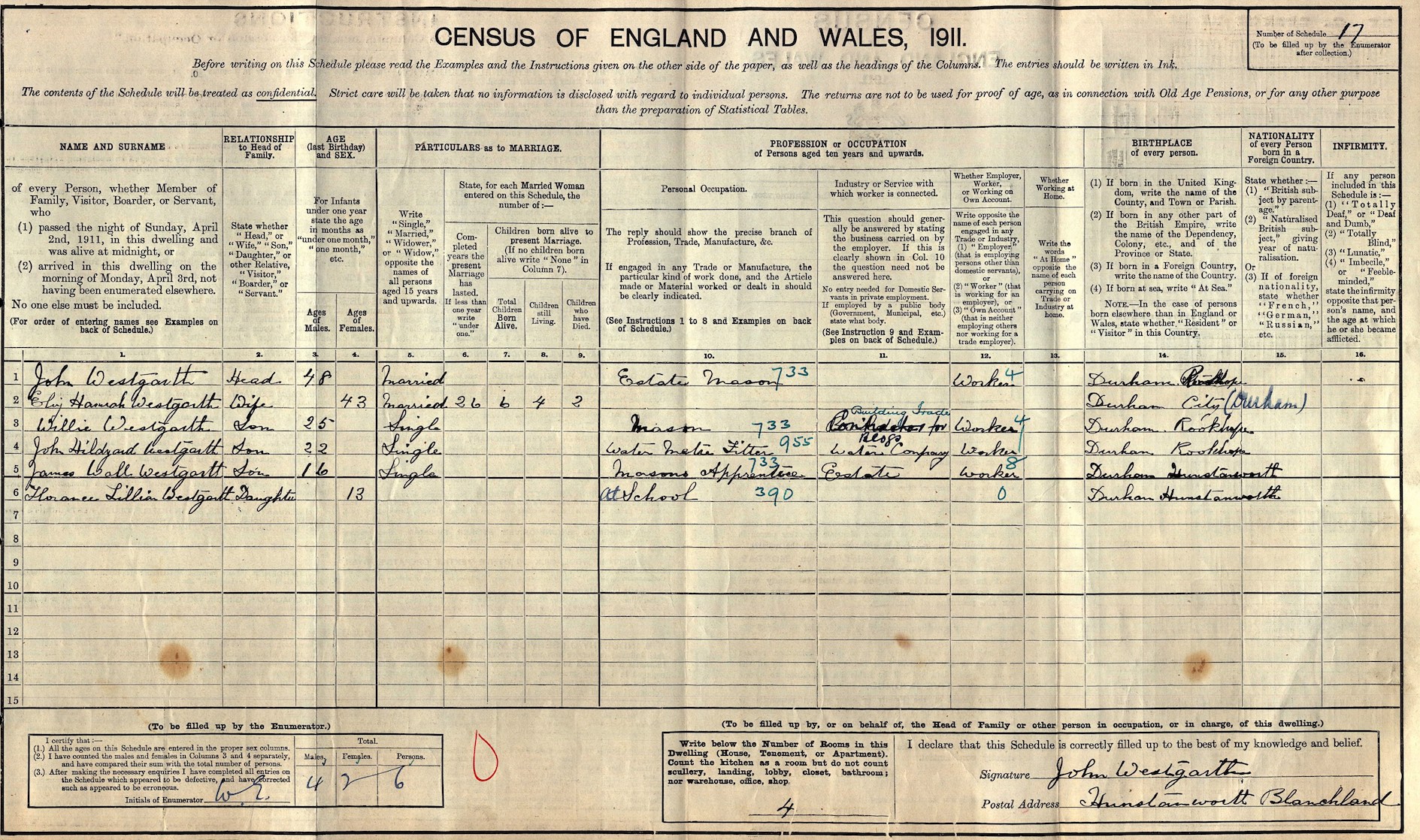
Sergeant James Wall Westgarth, MM

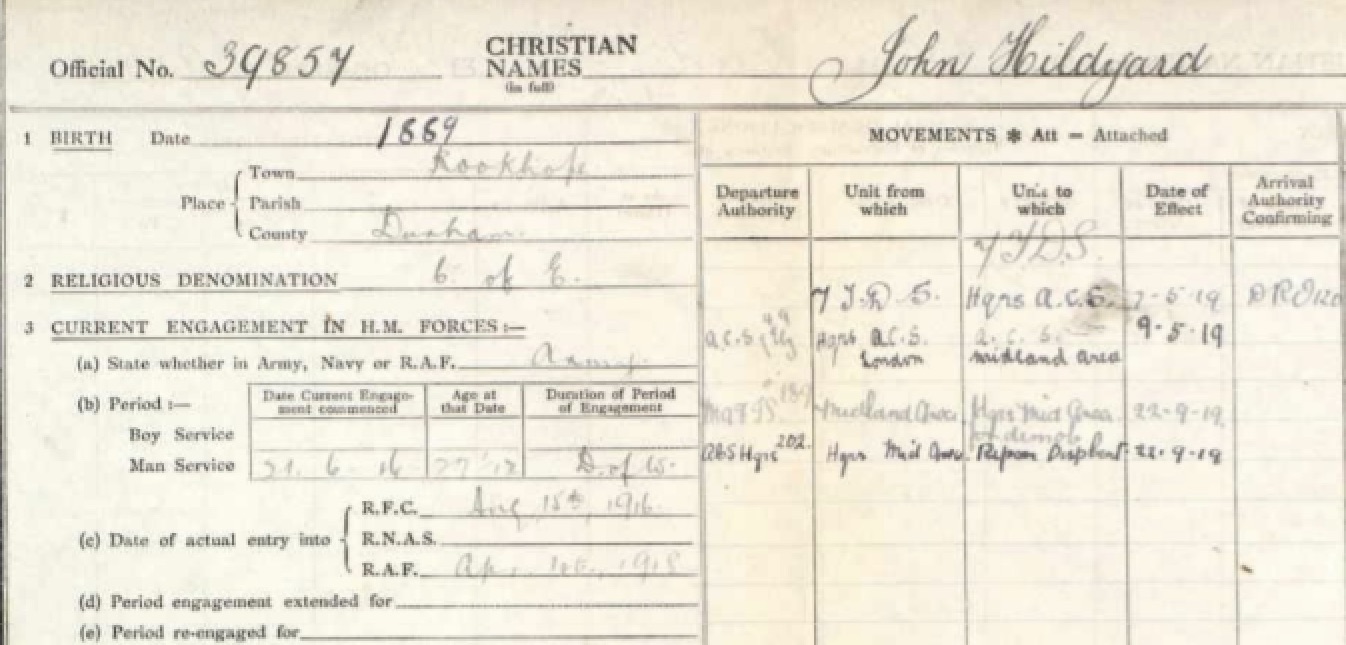
James was born in Hunstanworth in 1895 and was the youngest son of John and Elizabeth Hannah Westgarth. He had two older brothers Willie (b 1886), John Hildyard (b  1889) and a younger sister Florence Lillian (b. 1898).

Two other brothers Thomas (b. 1890) and Joseph Stephen (b. 1894) both died in childhood aged 2 and 13 respectively.

The Westgarth family were from the local area and had previously lived in Stanhope (1871 & 1881) and Crook (1889 & 1891) before moving to Hunstanworth

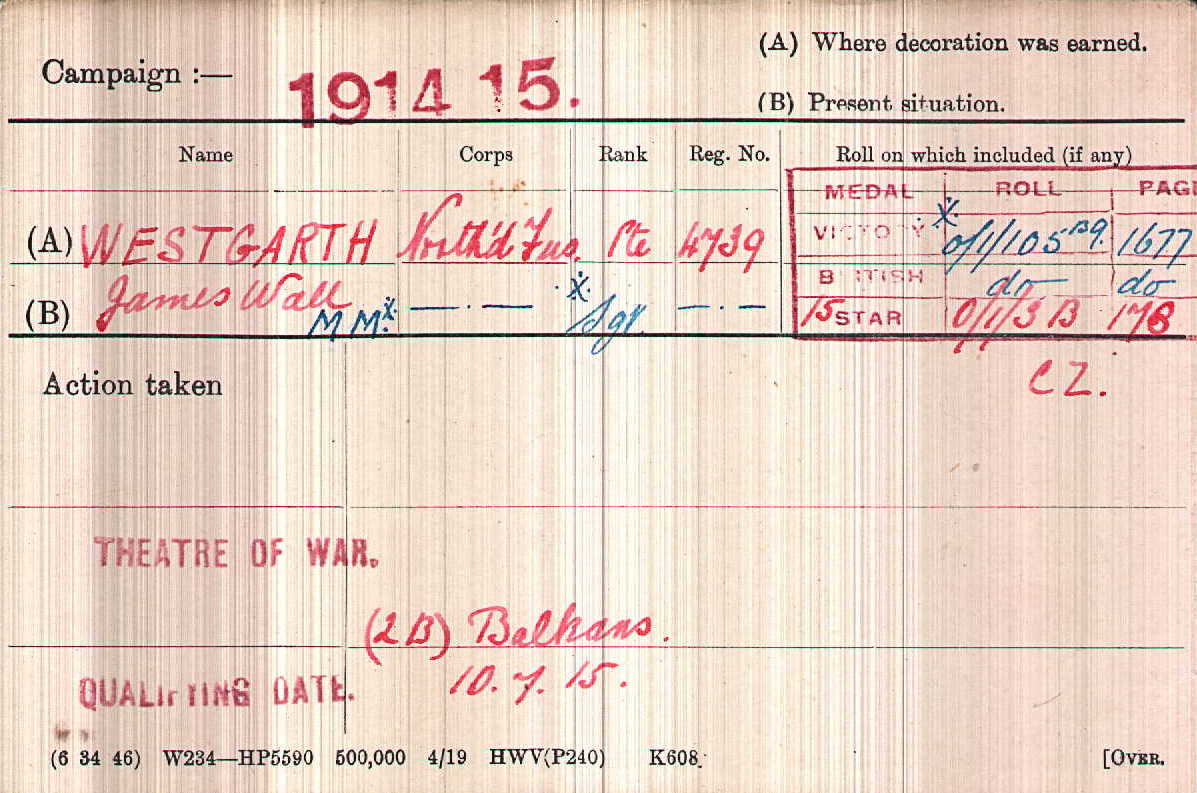
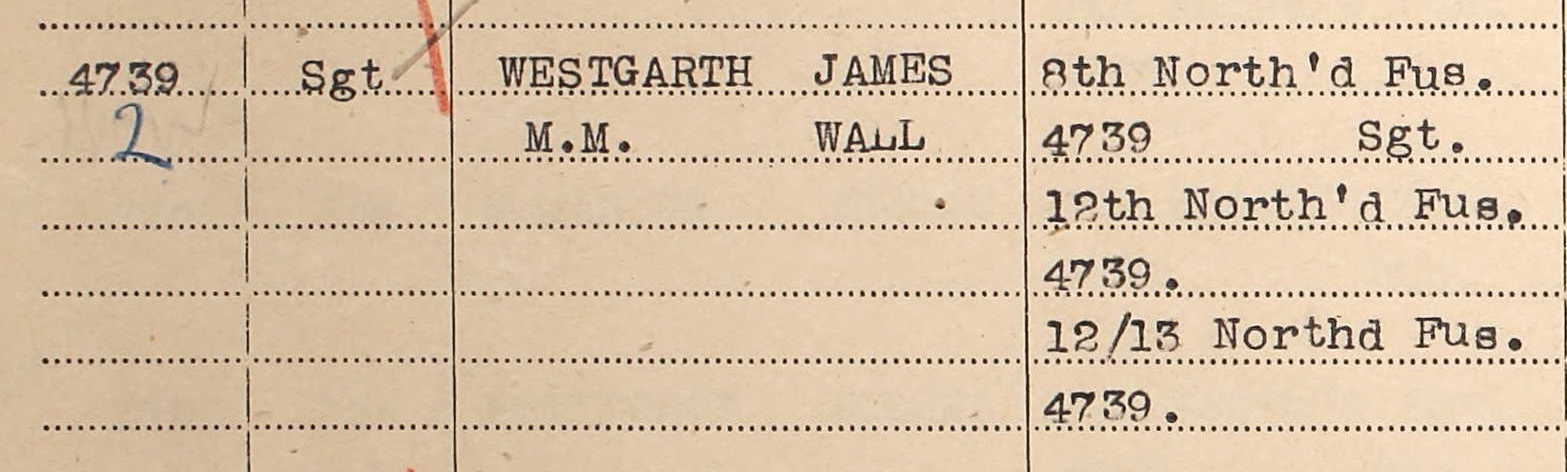
James enlisted into the Northumberland Fusiliers in August 1914 and went to Gallipoli with the 8th Battalion in July 1915

At some point during 1916 he transferred to 12th Battalion (perhaps after being wounded?)

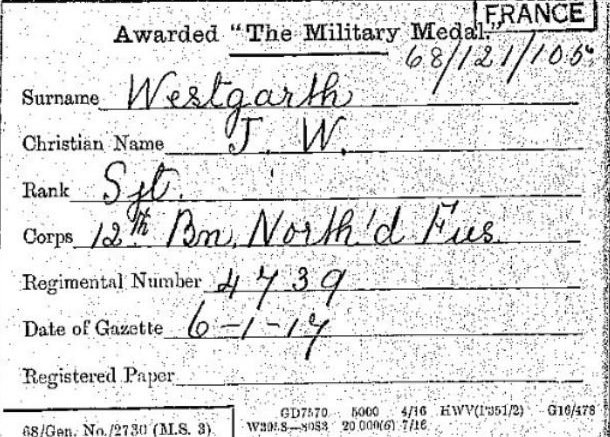
James was awarded the Military Medal, which was announced in the London Gazette of 5th January 1917.

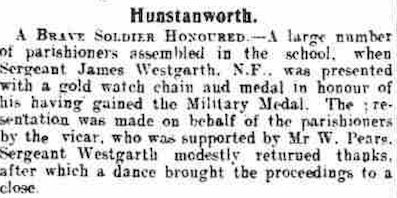
During the Summer of 1917 James was back in England and ‘was presented with a gold watch chain and medal in honour of his having gained the Military Medal’

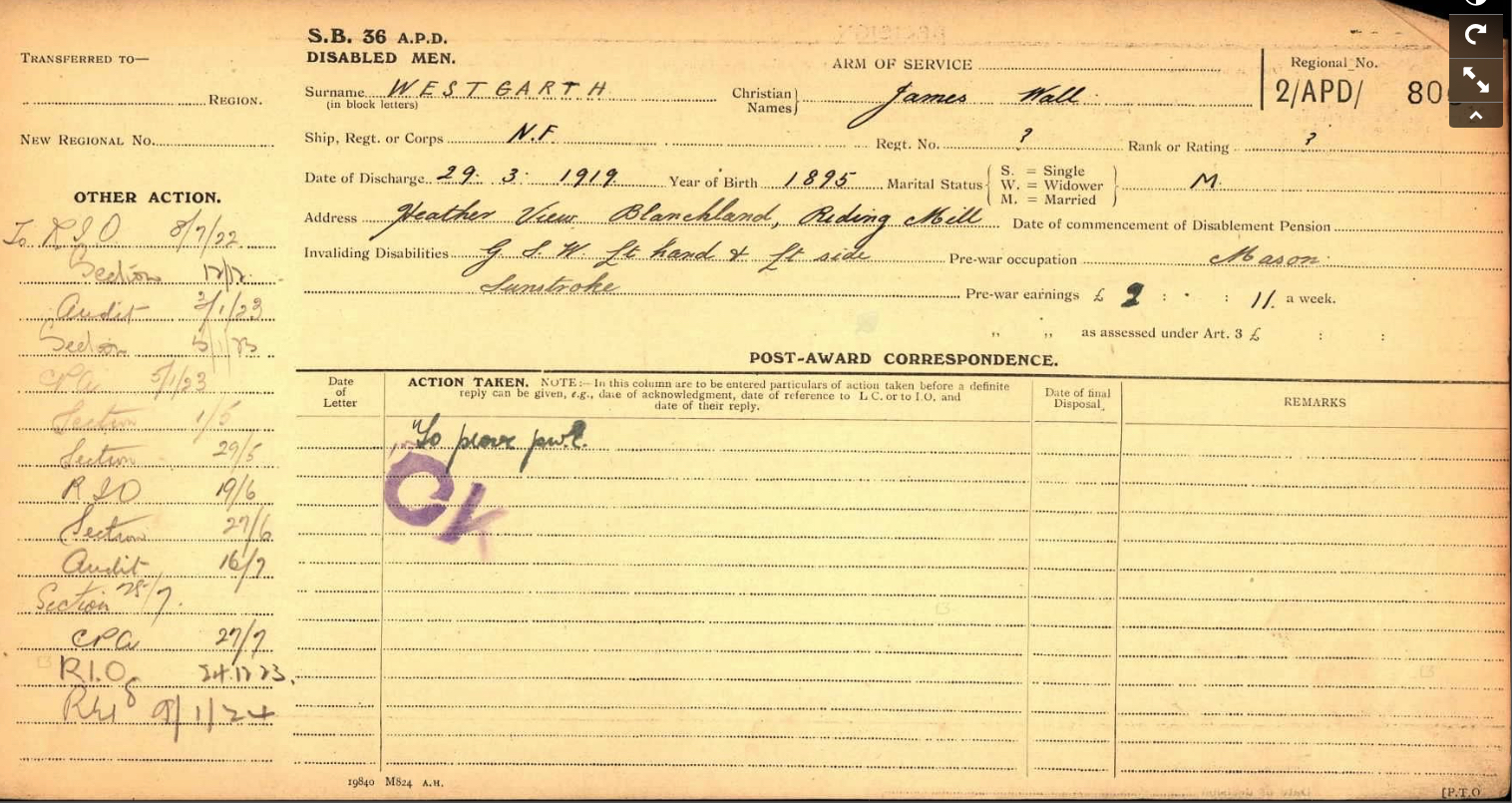
James was serving the “D” Company the 12/13th Battalion Northumberland Fusiliers when he was wounded in the side and hand and captured during the German Spring Offensive. Between 22-25th March the 12/13 Northumberland Fusiliers lost 440 Officers and Men whilst fighting rear guard actions.

On the 16th May 1918 John and Elizabeth received news that their Son had been posted missing on the 23rd March; however, several days later they received a letter from James stating that he was wounded and a prisoner.

On returning home James was awarded a pension and continued to work as an Estate Stonemason.


NOTE: James’ two elder brothers Willie and John also served in WW1, but at the time they enlisted Willie had married was and living in Rookhope and John had moved to Muggleswick.

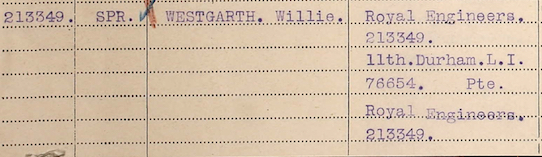
Willie attested in November 1915 and was posted to the Royal Engineers in November 1916. He served for several months with the 11th Battalion Durham light Infantry before transferring back the Royal Engineers and going to France. Willie was made a Prisoner of War on the 21st March 1918, just two days before his younger brother James.

John was a gas and oil engine attendant and joined the Royal Flying Corps in June 1916.


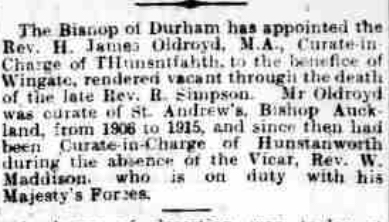
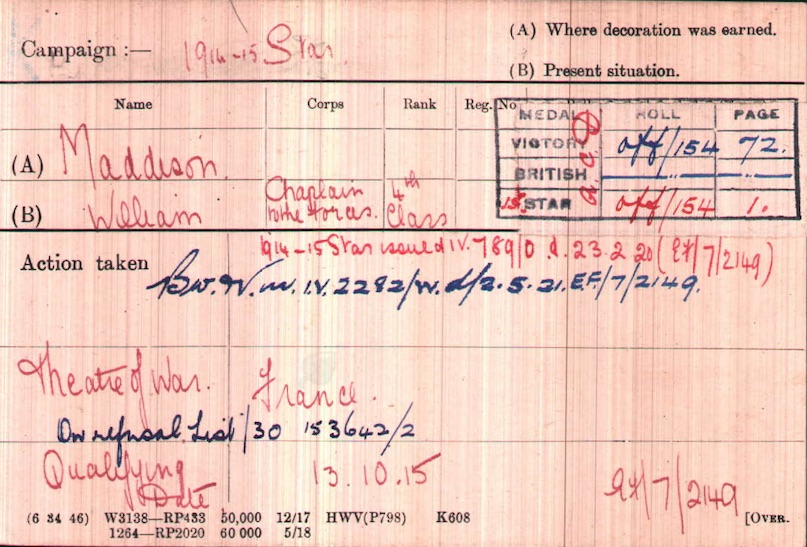
Reverend William Maddison

Note: this is still a work in progress.

During the 1st week in May

The following men were taken ill and/or returned to England Time Expired

Taken ill:-

  • 1588 Pte Walter Wragg a cotton operator from Little Hucklow and a Pre-War Territorial who served in “D” Company. Admitted to 1st North Midland Field Ambulance with scabies.1588 Wragg
  • 1012 Pte Edward Nightingale a coal miner from Eckington and Pre-War Territorial who served in “F” Company. Admitted to 1st North Midland Field Ambulance with scabies.
  • 2609 Pte Arthur Collier a labourer from Whaley Bridge who enlisted in October 1914. Admitted to 1st North Midland Field Ambulance with scabies.2609 collier
  • 1804 Pte Harry Bagshaw a stonemason from Matlock and a Pre-War Territorial who served with “E” Company. Admitted to 1st North Midland Field Ambulance with scabies.1804 Samuel Bagshaw1804 Bagshaw
  • 4101 Pte Alfred Allen from Old Whittington who enlisted in March 1915 and arrived in France with the 6th Reinforcement in March 1916. Admitted to 1st North Midland Field Ambulance, 30th Casualty Clearing Station and 22nd General Hospital with bronchial pneumonia. Transferred to England and discharged October 1916.4101 Allen

Time Expired:-

  • 1317 Pte William Haywood a miner from  Bolsover and Pre-War Territorial in “F” Company. Returned to England on the “SS Lydia” pending discharge due to Termination of Engagement.1317 Haywood
  • 1418 Charles Vernon Lee a cabinet maker from Chesterfield and Pre-War Territorial in “A” Company. Retuned to England pending discharge due to Termination of Engagement.1418 lee
  • 1409 Pte George Smart a miner from Clay Cross and Pre-War Territorial in “G” Company. Retuned to England pending discharge due to Termination of Engagement.1409 Smart
  • 1404 Pte John Davenport a coal miner from Bolsover and Pre-War Territorial in “F” Company. Retuned to England on “SS Copenhagen” pending discharge due to Termination of Engagement.1404 Davenport