Category Archives: Soldiers

809/240063 Pte Jim Cook from Clay Cross

A Pre-War Territorial who enlisted in November 1908. Arrived in France in February 1915 and later served with the 2nd Battalion. Disembodied in February 1919.

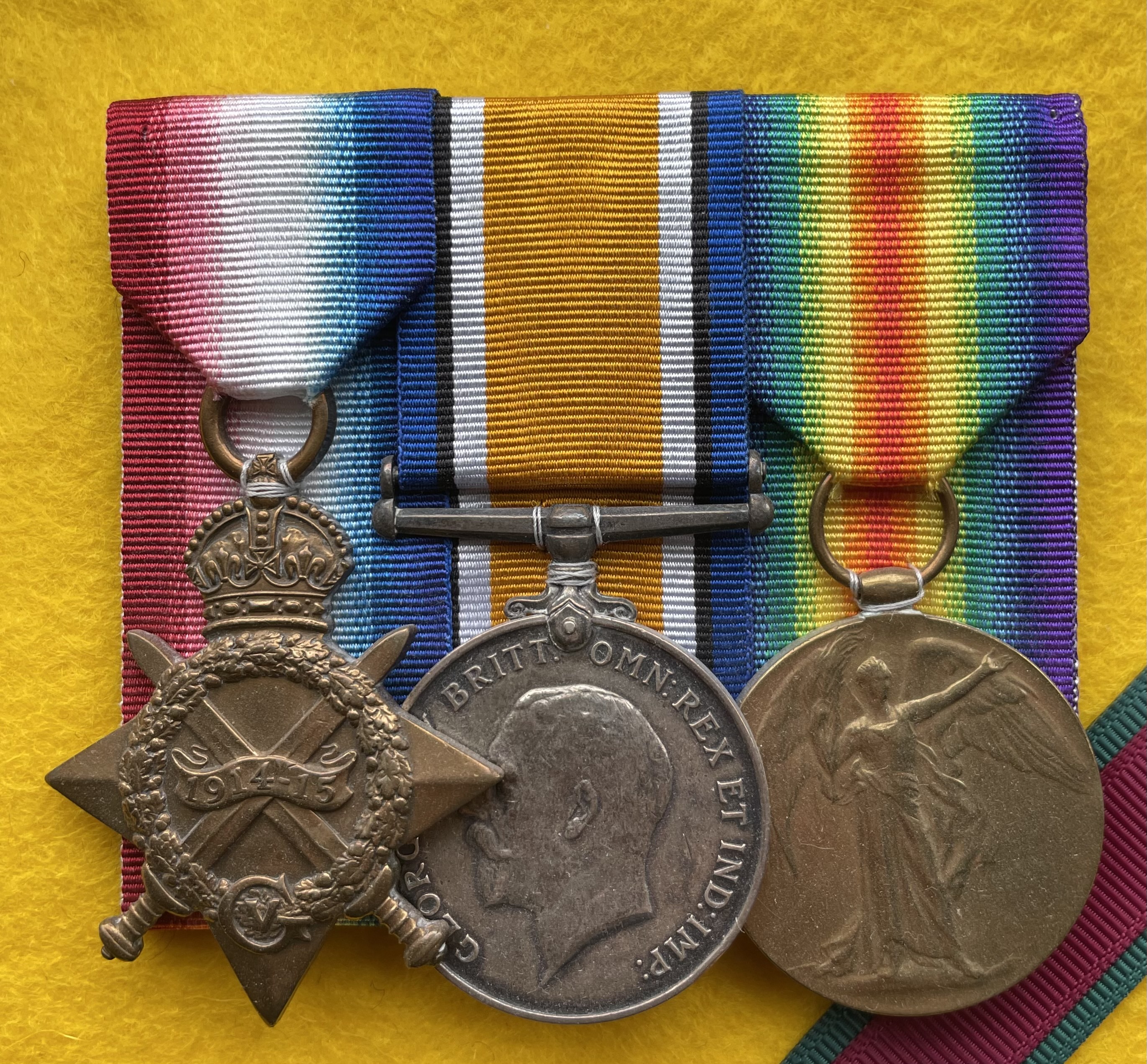
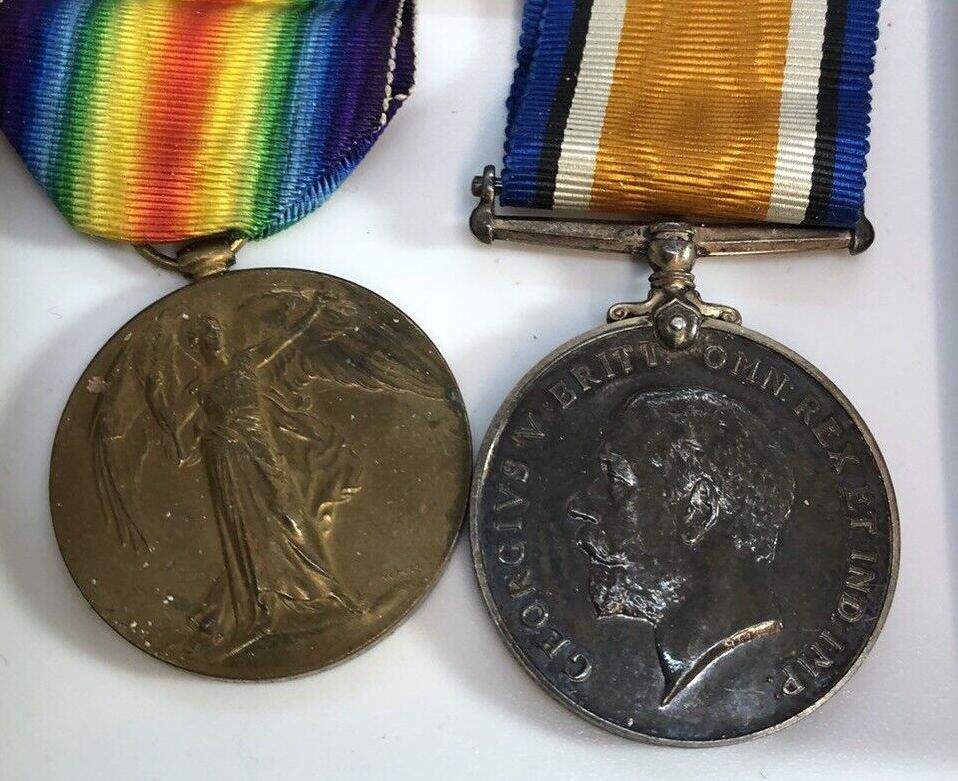
1914-15 Trio awarded to Jim Cook
Medal Role
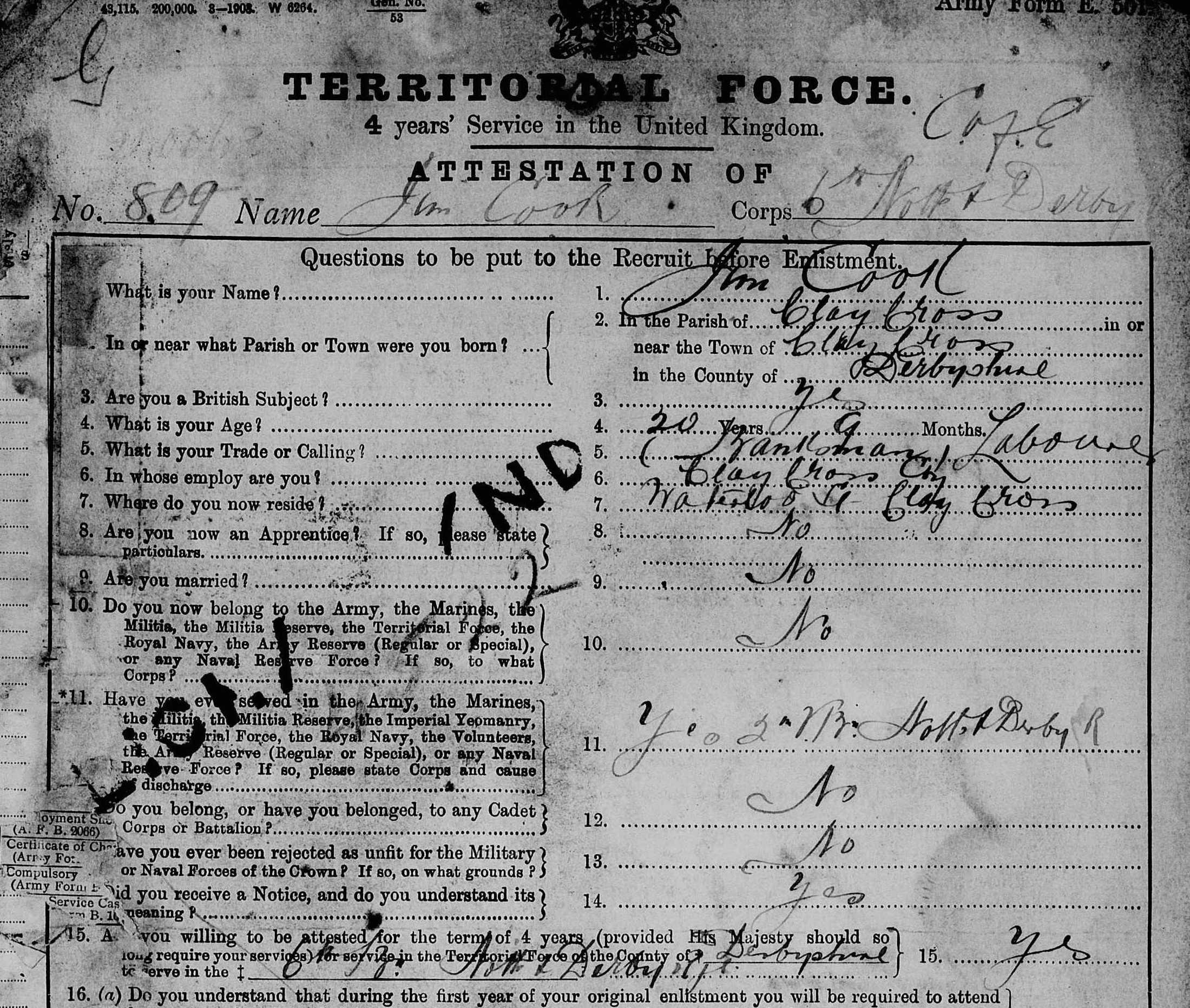
Attestation Form

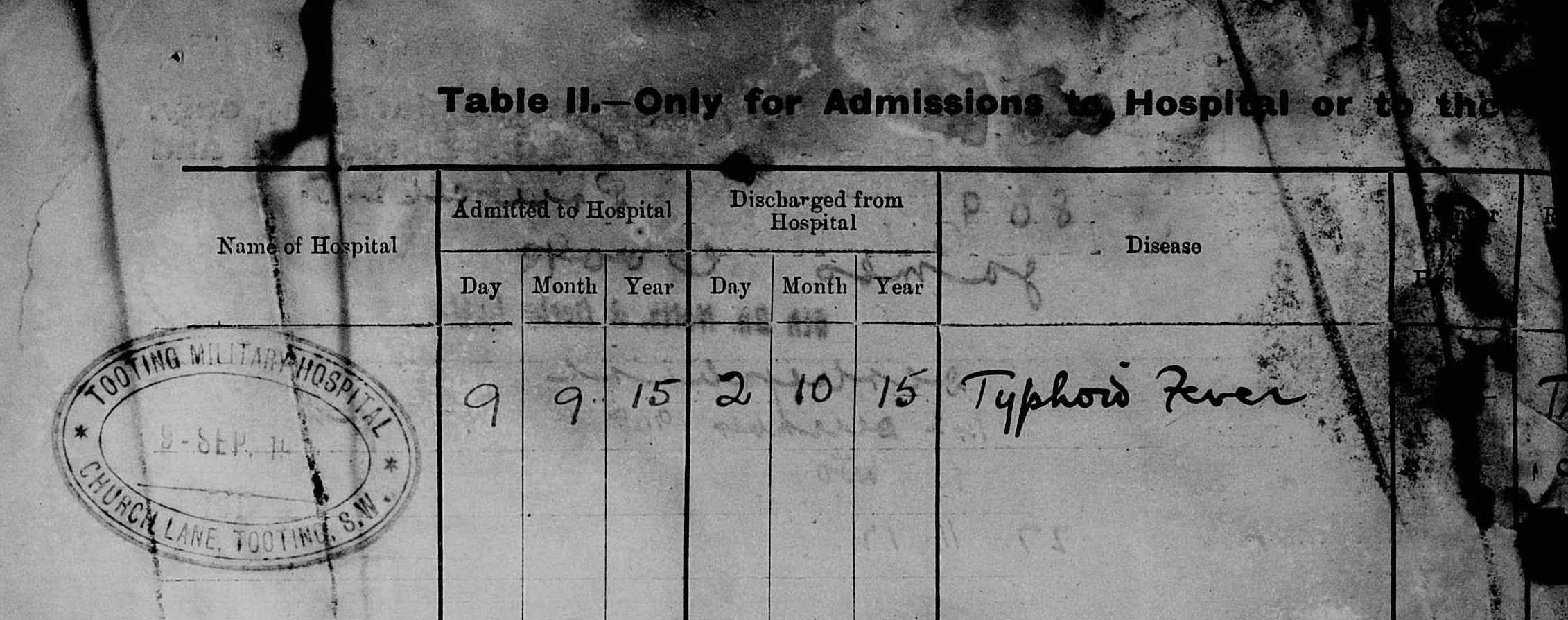
Jim was a 20 year old miner from Clay Cross when he enlisted and was posted to Letter G (Clay Cross & District Company). Jim arrived in France with the rest of the 46th North Midland Division in February 1915. Jim caught typhoid/enteric fever in September 1915 and was transferred to Hospital in England.

Medical Record

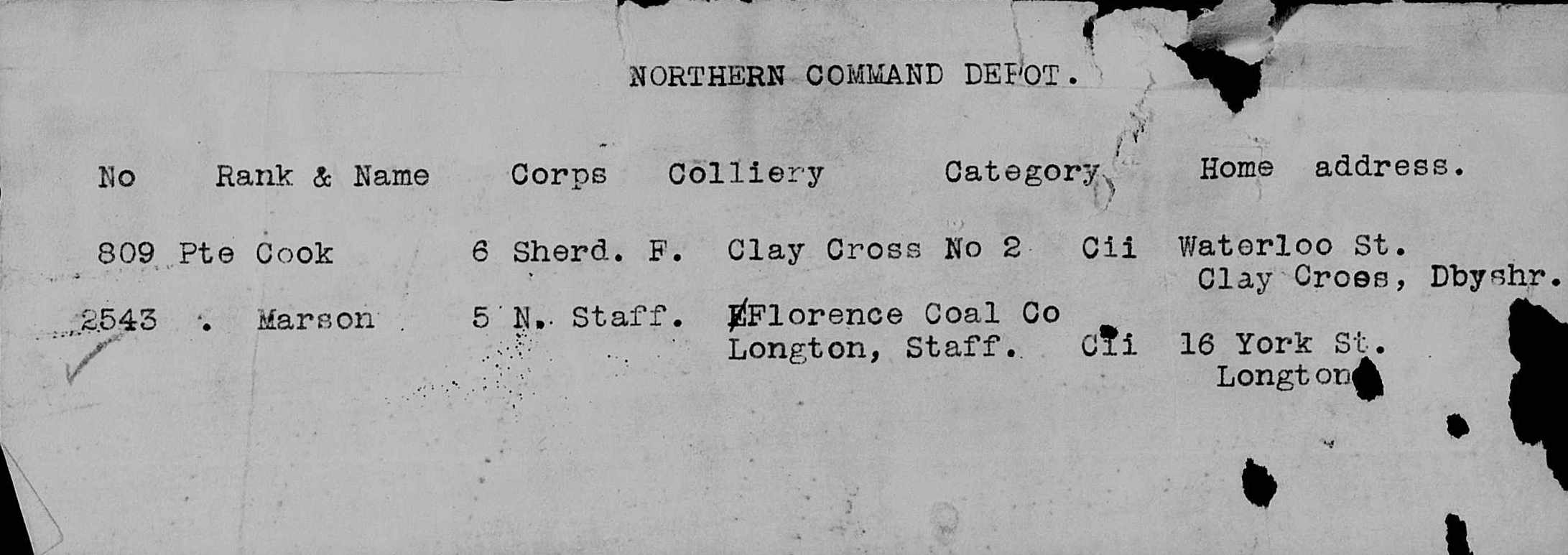
Following treatment in Tooting Hospital Jim was discharged in October 1915 and posted to the 3/6th Battalion. He was later transferred to the Command Depot at Ripon in March 1916.

Northern Command Depot

In August 1918 Jim was transferred to the Army Reserve and returned to work at Clay Cross No 2 Pit.

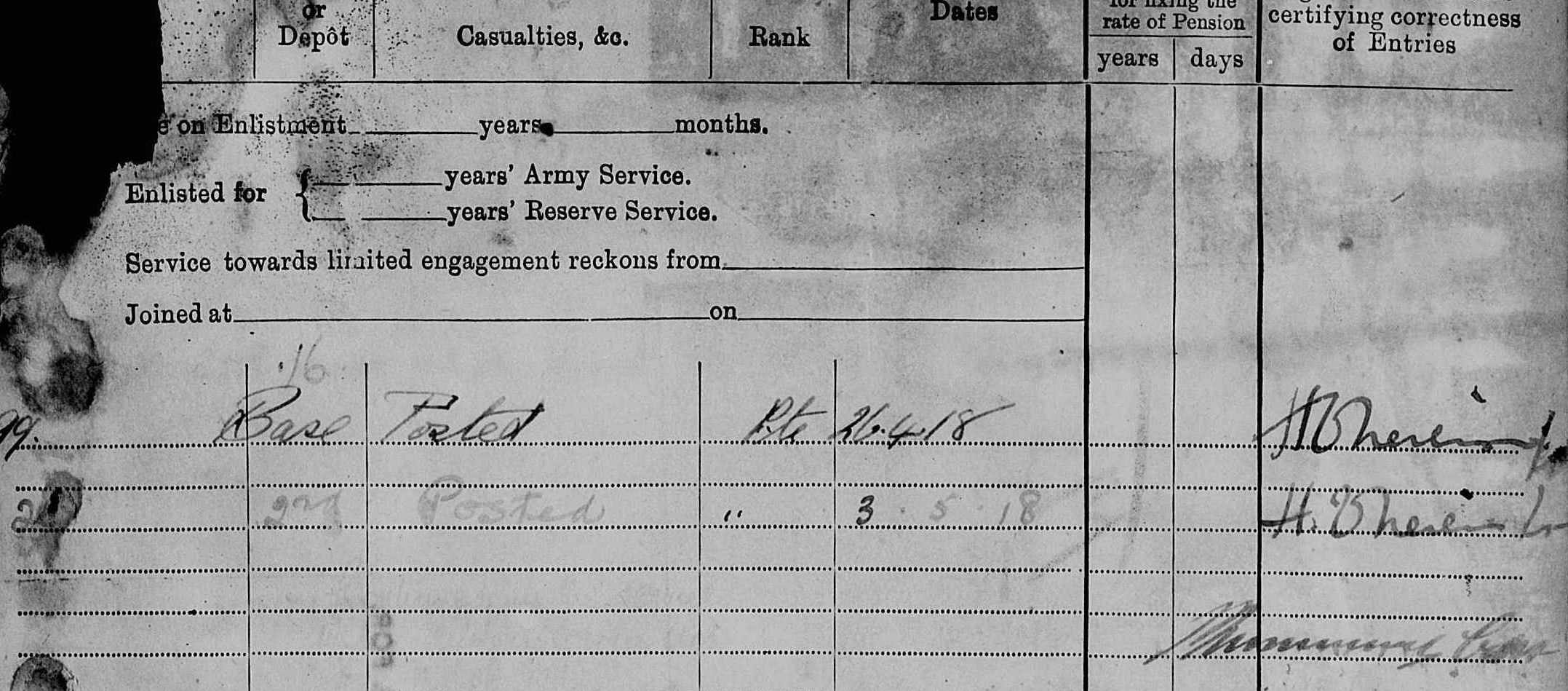
Army Service Record

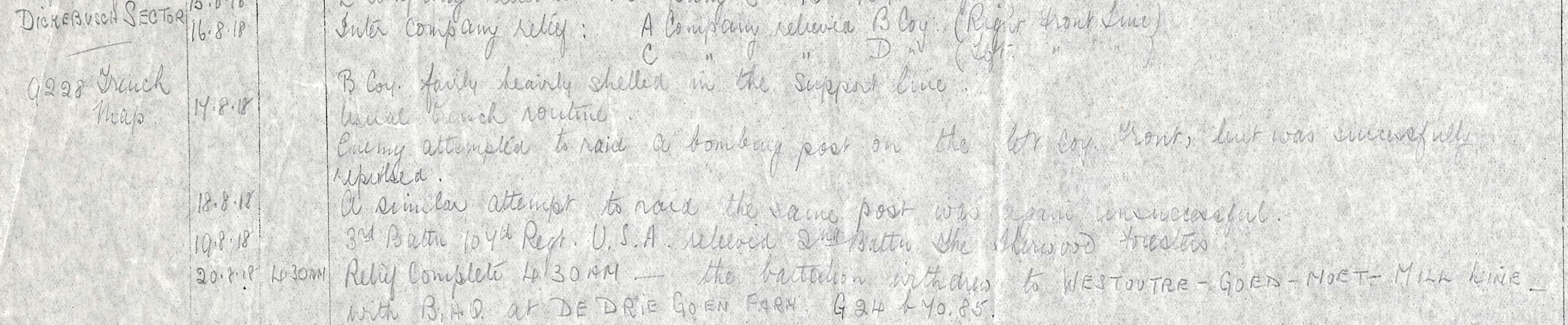
Jim returned to France in April 1918 and was posted to the 2nd Battalion. He was wounded on 17th April 1918; suffering from gsw in the upper right arm. At that time the 2nd Battalion were holding front line trenches in the Dickebusch Sector when they were heavily shelled and the Germans attempted to raid a bombing post.

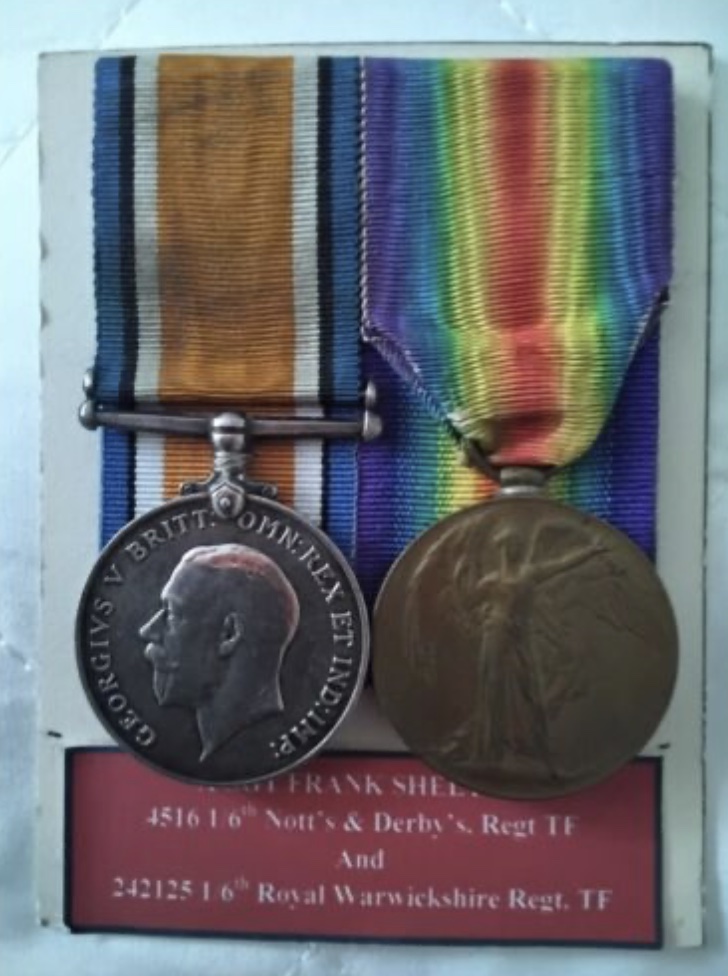
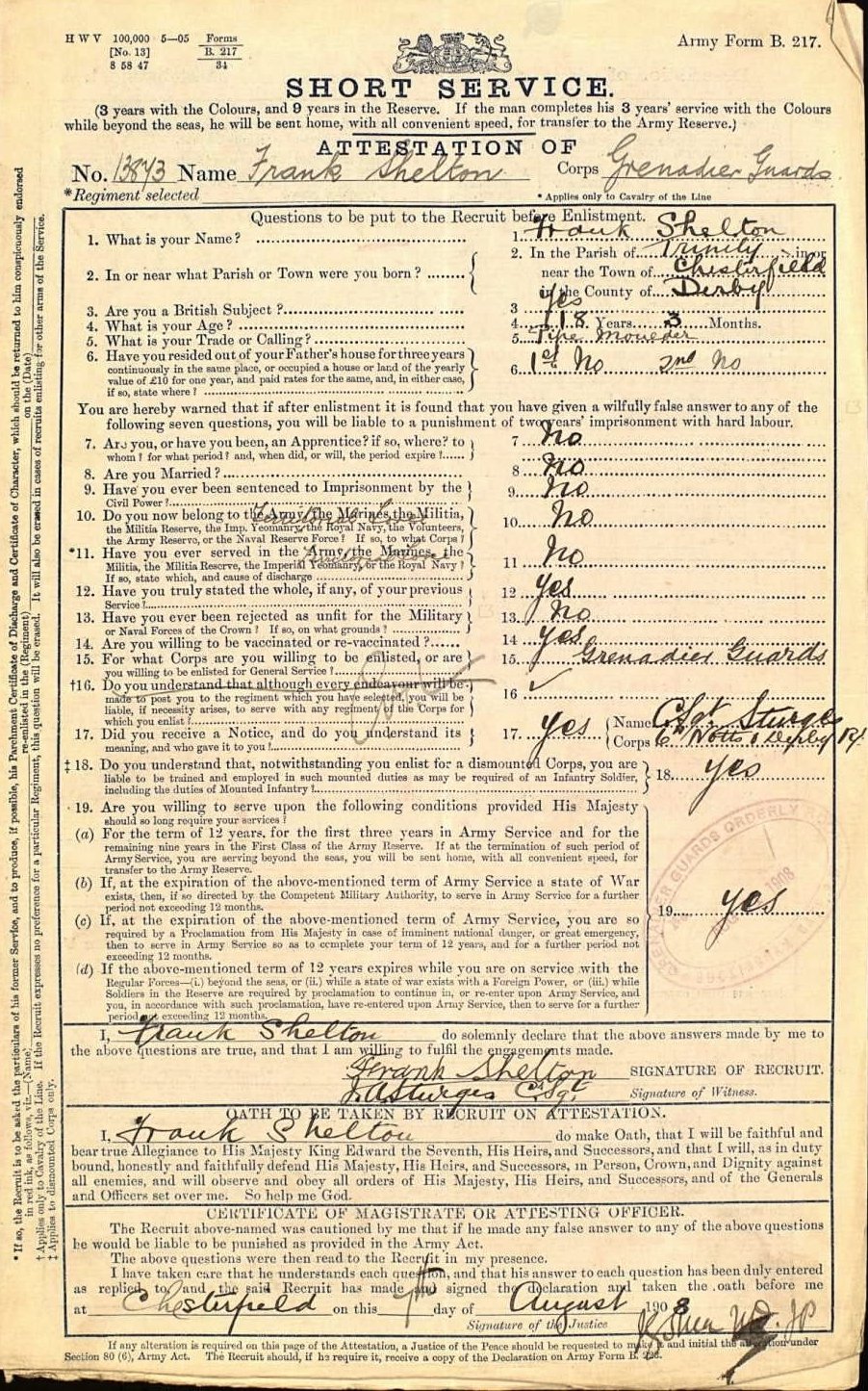
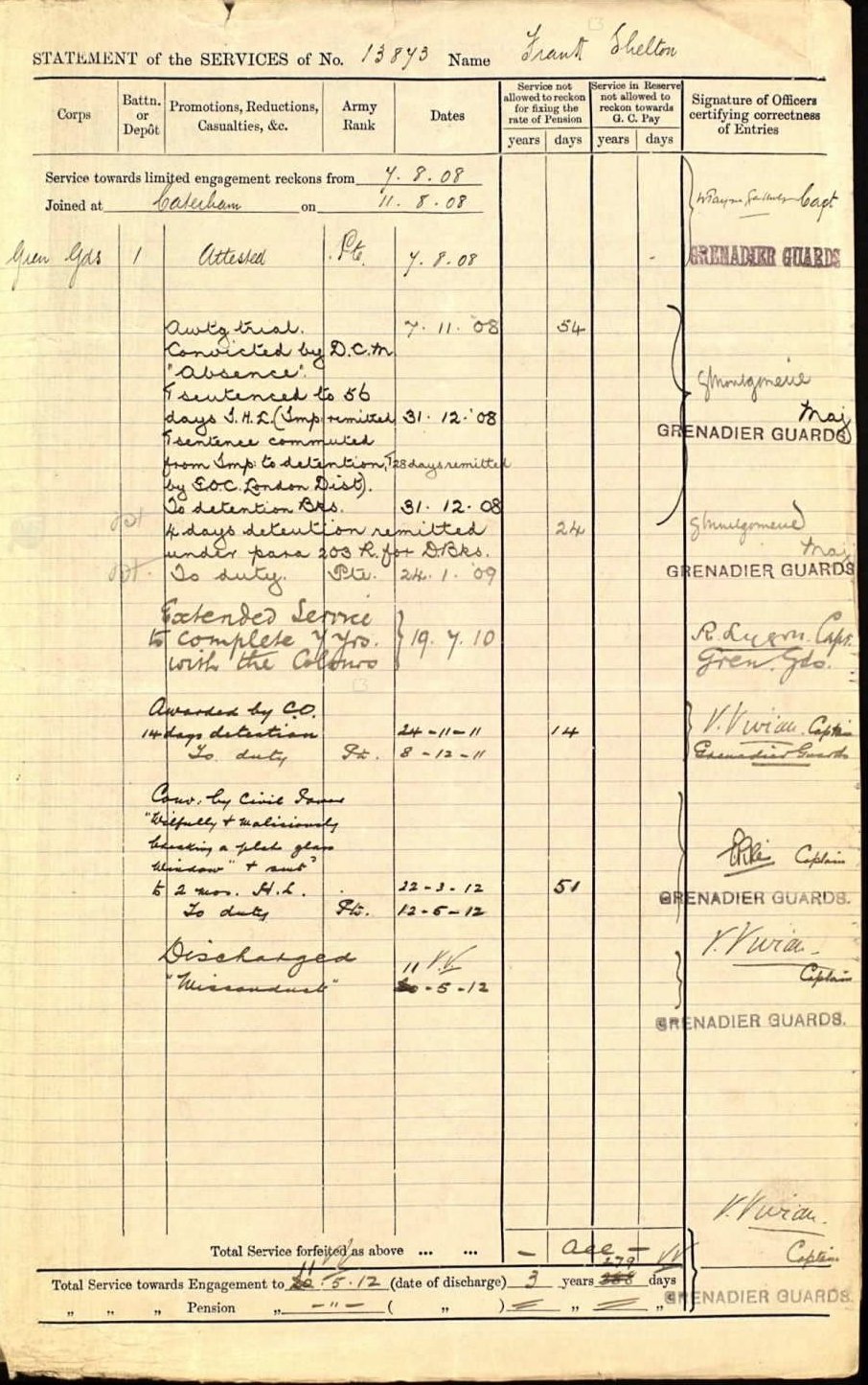
4516 Pte Frank Shelton from Chesterfield

A bit of a rogue or a ‘wrong ‘un’……..

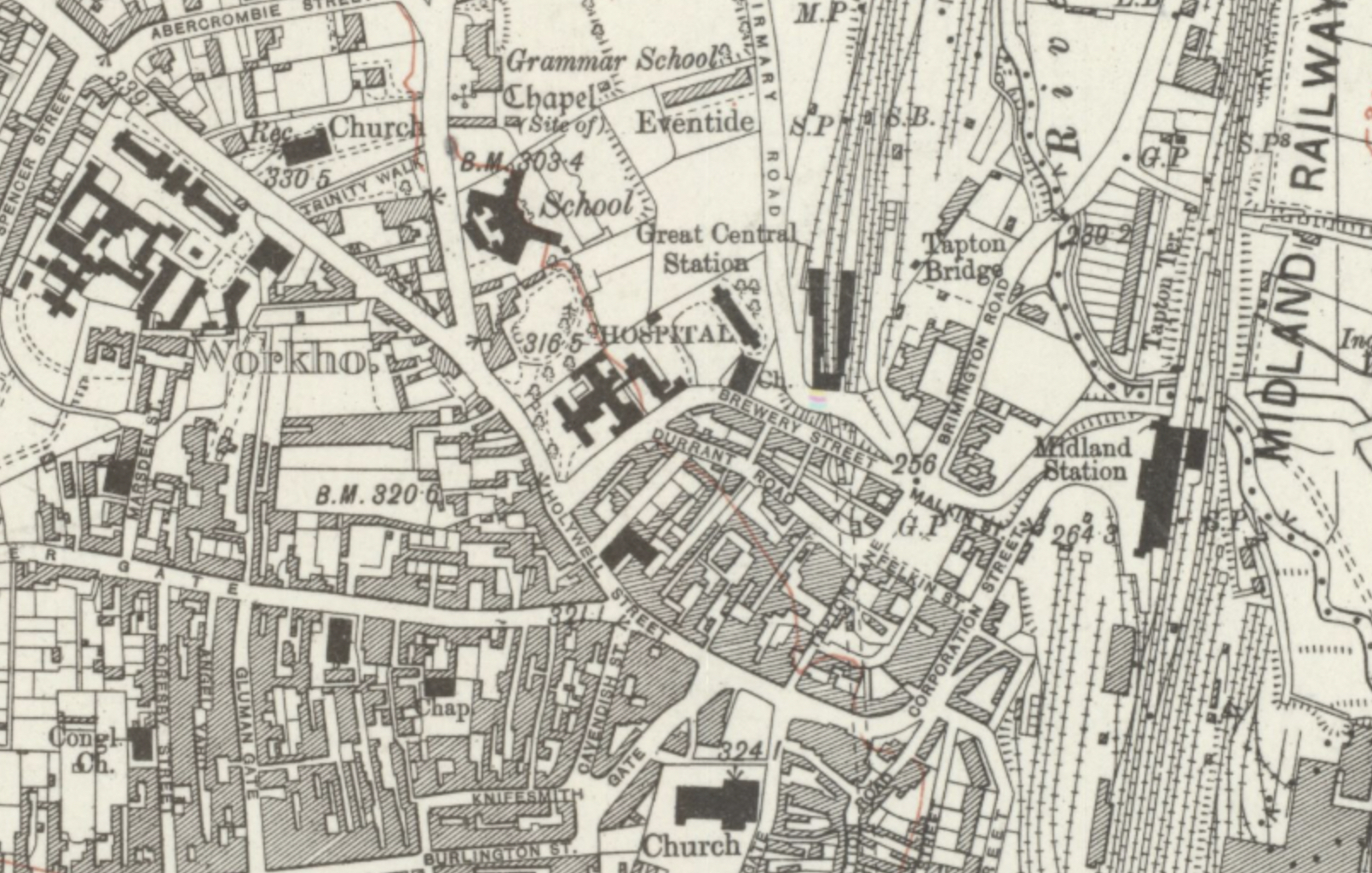
Frank Shelton was born in Chesterfield in 1891 and was a pipe moulder by trade. He enlisted into the 6th Battalion, The Sherwood Foresters early in 1908. He was married to Hannah and they lived in Brewery Street close to the Hospital

Chesterfield

Frank enlisted into the Grenadier Guards in August 1908 and achieved a 3rd Class certificate of education in October 1909. However, it would appear that Frank suffered from a lack of military discipline and was eventually discharged due to ‘misconduct’ in May 1912.


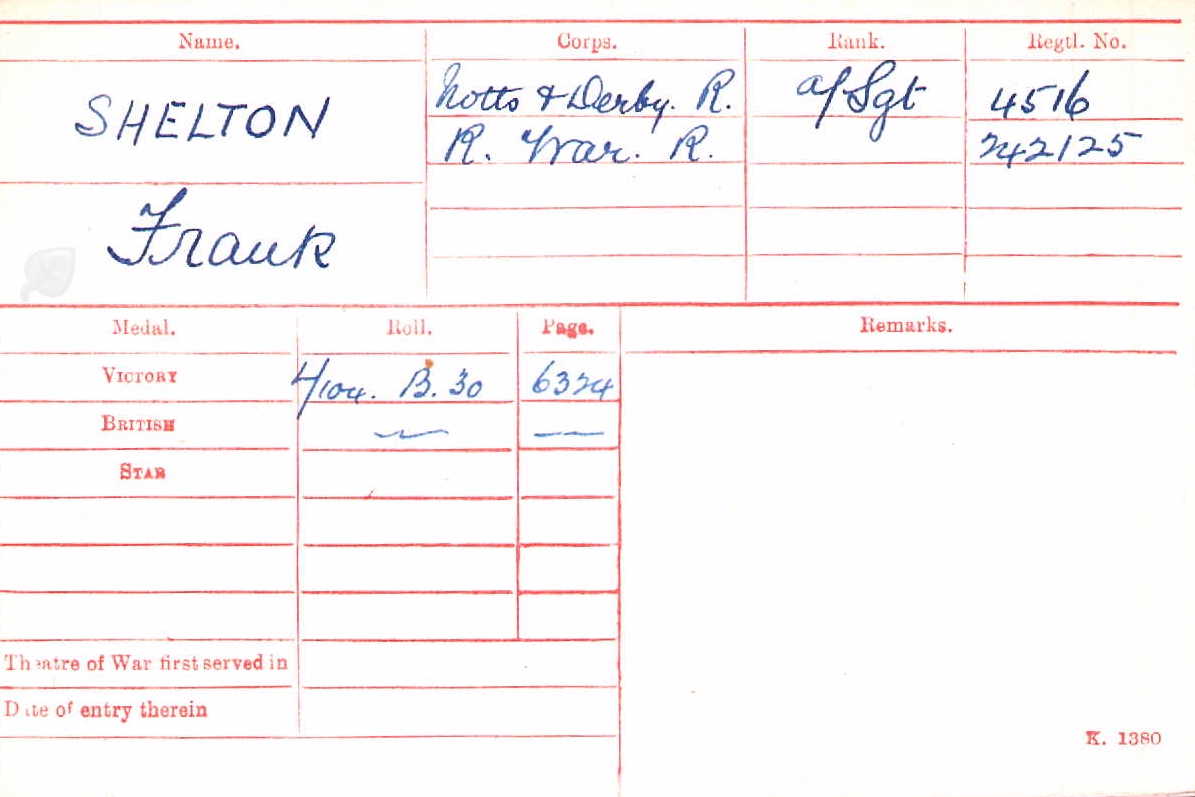
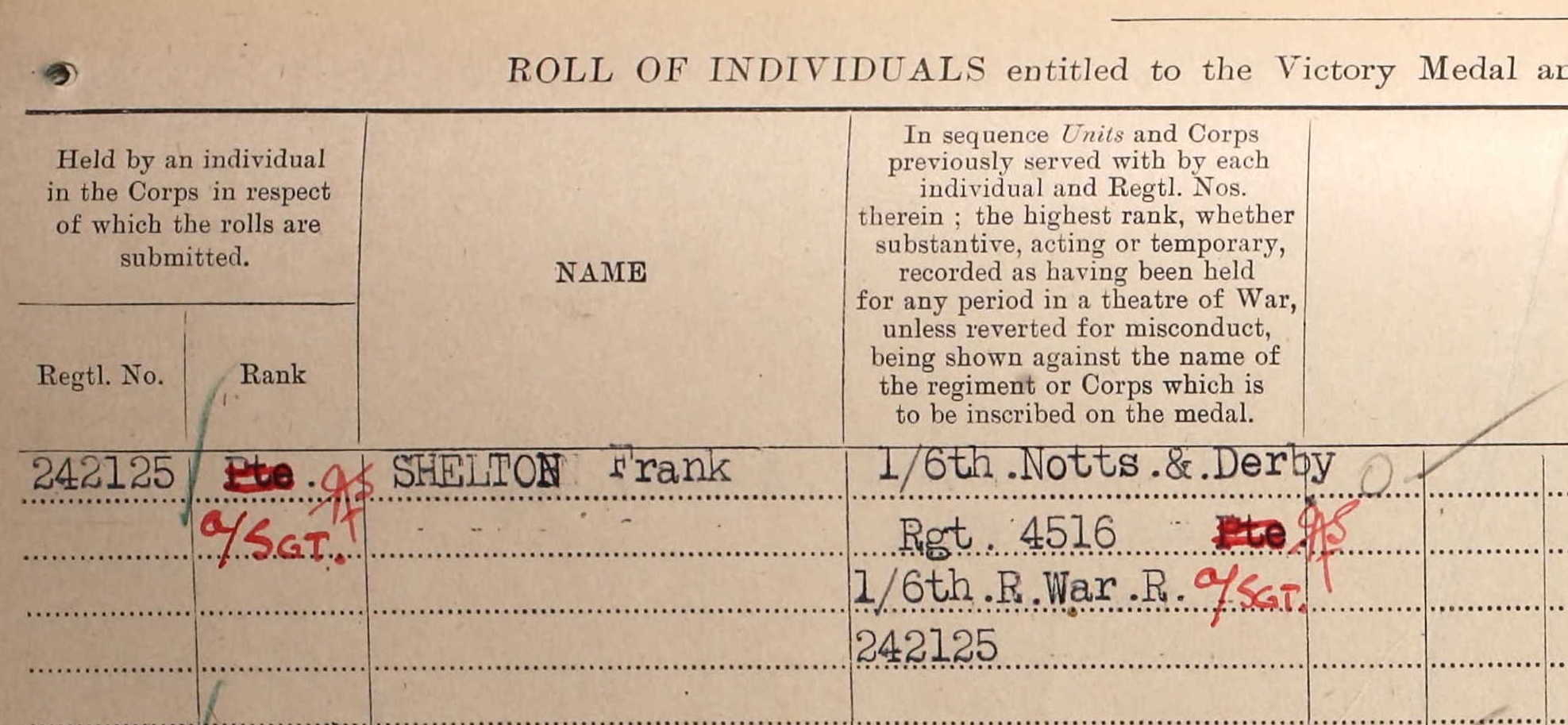
Medal Roll

Frank enlisted into the 6th Battalion, The Sherwood Foresters in August 1915 and was issued the Regimental number 4516. His 4-digit number on the medal index card records his entitlement to the BWM and VM and suggests that he arrived in France in 1916.

At some point (before the 1917 Territorial Renumbering) Frank was transferred to the 1/6th Battalion Royal Warwickshire Regiment where he rose the rank of acting Sergeant.


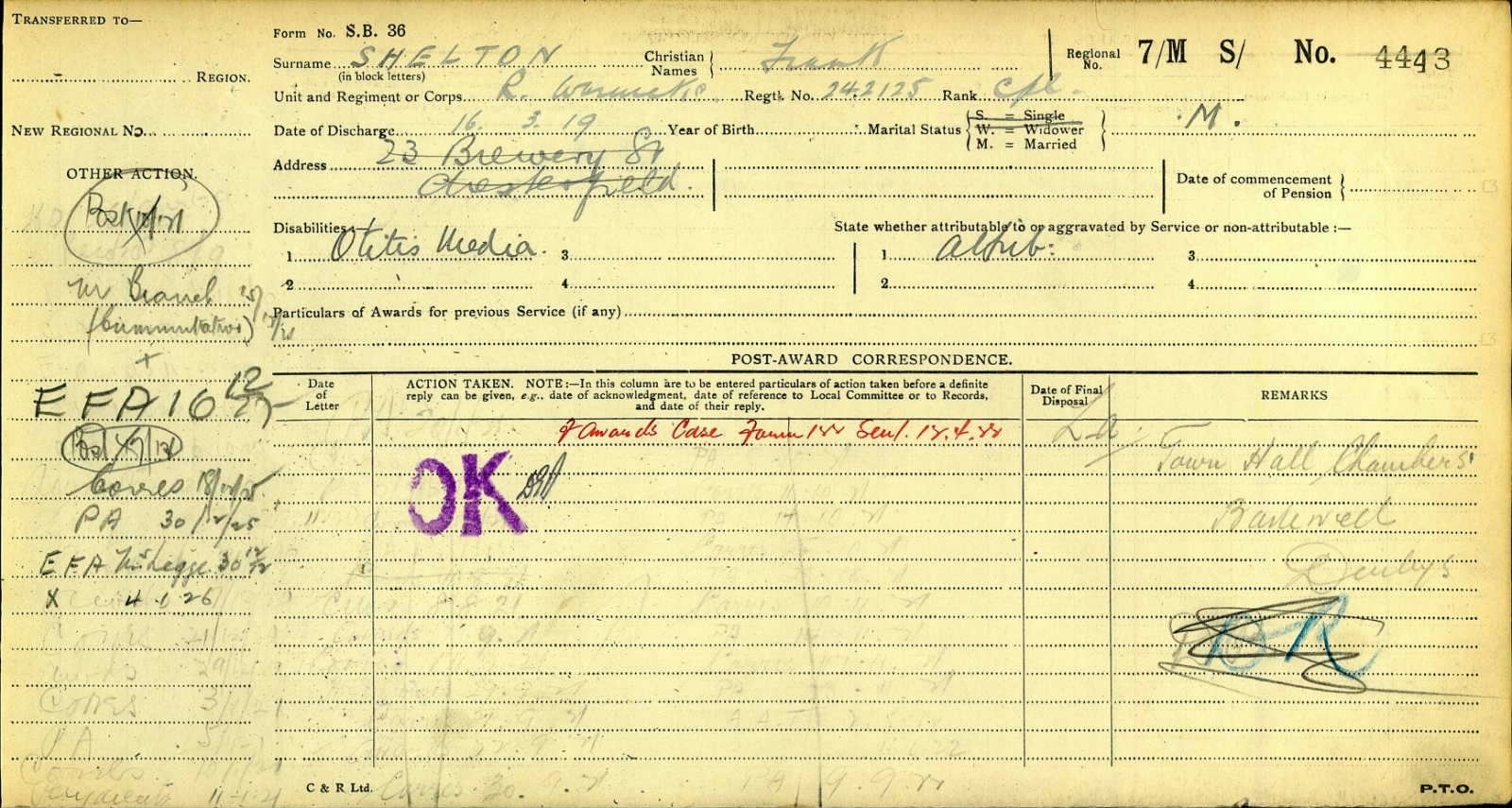
Pension Record

Frank was eventually discharged in March 1919 and received a pension.

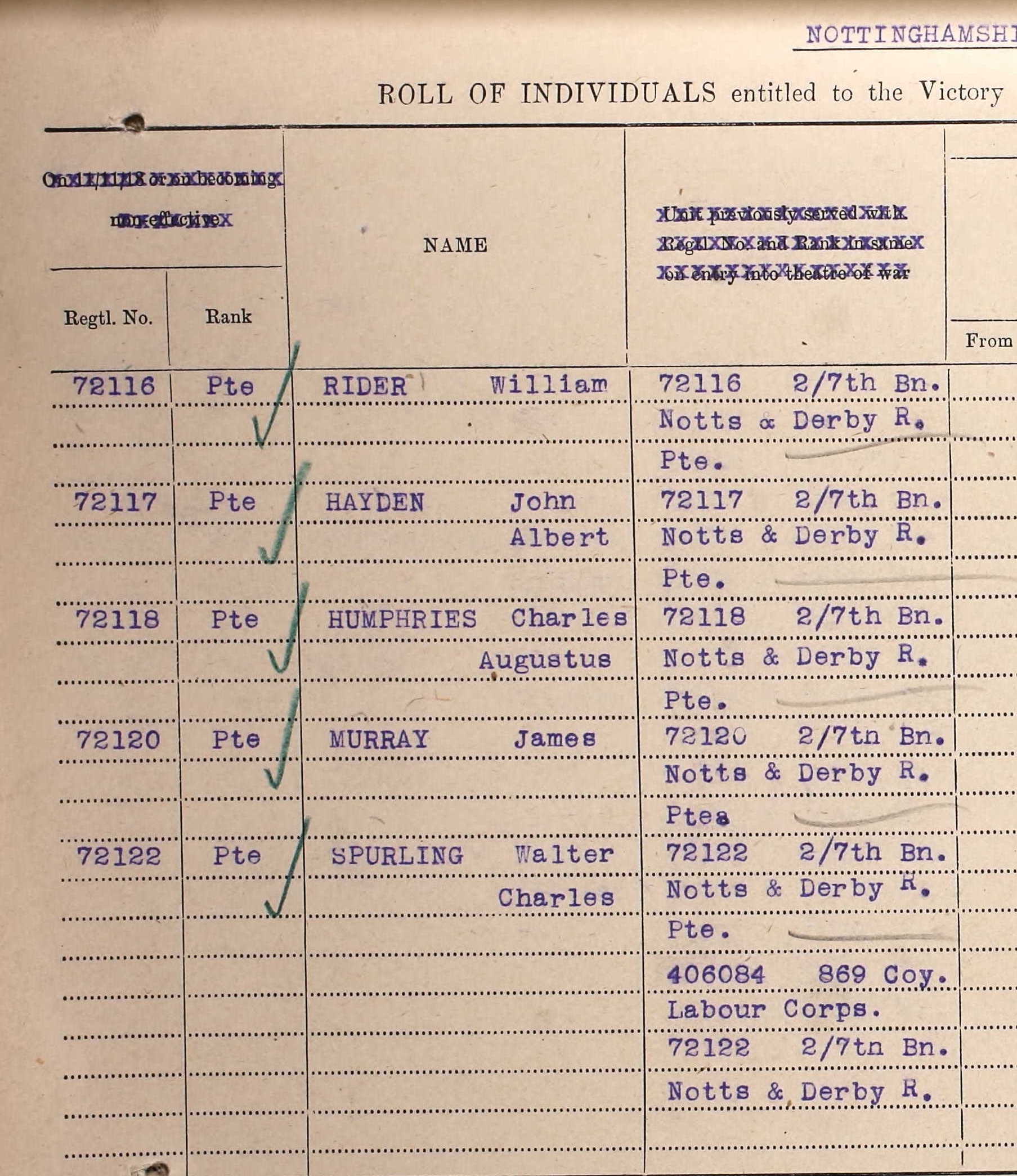
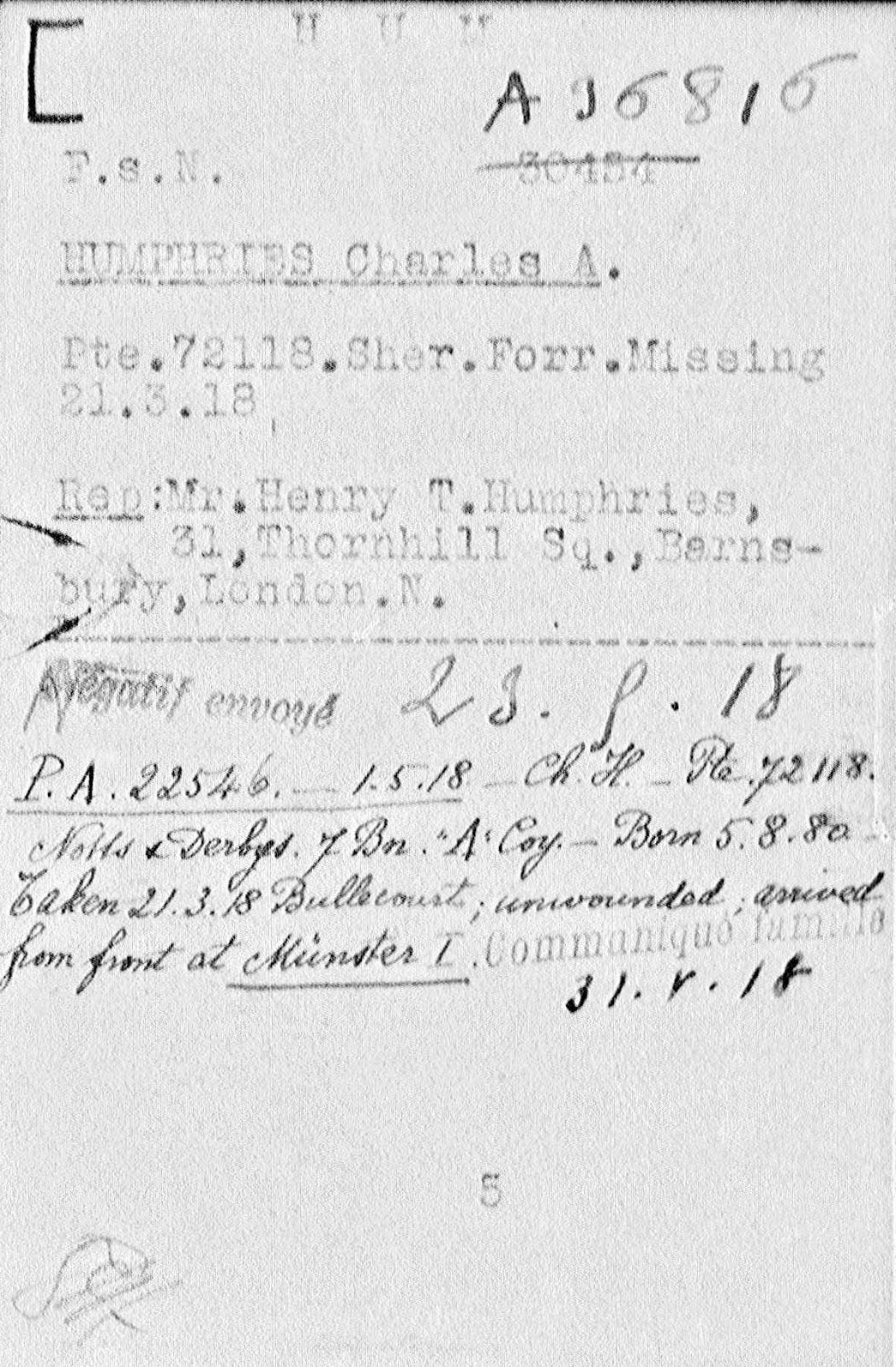
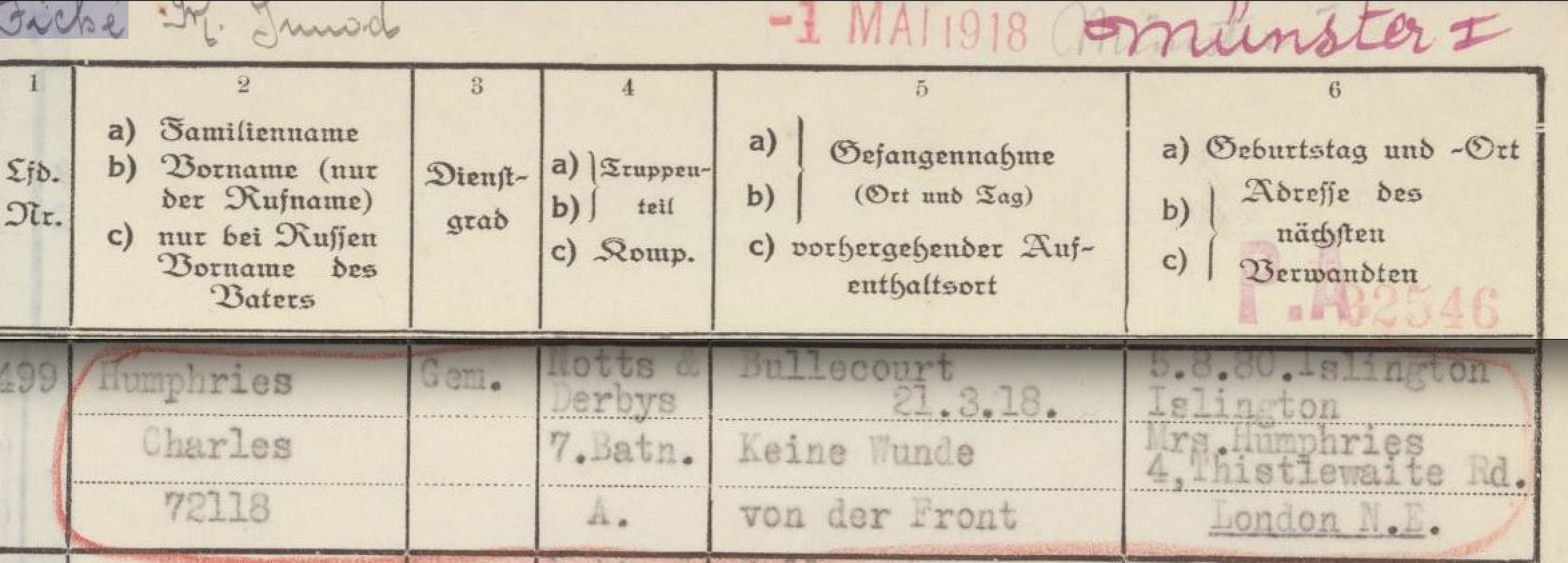
72118 Pte Charles Augustus Humphries

A ‘Londoner’ who was posted to the 2/7th Battalion, the Robin Hoods, in July 1917 and captured during the ‘Kaiserschlacht’ on 21st March 1918

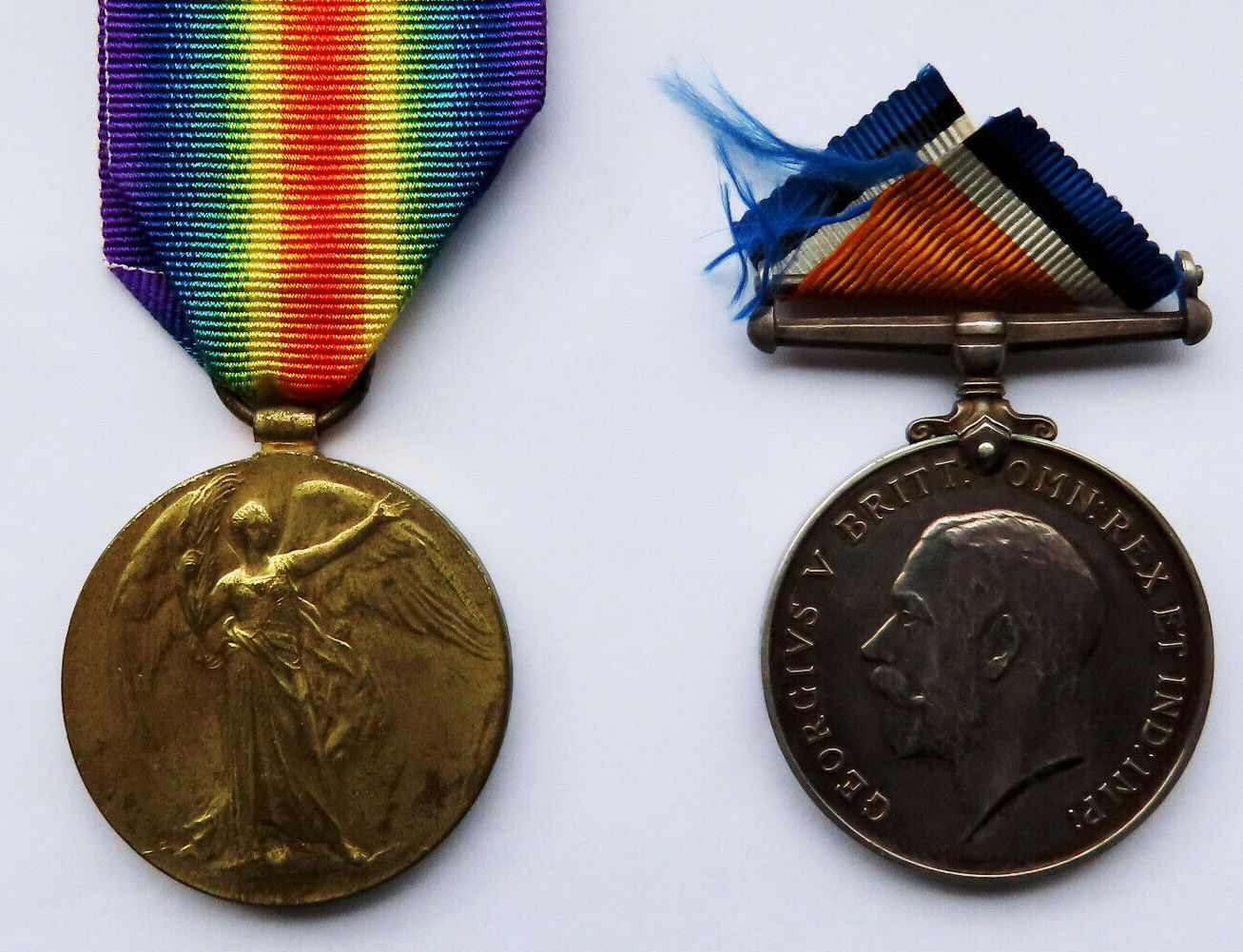
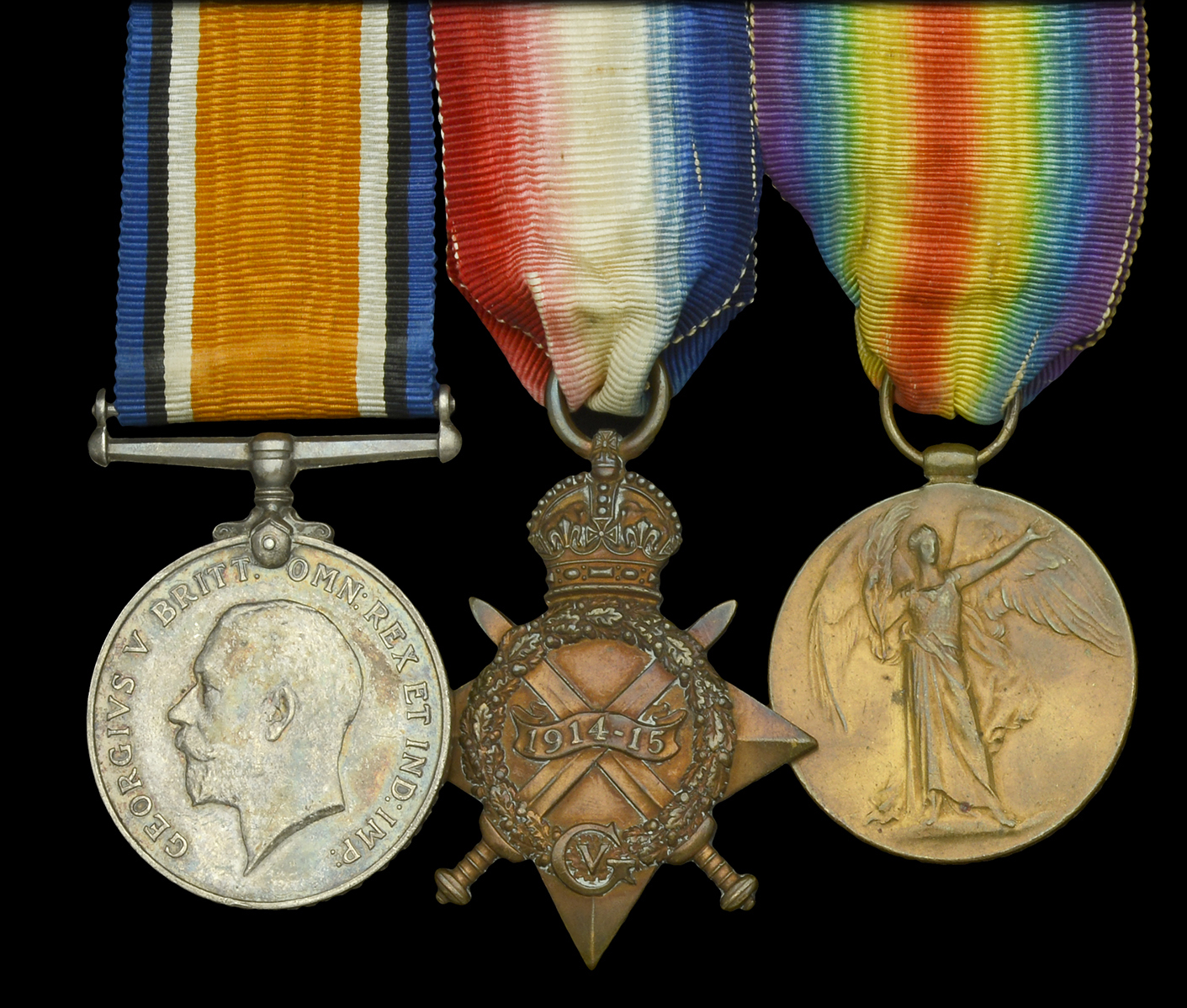
Charles was awarded the BWM and VM

Unfortunately, not a lot is known about Charles Augustus Humphries. He was born in Islington on the 5th August 1880, but there does not appear to be any census or birth records for that precise date (note: the birth of a Charles Augustus Humphries was recored in Islington in 1881).


It is not known when Charles enlisted into the British Army, but he was part of a contingent of approximately 65 men that were transferred to the 2/7th Battalion Sherwood Foresters on the 28th July 1917.

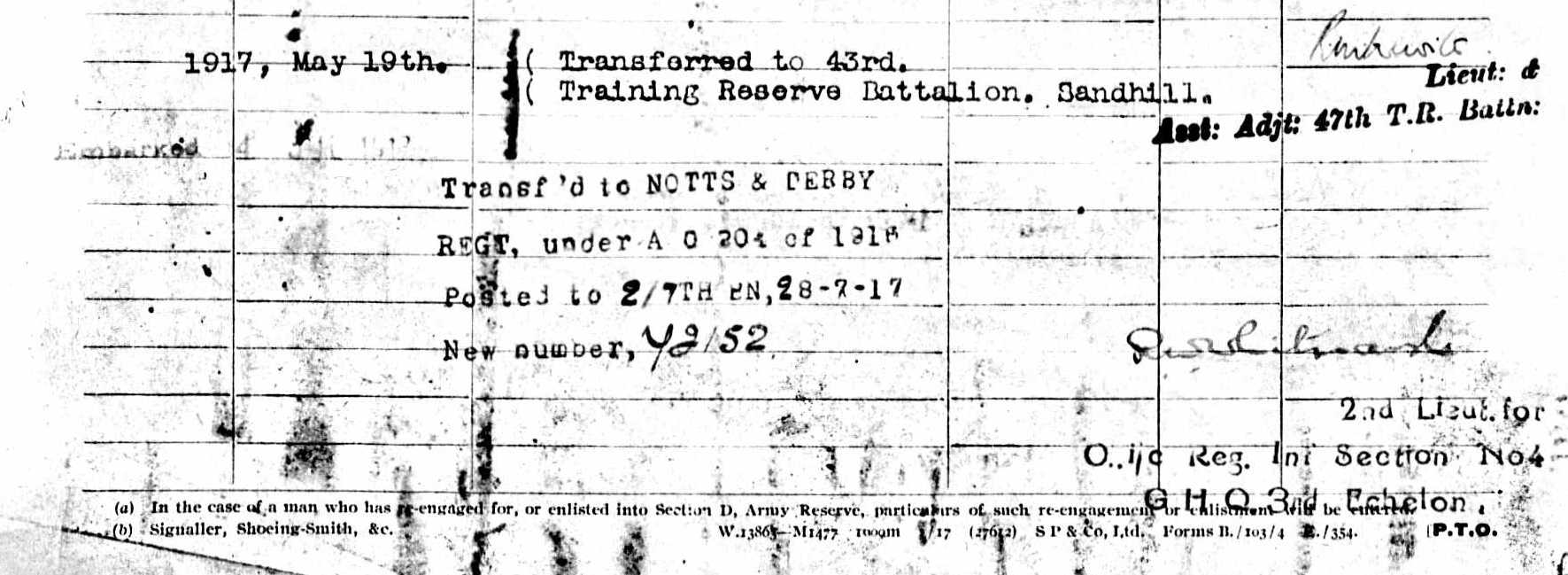
These men were given the service numbers 72093-72158. A service record for Charles does not exist, but a record for 72152 Pte John William Moore, from Paistow in East London, does exists and from this we can draw several conclusions.

Army Form B. 103: Casualty Form – Active Service

John Moore was posted to the 2/7th Battalion, the Sherwood Foresters on the 28th July 1917 along with the 64 other men. This appeared to happen at the 63rd Infantry Base Depot. John had originally served with the 47th and 43rd Training Reserve Battalions at Sandhill. It’s possible that Charles also trained with one of these Battalions.


Medal Role

Charles only served in France with the 2/7th Battalion from July 1917, therefore taking part in the 59th Division attack on 26th September during the 3rd Battle of Ypres.

2/7th Battalion, Sherwood Foresters War Diary
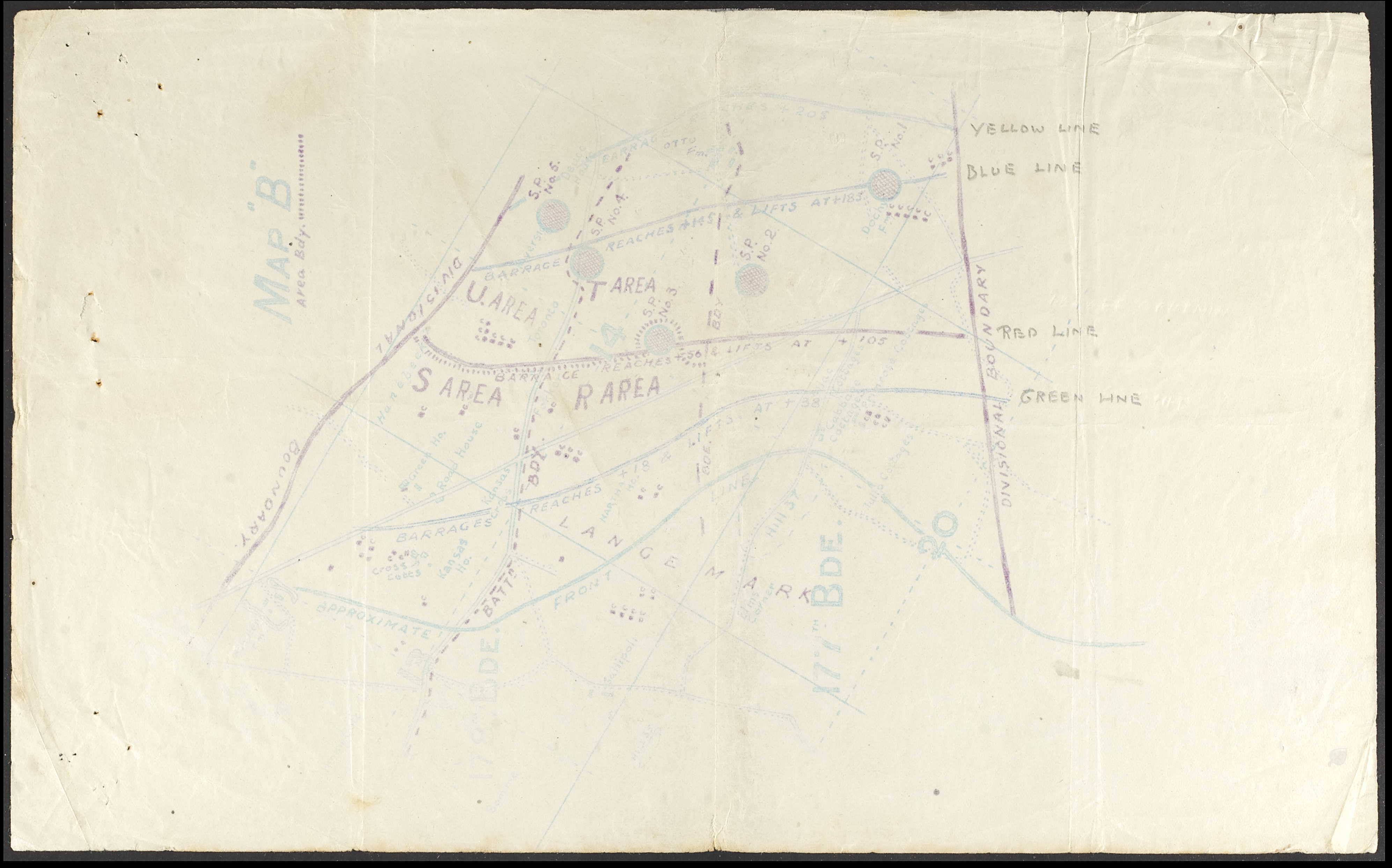
Trench Map

The 2/7th Battalion, Sherwood Foresters were responsible for capturing the ‘S’ Area, whilst the 2/6th Battalion, Sherwood Foresters were responsible for capturing the ‘R’ Area.


Charles was made a prisoner of war on the 21st March 1918 during the German spring offensive. It is not known when he was repatriated.

2190 Pte Walter Edward Lamb from Chapel-en-le-Frith

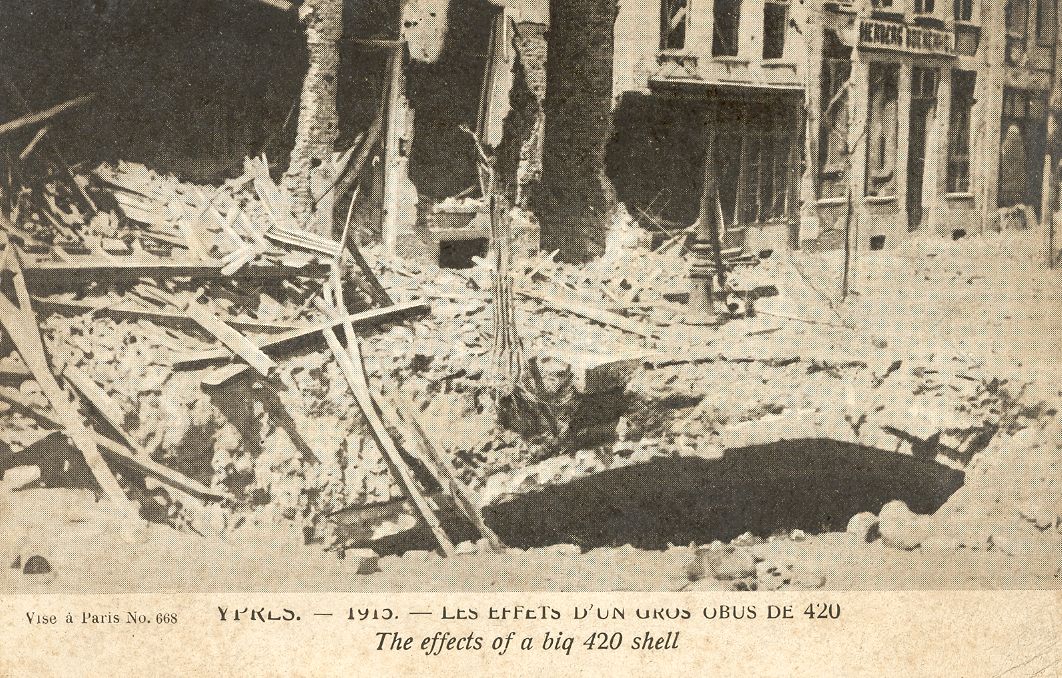
A pre-War Territorial who originally served with ‘H’ (Whaley Bridge, New Mills and Hayfield) Company and arrived in France in February 1915 with ‘B’ (Whaley and Chapel) Company. Wounded by a shell explosion in Ypres on 4th July 1915. Discharged due to wounds in May 1916.

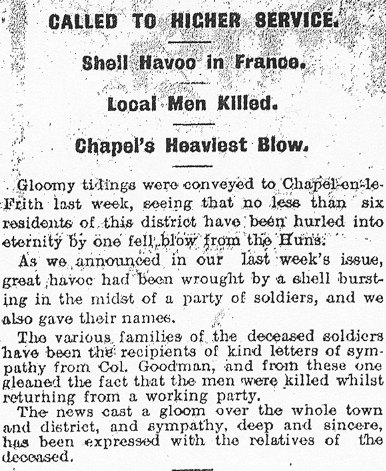
The casualties numbered thirty-two; nine men were killed or died of their wounds and another 23 were wounded. 

On 4th July a routine fatigue party 200 strong and under the command of Captain Edgar Heathcote marched to the front line, but came under heavy shellfire on the return journey:-

“On the Saturday night we went up to the lines on fatigue, and travelled up a long way in motor lorries; it was quite an exciting journey for us after we left the lorries to march through Ypres, especially as for many of us it was the first experience of the war. Fritz was sending over a few gas shells and we were all sneezing and rubbing our eyes. We drew spades and set off after a short rest, landed at the work, finished off fairly quickly and started for home – home consisting of bivvies made from water-proof sheets, and some of us hadn’t even got those. We had a pretty rough journey coming through Ypres, had just downed tools and started the march towards the houses, when Fritz began shelling; of course he managed to get a lucky shot right in the middle of us, killing and wounding about half the party, many of whom had not yet even seen the trenches”.

[Battalion History]

See here https://derbyshireterritorials.uk/the-great-war-1914-1918/1915-2/ypres/

4471/241528 Frederick George Hall

Enlisted in August 1915 and served with the 1/6th and 1st Battalions

Victory Medal
Medal Index Card
Medal Roll

Frederick enlisted into the 3/6th (or 2/6th) Battalion in August 1915 and was subsequently posted to the 1/6th Battalion. He was not awarded a 14-15 Star so probably arrived in France in 1916. He was still serving with the 1/6th Battalion at the time of the Territorial Force renumbering in spring 1917. At some time (and for reasons unknown) he was transferred to the 1st Battalion. He survived the War.

268073 Pte Frederick Albert Surman from London

One of the ‘London recruits’, but did he serve with the 1/6th or 2/6th Battalion……..

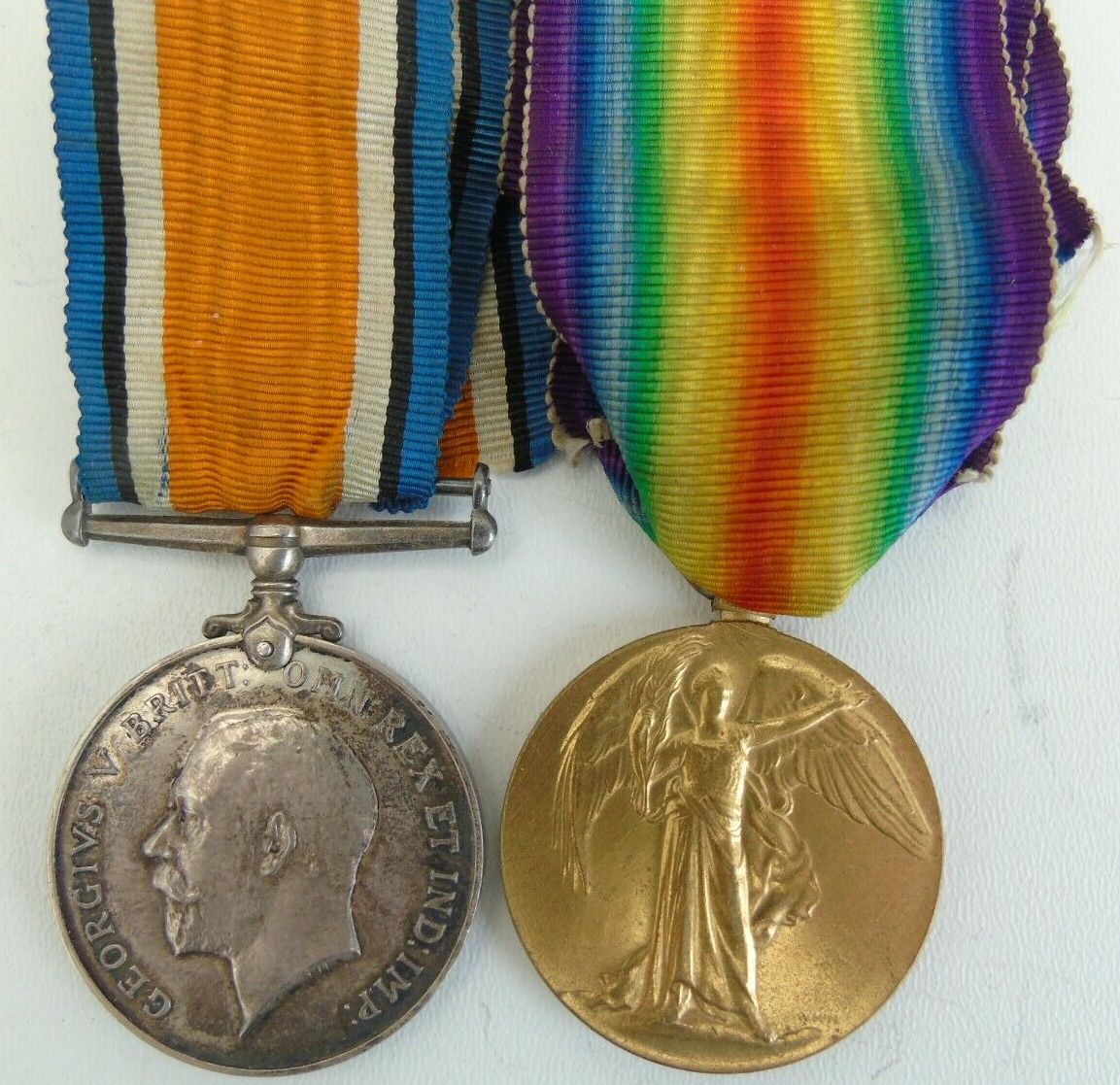
Victory and British War Medals
Medal Index Card

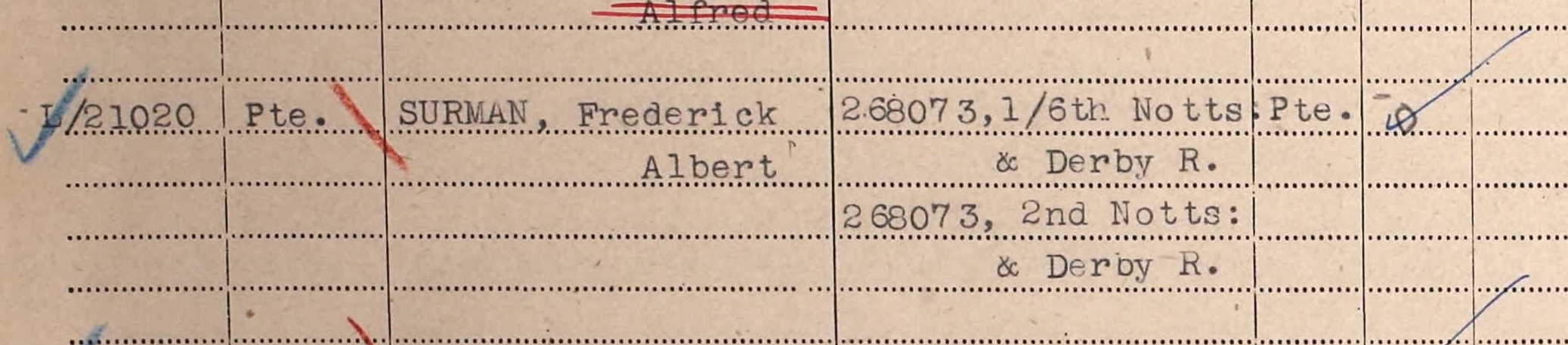
Frederick was born in Fulham in 1898 and was one of the ‘Londoners’ that were posted to the Sherwood Foresters Battalions of the 178th Brigade, 59th Division in September 1916.

Medal Roll

He originally served with the 2/7th Battalion because in Spring 1917 he was issued with a number allocated to the 7th Battalion (265001 – 305000). However, the medal roll shows that he was transferred to the 2/6th Battalion and then the 2nd Battalion before finally ending up in the Middlesex Regiment.

31 Ambulance Train 25th October 1917

In October 1917 Frederick suffered a shell wound to the right leg and was transported on the 31 Ambulance Train from Brauy to Commines. At this point he is recored as serving with ‘B’ Company in the 2/6th Battalion.

1/6 Battalion War Diary 19th-28th October 1917
2/6th Battalion War Diary 25th-31st October 1917

At the time of his wounding only the 2/6th Battalion was occupying front line trenches and recorded 11 other ranks wounded during their 5 days in the front line.

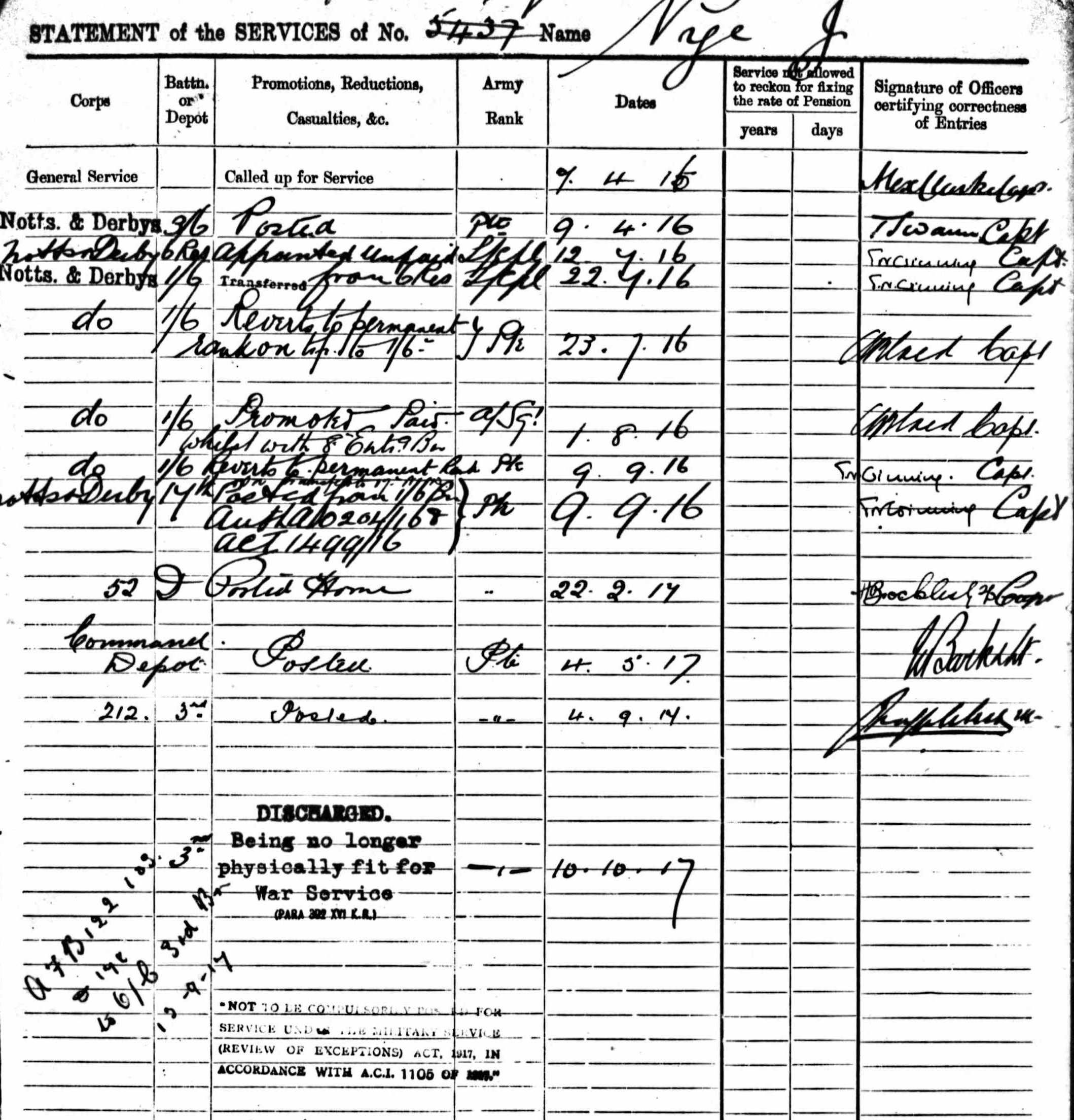
5427/70266 A/Sergeant James Nye from Guildford

A 1916 recruit who served in France with the 1/6th and 17th Battalions

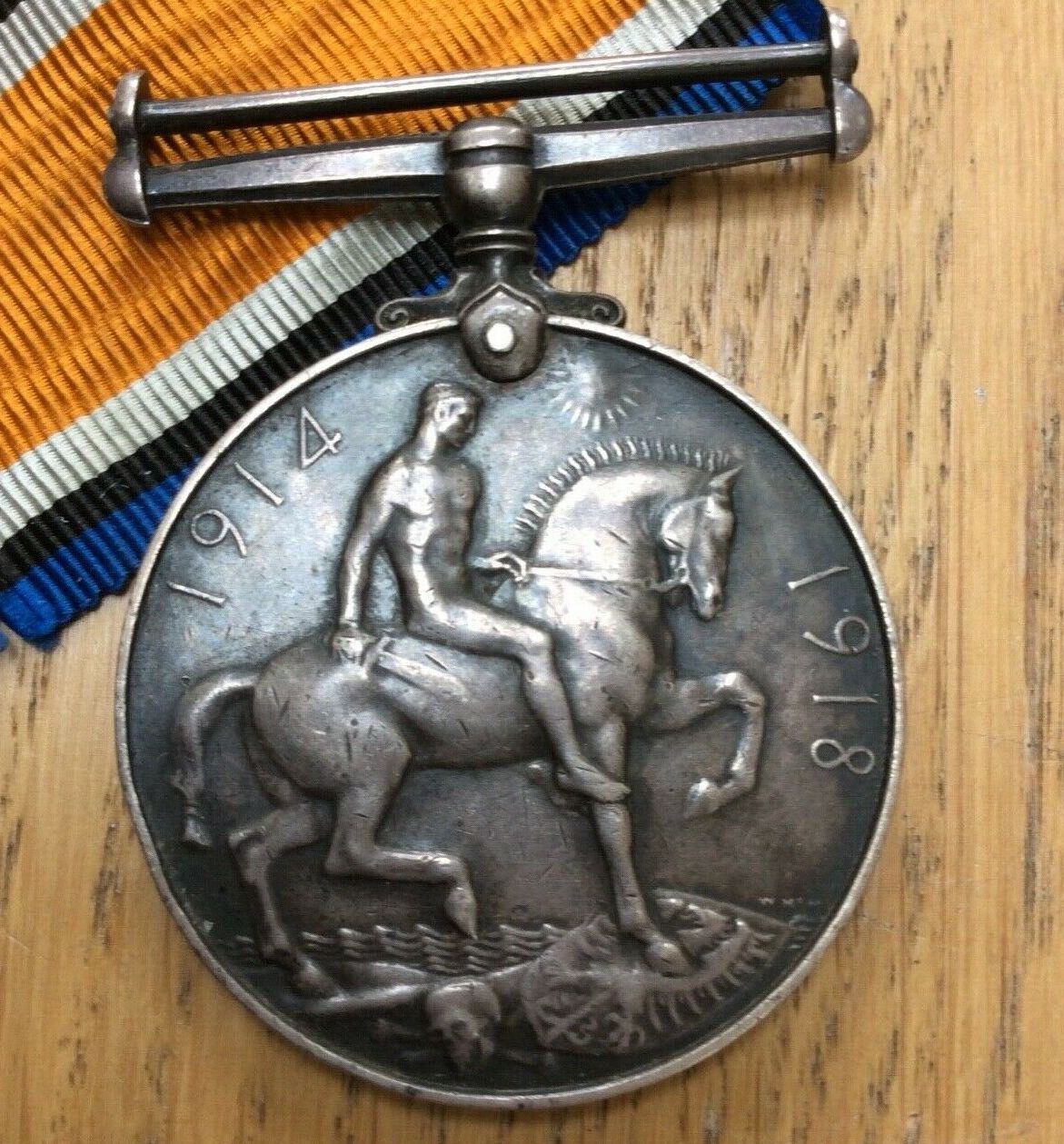
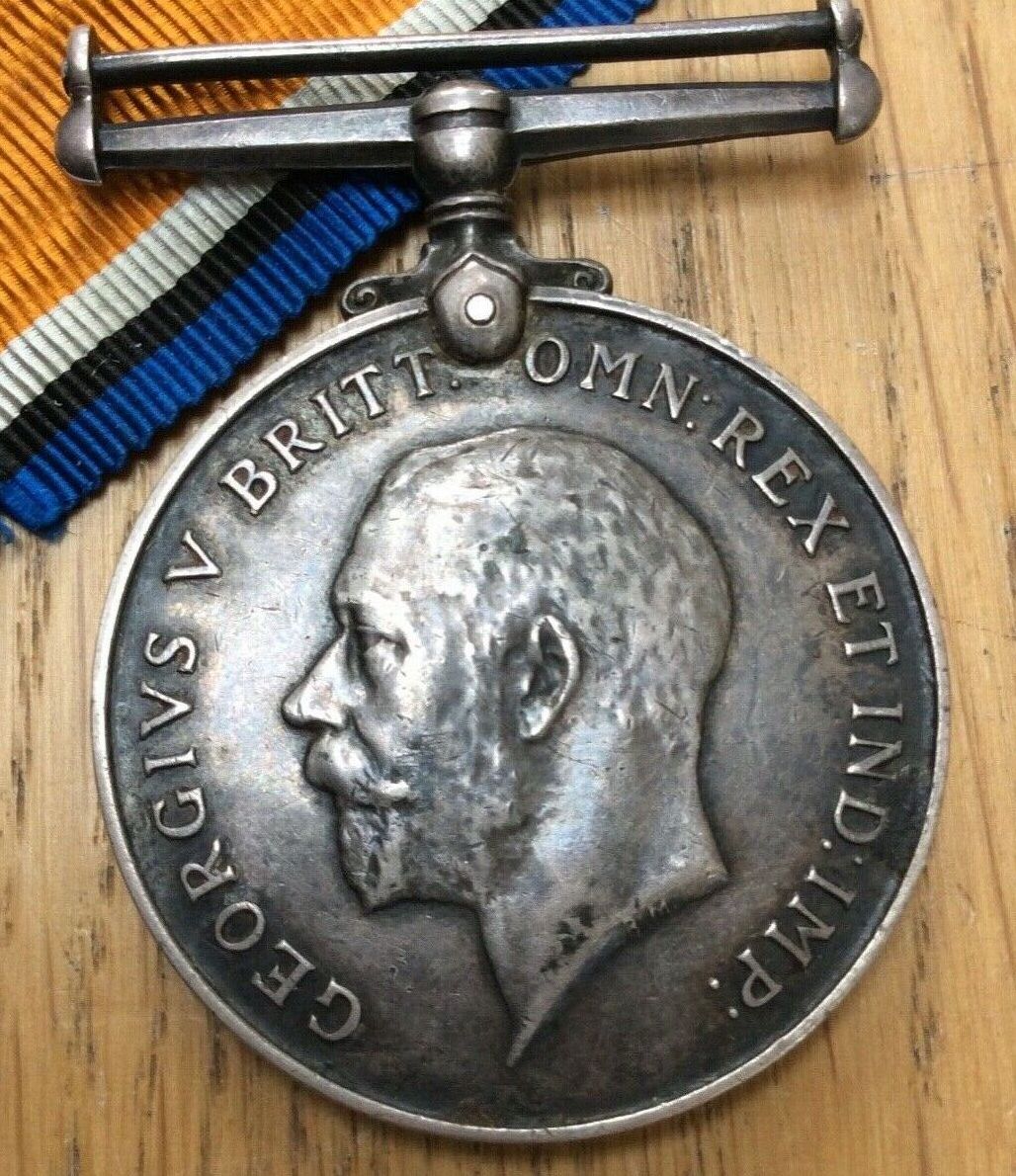
BWM and VM

James Nye enlisted into the 3/6th Sherwoods Foresters at Chesterfield in April 1916. James was a 36 year old farm labourer from Arlington near Guildford. His enrolment was approved by Captain Swann.

Statement of Service

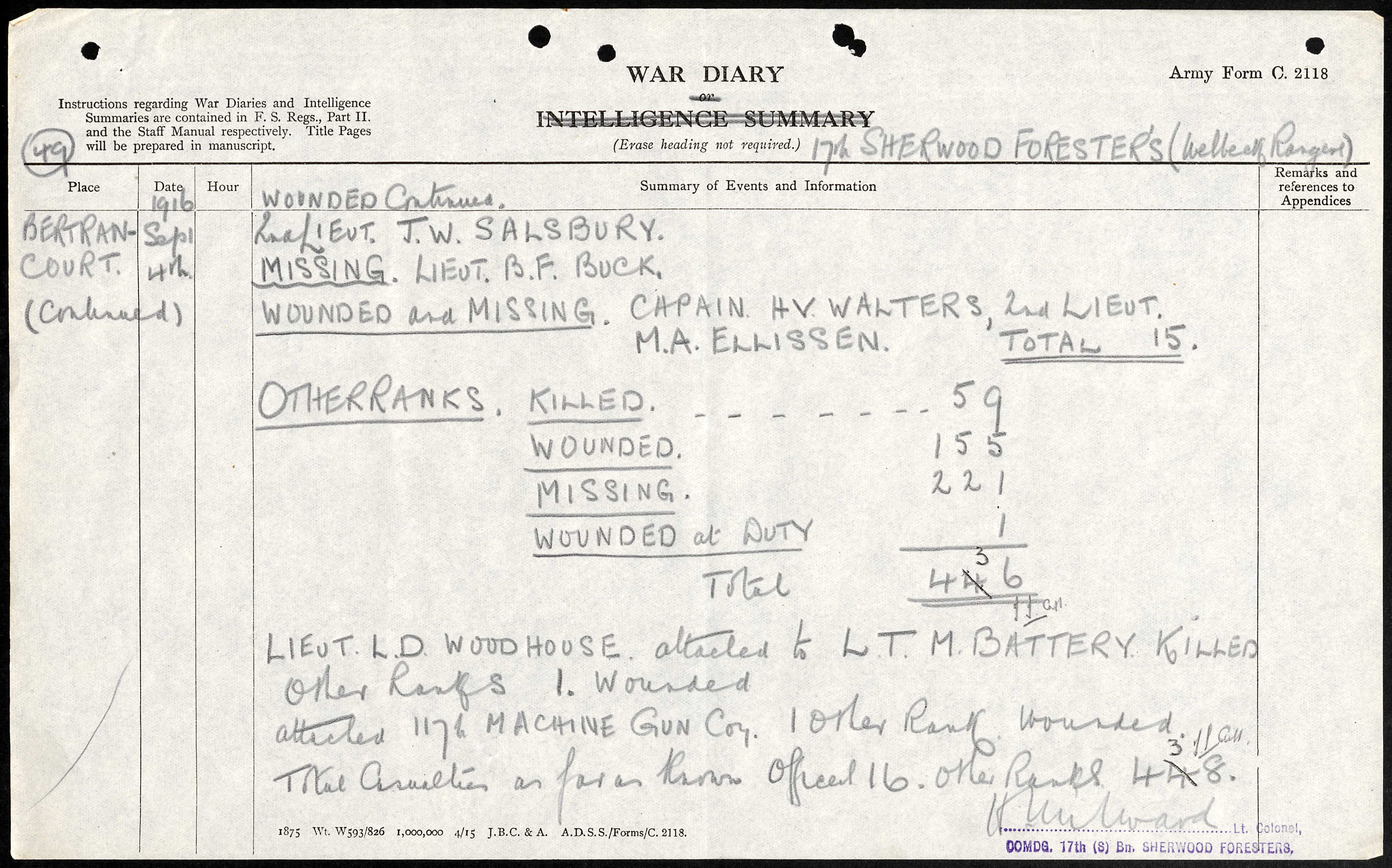
Following training with the 6th Reserve Battalion James was transferred to the 1/6th Battalion and proceeded overseas to the 8th Entrenching Battalion in France. James was later posted to the 17th Battalion (The Wellbeck Rangers) on the 9th September 1916 with approximately 100 other men who were all renumbered from 70211 to 70312. This reinforcement was to make up for losses suffered by the 17th Battalion during their attack on Beaumont Hamel.

[Regimental numbers 70001 to ~71177 was a numbering systems employed by the Sherwood Foresters to move men from the Territorial Battalions to the Regular and Service Battalion between September and November 1916]

War Diary entry for Wellback Rangers recording the casualty figures for the attack on Beaumont Hamel
Drafts of men posted to the 17th Battalion in early September

James served in France with the 17th Battalion until he was posted home on the 22nd February 1917 suffering from rheumatism. After time spent at the Command Depot (possibly at Ballyvonare, County Cork) he was posted to the 3rd Battalion and then discharged in October 1917.

Report of the Medical Board held at Strensall
Military Service
Silver War Badge
SWB Roll

118815 Private Harry Watson and the 118*** series of Regimental numbers…….

A recent purchase that I am very happy with because I believe the recipient – 118815 Pte Harry Watson – has a special tale to tell in the story of the 1/6th Battalion, The Sherwood Foresters.


Harry was issued the Regimental Number of 118815, which were numbers issued to conscripted men posted to the 3rd/4th and 5th/7th (Reserve) Battalions for training in early summer 1918.


The 118*** Series of Regimental Numbers

From studying surviving service records we can draw some broad conclusions:-

Men numbered between 118044 (Pte William Walters) and 118239 (Pte Sidney Nunn) were posted to the 3rd or 4th Battalions between 25th and 29th May 1918. Following training these men arrived in France in Sept/Oct 1918.

Men numbered between 118272 (Pte Charles Leedel) and 118287 (Pte Street) were posted to the 5th Reserve Battalion at Saltfleet on the 28th and 29th May 1918. Following training these men arrived in France in Sept/Oct 1918.

Men numbered between 118431 (Pte Hartwell) and 118547 (Pte Walker) were posted to the 3rd Battalion at Sunderland between on the 12th and 13th June 1918. Following training these men arrived in France on 4th Oct 1918.

Men numbered between 118785 (Pte McLocklin) and 118889 (Pte Hand) were posted to the 5th and 7th Reserve Battalions at Saltfleet between 18th and 20th June 1918. Following training these men arrived in France in mid Oct 1918.


Medal Roll of 118815 Harry Watson

From his service number of 118215 we can surmise that Harry Watson was posted to either the 5th or 7th Reserve Battalions in mid June 1918 and was highly likely to have arrived in France and posted to the 1/6th Battalion in October 1918.

And why is that important?……..It would make Harry one of the last reinforcements to join the 1/6th Battalion, most likely to replace losses following the storming of the Hindenburg Line.

Note: On the medal roll there is no longer a distinction between the 1/6th and 2/6th Battalions, the latter of which had been finally disbanded on 31st July 1918.

103039 Pte Frederick Blaydon – one of the ‘Bedfordshire Lads’………

Sherwood Foresters Cap Badge

Unfortunately, I carelessly let this Medal Pair ‘get away from me’ on a well known internet auction site last night, but I thought that I would still try to piece together Frederick’s story.


Frederick was one of approximately 112 men who were transferred to the 2/6th Battalion, the Sherwood Foresters from the Bedfordshire Regiment and issued the new Regimental numbers running from 103024 (Herbert Meekins) to 103137 (George Webster). Many of these men had previously been numbered with a post-1917 6-digit Bedfordshire Territorial Force Regimental number (see below).

Section of the Sherwood Forester Medal Roll showing the transfer of Men from the Bedfordshire Regiment to the 2/6th Battalion.

But when and why did this transfer happen?

Fortunately the Service Records of at least two of this group of 112 men still exist:

103035 Pte John Male from Bath (see above).

103065 Pte Horace Crowle from Cornwall.

Casualty Form – Active service for 204038 Pte John Male
Casualty Form – Active Service for 103035 Pte John Male
Casualty Form – Active Service for 103065 Pte Horace Crowie

These documents confirm that Pte John Male and Pte Horace Crowle – and by inference Pte Frederick Blaydon – were posted to the 5th Reserve Battalion of the Bedfordshire Regiment, before proceeding to France from Folkestone on the 28th March 1918.

They arrived at “L” Infantry Base Depot and were transferred to the 2/6th Battalion Sherwood Foresters on the 31st March 1918. This transfer was due to the losses suffered by the 2/6th Battalion (178th Bde, 59th Division) on the 21st March 1918 during the German Spring Offensive.


Neither John Male or Horace Cowle would survive the month

59th Division Casualties for April 1918

John Male was killed in action with B Company, 2/6th Battalion on the 16th April aged 48. He was the Son of Mr and Mrs Male of 13, Maytree Rd., Bitterne, Southampton. John’s body was exhumed near Kemmel Hall in July 1919 and he is now buried in La Clytte Military Cemetery.

Mount Kemmel – John’s body was found at 19 D, near to Kemmel Hall

Horace Cowle served with B Company and was listed as ‘missing in action’ during the defence of Kemmel on the 18th April 1918 aged 19. He was the son of Mr and Mrs Crowle of 1 Chapel Terrace, St. Blazey, Cornwall. Horace is commemorated on The Ploegsteert Memorial.

Horace had enlisted underage in November 1915. He arrived in France in December 1916 and was posted to the 1st Duke of Cornwall’s Light Infantry. However, in January 1917 he was returned to England.


Frederick Blaydon was later transferred to the 1/6th Battalion when the 2/6th was reduced to Cadre in May 1918 and survived the War.

‘Kriegsgefangenen-Sendung’ from 70107 Pte George Wealthall of Nottingham

George was posted to the 16th Battalion, the Chatsworth Rifles with 125 other men in early Sept 1916. These men were issued with the Regimental numbers 70052 to 70177.

In 1916 this numbering system was used to transfer men from the Territorial Battalions of the Sherwood Foresters to the Regular and Service Battalions under Army Order 204/A.C.I. 1499.

George was captured at Thiepval on 9th October during the attack on the SCHWABEN REDOUBT.

War Diary of the Chatsworth Rifles
Trench Map showing Schwaben Redoubt
The Schwaben Redoubt (Art.IWM ART 3000) image: A view across to a redoubt, with shattered trees and wide craters pocking the chalky soil. Copyright: © IWM. Original Source: http://www.iwm.org.uk/collections/item/object/20829

George was interned in Giessen POW Camp when he sent this card.