53rd Battalion Notts & Derby, Clipstone Camp December 1918.

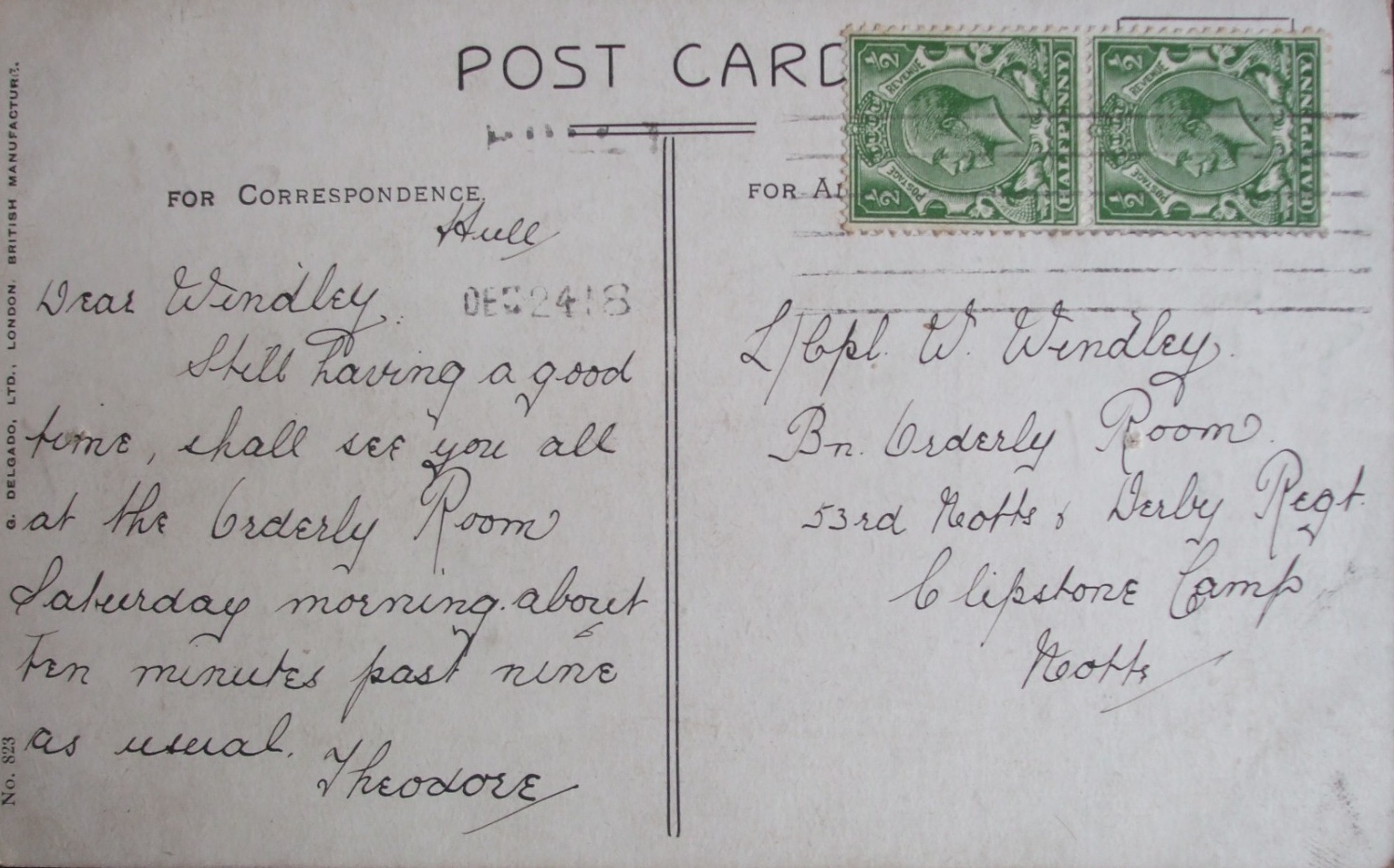
Unfortunately nothing is known about W Wendley’s service – of course he may never have served overseas – who knows……
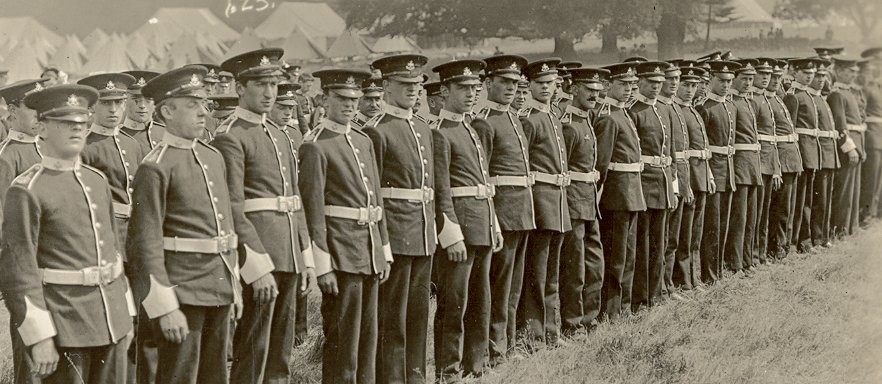
53rd Battalion Notts & Derby, Clipstone Camp December 1918.
Unfortunately nothing is known about W Wendley’s service – of course he may never have served overseas – who knows……
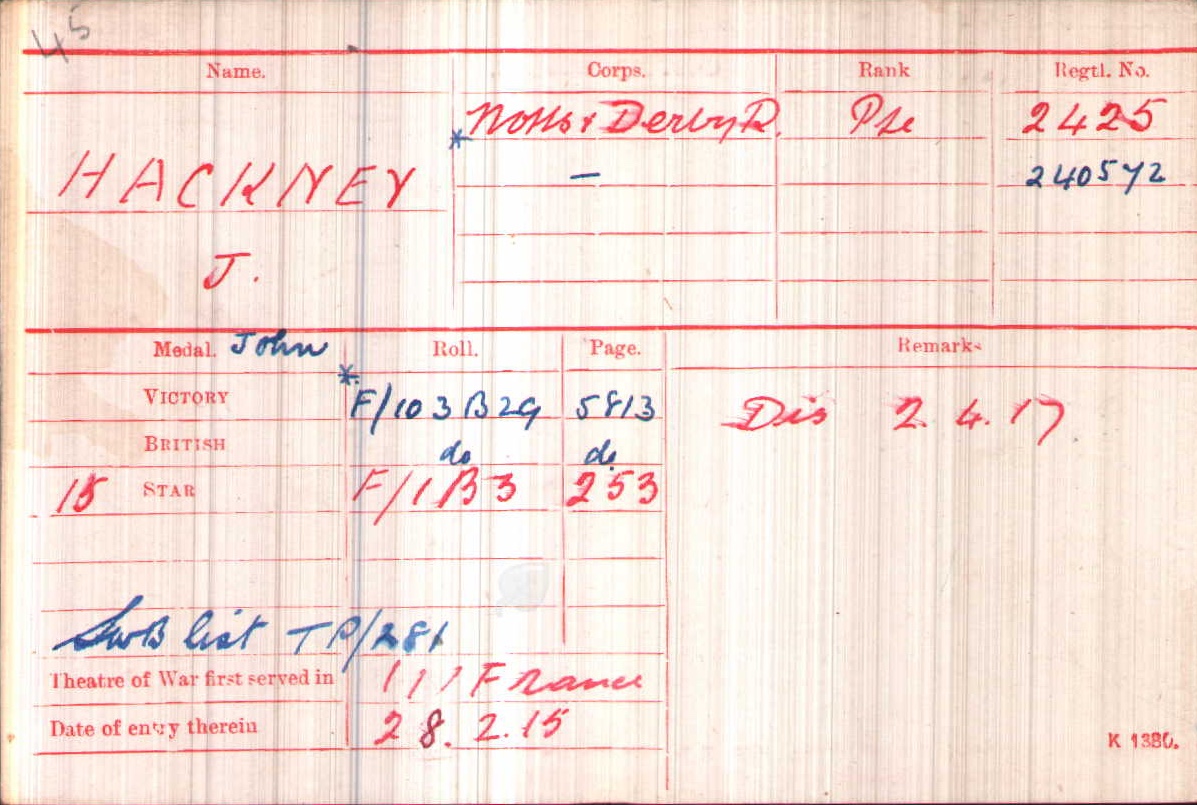
Enlisted in October and 1914 and arrived in France in February 1915; discharged in April 1917 due to sickness from an injury inflicted by barbed wire.
Many thanks to Paul Nicholson (John’s Grandson) for additional information and kindly sending the photographs.
John enlisted into the 6th (Home Service) Battalion in Buxton on 6th October 1914 aged 19 and arrived in France with the 1/6th Battalion in February 1915. He would have been serving with the Battalion whilst they occupied Front Line Trenches at Kemmel, Ypres and during the Battle of Loos.


John was injured in February 1916 when the Battalion were in reserve near to Puchevillers and provided working parties to the Royal Engineers.
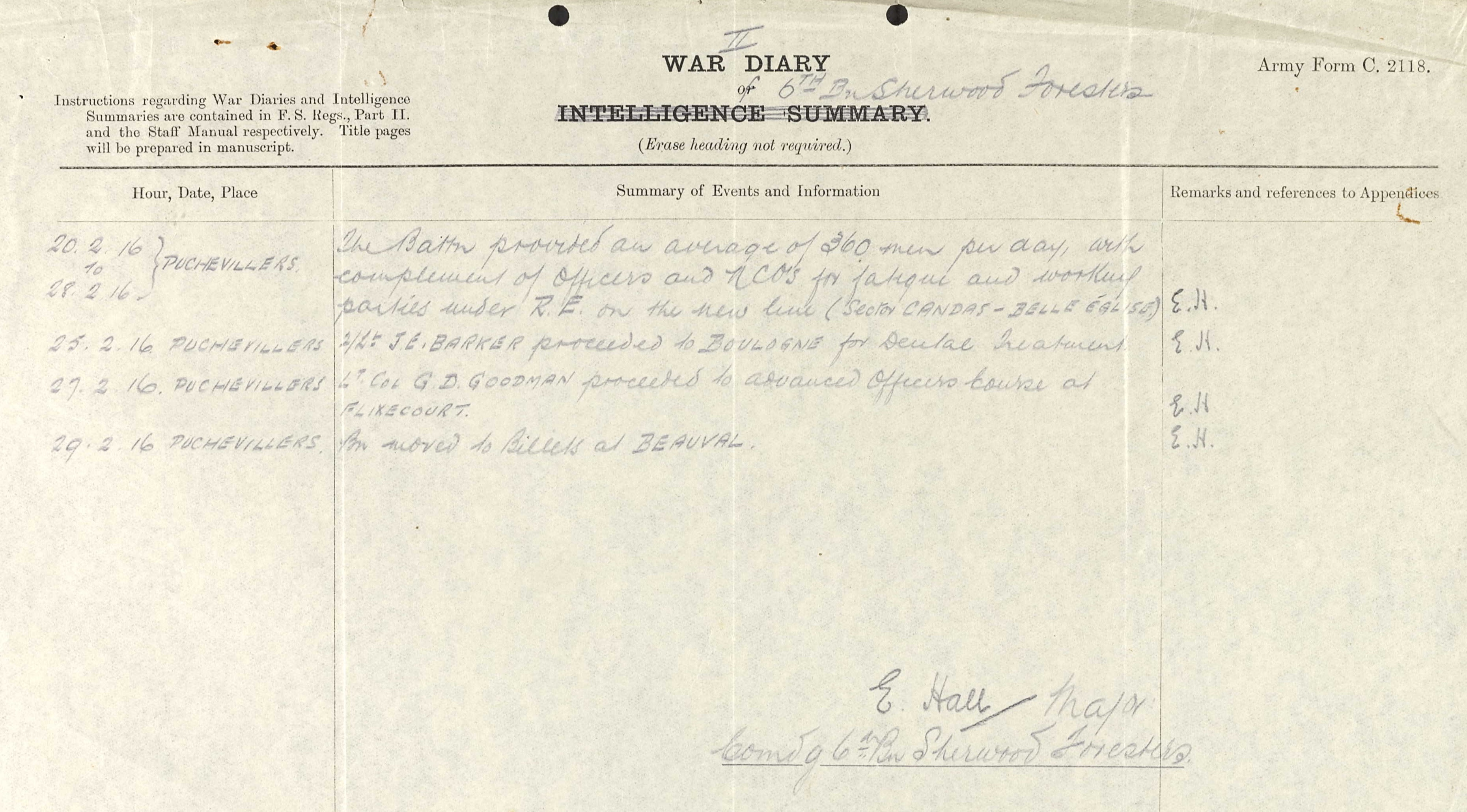
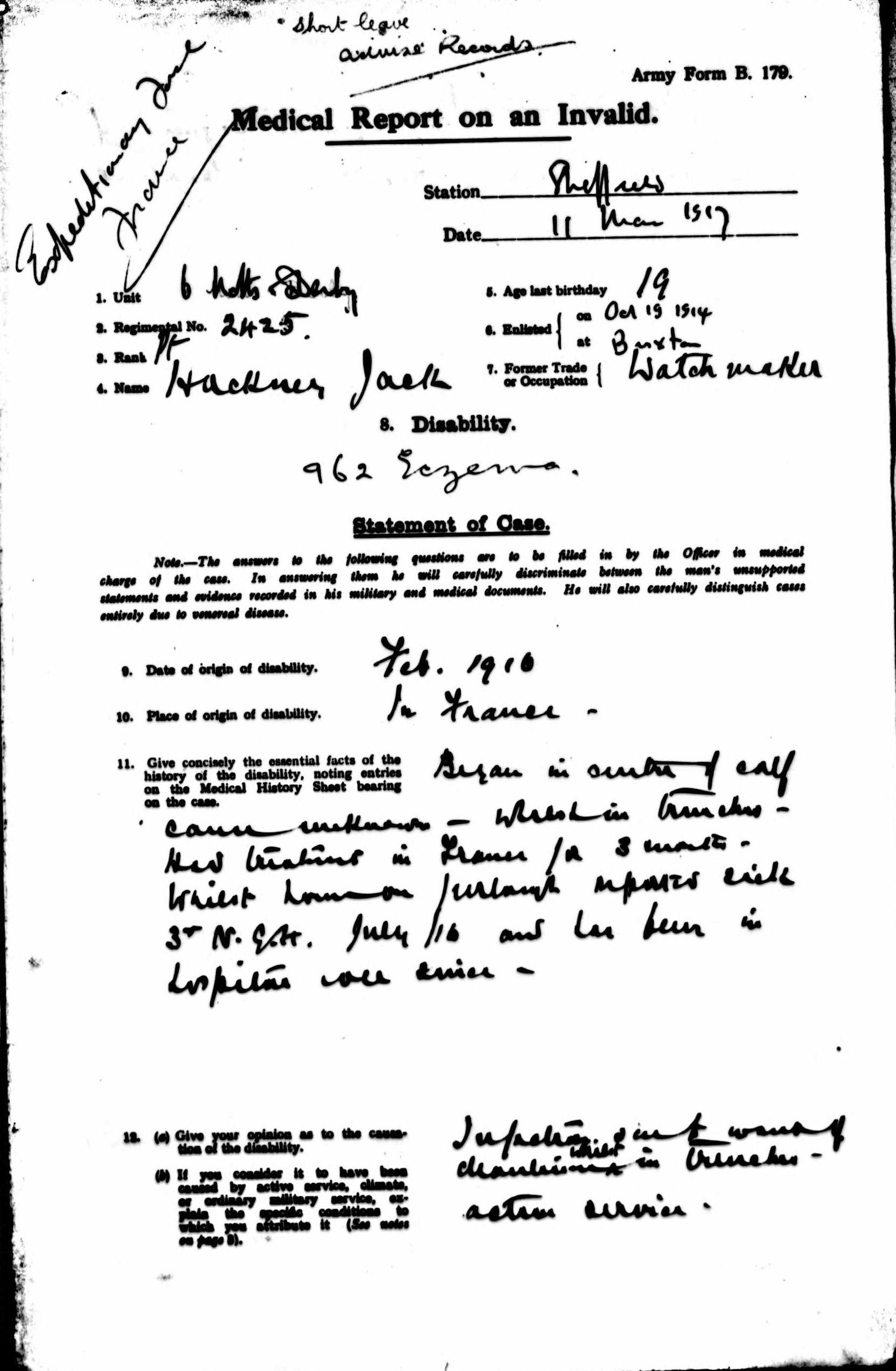
Following treatment in France John was transferred to the 3rd Northern General Hospital in Sheffield.
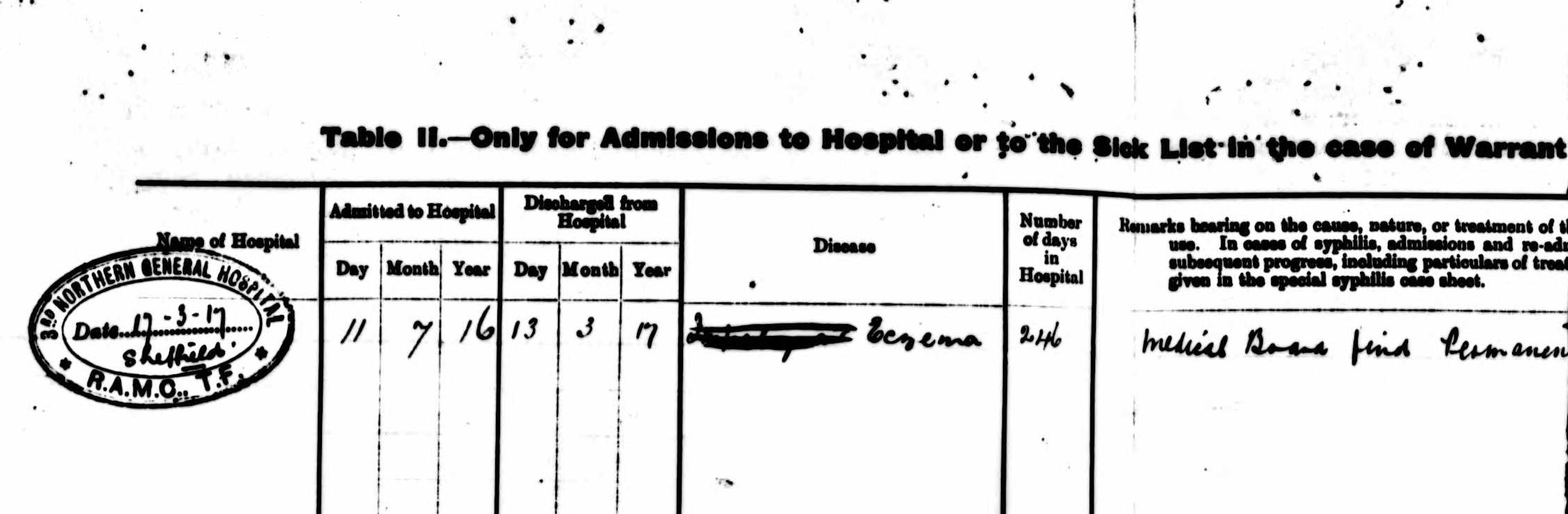
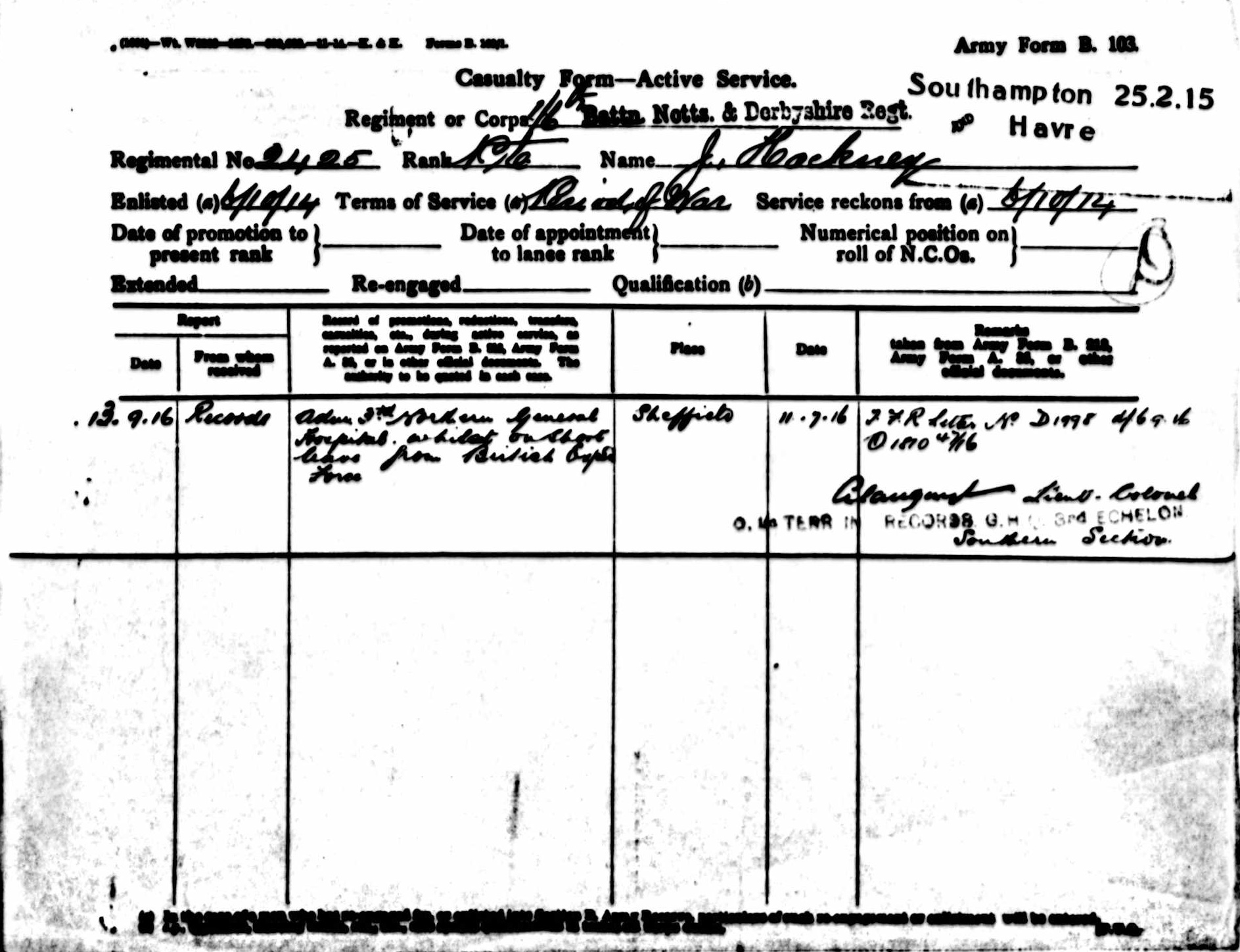

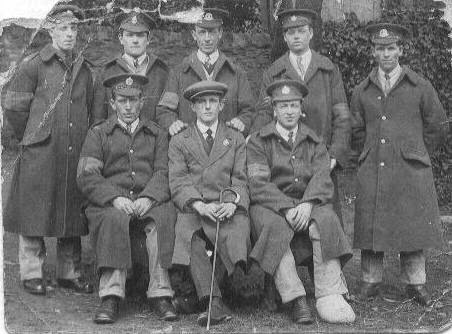
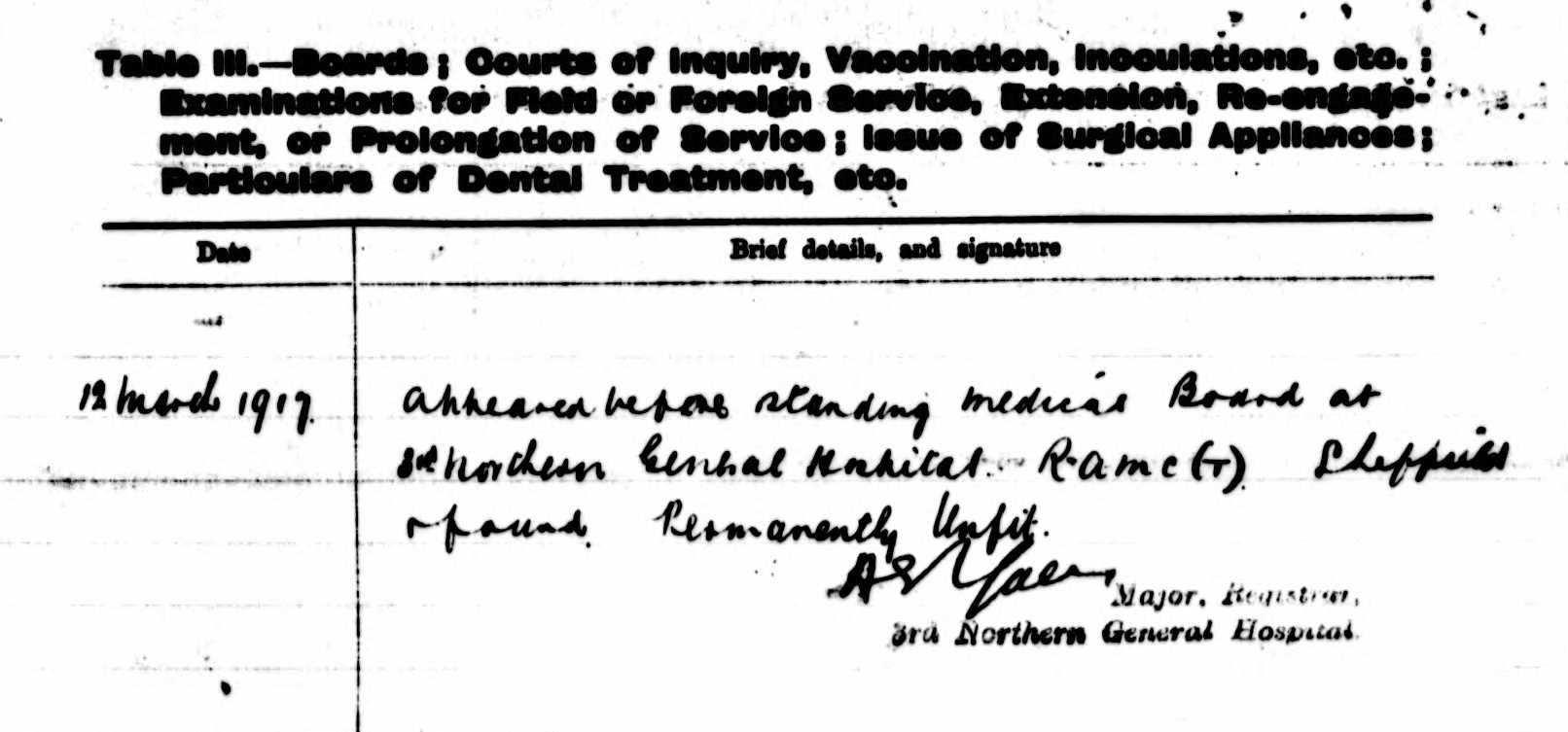
A Medical Board in March 1917 found that John was found physically unfit for further military service and was he was discharged in April 1917 having served 2 years and 179 days. John was awarded a military pension.

After the War John was awarded a 1914-15 Trio and a Silver War Badge
(representative images)


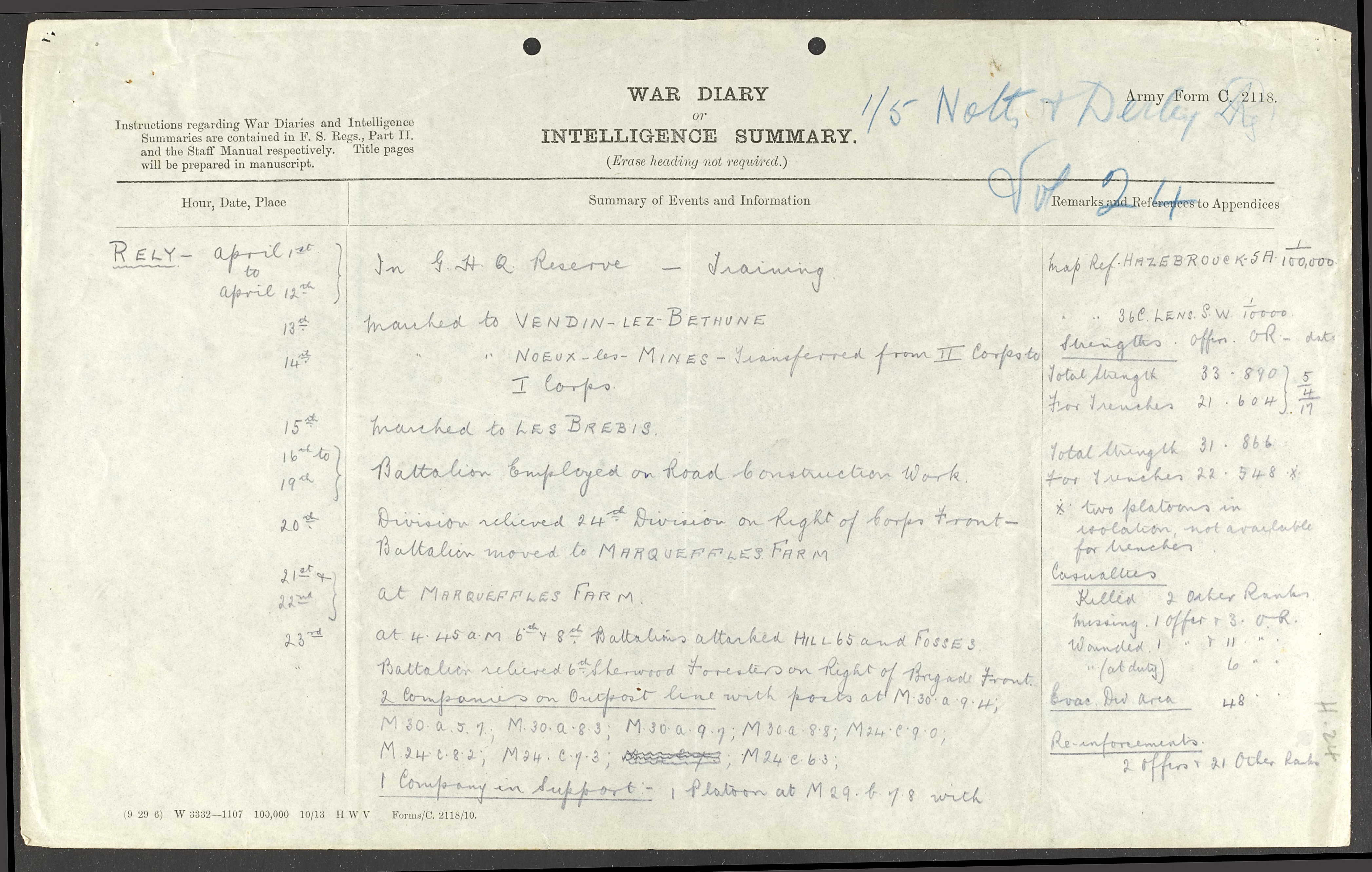
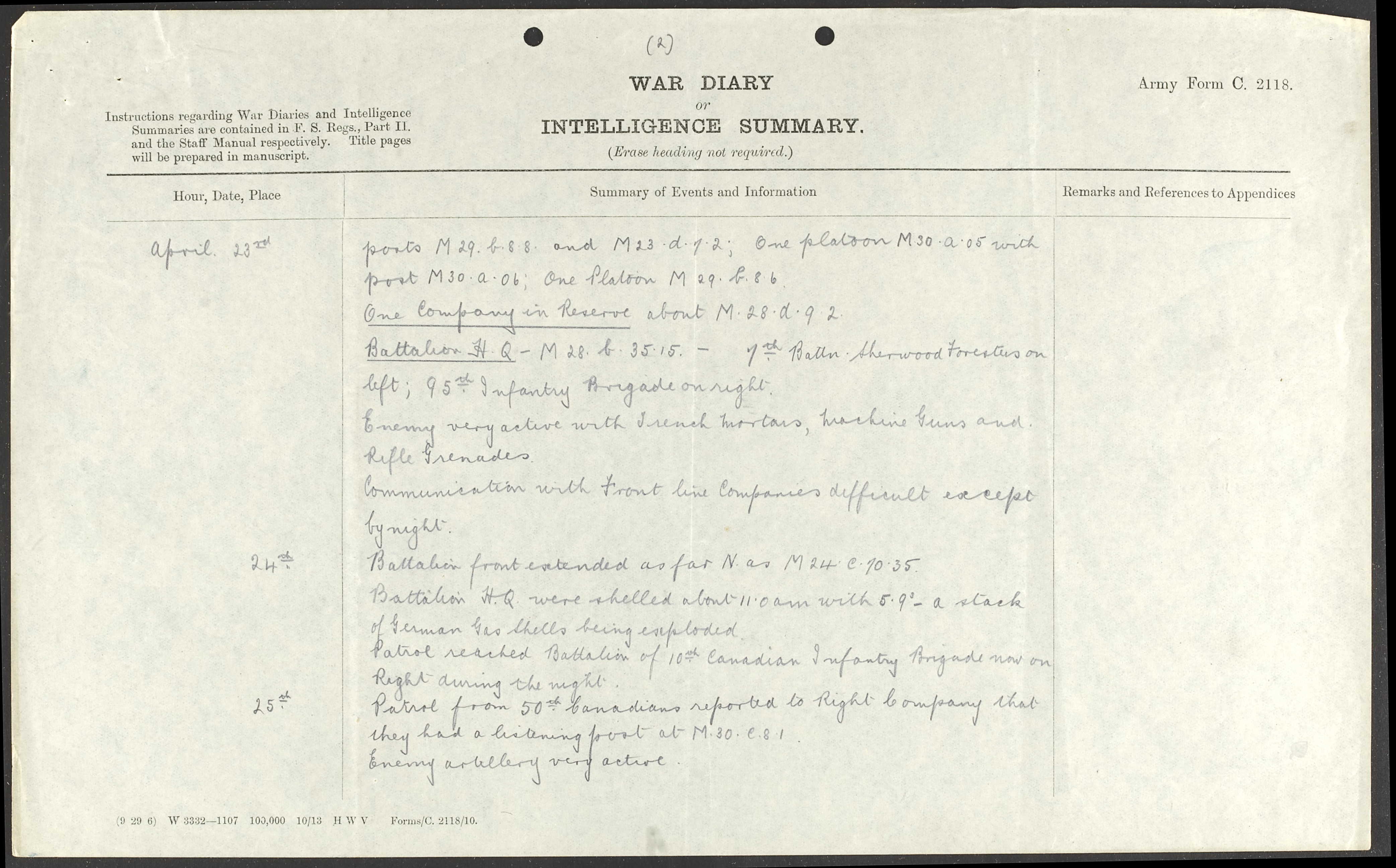
Enlisted on 15th March 1915 aged 22; served with the 3/5th, 29th and 5th Reserve Battalions; transferred to the 1/5th Battalion in January 1917 and was posted missing on the 24th April 1917.



E. P. Short (1863-1932) was a photographer from Nottingham
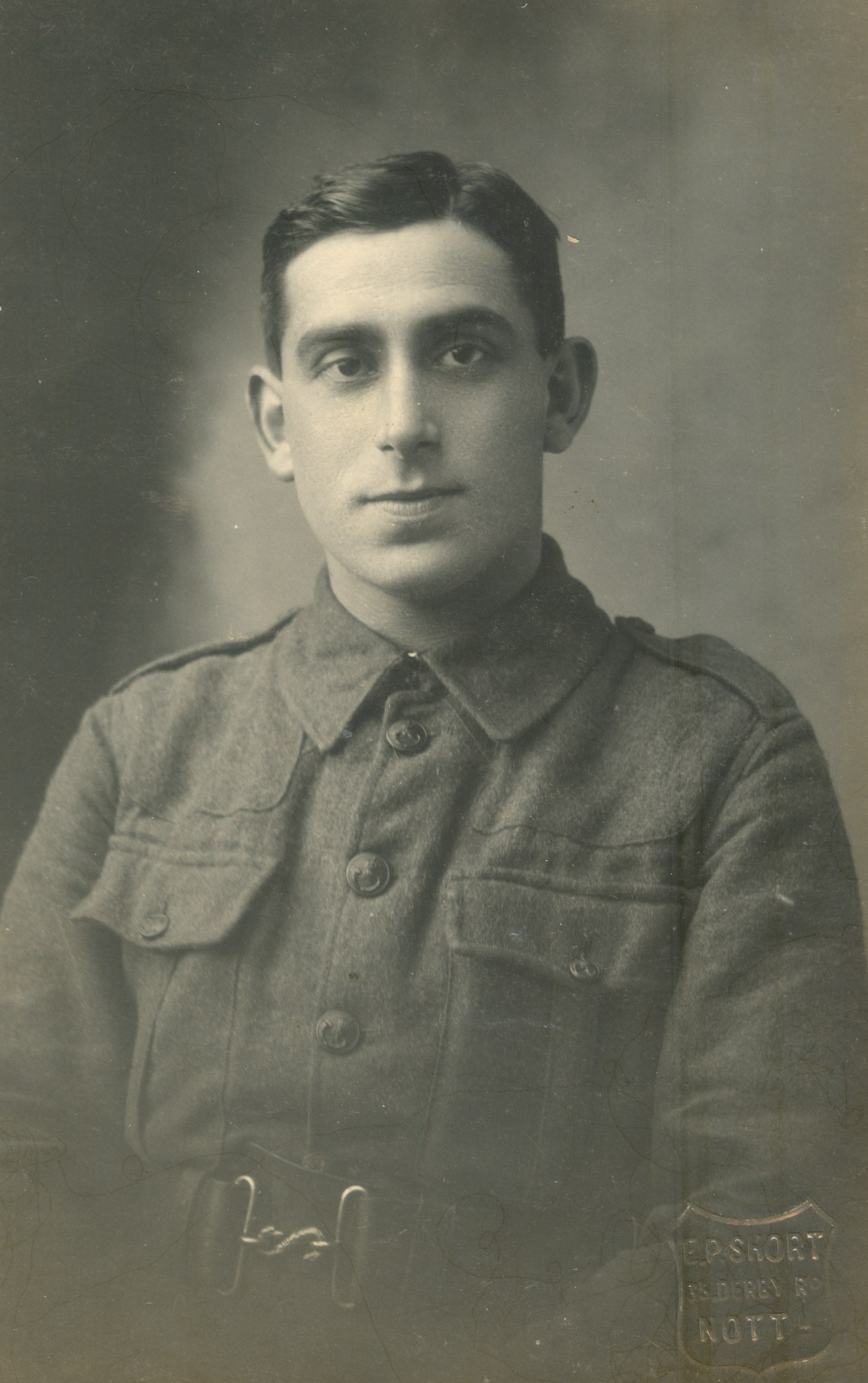
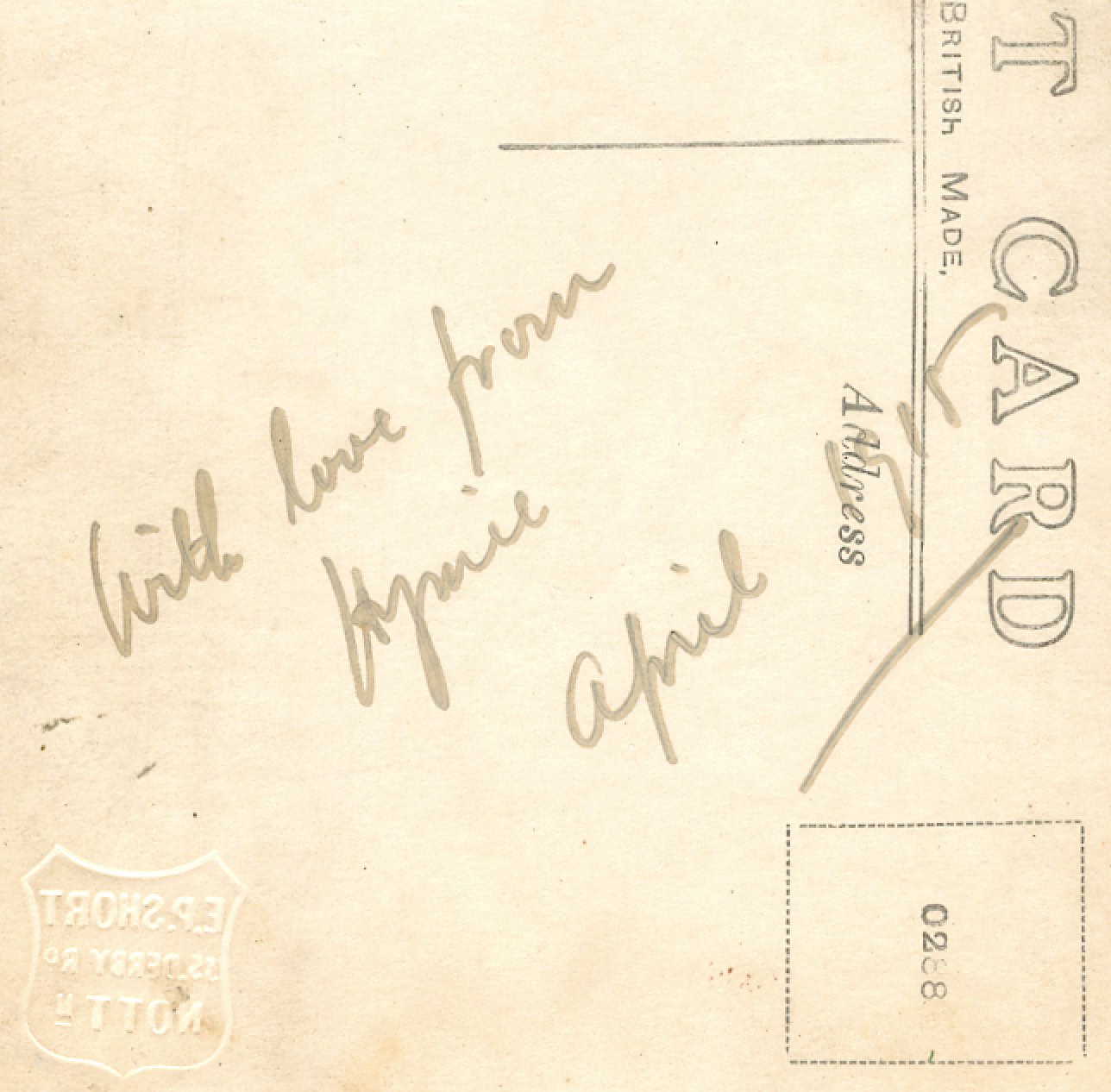
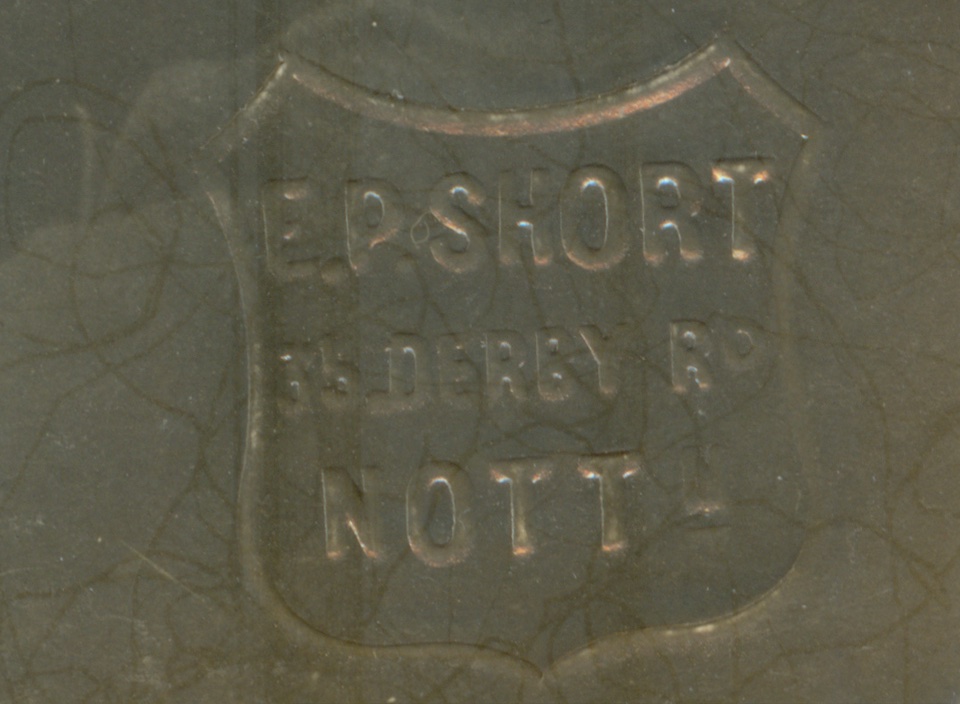
Posted with 32 other men from the Army Ordnance Corps to the 1/8th Battalion in May 1917. He was killed in action on the 30th May 1917 aged 21.
Many thanks to John Hale and Helen Dye (Thomas’ Great Niece) for permission to use these photographs and associated text.
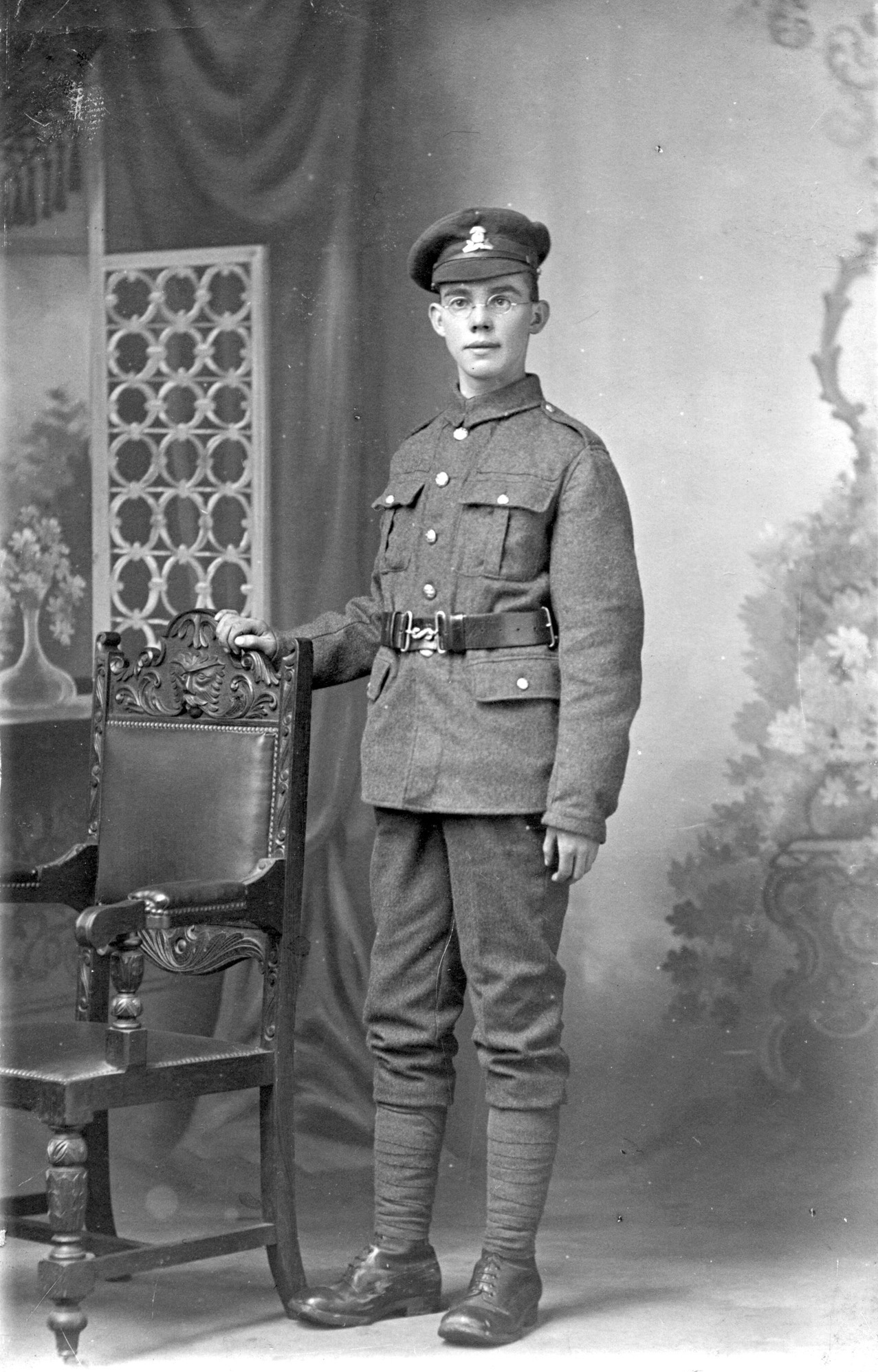

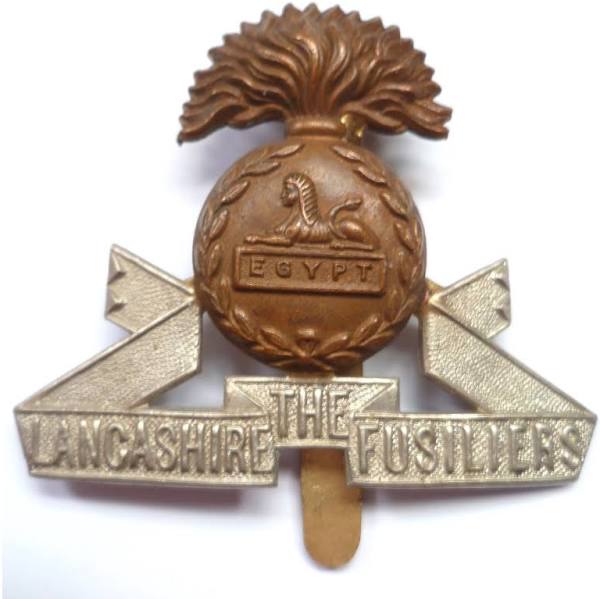
Thomas enlisted into the Lancashire Fusiliers (see cap badge), but first served overseas with the Army Ordnance Corps – as per his medal role (below).
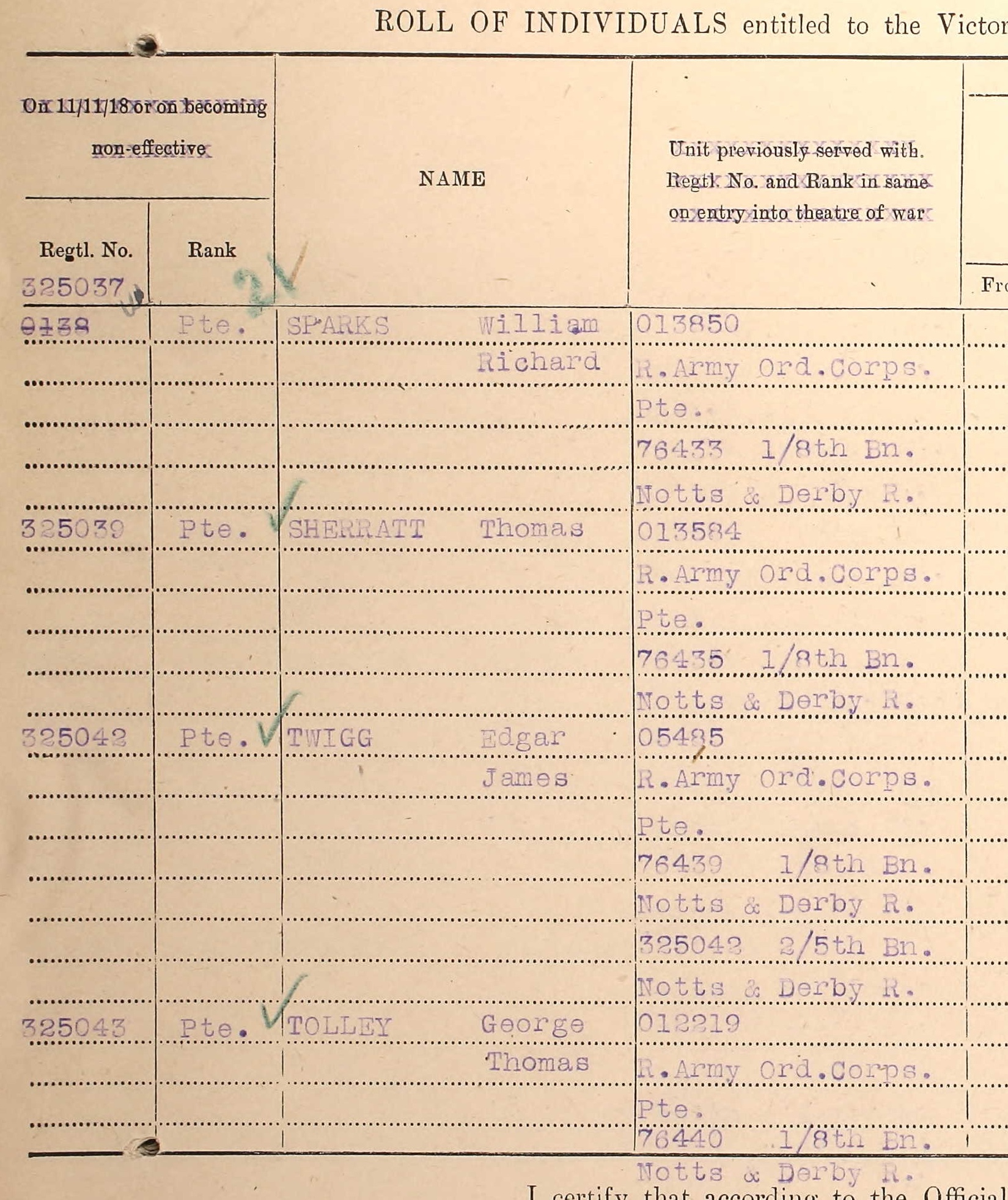
At some point Thomas was transferred to the 1/8th Battalion Sherwood Foresters and was renumbered 76435. He was posted to “A” Company.
[The 7**** number system was started in September 1916 to move men from N&D Territorial Battalions to N&D Regular and Service Battalions. I then think that it continued to be used when men from other regiments joined the N&D. I don’t know what date 76*** was used, but early 1917 I would guess. Looking at the medal roles it would seem that the 32**** system was used to move men from 1/8th to other N&D Battalions, but Thomas stayed with the 1/8th]
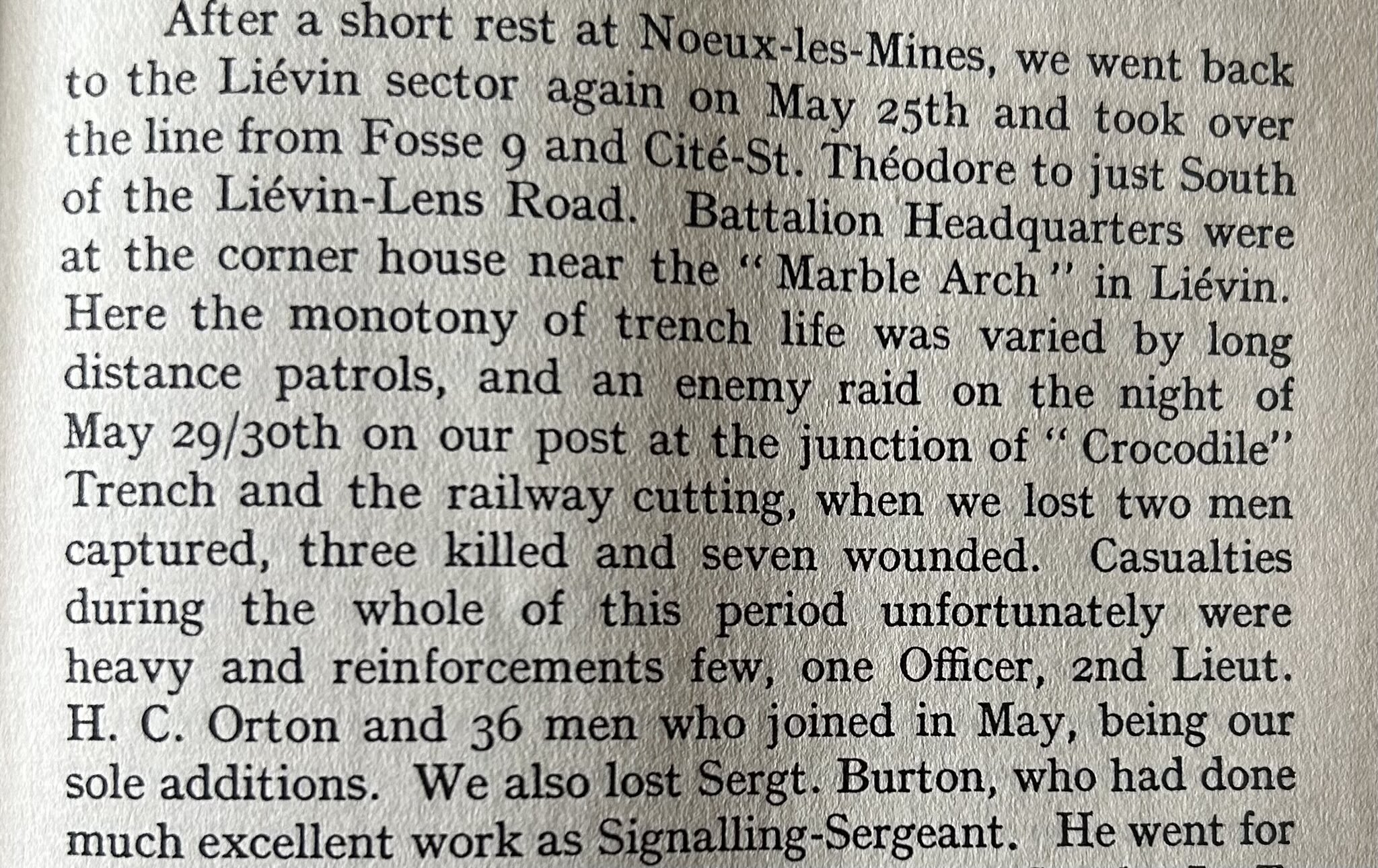
On the night of 29th/30th May 1917 the Battalion’s positions near the railway station in Lievin suffered a trench raid by the Germans; enduring a heavy barrage, the raiders were eventually repulsed at a cost of 3 killed, 2 captured and 7 wounded. Thomas was found dead at his post, having been posted as sentry.
[Courtesy of John Hale]
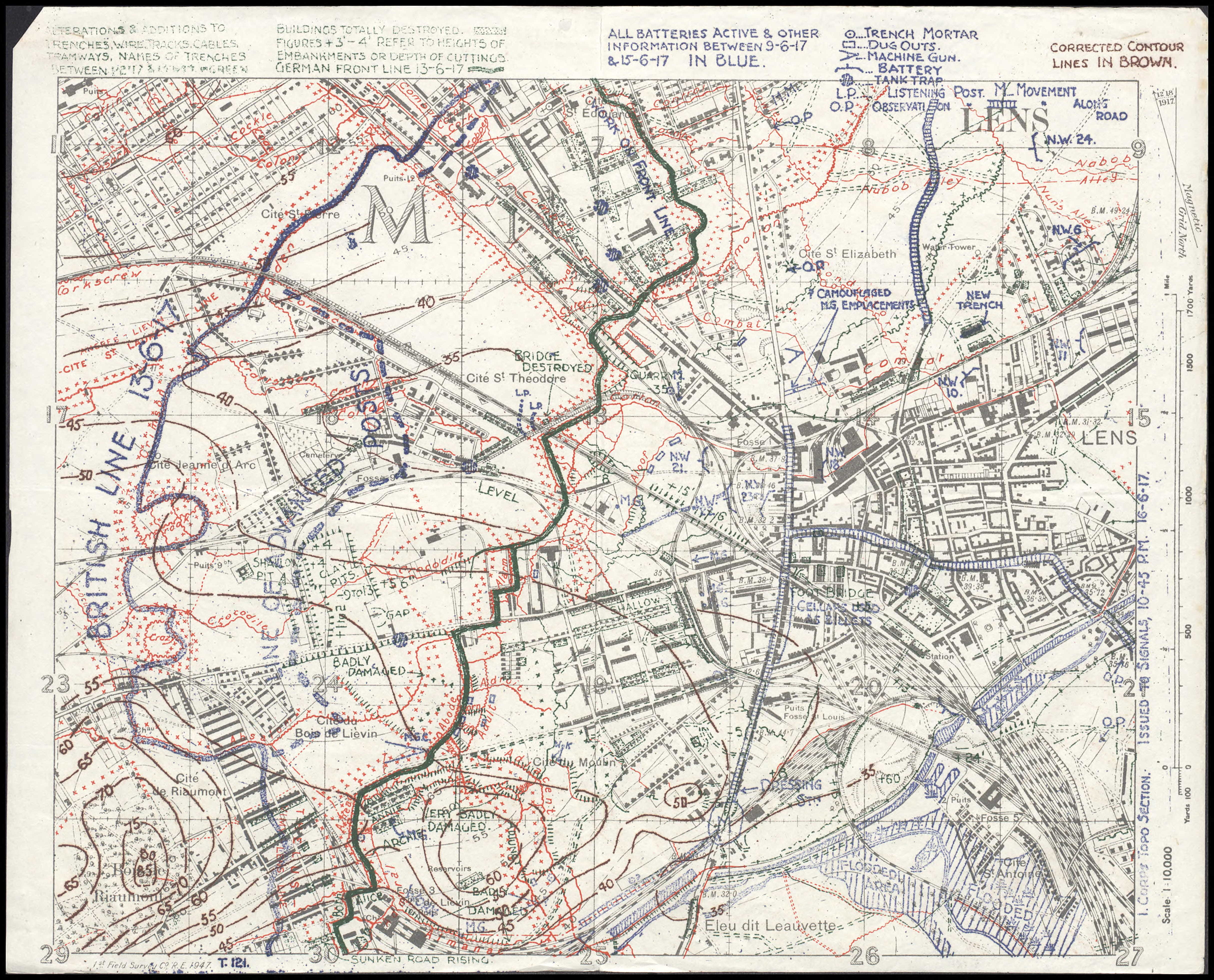
It’s difficult to pin-point where the raid took place, but on this trench map from May 1917 “Crocodile Trench” can clearly be seen snaking into the British front line (shown in blue).
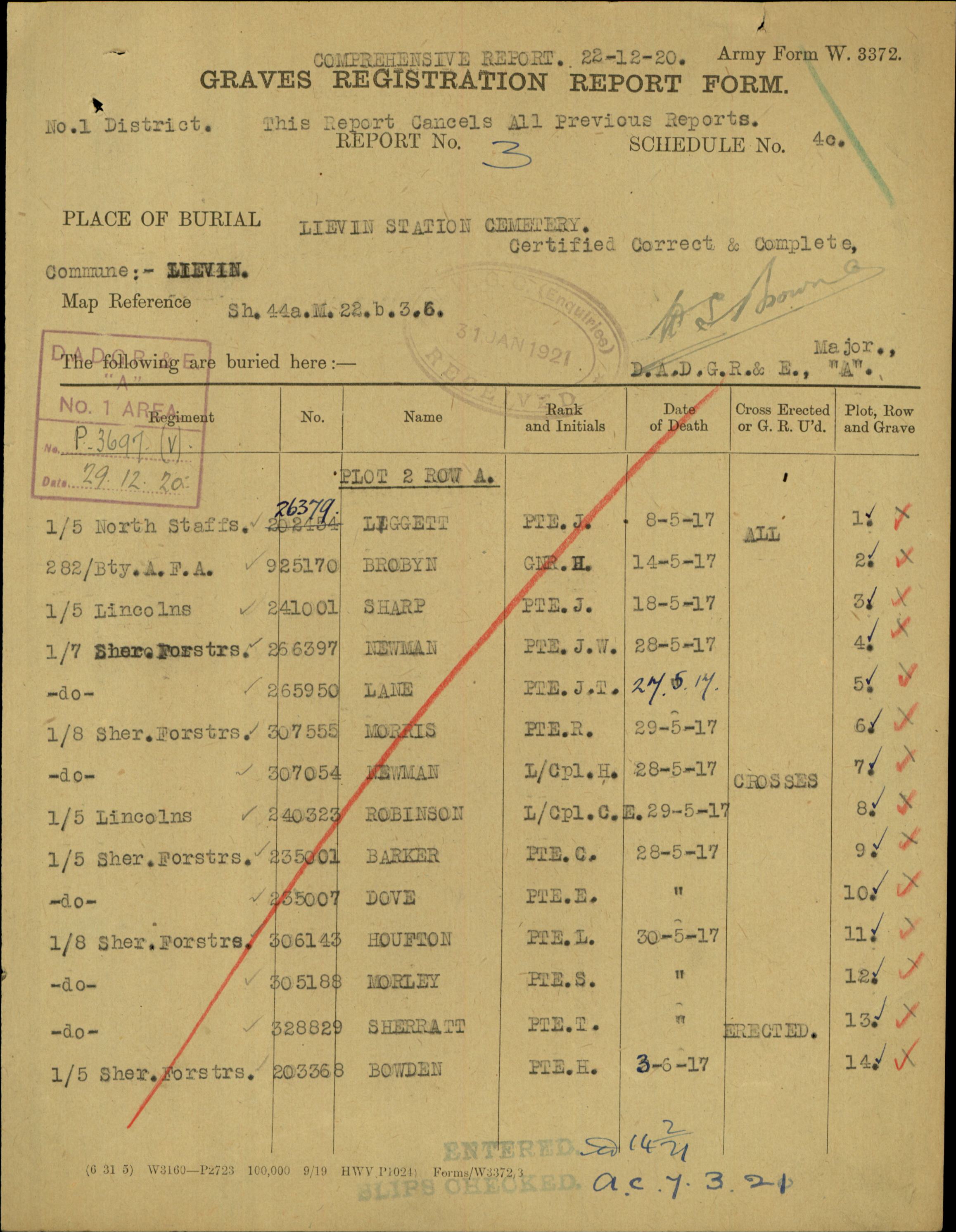
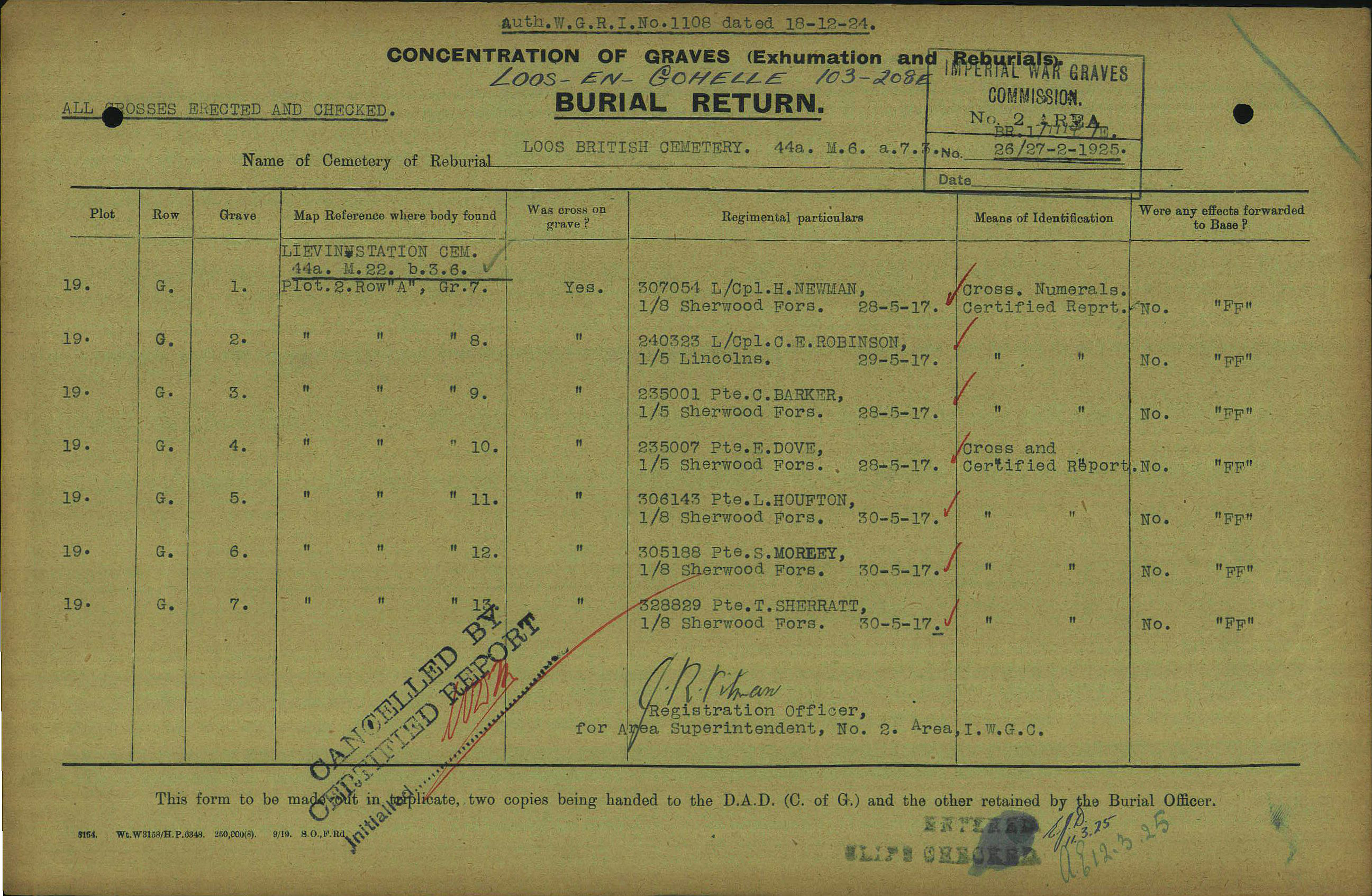
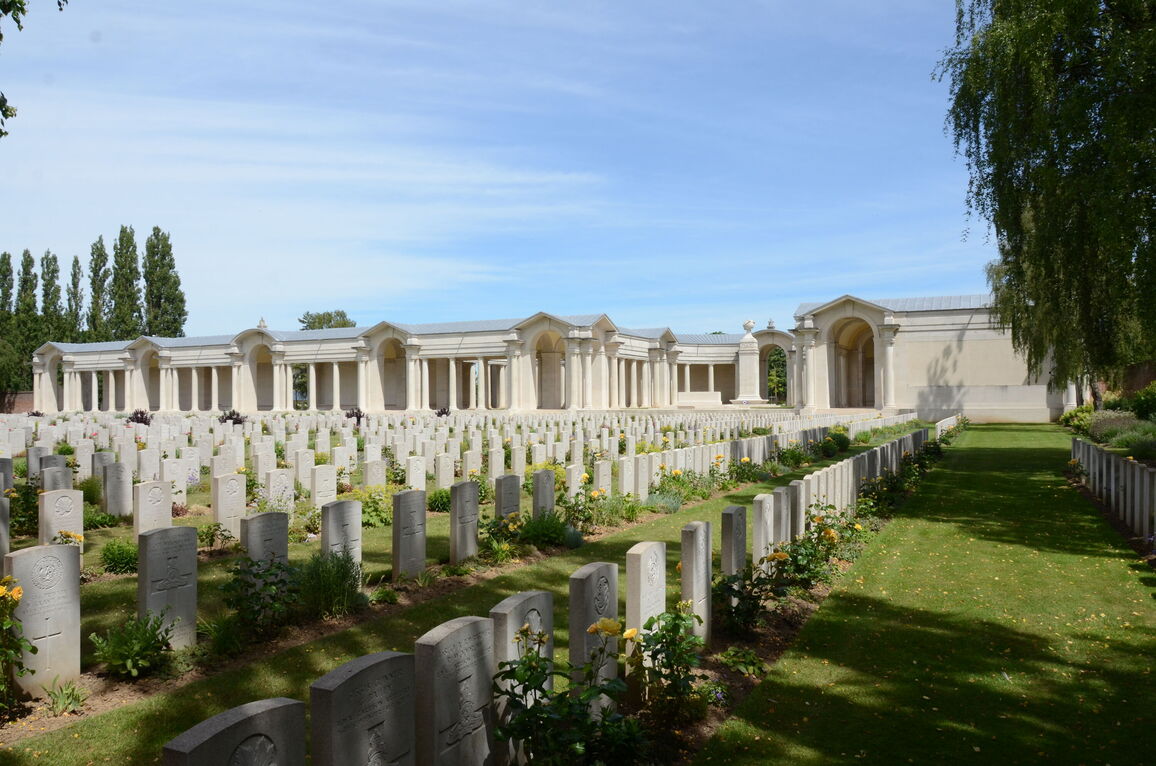
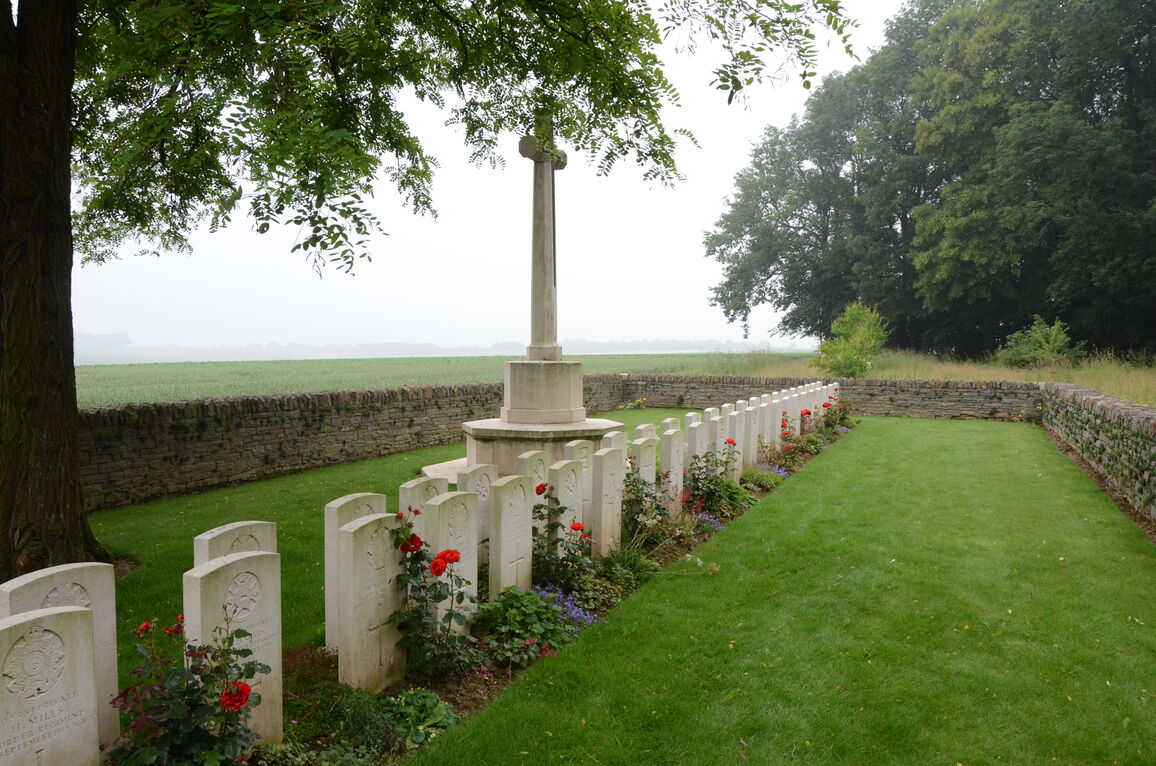
Thomas’s body was moved from Lieven Station Cemetery in 1925 and he is now buried in Loos British Cemetery XIX G 7. Thomas was the Son of Mr and Mrs T Sherratt of 62 Highland Rd., Shavers End, Dudley, Worcestershire.
He now rests peacefully with his comrades from the 1/8th Battalion, 139th Brigade, 46th North Midland Division.
[LIEVIN STATION CEMETERY, on the North-West side of the railway station, was used in 1917 and contained the graves of 48 soldiers almost all from the 46th (North Midland) Division]


Thomas is commemorated on the Memorial to the men of Gibbons who joined the forces in the Great War.
Possibly a member of “G” (Worksop) Company, the 1/8th Battalion. Purportedly from the ‘Dean Family’ collection of Netherton Road in Worksop
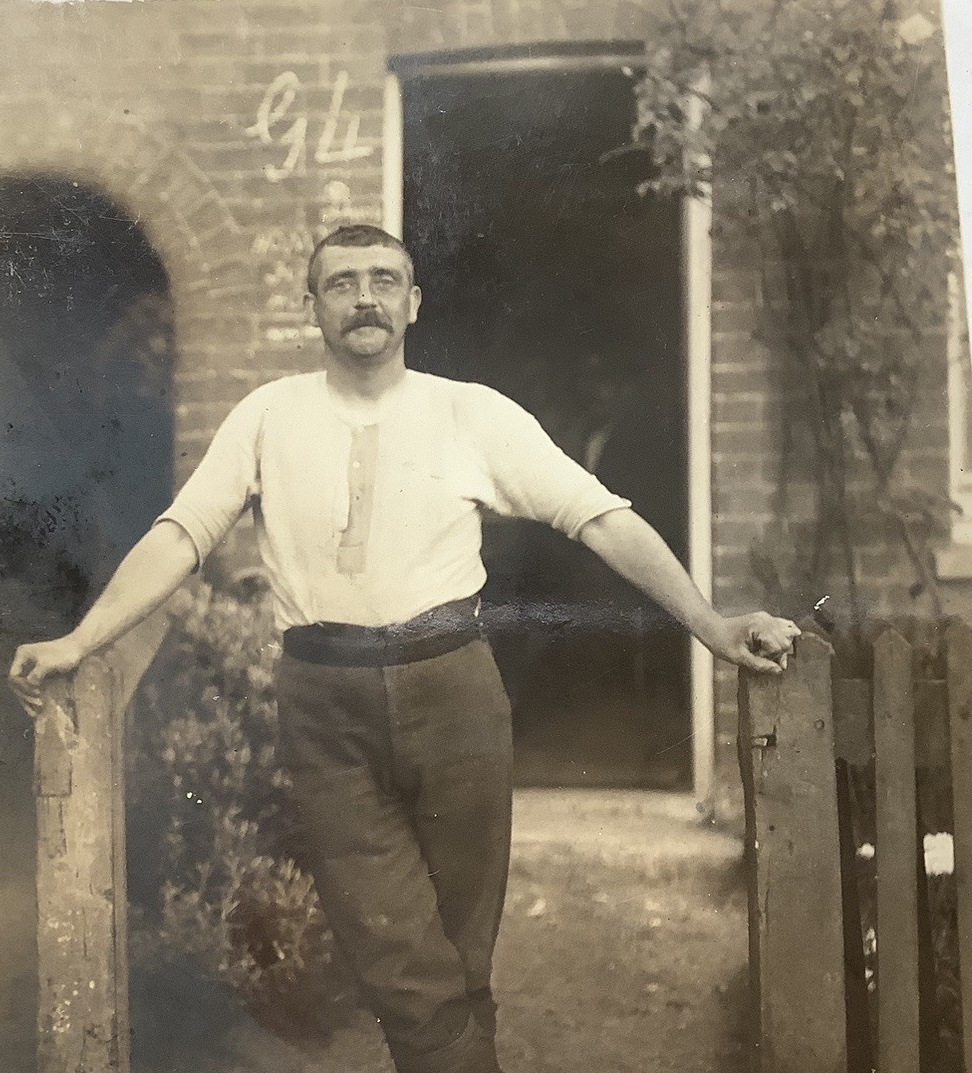

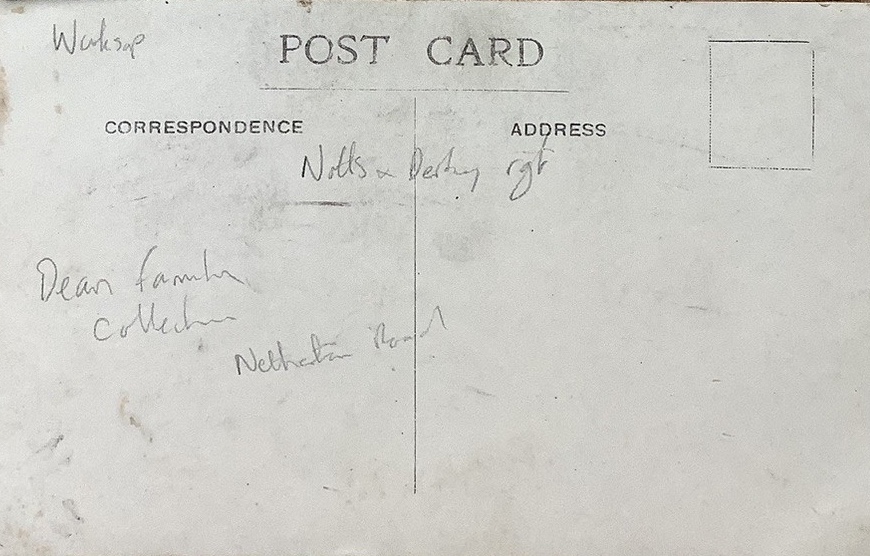
I’m pretty certain that these two pictures were taken at Harpenden in 1914-5 – the chalked numbers on the houses are the giveaway.

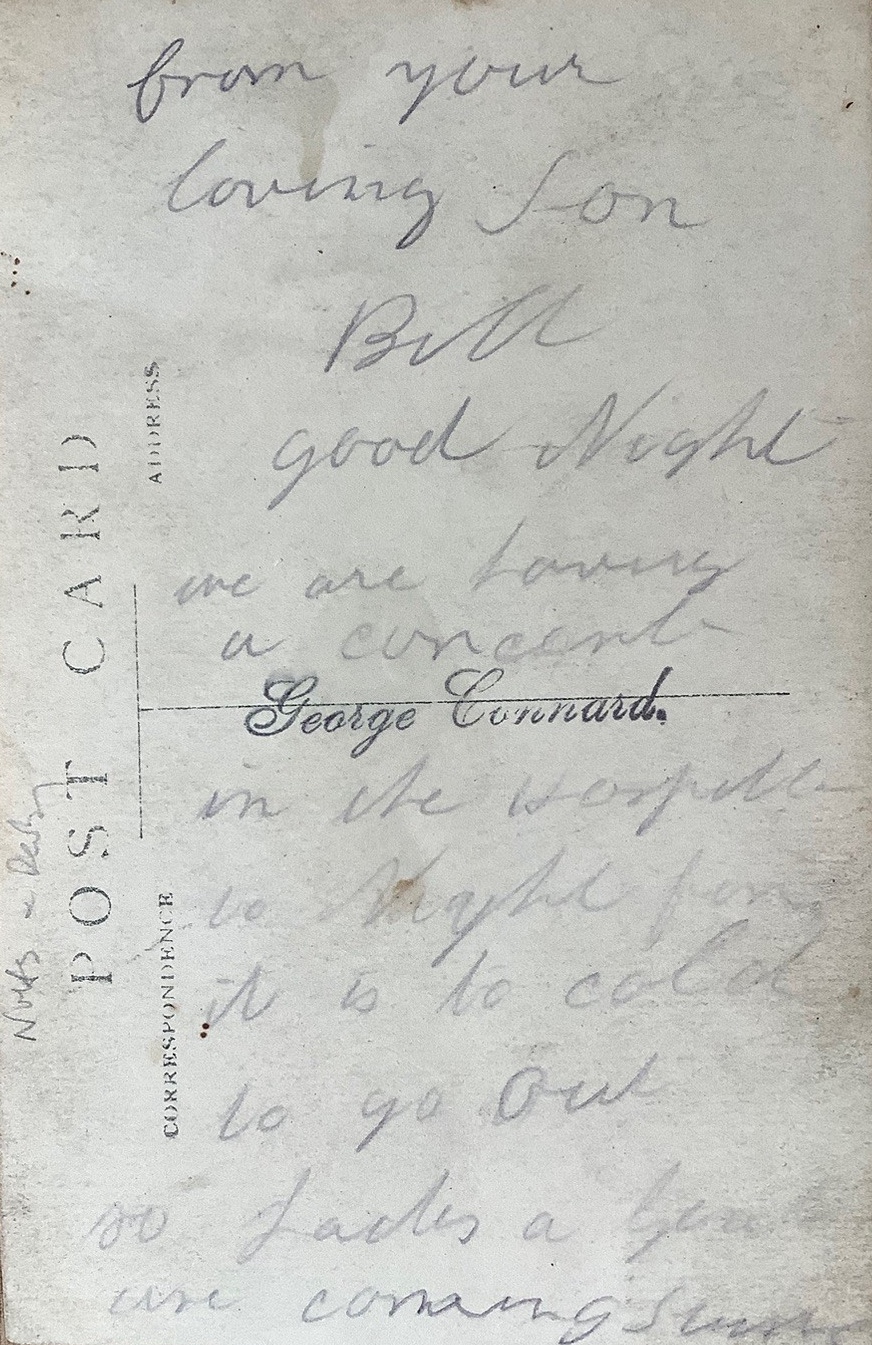
” From your loving son Bill. We are having a concert in the Hospital to night for it is to cold to go out [sic]. So…….were coming…….”
Post card taken by ‘George Connard’, who was a photographer in Ashton-under-Lyne, which was home to Albert House Auxiliary Hospital.
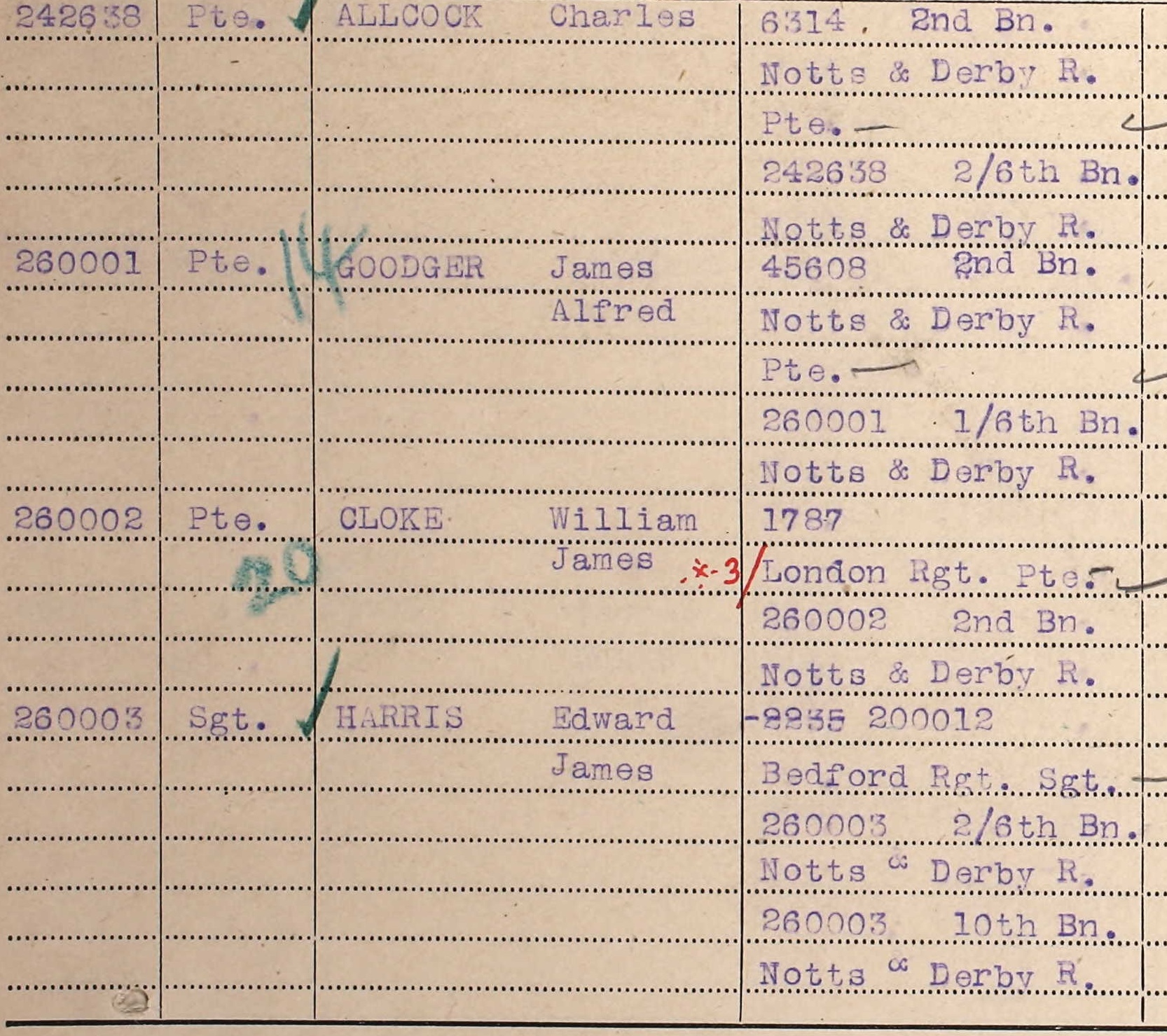
Transferred from the Bedfordshire Regiment to the 2/6th Battalion in March 1918 and was later killed in action with “D” Company the 10th Battalion on 22nd September 1918
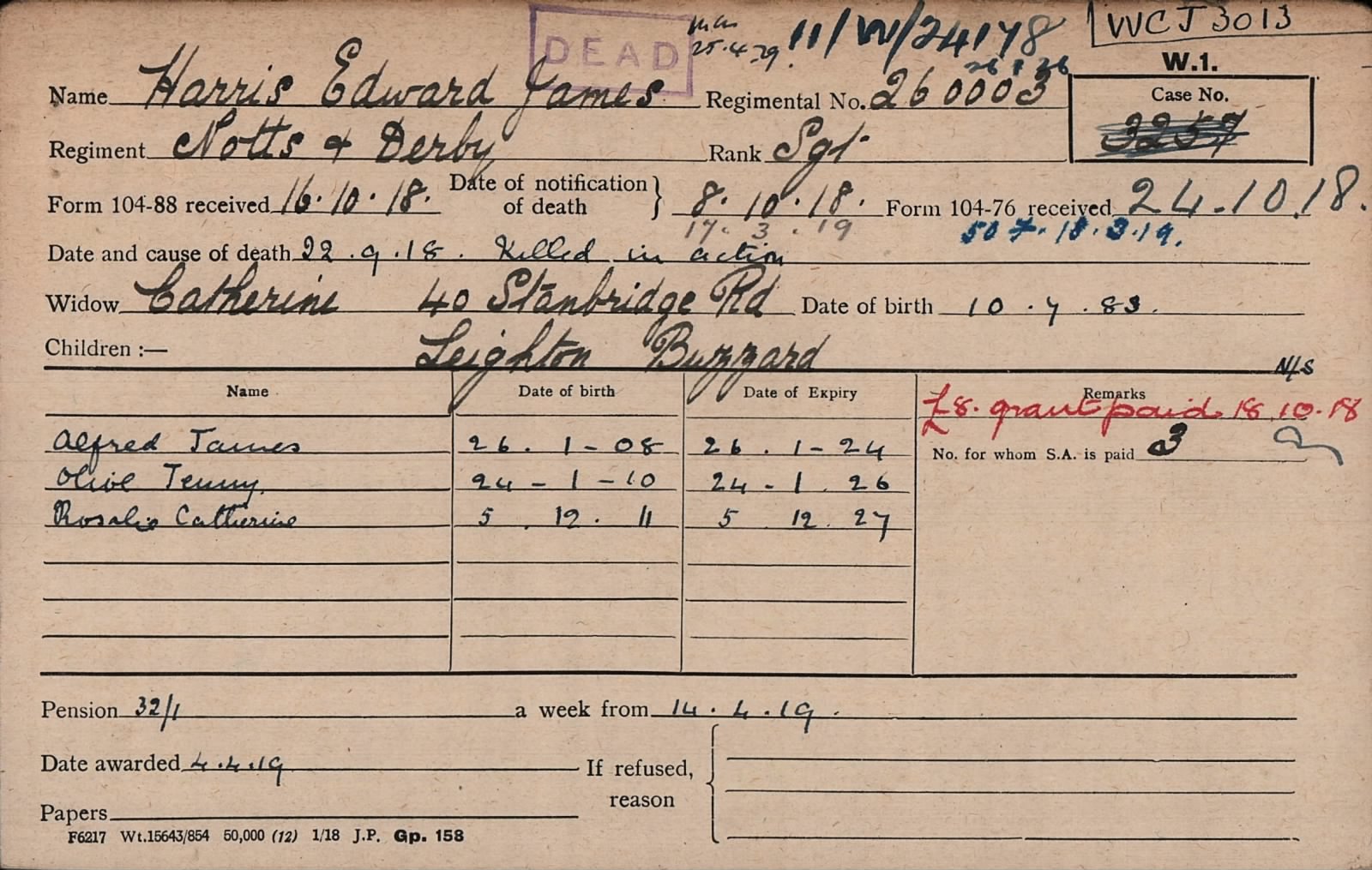
Edward’s wife received a pension and later remarried. They had three children together.
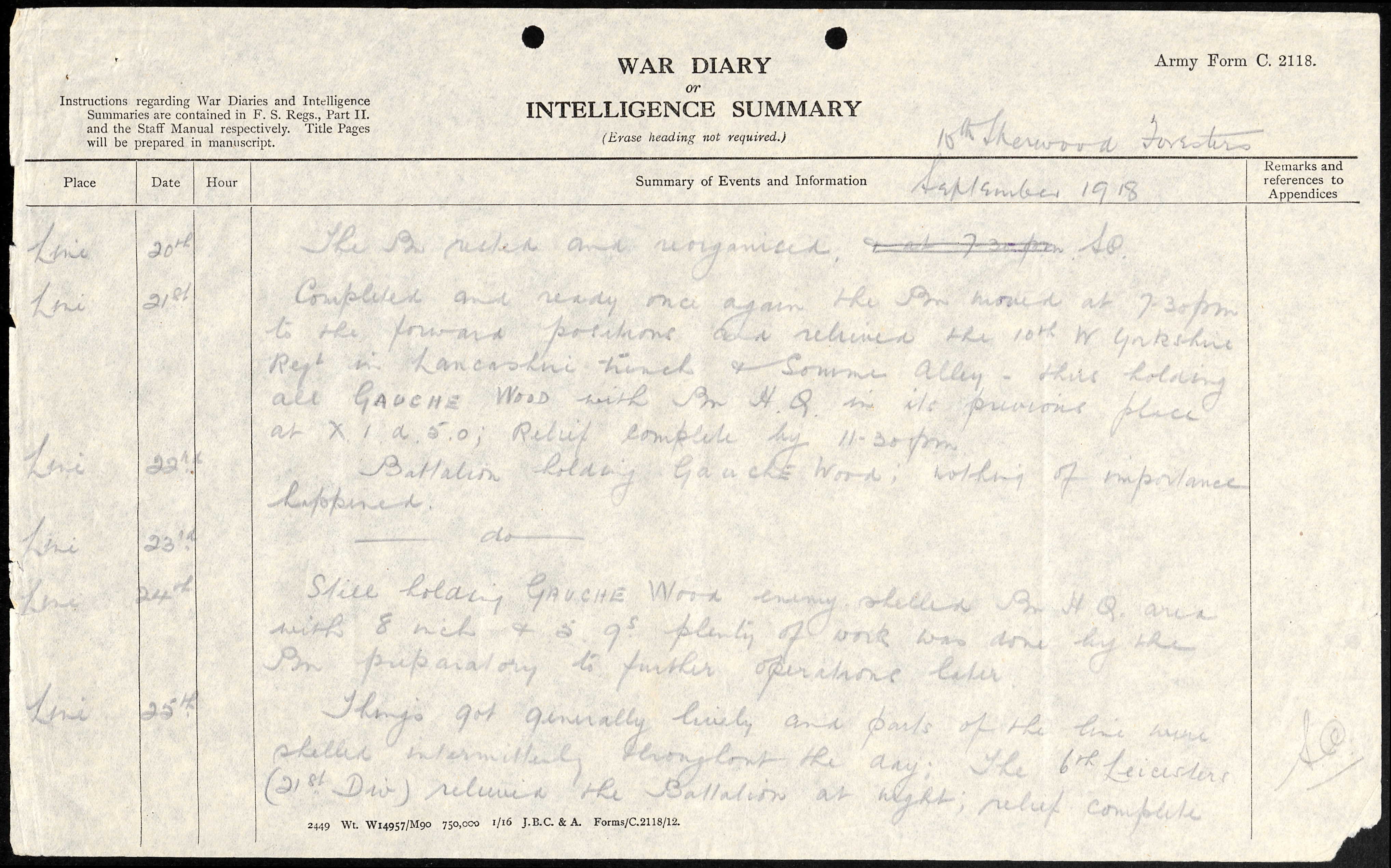

At the time of his death the 10th Battalion were involved in the attack at Gauche Wood and suffered heavy casualties.

James was part of a group of 18 men from the Bedfordshire Regiment that were transferred to the 2/6th Battalion on the 11th March 1918 and issued with a 260000 number. Its is not clear how many of these men were serving with the Battalion on the 21st March 1918.
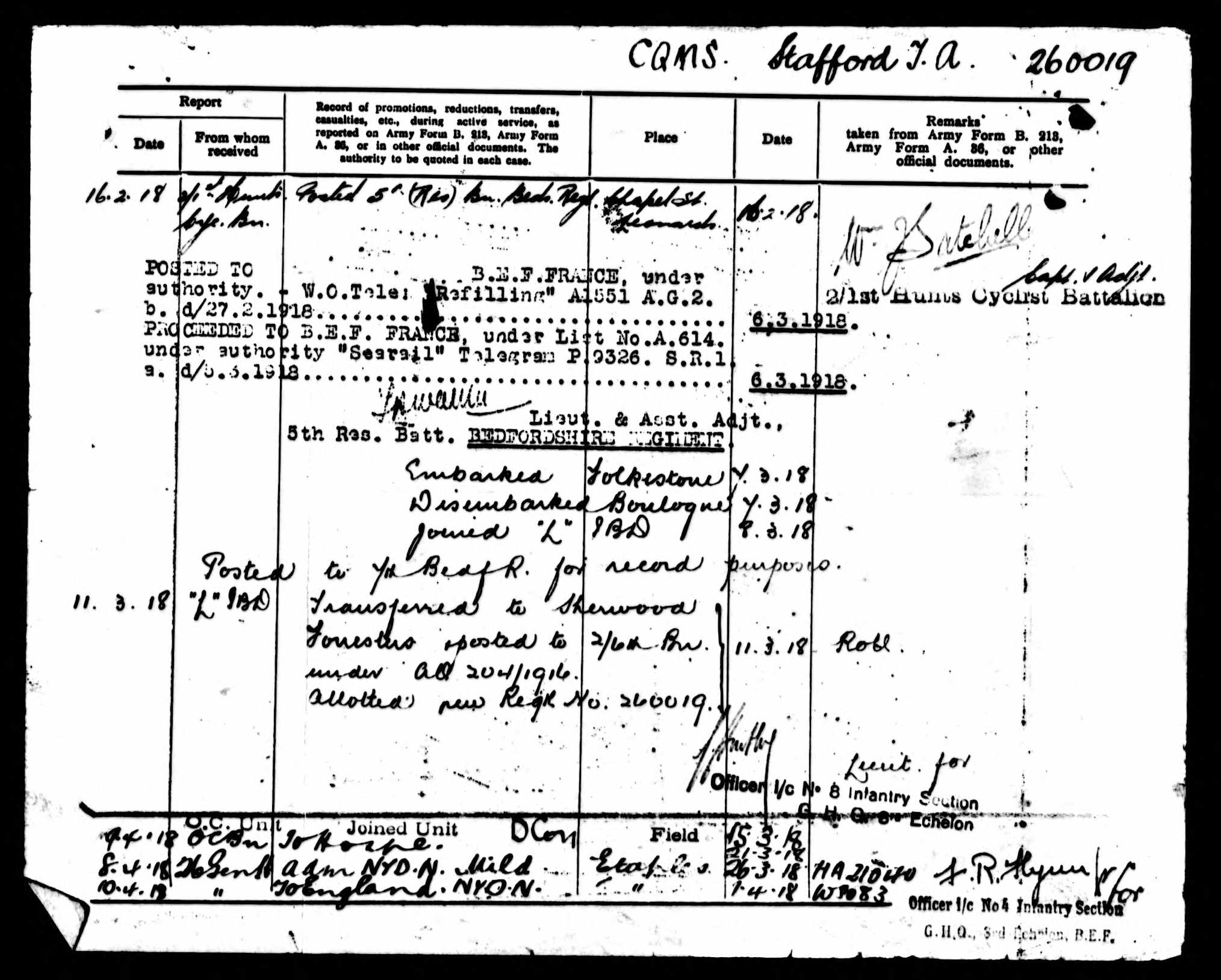
Army Service Record of 260019 CSM Thomas Alfred Stafford confirming his transfer to the Notts & Derby.
Served with the 1st Nottinghamshire Volunteer Rifle Corp (1901-1908) and 1/7th Battalion (1908-1916). Suffered a shell wound whilst in trenches at Hooge in August 1915 and discharged in May 1916.
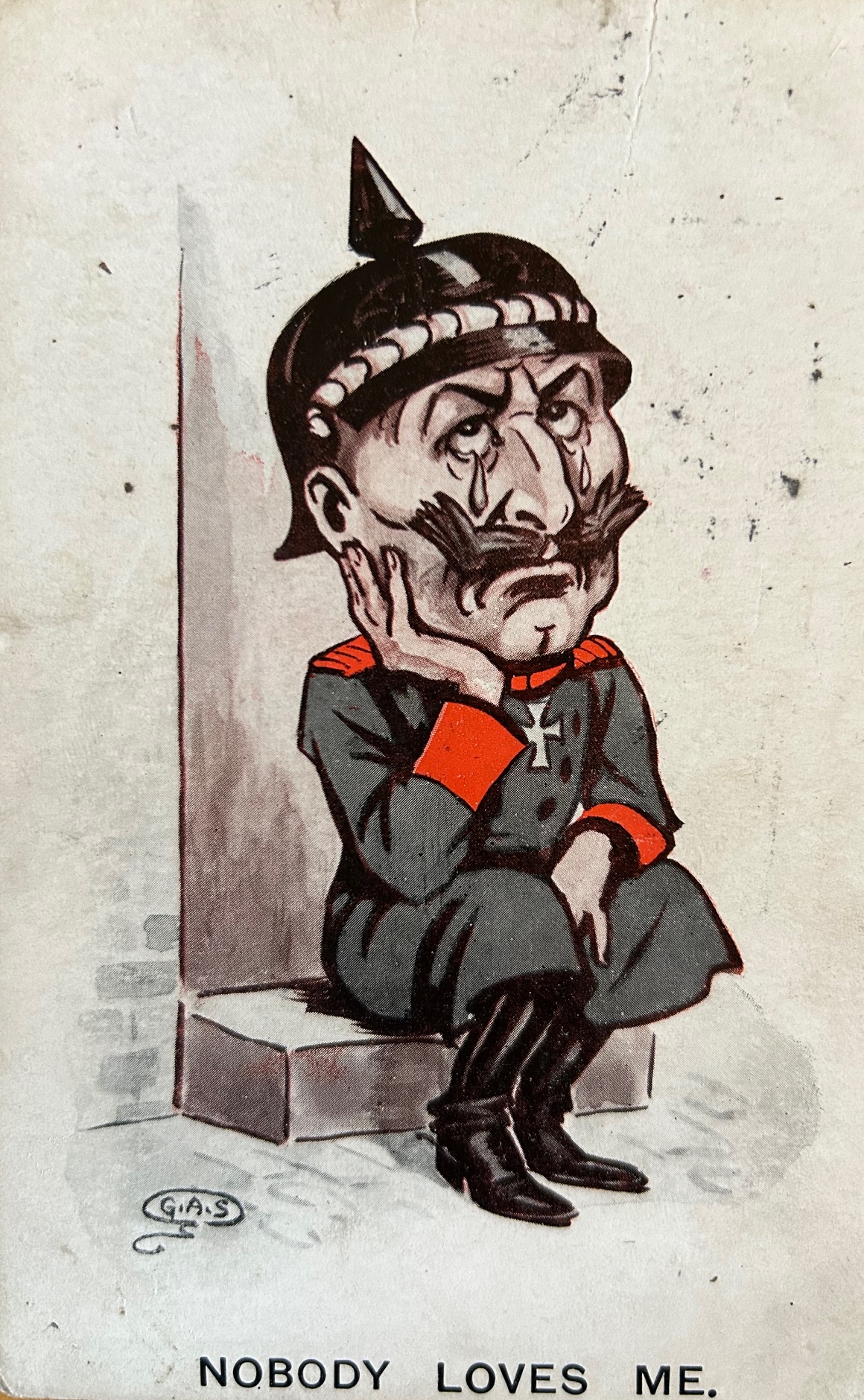
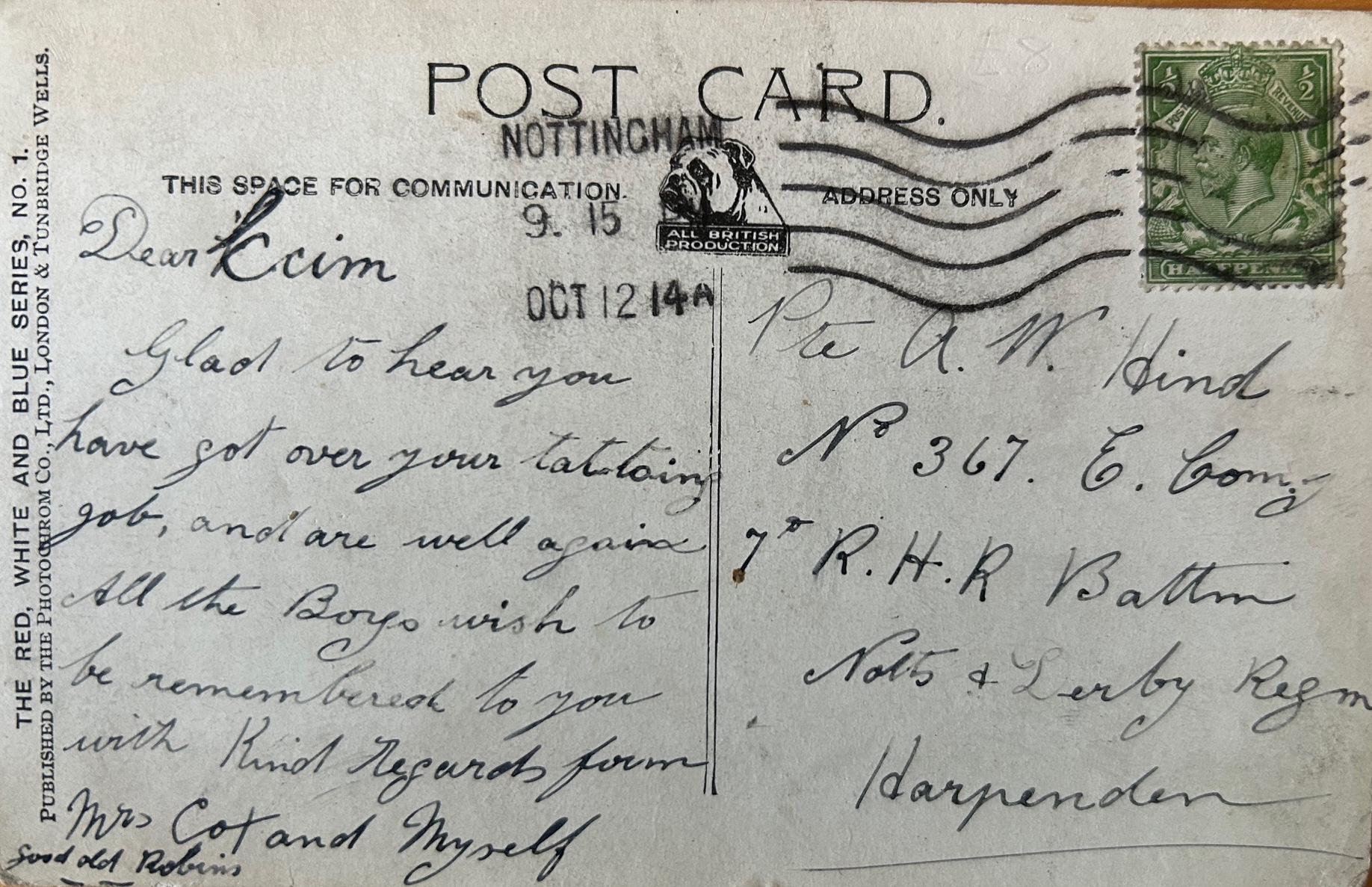
Oct 12th 1914
Dear Chum
Glad to hear you have got over your ta…..ing (?) jab, and are well again. All the boys wish to be remembered to you with kind regards from Mrs Cot and myself.
Good old Robins
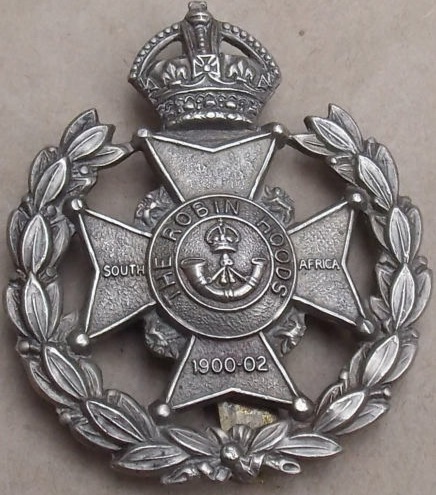
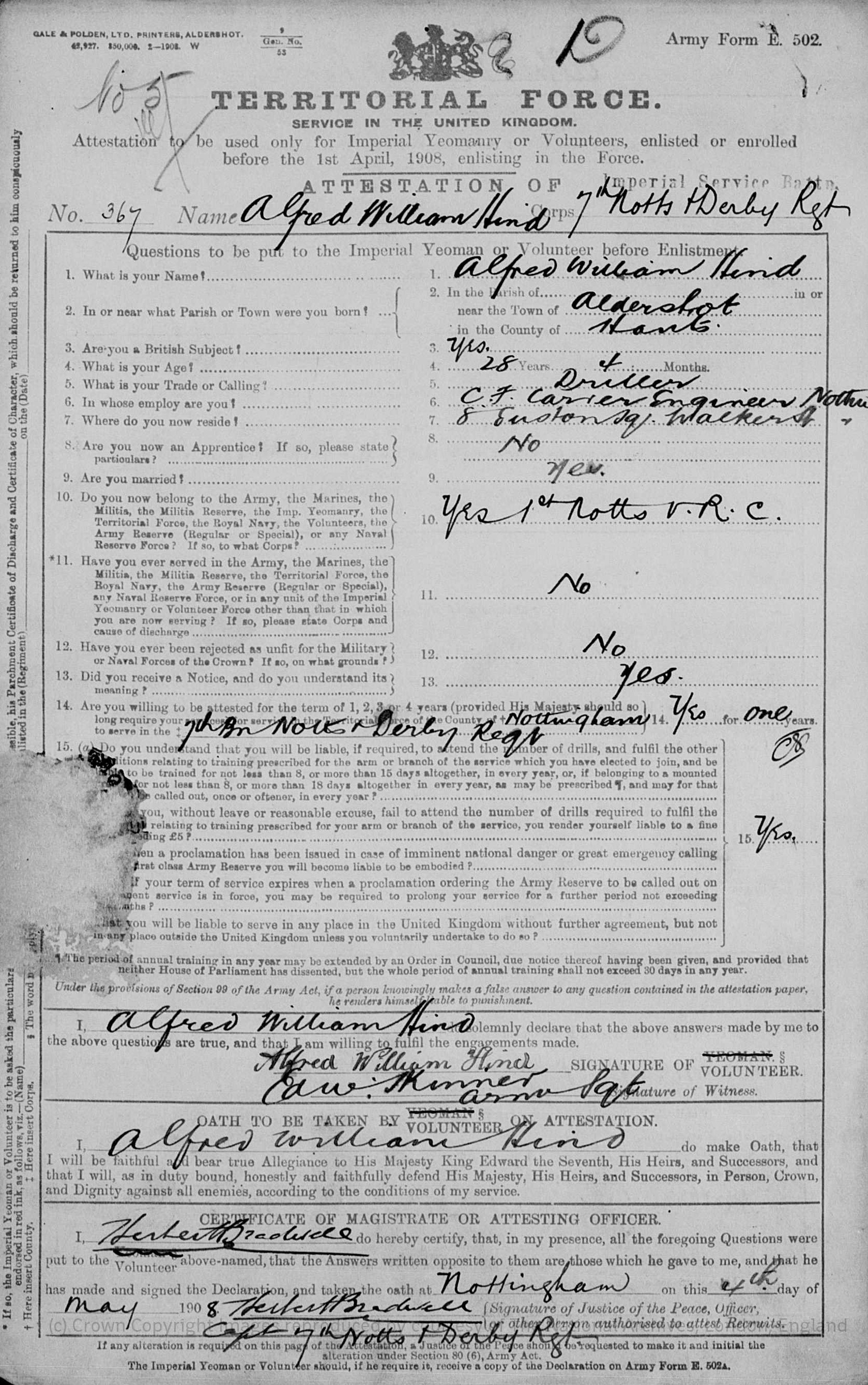
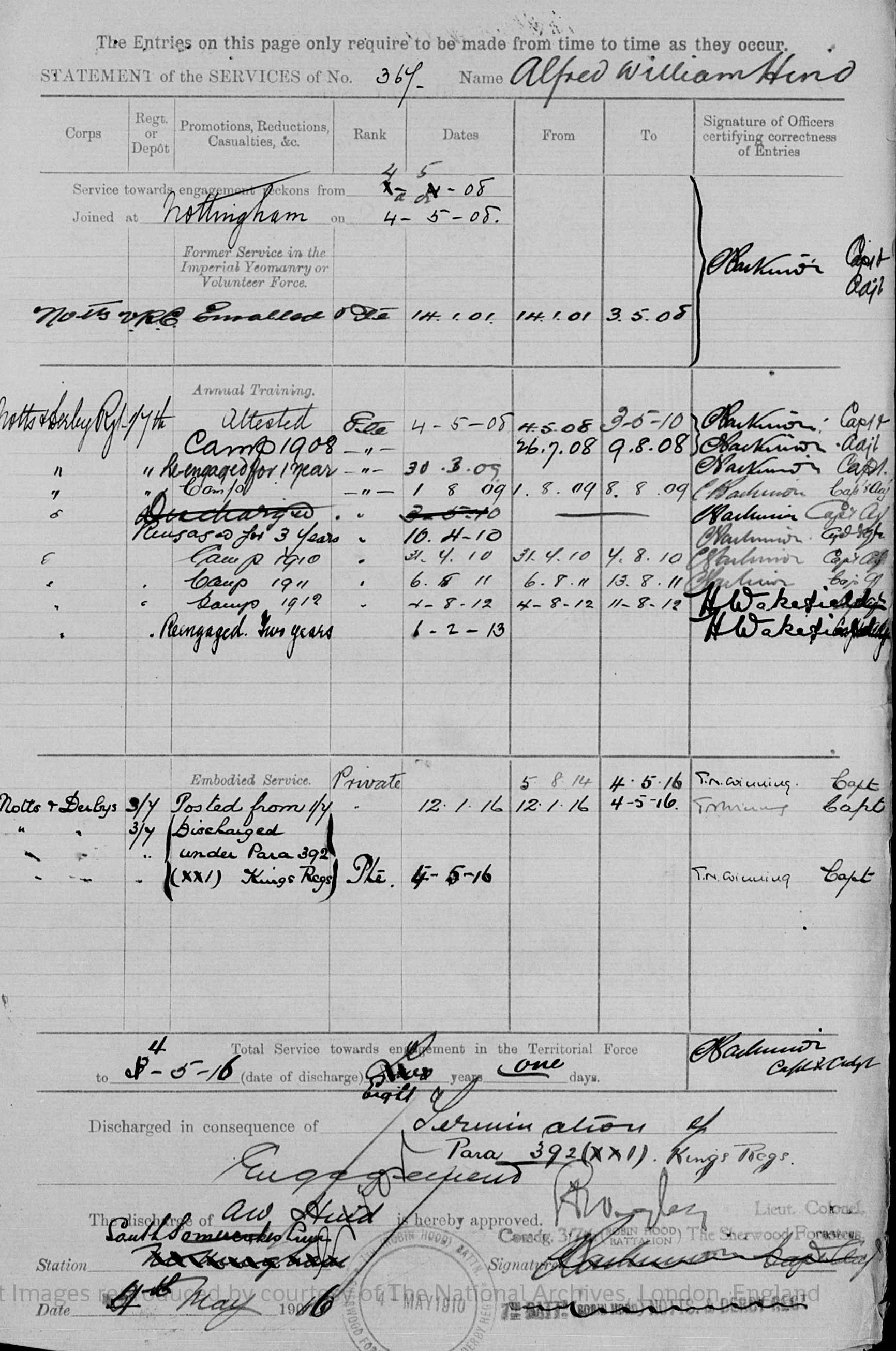
Alfred William Hinds was driller from Nottingham and enlisted into the 1st Nottinghamshire Volunteer Rifle Corp in May 1901. He served with them until transferring to the newly established 7th Battalion Robin Hood Rifles in May 1908. Up to August 1914 he attended many of the annual camps.
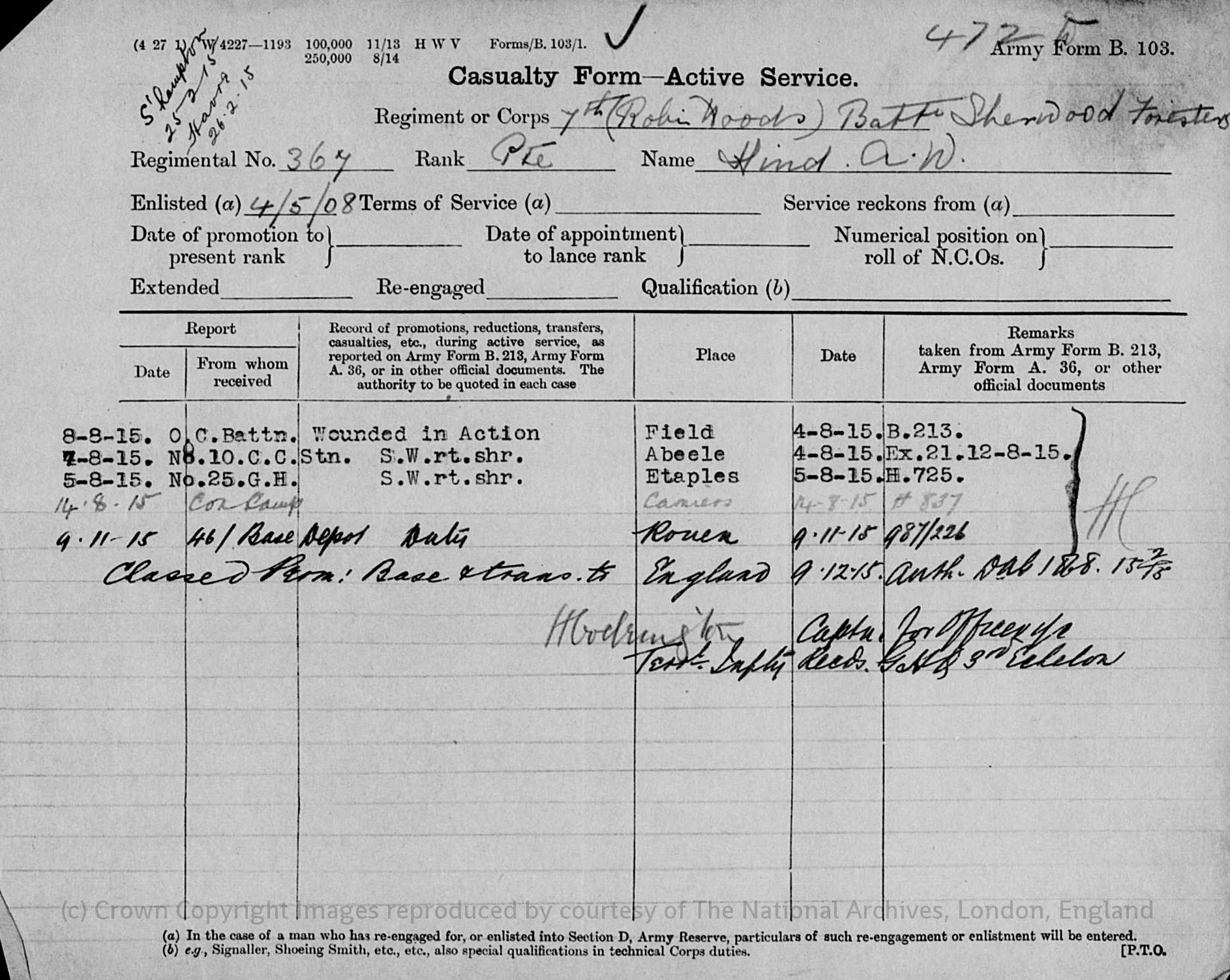


On the 28th of February 1915 Alfred was sent to France with the 46th North Midland Division. He was serving in the front line trenches near Hooge when he suffered a shoulder wound in the right shoulder on 4th August 1915. He was transferred from the 10th Casualty Clearing Station at Abeele to the 25th General Hospital in Etaples before arriving at the 46th NM Base Depot in November 1915.
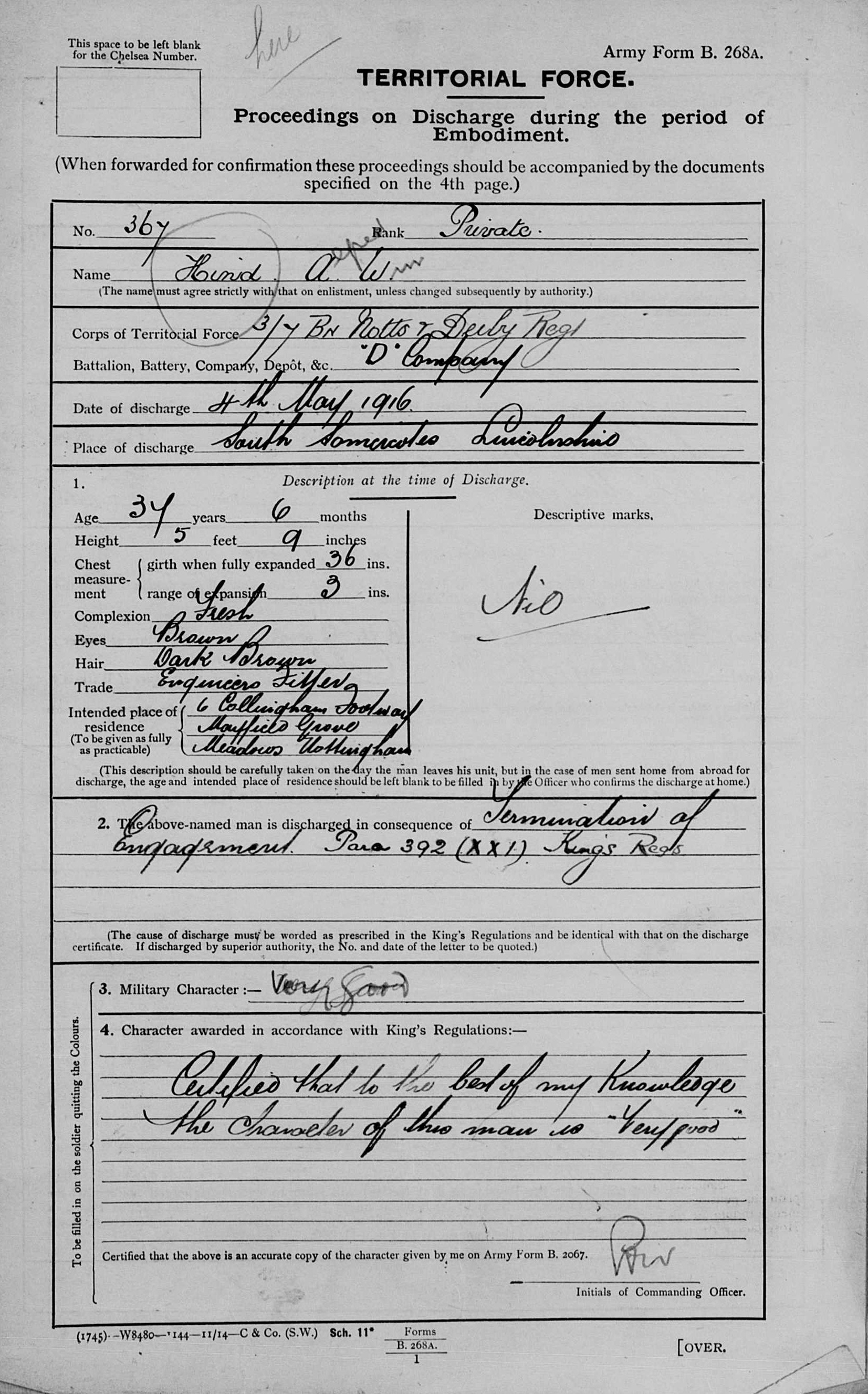
Alfred was eventually transferred to England in December 1915 and transferred to the 3/7th Battalion at South Somercotes in Lincolnshire. Alfred was eventually discharged in May 1916 aged 37.
Wounded in Dublin with the 2/7th Battalion
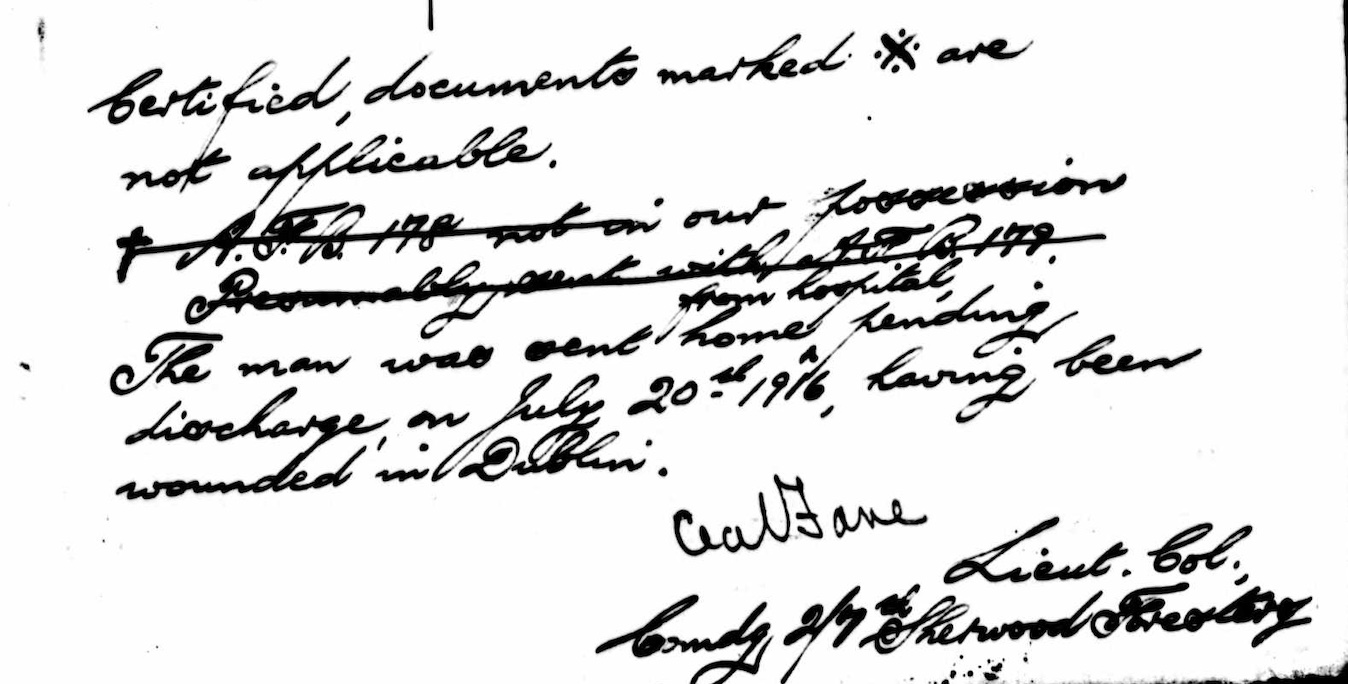
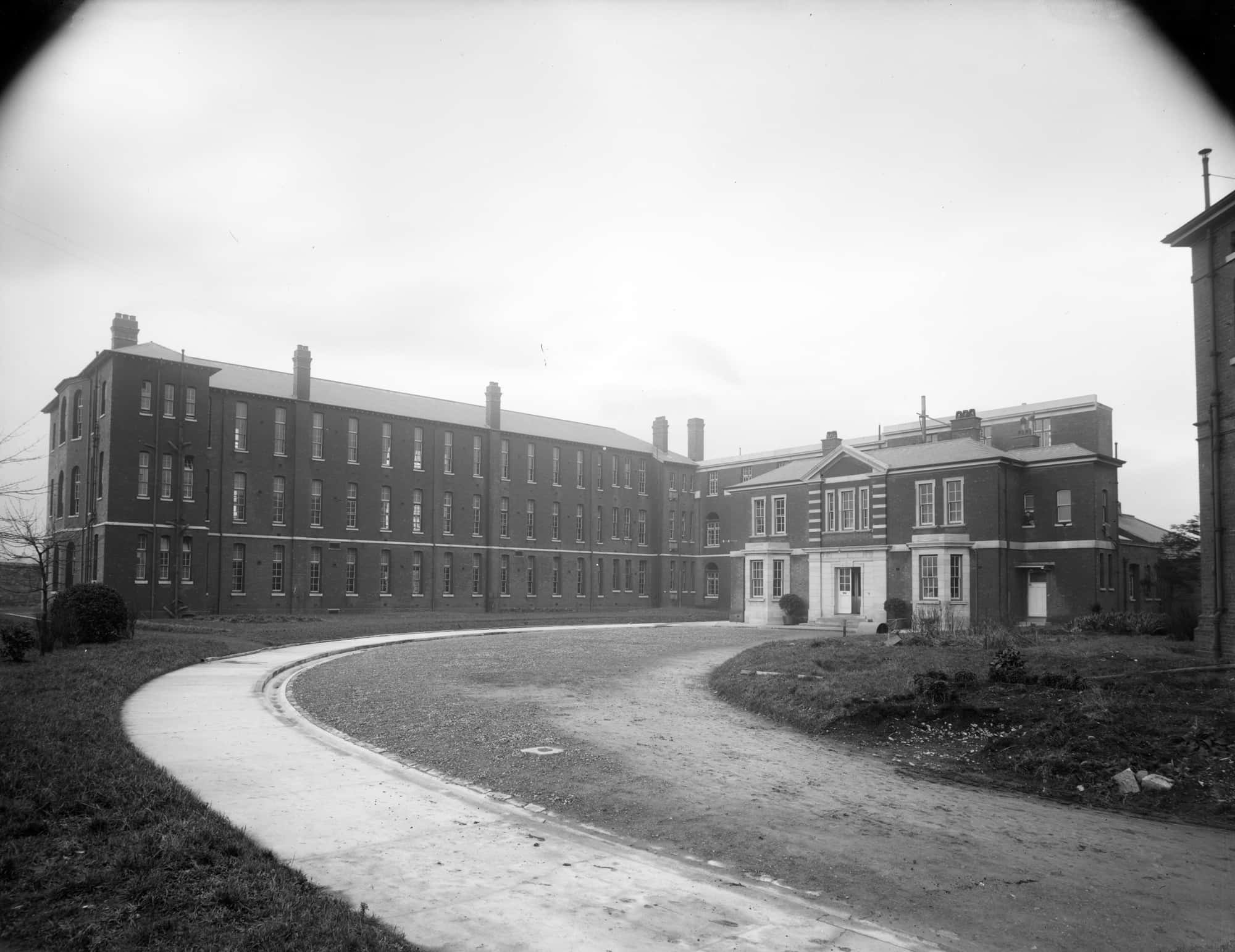
Dixon Vestry enlisted into “A” Company the 2/7th Battalion on 2nd February 1916 and was wounded in Dublin during the Easter Rising. He was treated in King George Hospital in Dublin.

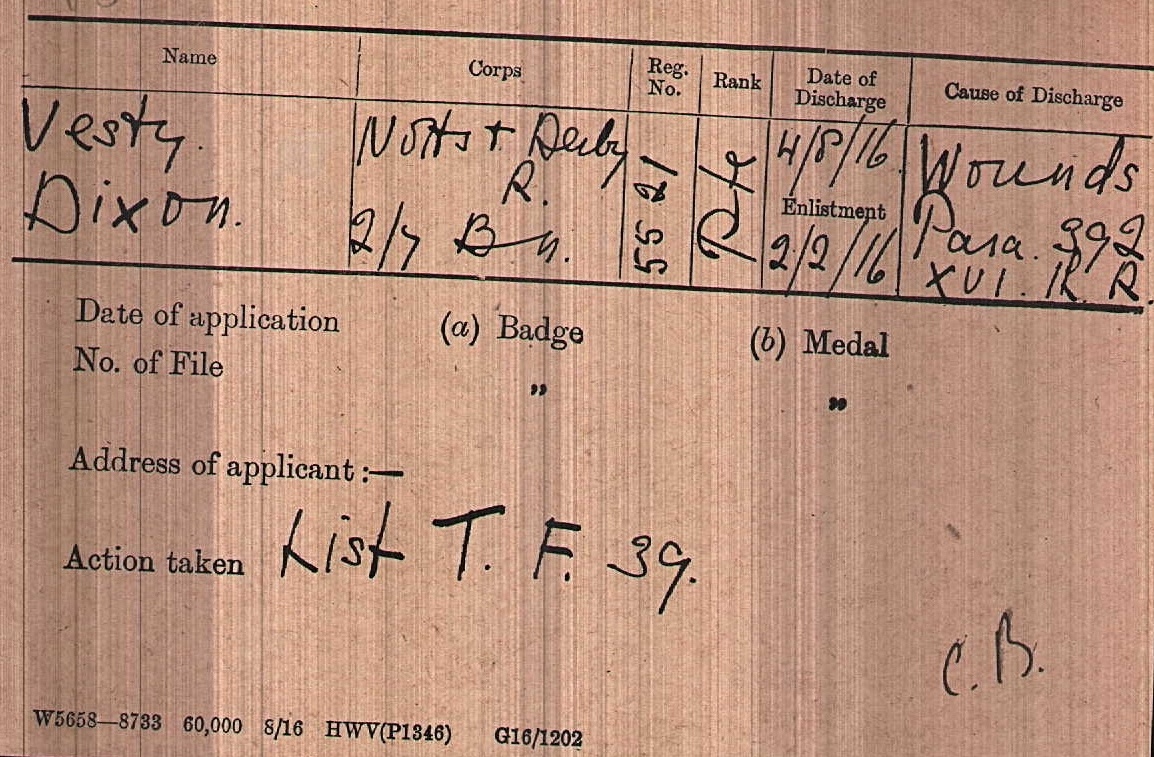
He was discharged on 4th August 1916 in Ornamore, Co Galway and was awarded a Silver War Badge.
A 1917 conscript who served with the 1/7th and 1/6th Battalions

Harold Herbert Pagett was born in January 1899 and was from Derby. His father George was a congregational minister and his was mother Sarah Ann. Both the 1901 and 1911 Census place the family at Avondale Road in Derby. Harold attended Derby School and won a scholarship to Hastings Street Higher School.
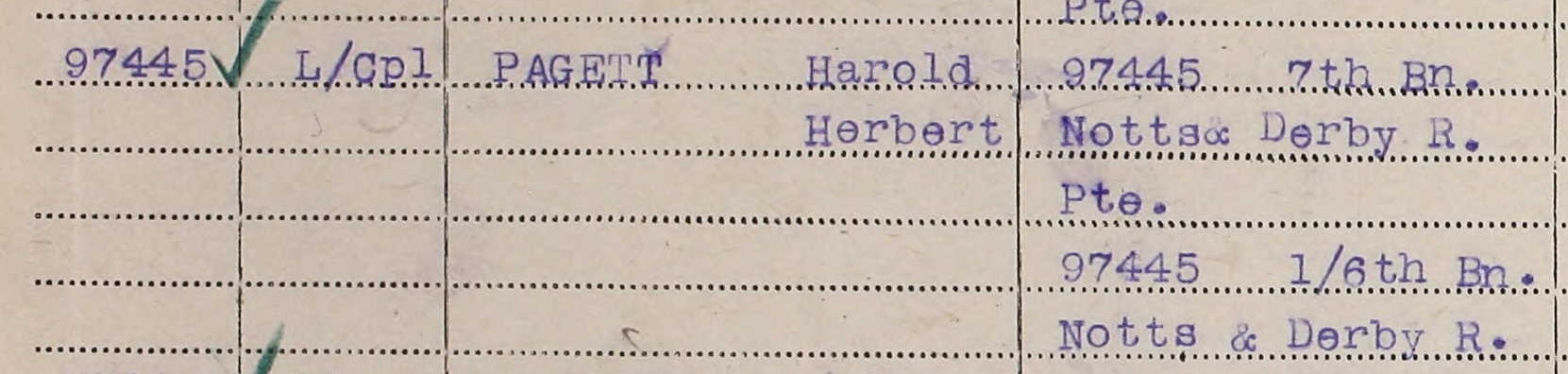
Harold was conscripted in Spring 1917 – most likely into the 3 (Res) Battalion. He would have arrived in France in late 1917/early 1918. Harold only served overseas with the 7th and 1/6th Battalions. It is likely that he joined the 7th Battalion after the 1/7th Battalion merged with the 2/7th Battalion. He was later transferred to the 1/6th Battalion probably in the Summer of 1918.
He married Dorothy Whatmough in Surrey in 1934 and they settled at Frimley where Harold was a tutor “for Army, Navy and Air Force”. He died in Surrey in 1971.
 Derbyshire Territorials in the Great War