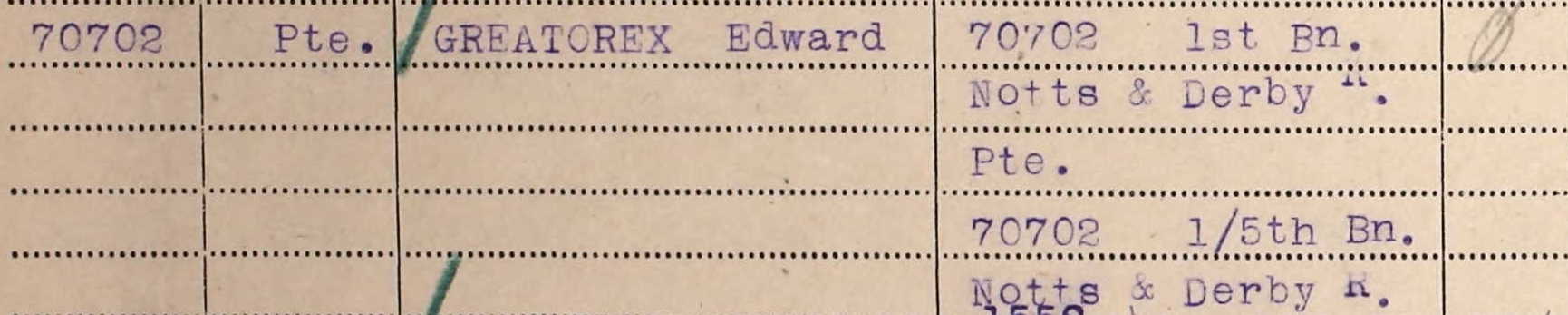
Edward Greatorex served overseas with both the 1st and 1/5th Battalions of the Sherwood Foresters. Edward was posted to the 1st Battalion with a draft of about 90 men on the 21st September 1916.
The 70000 series of Regimental Numbers were initially used to transfer men from the Territorial (Reserve) Battalions to the Regular and New Army Battalions of the Sherwood Foresters to make up for loses sustained in the Battle of the Somme.
This would suggest that Edward was possibly from the Nottinghamshire/Derbyshire region. Indeed, Greatorex is a very uncommon name and only seven other men called Edwards Greatorex served with the British Army during WW1
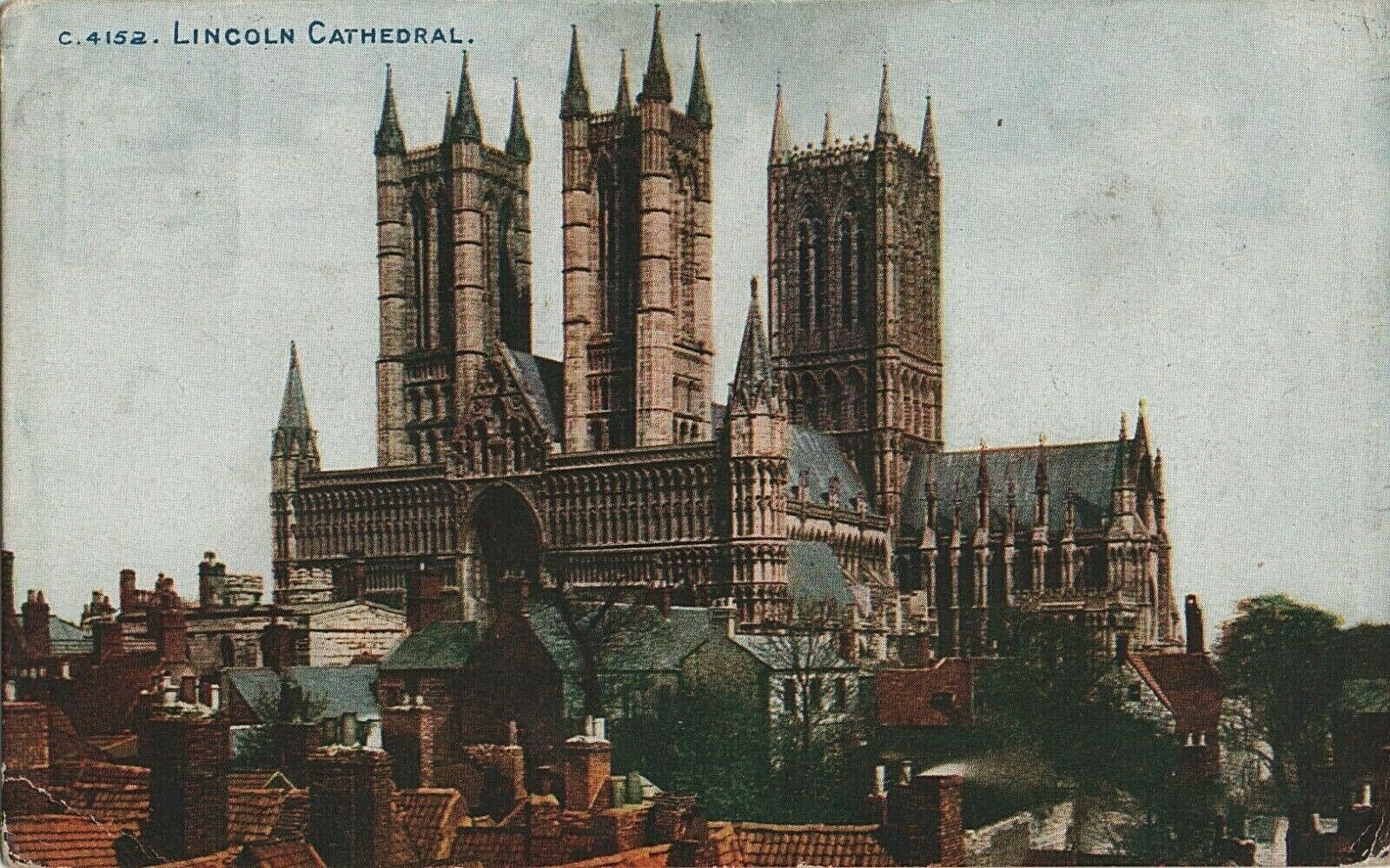
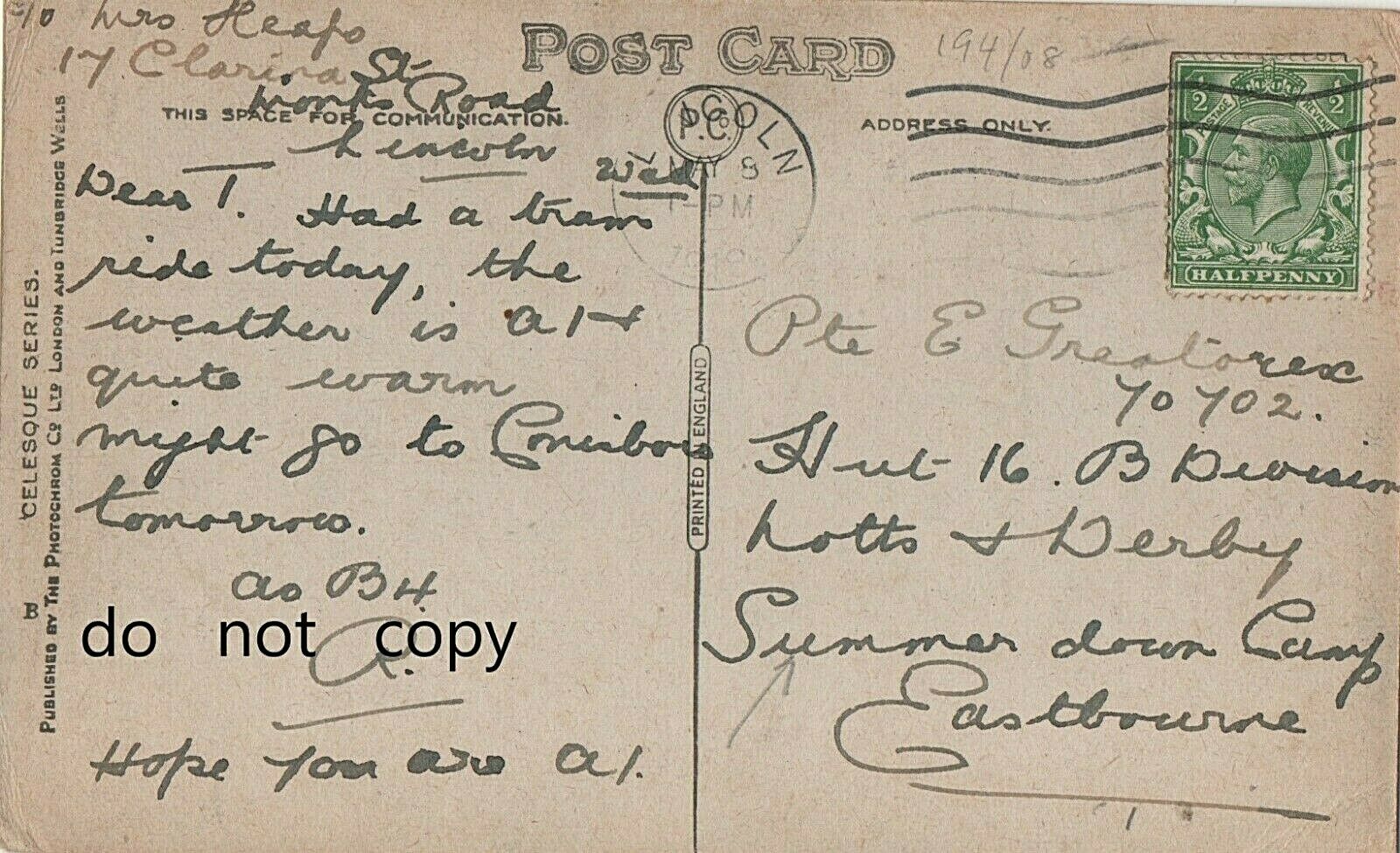
On May 8th 1918 ‘A’ sent a postcard from Lincoln to Edward in Summerdown Camp in Eastbourne (from c/o Mrs Heaps of 17 Clarina Street in Lincoln).
Dear T. Had a tram ride today, the weather is a1 & quite warm…might go to Conisboro [sic] tomorrow as B4….A….hope you are a1.”
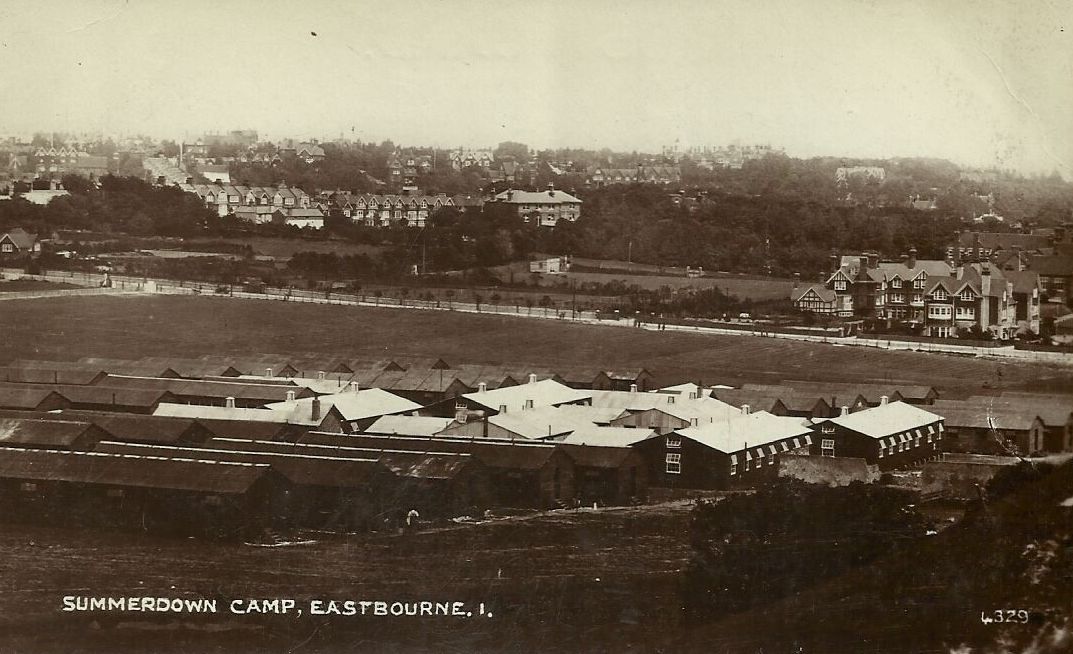
Summerdown Camp
Summerdown Camp opened in April 1915 and was the first, and at the time the largest, of three purpose built convalescent camps designed for rehabilitation of the wounded from the First World War. Of the 150,000 injured and sick soldiers who passed into the camp, 80% were sent back to fight.
This postcard would suggest that Edward had been wounded in the trenches and was convalescing in England. It’s possible that this occurred between his service with the 1st and 1/5th Battalion. Edward was in hut 16 B Division with the Notts & Derby.
But who was Edward Greatorex, ‘A’ and Mrs Heaps?
The last question is the easiest to answer…….Lucy Heaps was the (second) wife of Charles William Heeps, a carpenter and joiner originally from Northamptonshire. They had one daughter Winifred Emma who was born in 1896.
The Heep’s Census return on 1911
A search of the 1911 Census for ‘Edward Greatorex’ with search terms ‘born in 1896 +/- 10 years’ and ‘Lincoln’ only identified a few plausible candidates.
Edward, born in 1893 in Derby who was blind.
Edward, born in 1892 in Wirskworth and was tape weaver.
Edward, born in 1900 in Nottingham, but would have only been 14 at the outbreak of War.
Despite no obvious link to Lincoln I can only assume that the card was sent to Edward Greatorex from Wirksworth.
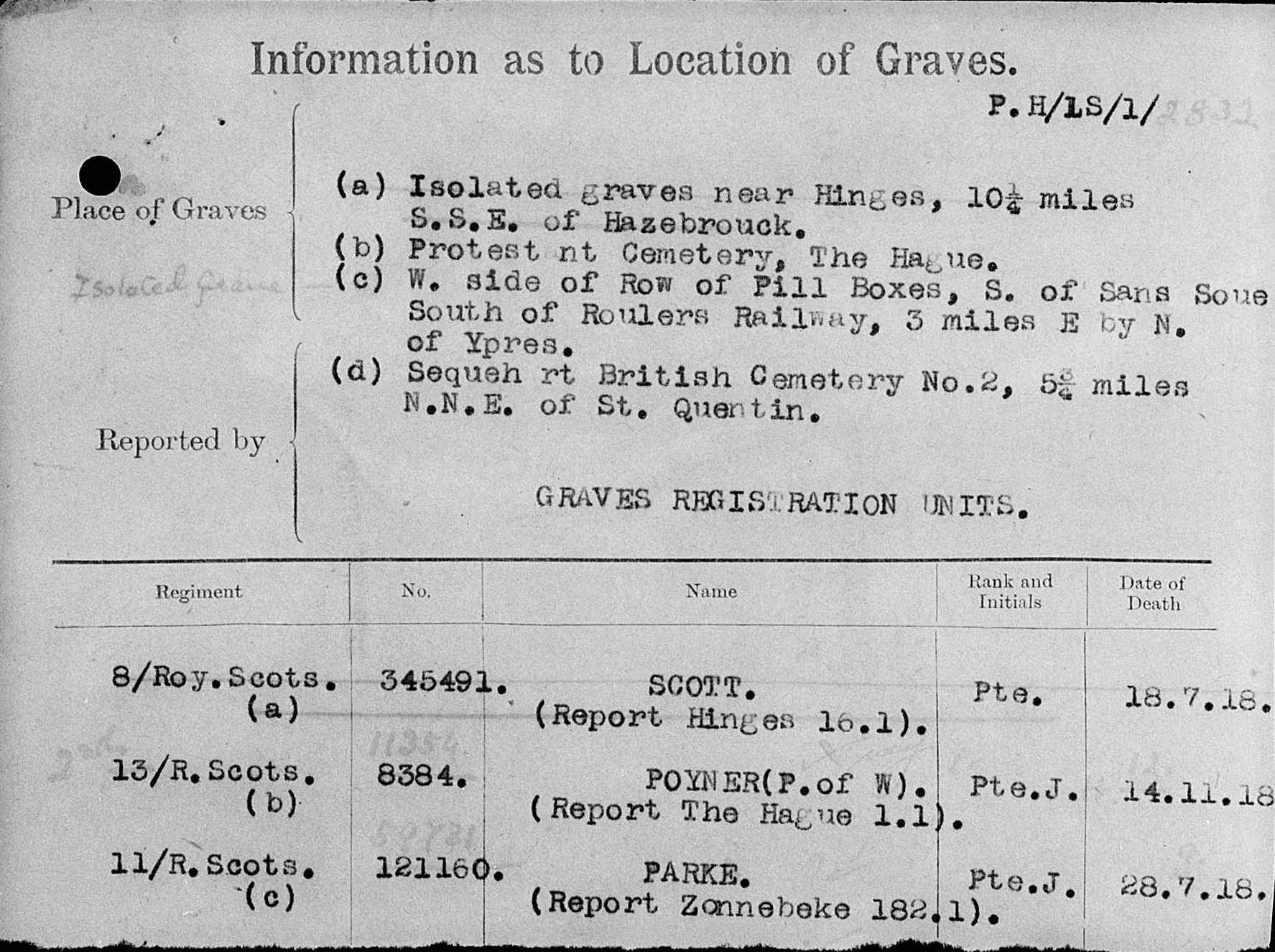
In searching the WW1 Army Service Records online I came across a single (torn) page making reference to four isolated graves, in various locations, of men that had died in 1918. The record had been made by a ‘Graves Registration Unit’, but no date was recorded.
The names and details of three of these men were also listed and all men had served with The Royal Scots.
I was intrigued as to whether I could discover the stories of these brave men and find the location of the graves on a contemporary trench map.
335833 Pte Thomas Scott, 8th Royal Scots
“Isolated grave near Hinges, 10 miles S.S.E. of Hazebrouck”
Private Scott was difficult to identify because there was no soldier with that name and regimental number that was killed on the 18th July 1918. However, a further search of CWGC identified 335833 Pte Thomas Scott, aged 22, who was k/a on the 23rd July as the most likely candidate. Unfortunately, it would appear that Thomas’ body was not recovered after the War and he is now Commemorated on the Soissons Memorial.
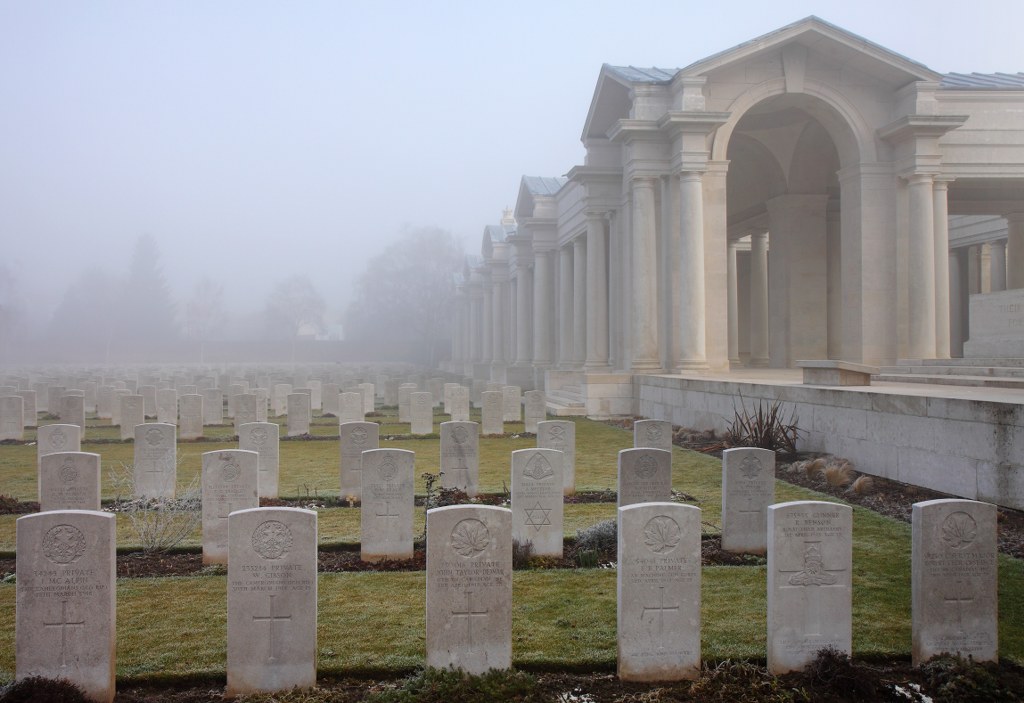
The Soissons Memorial commemorates almost 4,000 officers and men of the United Kingdom forces who died during the Battles of the Aisne and the Marne in 1918 and who have no known grave.
Thomas was the son of of Robert and Susan Scott of 10 Morningside Square, Newmains, Wishaw in Lanarkshire.
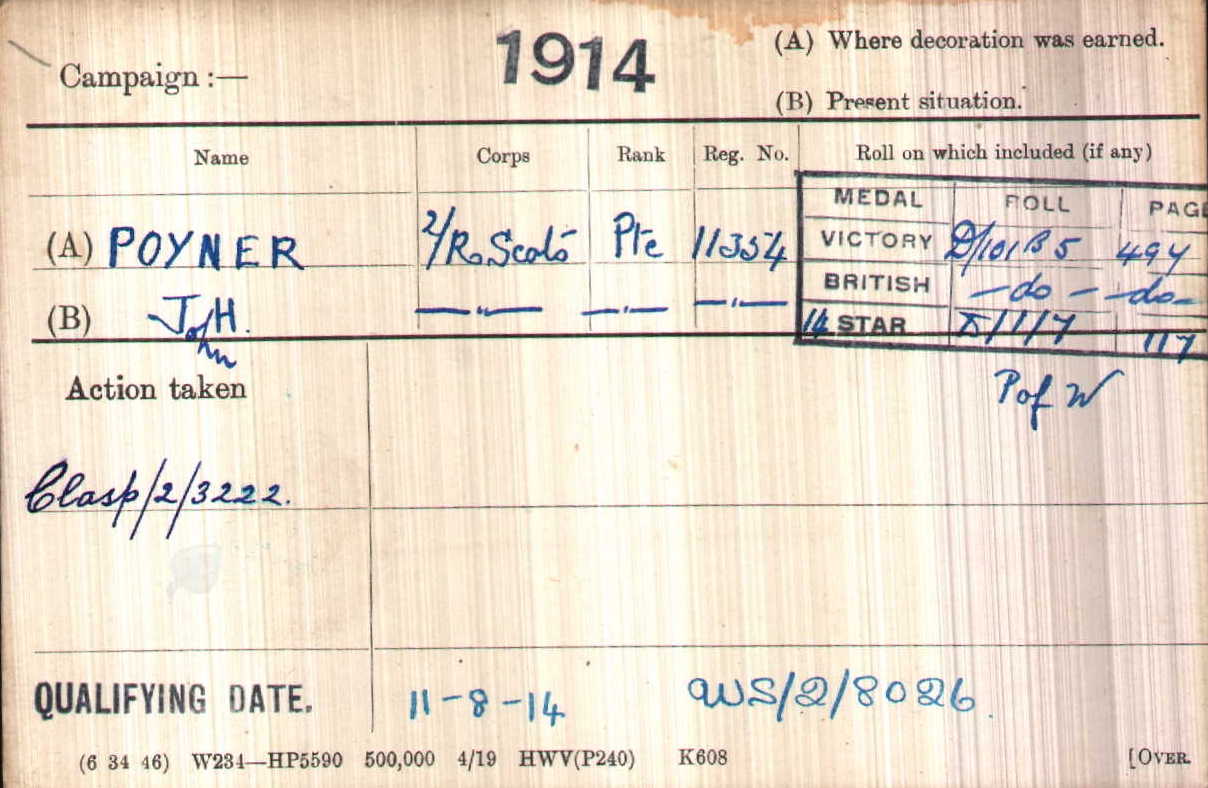
11354 Pte John Henry Poyner, 2nd Royal Scots
“Protestant Cemetery, The Hague”
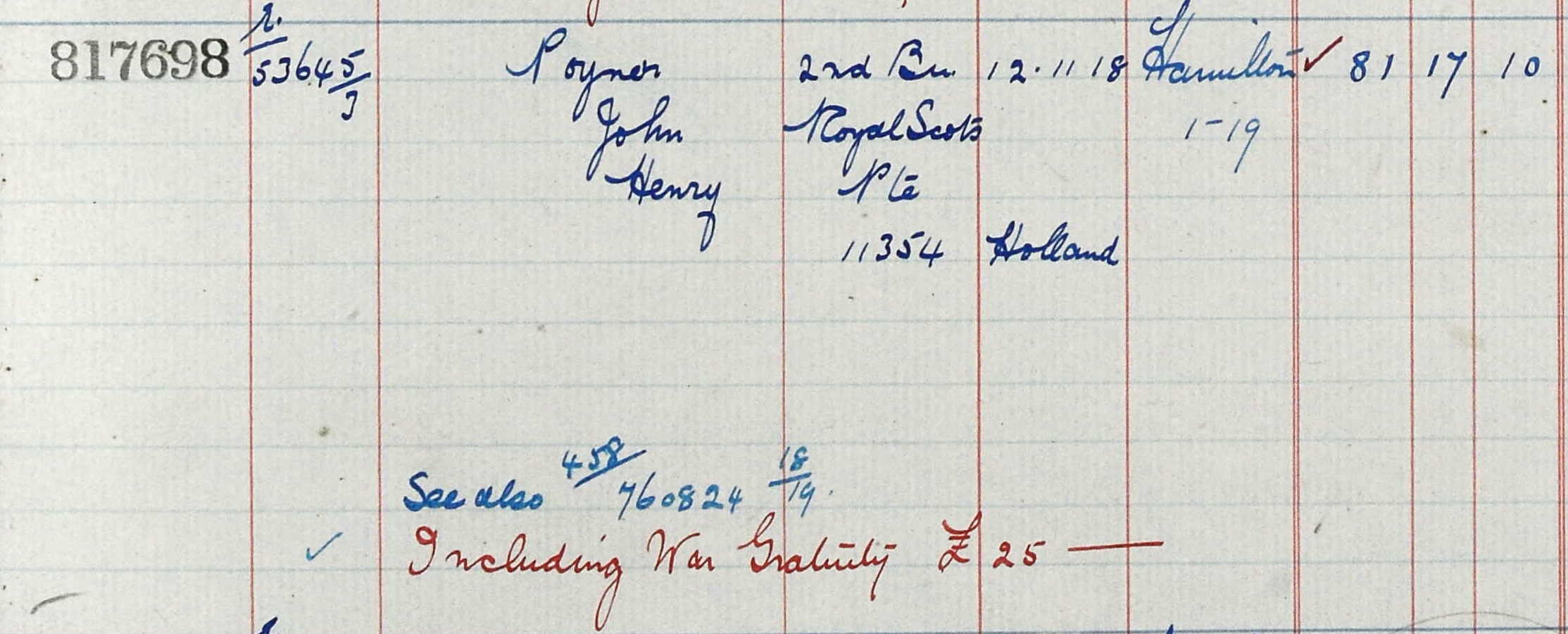
John Poyner died one day after the Armistice on 12th November 1918, aged 25. He was the son of William and Annie Poyner of 72 Bradbury Lane, Hednesford in Staffordshire and was born at High Town, Cannock, Stafford.
James was a coal miner and enlisted into The Royal Scots (Lothian Regiment) on the 4th January 1913, aged 18, having previously served with the 5th Battalion North Staffs Regiment.
2nd Battalion Royal Scots 1913
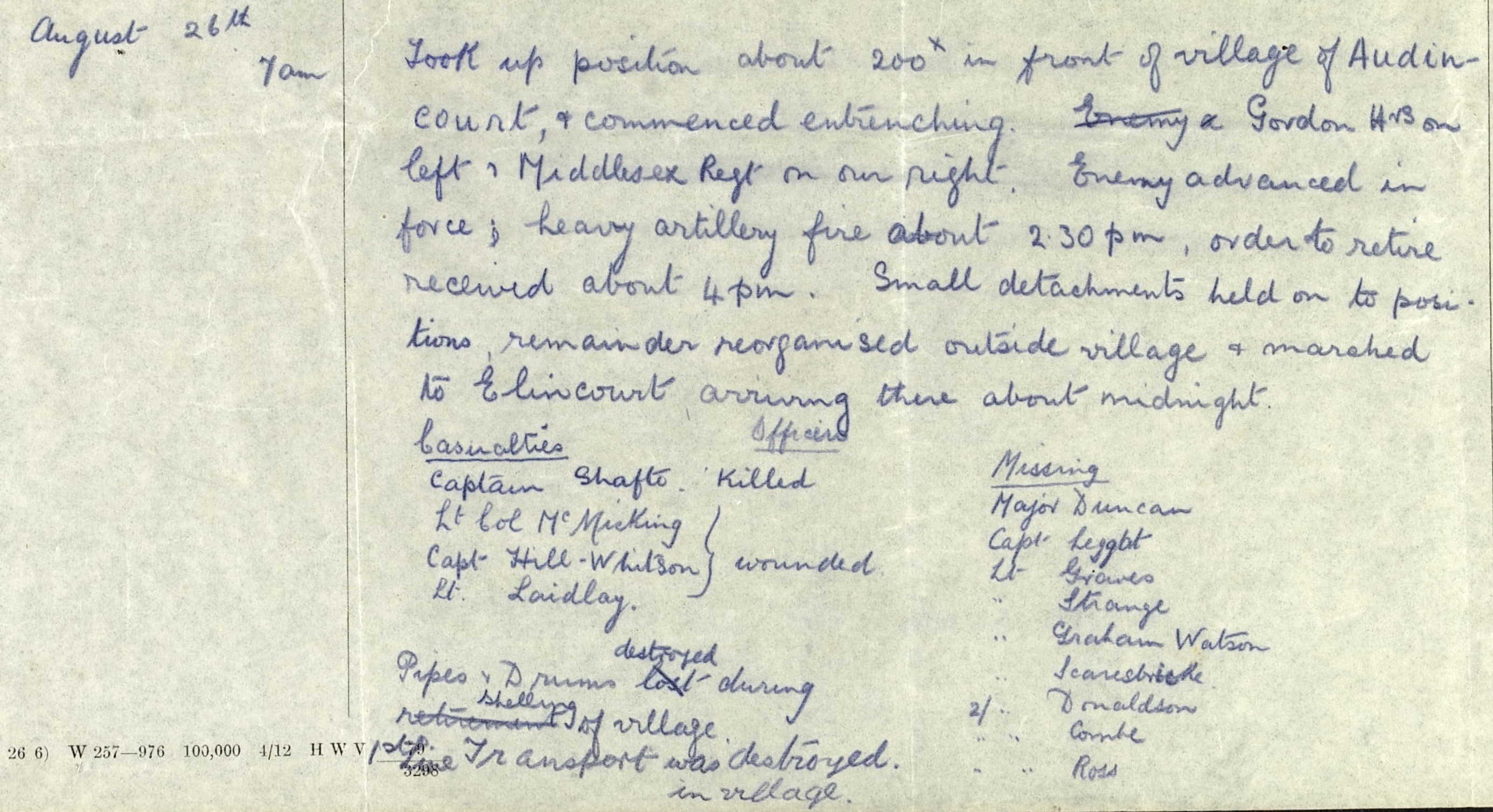
He arrived in France on the 11th August 1914 and was captured unwounded by the Germans on 26th August 1914 at Caudry. and was interned in Hamelu and Diepholzer POW Camps.
John Poyner MIC
Caudry town was the scene of part of the Battle of Le Cateau on the 26th August 1914; see here for more details.
26th August 1914
John was originally reported as killed in action on the 14th September 1914 (Casualty List No. 1778), but in November his mother received a postcard from him stating that he was a prisoner of war.
Prisoner of War letterPost card received from John Poyner
At some point John appears to have been wounded and transported for internment in Holland, where he died.
Army Service RecordRecord of John Henry Poyner’s death in the Netherlands
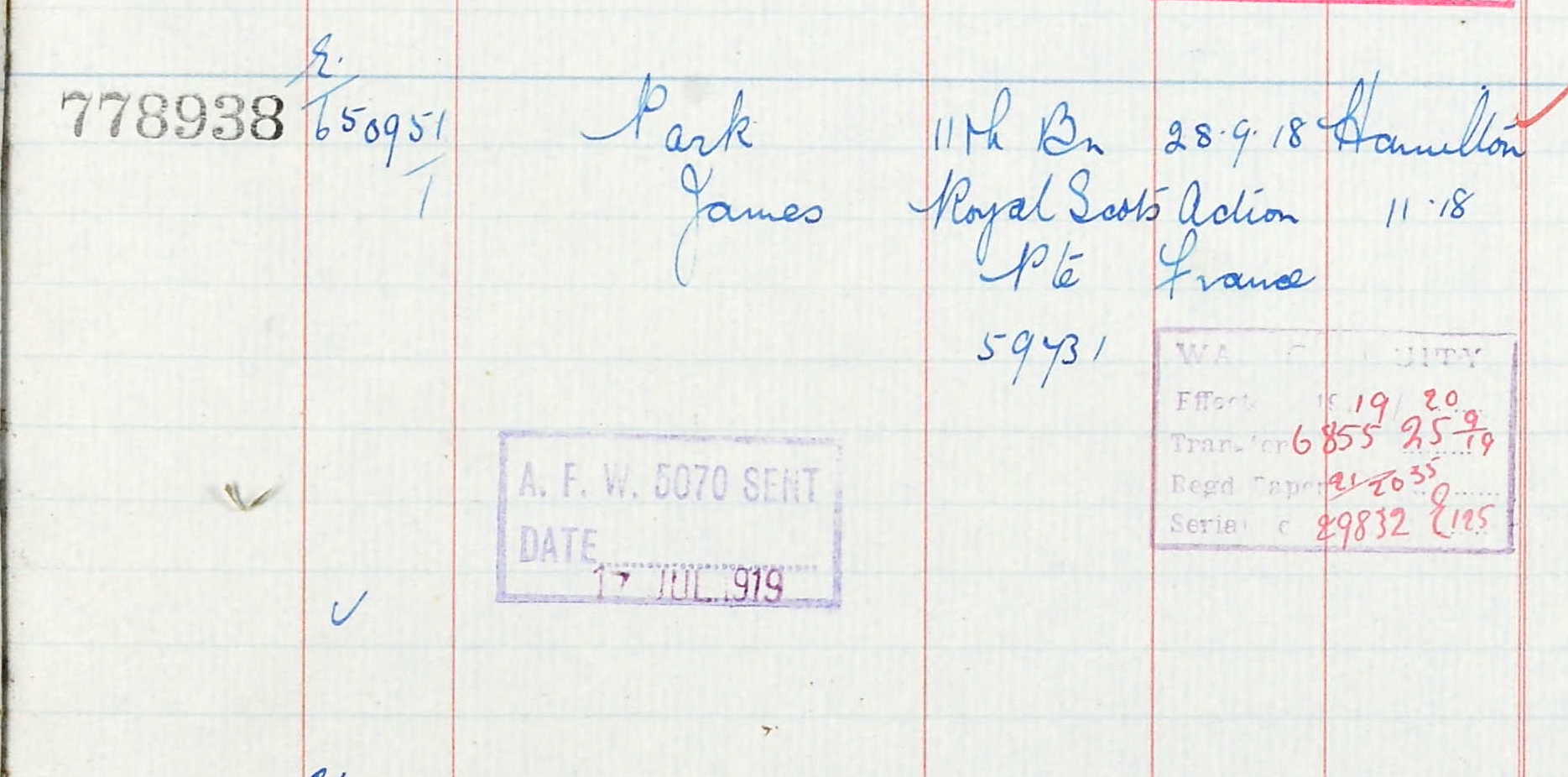
59731 Pte James Park, 11th Royal Scots
“W. side of Row of Pill Boxes, S. of Sans Some South of Roulers Railway, 3 miles E by N. of Ypres
James Park was from Glasgow in Lanarkshire and served overseas with the 16th, 12th and 11th Battalions of the Royal Scots, which suggests that he may have been wounded several times and moved between different Battalions of the Regiment following his convalescence.
BWM and VM entry for James ParkJames was killed in action on the 28th September 1918
After the War James’ body was exhumed and reburied in August 1918 in Perth China Wall Cemetery. Interestingly, although the Graves Registration Unit recorded that his was an ‘isolated grave’, he was actually buried alongside Frederick William Bruback of the 27th Field Ambulance RAMC. The record also provides a precise location of their graves.
IWGC reburial record
The War Department trench maps shows that this was a very heavily defenced area and well-known Pill Boxes such as Kit and Kat and Anzac are recorded.
Trench Map from early 1917 showing a strong German position at 0.0 in square J2 CA line of three blue boxes at 0.0 in Square J2 C may be reference to the ‘W. side of Row of Pill Boxes’ recored in the original grave registration.
What happened on the 28th September 1918?
War Diary entry for the 11th Royal Scots on 28th September 1918
The 11th Royal Scots, which was part of the 9th (Scottish) Division, attacked German positions to the north east of Ypres. The 27th Field Ambulance were attached to the Division.
“5.30am. Battle commenced in terrible weather, torrents of rain, progressive however was good and all objectives were taken.”
“Weather cleared at 12 noon and wounded who were numerous were cleared without difficulty by night fall”
“Work for bearers is very heavy and 4 bearers of 27 FA were killed”
It is interesting to speculate that the 27th Field Ambulance had an Advanced Dressing Station in one of the abandoned Pill Boxes and that is were both James Park and Frederick Bruback died and were buried.
Joseph Archibald Robinson was born in Bakewell, Derbyshire on the 27th December 1895. He was the eldest of 5 children born to Frederick and Helena Robinson. By 1911 the family had moved to Spa Lane in Chesterfield. Joseph – aged 15 – was a telegraph messenger.
Joseph enlisted into the 3/6th (or 2/6th) Battalion Sherwood Foresters (Notts & Derby) Regiment in late December 1915/early January 1916. His 4-digit service number was most likely 4657. It is highly likely that Joesph served in Ireland during the Easter Rising of 1916.
The 2/6th Battalion marched out of No. 6 Camp at Hurdcott (Fovant) on 25th February and proceeded to Folkstone where they proceeded to Boulogne.
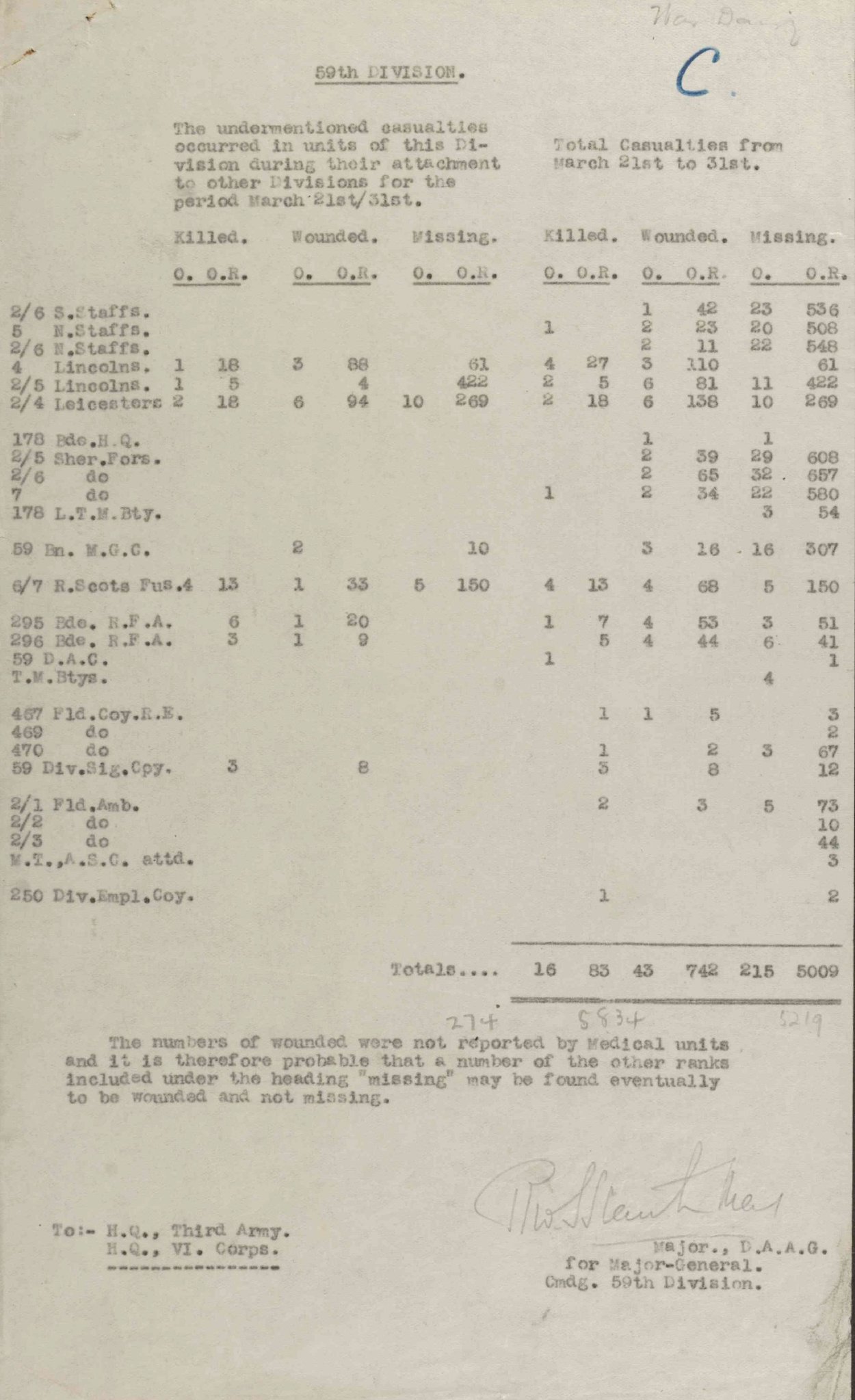
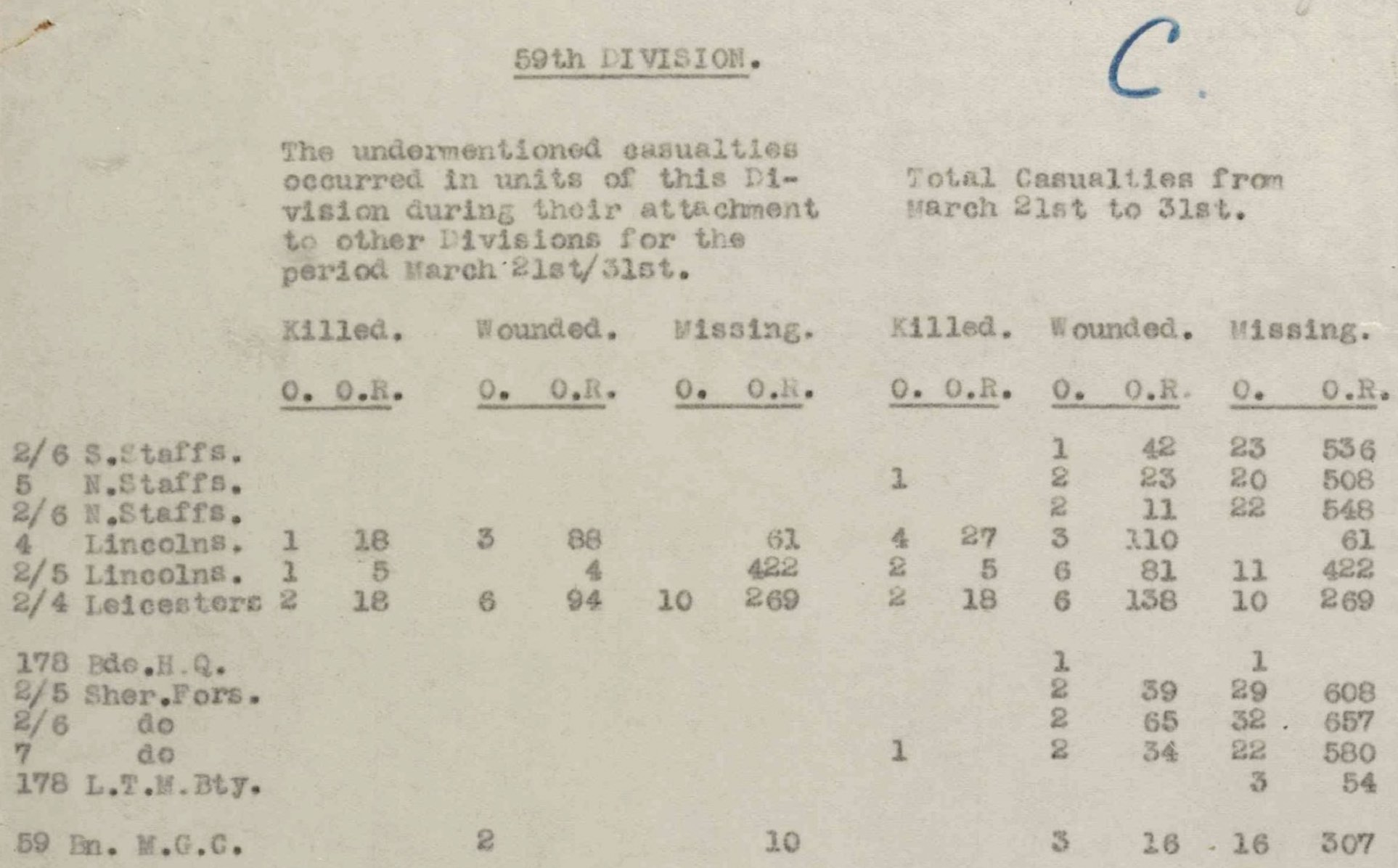
On the 21st March 1918 the Germans launched their Spring ‘Kaiserschlacht’ offensive and the 2/6th – like the rest of the 178th Bde of the 59th Division – were effectively annihilated.
But what happened to Joseph?
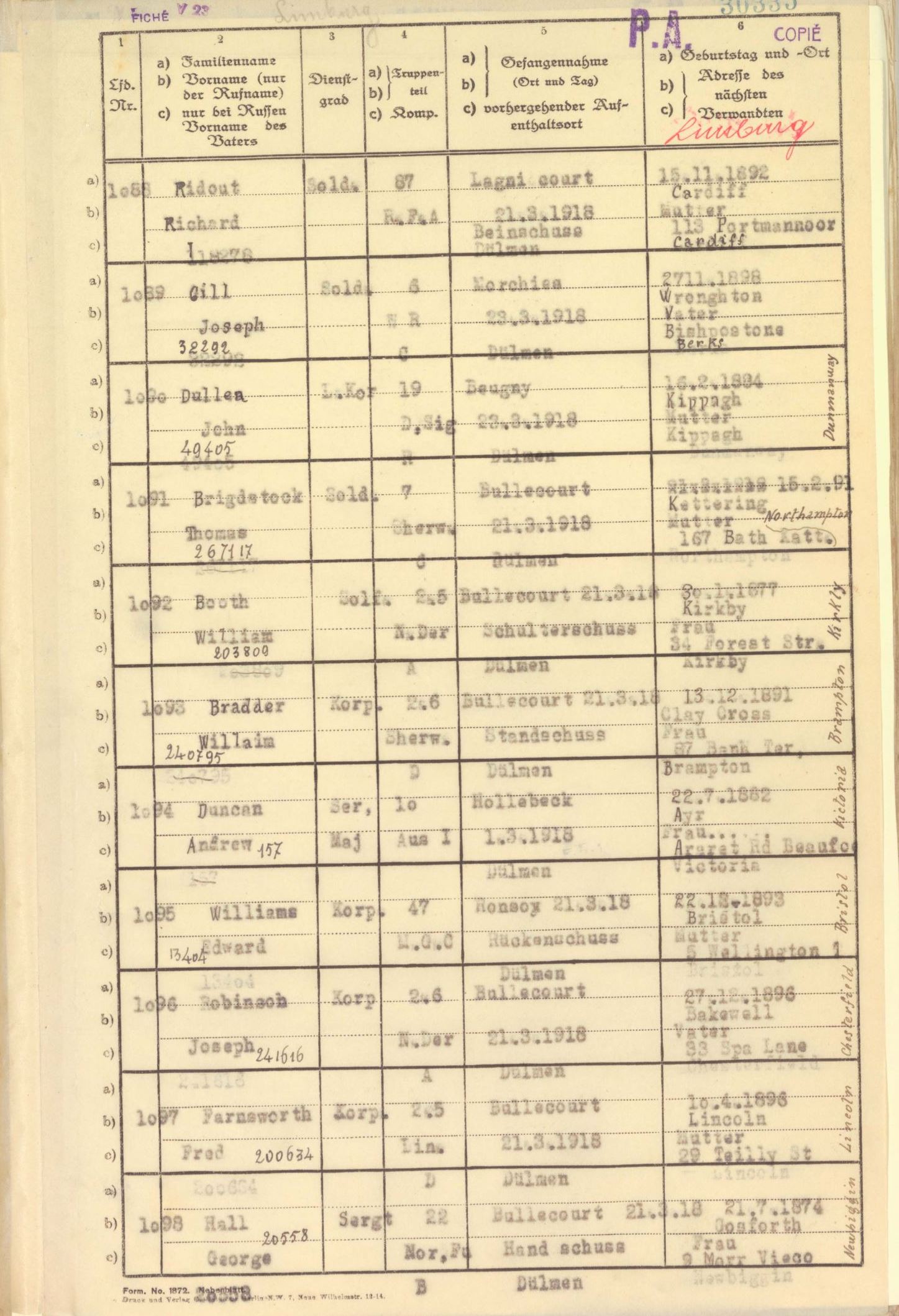
On the 21st April 1918 Joseph’s mother – Helena – sent a request to the War Office enquiring about her son Joseph, who she had (presumably) not heard from for a while.
A very worried mum.
Joseph was reported as ‘missing’ – along with 657 other men of the 2/6th.
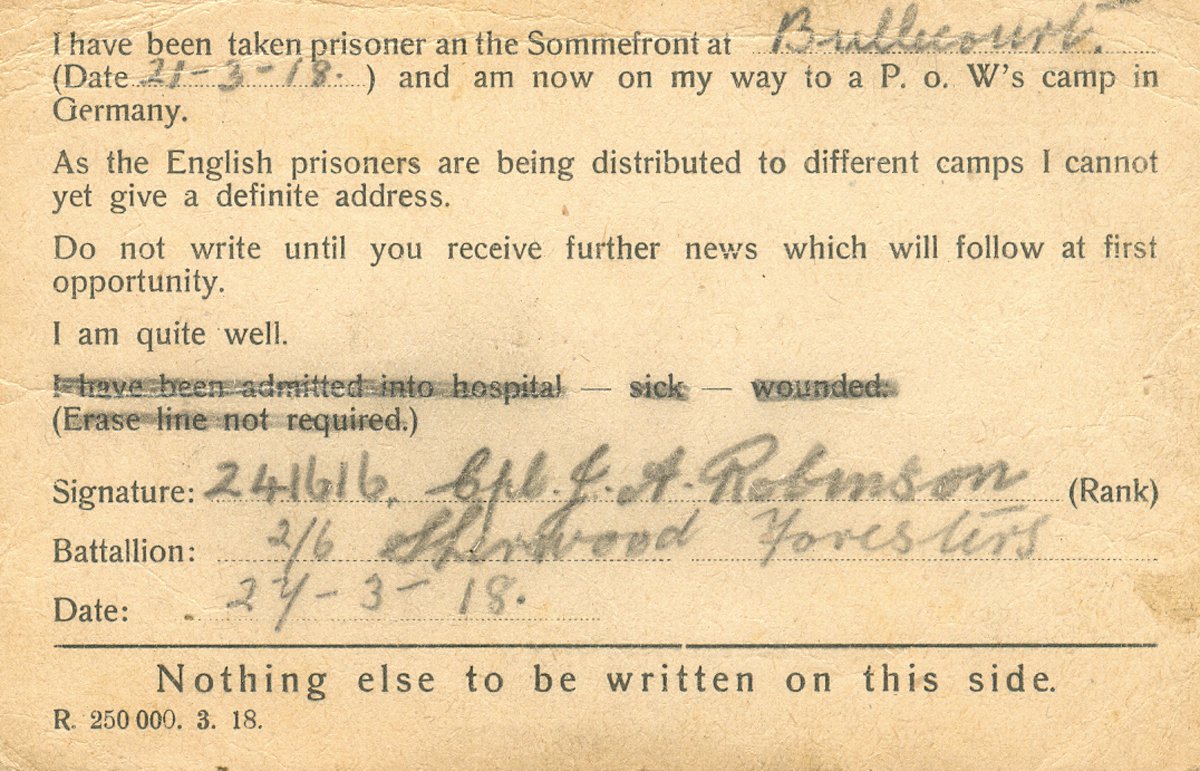
On the 27th March 1918 Joseph was able to send a ‘Pro-Forma’ card to Helena informing her that he was a POW – but alive and well!
It clearly took a while to arrive in Chesterfield – see paragraph.
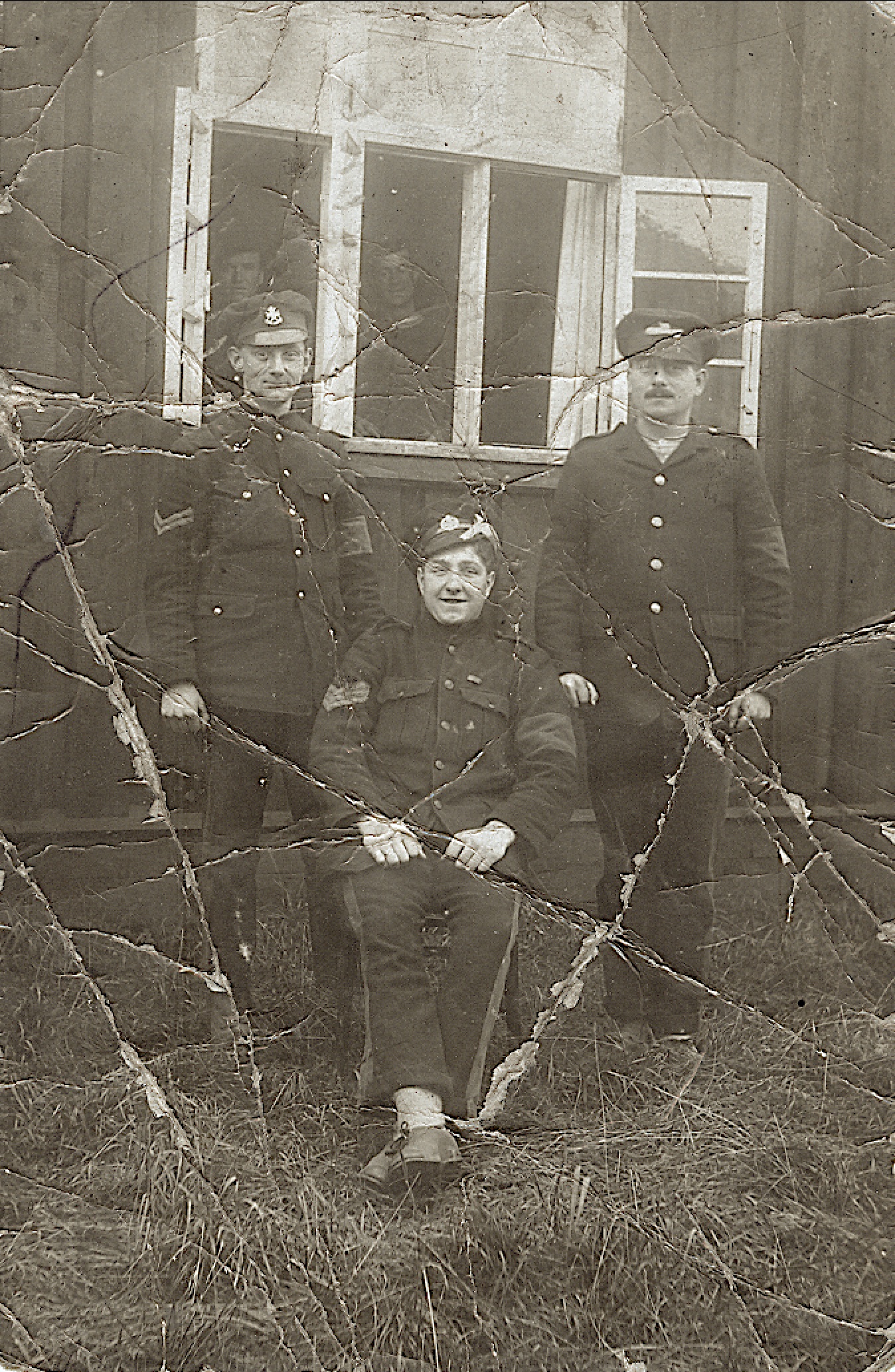
Joseph eventually found himself interned in Dulman POW camp and was able to send a photo back to his mother….
“Dear Mother, how do you like me in my ‘Gefangeners’…….”
Joseph – along with other men of the BEF – was released from captivity and returned to the UK. I have not traced his name on any repatriation lists, but man of the 2/6th men captured on the 21st March were repatriated in November and December 1918.
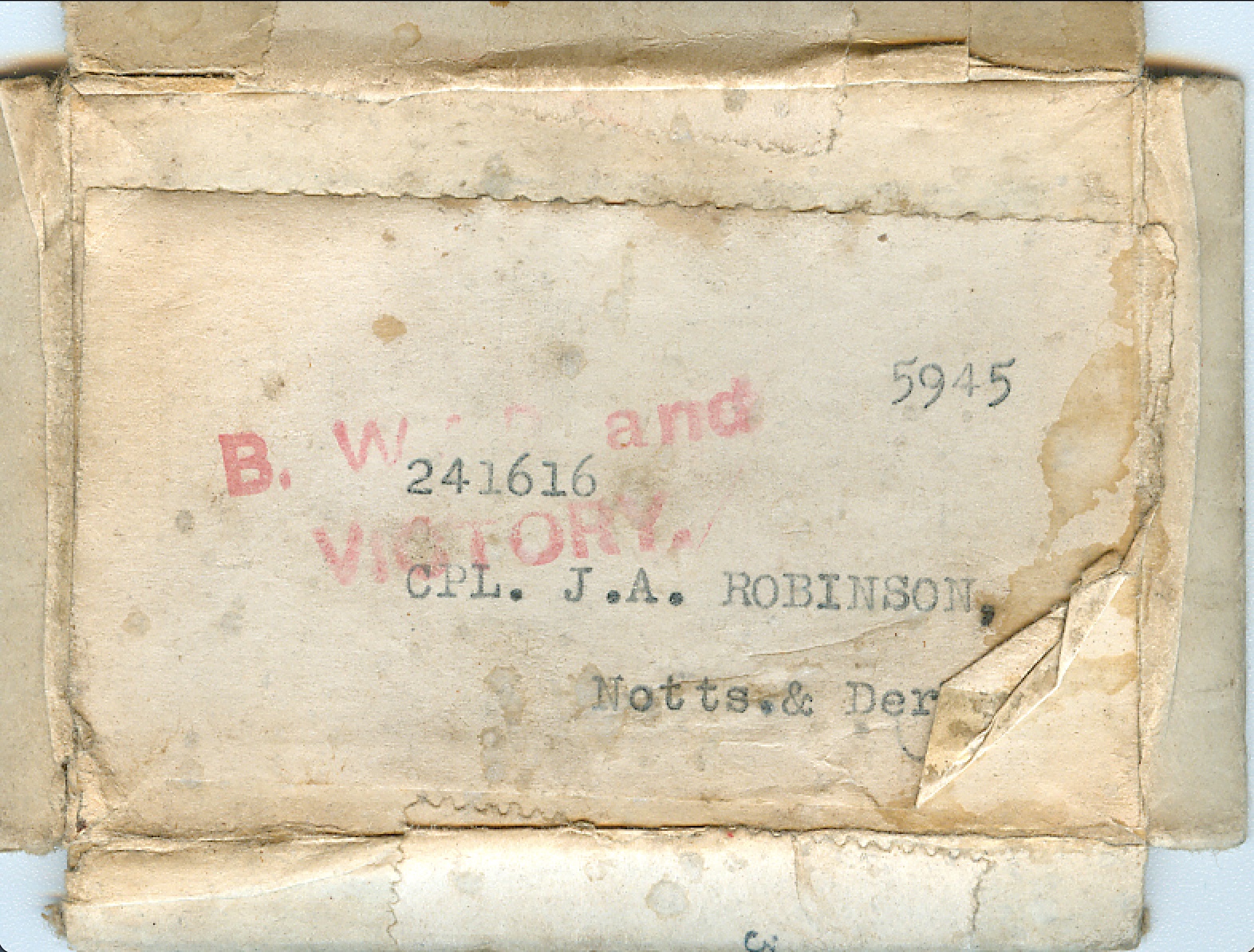
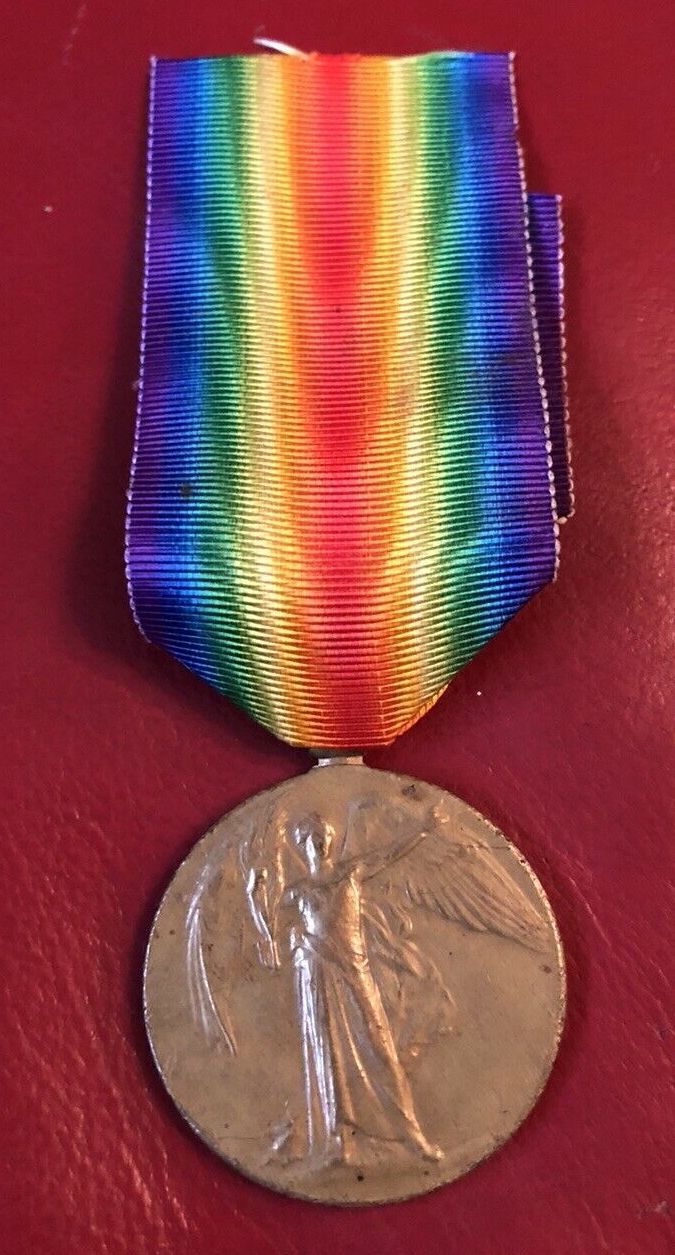
Joseph was awarded the Victory Medal and British War Medal.
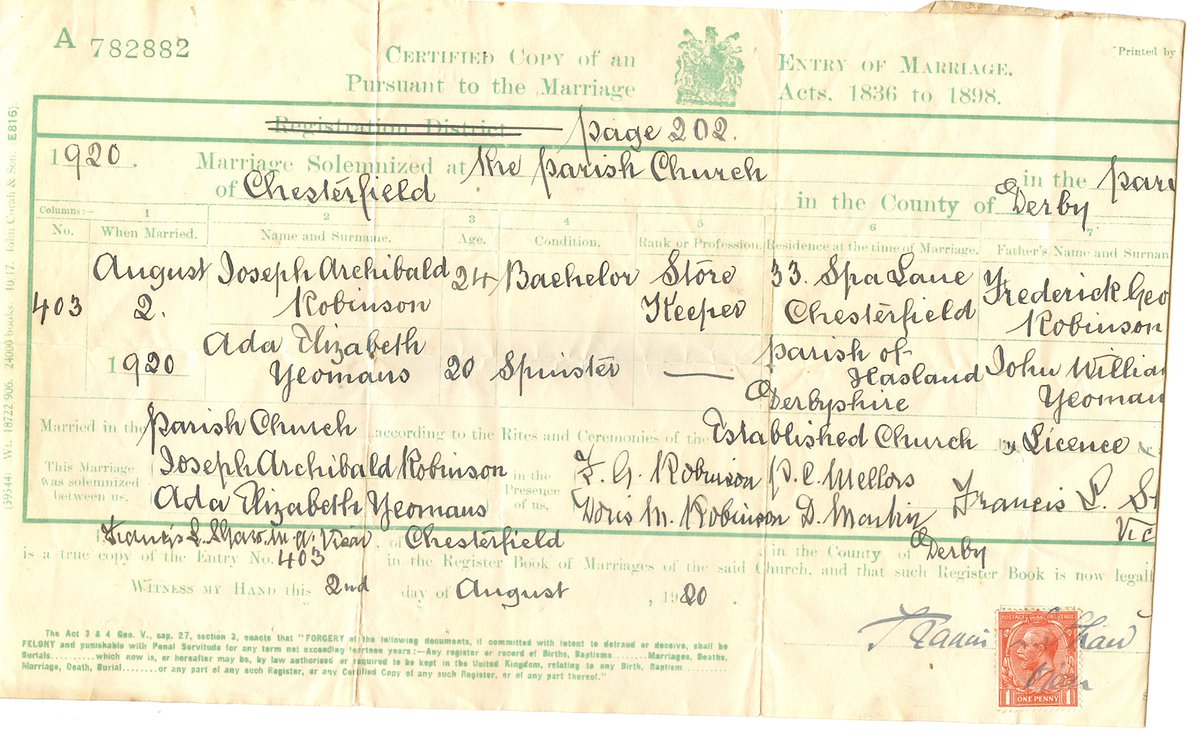
Joseph married Ada Elizabeth Yeomans at the Parish Church in Chesterfield on 2nd August 1920.
After the War Joseph served as a Special Constable (his father was a Railway Policeman) rising to the rank of Sergeant.
He was awarded the The Special Constabulary Long Service Medal (George VI issue) for 10 years service.
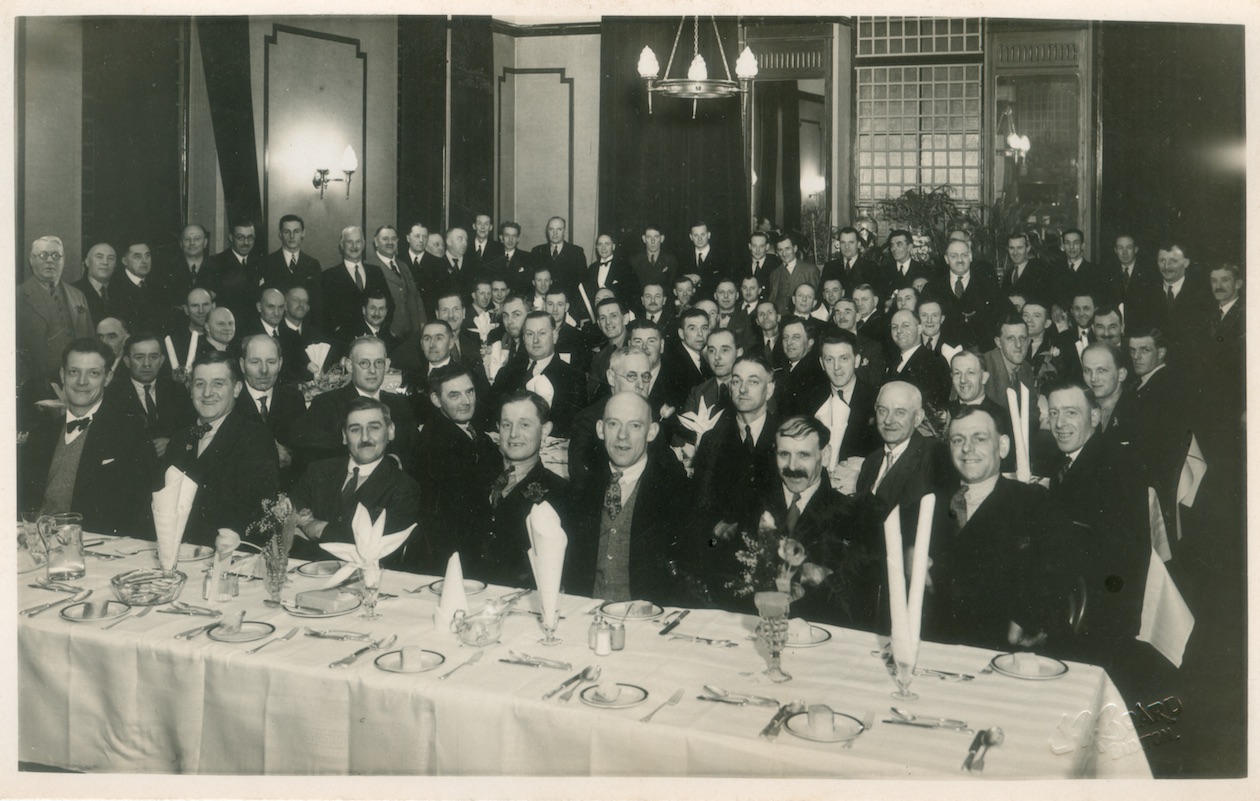
It is not known if he attended the Annual Reunion of the 2/6th Battalion held in Bakewell in 1935.
Joseph and Ada moved to Hasland and he worked as an Electricity Board Storekeeper. Joseph died at the Royal Hospital on the 4th February 1974, aged 79.
“Very heavy enemy barrage on front line from 5.0am to 9.30am. Enemy attacked at 9.30am. Battn suffered very heavy casualties”
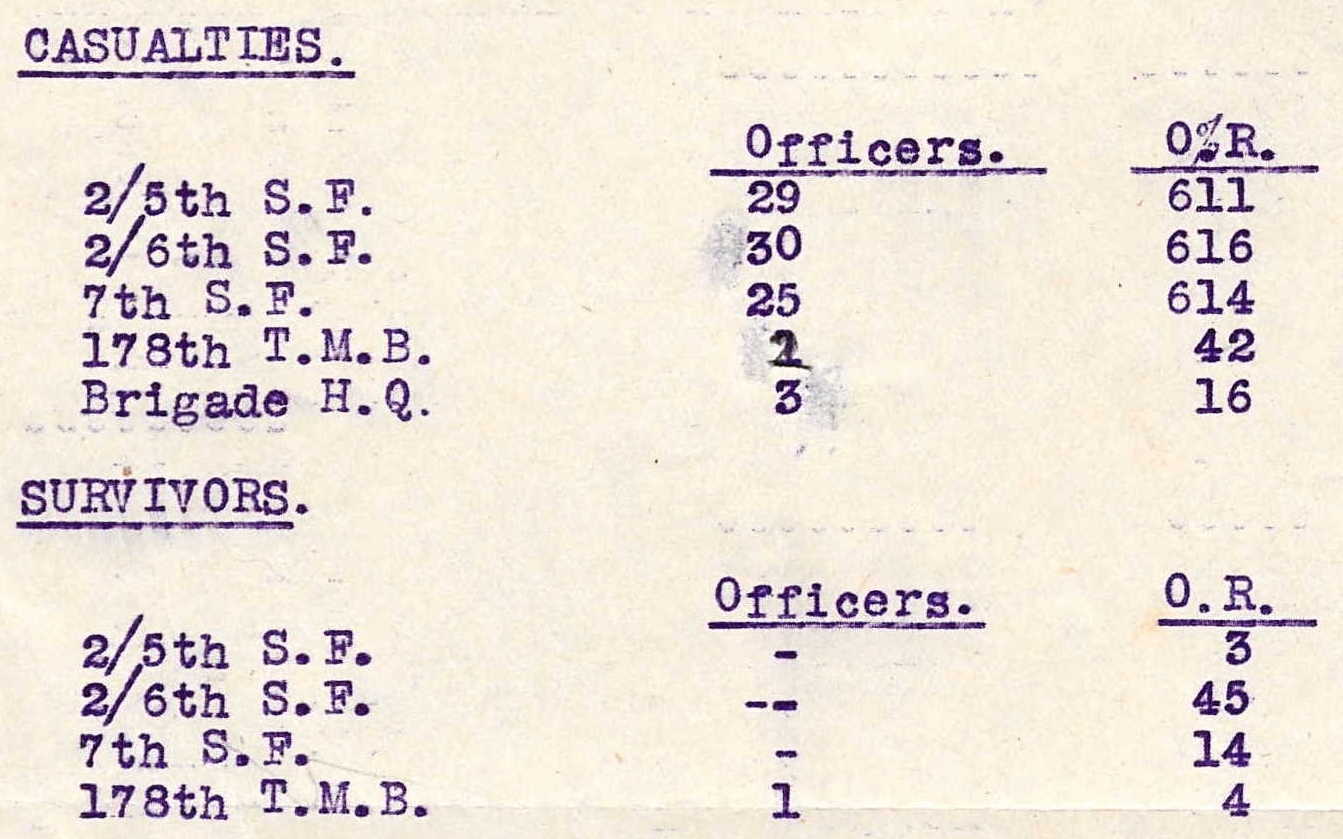
So wrote KJ Bunting, Captain and Adjutant to the 2/6th Battalion; however, this short sentence belies the enormous casualties that the 2/6th Battalion, along with the 2/5th and 7th Battalions of the 178th Brigade, suffered during the first day of ‘Kaiserschlacht’; the German Spring offence of 1918.
Unlike the 2/5th and 7th Battalions, the War Diary of the 2/6th Battalion does not record the precise numbers of casualties suffered that day (i.e killed, wounded or missing).
However, the 178th Brigade War diary does provide a total number of casualties for each Battalion. The strength of the 2/6th Battalion on 1st March 1918 was 53 Officers and 883 Other Ranks, thereby suggesting that approximately 20 Officers and 220 men were left in reserve and took no part in the fighting.
The 59th Division War Diary gives slightly higher casualty figures of 34 Officers and 722 men wounded or missing. In addition, they acknowledge that the numbers of wounded men were not reported by Medical Units, and therefore a proportion of other ranks listed a ‘missing’ may have in fact been wounded.
Personal Accounts
Very few personal accounts exist of those chaotic few hours, several Officers wrote of their experience after the War and a few stories appeared in local newspapers at the time.
Below are a few examples.
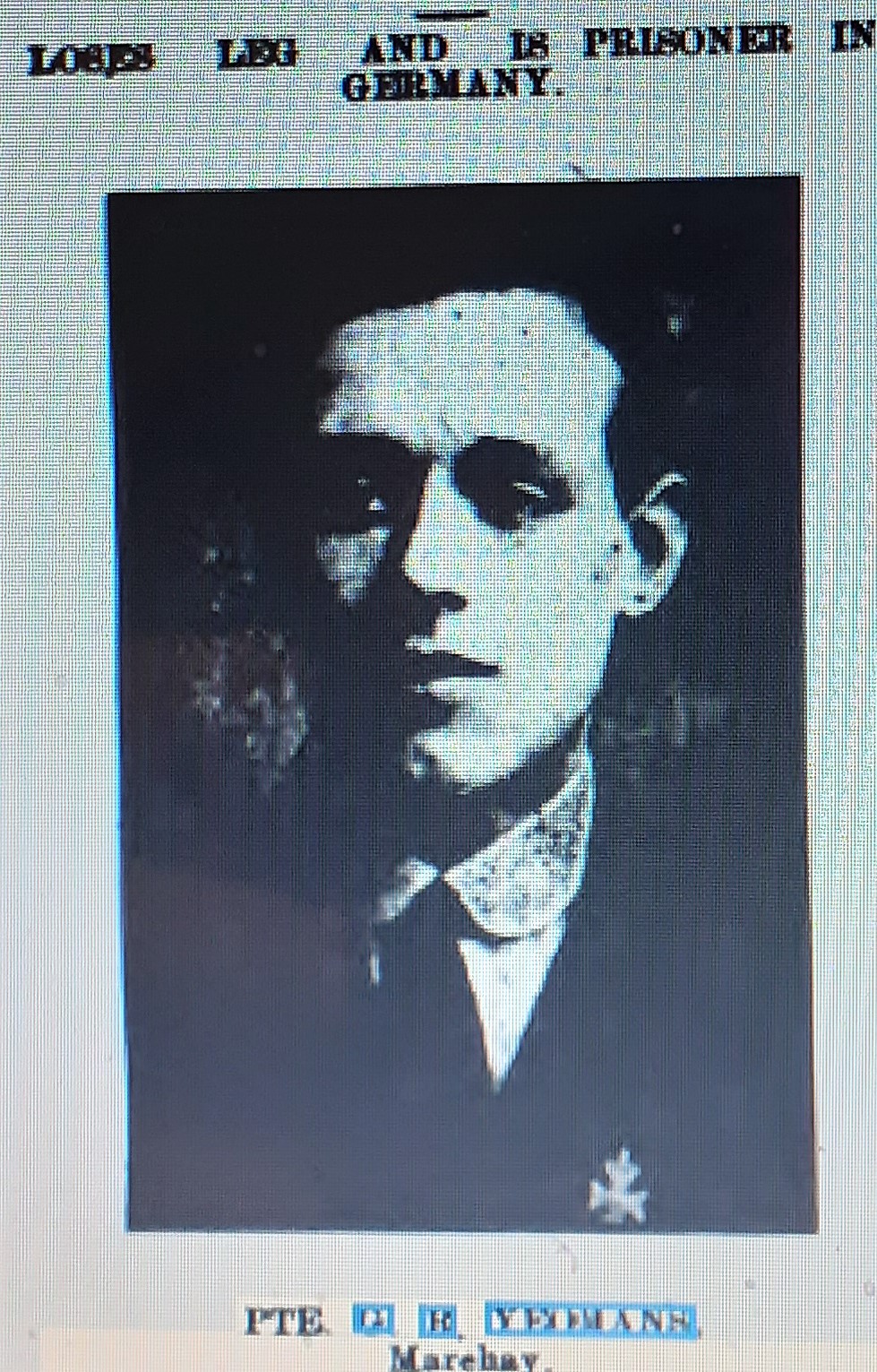
George Robert Yeomans
“We were holding the line on March 21st 1918. I was wounded in the left leg by a gun shot and taken prisoner a few hours afterwards. My leg was amputated April 8th 1918 at Cassel Germany”
George Robert Yeomans, Lewis Gunner, B Company, 2/6th Battn, aged 20 from Upper Marehay.
265746 Corporal Joseph Page
“Our Battalion was in the support trenches, having come out of the first line trenches two days earlier. We found the Germans putting down a barrage of gas shells. We stood to until eleven o’clock, by which time the trenches had been blown flat and many casualties sustained. A runner came up and said the Germans had broken through. I had to take that message to our Battalion headquarters, and after I had been there about 15 minutes I was surprised to see hundreds of Germans all round us.
By this time part of the Battalion had already been taken prisoner, but the rest of us were told to get behind a sunken road and fight it out. There were machine guns at either end, and although we fired as hard as we could at the oncoming Germans they swarmed forward in mass formation, other parties coming down the communication trenches. We put up a hard fight until by one o’clock we had no ammunition left. Our last lot of bombs were useless, as somebody had left the detonators behind.
After having done a lot of execution we retired from the sunken road into a trench, the end of which was blocked so that we could not get out. About twenty of us scrambled up, however, and made a rush under heavy machine gun fire to another trench on the right, fifty yards away. There we met some Lincolnshire reinforcements, with whom we put up a big bombing attack. Fritz bombed us back until our casualties became so heavy that we found it was hopeless to go on fighting, so one of the sergeant-majors ordered us to put our arms down and are hands up.”
[The Mansfield Reporter and Sutton Times, Friday, May 19, 1918]
Lt Conrad Stark, “C” Company, 2/6th Battalion
“We were very quickly surrounded and our lines became too hot to hold from crossfire. Retired to our support line; shall never know how I reached same untouched, was walking through our own and the enemy’s barrage. Had a great number of casualties whilst crossing. On reaching support managed to put up a show there but was surrounded about 9:40 a.m. and taken prisoner about 45 minutes after the enemy left his front line.”
The last stand of the 178th Brigade
The vast majority of men that were killed that morning have no known grave and are Commemorated on the Arras Memorial to the Missing.
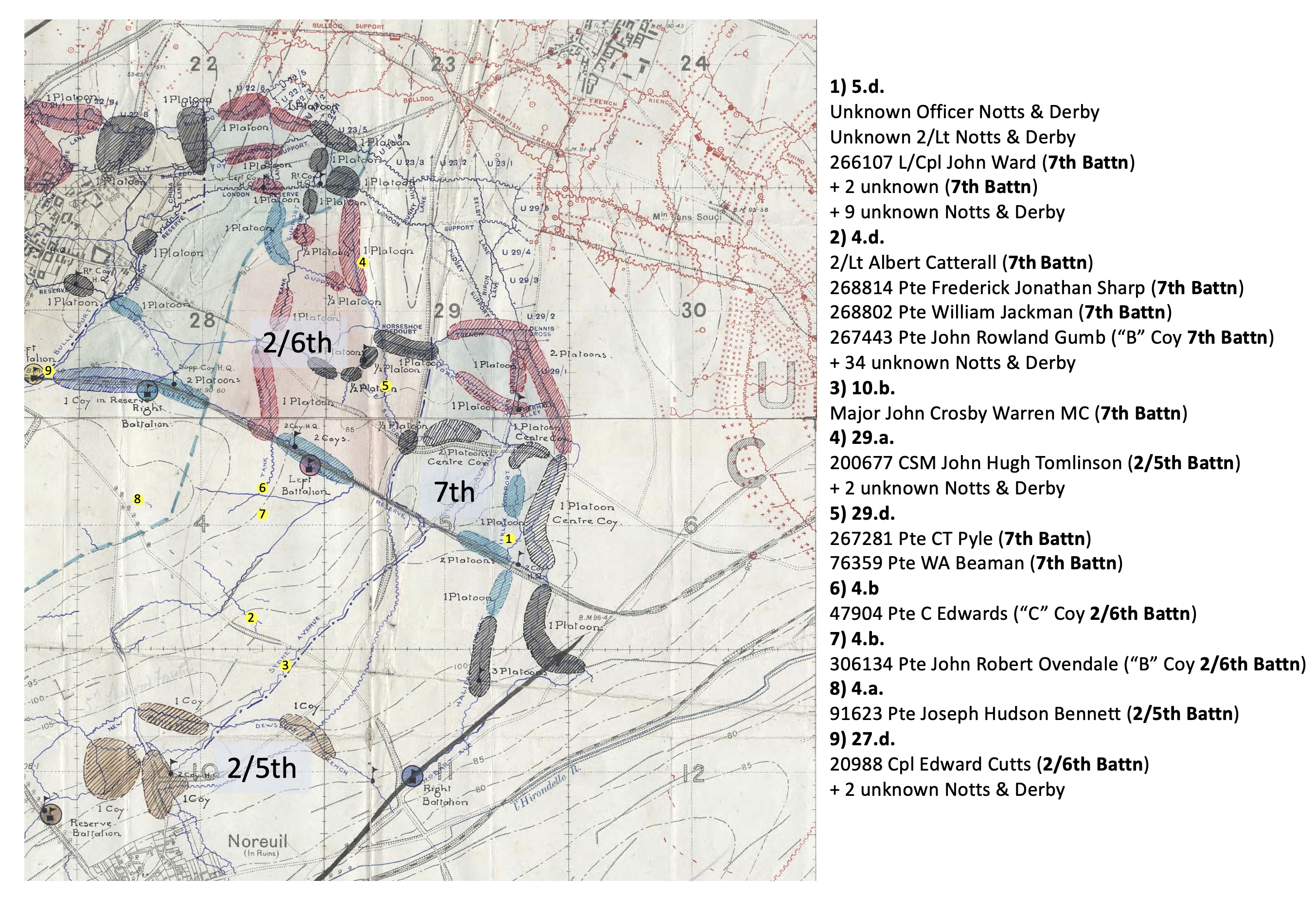
However, by examining the exhumation and reburial records held by the CWGC it is possible to identify the locations of 65 Officers and men of the 178th Brigade whose bodies were recovered after the War. Assuming that they were buried close to where they died, either by the Germans or through shell fire, it is possible to trace the last actions of the 178th Brigade.
There are several important inferences that can be made:-
Major John Warren MC, 2/Lt Albert Catterall and a few men of the 7th Battalion were able to escape from the German’s surrounding their front line positions and make a ‘final ‘stand in sunken road in 4d – see 1), 2) and 3).
CSM John Tomlinson, although recored as serving with the 2/5th Battalion, had mostly likely been attached to the 2/6th Battalion when he was killed – see 4).
Several men from the 2/6th Battalion, most little from the HQ Company, were able to escape being surrounded in Railway Reserve – see 6), 7) and 9).
Very few of the 2/5th Battalion made made it away from Noreuil – see 8). In fact Joseph Hudson is the only man serving with the 2/5th Battalion who’s body was exhumed and identified after the War.
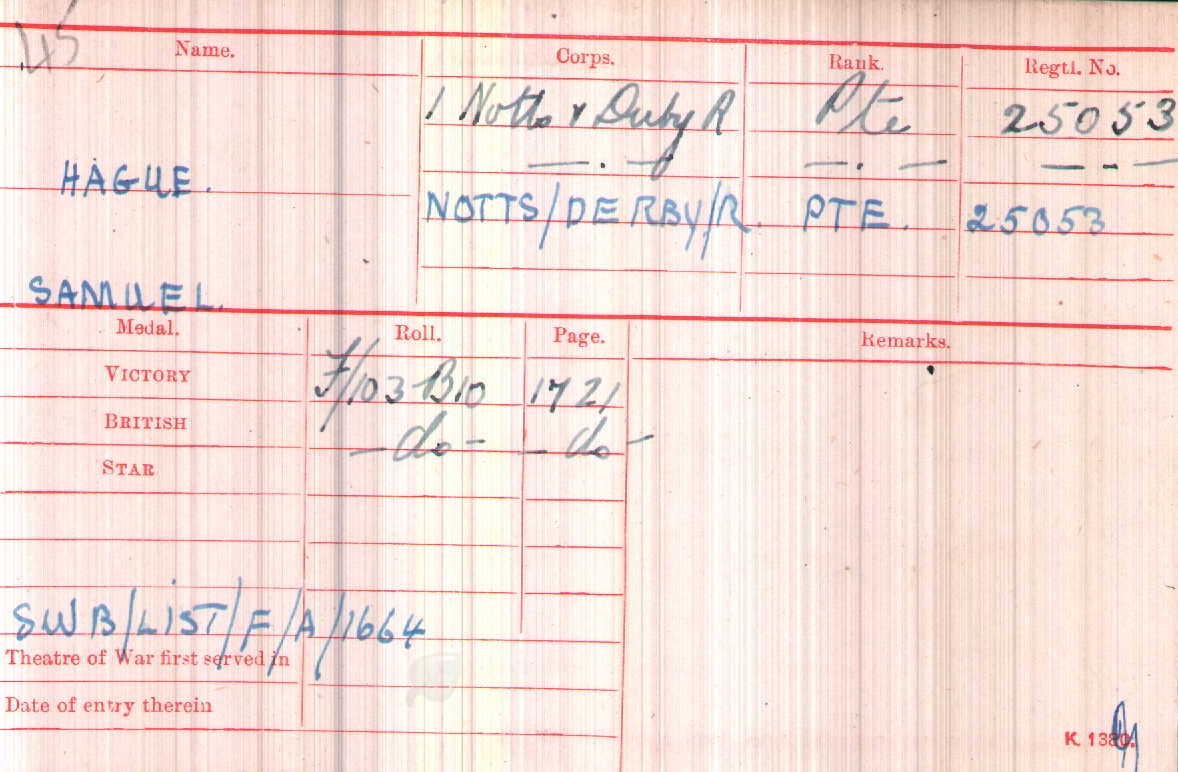
Samual Hague was born c1879 in Clay Cross and was a coal miner hewer by trade. He met and married Clara Harvey – who was six years his junior – in August 1907 and their first child – Harold – was born four months later.
Samual and Clara had five children – Harold b. 1907; Clara b. 1909; Eliza b. 1910; Emma b. 1912 and Louise b. 1914. – and they lived on Blackwell Road in Huthwaite, Nottinghamshire.
In November 1914 Samuel enlisted into the Sherwood Foresters (Notts & Derby) Regiment aged 33, but was discharged 12 days later because he was ‘not likely to become and efficient soldier’ due to rheumatism.
Samuel later re-enlisted in April 1915 and following basic training – he had previously served with the 4th (Reserve) Battalion prior to 1914 – he was posted to the 1st Battalion.
Samuel joined the 1st Battalion in France, possible in 1916 because he was not awarded a 1915 Star, and served with them throughout the rest of the War until he was discharged with rheumatism in December 1918.
Unfortunately, and during his time in France, Clare died in October 1916 leaving him a widower and his children without their mother.
He was awarded a pension, but it is not known if Samuel ever remarried.
As I hinted during the first lock down (!) – I fancied putting pen-to-paper and writing the History of the 2/6th Battalion. The only previously published History – limited to very few copies – just documented November 1914 to late 1916.
So I’ve been messing with titles and introductions – a bit like Bilbo Baggins and the start of the Hobbit…..
“In a hole in the ground there lived a hobbit…….”
So here we go
Men of the Forest Green Circle; being a history of the 2/6th Battalion, the Sherwood Foresters (Nottinghamshire and Derbyshire) Regiment (1917-18).
The story of the 2/6th Battalion, the Sherwood Foresters (Nottinghamshire and Derbyshire) Regiment starts as a North Midlands’ narrative in 1914 as men from the two Counties flock to join the newly established Territorial Battalion. However, even before the ‘2/6th’ leaves for France in February 1917, recruits from both Hull and London have bolstered their ranks and significantly redefined the composition of this ‘North Midlands’ Battalion.
The War Diary entry for the 31st July 1918 simple records……
“One man missing from X.8.c.80.20. Thought to have been lost in the early morning”
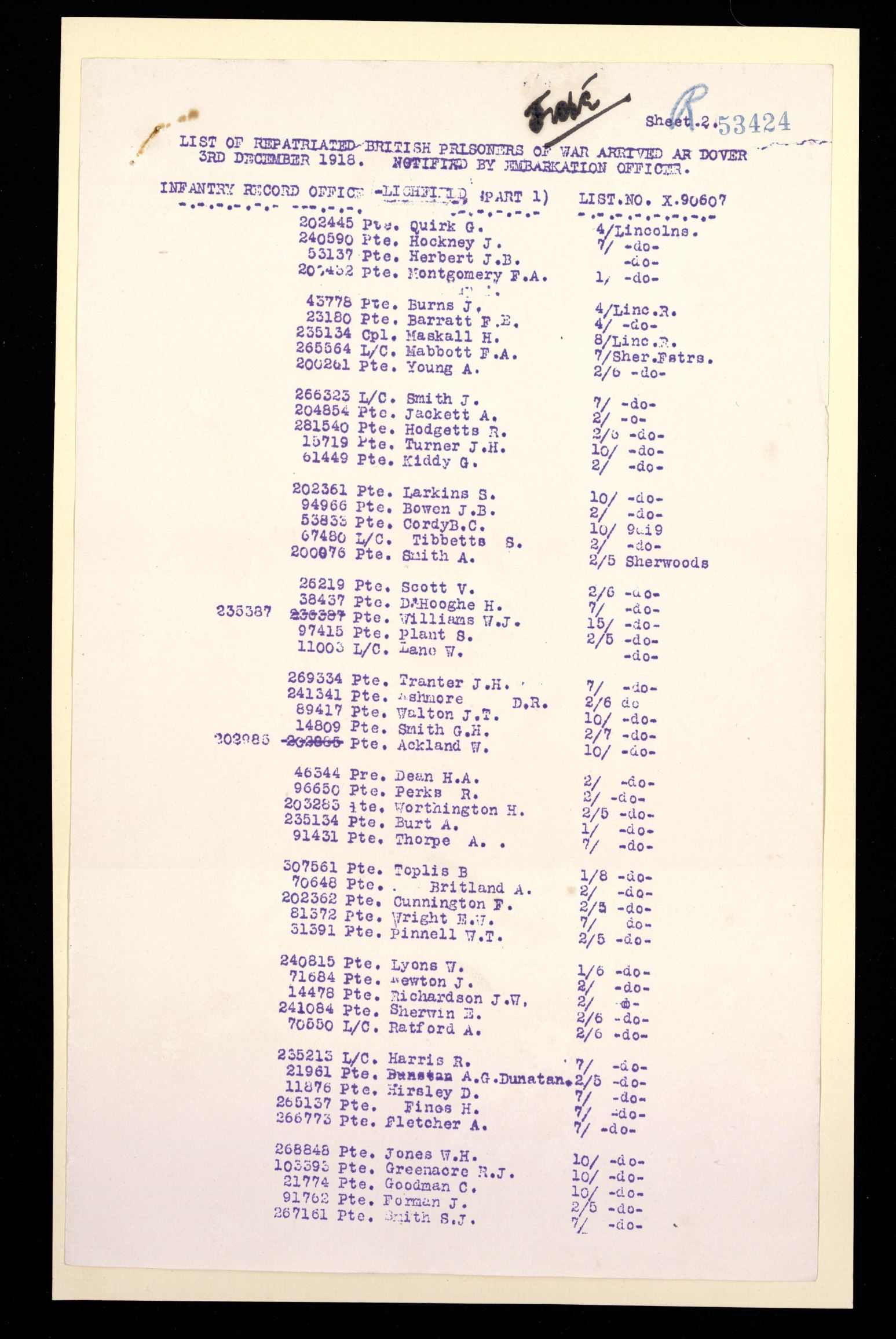
Through sheer luck I can now report that this man was 2943/240815 Pte Willliam Lyons from Tideswall.
William was born in 1871 in Burbage and in the 1911 Census he is recorded as a general labourer in the lime industry lodging with the Belfield family at 30 Lime Terrace, Burbage in Buxton.
William enlisted into the 2/6th Sherwood Foresters in October 1914 and following basic training he arrived in France on the 25th June 1915 with the ‘1st Reserve’ Reinforcement.
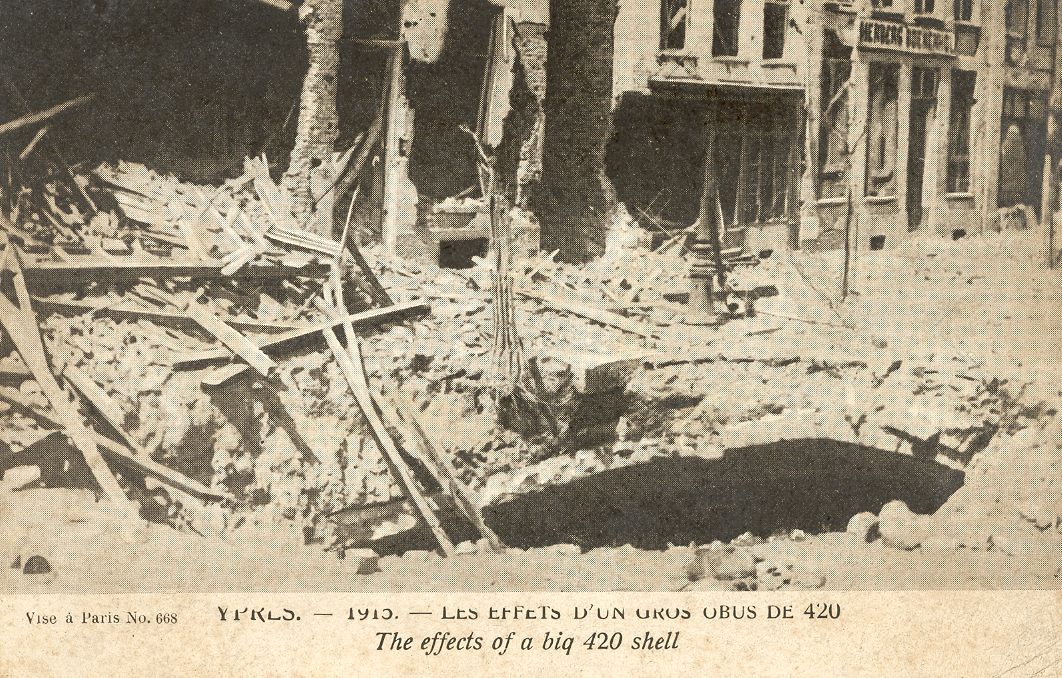
William served with “A” Company was was wounded by shell fire in Ypres on 4th July 1915 – see here.
“On the Saturday night we went up to the lines on fatigue, and travelled up a long way in motor lorries; it was quite an exciting journey for us after we left the lorries to march through Ypres, especially as for many of us it was the first experience of the war. Fritz was sending over a few gas shells and we were all sneezing and rubbing our eyes. We drew spades and set off after a short rest, landed at the work, finished off fairly quickly and started for home – home consisting of bivvies made from water-proof sheets, and some of us hadn’t even got those. We had a pretty rough journey coming through Ypres, had just downed tools and started the march towards the houses, when Fritz began shelling; of course he managed to get a lucky shot right in the middle of us, killing and wounding about half the party, many of whom had not yet even seen the trenches”.
[Battalion History]
The casualties numbered thirty-two; nine men were killed or died of their wounds and another 23 were wounded.
Following his return to the 1/6th Battalion he was reported missing and recorded on a Red Cross Enquiry List dated 1.10.1918 as missing on 31.7.1918.
William was repatriated on the 3rd December 1918 and he was finally disembodied on 27th March 1919.
Son of Thomas and Elizabeth Bull, of Kirk Langley, Derby; husband of Elizabeth Bull, of The Hall Flats, Ashbourne.
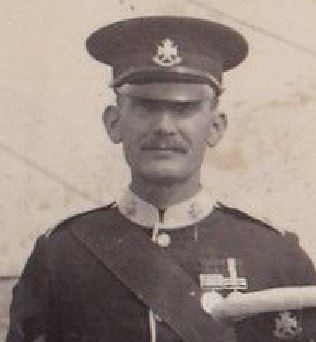
Frederick was a postman and enlisted into the 6th (Reserve) Battalion on the 15th October 1914. Promoted to Colour Sergeant on the 4th November, but discharged on the 10th November 1914.
Frederick had initially enlisted in the Sherwood Foresters (Derbyshire Regt) on the 15th May 1891 aged 19 and had served:-
At home 5/91 – 12/92
India 12/92 – 2/99 (Tirah Expedition and wounded in 12/97)
Home 2/99 – 11/99
Malta 11/99 – 5/02
Home 5/02 – 5/12
Discharged on termination of 2nd period of engagement 14th May 1912

















 Derbyshire Territorials in the Great War