No record in the 1/6th Battalion War Diary [WO/95/2694]
6th: East edge of FONQUEVILLERS and Trench 52 again shelled during the afternoon.
139 Infantry Brigade: Headquarters War Diary [WO95/2692]

No record in the 1/6th Battalion War Diary [WO/95/2694]
6th: East edge of FONQUEVILLERS and Trench 52 again shelled during the afternoon.
139 Infantry Brigade: Headquarters War Diary [WO95/2692]
No record in the 1/6th Battalion War Diary [WO/95/2694]
On the 5th January in the afternoon we decided to again follow the same procedure, to send them over and the same retaliation. About the fifth grenade I was told that the General was in the line observing the hits. He came round to me and remarked that we were doing very good work and asked how long we kept it up? I told him that as soon as the Germans made it too hot for us we gave up for the day. He said “Keep up the good work”, and left.
The Germans by this time were giving it to us thick and heavy. I loaded again, took the cord half way round the barricade when crash! A blinding explosion of mortar or some such missile had fallen on our emplacement. The result, our emplacement and our unfired grenade were blown to smithereens and the fragments of the Trench mortar and our grenade were distributed around our position.
At first I was stunned, then I realised I was wounded. I was bleeding from several wounds in the face and neck. What was worse I could not see. They led me down the trenches and to the Regimental Aid Post and then to a Casualty Clearing Station. I was examined by a Surgeon Major who told me that my fighting days were finished because for the time being at any rate I was blind. Fragments of the metal had entered my eyes.
[2305 Pte Frank Longson]
5th: An organised bombardment of enemy trenches North of GOMMECOURT carried out to which they replied by shelling our left sub sector.
139 Infantry Brigade: Headquarters War Diary [WO95/2692]
No record in the 1/6th Battalion War Diary [WO/95/2694]
4th: FONQUEVILLERS and our left sub sector shelled during the afternoon and evening.
139 Infantry Brigade: Headquarters War Diary [WO95/2692]
3.1.1917: Battalion relieved by 5th Battalion and moved back to Brigade Reserve.
1/6th Battalion War Diary [WO/95/2694]
3rd: 5th and 7th Battalions take over the front line.
139 Infantry Brigade: Headquarters War Diary [WO95/2692]
No record in the 1/6th Battalion War Diary [WO/95/2694]
2nd: LINCOLN LANE damaged by Enemy Trench Mortars.
139 Infantry Brigade: Headquarters War Diary [WO95/2692]
We spent the remainder of Christmas Week quietly and about New Year’s Day 1917 an issue of a new Rifle Grenade arrived in the trenches. The grenade which had been given the name “Newton Pippin” after the apple was very vicious and had a range of 400 yards and because there was a danger when being fired from a rifle of a premature detonation it was considered safer to attach a cord to the rifle trigger and pull it from behind a sandbag barricade.
 Henry Newton (1880-1959) designer of the “Newton Pippin” rifle grenade and a Captain in the 5th Battalion Sherwood Foresters.
They were new to this part of the front and therefore treated with suspicion and care. The Commanding Officer gave me instructions to operate the grenade against the German dugouts and emplacements behind the German front line so for 3 or 4 days we prepared a number of emplacements in the front line or just behind. It was a reasonable understanding on the part of the inhabitants of the front line trenches that if the Sector was reasonably quiet it should be left that way. They did not welcome any introduction of new weapons because as soon as something new was tried out the Germans retaliated with all sorts of flak, trench mortars, minewerfers, shrapnel and high explosive shells which of course soon made life very unhealthy indeed.
On the 3rd January we sallied forth from the support line about 30 strong carrying our stock of Newton Pippins in cases. We arrived at our prepared emplacements and soon the word went round that we intended to use them against the enemy so extra steps were taken to get some shelter from the resultant retaliation. The first grenade was pushed down the muzzle of the rifle, the range checked by means of lowering or raising the muzzle. I attached the cord to the trigger took the end round the protective barricade and making sure that my men were all well out of the way pulled the cord.
Crack went the cartridge and away soared the grenade. We followed the course and the explosion in the German rear. It was marvellous and very effective. This was just what we wanted. I loaded – again the same result. The Germans who I suppose were considering the new weapon were up to now fairly quiet but I knew from experience that they were considering the range factor. How far and from which direction had the grenade come? I know also that one of the enemy had been detailed to watch and listen for the crack of the cartridge or the twang of a catapult.
I loaded again, pulled the cord and away went the grenade – the subsequent explosion amongst the German dugouts, then about a couple of minutes afterwards I heard the unmistakable thump in the German line of trench mortar. Down it came just behind us, then another thump and another crack, one on our front line. They were feeling for our position but they had not got the range. I fired two more mortars. It was time to pack up and get back to safety of our dugout. It was very unfair of us to create this unhealthy disturbance in the front line but the job had to be done however unpleasant.
Next day we repeated the dose and a few senior officers came to observe the result of this remarkable weapon. The retaliation this time was very severe and of course the plea from our front line was to get out and leave them in peace.
[2305 Pte Frank Longson]
Despite the retaliation of the German artillery no men of the 139th Brigade were killed during these few days.
1.1.1917 Gazette: Lt Col Edward HALL to be a Companion of the Distinguished Service Order (DSO). 1453 Sergeant William MARCHINGTON awarded DCM.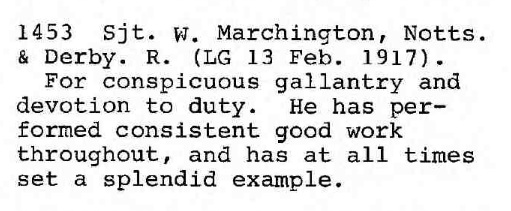
1.7.1917 Despatches: The following were mentioned in the Despatches of Field Marshall Sir Douglas Haig.
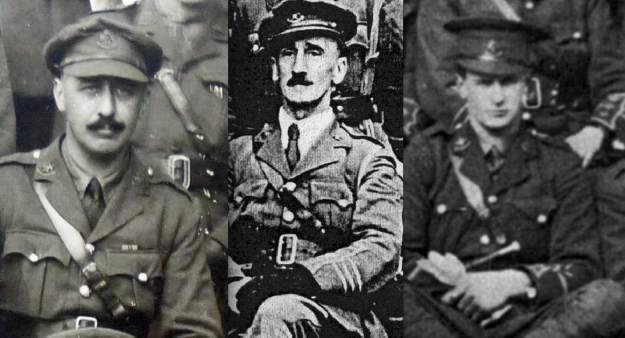
Edward Hall, Arthur Wilson Shea, Edward Mallalieu Brook-Taylor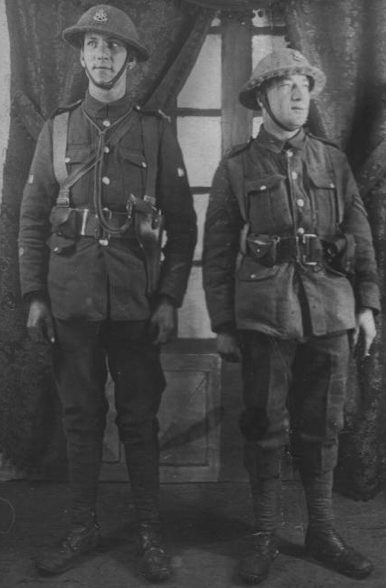
508 Drummer Albert Askey (right)
1/6th Battalion War Diary [WO/95/2694]
1453/240125 Sergeant William Marchington only served overseas with the 1/6th Battalion and was disembodied in July 1919.
Jan 1st 12am SOUASTRE: A ten minute bombardment of the enemy line carried out to which the hostile artillery replied an hour later.
139 Infantry Brigade: Headquarters War Diary [WO95/2692]
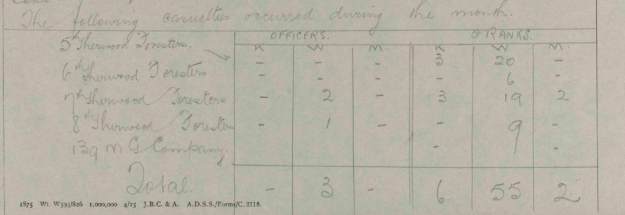
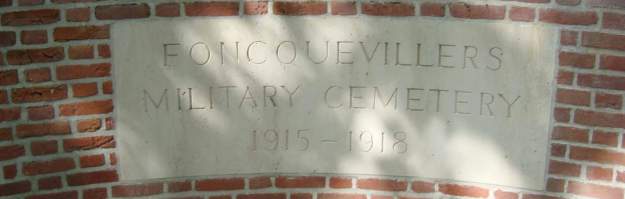
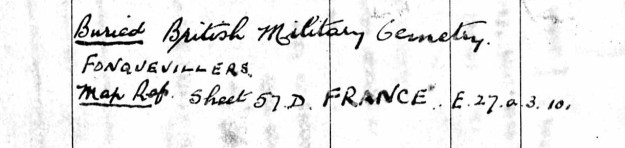 All are six men buried next to each other in Plot I, Row H, Graves 29 to 34
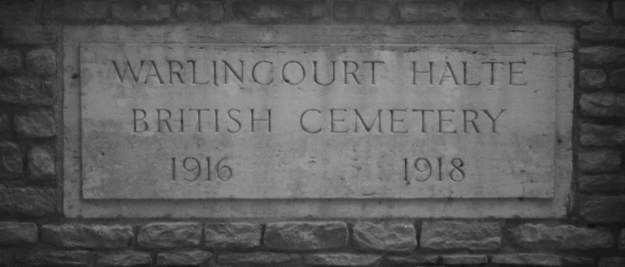
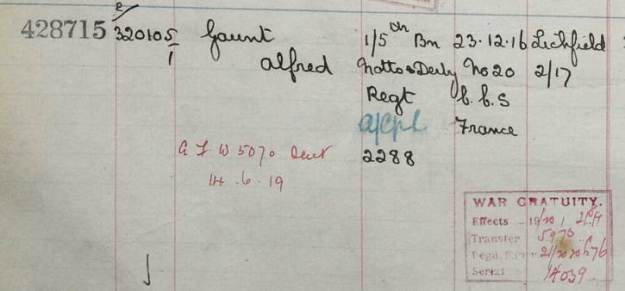


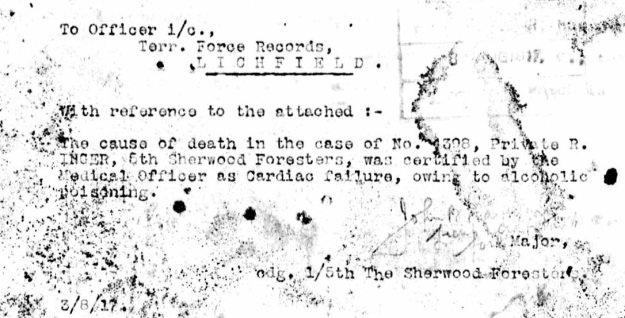
4398 Pte Robert Inger (1/5th Battalion) from Derby and enlisted in May 1915 aged 19 and arrived in France in October 1915. Died from cardiac failure due to acute alcoholic poisoning on the 24th December. He had previously suffered from gas poisoning in January 1916.
5556 Pte George Thomas Doyle (1/5th Battalion) died of wounds on the 2nd December at the 2nd Stationary Hospital in Abbeville.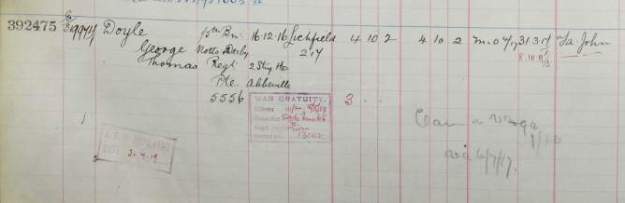
31.12.1916 TRENCHES: CAPT VO ROBINSON rejoined from duty at 14 Infantry Base Depot. 2/Lieut FWA STUBBS rejoined as reinforcement from England. 2/Lieut FW HIPKINS rejoined from Divisional School.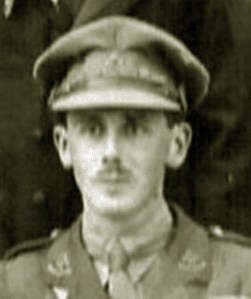
Frederick William Arthur Stubbs
War Diary [WO/95/2694]
The last man wounded in 1916 was 4109/241358 Pte William J Stevenson of “A” Company who later served with the Labour Corps.
31st: Enemy field battery shelled Green Street in the afternoon. A fortnight of bad weather has caused most of the inverted trench in the sector to fall in and the Communication trenches in the left sub sector. Nottingham Street and Lincoln Lane and St Martins Lane in the right sub sector are almost impassible.
139 Infantry Brigade: Headquarters War Diary [WO95/2692]
30.12.1916 SOUASTRE: Battalion relieved 5th Battalion in same sector, distribution of Companies under:-
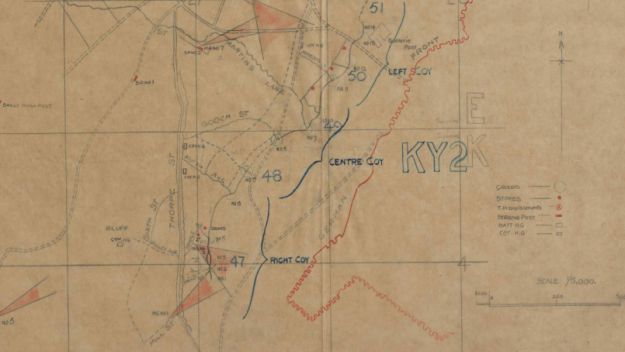
30.12.1916 SOUASTRE: 2/Lieut R EVANS to 3rd Army School.
War Diary [WO/95/2694]
30th: Centre Company of left sub sector shelled by 4.2 during the afternoon. 6th and 8th Battalions relieved the 5th and 6th Battalions in the front line.
139 Infantry Brigade: Headquarters War Diary [WO95/2692]
 Derbyshire Territorials in the Great War