Author Archives: mikebriggs1910

Unknown's avatar

About mikebriggs1910

I'm not a Historian by profession - merely an (over) enthusiastic amateur. By day I'm a Professor of Genetics at Newcastle University with a translation research interest in rare bone diseases. At weekends I can be classified as a Yorkshire Cricket & Psychedelic Rock fan, but mostly I'm just on the Fells (or in the pub - when they were open!).

Recruiting for the 2/6th Battalion, the Sherwood Foresters

Recruiting for the 2/6th Battalion took place at the Drill Hall in Chesterfield and at the various Company Headquarters throughout Derbyshire. In most cases, as the men were enlisted they were paid 3/- per day pay (including billet allowance) and 3d a day for clothing allowance and sent back to their homes until they were called up.

A brief story of Samual Hague from Clay Cross……

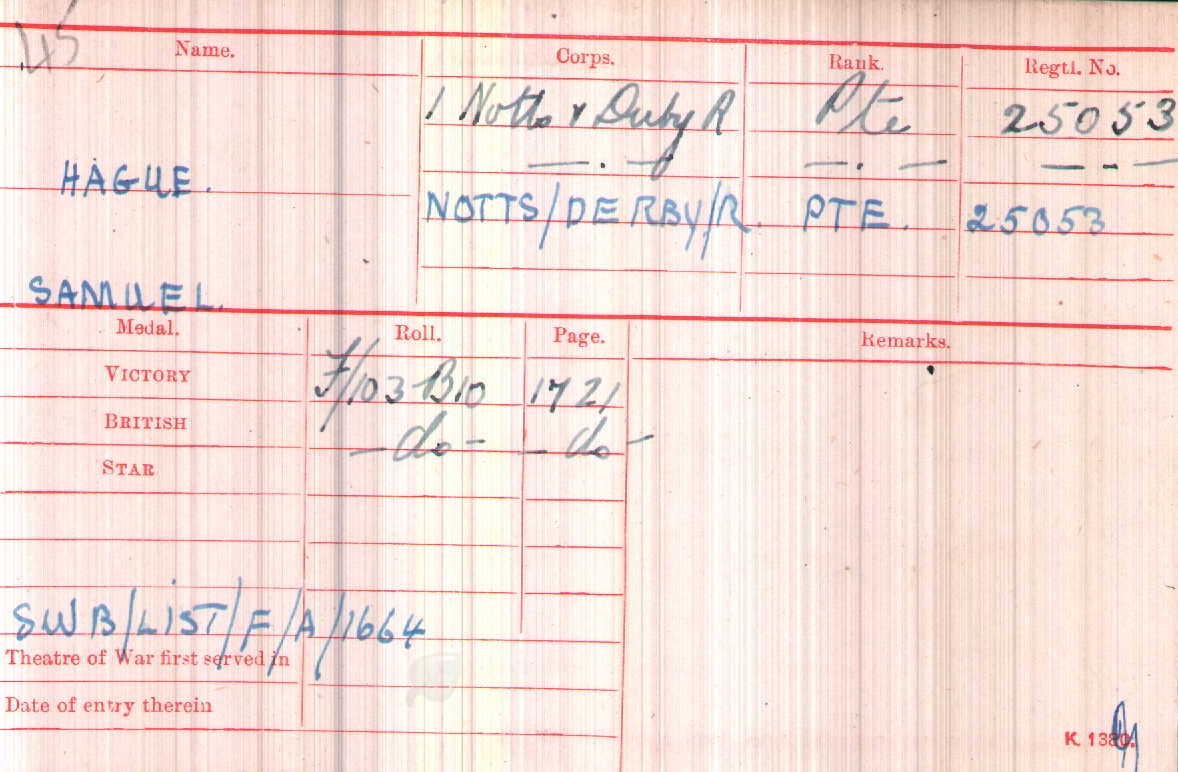
Samual Hague was born c1879 in Clay Cross and was a coal miner hewer by trade. He met and married Clara Harvey – who was six years his junior – in August 1907 and their first child – Harold – was born four months later.

Samual and Clara had five children – Harold b. 1907; Clara b. 1909; Eliza b. 1910; Emma b. 1912 and Louise b. 1914. – and they lived on Blackwell Road in Huthwaite, Nottinghamshire.


In November 1914 Samuel enlisted into the Sherwood Foresters (Notts & Derby) Regiment aged 33, but was discharged 12 days later because he was ‘not likely to become and efficient soldier’ due to rheumatism.


Samuel later re-enlisted in April 1915 and following basic training – he had previously served with the 4th (Reserve) Battalion prior to 1914 – he was posted to the 1st Battalion.

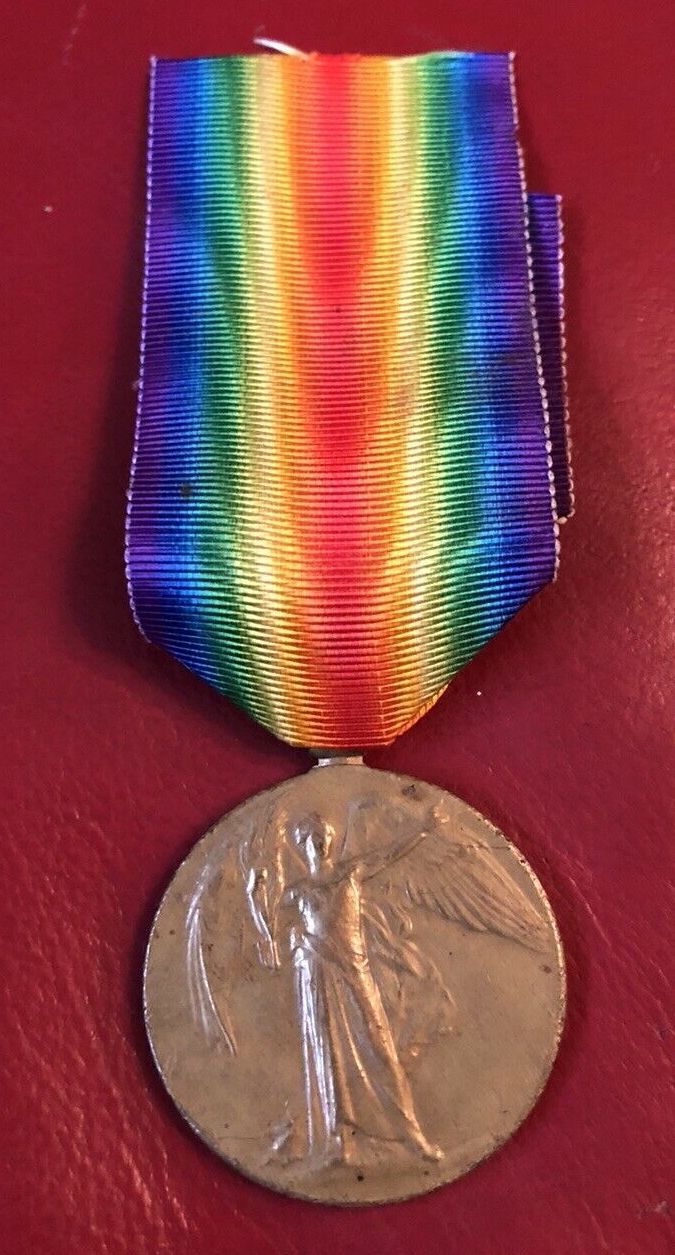
Samuel joined the 1st Battalion in France, possible in 1916 because he was not awarded a 1915 Star, and served with them throughout the rest of the War until he was discharged with rheumatism in December 1918.

Unfortunately, and during his time in France, Clare died in October 1916 leaving him a widower and his children without their mother.

He was awarded a pension, but it is not known if Samuel ever remarried.


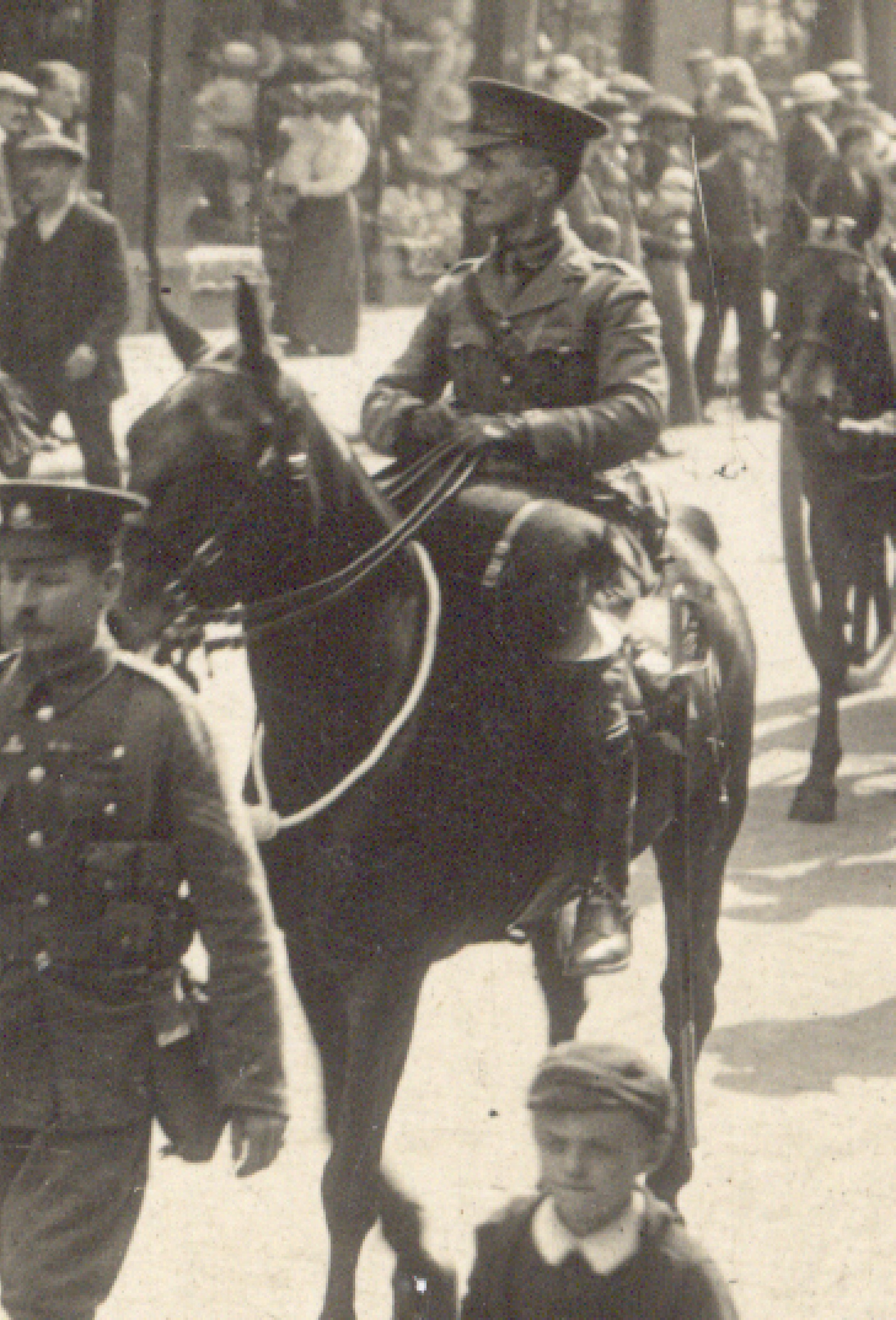
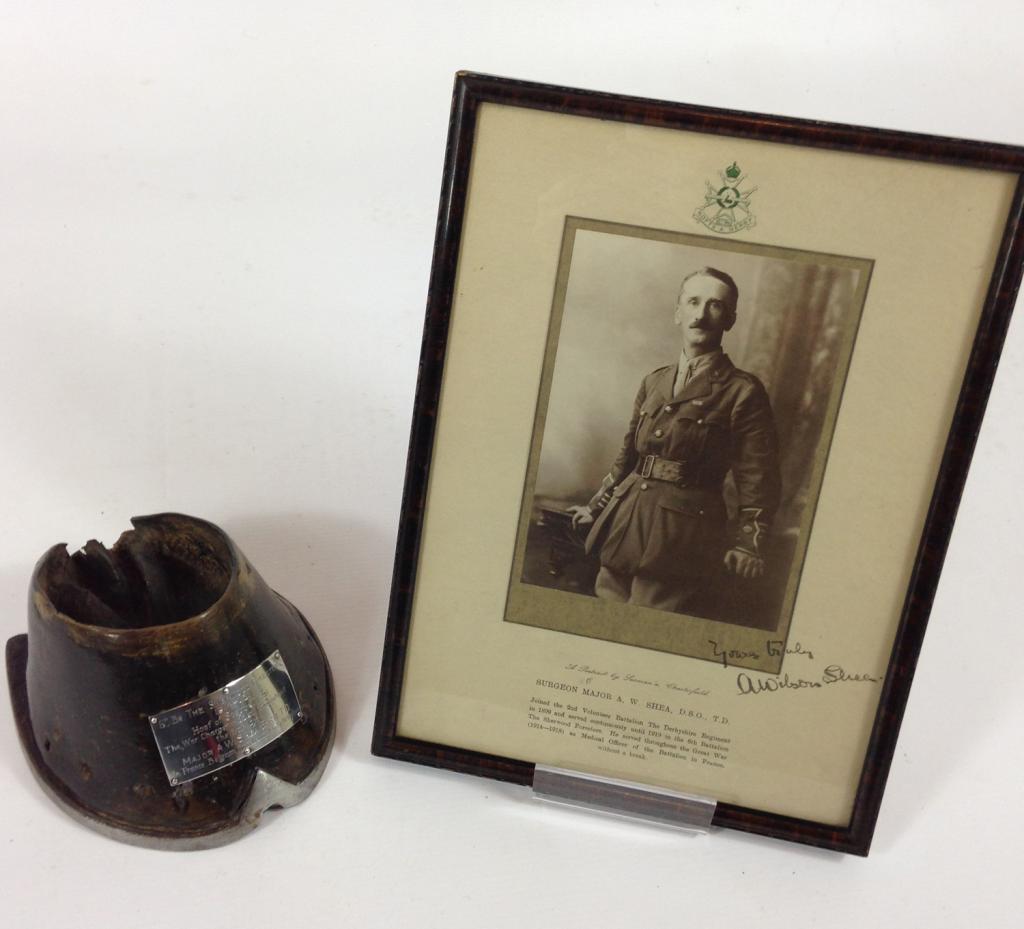
Surg.-Major Arthur Wilson Shea (1866-1947)

“Surg.-Major AW Shea……..was also on that well remembered march out of Chesterfield, mounted, as always, on the popular “Sceptre” (alias “No. 9”). We remember the doctor because of his many waved farewells, which were all faithfully reordered by the cinematograph.

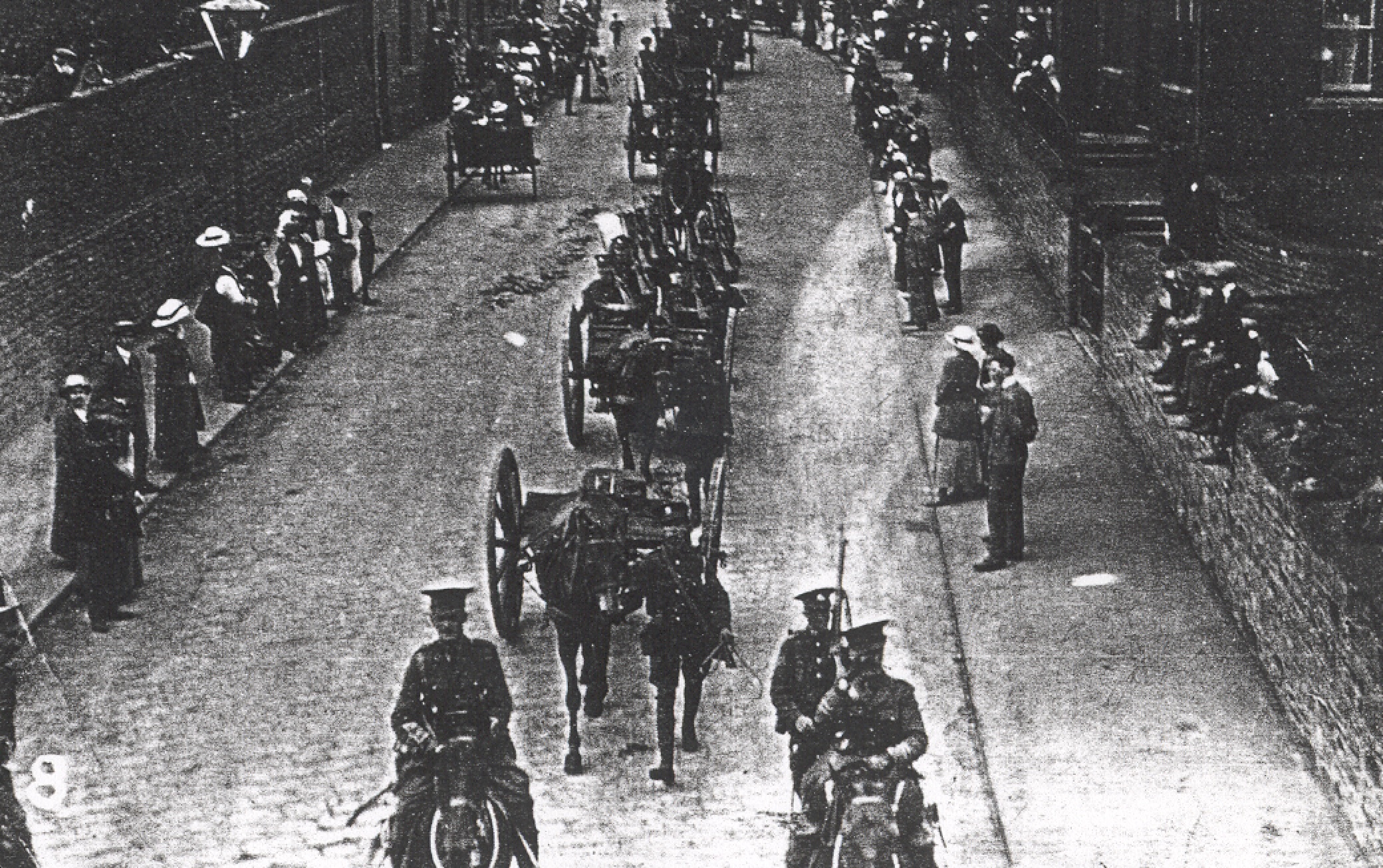
Transport Section 1914

Mobilisation: Chesterfield 10th August 1914

“The crowds who cheered were also permitted a smile and a joke at our transport. Little wonder, for its variegated collection. The furniture-remover’s van, the brewer’s dray, and the grocer’s cart, even the farmers waggon, found their place in the column.”

Men of the Forest Green Circle……

As I hinted during the first lock down (!) – I fancied putting pen-to-paper and writing the History of the 2/6th Battalion. The only previously published History – limited to very few copies – just documented November 1914 to late 1916.

So I’ve been messing with titles and introductions – a bit like Bilbo Baggins and the start of the Hobbit…..

“In a hole in the ground there lived a hobbit…….”

So here we go


Men of the Forest Green Circle; being a history of the 2/6th Battalion, the Sherwood Foresters (Nottinghamshire and Derbyshire) Regiment (1917-18).

The story of the 2/6th Battalion, the Sherwood Foresters (Nottinghamshire and Derbyshire) Regiment starts as a North Midlands’ narrative in 1914 as men from the two Counties flock to join the newly established Territorial Battalion. However, even before the ‘2/6th’ leaves for France in February 1917, recruits from both Hull and London have bolstered their ranks and significantly redefined the composition of this ‘North Midlands’ Battalion.

This is their story……

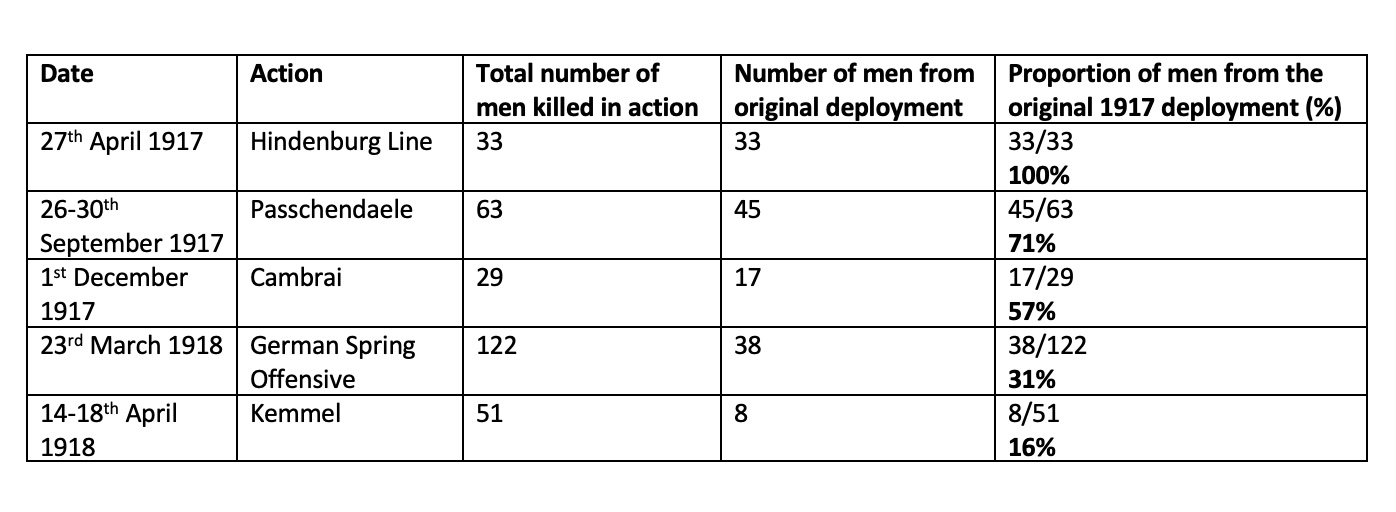
The dwindling men of the ‘Original Deployment’ of the 2/6th Battalion during 1917-18

The 178th Brigade of the 59th Division landed at Boulogne at the end of February 1917. This closely coincided with the Territorial Force renumbering that occurred in March 1917 and before the 2/6th Battn (59th Division) was engaged in any major operations on the Western Front.

By the time the 59th Division were engaged during the German retreat to the Hindenburg Line at the end of April 1917, all the men that were serving with the 2/6th Battn at that time had been renumbered with a 6-digit (24****) service number.


We can identify these men as the ‘Original 1917 Deployment’ of the 2/6th Battalion.


Therefore, by studying the service numbers of the 2/6th Battn men who were killed in action during the 11 months between April 1917 and April 1918 it is possible to see how the composition of the ‘Original 1917 Deployment’ was slowly diluted due to the ever increasing numbers of casualties (killed, wounded and missing) and subsequent reinforcements.


My first thoughts…….to be revised……

By mid-April 1918, and at the time of the last action of the 2/6th Battn (before being reduced to Cadre in May 1918), less that 1 in 5 men still serving were from the Original 1917 Deployment.

Charles Norman Commins from Lincoln

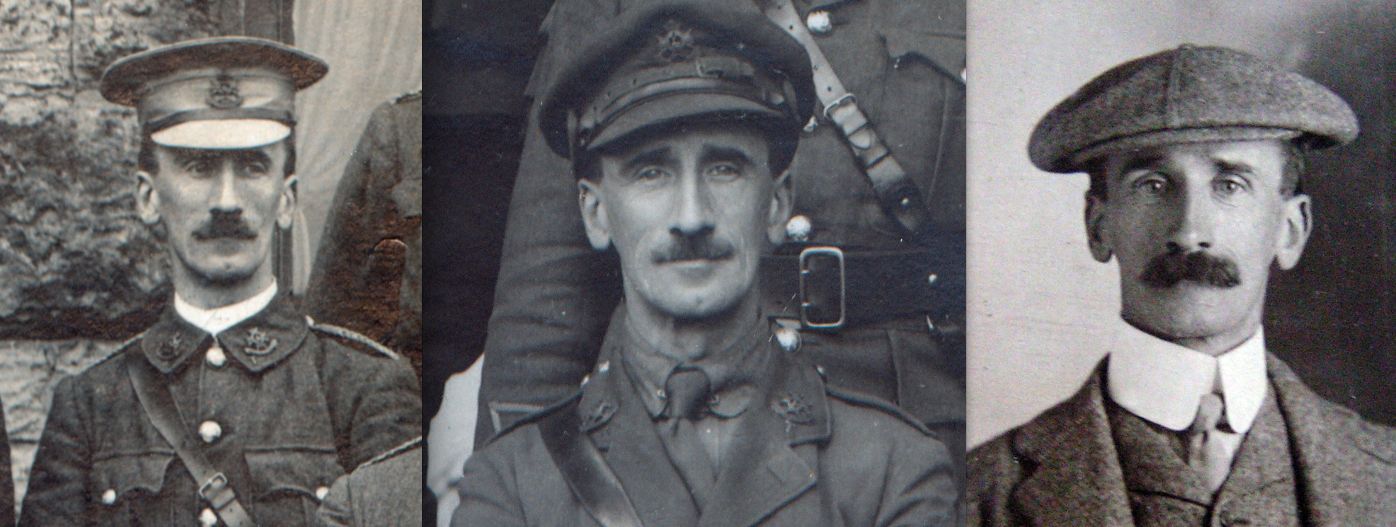
Charles was killed in action during a raid on Hunters Post in the last months of the Great War, and thanks to his great nephew Chris, we can now put a face to Charles and tell a little more about his short life and the sweetheart that he left at home.

Charles was born in Lincoln in July 1895 and in the 1911 Census was living with his family at 117 Winn Street. He was from a large family and an errand boy for a local doctor.


Service with the Sherwood Foresters

It’s not clear when Charles enlisted, and into which Regiment; interestingly, his two elder brothers both enlisted into the Lincolnshire Regiment and have very close regimental numbers.

Charles was certainly with the 1/7th Battalion at the end of 1916 (December) when the Territorial Force Renumbering was being planned and the Territorial Battalions of the Sherwood Foresters used a five digit (2****) regimental numbering system to renumber men being moved between battalions or being posted from other Regiments at the 14th Infantry Base Depot . Charles duly received a 7th Battalion 6-digit number in March 1917 (269262).

Charles most likely served with the Robin Hoods from December 1916 until the Battalion was reduced to Cadre in late January 1918.

Note the Service Record of 20070/269288 Alfred Harold Gregory, who has similar Regimental Numbers to Charles, was used to infer his service.


Attack on Hunter and Scott Post

During early September 1918 the 1/6th Battalion made several attacks on the German strong points known as Hunter and Scott Post – see here for details. It was during this attack that Charles was killed in action or mortally wounded.

Chris has told me that there is a family legend that Charles died carrying a wounded man back to his own trenches. That he was hit and fell and that the wounded man asked Charles whether he was OK, he said he was ok and could carry on. He picked the man up again but was hit a second time, this time he told wounded man he would have to make his own way back and died.


An obituary was posted in a local paper by his fiancée “Vera L” who must have also sent the post card to the family.

William Lyons from Buxton – ‘the man that got lost’

The War Diary entry for the 31st July 1918 simple records……

“One man missing from X.8.c.80.20. Thought to have been lost in the early morning”

Through sheer luck I can now report that this man was 2943/240815 Pte Willliam Lyons from Tideswall.


William was born in 1871 in Burbage and in the 1911 Census he is recorded as a general labourer in the lime industry lodging with the Belfield family at 30 Lime Terrace, Burbage in Buxton.

William enlisted into the 2/6th Sherwood Foresters in October 1914 and following basic training he arrived in France on the 25th June 1915 with the ‘1st Reserve’ Reinforcement.

William served with “A” Company was was wounded by shell fire in Ypres on 4th July 1915 – see here.

“On the Saturday night we went up to the lines on fatigue, and travelled up a long way in motor lorries; it was quite an exciting journey for us after we left the lorries to march through Ypres, especially as for many of us it was the first experience of the war. Fritz was sending over a few gas shells and we were all sneezing and rubbing our eyes. We drew spades and set off after a short rest, landed at the work, finished off fairly quickly and started for home – home consisting of bivvies made from water-proof sheets, and some of us hadn’t even got those. We had a pretty rough journey coming through Ypres, had just downed tools and started the march towards the houses, when Fritz began shelling; of course he managed to get a lucky shot right in the middle of us, killing and wounding about half the party, many of whom had not yet even seen the trenches”.
[Battalion History]

The casualties numbered thirty-two; nine men were killed or died of their wounds and another 23 were wounded.


Following his return to the 1/6th Battalion he was reported missing and recorded on a Red Cross Enquiry List dated 1.10.1918 as missing on 31.7.1918.

William was repatriated on the 3rd December 1918 and he was finally disembodied on 27th March 1919.

He died in July 1940 in Pontefract aged 69.

William Bryan Davies (1881-1916)

William Bryan was the eldest child of Thomas William and Mary Bryan Davies of Welshpool in Montgomeryshire.


William was Commissioned into the Sherwood Foresters in January 1916 and joined the 1/6th Battalion in France on the 18th July of that same year. He was posted to the 139th Trench Mortar Battery on the 1st August along with 4 Officers and 12 other ranks of the 1/6th Battalion.

Sometime in early September William was referred to the ‘Officers Hospital’ at Lucheux. This facility was provided by the 37th Casualty Clearing Station and catered for ‘Sick Officers’.

During the afternoon of the 17th September William died “the result of a revolver bullet wound of the head, self inflicted, in our opinion during a state of temporary insanity”.

The proceeding investigation the Court of Enquiry heard witness statements from two Officers.

“I last saw the deceased at 12 noon today, he was then apparently in the best of spirits. he was absent from lunch and as he had not appeared by 3 o’clock and was due to return to duty I instituted a search party”

[Lt AF Grattan Guiness RAMC]

“For the last seven days I shared a bedroom with Lt Davies at the Officers Hospital Lucheux; he appeared quite normal all the time but rather quiet. We were both to return to duty today. His kit was packed up on his bed but he did not come to lunch and when the car arrived for us he was not to be found”

[Lt Frank E Rowe, 1/5th South Staffs R]


William was buried in Avesnes-le-Comte Communal Cemetery Extension in France.


His younger brother Idwal also served in France with the 1/6th Battalion Sherwood Foresters from February 1915 until he was wounded and returned to England in June 1915.

George Henry Raynor and the 19th (Reserve) Battalion, Sherwood Foresters

An interesting (and rare) find on Ancestry yesterday; the Attestation of George Henry Raynor from Nottingham into the 19th Battalion Sherwood Foresters.

This short-lived Battalion was formed at Brocklesby in August 1915 from depot companies of the 15th, 16th and 17th Bns. Moved to Ripon in November 1915 and on to Harrogate in July 1916; then to Durham in July 1916. It was finally absorbed in the Training Reserve Battalions of 19th Reserve Brigade at Newcastle on 1 September 1916.

See Long Long Trail.

George originally attested in December 1915, most likely as part of the ‘Derby Scheme’. He was mobilised on the 15th April 1916 and on the following day was posted to the 19th Sherwood Foresters at that time stationed at Ripon. Following basic Infantry train George was transferred to the 17th Battalion and embarked for France on the 31st July 1916.

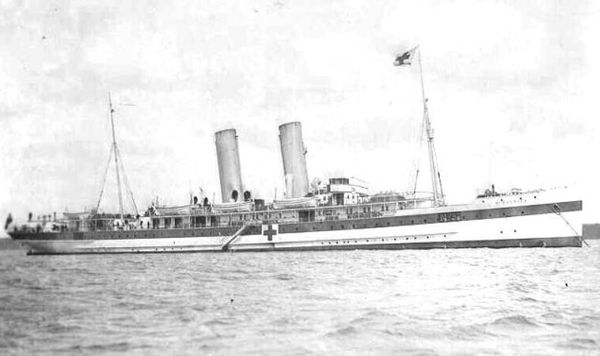
He was later attached to the 117th Machine Gun Company (39th Division) where he contracted bronchitis and returned to England on the Hospital Ship “Dieppe”.

After his convalescence George returned to France and served with the 2/7th Battalion Durham Light Infantry and 33rd Battalion London Regiment (Rifle Brigade) before being demobilised in February 1919.