I'm not a Historian by profession - merely an (over) enthusiastic amateur. By day I'm a Professor of Genetics at Newcastle University with a translation research interest in rare bone diseases. At weekends I can be classified as a Yorkshire Cricket & Psychedelic Rock fan, but mostly I'm just on the Fells (or in the pub - when they were open!).
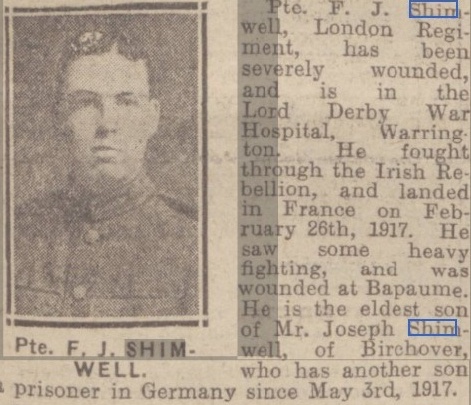
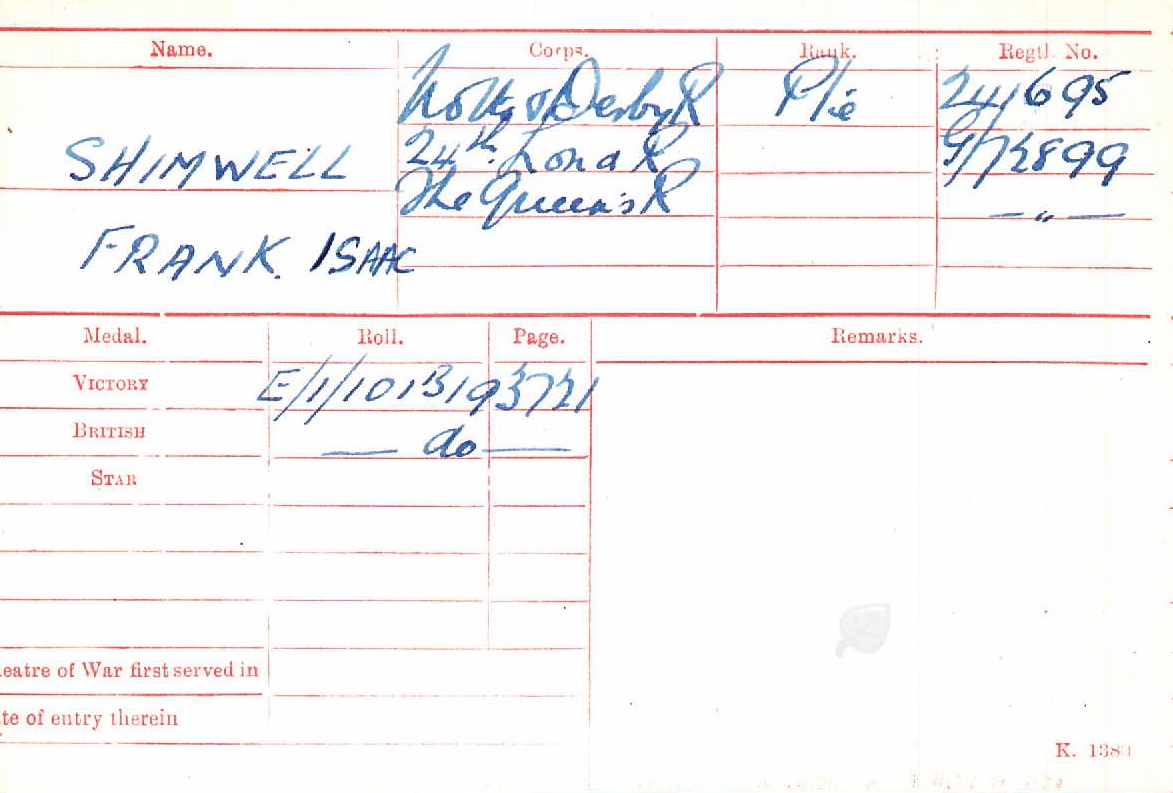
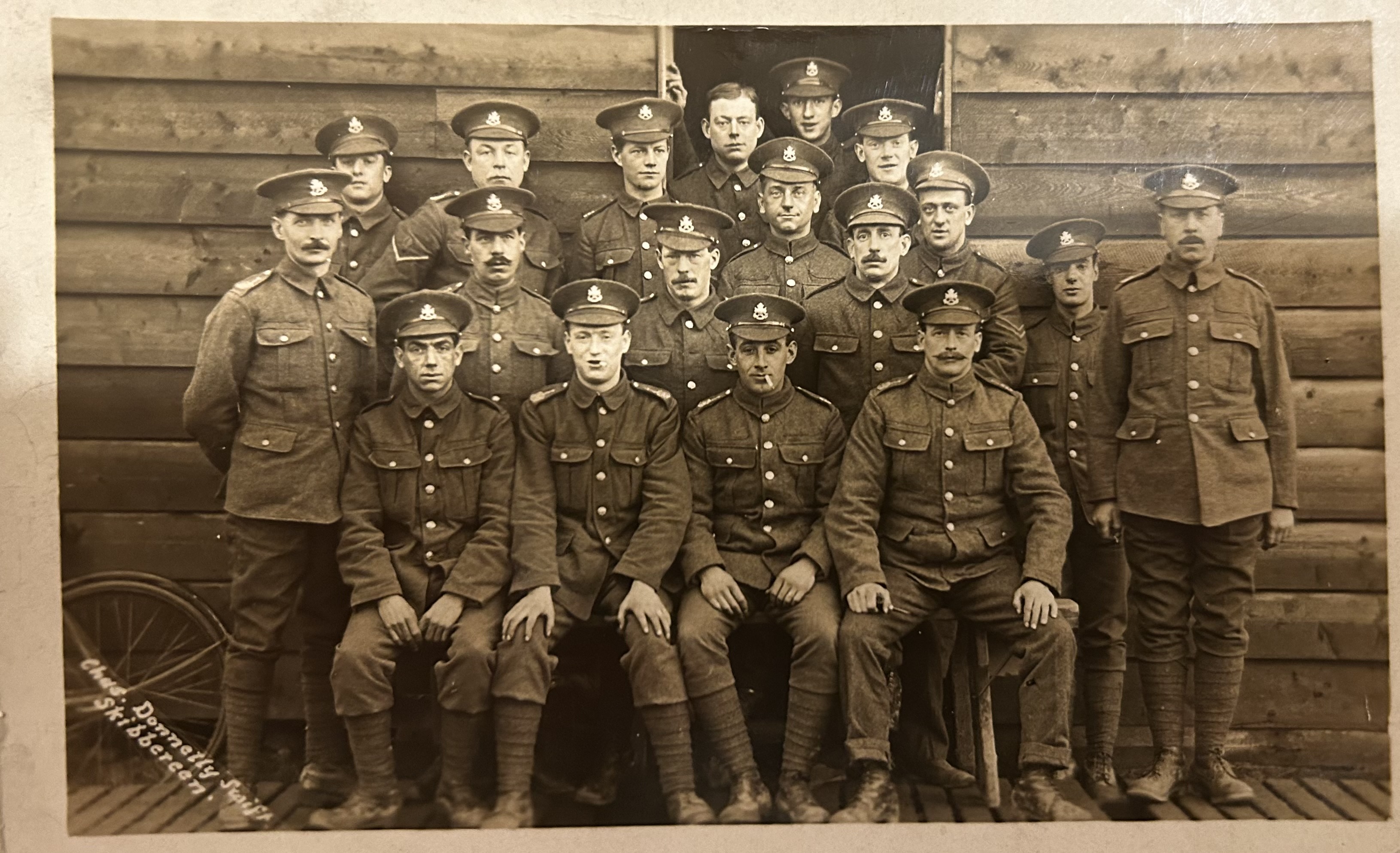
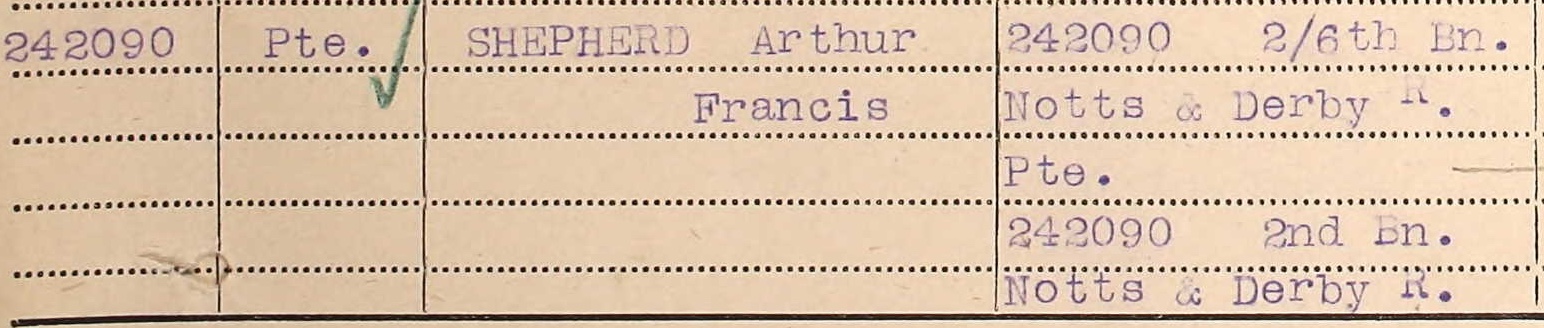
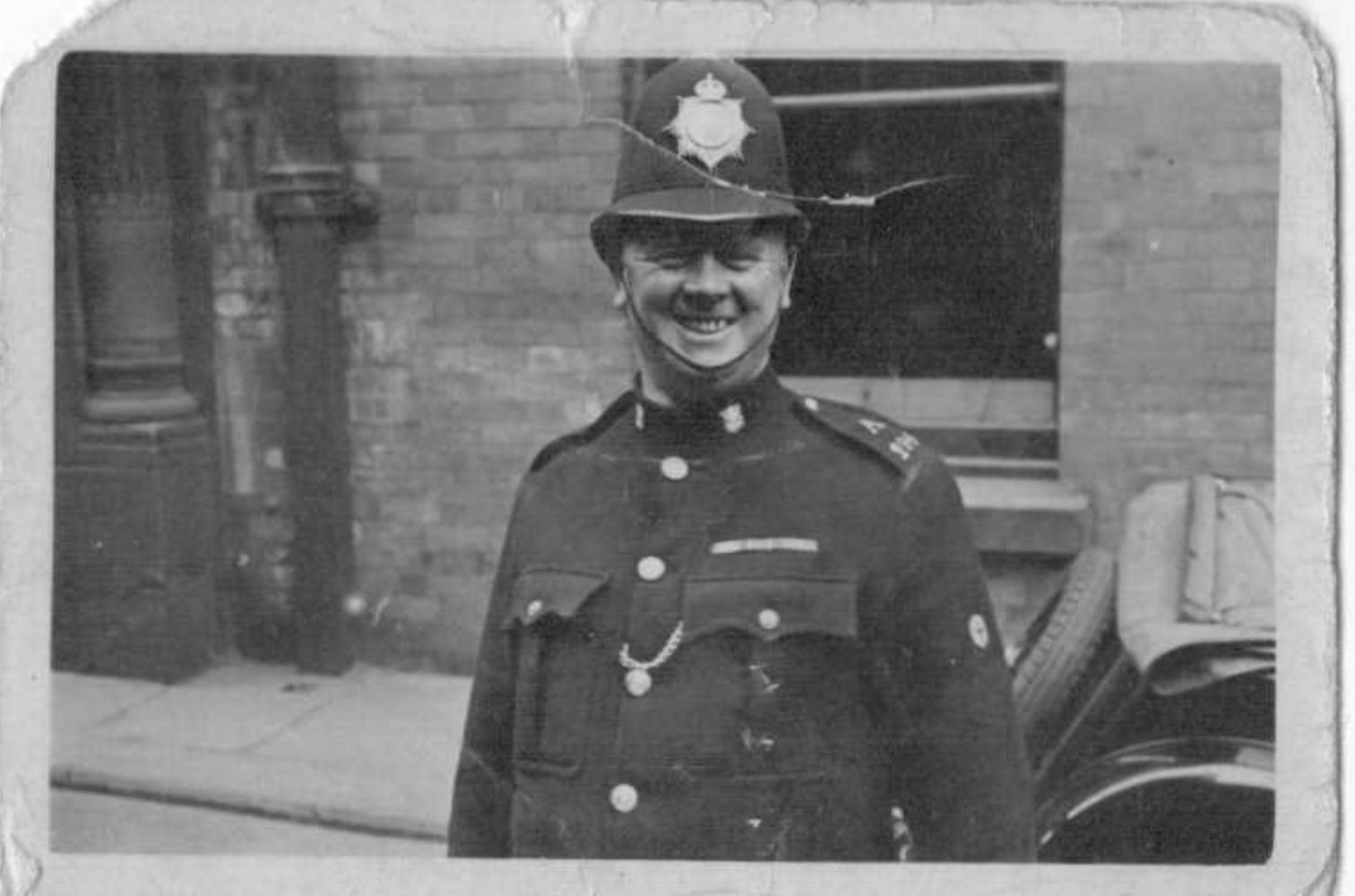
Attested in December 1915; One of the Derby Scheme ‘London Men’; Served inmates Ireland; Survived the War and was discharged in November 1918; Died in Summer of 1968.
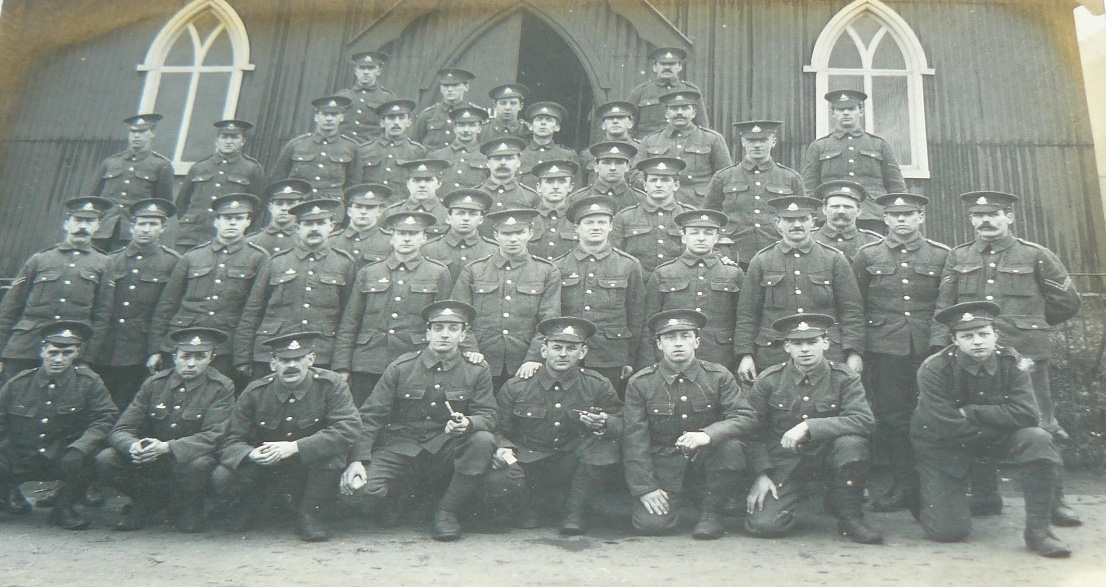
Photograph taken at Curragh Camp towards the end of 1916
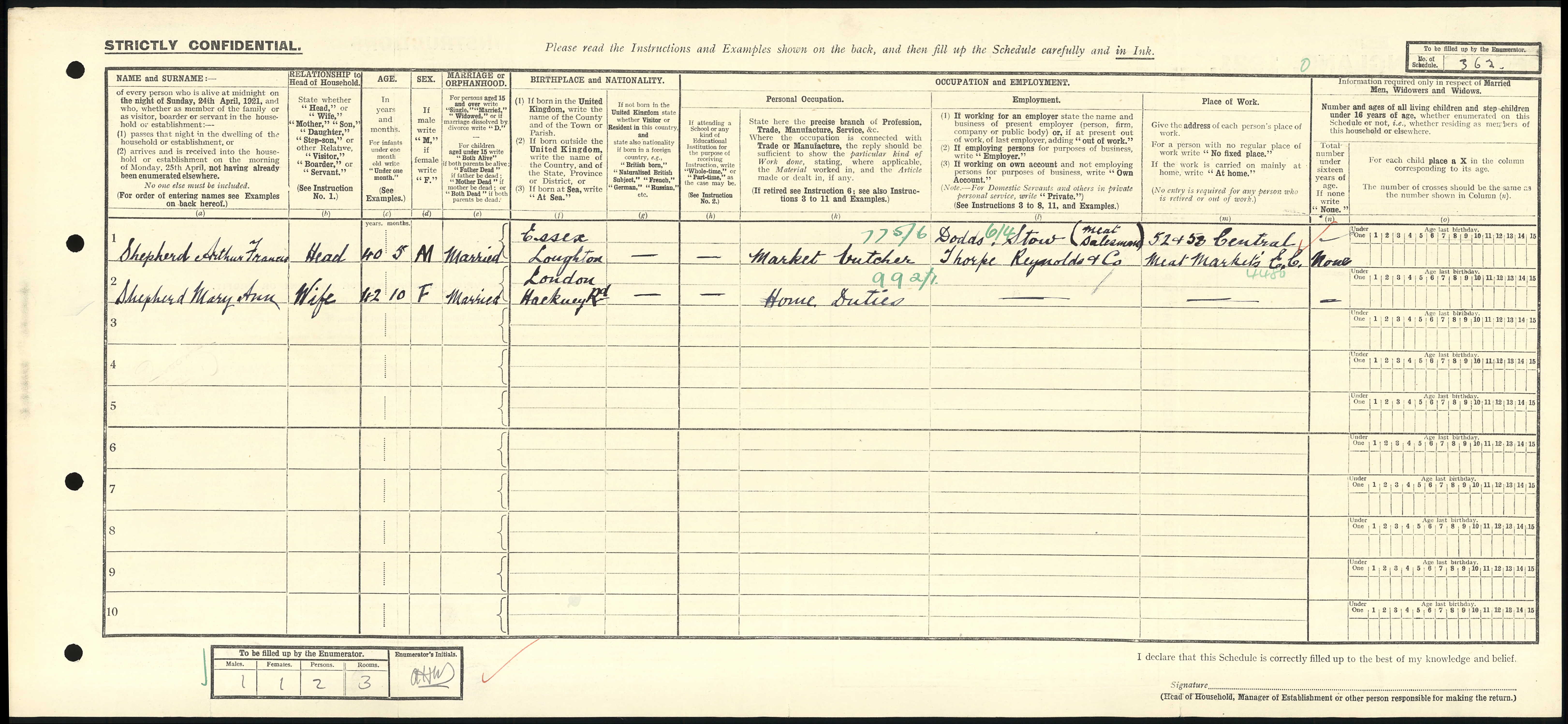
Pre-War
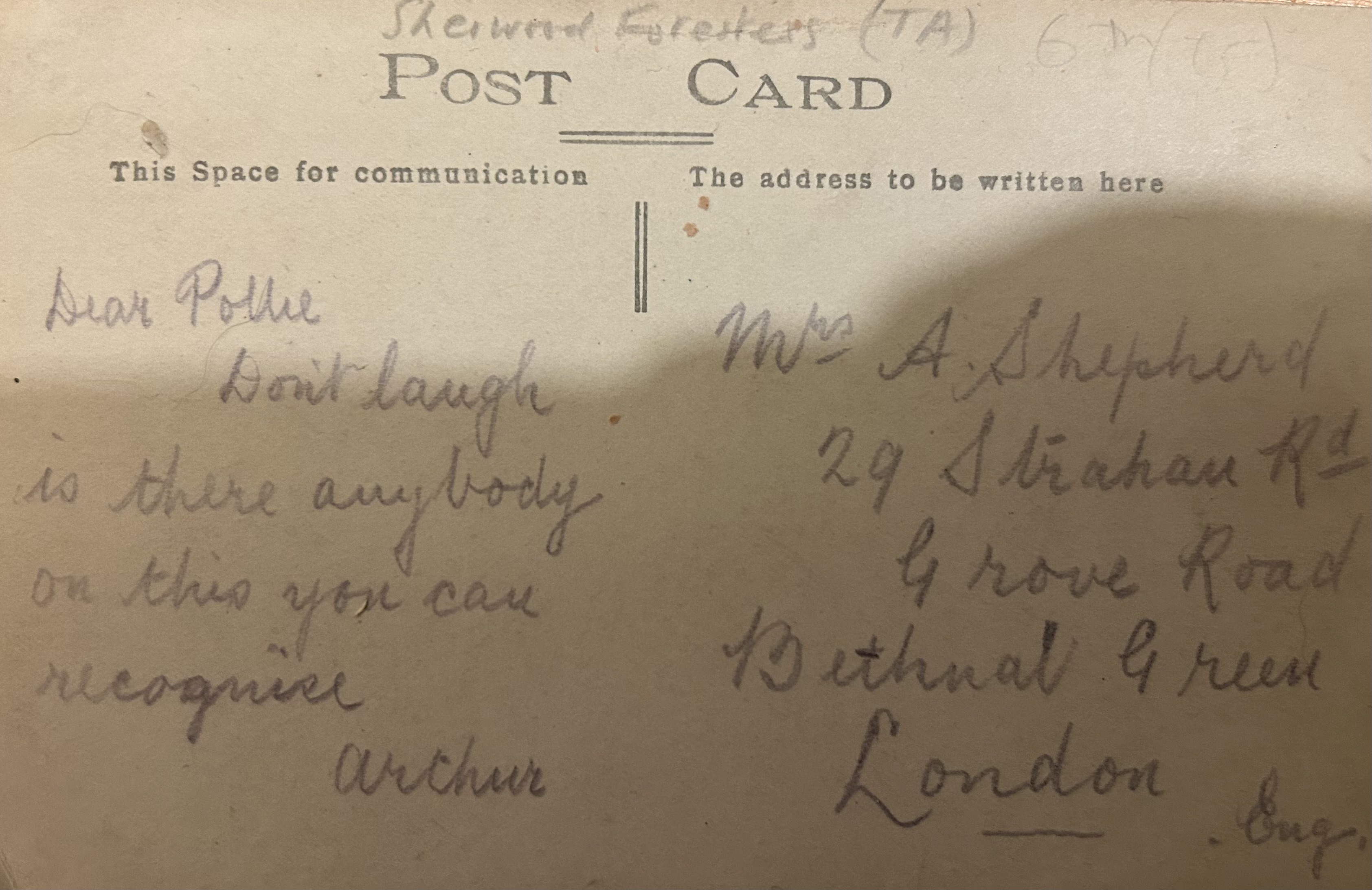
Arthur lived with his wife Mary Ann at 29 Strahan Road in Bethnal Green
Attestation and Service in Ireland
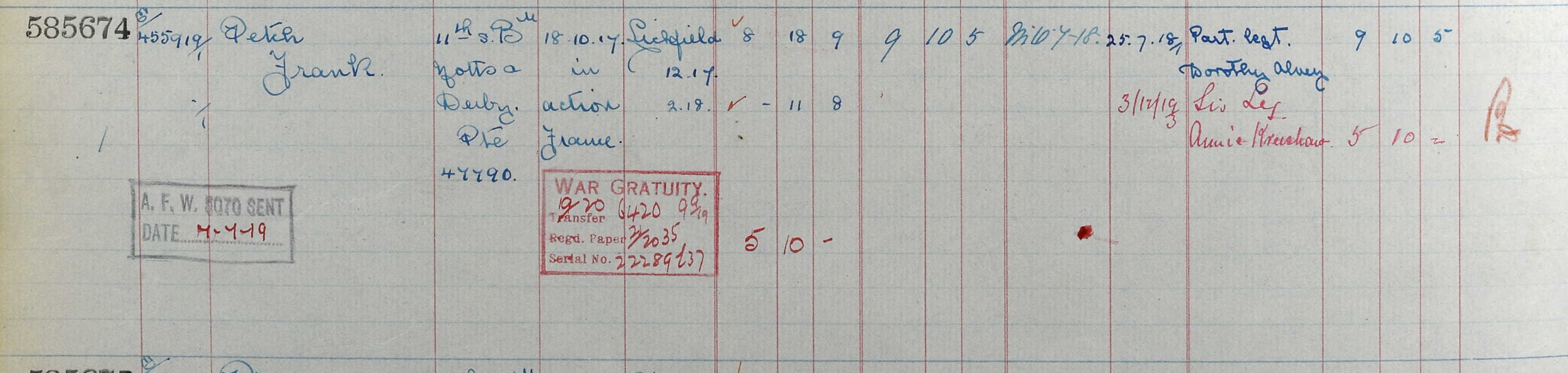
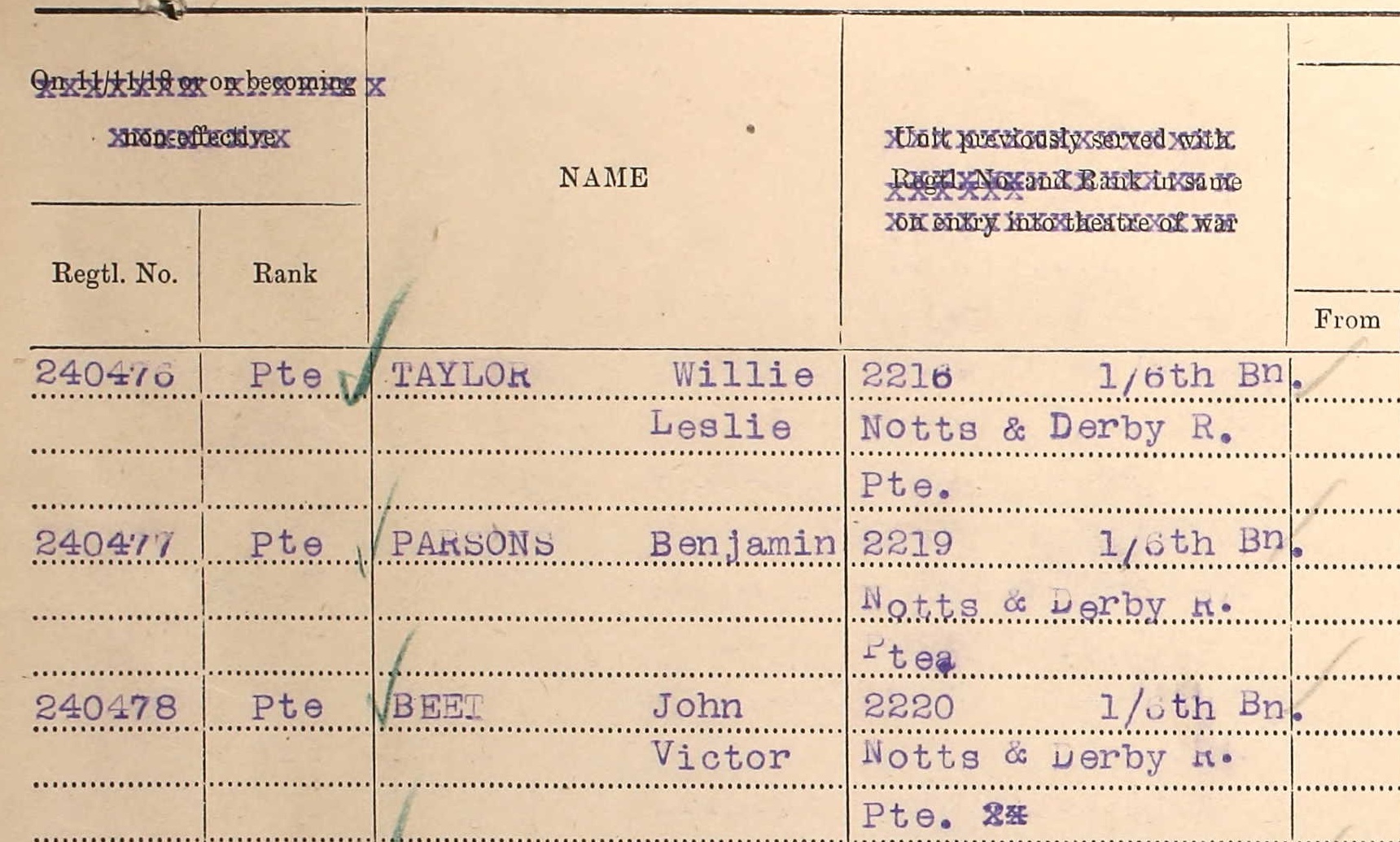
Frank attested in December 1915 and was mobilised in October 1916. It’s likely that he was one of the Derby Scheme ‘London Men’ that were posted to the 2/6th – see here.
He served for a few weeks in Ireland before the Battalion moved to Fovant in early 1917.
Active Service in France from early 1917
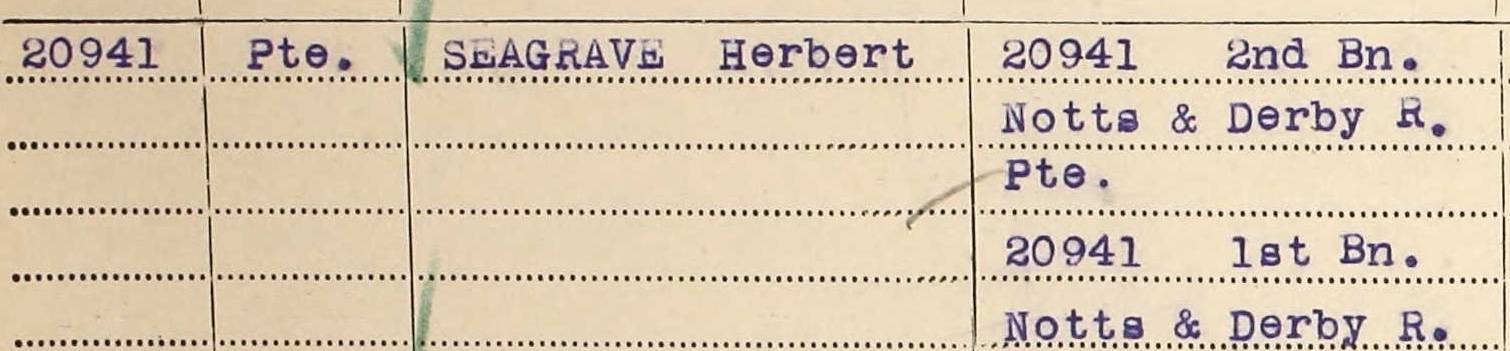
Very little is known about Arthur’s service in France. It is possible that at some point he was wounded and transferred to the 2nd Battalion after recovery.
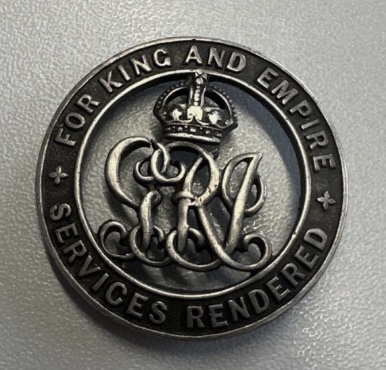
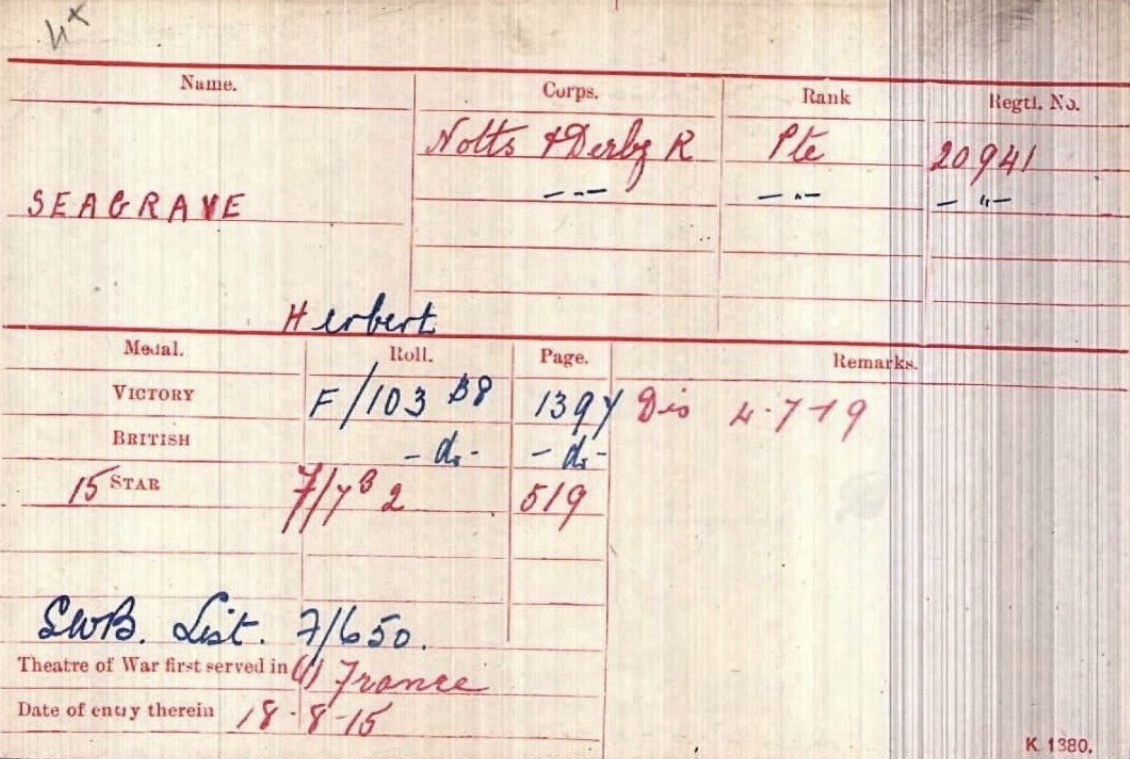
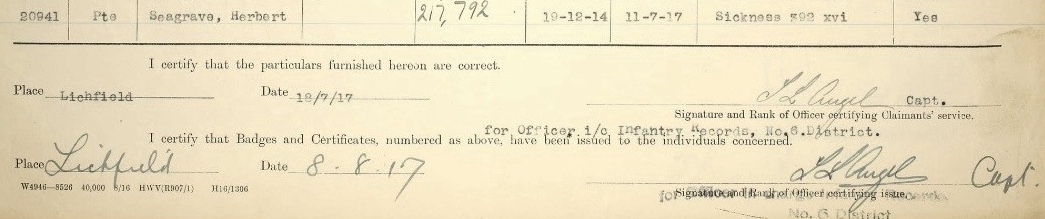
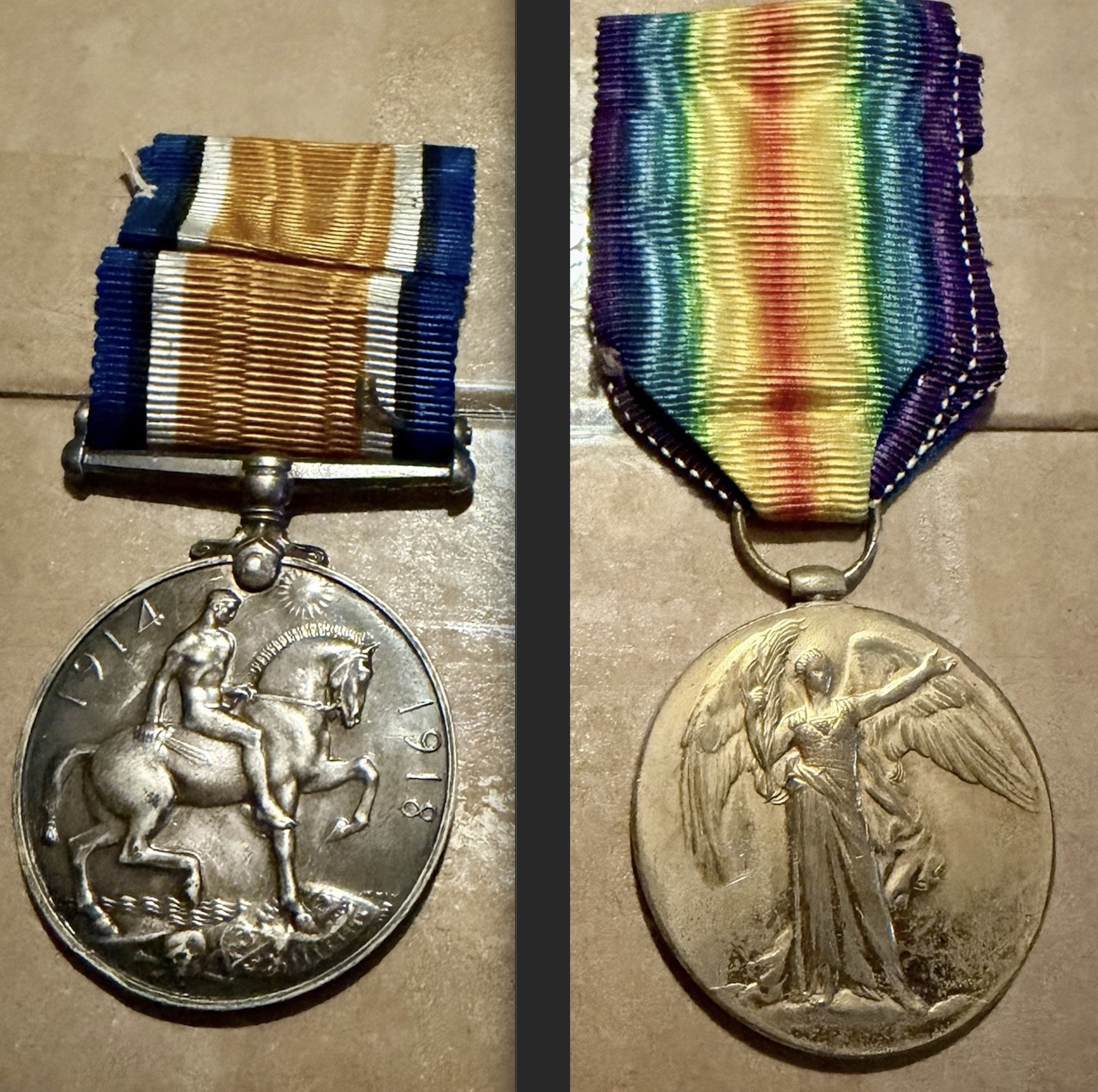
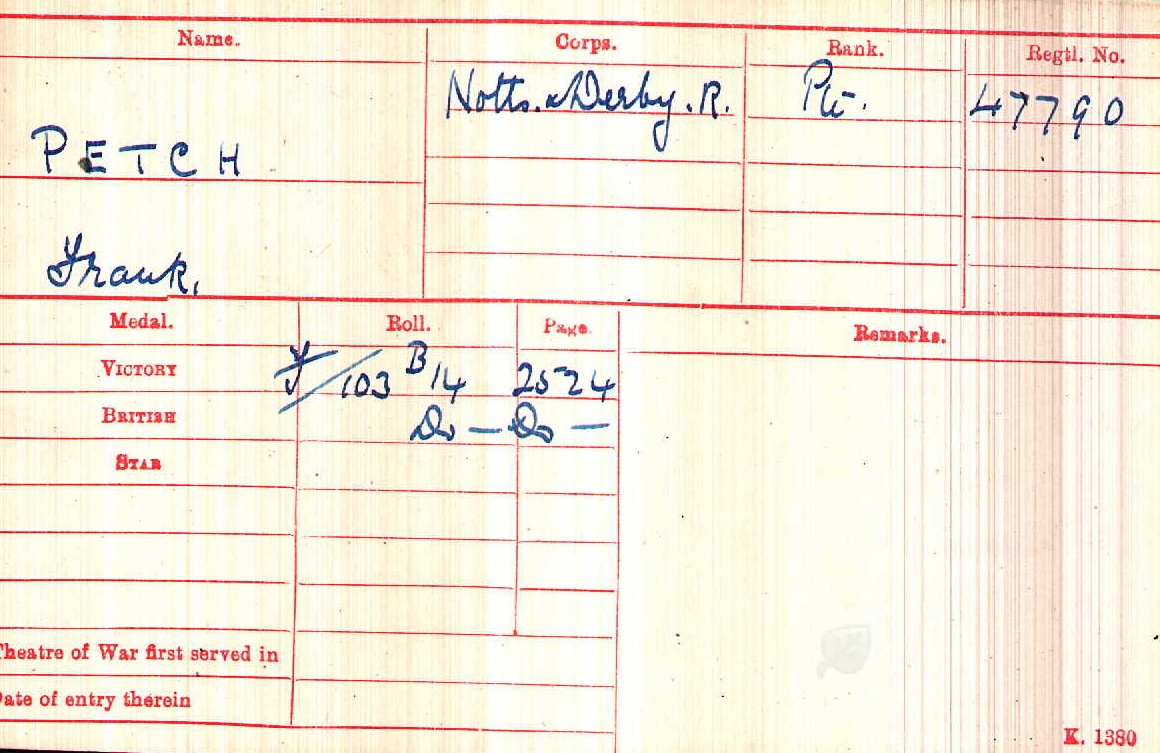
Arthur was discharged on the 11th November 1918 due to ‘sickness’ and was awarded a Silver War Badge along with his British War and Victory Medal.
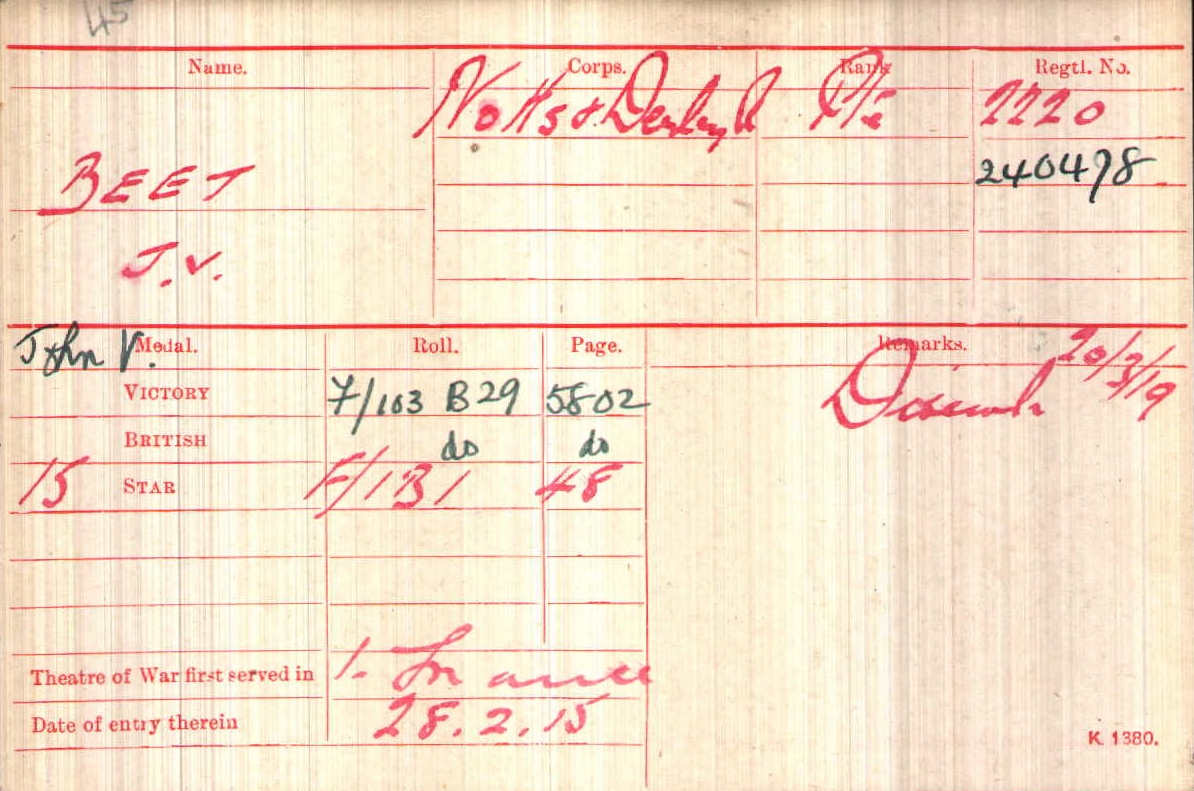
A pre-War Volunteer and Territorial who re-enlisted into the 5th (Reserve) Battalion in October 1914. Arrived in France in February 1915 and was killed during the Battle of Loos.
Many thanks to Cathy Bryant – who was John’s great granddaughter – for kindly sending the photographs
John serving with the 1/5th Battalion. The picture on the left is probably pre-WW1, whilst the picture on the right is likely after he re-enlisted into the 5th (Reserve) Battalion in October 1914 and was promoted to Corporal in December 1914
Pre-War Service
John (standing on the left) appears to have served with the 4th (Nottinghamshire) Volunteer Battalion, The Sherwood Foresters (Notts & Derbys) Regt.
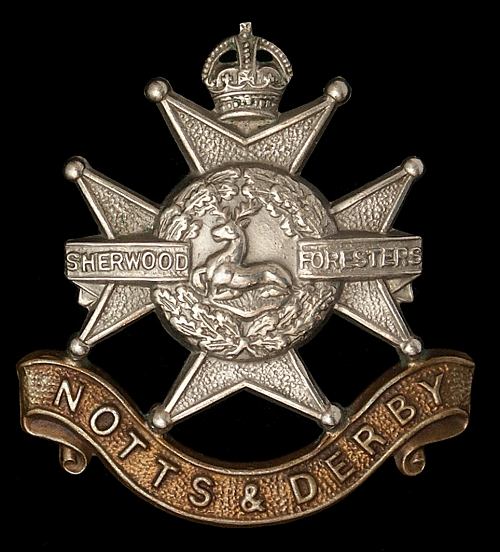
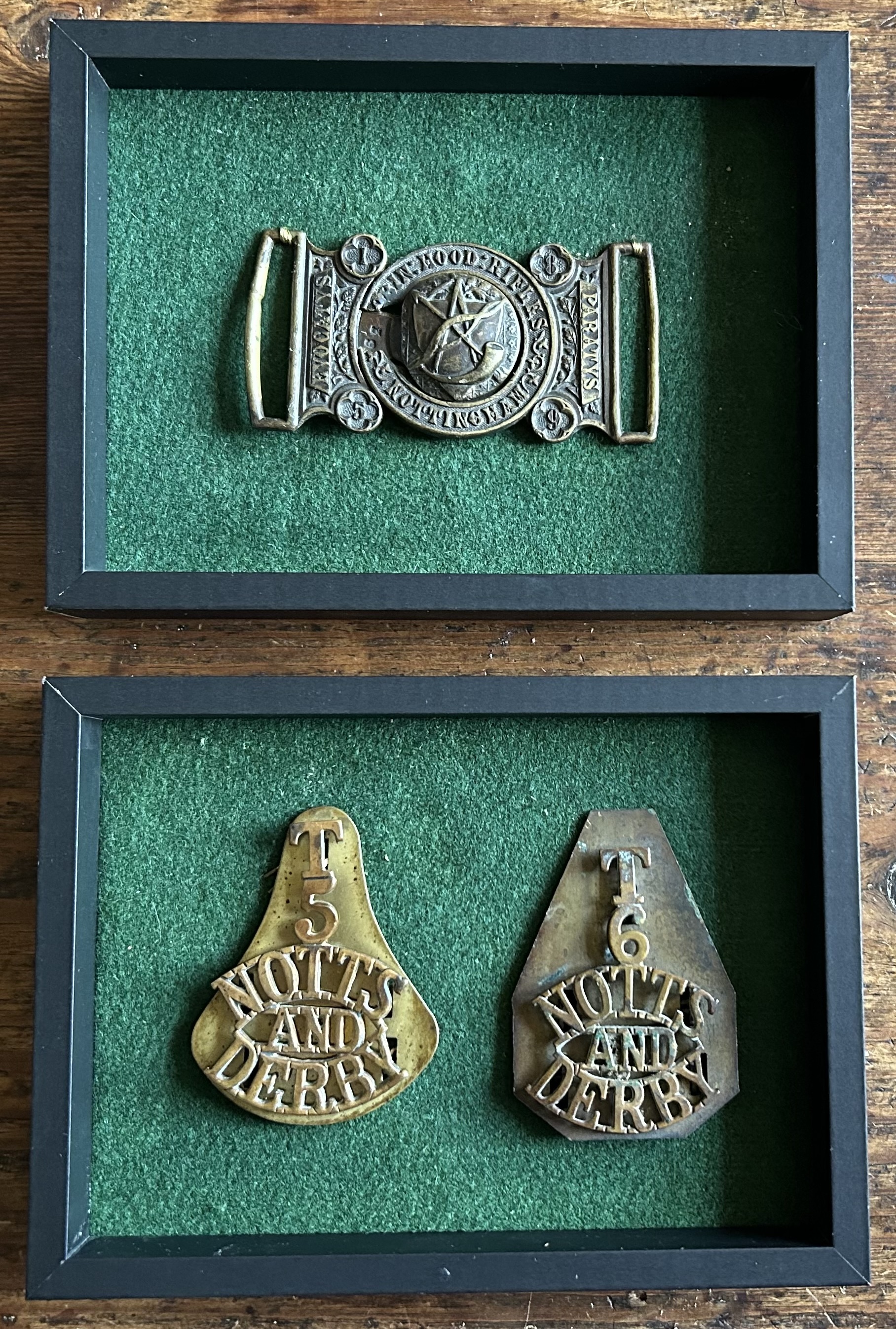
Note the 4th V N&D cloth badge on his right shoulder (example shown below) and the 3-tier ‘T 8 Notts & Derby’ badges that some of the other men are wearing. This post card was sent to his wife Lucy in Alfreton from Hindlow Camp in 1910.
Re-enlistment into the 5th (Reserve) Battalion in October 1914
John’s attestation into the 5th (Reserve) Battalion in October 1914 in which he states that he had previously served with the 5th Battalion for 4 years. Presumably at some point after 1910 John transferred from the 4th Volunteer Battalion to the 5th Territorial Battalion.
John was promoted to Corporal in November 1914 and signed the Imperial Service Obligation in January 1915 whilst the 5th (Reserve) Battalion in Swanwick. John was subsequently transferred to the 1/5th Battalion in February 1915 and proceeded with the 46th Division to France on the 1st March 1915.
Attack on the Hohenzollern Redoubt during the Battle of Loos:
War Diary entry for the 14th – 15th October recording their attack on the Hohenzollern Redoubt. The Battalion suffered 5 men killed and 42 wounded. Amongst the men killed was John Bradley.
Trench map showing the Hohenzollern Redoubt
Casualties suffered by the 46th North Midland Division
John’s body was not recovered after the War and he is Commemorated on the Loos Memorial to the Missing
A Pre-War Territorial who enlisted in February 1911. Harry arrived in France in February 1915 and was discharged in March 1919. He would have fought in all the major battles of the 46th North Midland Division.
Many thanks to Harry’s grandson Phil for providing the pictures and additional information.
Enlistment and training in Harpenden
Harry enlisted in February 1911 and served with the Buxton half of “C” (Ashbourne and Buxton) Company. On August 13th 1914 Colour Sergeant Frank Brindley sent Major Edgar Heathcote (O/C “C” Company) a full list of the Buxton men serving with the Company – Harry is recorded as living at 11 Hardwick Square.
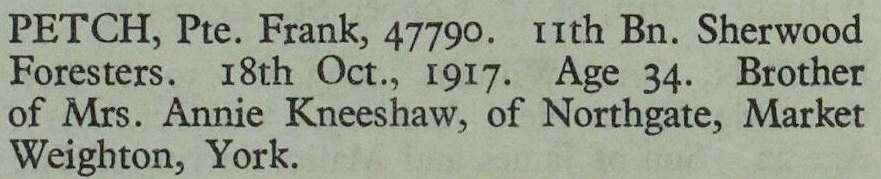
Harry mobilised with the rest of the 46th North Midland Division and proceeded to Harpenden before departure to France in February 1915.
Post card sent from Harry to his wife Gladys while he was stationed in Harpenden
The ‘Buxton Territorials’ ready to leave for France in 1915
Discharge from the Army
Unfortunately there is very little information regarding Harry’s time with the 1/6th Battalion. Following his discharge he suffered from rheumatoid arthritis, but a Medical Board determined that this was not attributable to War Service so he was denied a pension. Harry died in 1928 aged only 35.
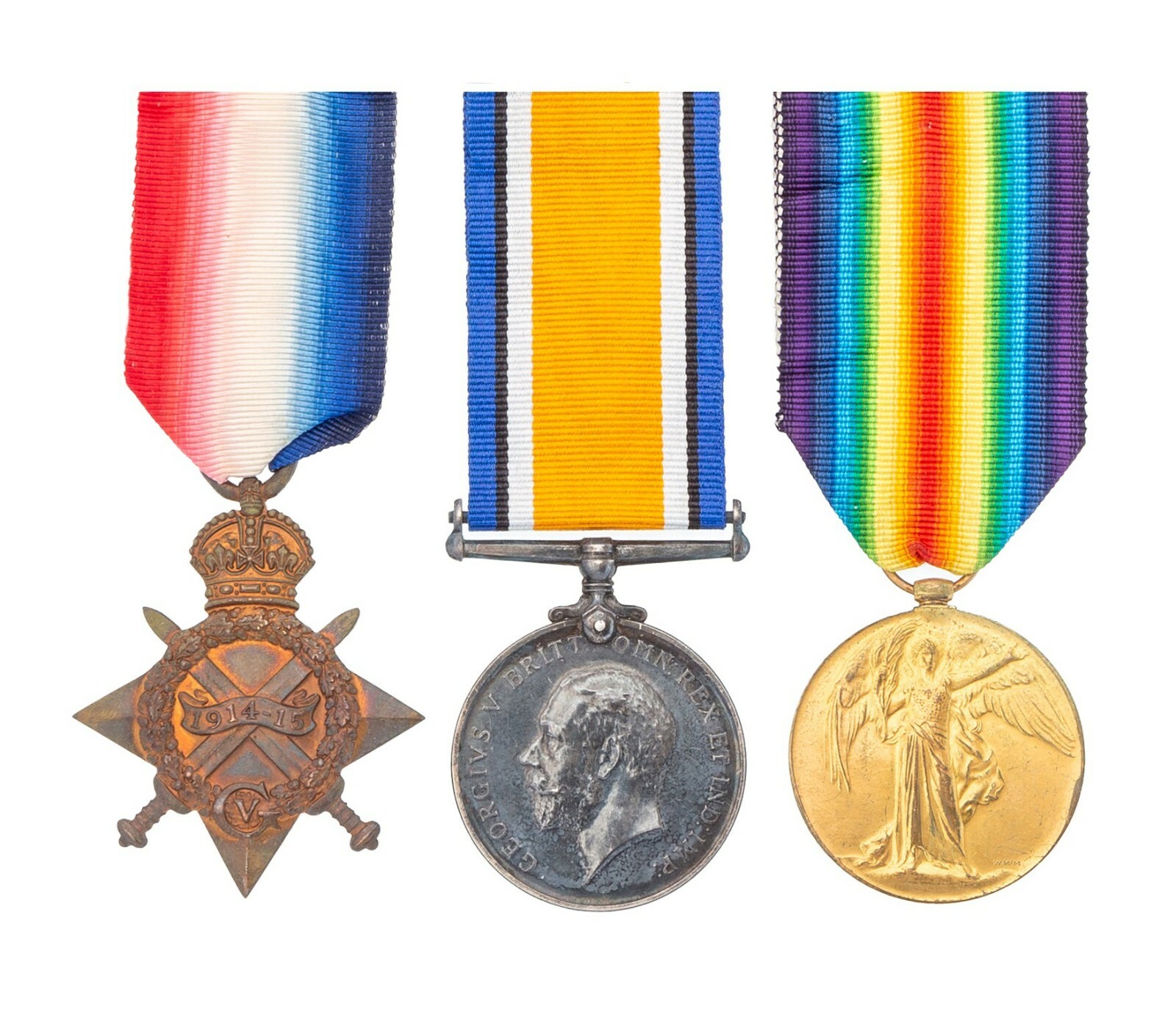
Harry was awarded a 1914-15 Trio (representative image)
Enlisted in October and 1914 and arrived in France in February 1915; discharged in April 1917 due to sickness from an injury inflicted by barbed wire.
Many thanks to Paul Nicholson (John’s Grandson) for additional information and kindly sending the photographs.
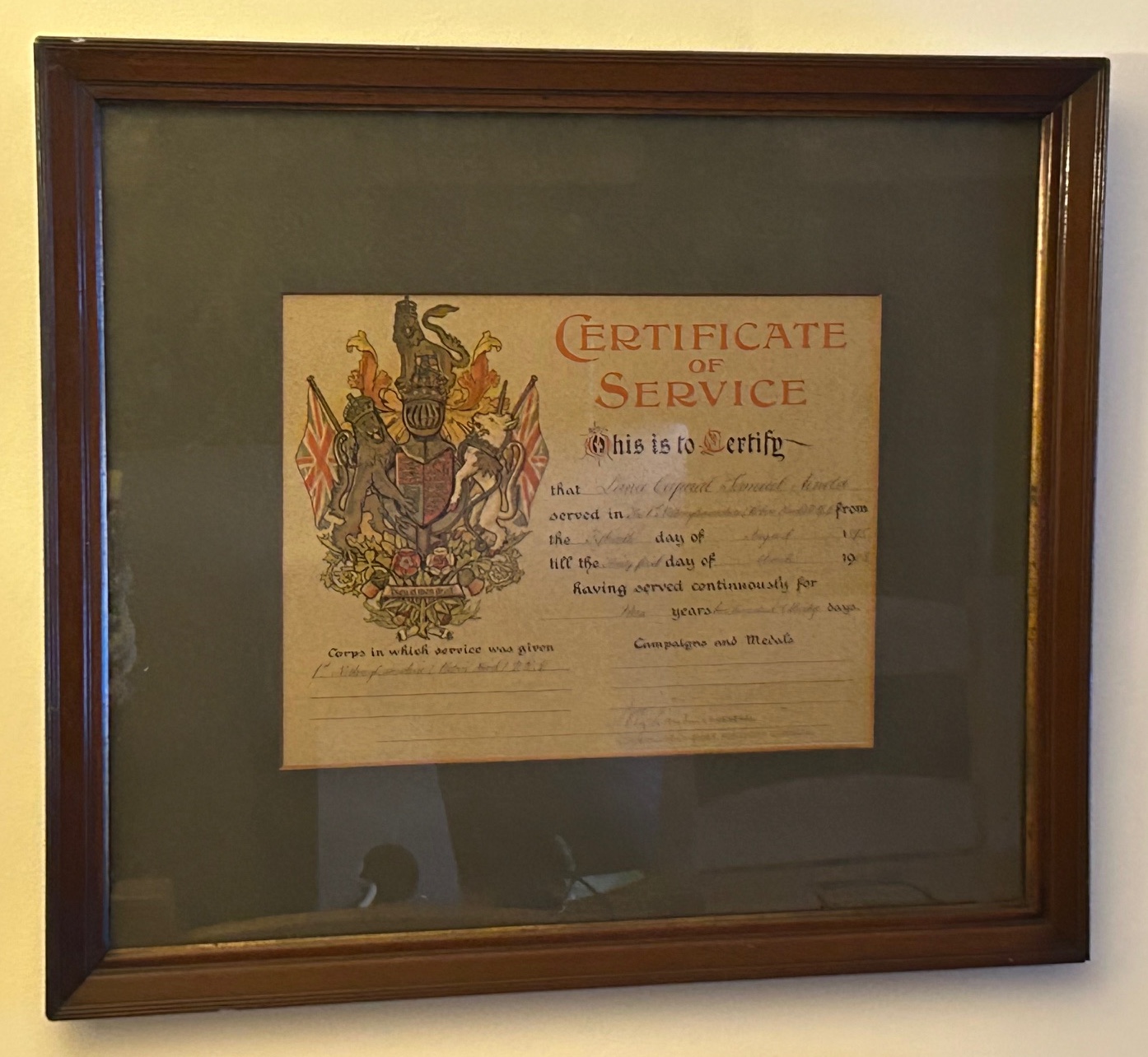
Enlistment and Arrival in France in February 1915
John enlisted into the 6th (Home Service) Battalion in Buxton on 6th October 1914 aged 19 and arrived in France with the 1/6th Battalion in February 1915. He would have been serving with the Battalion whilst they occupied Front Line Trenches at Kemmel, Ypres and during the Battle of Loos.
Wounding and return to England
John was injured in February 1916 when the Battalion were in reserve near to Puchevillers and provided working parties to the Royal Engineers.
Following treatment in France John was transferred to the 3rd Northern General Hospital in Sheffield.
Discharge and Pension
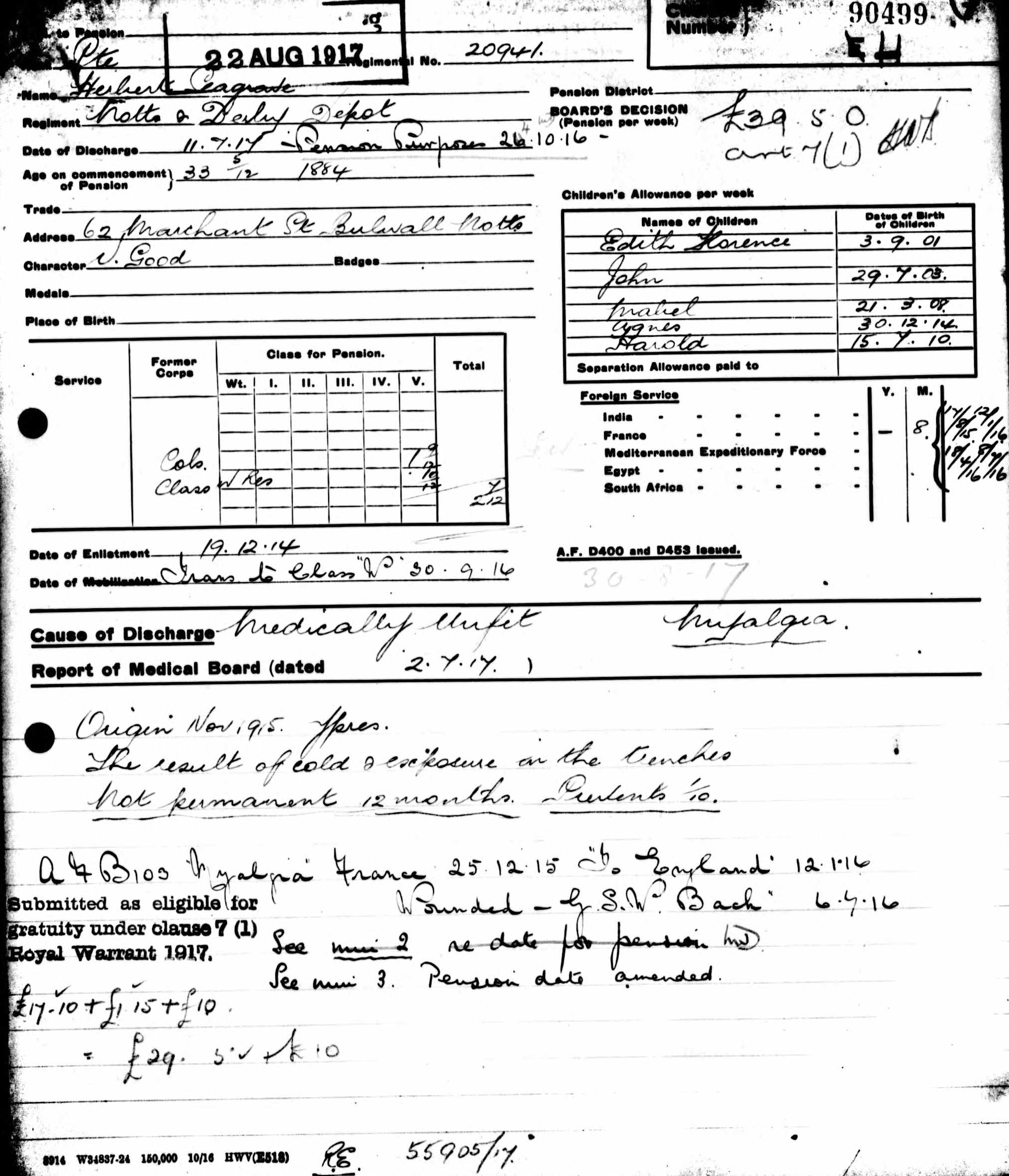
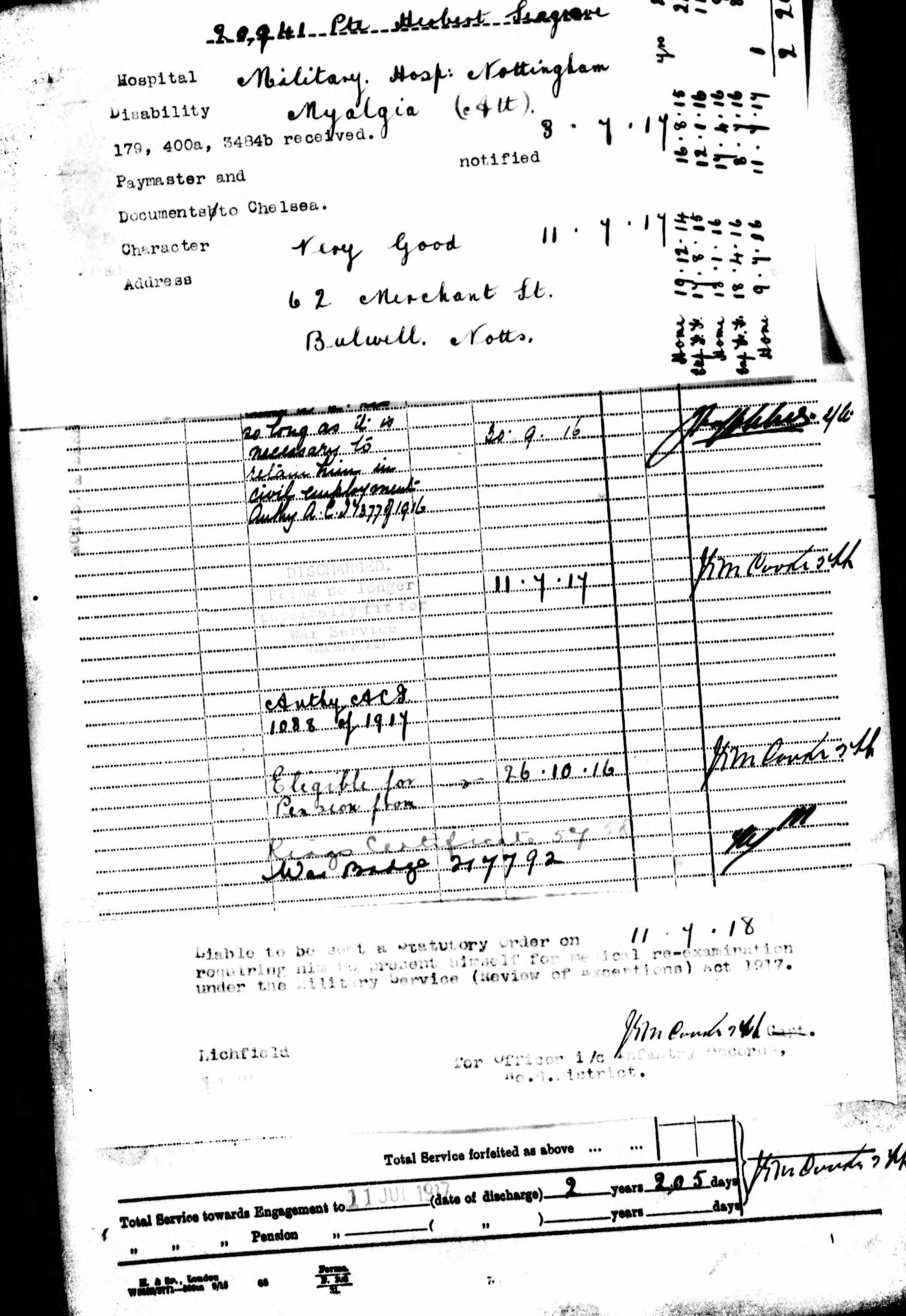
A Medical Board in March 1917 found that John was found physically unfit for further military service and was he was discharged in April 1917 having served 2 years and 179 days. John was awarded a military pension.
After the War John was awarded a 1914-15 Trio and a Silver War Badge