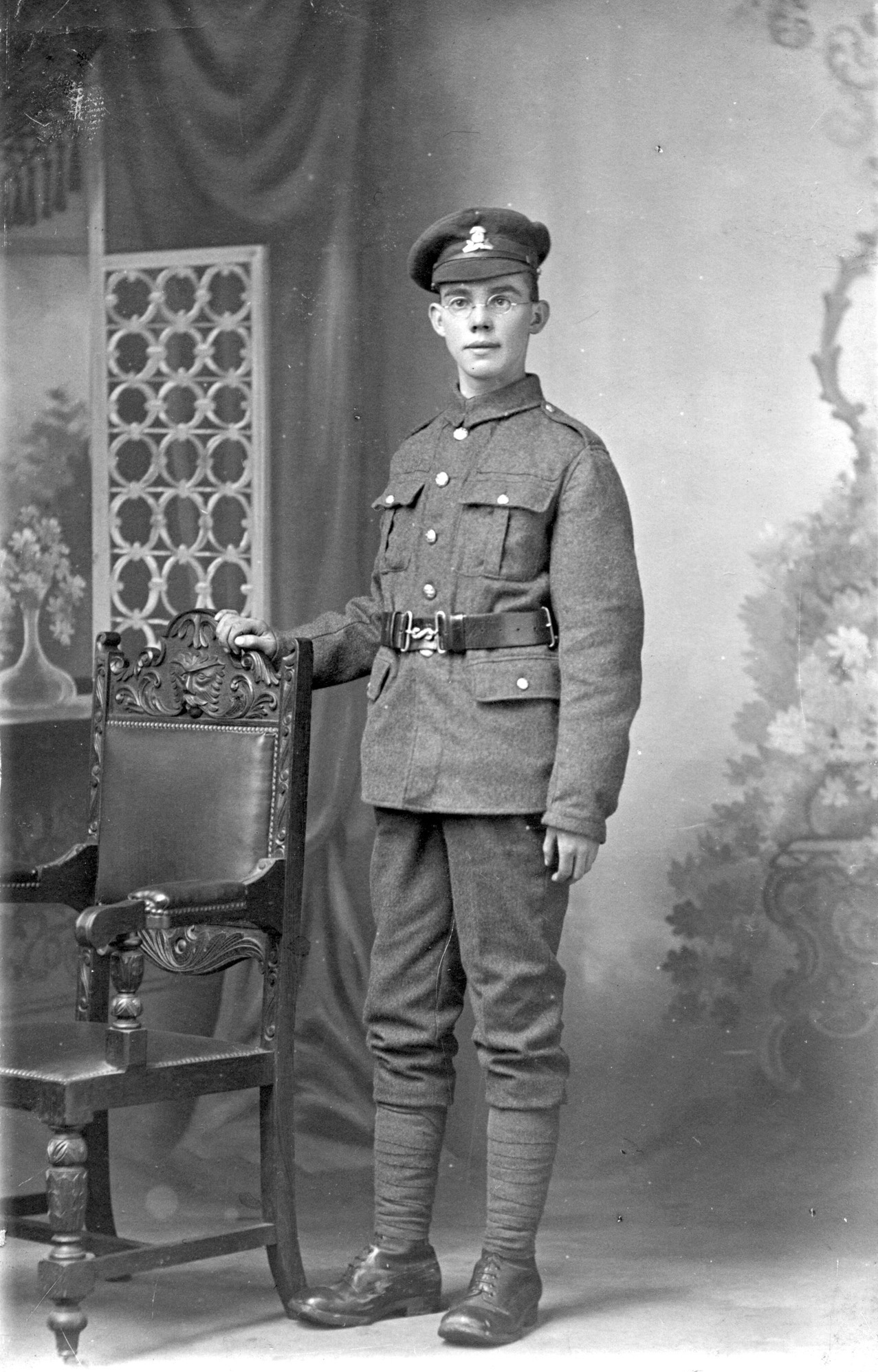
Posted with 32 other men from the Army Ordnance Corps to the 1/8th Battalion in May 1917. He was killed in action on the 30th May 1917 aged 21.
Many thanks to John Hale and Helen Dye (Thomas’ Great Niece) for permission to use these photographs and associated text.

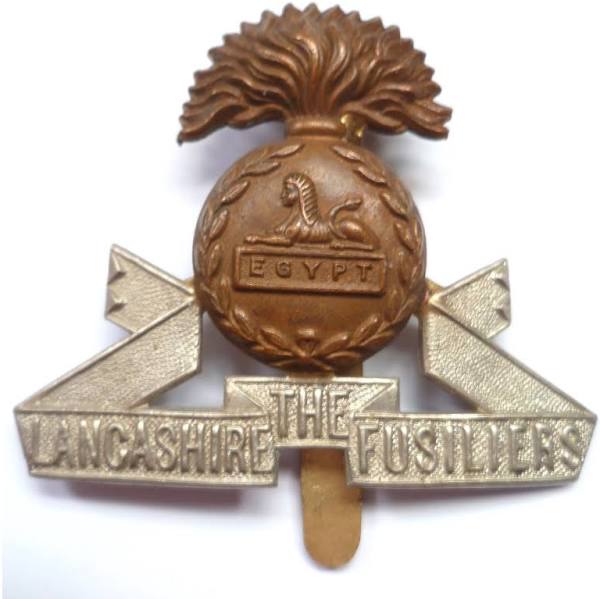
Thomas enlisted into the Lancashire Fusiliers (see cap badge), but first served overseas with the Army Ordnance Corps – as per his medal role (below).
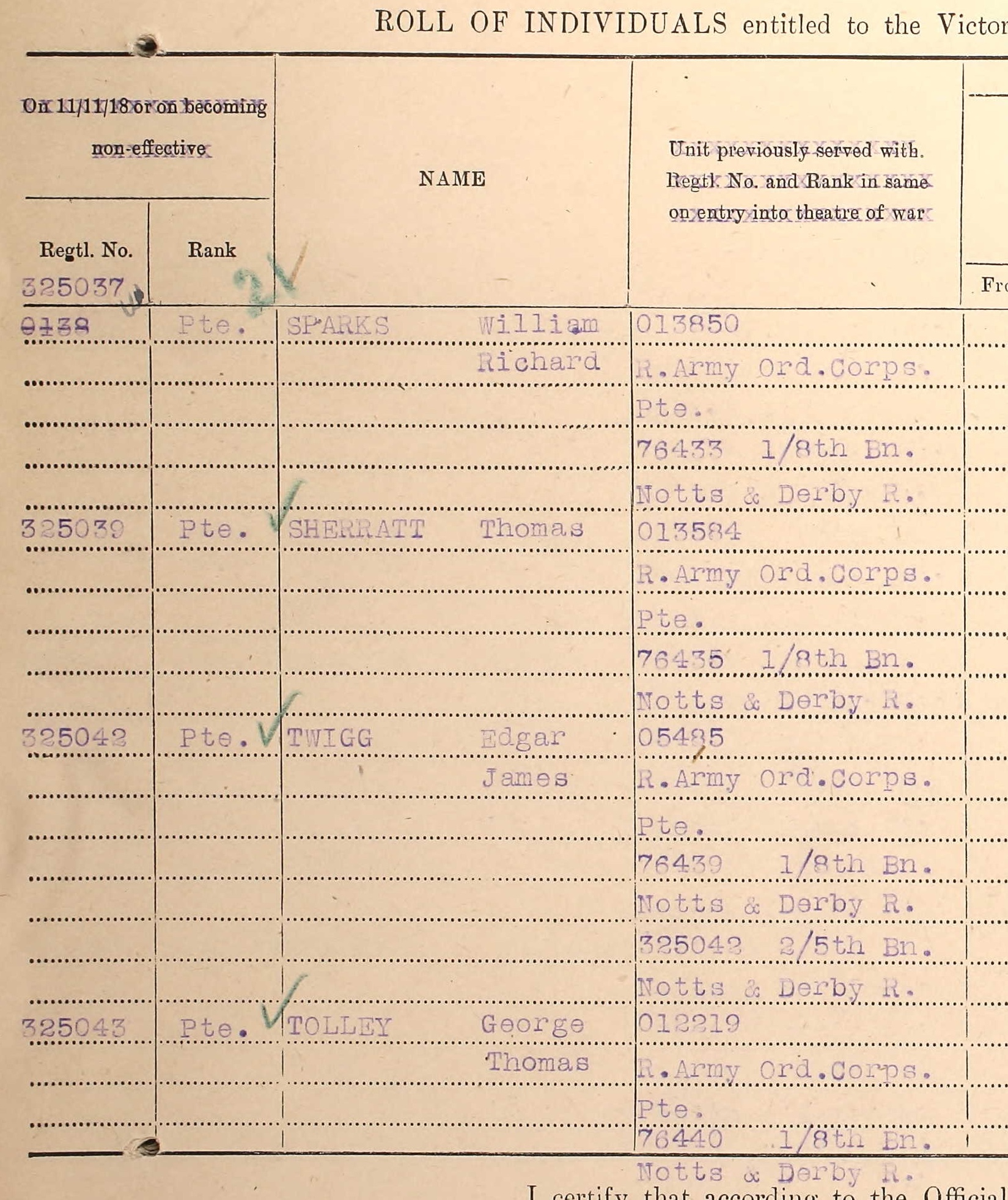
At some point Thomas was transferred to the 1/8th Battalion Sherwood Foresters and was renumbered 76435. He was posted to “A” Company.
[The 7**** number system was started in September 1916 to move men from N&D Territorial Battalions to N&D Regular and Service Battalions. I then think that it continued to be used when men from other regiments joined the N&D. I don’t know what date 76*** was used, but early 1917 I would guess. Looking at the medal roles it would seem that the 32**** system was used to move men from 1/8th to other N&D Battalions, but Thomas stayed with the 1/8th]
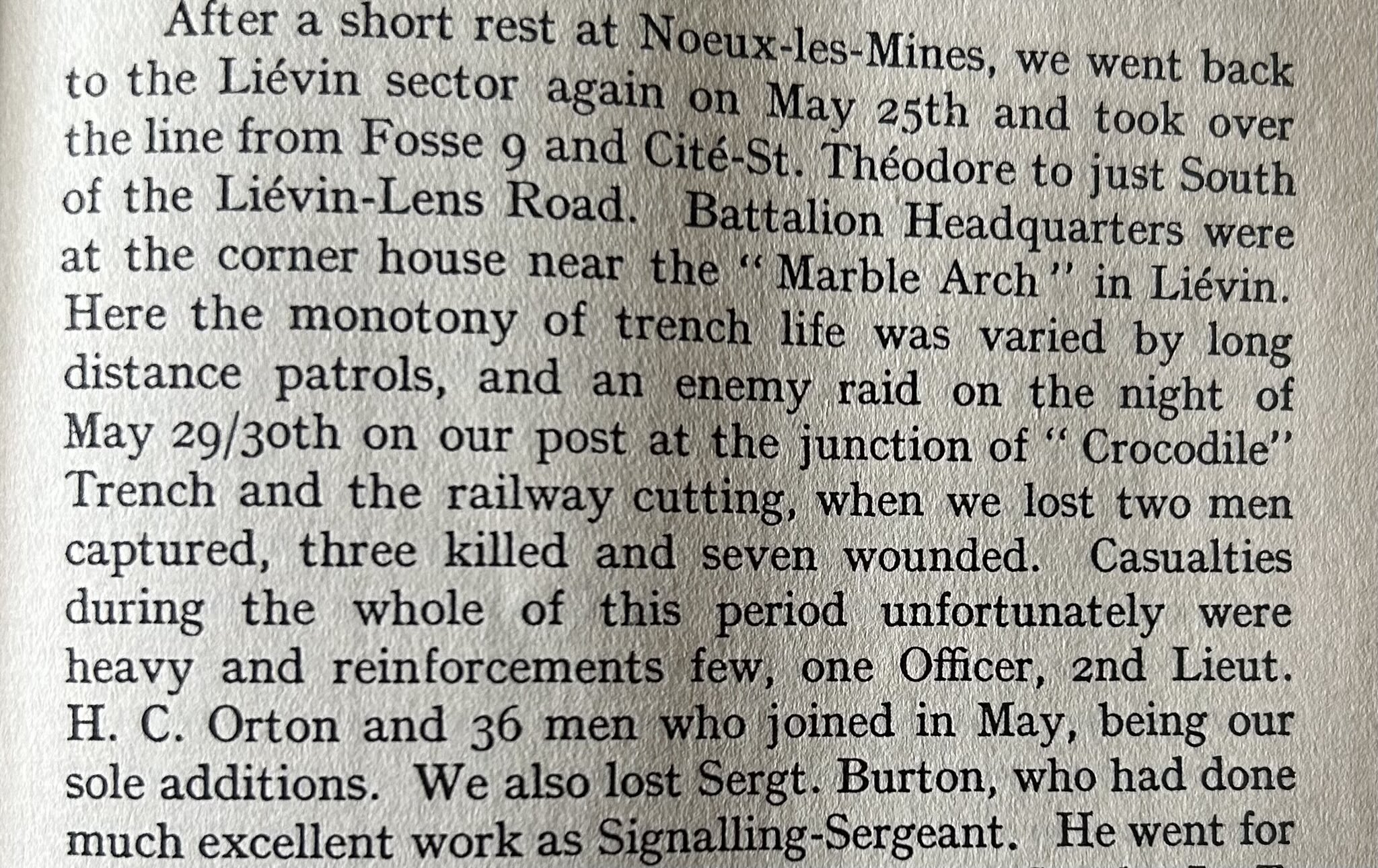
On the night of 29th/30th May 1917 the Battalion’s positions near the railway station in Lievin suffered a trench raid by the Germans; enduring a heavy barrage, the raiders were eventually repulsed at a cost of 3 killed, 2 captured and 7 wounded. Thomas was found dead at his post, having been posted as sentry.
[Courtesy of John Hale]
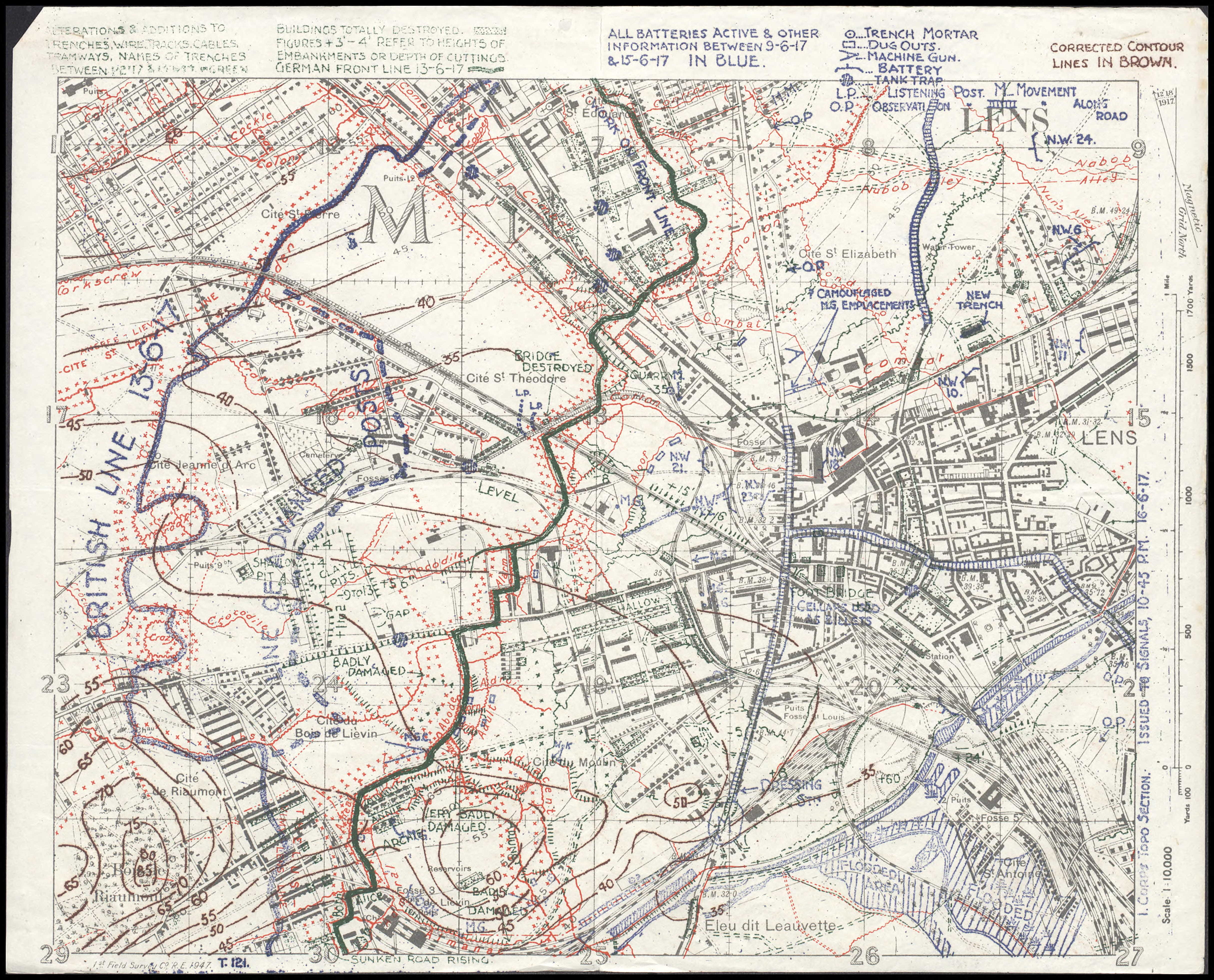
It’s difficult to pin-point where the raid took place, but on this trench map from May 1917 “Crocodile Trench” can clearly be seen snaking into the British front line (shown in blue).
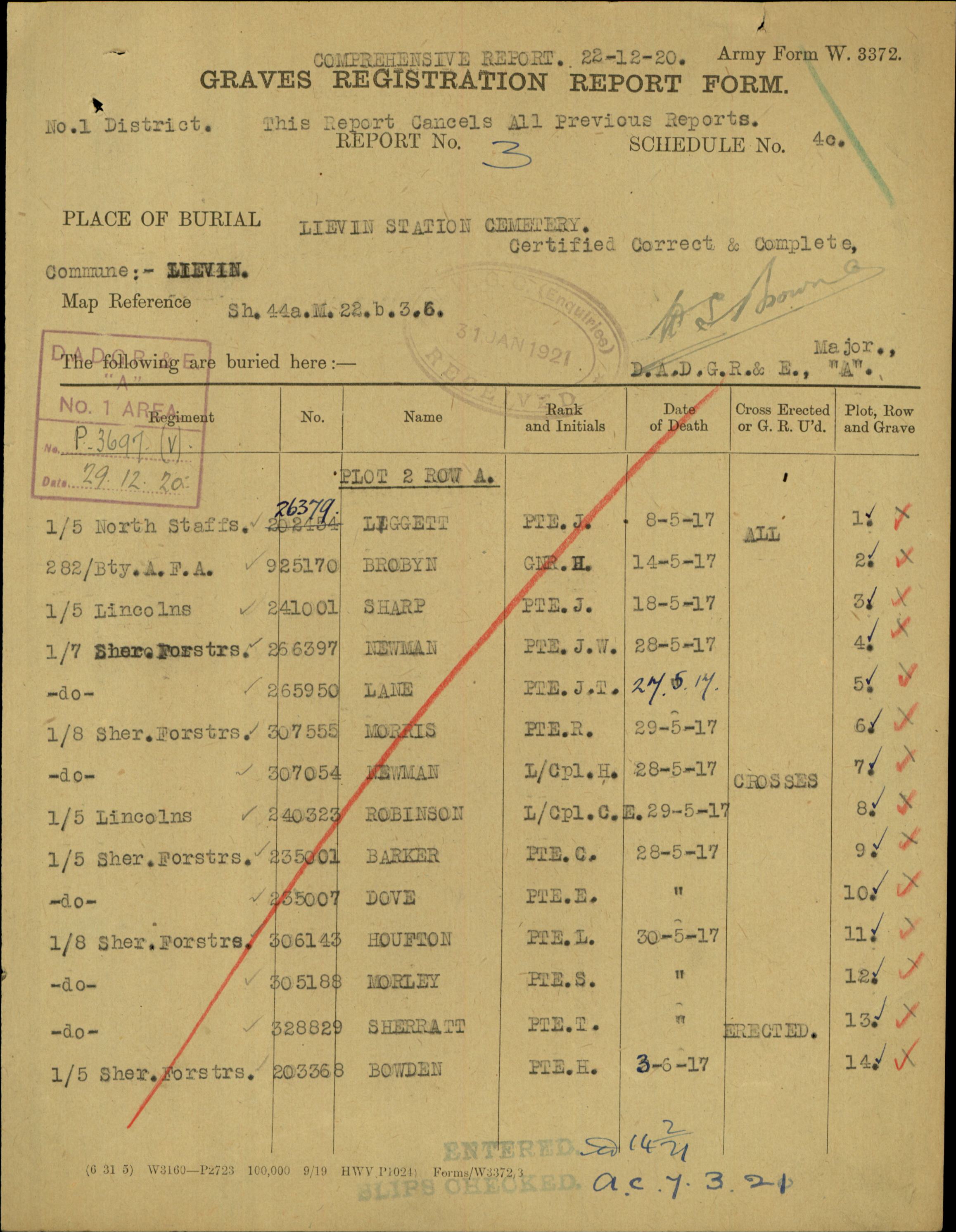
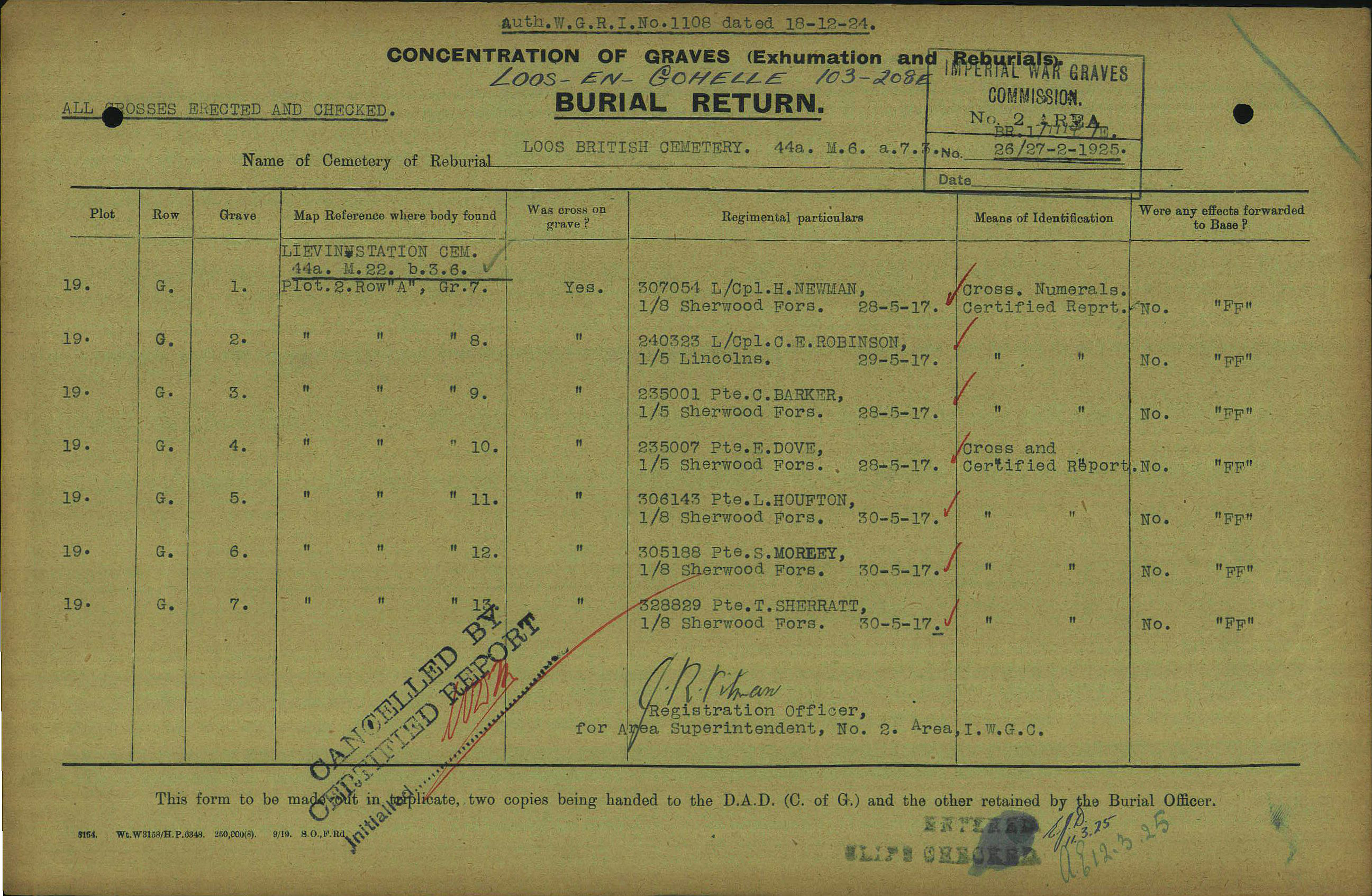
Thomas’s body was moved from Lieven Station Cemetery in 1925 and he is now buried in Loos British Cemetery XIX G 7. Thomas was the Son of Mr and Mrs T Sherratt of 62 Highland Rd., Shavers End, Dudley, Worcestershire.
He now rests peacefully with his comrades from the 1/8th Battalion, 139th Brigade, 46th North Midland Division.
[LIEVIN STATION CEMETERY, on the North-West side of the railway station, was used in 1917 and contained the graves of 48 soldiers almost all from the 46th (North Midland) Division]


Thomas is commemorated on the Memorial to the men of Gibbons who joined the forces in the Great War.
 Derbyshire Territorials in the Great War