Major William Seaton proceeded to England for transfer to Royal Flying Corps.
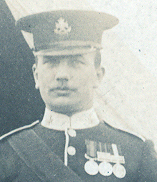
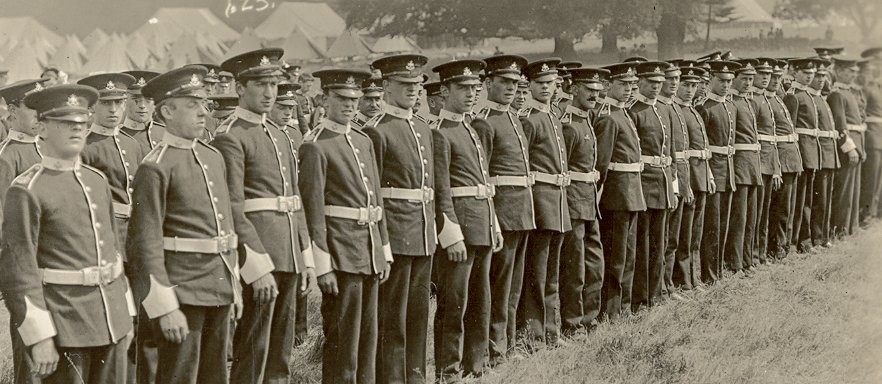
Major William Seaton proceeded to England for transfer to Royal Flying Corps.
Frederick Holmes, a 20 year old painter from Buxton enlisted into the 6th Battalion and was given the number 2475.
Frederick arrived in France on 28th February 1915 and returned to England on 7th July possibly because of illness. He was posted to the 3/6th Battalion and served with them until November 1915 when he returned to France. He was posted home again in December 1915 and later served as 331224 with 29th and 21st Battalions until he was discharged in December 1917.

The Battalion were relieved by the 5th Battalion and moved into billets at Bailleuval as part of the Divisional Reserve.
2979/240830 Pte Henry Kingston was wounded by a gas shell and sent to the 18 CCS and 13 General Hospital before being transferred to England.

Henry Kingston was a labourer from Nottingham and enlisted into the 6th Battalion at Clay Cross on the 19th october 1914 aged 32.
Henry later returned to France and served with the 16th Battalion and was posted missing in April 1918. It was later reported that he had died in Germany.
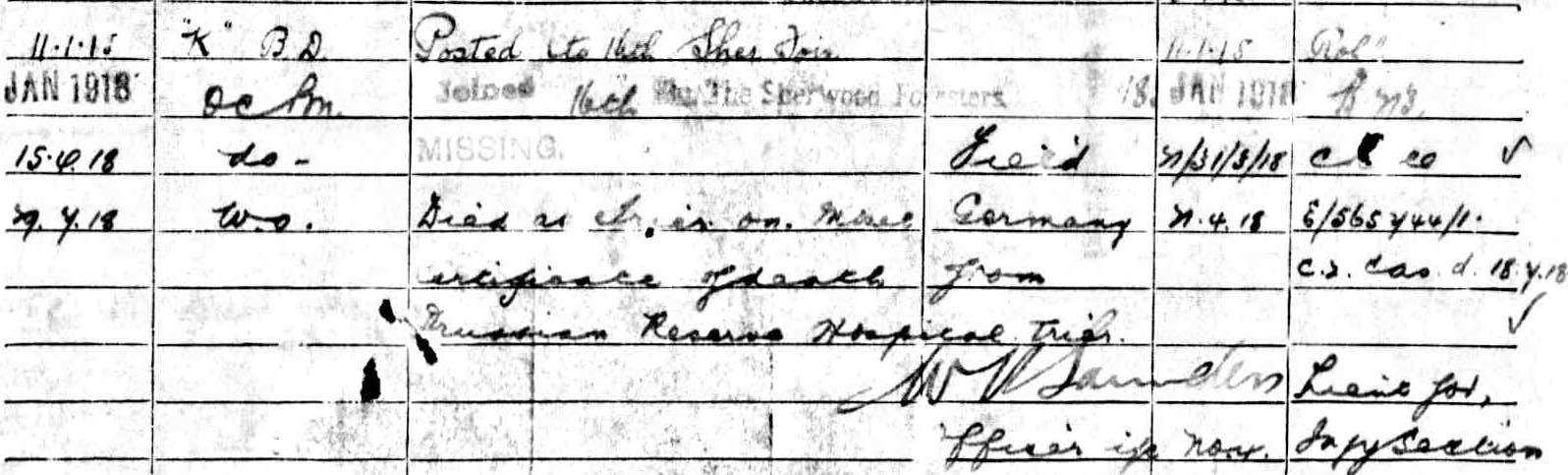
He left a wife and a little girl called Lily Rebecca.
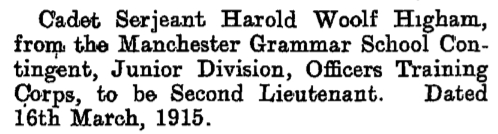
The Battalion moved to billets at FOUQUEREUIL and were joined by 2/Lt Harold Woolf Higham and drafts of reinforcements.
Supplement to the London Gazette, 22 April 1915.
Arrived in France on 14th July 1915.

Awarded Croix de Guerre in 1918 (London Gazette, 21 September 1918)
After the War he lived at Melbourne House, Derbyshire Lane in Stretford.
The Battalion remained in front line trenches close to Hill 60 near Loos.
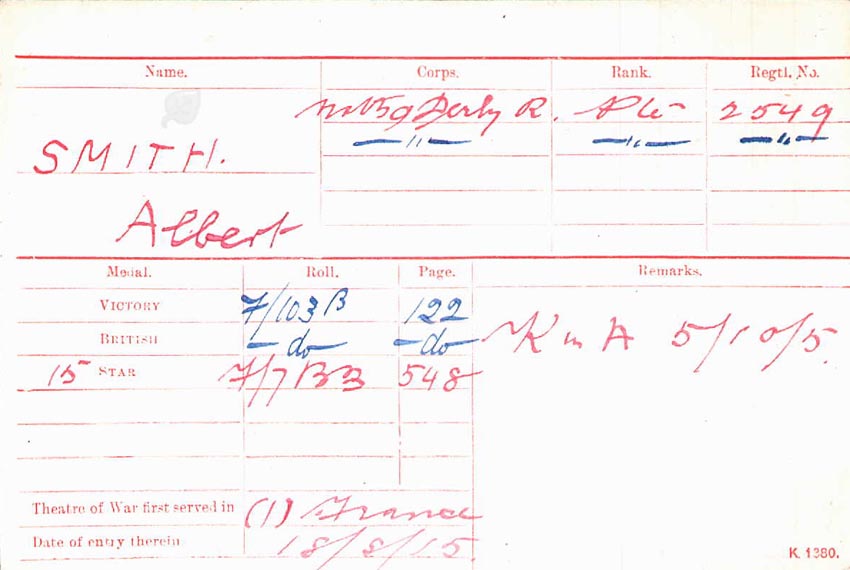
The Battalion was employed converting old German trenches west of Loos. 2549 Pte Albert Smith was killed during this duty, but his grave was not found after the War and he is commemorated on Loos Memorial.
Albert Smith was from Buxton and served with C Company.
On the morning of 3rd October the 139th Brigade were ordered to capture the villages of Ramicourt and Montbrehain with support from the 137th Brigade on the right and the 2nd Australian Division on the left. Nine tanks had also been alloted to this attack and were due to advance immediately behind the first wave.
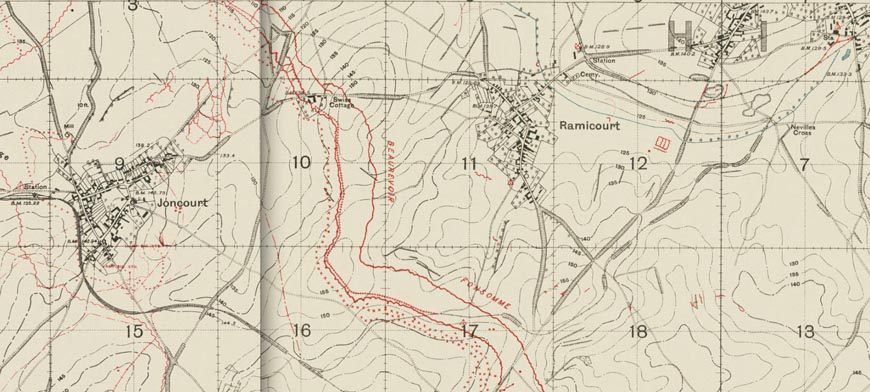
An abridged version of the attack is below, visit here for the full account.
The three battalion of the 139th Brigade moved forward and the 1/6th Battalion occupied the railway cutting as it crossed the Ramicourt to Montbrehain road approximately 200 yards from the village. The men moved cautiously towards Montebrahain using the sunken road and were ordered to pass through the village to the eastern outskirts and consolidate their positions there.
The 6th Battalion moved up the sunken road and towards the centre of Montebrahain. It was supported in this attack by the single remaining tank of the 5th Battalion Tank Corps which cleared out a nest of 16 machine guns that was holding the Battn up. Unfortunately the tank itself was put out of action shortly afterwards.
The Battalion reached as far as Montebrehain close to the blue dotted line. However, the Germans offered strong resistance around the cemetary on the north east edge of the Village. Following a series of isolated frontal attacks the village was finally rushed and cleared of Germans.
At about 12.30 pm large parties of Germans counter attacked by forming north east of the village and passing around under cover to the south east and attacking the quarries. During that attack heavy pressure was brought to bear on the 6th Battalion and they were forced to retire to a railway cutting east of Ramicourt.
Just before the Battalion were due to withdraw from Montbrehain to the reserve area, Lieutentant Percy Alexander Tompkinson, a teacher from Longton near Stoke-on-Trent, was killed. There is no record of how he died, but his body was later buried in the small cemetary that had been started next to the crucifix near the village cemetary.
Percy Tompkinson (A.23) is buried next to 2/Lt William David Baldie (A.22), a 28 year old farmer from Boolara in Western Victoria, who’s service record provides the only known description of the trench burials at Calvaire.
“….. a cross was made from Fritz Ammuniation Boxes, with his name inscribed on it and placed were he was buried.”
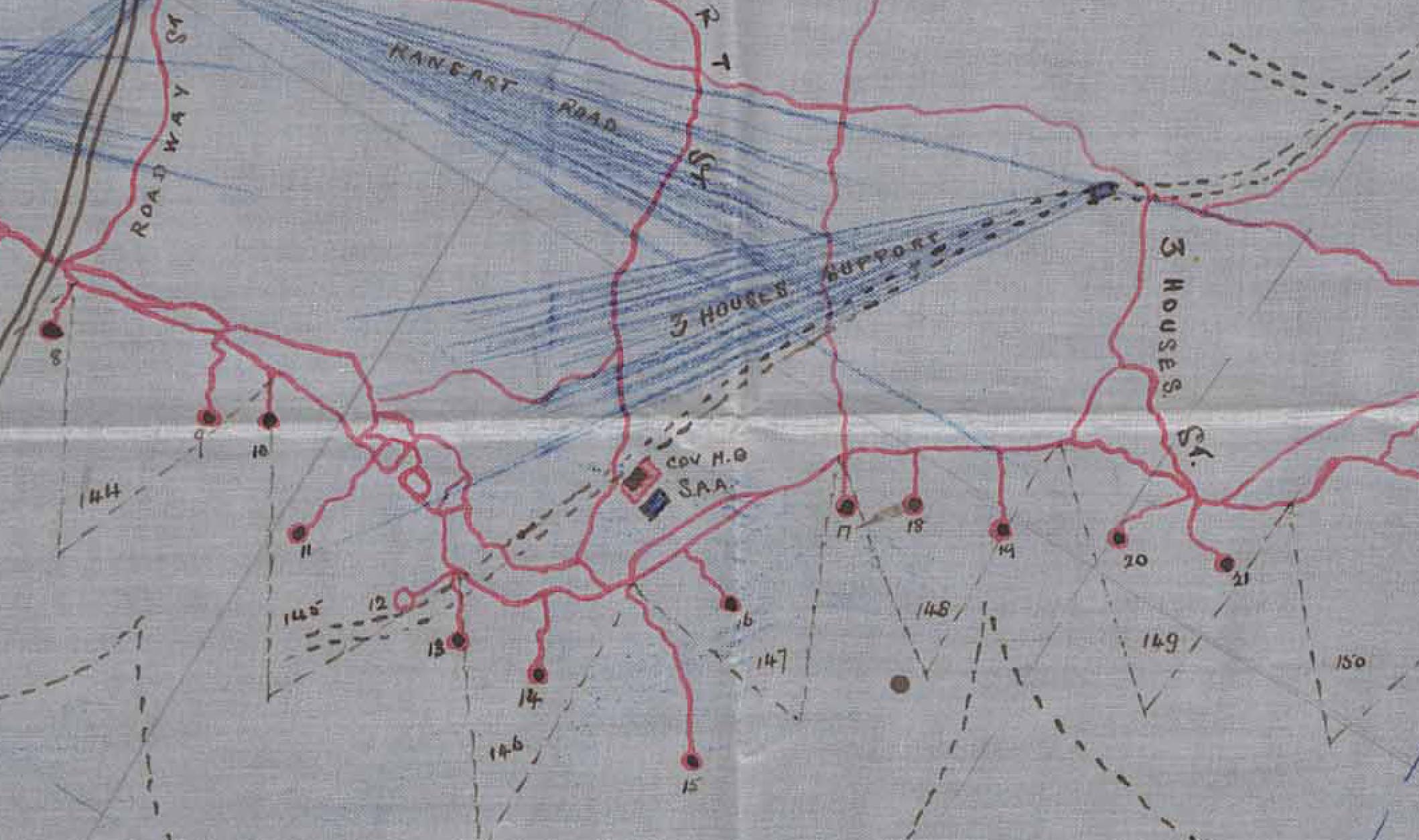
The Battalion relieved the 5th Battalion in the RIGHT SECTOR of trenches in front of Bellacourt.
Wounded during the relief was 3003 Pte Frank Guy Harvey who suffered a GSW in his right shoulder.
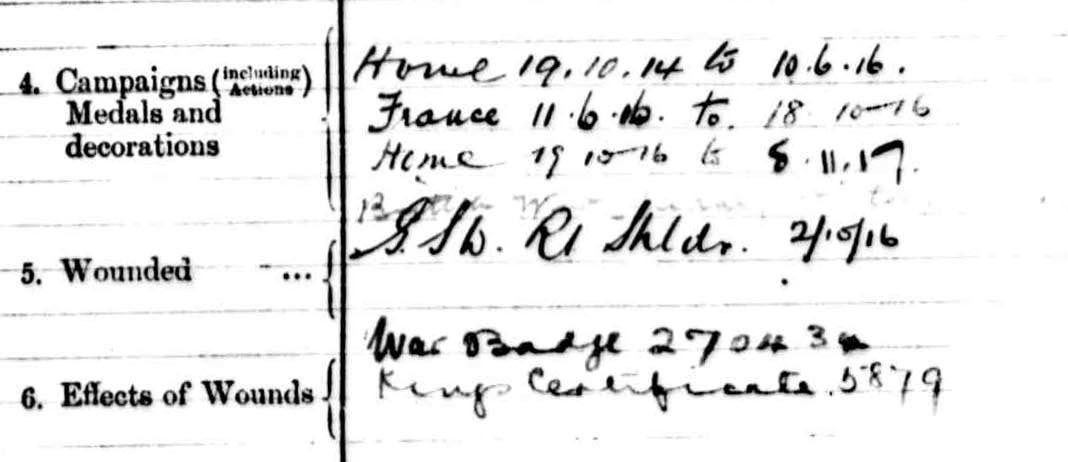
Frank was a domestic servant from North Street in Wirksworth and enlisted into the 6th Reserve Battalion in October 1914 aged 17. After training with the 9th Provisional and 3/6th Battalion he was posted to the 1/6th Battalion and arrived in France on 11th June with the 11th Reinforcement. After being wounded he was transferred to England and eventually discharged in November 1917.
3366 Pte Walter Adkin died from wounds at LIJSSENTHOEK MILITARY CEMETERY.
Walter was a miner from Stavelely and enlisted in October 1914 aged 24. He arrived in France on 28th February 1915.
 Derbyshire Territorials in the Great War